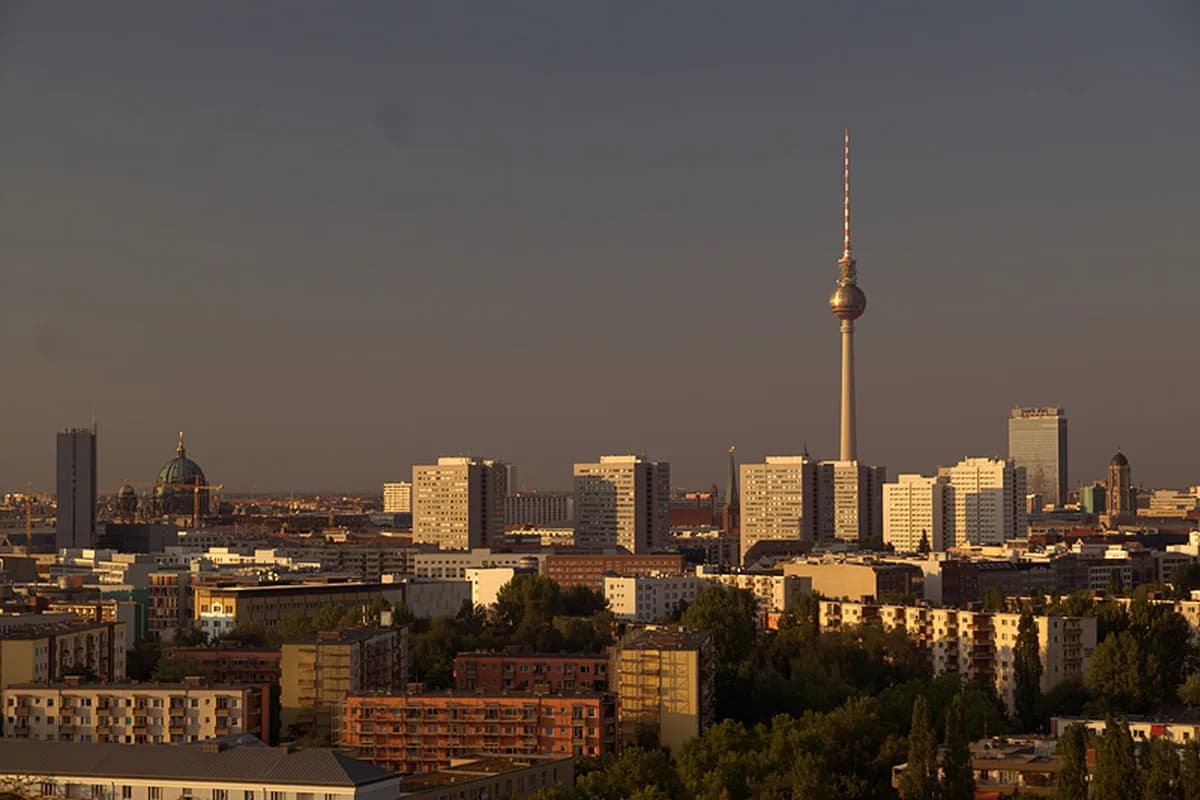
Budapest 3 Day Itinerary: The Ultimate First-Timer's Guide
Plan the perfect Budapest 3 day itinerary with local picks, neighborhood context, thermal bath tips, and practical booking advice for a smoother trip.
On this page
Budapest 3 Day Itinerary
Budapest rewards short visits. Three days is enough to see the old royal city of Buda, cross into the grand boulevards of Pest, soak in a century-old thermal bath, and still have time for a ruin bar or two. This itinerary is built for first-timers and refreshed for 2026, with current admission prices, practical transport notes, and a few tips that most guides skip.
The city is split by the Danube River — Buda to the west and Pest to the east. They feel genuinely different. Buda is quieter, hillier, and more historic. Pest is flat, dense, and commercially alive. This plan works through both sides in a logical order so you spend less time backtracking and more time exploring.
A Quick Intro to Visiting Budapest
Budapest is one of Central Europe's most visited cities, and the attention is deserved. The Hungarian capital of nearly two million people combines medieval castle ruins, Art Nouveau bathhouses, Baroque synagogues, and a raucous nightlife scene in a relatively compact area. You can walk between many of the major sights, and the metro and trams fill in the rest.
Spring (April to June) and autumn (September to November) are the best times to visit. The weather is mild, crowds are manageable, and hotel prices sit below the summer peak. December brings excellent Christmas markets around Vörösmarty Square and St. Stephen's Basilica. Summer is hot and busy but the outdoor thermal pools and rooftop bars make up for it.
Is Budapest a good city break? Absolutely. Its compact center means you can see a genuine mix of history, architecture, and culture without long transfers between attractions. Most of the big sights sit within 4–5 kilometres of each other, which is rare for a capital city. Three days will cover the highlights; four days lets you breathe.
How to Plan a Smooth Budapest Attractions Day
Buy the 72-hour Budapest Card (around 29,900 HUF / €80) before your visit if you plan to visit 4+ paid attractions. It includes unlimited public transport plus free or discounted entry to museums, baths, and restaurants — often pays for itself by Day 2. Alternatively, grab the cheaper 72-hour travel pass (4,150 HUF / €11) if you're only using metro, trams, and buses.
Start your day at Fisherman's Bastion or Matthias Church before 09:00 to beat tour coach crowds. The outer terraces of the Bastion are free; if you're short on time, skip the paid upper level and explore the Castle District on foot instead — the neighborhood rewards wandering.
Budapest's public transport is cheap and reliable. The metro has four lines (M1–M4) and the M1 — the Millennium Underground — is a UNESCO World Heritage site and the oldest metro line in continental Europe. Trams 4 and 6 run constantly along the Great Boulevard and are the fastest way to move across Pest. Single tickets cost around 450 HUF (just over €1); a 72-hour travel card costs around 4,150 HUF (~€11) and covers the metro, trams, and buses. You can buy both at metro station machines or on the BudapestGO app. Always validate before boarding — inspectors are frequent and fines are steep.
Where you stay shapes your trip. Staying in Pest, specifically District V (Belváros-Lipótváros) or District VII (the Jewish Quarter), puts you within walking distance of Parliament, St. Stephen's Basilica, the Central Market, and the ruin bars. Buda is more atmospheric — particularly around Castle Hill — but the tourist areas there can feel quiet after 21:00, and many restaurants close earlier than you'd expect. If you want historic surroundings during the day and lively evenings, base yourself in Pest and take the tram or metro across to Buda each morning.
Book Parliament tickets well in advance. Non-EU citizens pay around 9,000 HUF (~€24) for a guided interior tour, and peak-season slots sell out weeks ahead. Matthias Church and Fisherman's Bastion also require tickets, though the outer terraces at the Bastion are free. For the thermal baths, you do not need to pre-book Széchenyi — tickets are sold at the door for around 8,800–11,500 HUF (~€23–€30) depending on weekday or weekend. Gellért Baths has similar pricing. Check each attraction's official website in 2026, as prices have increased year on year since 2023.
From the airport (Budapest Ferenc Liszt International, BUD) the 100E express bus runs 24/7 to downtown and costs around 2,200 HUF (~€6). The ride is about 40–45 minutes. A taxi to the city center costs roughly 10,000–12,000 HUF (~€26–€32) and all rides are metered. Rideshare apps Bolt and Uber both operate in Budapest and are generally cheaper than hailed taxis for short in-city journeys.
Day 1: Must-See Budapest Attractions in Historic Buda
Start on the western bank. Castle Hill is the oldest part of the city and the logical first stop. The hill is hollow underneath — literally riddled with tunnels from medieval times — which is why large tour coaches are banned. Arrive at Fisherman's Bastion by 09:00 if you can. The ornate Neo-Romanesque terraces are free to walk, though the upper levels require a ticket (~2,000 HUF). The views over the Danube and the Parliament dome are among the best in Central Europe. Next door, Matthias Church opens at 09:00 — buy tickets from the kiosk opposite (around 3,500 HUF). The interior is covered in vivid 19th-century frescoes and Gothic stonework that photographs cannot fully capture.
From Matthias Church, walk five minutes to Buda Castle. The castle complex houses two major institutions: the Hungarian National Gallery and the Budapest History Museum. The History Museum traces the city from Roman Aquincum to modern capital and is worth an hour of your time (admission ~3,000 HUF, closed Mondays). The National Gallery's collection of Hungarian painting and sculpture runs from medieval altarpieces to 20th-century modernism. The terrace views from the castle courtyard are free and superb.
After lunch in the Castle District — try the strudel bakery Budavári Rétesvár tucked under an archway off the main alley; their dill-and-cottage-cheese strudel is savory and unusual — descend the hill and head to Gellért Hill. The climb takes about 30 minutes on foot and rewards you with the best panoramic views in Budapest. The Citadel at the summit, with the Liberation Monument just below it, is particularly striking in the late afternoon light. At the base of the hill, the Cave Church built directly into the rock face is easy to miss but worth a five-minute detour.
End Day 1 with a Danube river cruise. Most evening departures leave from Vigadó tér on the Pest side around 19:30–20:00. The Parliament and Buda Castle are both illuminated after dark and look completely different from the water. Book any cruise 15 minutes before sunset to catch the Parliament in golden hour light and then again lit up at night — most 90-minute cruises cover both if you board early enough.
Day 2: Museums, Art, and Culture in Pest and Central Market Hall
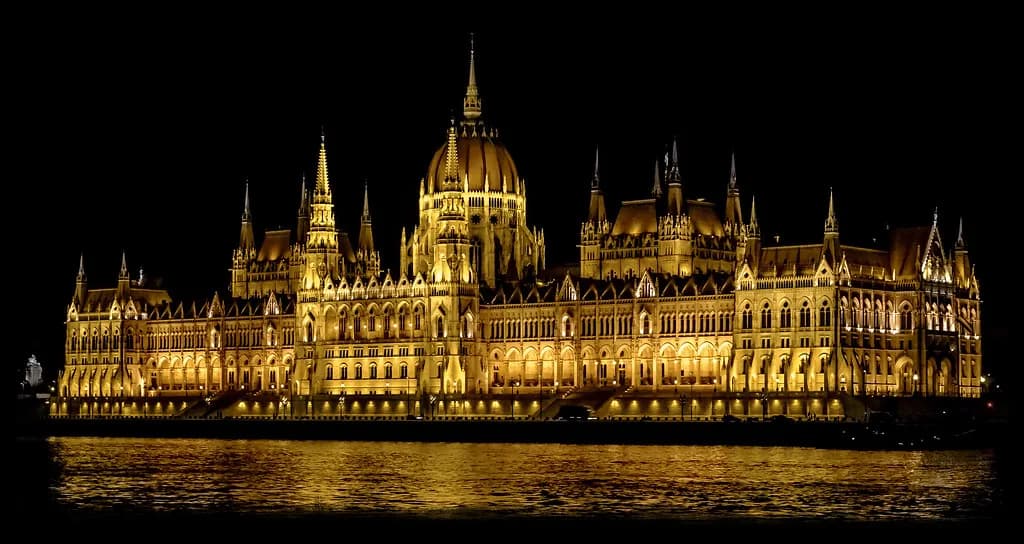
Begin the morning at St. Stephen's Basilica, the largest church in Budapest and the highest building permitted in the city center (its dome is the same height as the Parliament, by deliberate design). The church holds the mummified right hand of Hungary's first king, kept in a reliquary behind the main altar. Climb to the dome platform for a 360-degree view of the city (~3,000 HUF for the lift, less for the stairs). From the Basilica, walk or take the M2 metro north to the Hungarian Parliament Building for your booked guided tour. The neo-Gothic exterior is impressive; the interior — with its 691 rooms, red carpeted staircases, the Hungarian Holy Crown under the central dome, and gilded ceilings — is extraordinary. Allow 45–60 minutes for the tour.
After Parliament, walk south along the Danube waterfront. Pause at the Shoes on the Danube Bank memorial, a row of 60 pairs of iron shoes placed at the river's edge to commemorate Jews shot here during World War II. It is a quiet, affecting monument. Continue south past the Chain Bridge to the Central Market Hall (Nagycsarnok) at the end of Váci Street. Built in 1897, the iron-and-brick hall has three levels: the ground floor sells fresh produce, meat, and paprika in every form imaginable; the upper level has food stalls, embroidered goods, and tourist trinkets. Buy lángos (fried dough with sour cream and cheese, around 1,500–2,000 HUF) at one of the stalls upstairs for lunch. Avoid the restaurants immediately around the entrance — the prices jump sharply.
The afternoon belongs to Andrássy Avenue and the Jewish Quarter. Andrássy is Budapest's grand UNESCO-listed boulevard — lined with neo-Renaissance palaces, embassies, and the Hungarian State Opera House. The Opera House runs inexpensive guided tours (around 4,900 HUF) most afternoons, covering the gilded auditorium, royal boxes, and the underground passages. The Jewish Quarter around Dohány Street has the largest synagogue in Europe (the Dohány Street Synagogue, ~7,000 HUF admission) and a moving memorial garden behind it. Allow 90 minutes to do both justice.
By early evening the Jewish Quarter transitions into ruin bar territory. Szimpla Kert, Budapest's original ruin bar, opens around 17:00 and is worth visiting before 20:00 when it becomes very crowded and very loud. The layout — a crumbling courtyard filled with mismatched furniture, bathtubs-turned-planters, and string lights — is genuinely atmospheric when it's not at full capacity. If you want a quieter alternative, Mazel Tov three minutes away has a beautiful covered garden courtyard, serves excellent food, and feels more restaurant than bar. For a late night, Instant is a multi-room club complex and draws a younger crowd from around 22:00.
Day 3: Parks, Gardens, and Outdoor Spots — Margaret Island and the Baths
Start Day 3 at Heroes' Square (Hősök tere), reached in 10 minutes by the M1 metro from downtown. The square was built in 1896 to mark 1,000 years of Hungarian statehood and features a 36-metre column topped by the Archangel Gabriel, flanked by statues of the seven Magyar chieftains and later Hungarian kings. The square acts as the gateway to City Park (Városliget), where Vajdahunyad Castle — a single building combining Romanesque, Gothic, Renaissance, and Baroque architecture — sits beside an artificial lake. In winter the lake becomes Budapest's main outdoor ice rink.
Széchenyi Thermal Bath is the centerpiece of Day 3. It sits inside City Park, making it easy to combine with a morning at Heroes' Square. Built in 1913, Széchenyi is Europe's largest medicinal bath complex. The signature outdoor pool — where elderly regulars play chess on floating boards in the steaming water — has become one of the most recognizable images in Hungarian tourism. Admission with a locker is around 8,800 HUF on weekdays; a private cabin (a lockable changing room) costs roughly 2,500 HUF more. Bring your own towel and flip-flops — rentals at the bath add up. Plan to spend at least 2.5–3 hours.
In the late afternoon, consider crossing to Margaret Island (Margit-sziget) by tram 4 or 6 to Margaret Bridge. The island is car-free, 2.5 km long, and sits in the middle of the Danube. It is where locals actually spend their weekends — jogging, cycling, reading in the rose garden, or lying on the grass. A medieval Dominican convent ruin and a small Franciscan chapel are worth a 20-minute walk. The open-air Musical Fountain runs on the hour from around 18:00 and is a surprisingly good spectacle. If you are traveling with children, Palatinus Open-Air Baths on the northern tip of the island is a full waterpark open in summer — a better option than Széchenyi for families with young kids.
For the final evening, stay close to the hidden gems in Budapest side of the city and book dinner at a restaurant that actually serves Hungarians, not tour groups. Look at Borbíróság in the eighth district or Kádár Étkezde in the Jewish Quarter — both are cash-only, short-menu places serving honest Hungarian food at roughly 3,000–5,000 HUF per main dish.
Thermal Bath Guide: Choosing Between Széchenyi and Gellért
Every guide tells you to go to a bath. Few explain how to actually navigate one. The two most visited options are Széchenyi (in City Park) and Gellért (at the foot of Gellért Hill), and they serve different types of visitors. Széchenyi is larger, more social, and easier to find. Gellért is architecturally spectacular — Art Nouveau interiors with mosaic tiles, vaulted ceilings, and twisting marble columns — but the layout is less intuitive and some areas are gender-segregated on certain days.
When you buy a ticket, you choose between a locker and a cabin. A locker gives you a numbered space in a shared changing room. It is cheaper (included in the base ticket) and perfectly adequate for a solo traveler or couple. A cabin is a private changing room that you lock from the inside. It costs more but is genuinely useful if you are traveling with children or simply want more space. Neither option is complicated — staff will show you where to go — but first-timers often arrive without knowing the difference and either overpay for a cabin they don't need or feel uncomfortable in a shared locker room they didn't expect.
Bring your own swimwear, a towel you don't mind getting wet, and flip-flops. Rentals for all three are available at the entrance but cost around 1,000–2,000 HUF each and the flip-flops in particular are flimsy. The water temperature in the outdoor pools at Széchenyi sits around 36–38°C year-round. The indoor thermal pools run hotter at 38–40°C. Move between pools rather than staying in the hottest one — 20 minutes in, 10 minutes out, then repeat. Drink water between sessions. Hungarians have been doing this for 150 years; there is a rhythm to it that makes the experience feel less like a tourist attraction and more like genuine urban relaxation.
Family-Friendly and Budget-Friendly Options in Budapest
Budapest is a genuinely good destination for families. Margaret Island has open lawns, a small petting zoo, playgrounds, and the Palatinus Open-Air Baths waterpark — far more child-appropriate than Széchenyi. The Children's Railway in the Buda Hills is a short and unusual experience: a working narrow-gauge railway operated almost entirely by children aged 10–14 (under adult supervision), running through forested hills with views over the city. The Budapest Zoo inside City Park is compact but good value. The Natural History Museum has excellent dinosaur exhibits and is rarely crowded.
Budget travelers can cover a lot of Budapest without spending much. Walking across the Chain Bridge is free. The entire exterior of the Parliament and the riverside promenade are free to enjoy. The Central Market Hall is free to enter. Consider visiting some places to visit in Budapest for free — there are more than most visitors expect. For meals, skip the tourist menus on Váci Street and eat at the market hall upstairs, at one of the langos stalls near Keleti train station, or at a kifőzde (a Hungarian workers' lunch canteen) for a two-course lunch under 2,500 HUF. The BudapestGO 72-hour card covers all transport for €11, cutting one of the biggest daily costs significantly.
The Budapest Card deserves mention for visitors who plan to visit multiple paid attractions. It includes unlimited public transport, free entry to the Budapest History Museum, and discounts at around 60 further attractions and restaurants. Prices for 2026 run approximately 12,500 HUF for 24 hours and 29,900 HUF for 72 hours. Do the arithmetic against your planned admissions before buying — for a sightseeing-heavy itinerary it often pays for itself by Day 2.
Bonus Day 4: Beyond the Main Attractions
If you have a fourth day, shift your focus away from landmarks entirely. The House of Terror Museum on Andrássy Avenue occupies the former headquarters of Hungary's secret police and covers the country's years under both Nazi and Soviet rule through powerful exhibits, reconstructed prison cells, and personal testimonies. It is one of the most affecting history museums in Europe and takes 2–3 hours. The Great Market Hall, the Parliament, and the Opera House will all still be there after — this one rewards unhurried attention.
A day trip to the Danube Bend is a natural extension for a fourth day. The towns of Szentendre, Visegrád, and Esztergom are all reachable within 45–90 minutes from Keleti or Nyugati train stations or by HÉV suburban rail. Szentendre is an 18th-century artist colony with a well-preserved baroque center and a good open-air ethnographic museum. Visegrád has a clifftop citadel with wide Danube views. Esztergom has Hungary's largest cathedral and the country's historic seat of power. You can combine two of these towns comfortably in a day, or take a boat from Vigadó tér pier for a scenic approach.
For evening on Day 4, the Budapest ruin bars scene has more to offer than Szimpla Kert. Fogas Ház, just down the street, is a larger multi-venue complex. Élesztő in the eighth district serves craft beers in a more relaxed, local atmosphere with a beer garden. Csendes and Kőleves Kert in the Jewish Quarter are smaller and friendlier than the main ruin bars. Budapest's nightlife runs late — nothing significant starts before 22:00 — so it pairs well with an early-day trip return.
Itinerary Overview
| Day | Area | Highlights |
|---|---|---|
| Day 1 | Buda (West Bank) | Fisherman's Bastion, Matthias Church, Buda Castle, Gellért Hill, Danube sunset cruise |
| Day 2 | Pest (East Bank) | St. Stephen's Basilica, Parliament Building, Central Market Hall, Jewish Quarter, Ruin bars (Szimpla Kert) |
| Day 3 | Parks & Thermal Baths | Heroes' Square, City Park, Széchenyi Thermal Bath, Margaret Island, outdoor pools & gardens |
Frequently Asked Questions
Which Budapest 3 day itinerary options fit first-time visitors?
First-time visitors should prioritize iconic landmarks in both Buda and Pest. Start with Buda Castle, Fisherman's Bastion, and Matthias Church. Then explore the Parliament, St. Stephen's Basilica, and the vibrant Jewish Quarter in Pest. Finish with a relaxing thermal bath experience.
How much time should you plan for a Budapest 3 day itinerary?
A 3-day itinerary provides a solid introduction to Budapest's main attractions. It allows enough time to see the highlights without feeling rushed. For a more in-depth exploration or a day trip, consider adding an extra day.
What should travelers avoid when planning a Budapest 3 day itinerary?
Avoid over-scheduling your days; allow for spontaneous exploration. Do not forget to book popular attractions like Parliament tours in advance. Try to skip overpriced tourist trap restaurants near major squares and seek out local eateries instead.
Budapest truly offers a captivating blend of history, culture, and relaxation for every traveler. This 3-day itinerary provides a balanced approach to experiencing its best. From historic castles to rejuvenating thermal baths, your trip will be unforgettable.
Whether you're admiring Danube views or savoring local flavors, Budapest leaves a lasting impression. Remember to plan ahead for bookings and embrace the city's unique charm. We hope this guide helps you create your perfect Hungarian adventure.
Continue exploring
More guides you'll find useful