Jewish Quarter Budapest Guide Travel Guide
Plan jewish quarter budapest guide with top picks, neighborhood context, timing tips, and practical booking advice for a smoother trip.
On this page
Jewish Quarter Budapest Guide: Explore History & Culture
Budapest's Jewish Quarter is one of the most layered neighbourhoods in Central Europe. Known officially as District VII or Erzsébetváros, it served as a walled ghetto during the German occupation of 1944. Within just 56 days, over 400,000 Hungarian Jews were deported to Polish death camps. The scars of that history are still readable in the architecture, the memorials, and the plaques on ordinary-looking walls.
Today the same streets are home to Europe's most famous ruin bar scene, an evolving street art landscape, craft coffee shops, and some of Budapest's best restaurants. The district handles this tension between grief and celebration better than you might expect. This jewish quarter budapest guide covers the history, the synagogues, the food, the nightlife, and the practical details you need to plan a visit in 2026.
A Brief History of the Jewish Quarter
Jewish settlement in this part of Pest accelerated in the late 18th century. By 1910, more than 23 percent of Budapest's population was Jewish — over 200,000 people — making it the second-largest Jewish city in Europe after Warsaw. Jews made up roughly 60 percent of the city's merchants, doctors, and lawyers, and the quarter was a dense, prosperous neighbourhood filled with courtyard apartments, kosher restaurants, and small workshops.
The community fractured in 1869 over questions of assimilation. The progressive majority, called Neologs, built the grand Dohány Street Synagogue. A moderate middle group commissioned the Rumbach Street Synagogue. The most conservative orthodox faction built Kazinczy Street Synagogue. This "synagogue triangle" — three major houses of worship within minutes of each other — exists because of that 1869 schism, and each building reflects a distinct architectural and theological identity.
The golden era ended brutally. In March 1944 the German army invaded Hungary. By the winter of 1944, some 70,000 Jews had been relocated into the Jewish Quarter, which was sealed behind a physical wall. Thousands died of famine and disease before the Soviet army liberated the ghetto in January 1945. A stone marker embedded in the sidewalk of Dob utca still traces the original ghetto boundary. The Soviet liberation is why Budapest retains the largest Ashkenazi Jewish community in continental Europe today — roughly 100,000 people.
The post-war decades left the quarter in disrepair, with crumbling buildings and abandoned courtyards. The turnaround came in the early 2000s when Szimpla Kert opened in a derelict building on Kazinczy utca and launched Budapest's ruin bar phenomenon. Cheap rent and a creative energy followed, rapidly gentrifying the streets. What you see in 2026 is that layered result: orthodox Jews, stag parties, local hipsters, and international tourists sharing the same blocks.
The Synagogue Triangle: Three Buildings, Three Communities
Most visitors spend all their time at the Dohány Street Synagogue and skip the other two. That is a mistake. Each synagogue tells a different story, and they are all within a five-minute walk of each other. Knowing what distinguishes them helps you decide how much time to allocate and which to prioritise.
The Dohány Street Synagogue (Budapest, Dohány u. 2) is Europe's largest synagogue and the obvious starting point. Its Moorish Revival towers are unmistakable. Admission in 2026 is approximately HUF 5,000 and includes the Hungarian Jewish Museum and the Raoul Wallenberg Memorial Park — where the Tree of Life sculpture bears the names of Holocaust victims on its metal leaves. Plan at least two hours. Opening hours are Sunday to Thursday 10:00–16:00 and Friday 10:00–14:00. The synagogue is closed on Saturdays and Jewish holidays. Book tickets online in advance during peak season to avoid the queue.
Your single ticket covers not just the main synagogue but also the adjoining Hungarian Jewish Museum and the moving Raoul Wallenberg Memorial Park. Dress code: cover your shoulders and knees. Hats are required for men; the synagogue provides them if needed. Friday evening services are still conducted here, and the building closes at 14:00 on Fridays to prepare for Shabbat.
The Rumbach Street Synagogue is a different architectural experience entirely. Designed in 1872 by the young Viennese architect Otto Wagner — later a pioneer of Modernism — the building uses Moorish ornament more freely and feels more intimate than Dohány. Today it operates as a museum with limited opening hours, primarily on Sundays. Admission is lower than Dohány and the crowds are a fraction of the size. This is the best choice if you want to photograph synagogue interiors without tour groups in every frame.
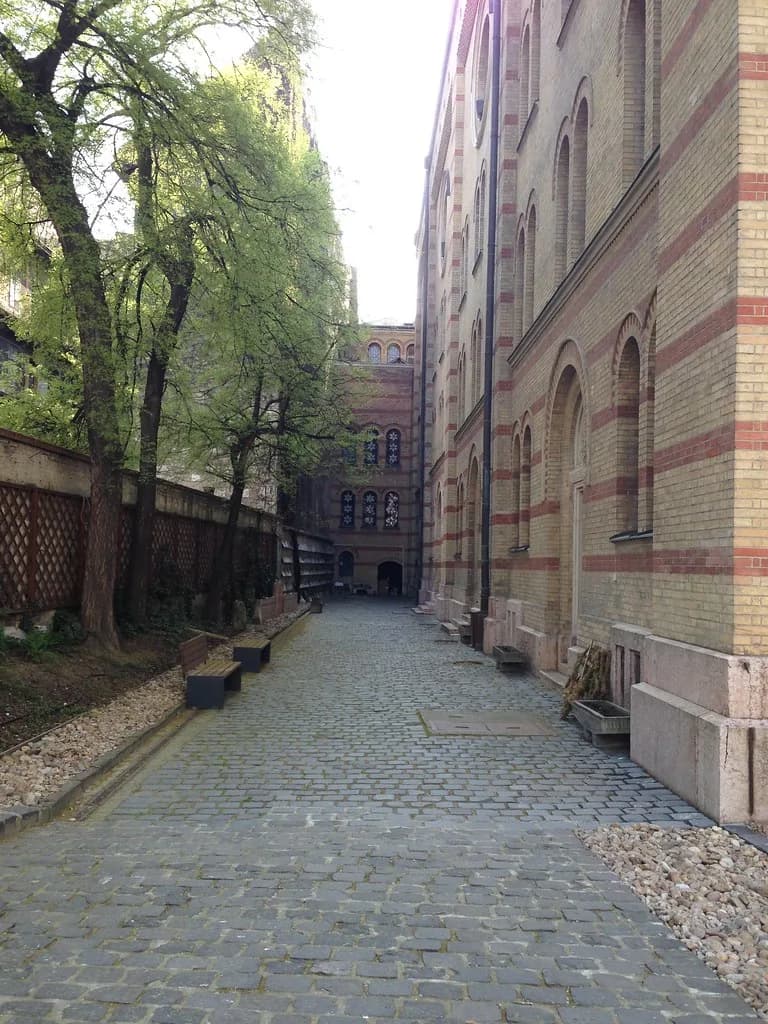
The Kazinczy Street Synagogue (also called the Orthodox Synagogue) is the most inward-facing of the three. Thick masonry walls face the street; inside, you find striking blue walls, stained glass, and Hungarian Art Nouveau folk ornaments — a jarring and beautiful contrast. The Kazinczy complex still includes working kosher facilities and the longstanding restaurant Carmel. Hasidic visitors from the United States and Israel frequently attend services here. Respectful attire is required at all three sites. Visiting all three in a single morning is entirely feasible.
| Synagogue | Architectural Style | What to See | Visitor Experience |
|---|---|---|---|
| Dohány Street | Moorish Revival (largest in Europe) | Hungarian Jewish Museum, Raoul Wallenberg Memorial Park, Tree of Life sculpture | Busiest, full tour groups, pre-book recommended |
| Rumbach Street | Moorish with Modernist elements (Otto Wagner, 1872) | Intimate interior design, photography-friendly, fewer crowds | Limited opening hours (mainly Sundays), photogenic without tour groups |
| Kazinczy Street | Hungarian Art Nouveau, thick masonry exterior | Striking blue walls, stained glass, kosher restaurant Carmel | Active worship space, Hasidic services, respectful dress required |
Museums, Art, and Culture in the Quarter
The Hungarian Jewish Museum, attached to the Dohány Synagogue complex, holds extensive collections of ritual objects from across Hungary. The exhibits trace Jewish life from the emancipation period through the Holocaust, and the archival photographs are particularly affecting. Entry is included in the Dohány ticket.
Beyond the synagogue complex, the contemporary art scene in District VII is one of the most active in Budapest. The Robert Capa Contemporary Photography Center on Nagymező utca regularly hosts international exhibitions alongside its permanent collection. It is one of the best photography museums in Central Europe and entry is affordable. The café inside is also one of the calmer spots in an otherwise busy district.
Massolit, on Nagy Diófa utca, operates as both an English-language bookshop and a café. The book selection covers Hungarian literature in translation — Ferenc Molnár, Sándor Márai, Magda Szabó — alongside pulp fiction, history, and biographies. It is worn-in, unhurried, and a genuine local institution. Worth an hour if you need a break from the main tourist circuit. Self-guided audio tours are also an option: the Jewish Quarter VoiceMap tour uses GPS to play audio automatically at the right locations.
The district also hosts cultural events year-round: open-air cinema in summer courtyards, the Budapest Jewish Film Festival in autumn, and regular klezmer and jazz evenings in smaller venues. Check local listings when you arrive — many events are free or low-cost and far less crowded than the main attractions.
Street Art in the Jewish Quarter
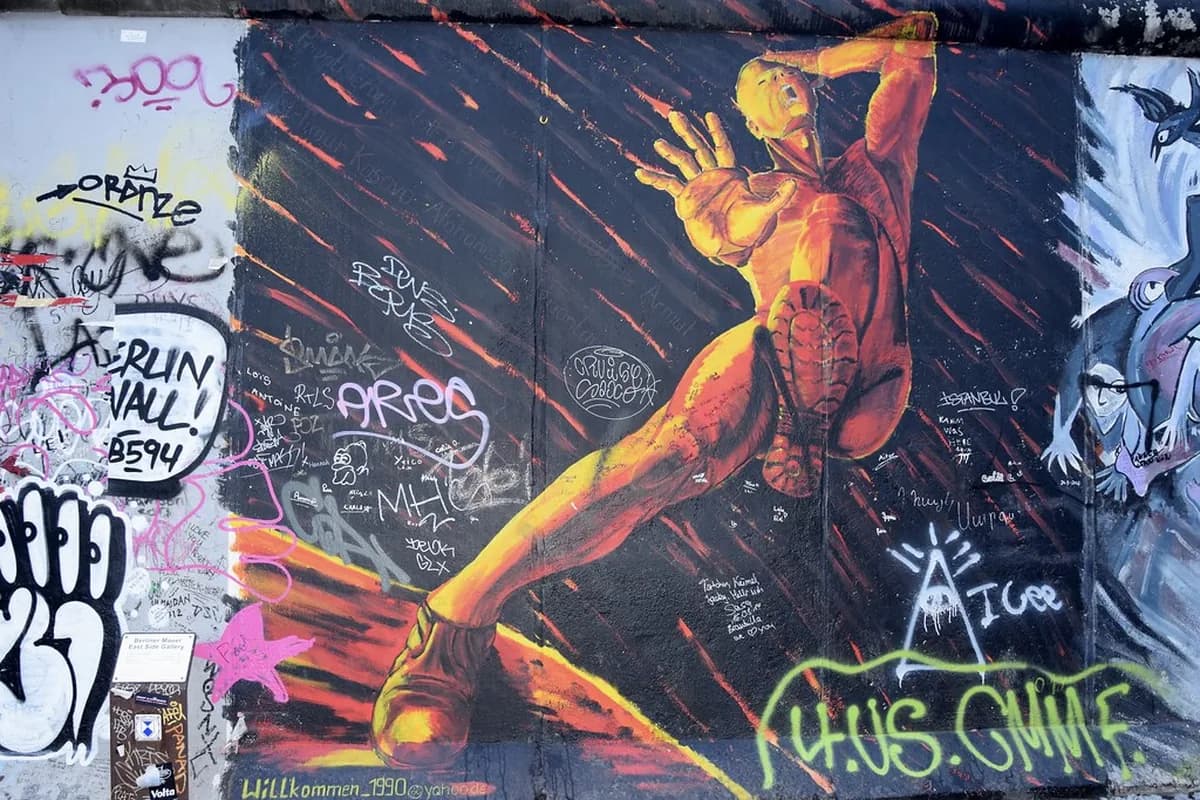
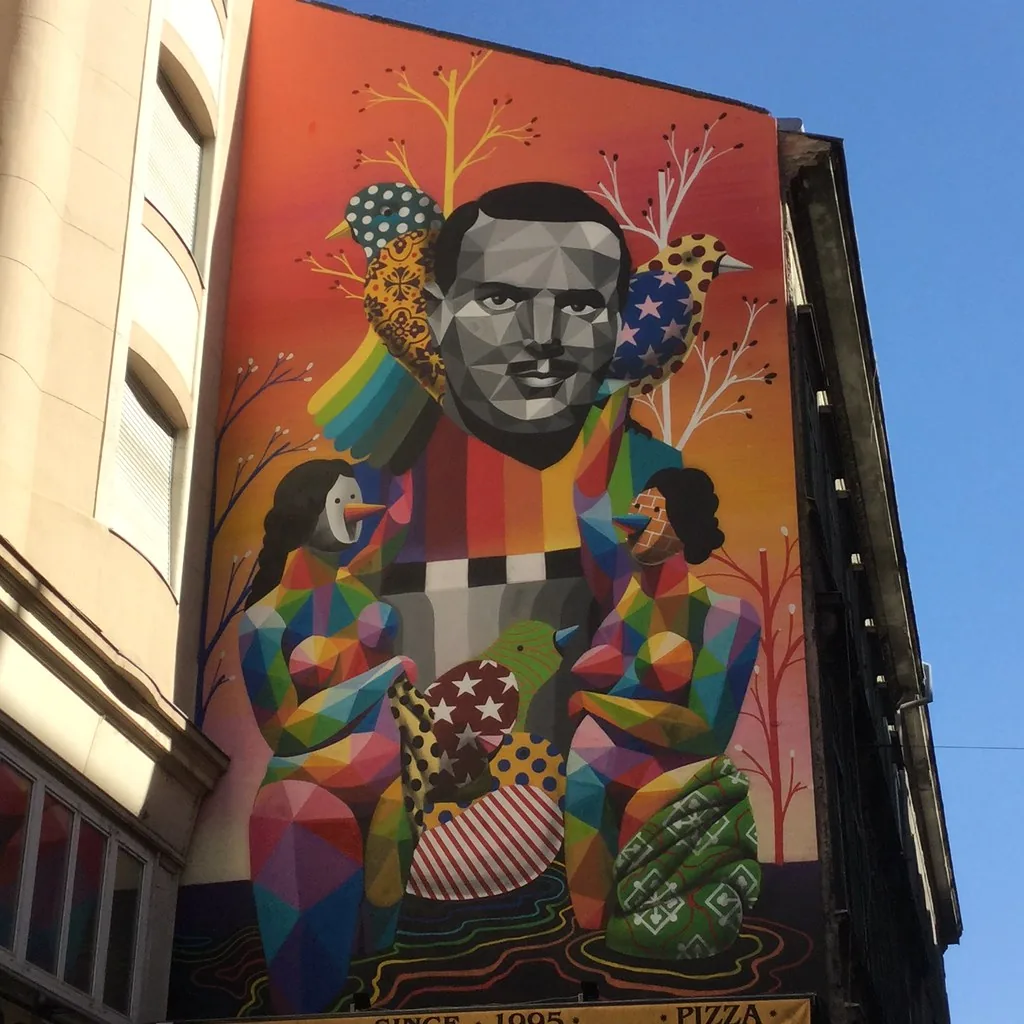
The Jewish Quarter has one of the densest concentrations of street art in Budapest. After World War II, demolished buildings left large exposed party walls throughout the district. As graffiti is illegal in Hungary, the city commissioned murals rather than tolerating tags — which is why so many pieces here are large-scale, technically accomplished, and deliberately site-specific rather than the throwaway tags you see elsewhere in Europe.
The most discussed mural in 2026 covers an entire firewall on Wesselényi utca 40 and depicts two Hungarian Nobel Prize winners from 2023: physicist Ferenc Krausz and biochemist Katalin Karikó, who helped develop the mRNA vaccines used against COVID-19. Karikó grew up in Hungary, spent her career in the United States, and is now internationally known. Seeing her face on a building in a district shaped by forced displacement carries a particular resonance.
Other significant pieces cluster around Kazinczy utca, Dob utca, and the alleyways off Király utca. The concentration near the ruin bars is the densest, as many bar owners commissioned murals for their exterior walls. New pieces appear regularly, so each visit turns up something different. For a comprehensive look before you go, this Budapest street art guide and this detailed street art and murals guide for District VII are both useful resources.
A dedicated street art walking tour is the most efficient way to see the best pieces. Local guides can explain the artists' intentions and point out subtle works hidden in courtyards that most visitors walk past. These tours typically run 90 minutes and cost around HUF 3,000–5,000 per person. Alternatively, wandering on your own works fine — keep your eyes on upper floors and blank walls, not just at eye level.
The Best Budapest Ruin Bars in the Jewish Quarter
Ruin bars emerged from the same post-war dereliction that shaped the quarter's street art scene. In the early 2000s, entrepreneurs began converting vacant courtyards and abandoned apartment buildings into bars decorated with salvaged furniture, mismatched lighting, and eclectic art. The result was a new category of venue — the romkocsma, or ruin pub — that defined Budapest's nightlife identity for two decades.
Szimpla Kert on Kazinczy utca 14 is the original and still the most interesting. Multiple themed rooms open onto a central courtyard strung with lights. Drinks are affordable: a beer costs roughly HUF 800–1,000. The Sunday farmers' market (09:00–14:00) draws producers from across Hungary selling sourdough, cheese, honey, and street food — it is worth visiting independently of the nightlife. Opening hours are Monday to Friday 15:00–04:00, Saturday 11:00–04:00, Sunday 09:00–04:00. Entry is free.
Instant-Fogas on Akácfa utca 51 is the largest venue — seven floors, 18 bars, two gardens, and separate rooms for techno, R&B, rock, and Latin. It is a committed late-night option and stays open until 06:00 at weekends. Entry is free and drinks come in refundable eco cups (return the cup to the bar for a HUF 300 deposit back). The scale makes it overwhelming for a quiet drink but excellent if you want to dance. For a more local atmosphere, explore more Budapest ruin bars beyond the tourist circuit.
Köleves Kert on Kazinczy utca is a calmer alternative, especially in summer when the garden fills up with locals. Kisüzem on Rumbach Sebestyén utca has retained a predominantly Hungarian clientele and is strong on premium rum. Gozsdu Udvar — a covered passageway linking Király utca and Dob utca — has plenty of bars and restaurants but tends to attract stag parties. It is worth a look but not necessarily where you want to spend an evening if you prefer a more relaxed crowd.
Bustling Bars and Vibrant Nightlife Beyond Ruin Bars
The Jewish Quarter's nightlife extends well past the ruin bar circuit. For serious cocktails, Boutiq Bar on Paulay Ede utca and Hotsy Totsy are both considered among the best cocktail bars in the city — precise, ingredient-driven drinks in a calmer setting than Szimpla. Expect to pay HUF 3,000–4,000 per cocktail, which is still cheaper than equivalent bars in Vienna or Prague.
Telep and Központ on Madách Imre tér draw the local creative crowd: design students, musicians, and younger professionals who live in the district. These are good choices on a weeknight when you want conversation rather than noise. Fekete kutya occupies a middle ground between bohemian and polished. For live music, check the schedule at Dürer Kert — slightly further south but easily walkable — which hosts local and international acts across multiple stages.
One practical detail most guides miss: a significant number of local students and young Hungarians who have been priced out of the Jewish Quarter now drink along Erzsébet körút, the Grand Boulevard just east of the district, where bars charge a fraction of the prices in the tourist-facing part of the quarter. If you want a genuinely local experience, this is where to find it — especially from around 22:00 onwards on weekends.
Most venues accept card payments, but carry some cash for smaller bars and street food stalls. Tipping 10 percent is standard for table service. For getting home, the ride-share app Bolt is reliable and cheaper than taxis hailed on the street. Night buses also run frequently along the main boulevards after the metro stops at around 23:00. For more local spots, explore best local restaurants in Budapest to round out your evening.
Where to Eat in the Jewish Quarter
The food scene in District VII has diversified rapidly. The district now has more dining options per square metre than almost anywhere in Budapest, ranging from kosher cholent at Carmel on Kazinczy utca to Korean sandwiches at Eggi and Japanese dishes at Komachi. Downtown Budapest has more Michelin-decorated restaurants, but the Jewish Quarter competes through variety and informality.
Dobrumba on Dob utca 5 is one of the most consistently praised restaurants in the quarter — a Middle Eastern-inflected menu in a narrow, intimate room. Gettó Gulyás on Wesselényi utca offers updated Hungarian classics at fair prices and is popular with both locals and visitors. Köleves (Spinoza Street) is a reliable all-day choice with a good wine selection. Mazel Tov on Akácfa utca gets heavy tourist traffic and is best visited for a weekday lunch when it is less overwhelming.
The Klauzál Market (Klauzál tér) is worth a visit for a different kind of eating experience. This 1897 indoor market hall is one of five surviving 19th-century market halls in Budapest. On the upper deck, Marika serves made-to-order lángos — the traditional Hungarian fried flatbread topped with sour cream and grated cheese — for a few hundred forints. On Sunday mornings, a flea market spreads through the premises. The market faces Klauzál tér, the quarter's only real green space, which also contains a minimalist Holocaust memorial marking the mass graves from the 1944 ghetto.
Arán Bakery on Wesselényi utca is widely considered the best sourdough bakery in Budapest. It is a useful morning reference point — arrive before 09:00 if you want the full range of loaves and pastries. For a quick snack while walking, Karavan on Kazinczy utca is a street-food courtyard with rotating stalls offering everything from Hungarian chimney cakes to burgers.
The Best Brunch and Coffee in the 7th District
District VII has become one of Budapest's primary destinations for specialty coffee and weekend brunch. Several of the city's best cafés are concentrated within a few blocks of each other, which makes a morning coffee circuit genuinely enjoyable rather than a logistical exercise.
Arán Bakery doubles as a café and is the most popular morning stop in the quarter. The pastry selection — croissants, pain au chocolat, and Hungarian-style sweet rolls — is better than almost anywhere else in the city. Dorado on Dob utca is favoured by local coffee professionals and combines excellent espresso with a light brunch menu. Cirkusz on Wesselényi utca is the most consistently recommended for a full sit-down brunch: the menu changes seasonally and the portions are generous without being excessive. Reservations for weekend brunch at Cirkusz are advisable.
Massolit Café on Nagy Diófa utca is the quietest option if you need to work or read rather than be seen. The coffee is solid and the second-hand books are a genuine distraction. My Little Melbourne on Madách Imre tér focuses purely on coffee quality — no food beyond pastries — and is the go-to for flat whites and filter coffee. Vinyl & Wood on Dob utca is more of a brunch restaurant than a café, with a menu that leans toward eggs, avocado, and seasonal vegetables. It stays busy until mid-afternoon on weekends.
One practical note: many of the most popular brunch spots in the Jewish Quarter do not take phone reservations — they use online booking only through their own websites or Étteremkereső. If you are visiting on a Saturday or Sunday without a reservation, arriving before 10:00 generally avoids the worst waits. After 12:00 on weekends, expect 30–45 minute queues at the most popular spots.
Unique Shops and Eclectic Boutiques
The Jewish Quarter is the best part of Budapest for independent retail. The concentration of vintage clothing stores, design shops, and specialist food sellers is higher here than anywhere else in the city. Most shops are owner-operated and clustered on and around Madách Imre tér, Király utca, and the side streets off Kazinczy utca.
Retrock on Madách Imre tér is the largest and most curated vintage clothing store in Budapest — prices reflect the quality, but the range is excellent. Ludovika, also on Madách tér, is a female-owned boutique selling new and pre-owned clothing from Hungarian designers at more accessible prices. Szputnyik near Astoria is broader in scope and skews toward an 80s aesthetic. Komondors on Kazinczy utca combines vintage denim and flannel with craft beer — the beer is there to help with purchasing indecision, according to the staff.
For something more specifically local, Judapest is a design store selling objects inspired by Jewish and Hungarian-Jewish culture: mugs with Yiddish-Hungarian words, earrings based on the towers of the Dohány Synagogue, printed tote bags. Printa Design Shop on Rumbach Sebestyén utca sells sustainable clothing and artwork entirely from Hungarian designers, plus excellent coffee. If you want a print of Budapest to take home, this is the most original option. Tisza Shoes near Astoria sells the revived Communist-era Hungarian sneaker brand — all manufactured in Tiszakeszi in eastern Hungary — and is one of the more thoughtful local purchases available in the city.
Where to Stay in the Jewish Quarter
Staying inside the Jewish Quarter means being within walking distance of the synagogues, ruin bars, and restaurants. The tradeoff is noise: streets near Kazinczy utca and Akácfa utca stay loud until 04:00 or later on weekends. If you are a light sleeper, look for accommodation on the quieter northern end of the district, near Király utca or Madách tér, rather than directly adjacent to the main bar corridor.
For budget travellers, Wombat's City Hostel is well located and consistently well-reviewed for its facilities and social atmosphere. The Hive Party Hostel is the better choice if late-night socialising is the priority — it sits right in the heart of the party zone. Maverick City Lodge bridges the gap between hostel and budget hotel, with private rooms available and Szimpla Kert literally a one-minute walk away.
Mid-range options include Stories Boutique Hotel, a stylish four-star property with breakfast included in most rates, and Hotel Memories, positioned directly opposite the Dohány Synagogue. At the top end, Hotel Corinthia on Erzsébet körút occupies a stunning 1890s building and is one of the most impressive hotels in Budapest. The Jewish Quarter is also compact enough that staying in a neighbouring district — the 5th or the 8th — and walking in takes no more than 15–20 minutes from most directions. Consider exploring hidden gems in Budapest to find accommodation in less trafficked pockets of the city.
How to Plan a Smooth Visit to the Jewish Quarter
The Jewish Quarter is compact — roughly bounded by Király utca to the north, Erzsébet körút to the east, Dohány utca to the south, and Károly körút to the west. Everything in this guide is walkable within 15 minutes. Start at the Dohány Synagogue complex in the morning when it opens at 10:00, before the tour groups arrive. Pre-book your ticket online to skip the entrance queue, especially from May through September.
After the synagogue, walk the side streets toward Kazinczy utca to see the Orthodox Synagogue and pick up a coffee at Arán Bakery or Dorado. Late morning is a good time for the street art — the light is better and the streets are less crowded than in the afternoon. Klauzál tér and the adjacent market make a good midday stop for a cheap lángos lunch. The Sunday farmers' market at Szimpla Kert (09:00–14:00) is worth building a Sunday morning around if your visit overlaps.
Plan your itinerary geographically to avoid backtracking. A logical sequence runs: Dohány Synagogue → Rumbach Synagogue → Kazinczy Synagogue → Klauzál tér → Arán Bakery → street art on Wesselényi utca → Madách tér shops → Szimpla Kert for an early evening drink. This covers the major sites in under four hours of walking with reasonable stops. For a broader Budapest plan, a Budapest 3-day itinerary can help you balance the Jewish Quarter against the city's other districts. Remember that synagogues are closed on Saturday (Shabbat) — plan accordingly.
Check the Jewish calendar before booking — all three synagogues close on major Jewish holidays (Passover, Shavuot, Rosh Hashanah, Yom Kippur, Sukkot, Simchat Torah, Hanukkah runs through multiple weeks). Shabbat (Friday evening to Saturday evening) is an especially important closure period across the district. The official tourism calendar at visitbudapest.com lists Jewish holiday closures year-round.
The tram lines along Erzsébet körút connect the district to the rest of the city quickly. For late nights, Bolt is the most reliable option for getting home safely. A single-day public transport pass (around HUF 1,650 in 2026) covers unlimited trams, buses, and the metro. For broader free options, check out places to visit in Budapest for free to complement your time in the quarter.
Frequently Asked Questions
Which jewish quarter budapest guide options fit first-time visitors?
First-time visitors should prioritise the Dohány Street Synagogue, the Hungarian Jewish Museum, and a stroll through the main streets to soak in the atmosphere. Consider a guided walking tour for historical context and to discover hidden street art. Visiting a famous ruin bar like Szimpla Kert is also a must for a taste of local nightlife.
How much time should you plan for jewish quarter budapest guide?
To adequately explore the Jewish Quarter, plan for at least half a day, or ideally a full day. This allows enough time for synagogue visits, museum exploration, enjoying a meal, and wandering through the streets to discover art and shops. If you plan to enjoy the nightlife, dedicate an evening as well.
What should travelers avoid when planning jewish quarter budapest guide?
Avoid visiting major synagogues on Saturdays (Shabbat) or Jewish holidays, as they are often closed or have restricted access. Also, try to avoid peak midday crowds by starting your exploration earlier in the morning. Don't try to see everything in a rush; allow for leisurely exploration. Avoid only sticking to main streets; venture into side alleys for unique discoveries.
Is jewish quarter budapest guide worth including on a short itinerary?
Absolutely. The Jewish Quarter is a compact area rich in history, culture, and entertainment, making it perfect for a short itinerary. Even with limited time, you can visit a key synagogue, see some street art, and enjoy a meal or coffee. It offers a condensed yet impactful Budapest experience. For a longer stay, consider exploring other Budapest neighborhoods.
How much time should you plan for Must-See Jewish Attractions?
For the Must-See Jewish Attractions like the Dohány Street Synagogue complex (including the museum and memorial), allocate approximately 2-3 hours. This allows for ticket purchase, a guided tour, and time to reflect. If you plan to visit additional synagogues like Rumbach Street, add another 1-2 hours to your schedule.
The Jewish Quarter of Budapest stands as a testament to resilience, culture, and vibrant urban life. This guide has covered its historical foundations, the three synagogues and what distinguishes each, the street art, the ruin bars, the best restaurants and brunch spots, and where to stay. District VII rewards slow exploration — the most memorable moments tend to happen in the side streets, not the main drag.
Embrace the opportunity to wander its streets, discover hidden gems, and connect with its profound history. Whether you seek cultural immersion, culinary delights, or energetic nightlife, District VII delivers. Use this jewish quarter budapest guide to craft your perfect itinerary.
Allow yourself to be captivated by the unique blend of tradition and modernity that defines this extraordinary neighbourhood. Your visit to Budapest's Jewish Quarter promises to be both enlightening and unforgettable. It truly is a must-see destination in Hungary.
Continue exploring
More guides you'll find useful