15 Best Hidden Gems in Seville: Secret Spots & Local Tips
Discover 15 hidden gems in Seville, from secret convent sweets to quiet plazas and authentic flamenco bars. Plan your off-the-beaten-path Andalusia trip today.
On this page
15 Best Hidden Gems in Seville
Seville's headline sights — the Cathedral, the Alcázar, Plaza de España — deserve their fame. But the city's true character is encoded in the quiet streets just beyond the main tourist drag. A semicircular square hidden behind a low arch. A revolving wooden hatch where cloistered nuns slide out sweets. A backstreet flamenco bar with no sign on the door. These are the places locals return to, and this guide maps all fifteen of them.
Finding the best 24 Best Things to Do in Seville often means resisting the pull of the obvious. Every spot here is walkable from the Cathedral — none requires a taxi or a tour — and most are free or under €15. The list covers architectural treasures, culinary secrets, and cultural experiences that reward visitors willing to slow down and look behind heavy wooden doors.
Use the table below as a quick orientation. Each gem is detailed in the sections that follow, with opening hours, costs, and the specific reason it qualifies as a local secret rather than a secondary tourist attraction.
| Mainstream Sight | Hidden Gem Alternative | Why Switch |
|---|---|---|
| Seville Cathedral | Iglesia Colegial del Divino Salvador | Baroque splendor, half the queue, combined ticket available |
| Royal Alcázar courtyard | Patio de Banderas | Free, open 24h, the best Giralda framing in the city |
| Las Setas rooftop | Plaza del Cabildo | Free, no queue, frescoes overhead instead of modern resin |
| Tourist flamenco dinner show | La Carbonería | No cover charge, raw performance, cash bar only |
| Sangria at a terrace bar | Tinto de Verano at a neighborhood tavern | Half the price, what locals actually order |
Plaza del Cabildo: The Hidden Crescent Square
Most visitors walk past the narrow archway off Avenida de la Constitución without realizing it leads to one of the most beautiful squares in the city. Plaza del Cabildo is a perfect semicircle — curved colonnades, frescoes painted on the underside of the arched gallery, and a sliver of ancient Roman city wall still visible at the far end. It sits fewer than 50 meters from the Cathedral entrance but remains almost completely empty.
Access is free and the gates stay open daily from around 09:00 until sunset. On Sunday mornings a small market sets up under the arches, where antique dealers trade stamps, coins, and vintage postcards. Come early in the day for photography — the angled morning light hits the frescoes at a low angle that makes the colors vivid without glare. In the afternoon the colonnade provides shade and the fountain provides white noise, making it a useful stop for cooling down between sights.
Patio de Banderas: The Secret Giralda Viewpoint
The Patio de Banderas (Courtyard of Flags) was the ceremonial entrance to the Royal Alcázar complex for centuries. Today it functions as the exit for visitors leaving through the side gate on Calle Joaquín Romero Murube, which means most tour groups rush straight through without pausing. That is a mistake. Stand in the northwest corner of the courtyard and you will find the single best-framed view of the Giralda tower anywhere in the city — the minaret-turned-bell-tower rises clean above terracotta rooftops, with no modern buildings interrupting the sightline.
Entry to the patio is free and the space is open 24 hours. The orange trees provide dense shade in the afternoon. In the early evening, when the light goes golden, the courtyard fills briefly with locals cutting through from the old quarter — then empties again. If you are following a Seville itinerary for 3 days, this is the natural end-point for the Alcázar visit rather than the main exit that deposits you back onto the busy tourist street.
Patio de Banderas is open 24 hours and completely free to visit. The northwest corner offers the best-framed view of the Giralda tower with no modern buildings in sight.
Iglesia de San Lorenzo: A Local Neighborhood Gem
The San Lorenzo district sits just north of the Cathedral quarter and functions as a fully residential neighborhood that tourists almost never enter. The centerpiece is this 13th-century Gothic-Mudéjar church, which houses the Jesús del Gran Poder — a 1620 carved figure of Christ carrying the cross that is arguably the most venerated religious image in all of Seville. Entrance during mass is free; a small museum fee of around €4 applies at other times.
What makes San Lorenzo genuinely different from Santa Cruz or the Cathedral area is the year-round devotion visible in the streets. Residents leave flowers and lit candles on the church steps throughout the week. During Holy Week, the Gran Poder brotherhood processes through the neighborhood at dawn on Good Friday — the streets are packed with locals who have waited through the night, and the emotional intensity bears no resemblance to the daytime processions tourists typically see. Even in 2026, months before Easter, you will see the neighborhood's balconies decorated with purple and gold cloth in quiet anticipation.
The plaza outside the church is an authentic living room for the barrio. Order a beer at the bar on the square's corner and you will be sitting alongside retired men reading newspapers and young families eating afternoon snacks. This is the residential Seville that no organized tour reaches.
Palacio de las Dueñas: The House of Alba
The Palacio de las Dueñas was the private residence of the Duchess of Alba — the most titled noble in Spanish history — until her death in 2014. The estate opened to the public in 2016 and remains surprisingly uncrowded. Admission costs approximately €12 for adults (€10 for students and over-65s), and the palace is open daily from 10:00 to 18:00, with extended summer hours to 20:00.
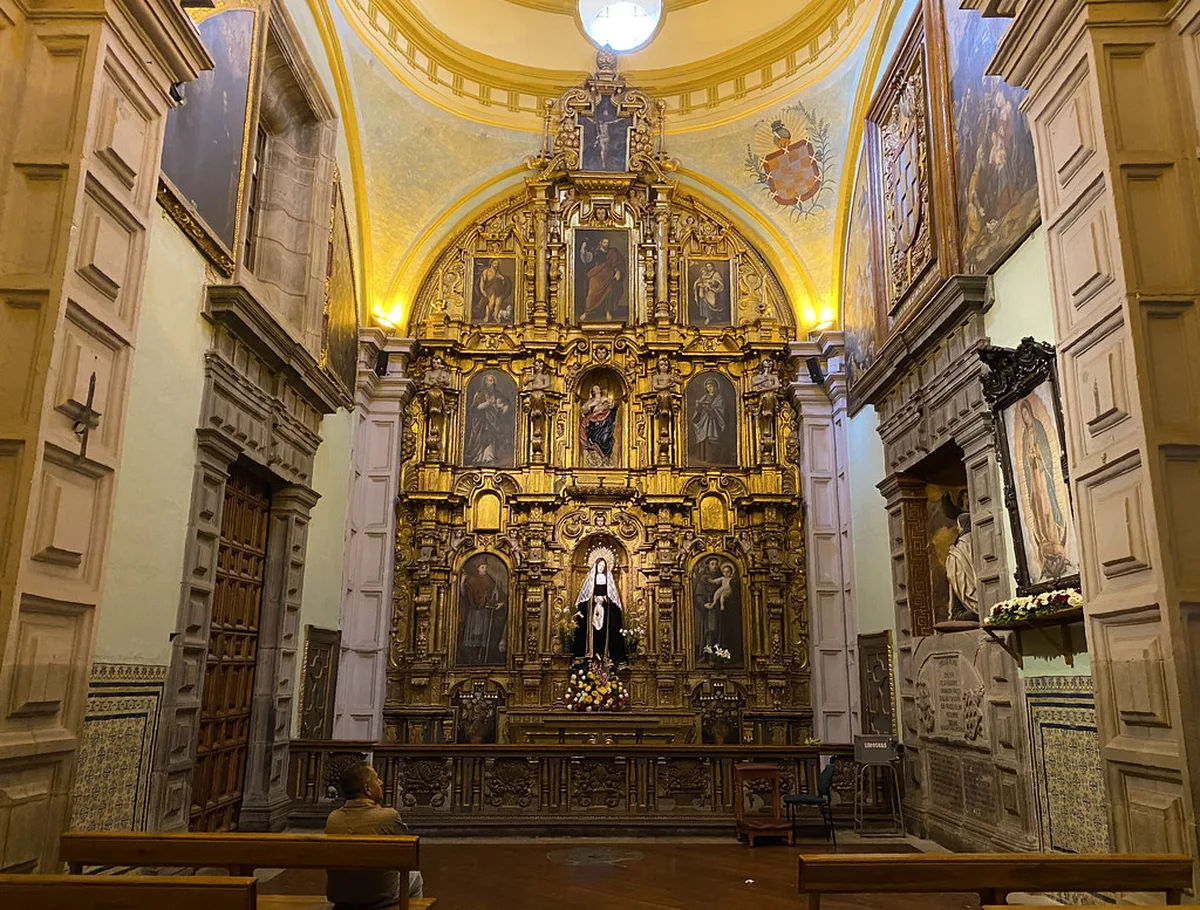
The gardens are the primary reason to visit. Jasmine, bougainvillea, and palm trees surround a central fountain, and the air carries a sweetness that feels conspicuously absent from the more formal courtyards near the Alcázar. Inside, the personal collection is eclectic: bullfighting posters, family portraits, antique furniture, handwritten correspondence, and a collection of tapestries. The official website at lasduenas.es lists entry prices and occasional evening events. Arrive at opening time to have the jasmine courtyard to yourself for at least 20 minutes before the first tour groups arrive.
Yemas de San Leandro: Sweets from a Hidden Convent Hatch
The Convent of San Leandro sits on Plaza de Ildefonso, a short walk east of the Cathedral. The cloistered nuns who live there make yemas — small, intensely sweet egg-yolk confections — using a recipe that has not changed in centuries. They sell them through a torno: a rotating wooden hatch set into the convent wall that lets you buy without seeing, or being seen by, the nuns inside.
Here is exactly how the transaction works. Locate the heavy wooden door marked "Dulces de Convento" and ring the bell. A nun will speak through the hatch — likely in Spanish. Say what you want: "Una caja de yemas, por favor" (a box of yemas, please). She will name a price, typically around €10–12 per box. Place the cash on the wooden shelf, give the torno a quarter-turn, and your sweets will appear on the other side. The hatch is available from roughly 10:00 to 13:00 and again from 16:30 to 19:00, Monday through Saturday. Bring exact change — cash only, no cards accepted.
Several other convents in Seville operate similar tornas: Santa Inés (near Plaza de la Encarnación) sells anise-flavored biscuits and mazapán; Santa Paula (Barrio de San Julián) is known for its marmalade. Each requires the same cash-and-patience approach. The experience is entirely unremarkable in appearance — a door in a wall — and entirely unforgettable in practice.
Yemas de San Leandro only accepts exact cash—no cards. The torno hours are 10:00–13:00 and 16:30–19:00, Monday through Saturday. Plan accordingly as lines can form, especially on weekends.
Palacio Bucarelli: A 17th-Century Palace Stay
Palacio Bucarelli sits in the San Lorenzo district on Calle Muñoz y Pabón. The building dates from the 17th century and was restored as a boutique hotel — making it the rare hidden gem you can actually sleep inside. Visitors can walk into the ground-floor courtyard for free and admire the classical Sevillian arcade, central fountain, and the unusual quiet that the thick stone walls impose on city noise.
The Palacio Bucarelli hotel hosts occasional classical concerts and cultural evenings that are open to non-guests — check the schedule on their website. Even if you are staying elsewhere, arriving for an afternoon drink in the courtyard is a completely legitimate visit. The combination of San Lorenzo's residential streets and the palace's 17th-century architecture makes this corner of the city feel far removed from the souvenir shops near the Cathedral.
La Carbonería: The Backstreet Flamenco Bar
La Carbonería occupies a former coal merchant's warehouse on Calle Levíes 18, a narrow backstreet in Santa Cruz. There is no sign above the door, which is exactly the point. Inside, the space opens into a long, high-ceilinged room with wooden benches, brick walls, and a stage lit by a single overhead light. The bar serves wine and beer (cash only). Flamenco performances run most nights from around 21:00, with no cover charge.
The critical difference between La Carbonería and the tourist dinner-shows is spontaneity. The artists here perform because they live in Seville and this is how they work. Photography and video are not permitted during performances — a rule enforced by the performers themselves, which immediately changes the atmosphere. Arrive by 20:30 to secure a bench with a clear view of the stage. The music typically runs for 45 to 60 minutes and the crowd includes a genuine mix of locals and informed travelers.
If La Carbonería feels too known for your taste, the neighborhood also contains Bar Garlochí on Calle Boteros — a surreal bar dedicated to Semana Santa iconography, serving a blood-red cocktail called Sangre de Cristo in a space packed floor-to-ceiling with religious kitsch. The two bars are five minutes apart and make an ideal evening combination.
Casa Manolo Leon: Dining in a Stately Courtyard
Casa Manolo Leon is a restaurant set inside a restored noble mansion near the Alameda de Hércules. The interior courtyard — two storeys of Sevillian arches, trailing greenery, soft lighting strung between columns — makes it one of the most atmospheric dining rooms in the city. Main courses range from €18 to €30. The kitchen focuses on Andalusian seasonal produce: artichokes with Iberian ham in spring, slow-cooked pork cheek with sherry in autumn.
The restaurant's position near the Alameda places it firmly outside the Cathedral tourist circuit. The surrounding streets are where Seville's younger residents eat, drink, and sit outdoors at night. Reservations are recommended for dinner, particularly on weekends. For lunch, the fixed-price menú del día (typically €14–16 for two courses plus wine) is the most cost-efficient way to eat in the courtyard without the full dinner commitment.
AIRE Ancient Baths: Relaxation in a Mudéjar Mansion
The AIRE baths operate inside a restored Arab bathhouse on Calle Aire 15, in the Santa Cruz neighborhood. The building was originally constructed over Roman foundations and later converted during the Moorish period. Today it contains a series of thermal pools at different temperatures, a steam room, and a salt flotation pool — all inside vaulted brick spaces lit by candles and filtered daylight.
Basic thermal bath access starts at approximately €38 on weekdays and rises to €45–50 at weekends. Add-on treatments — wine baths, hot stone massages — cost extra and require advance booking. The AIRE Sevilla booking page opens slots two weeks ahead, and weekend mornings (09:00–11:00) fill fastest. Two practical details: the dress code is swimsuit and towel only (rentals available at €5); mobile phones must be left in lockers, which makes the experience genuinely restorative rather than just picturesque. The rooftop pool overlooks the Giralda and is worth timing for the late afternoon.
Palace of the Countess of Lebrija: The City of Mosaics
The Countess of Lebrija was an aristocrat who, in the early 20th century, funded her own archaeological excavations and brought the best pieces home. The ground floor of her 16th-century palace is entirely paved with Roman floor mosaics salvaged from the ruins of Itálica, the Roman city founded outside Seville in 206 BCE. These are not reproductions. They are complete original mosaics in extraordinary condition, covering subjects from mythological scenes to geometric patterns.
General admission is €12 for the ground floor; a guided tour of the upper residential floors costs an additional €8 and is worth booking in advance. The palace is at Calle Cuna 8 and opens Monday to Friday 10:00–18:00, Saturday 10:00–14:00. Sundays are closed. The collection rivals the Alcázar's tilework in quality while attracting a fraction of the footfall — on a typical Tuesday morning the upper-floor guide may be leading a group of four people.
Iglesia Colegial del Divino Salvador: Baroque Splendor
El Salvador, as locals call it, is the second-largest church in Seville — dwarfed by the Cathedral but not by much. It stands on Plaza del Salvador in the historic center and was built in the late 17th and early 18th centuries on the site of a former mosque. Traces of the original Islamic structure survive in the layout of the cloister courtyard. Admission costs around €5, and a combined ticket with the Cathedral (€18) is available at either door.
The interior is dominated by a gilded Churrigueresque altarpiece that runs floor to ceiling behind the main altar. The scale is overwhelming in the best possible way — far more gold per square meter than you will find in most Spanish churches. Visit in the late afternoon when angled sunlight enters through the high windows and illuminates the carved figures from below. The exterior facade, facing the plaza, turns a deep rose color at that hour.
Triana Market: Authentic Cooking Classes
The Triana Market (Mercado de Triana) occupies a 19th-century building on Calle San Jorge, just across the Puente de Isabel II from the historic center. The market hall itself is open Monday to Saturday, 09:00 to 15:00, and sells fresh produce, fish, and ceramics from Triana's traditional workshops. Beneath the modern market floor, you can see the excavated remains of the 13th-century Castle of San Jorge — the original headquarters of the Spanish Inquisition — through glass panels set into the ground.
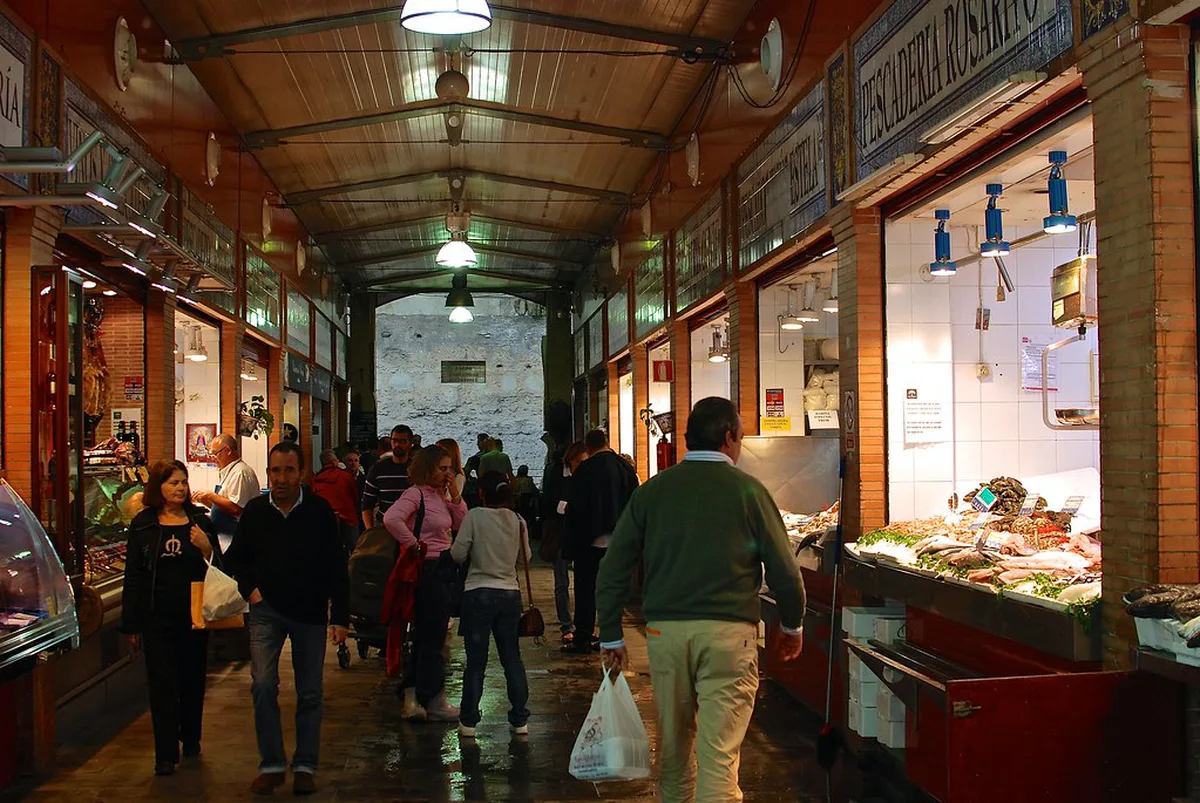
Several cooking schools operate out of kitchen units adjacent to the market stalls. Classes typically last three to four hours and cost €65–80, including a market tour led by the chef and a sit-down lunch at the end. The most common menu covers salmorejo (Seville's thicker, creamier version of gazpacho), espinacas con garbanzos (spinach and chickpeas), and a slow-braised pork dish. Book at least three days in advance for Saturday sessions. The Triana neighborhood surrounding the market — ceramic workshops, riverside bars, an accent that sounds closer to Latin American Spanish than Castilian — is worth an hour of exploration after class.
Early Morning in Barrio de Santa Cruz: Beating the Crowds
The Barrio de Santa Cruz is not a hidden gem by any definition — it appears on every Seville itinerary. But the neighborhood undergoes a complete transformation before 09:00. The narrow whitewashed alleys, flower-draped balconies, and tiled fountains that appear in ten thousand identical Instagram photographs are yours alone for a one-hour window at dawn. Tour groups do not start arriving until 09:30. By 10:30 the main lanes are impassable.
Set a 07:30 alarm and walk directly into the quarter from wherever you are staying. Bring a camera with a fast lens if you have one — the light in the tight alleys is dim but golden at that hour. The Plaza de Doña Elvira, at the heart of the quarter, is typically empty at 08:00, with the fountain running and cats visible on the surrounding walls. Stop at a local bakery on Calle Mateos Gago for a toasted mollete — a soft roll split and rubbed with olive oil and tomato — for around €2. This is a more efficient use of time before 09:00 than any tour can provide. Details on 9 Best Neighborhoods: Where to Stay in Seville will help you choose accommodation within walking distance of Santa Cruz so the early start requires no transport.
Tinto de Verano: The Real Local Drink
Sangria is served in Seville — almost exclusively to tourists. Locals drink tinto de verano, which translates directly as "summer red wine." The recipe is simple: cheap red wine mixed with gaseosa (sparkling lemon soda) in a 1:1 ratio, served over ice. It costs €2.50 to €4 in any neighborhood bar. The same drink at a riverside tourist terrace runs €8–10.
Order it by asking for "un tinto de verano con limón" — the "con limón" specifies the sparkling lemon variant rather than the slightly flatter plain soda water version. The best version of the drink is made with house wine and Casera brand gaseosa. Any bar in the Alameda de Hércules area, the San Lorenzo neighborhood, or the Triana riverside serves a better tinto de verano than anything you will find near the Cathedral. If you want a longer drink, ask for it "largo" — a larger glass with more ice. Pair it with espinacas con garbanzos or a plate of jamón and you have the authentic Seville afternoon covered for under €10 total.
Bar Santa Teresa: Traditional Tapas Away from Crowds
Bar Santa Teresa is a classic Sevillian tapas bar in the Santa Cruz area, identifiable by the cured hams hanging from the ceiling and the Semana Santa posters covering every available wall surface. The marble bar counter and worn wooden stools have been there for decades. Individual tapas cost €3 to €6. The house speciality is espinacas con garbanzos — spinach and chickpeas in a cumin and pimentón broth — done with more care here than at most bars twice the price.
The bar fills quickly at both the 14:00 and 21:00 sittings. Standing at the counter is faster and gives you a better view of the kitchen. The staff are efficient without being performative — no theatrics, just plates arriving promptly and the glasses refilled without being asked. For visitors following the best tapas in Seville, this bar represents the baseline: honest Andalusian cooking in an honest Andalusian setting, priced for the neighborhood rather than the tourist trade.
Planning Your Visit to Seville's Hidden Gems
The majority of these fifteen spots cluster within a 20-minute walk of each other in the historic center. A practical sequence for a single day: start with the early morning Santa Cruz walk (07:30–09:00), move to Plaza del Cabildo and Patio de Banderas before the tour buses arrive (09:00–10:30), visit AIRE Ancient Baths for the 11:00 session (book in advance), lunch at Casa Manolo Leon, and end the evening at La Carbonería. This covers six of the fifteen gems in one day without rushing.
Book AIRE Ancient Baths at least two weeks ahead for weekend slots. The Palacio de las Dueñas and Palace of the Countess of Lebrija generally have tickets available at the door, but morning visits on weekdays are always quietest. The Yemas de San Leandro convent hatch closes precisely at 13:00 — do not arrive at 12:55. Most neighborhood tapas bars observe siesta, closing from 15:00 to 20:00. La Carbonería does not open before 19:00 and performances do not begin before 21:00.
If you have time beyond these fifteen spots, 10 Best Day Trips from Seville to the white villages of the Sierra Norte or the ruins of Itálica extend the off-the-beaten-path logic into the surrounding countryside. The Roman city at Itálica, whose mosaics you will have already seen transplanted into the Countess of Lebrija's palace floors, is particularly striking when visited in context.
Explore More Seville Guides
Dig deeper into Seville with our complete set of local guides — from the hidden corners of Santa Cruz and Triana to where to eat, when to visit, and how to plan the perfect trip.
Neighborhoods & Districts
Food & Drink
Flamenco & Culture
Things to Do
Plan Your Trip
Explore hidden gems in other cities
Frequently Asked Questions
What is the best hidden neighborhood in Seville?
The San Lorenzo district is the best hidden neighborhood for an authentic local experience. It features quiet plazas and traditional taverns away from the main tourist crowds. You can explore this area further in our Triana and neighborhood guide for more tips.
How do I buy sweets from the nuns in Seville?
Find the convent of San Leandro and look for the wooden revolving hatch called a torno. Ring the bell, state your order, and place your cash on the wheel. The nun will rotate the sweets to you without ever being seen.
Are Seville's hidden gems expensive to visit?
Most hidden gems are very affordable, with many plazas and churches offering free entry to the public. Private palaces typically charge between $10 and $15 for admission. Tapas in local neighborhoods are also significantly cheaper than in the tourist center.
Seville is a city of layers that requires patience and curiosity to truly understand and appreciate. By visiting these fifteen hidden gems, you will experience the side of the city that locals cherish most. The mix of ancient history and living traditions makes every quiet corner feel like a significant discovery.
Whether you are biting into a convent sweet or standing in a silent plaza, these moments define a trip. I hope this guide helps you find the same magic that has kept me returning to Seville for years. Safe travels as you wander through the beautiful, winding streets of the Andalusian capital.
Continue exploring
More guides you'll find useful