11 Things Seville is Famous For (2026): Landmarks & Culture
Discover what Seville is famous for, from the world's largest Gothic cathedral to the passion of Flamenco and authentic tapas. Plan your 2025 trip today.
On this page
11 Things Seville is Famous For
Seville is the capital of Andalusia and one of the most distinctive cities in Europe. It is where Moorish history, Catholic grandeur, and a fiercely local culture meet in a compact historic center that you can walk across in under thirty minutes. Most people come for the landmarks and stay for the atmosphere — the late dinners, the clicking of flamenco heels, and the scent of orange blossoms drifting through narrow streets.
The city holds three UNESCO World Heritage Sites within a few hundred metres of each other. It is home to the world's largest Gothic cathedral, a royal palace that doubles as a film set, and one of the most photogenic plazas in Spain. This guide covers the eleven things Seville is best known for, with practical details so you can plan each visit properly. If you are still deciding how much time to spend here, a 3-day Seville itinerary covers all the major highlights without feeling rushed.
The Seville Cathedral and La Giralda
The Seville Cathedral is the largest Gothic church in the world and the first landmark most visitors see. It was built between 1401 and 1506 on the site of the former Great Mosque, and its sheer scale is difficult to absorb from street level. Inside, the gilded main altarpiece is one of the largest in the world, and the tomb of Christopher Columbus sits in an ornate sarcophagus carried by four bronze figures near the south entrance.
La Giralda, the adjoining bell tower, was originally built as a minaret for the mosque. It was converted into a Christian bell tower in the 16th century, and you can climb its internal ramp — not stairs — to the top for panoramic views over the orange-tiled rooftops. The ramp was designed wide enough for a horse to ascend, which gives you a sense of the scale of the original structure. Entry costs around €12 for adults in 2026, and the cathedral opens at 11:00 on most weekdays.
Tickets can be purchased at the door, but morning queues form quickly during spring and autumn. Booking online at least a day in advance avoids the wait. Budget two hours for a proper visit including the climb. This is the one site in Seville that genuinely justifies arriving right at opening time.
The Seville Cathedral is home to the tomb of Christopher Columbus, and its adjoining bell tower La Giralda was originally built as a minaret for a mosque before being converted into a Christian bell tower in the 16th century.
The Royal Alcázar of Seville
The Royal Alcázar is Seville's most visited and most logistically demanding attraction. It is a functioning royal residence — the Spanish royal family still uses the upper palace when in Seville — making it one of the oldest palaces still in use in Europe. The lower sections are open to the public and showcase some of the finest Mudejar craftsmanship anywhere in the world: carved plaster ceilings, geometric tilework, and arcaded courtyards that feel genuinely cool on a hot afternoon.
The palace gained new international attention when it served as the filming location for the Kingdom of Dorne in Game of Thrones. The Hall of Ambassadors and the gardens featured prominently in seasons four and five. Recognizing the specific rooms is easy if you watched the show, and it adds a layer of familiarity to an already impressive site. The underground baths of Lady María de Padilla, a vaulted cistern beneath the palace, are often overlooked and worth seeking out.
Tickets cost €13.50 for adults and the palace is open from 09:30 to 17:00 in winter and until 19:00 in summer. This is the one attraction in Seville where advance booking is non-negotiable. Tickets sell out weeks ahead during Semana Santa, Feria de Abril, and the entire months of March, April, and October. Book via the official website as soon as your travel dates are confirmed.
Plaza de España and Maria Luisa Park
Plaza de España is the most photographed location in Seville and one of the most striking public spaces in Spain. It was built for the Ibero-American Exposition of 1929 in a semicircular form combining Renaissance Revival and Moorish Revival styles. A canal runs along the base, and you can rent small rowboats for about €6 per person to paddle past the decorated alcoves. Each alcove features hand-painted ceramic tiles representing a different Spanish province, making the whole plaza a kind of open-air geographic atlas.
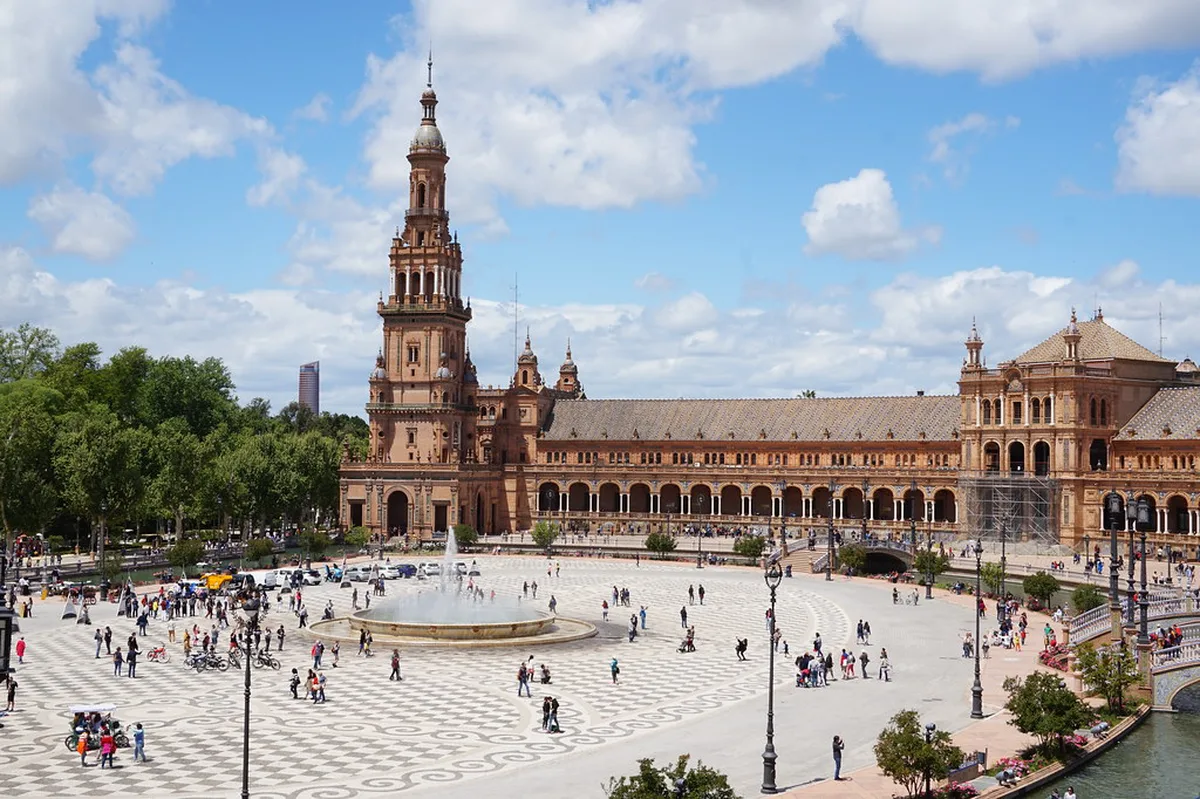
The plaza sits at the edge of Maria Luisa Park, which was donated to the city by the Infanta María Luisa in 1893. The park is lush, shaded, and free to enter, and it contains fountains, pavilions, and a small waterfall near Monte Gurugú that most tourists never find. It is one of the best places in the city to escape the midday heat. Visiting at golden hour, around 20:00 in summer, gives the red brickwork of the plaza a warm amber glow that photographers specifically plan around.
Both the plaza and the park are open at all hours and free to access. The park is about a fifteen-minute walk south from the Cathedral along the Paseo de las Delicias. Cycling along the river path and then cutting through the park is one of the most enjoyable ways to spend a morning in Seville.
The Passionate Art of Flamenco
Flamenco did not originate in a theatre. It emerged from the Gypsy communities of Triana, the neighborhood across the Guadalquivir River, in the 18th and 19th centuries. Triana remains the most historically significant place in the world to see it performed, and the distinction between the two main types of venue matters when you are deciding where to go. A tablao is a commercial venue designed for tourists, with fixed show times, reserved seating, and optional dinner packages. Tickets typically run €25 to €45. The performance is polished and the dancers are professional, but the atmosphere is curated for an audience that may never have seen flamenco before.
A peña flamenca is something entirely different. These are private clubs run by enthusiasts and members, and shows are often unannounced or listed only in local listings. Entry costs little or nothing. The performers and audience interact, the music goes where it wants, and a single song can last twenty minutes if the room demands it. Peñas are harder to find and attend — you typically need a local contact or to walk into a bar in Triana and ask — but the experience is incomparable. If you are in Seville for three or more days, prioritizing at least one evening in Triana is worth doing specifically for this.
The city also has a dedicated Museo del Baile Flamenco near the Santa Cruz district, designed by dancer Cristina Hoyos. Entry is around €10 and the museum explains the history, regional variants, and technique of the art form. It is a good primer before attending a live show. Afternoon shows at tablaos are slightly cheaper and less crowded than evening performances.
Flamenco did not originate in theatres but emerged from Gypsy communities in Triana in the 18th and 19th centuries. A peña flamenca (private club) offers an unscripted, authentic experience where performers and audience interact, unlike the polished commercial tablaos designed for tourists.
Tapas and Andalusian Gastronomy
Seville is serious about food in a way that goes beyond tapas being small portions. The tradition here is social: you order a drink and a plate arrives, or you choose from a chalkboard list of small dishes priced between €2.50 and €5. You stay for one or two rounds and then move on to the next bar. A proper tapas crawl covers four or five bars over two to three hours and costs less than a sit-down dinner in most European cities.
The dishes that define Seville's food identity include espinacas con garbanzos (spinach with chickpeas), salmorejo (a thicker, creamier cousin of gazpacho topped with jamón and boiled egg), and pringá, a slow-cooked meat mixture served on small rolls. Fried fish in the Triana market, sherry from a chilled carafe, and Iberico ham carved at the counter are all worth ordering. Finding the 9 Essential Tips and Spots for the Best Tapas in Seville requires walking away from the cathedral square and into the Alfalfa neighborhood, where local bars outnumber tourist restaurants.
Most traditional bars open for tapas from around 13:00 to 15:30, close for the afternoon, and reopen from 20:00 onwards. Dinner before 21:00 marks you as a tourist. The streets around Calle Mateos Gago and the Mercado de Triana are good starting points, but the best finds are usually on unmarked side streets where the menu is written in chalk and changed daily.
Metropol Parasol (Las Setas)
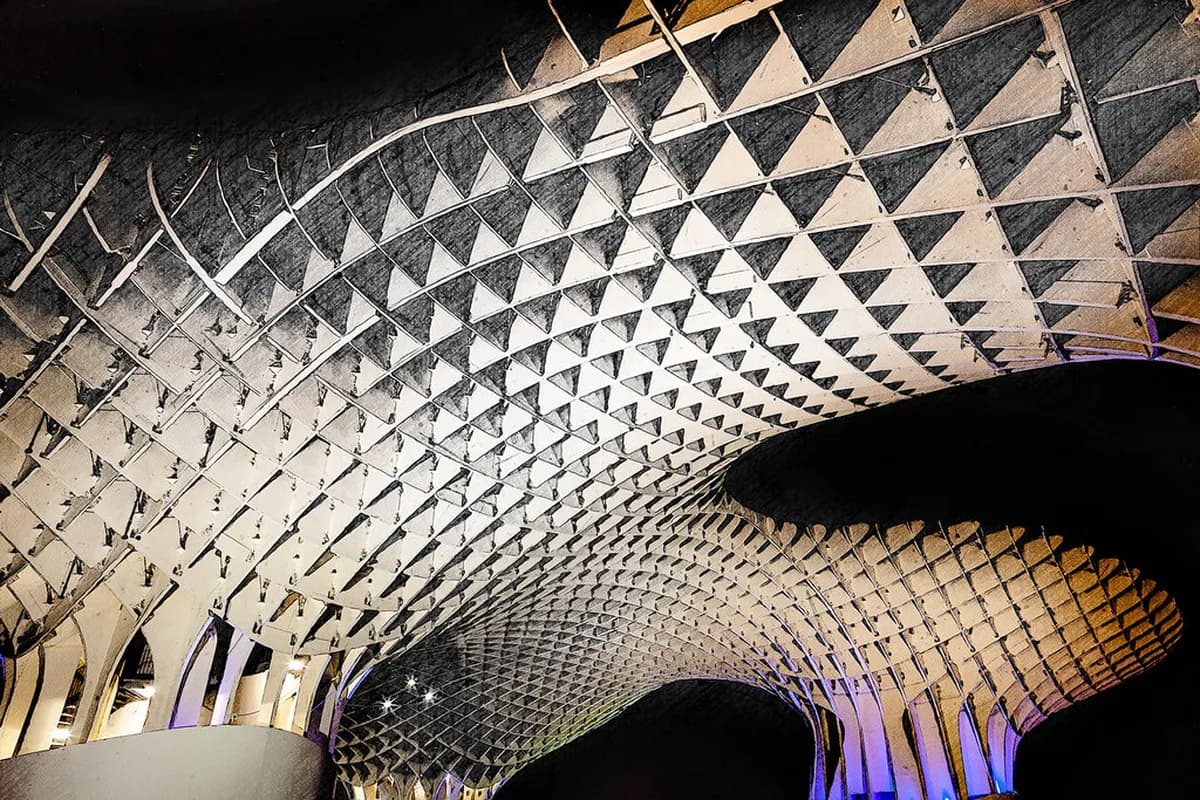
The Metropol Parasol is the city's most polarizing modern structure and one of its most genuinely interesting. Opened in 2011 and designed by German architect Jürgen Mayer, it is the largest wooden structure in the world and sits above a Roman archaeological site that was discovered during construction. The basement level houses the Antiquarium museum, where you can see the remains of a Roman neighborhood preserved in situ.
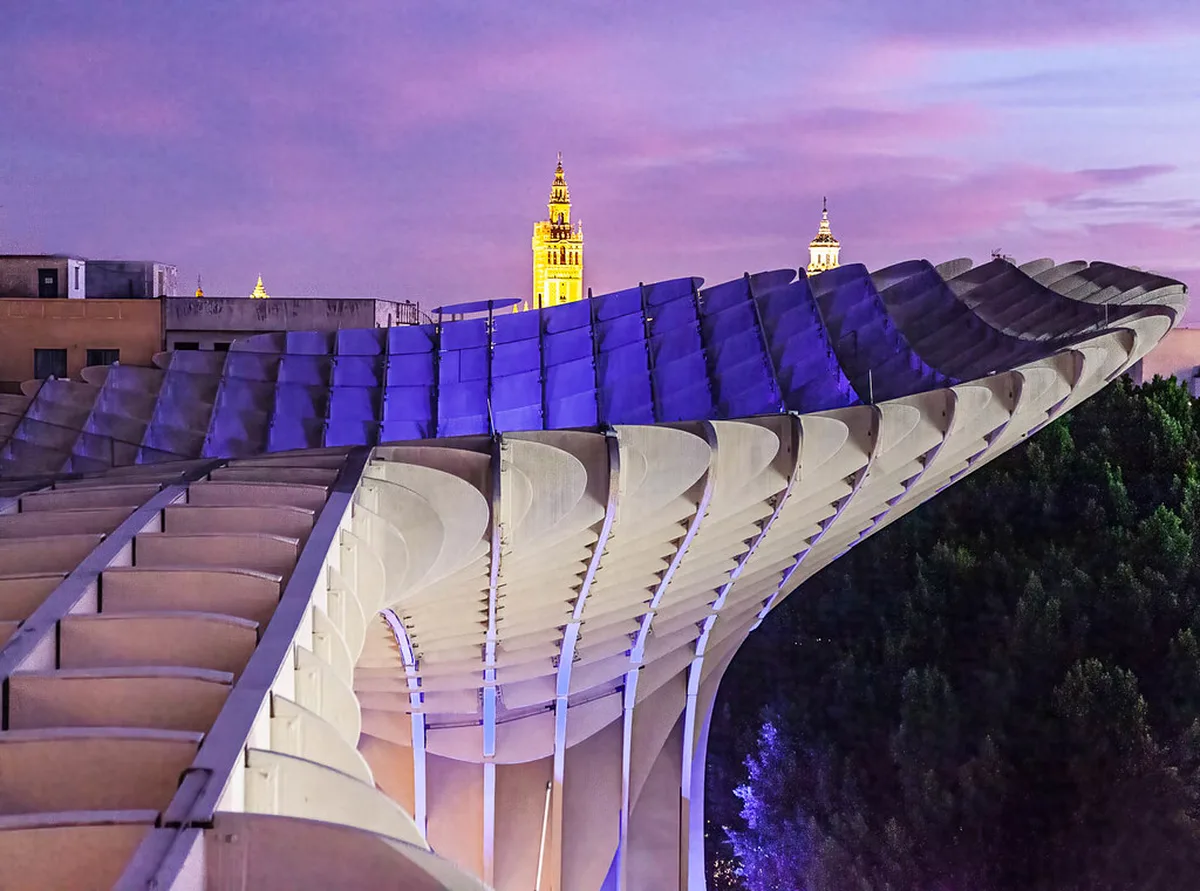
Locals call it Las Setas, meaning the mushrooms, because of its undulating honeycomb canopy. The rooftop walkway winds across the top of the structure and offers some of the best views of the city, including sightlines toward the Giralda, the Alcázar gardens, and the river. Admission to the walkway costs around €5 to €15 depending on the package. The structure is illuminated at night and visiting after dark is a different experience from the daytime — quieter, cooler, and visually striking against the historic skyline.
The plaza below functions as a daily market and social space. Street performers, food stalls, and musicians occupy the ground level most evenings. It is located in the Encarnación neighborhood, about a ten-minute walk north of the Cathedral, and is easily combined with a tapas crawl in the surrounding streets.
Semana Santa and Feria de Abril
Seville hosts two of the most important festivals in Spain, both concentrated in spring and both requiring forward planning if you want accommodation at a reasonable price. Semana Santa, or Holy Week, takes place in the week before Easter and transforms the city into a slow-moving procession. More than 60 brotherhoods carry elaborate floats through the streets, accompanied by marching bands and rows of hooded penitents. The atmosphere is solemn and deeply emotional. Viewing from a side street in Triana gives you an unobstructed view without the crush of the official route.
Feria de Abril follows roughly two weeks after Easter and represents the other face of Seville. The fairground fills with hundreds of casetas, private tents decorated in red and green where families eat, drink, and dance flamenco from noon until dawn. Most casetas belong to families or associations and are not open to the public, but the street outside, the Calle del Infierno, has public rides, fried food, and an atmosphere that extends until 07:00. Wearing a traditional traje de gitana dress is common among women attending; it is not a costume for foreigners but it is not frowned upon either.
Both events fall at different dates each year depending on the Easter calendar. In 2026, Semana Santa runs from 29 March to 5 April, and Feria de Abril begins on 21 April. Hotel prices during these weeks are two to three times the normal rate. Booking accommodation three to four months in advance is not excessive for these periods.
Moorish and Mudejar Architecture
Understanding the difference between Moorish and Mudejar architecture clarifies why Seville looks the way it does. Moorish refers to the architecture built during the period of Islamic rule, which lasted from 711 until 1248 in Seville. The Giralda minaret is the most prominent surviving example. Mudejar is something distinct: it describes the style developed by Muslim craftsmen who remained in Christian-ruled Spain after the Reconquista. They continued using Islamic decorative techniques — geometric tilework, horseshoe arches, carved plaster — but in buildings commissioned by Christian patrons. Most of what visitors see in the Alcázar is Mudejar, not Moorish.
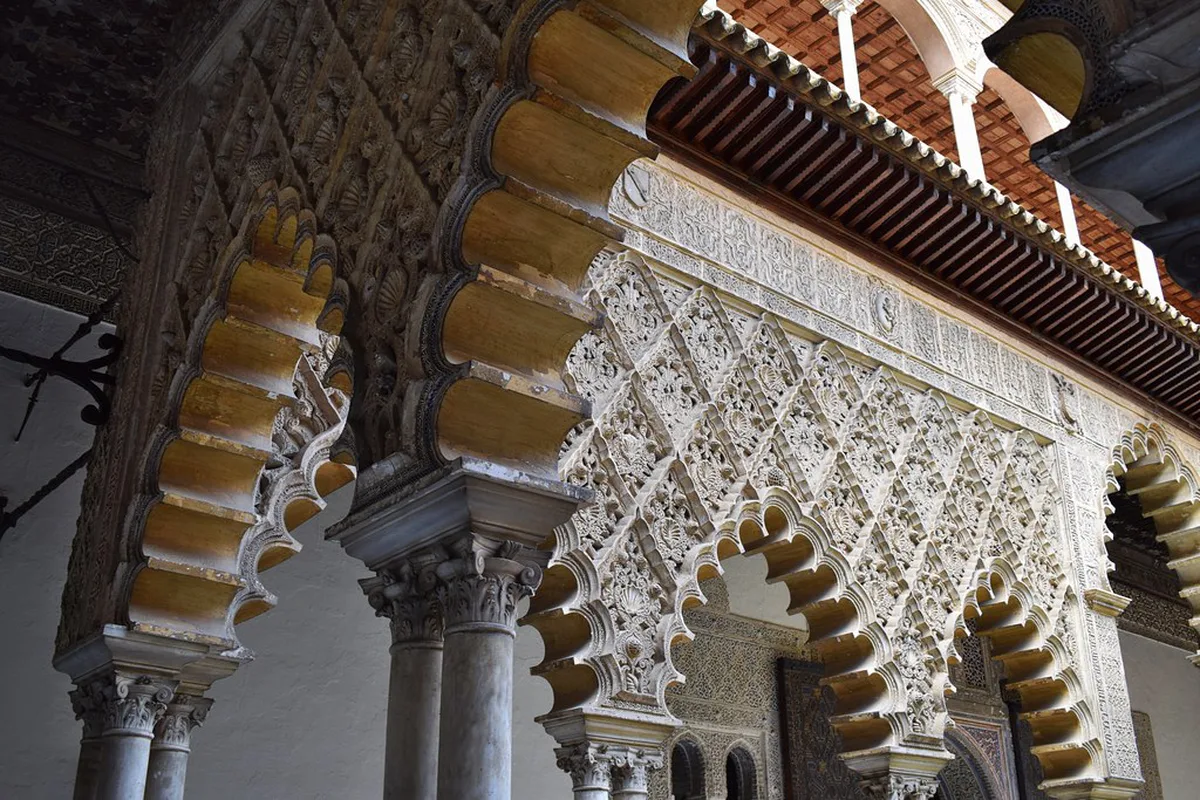
Beyond the Alcázar, the Casa de Pilatos in the San Esteban neighborhood is an exceptional example of Mudejar craftsmanship applied to a private palace. Entry costs around €10 for the ground floor and €12 for the full tour. It receives far fewer visitors than the Alcázar and allows you to study the tilework and carved ceilings at close range without crowds. The nearby Hospital de los Venerables and the Casa de la Contratación (within the Alcázar complex) show how the style evolved across different centuries.
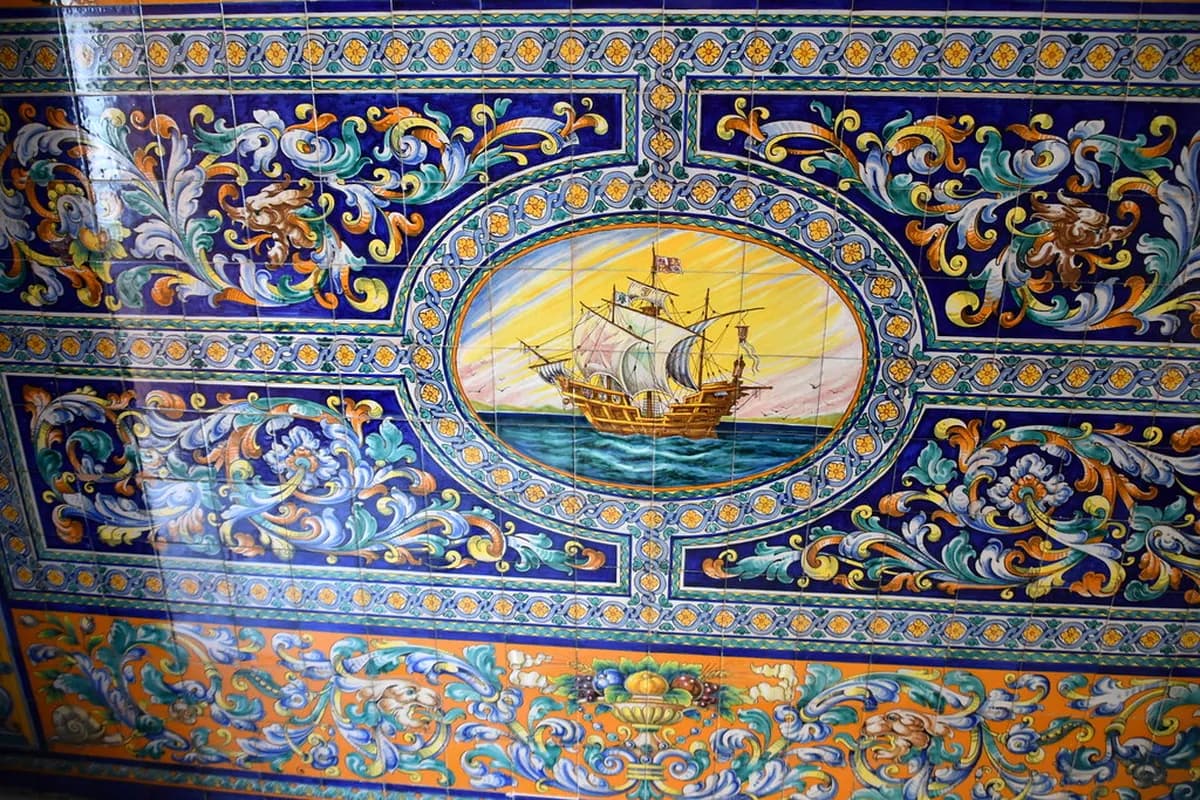
Even the everyday fabric of the city carries this influence. Courtyards with central fountains, azulejo tile panels on street corners, and the decorative window grilles on residential houses all reflect Mudejar design principles that became absorbed into the local vernacular. Walking through the Santa Cruz district with this in mind changes how you read the streets entirely.
The Guadalquivir River and Triana
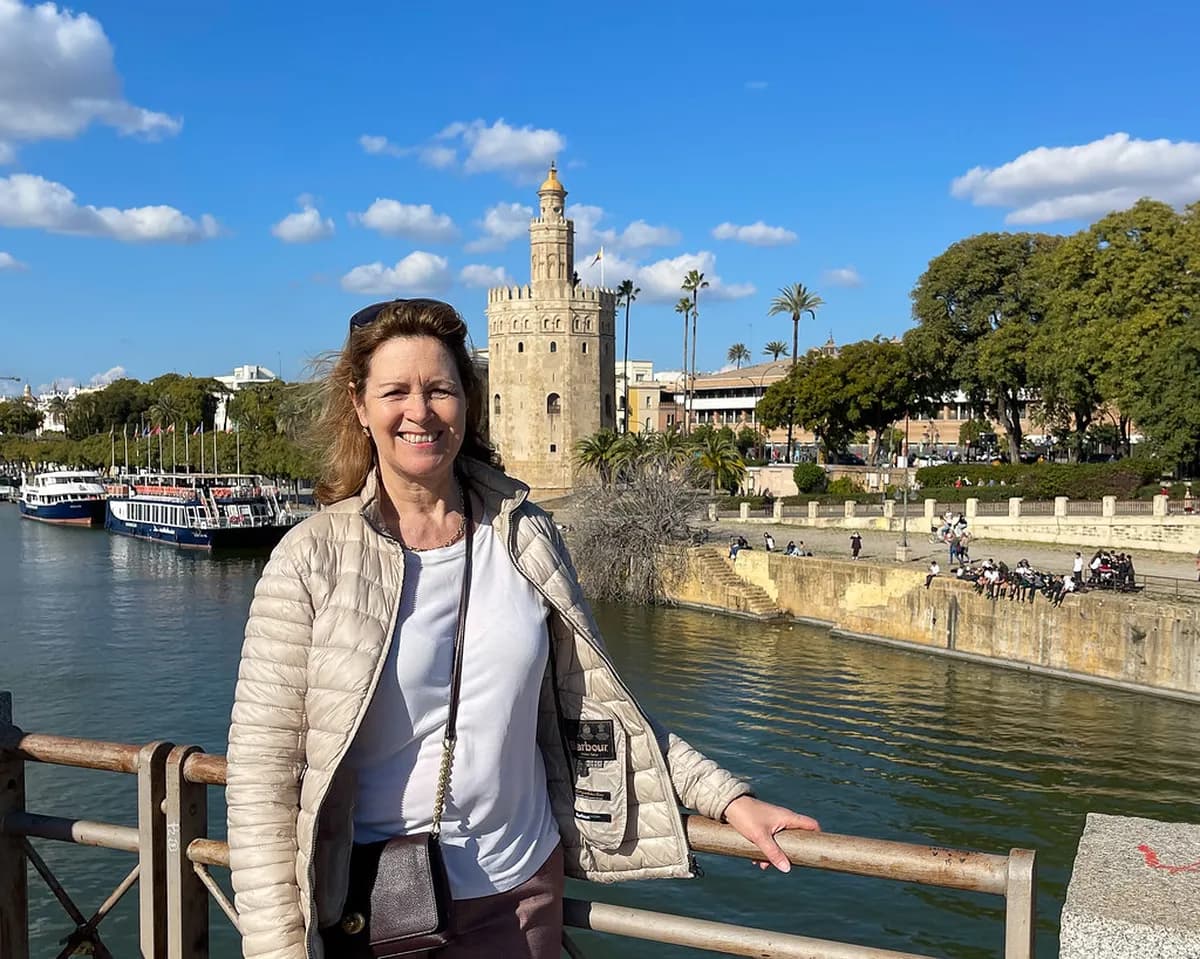
The Guadalquivir was the most important river in Spanish history for over a century. After Columbus's first return in 1493, Seville was the sole authorized port for all trade with the Americas. Every ship carrying gold, silver, and goods from the New World passed through the Torre del Oro checkpoint at the river's edge. The city grew enormously wealthy during this period, and much of what you see today was built on that money. The 13th-century Torre del Oro now houses a small naval museum; the exterior is more interesting than the interior, but the tower's history as a gold-storage checkpoint gives the riverfront a depth most visitors miss.
Triana, the neighborhood on the west bank of the Guadalquivir, has a distinct identity from the rest of Seville. It was historically the home of potters, sailors, and the Roma community who shaped flamenco. The Mercado de Triana is a covered market built on the foundations of the old Castillo de San Jorge, and you can see the excavated castle remains in the basement while shopping for produce. Ceramic workshops line the streets behind the market, and the tiles you see throughout Seville were largely made here.
Walking the Paseo de Cristóbal Colón at sunset, with Triana's pastel facades reflected in the water, is one of the best free experiences in the city. Boat tours depart from near the Torre del Oro and cost approximately €15 for a one-hour cruise. The 10 Best Day Trips from Seville along the river corridor to Italica and Santiponce are also accessible from this part of the city.
The Scent of Orange Blossoms (Azahar)
Seville has over 40,000 orange trees planted along its streets, and for roughly two weeks in late March and early April, they bloom simultaneously. The scent — called azahar in Spanish — is one of the most distinctive sensory markers of the city. It is sweet and slightly medicinal, and on calm evenings when the air is warm, it can be overwhelming in the best possible way. Walking through the historic center during bloom is an experience that photographs and descriptions consistently fail to capture.
The oranges themselves are Seville oranges, a bitter variety not suitable for eating off the tree. The city harvests them each year and sells the peel to English marmalade producers — Seville orange marmalade has been made in the UK since the 18th century. Do not eat the fruit directly from the trees; it is extremely astringent and will ruin your appetite for the tapas you were planning.
The peak bloom window shifts each year based on winter temperatures. In a mild winter, it can arrive as early as mid-March. After a cold winter it sometimes extends into mid-April. If azahar is part of your reason for visiting, checking local weather forecasts for the preceding weeks gives you a better indication than fixed calendar dates. The Maria Luisa Park and the streets immediately surrounding the Cathedral tend to have the densest concentration of trees.
Practical Tips for Visiting Seville's Famous Sites
The most important logistical step before visiting Seville is booking the Royal Alcázar. This is not optional advice — it is the difference between visiting the most famous palace in the city and standing outside it. Tickets go on sale 30 days in advance and popular slots disappear within hours during spring and autumn. Book at the official Real Alcázar website as soon as your dates are set.
The city operates on a schedule that confuses visitors from northern Europe and North America. Lunch runs from 14:00 to 16:00 and is the main meal. Dinner starts at 21:00 and rarely ends before midnight. The hours between 14:00 and 17:00 are for shade, coffee, and rest. Trying to visit the Cathedral, the Alcázar, and the Metropol Parasol in a single morning will exhaust you before the day has properly started.
- Book the Alcázar first, then build your schedule around it.
- Wear closed, flat shoes on cobblestone streets — sandals become painful after an hour in Santa Cruz.
- Carry cash for traditional bars; many in Triana and Alfalfa do not accept cards.
- Avoid July and August unless you specifically want 40°C heat. April, May, October, and November offer the most comfortable conditions.
- The city is walkable but a single taxi ride between neighborhoods costs €5 to €8 and is worth it at midday.
- Public drinking fountains throughout the historic center provide clean, cold water.
For a longer stay, a Santa Cruz neighborhood guide covers the quieter corners of the oldest district that most first-timers walk through without stopping. Three days is the minimum to see the main famous sites properly; five days allows for Triana at night and a day trip to Cordoba or Cadiz without feeling rushed.
Frequently Asked Questions
What is the most famous landmark in Seville?
The Seville Cathedral is the most iconic landmark in the city. It is the largest Gothic church in the world and houses the tomb of Christopher Columbus. Most visitors consider its Giralda bell tower the symbol of Seville.
Is Seville known for its food?
Seville is famous for its tapas culture and traditional Andalusian cuisine. The city is known for specific dishes like Iberico ham, gazpacho, and fried fish. Eating small plates while hopping between historic bars is a local way of life.
What is the best time of year to experience Seville's festivals?
The best time for festivals is during the spring months of March and April. This period includes the solemn Semana Santa processions and the colorful Feria de Abril. These events offer the most authentic look at Sevillian culture.
Seville is a city that lingers in your memory long after you have returned home. From the golden light on the Giralda to the taste of a cold manzanilla sherry, it offers a truly sensory travel experience. By understanding these eleven famous highlights — and what makes each one worth your time — you will navigate the city with more confidence and fewer regrets.
Whether you are here for the history, the food, or the passion of Flamenco, Seville rewards the traveler who plans ahead and moves slowly. Book the Alcázar early, eat late, and find your way to Triana on at least one evening. The city reveals more of itself the longer you stay.
Continue exploring
More guides you'll find useful