Hospital De Los Venerables Visitor Guide Travel Guide
Plan hospital de los venerables visitor guide with top picks, neighborhood context, timing tips, and practical booking advice for a smoother trip.
On this page
Hospital De Los Venerables Visitor Guide
Discover the historic charm of Seville with this essential hospital de los venerables visitor guide. This former residence for venerable priests offers a deep dive into Baroque art and architecture. You will explore stunning courtyards and exquisite artworks within its walls. Prepare for an enriching cultural experience in the heart of the city.
The Hospital de los Venerables stands as a testament to Seville's rich past. It provides a unique glimpse into 17th-century life and artistic grandeur. Our guide helps you navigate this magnificent landmark. Plan your visit to this captivating Spanish treasure with confidence.
Must-See Hospital Attractions
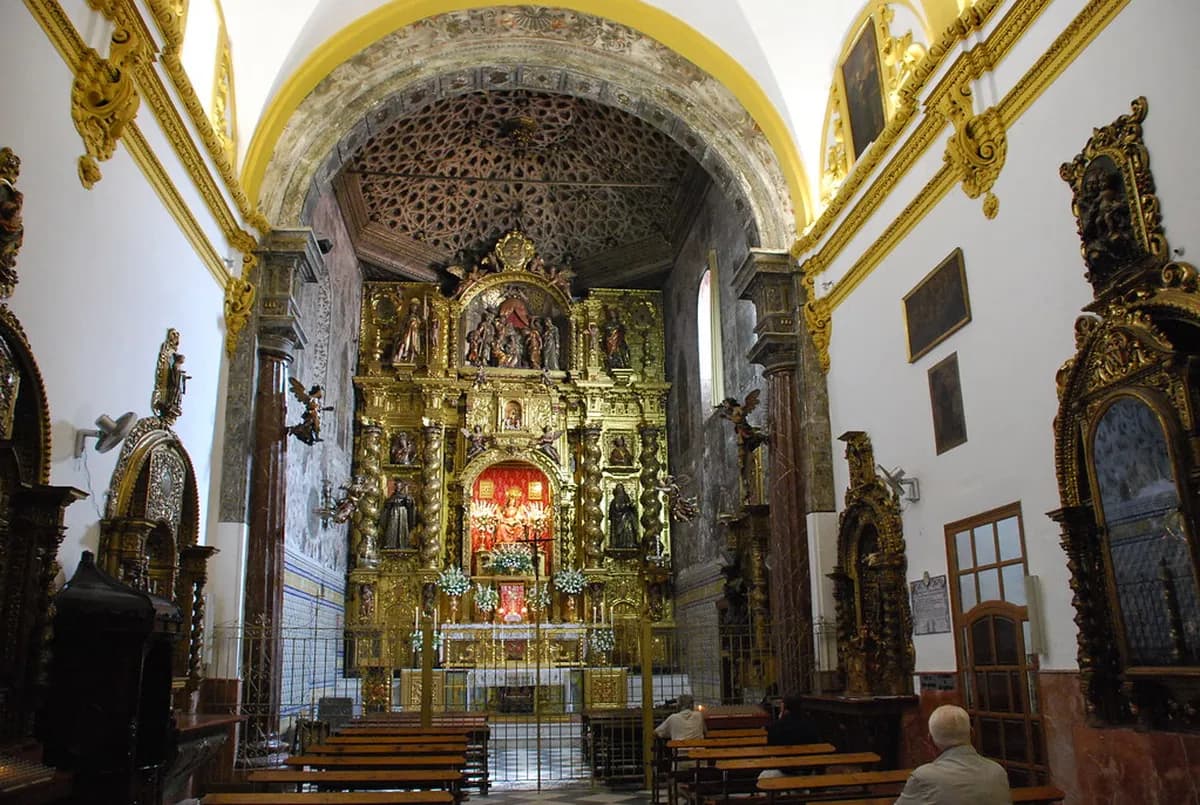
The Hospital de los Venerables packs three distinct highlights into a compact footprint: a single-nave Baroque church, an adjoining sacristy, and a classic Sevillian courtyard. Start in the church, where frescoes by Valdés Leal and his son Lucas Valdés cover the ceiling and walls with scenes that mix saints, allegory, and trompe-l'oeil trickery. The high altar carries Valdés Leal's own rendition of The Last Supper.
Step through to the sacristy next. It's a small room, but the painted ceiling and carved wooden furnishings routinely stop visitors mid-step — photos rarely capture how convincing the illusion of depth is in person.
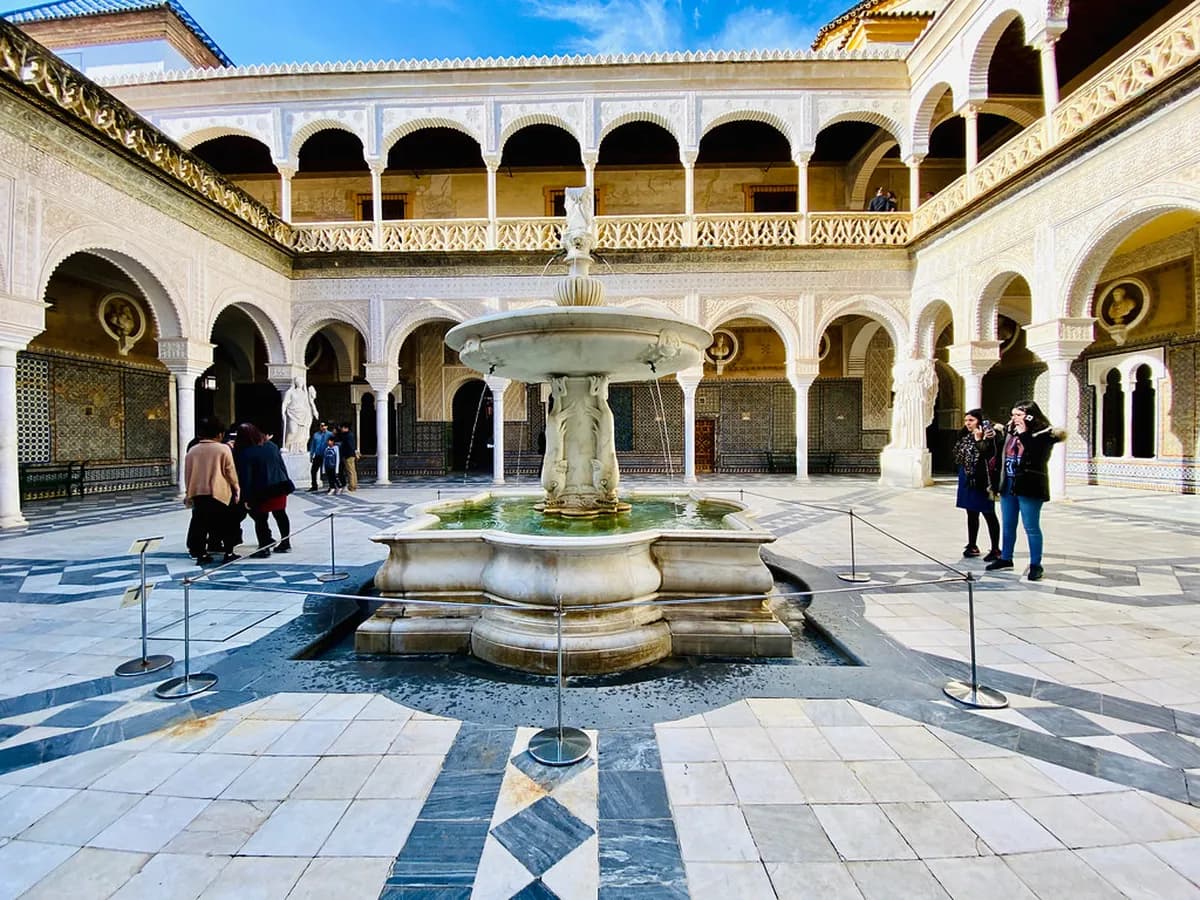
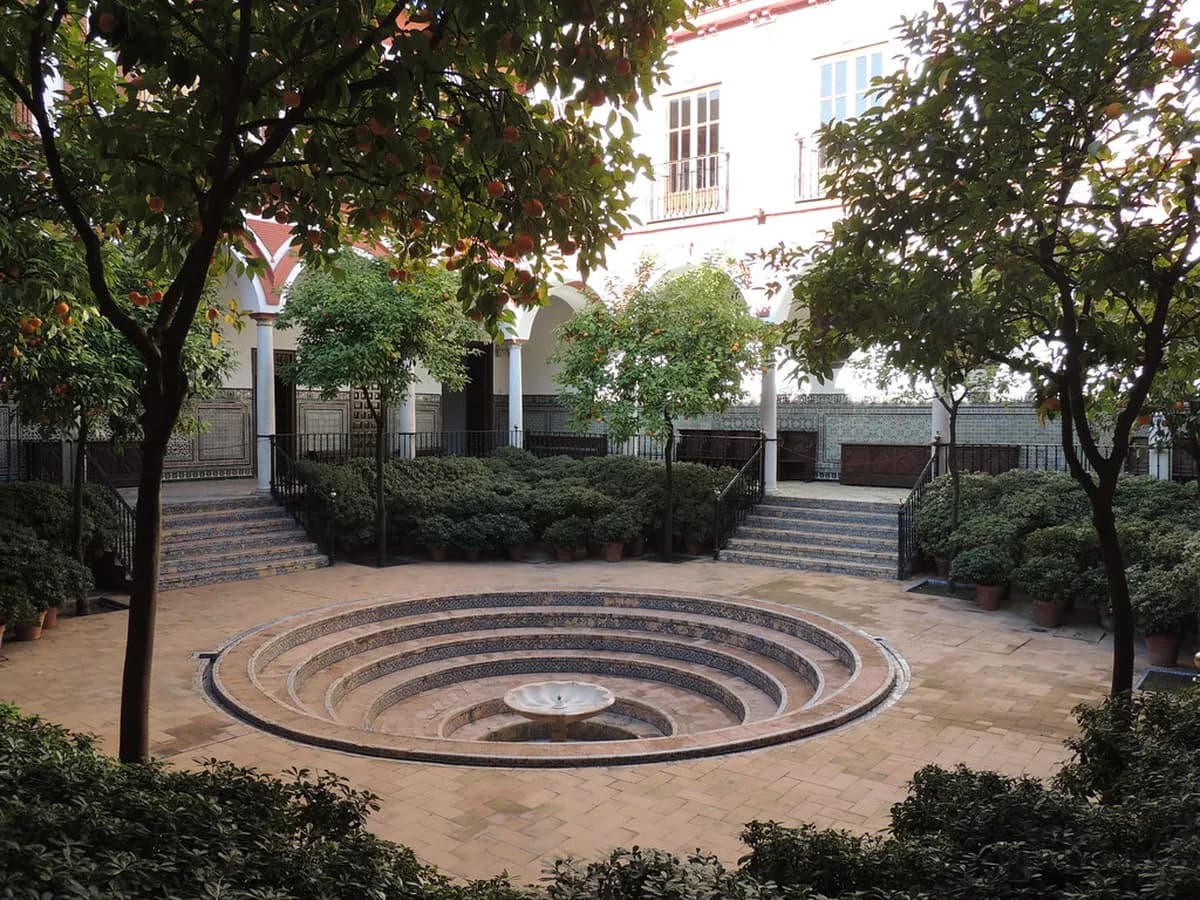
Finish in the central patio, ringed by galleries and anchored by a sunken fountain and Triana-tiled walls. It's the quietest corner of the building and the best spot to sit for a few minutes before moving on to the art galleries.
The sacristy's painted ceiling and carved wooden furnishings create a stunning illusion of depth that photos rarely capture — it's worth pausing here longer than you might expect.
Baroque Church and Hospital of Venerable Priests
The full name, Hospital de los Venerables Sacerdotes, points to its original mission. Its roots trace back to 1627, when the Hermandad del Silencio began sheltering elderly and infirm priests in rented houses around the city. Canon Justino de Neve of Seville Cathedral later championed a purpose-built home, and construction of the building visitors see today ran from 1675 to 1697 under architects Juan Domínguez and Leonardo de Figueroa.
The building didn't stay a hospital without interruption. It briefly operated as a textile factory starting in 1840 before the brotherhood recovered it in 1848 and resumed its charitable purpose, a role it kept until the 1970s.
In 1982 the Hermandad de los Venerables and the Archbishop of Seville transferred the property to the Fundación Focus, which restored the building between 1987 and 1991 and made it their headquarters — a role now held by Fundación Focus-Loyola. That restoration is why the church, sacristy, and courtyard still look as sharp as they do, more than three centuries after construction began.
Museums, Art, and Culture in Hospital
Beyond the church, the Hospital houses the Centro Velázquez, a permanent space dedicated to Seville-born painter Diego Velázquez, shown alongside contemporaries including Murillo and Zurbarán. It's a compact collection rather than a sprawling museum, which makes it realistic to see everything without gallery fatigue.
A second gallery holds the Focus-Abengoa Contemporary Art Collection, featuring 20th- and 21st-century Andalusian artists such as Carmen Laffón, Ramón Gaya, and Luis Gordillo — a deliberate contrast to the Baroque church a few steps away.
Temporary exhibitions rotate through the former hospital rooms throughout the year, so check the official listings before you go if a specific show matters to your trip. For a broader survey of the same Golden Age Sevillian painters at much larger scale, follow up with the Museo de Bellas Artes de Sevilla.
Tickets, Hours, and Accessibility
The Hospital is open Monday to Saturday from 10:00 to 19:00, and Sundays from 10:00 to 15:00, with last entry one hour before closing. General admission is €12. A reduced rate of €10 applies to seniors 65 and over, visitors aged 13-18, students up to age 25, Seville residents, and visitors with 33-64% disability; groups of 15-20 people pay €6 per person. Entry is free for children under 12 and for visitors with 65% disability or higher.
Standard admission includes an audio guide, and a dedicated children's audio guide is available for family visits, which makes the church and Centro Velázquez easier to follow for younger visitors than a straight adult tour.
The building has a lift, so travelers using wheelchairs or pushing strollers can reach the upper church galleries and the Centro Velázquez without needing to skip sections. Book tickets online in 2026 if you're visiting during Holy Week or a peak summer weekend — the courtyard and church are small enough that timed slots can sell out by mid-morning. For the latest updates, check the official Focus-Loyola site or Spain.info.
General admission of €12 includes a standard audio guide, and a dedicated children's audio guide is available free for family visits, making the church and Centro Velázquez easier to follow for younger visitors.
| Visitor Category | Price |
|---|---|
| General admission | €12 |
| Seniors (65+), ages 13–18, students up to 25, Seville residents, 33–64% disability | €10 |
| Groups of 15–20 people | €6 per person |
| Children under 12, 65%+ disability | Free |
Family-Friendly and Budget-Friendly Options in Hospital
Families get a real discount here, not just a token one: kids under 12 enter free, and the children's audio guide keeps the visit from feeling like a lecture. The courtyard and its fountain also give younger visitors somewhere to burn a few minutes of energy between gallery rooms.
Students up to 25, Seville residents, and seniors all qualify for the €10 reduced rate, and groups of 15-20 pay just €6 per person — worth organizing if you're traveling with an extended family or a small tour group.
Pair the visit with the free Santa Cruz Quarter itself: wandering its narrow lanes and hidden plazas costs nothing and fills out a half-day around the Hospital without adding to your budget. A stop at the Hospital de la Caridad nearby extends the same theme at a similar price point.
How to Plan a Smooth Hospital Attractions Day
Budget 1.5 to 2 hours for the church, sacristy, courtyard, and both art galleries — longer if a temporary exhibition is running. Arriving right at 10:00 on a weekday is the most reliable way to have the courtyard largely to yourself; by early afternoon, tour groups moving between the Cathedral and the Alcázar tend to fill the small rooms.
The Hospital sits inside the Santa Cruz Quarter, an easy walk from most central hotels and just a few minutes from the Seville Cathedral and Real Alcázar, so it slots naturally into a single-morning loop with either or both.
Wear shoes you can keep walking in afterward — Santa Cruz's streets are cobbled and uneven — and carry water in the warmer months, since the courtyard is the only shaded outdoor stop on the route.
Visit Los Venerables in Seville
For most travelers, the Hospital de los Venerables earns its spot on a Seville itinerary through scale: it delivers a full Baroque church, a serious art collection, and a genuine 17th-century courtyard in under two hours, without the queues that build up at the Cathedral or Alcázar.
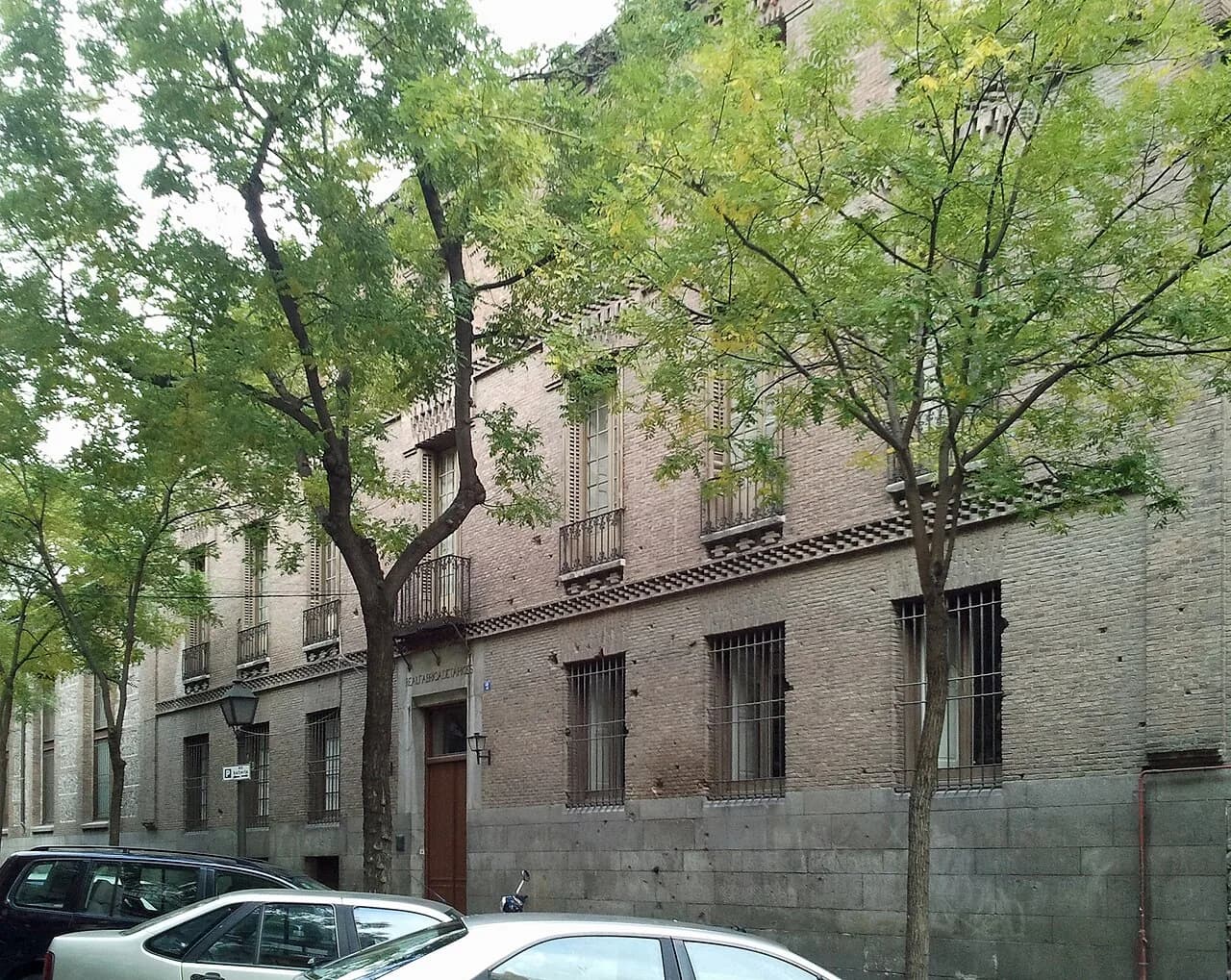
Its address — Plaza de los Venerables, nº 8 — sits at the quiet heart of Santa Cruz, a few short turns off the busier routes tour groups follow between the Cathedral and the river.
If you're building a longer Seville stay, this is one of the easiest half-day inserts to plan around meals or shopping in the surrounding quarter. See our full Seville travel guide for how it fits alongside the city's bigger sights.
Hospital de los Venerables vs. Hospital de la Caridad: Don't Book the Wrong One
First-time visitors regularly confuse the Hospital de los Venerables with the Hospital de la Caridad, and it's an easy mistake to make — both are 17th-century former hospitals converted into Baroque art museums, both hold works tied to the Valdés and Murillo circle, and both sit within walking distance of the Cathedral. They're run by entirely separate institutions, though, with separate tickets, separate hours, and no combined pass between them.
The Hospital de los Venerables sits inside Santa Cruz, closer to the Cathedral and Alcázar. The Hospital de la Caridad is closer to the river and the Maestranza bullring, run by the Hermandad de la Santa Caridad rather than Fundación Focus-Loyola, and its Murillo paintings hang in a different setting entirely.
If your plan is a single Baroque-art stop, either one works well on its own. If you have time for both, treat them as two separate half-hour-to-hour visits rather than one combined outing — nothing at the ticket counter of one applies to the other.
LOCATION 60 | Gateway to the Americas: A Walking Tour Through Seville’s Golden Age
The Hospital de los Venerables sits inside a district built on Seville's 16th- and 17th-century monopoly on trade with the Americas. From 1503 the Casa de Contratación gave Seville exclusive rights to New World commerce, and the wealth that trade generated funded the grand Baroque buildings — this hospital included — that still define the old city.
Several self-guided and app-based walking tours built around this "Gateway to the Americas" theme route through Santa Cruz and stop specifically at the Hospital de los Venerables, using it as an example of how charitable institutions were funded by colonial-era trade wealth.
A guided or audio-narrated version of this route adds context you won't get from signage alone — worth booking if the economic history behind Seville's Baroque boom interests you as much as the art itself. For a self-paced audio option, see Voicemap.me.
La Esperanza de Triana, one of the most revered Lady of Sorrows in Seville
Seville's devotion to Holy Week imagery runs through the same Baroque tradition that shaped the Hospital de los Venerables. La Esperanza de Triana, one of the city's most revered Lady of Sorrows figures, processes from her home church across the river during the Madrugá — the early hours of Good Friday, typically leaving around 1:00 am and returning well past dawn.
The Hospital's own Baroque church, with its frescoes and altarpiece devoted to suffering and redemption, comes from the same artistic and religious current that produced imagery like La Esperanza. Seeing both — the Hospital's static art and a procession's live devotion — gives a fuller picture of how central this imagery remains to the city.
If your visit doesn't line up with Holy Week itself, the Hospital's church is the closest year-round substitute for experiencing that same Baroque religious intensity up close.
BOOK YOUR ACTIVITY AND LIVE A UNIQUE EXPERIENCE
Standard admission already includes an audio guide, plus a children's version for family visits, and some ticket options add a 360° VR experience of spaces not always open for regular walk-through access. Audio guides typically run in several languages, so confirm yours is offered before buying online.
Guided tours add historical framing the audio guide alone doesn't cover, especially around the building's transformation from priests' hospice to fabric factory to museum. Combined tickets pairing the Hospital with other Santa Cruz sights can simplify planning and cut per-stop cost — check Tripadvisor.com for current reviewed operators, and book only through official or established platforms.
The Hospital also hosts occasional flamenco performances and classical concerts inside the church and courtyard. These sell out faster than general admission, so check the official events calendar a few weeks ahead if you want to catch one during your 2026 trip.
Frequently Asked Questions
Where is the Hospital de los Venerables located in Seville?
The Hospital de los Venerables is situated in the heart of Seville's historic Santa Cruz Quarter. You can find it near the famous Seville Cathedral and the Real Alcázar. Its central location makes it easily accessible on foot from many city center hotels. This charming neighborhood is perfect for exploring before or after your visit.
How much time should you plan for a Hospital de los Venerables visitor guide?
Most visitors find 1.5 to 2 hours sufficient to explore the Hospital de los Venerables thoroughly. This allows time to appreciate the church, art collection, and serene central courtyard. If you attend a special exhibition or cultural event, allocate extra time. Planning for this duration ensures a relaxed and complete experience.
What is there to see in the Hospital de los Venerables?
Visitors can explore a stunning Baroque church with frescoes and an ornate altarpiece. The hospital also features an impressive art collection by Sevillian masters like Valdés Leal. Do not miss the beautiful central courtyard with its fountain and orange trees. It is a true architectural and artistic gem in Seville. Consider exploring more attractions in Seville.
How does the Hospital de los Venerables compare to other cultural centers like CaixaForum Sevilla?
The Hospital de los Venerables offers a deep dive into Baroque art and 17th-century history. CaixaForum Sevilla, however, provides a modern art and cultural experience with diverse contemporary exhibitions. Choose the Hospital for historical immersion and classical art. Opt for CaixaForum if you prefer modern art and varied cultural events. Both offer unique perspectives on Seville's rich cultural scene.
The Hospital de los Venerables packs three centuries of Baroque history, art, and charitable purpose into a single, walkable stop in Santa Cruz. Between the church frescoes, the Centro Velázquez, and the quiet courtyard, most visitors leave surprised at how much sits behind such an understated street entrance.
Build it into a Seville itinerary alongside the Cathedral, Alcázar, and a short Santa Cruz wander, and budget the 1.5 to 2 hours it deserves rather than rushing through on the way to somewhere else. In 2026, that combination remains one of the most efficient half-days the old city has to offer.
For the latest official information, see the Hospital de los Venerables official site, Hospital de los Venerables official site and Hospital de los Venerables on Wikipedia.
For more Seville planning, read our 10 Essential Tips for a 3-Day Seville Itinerary guide.
Continue exploring
More guides you'll find useful