Hospital de la Caridad Guide: History, Art & Tips
Plan your visit to Seville's Hospital de la Caridad with our comprehensive guide. Discover its rich history, stunning Baroque art, and essential visitor information.
On this page
Hospital de la Caridad Visitor Guide: History, Art & Planning Your Visit
Discovering Seville's rich history often leads to hidden gems like the Hospital de la Caridad. This former charity hospital offers a unique glimpse into the city's past. It stands as a profound testament to compassion and artistic expression.
Our comprehensive hospital de la caridad visitor guide helps you plan your journey. You will explore its stunning Baroque art and fascinating heritage. Prepare for an enriching experience in the heart of Andalusia.
This guide provides practical tips and insights for your visit. Learn about its founder, Miguel Mañara, and the impactful art within its walls. Get ready to uncover a truly special part of Seville.
The Story of Miguel Mañara and the Brotherhood of Charity
The Hospital de la Caridad owes its existence to Miguel Mañara, a Sevillian nobleman born in 1627 into a family whose fortune came from trade with the Indies. His early life was marked by extravagance, duels, and a reputation as one of the city's most notorious libertines, until the death of his wife in 1661 triggered a complete spiritual conversion.
Mañara joined the Hermandad de la Santa Caridad (Brotherhood of the Holy Charity) that same year and quickly rose to become its Hermano Mayor, or Elder Brother. He rebuilt the brotherhood's modest hospital into the sanctuary visitors see today, personally overseeing the architecture, commissioning the artwork, and drafting the rules that still guide the institution.
The Brotherhood's mission drew on the Baroque idea of the "Good Death" — that confronting mortality honestly was the surest path to a compassionate life. Members personally buried unclaimed bodies from Seville's streets and gallows, a practice referenced throughout the church's art even though the brotherhood's modern work now centers on caring for the elderly and infirm.
Mañara's turn from rake to reformer later fed Spanish literary legend: several 19th-century writers floated him as a possible inspiration for the Don Juan myth, a claim historians treat as folklore but one Seville's guides still enjoy retelling. The man buried beneath the church's threshold, his tomb marked with an epitaph asking to be trodden on by all who enter, remains the emotional center of any visit in 2026.
Art and Architecture: A Spiritual Journey Through Baroque Seville
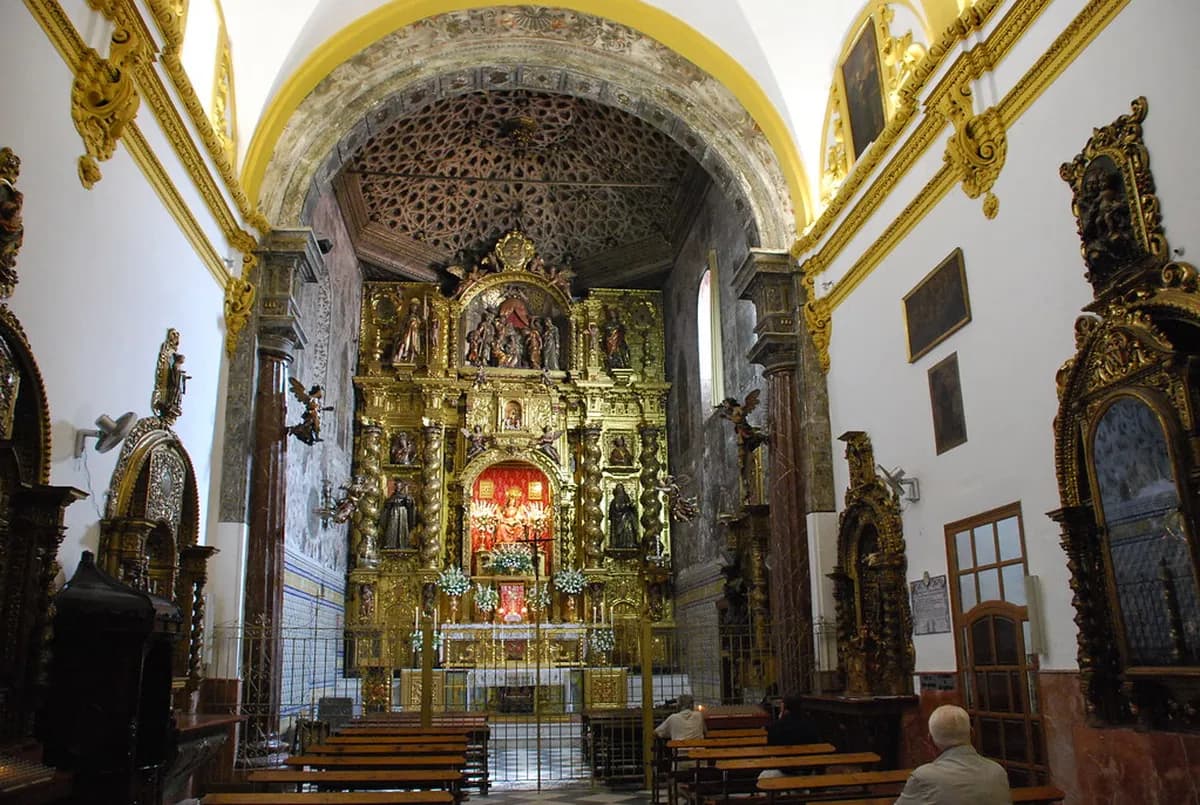
The Hospital de la Caridad is a masterpiece of Seville's Baroque period. Its church, the Iglesia de San Jorge, houses an extraordinary collection of art commissioned specifically to reflect the Brotherhood's charitable mission, not simply to decorate a religious space.
The architecture showcases the grandeur and emotional intensity typical of Baroque design in Andalusia. Intricate carvings, gilded retablos, and rich decoration adorn an interior built to move the visitor toward reflection rather than admiration alone.
Murillo and Juan de Valdés Leal contributed the major paintings, powerfully depicting themes of charity, death, and salvation. Fewer visitors know that during the Napoleonic occupation of Seville (1810–1812), Marshal Soult's troops looted several of Murillo's canvases from this church; not all were returned, and paintings created for this space now hang in museums as far away as London and Washington, D.C. — making the pieces still in place feel considerably rarer.
Pedro Roldán's sculptural altarpiece, depicting the Burial of Christ, is also a highlight. The art here is not decorative filler; it is integral to the hospital's identity, telling a story of compassion and human fragility that the paintings and sculpture were designed to reinforce together.
Planning Your Visit to Hospital de la Caridad
The Hospital de la Caridad sits in the Arenal district at Calle Temprado, 3, 41001 Sevilla, close to the Guadalquivir riverfront and the Plaza de Toros de la Real Maestranza. It is a five- to ten-minute walk from the Cathedral, easy to fold into a walk through Seville's historic center. City bus routes along Paseo Colón stop nearby, and taxis or ride-hailing apps drop off directly on Calle Temprado.
The church and hospital are open Monday to Friday from 10:30 to 19:00 and Saturday to Sunday from 14:00 to 19:00, with last entry 30 minutes before closing. There is no midday closure on weekdays, unlike many other Seville monuments, so a late-morning or early-afternoon visit works well. Weekends open later, which is worth building into any itinerary that also includes Mass at the Cathedral. For any seasonal changes, check Turismosevilla.org.
Standard admission with an included audioguide is €8. Reduced rates apply for visitors under 18 (€2.50), seniors (€5), and groups of 10 or more (€5 per person), and children under 7 enter free. One detail few guides mention: entry is free every Sunday from 16:30 to 18:30 — arrive right as the window opens, since space fills fast, and note the free slot skips the audioguide. Confirm current pricing on an official source like Spain.info before you travel.
Free entry every Sunday from 16:30 to 18:30 — arrive right as the window opens, as space fills fast. The free slot skips the audioguide.
| Tour Option | Price | Notes |
|---|---|---|
| Standard entry with audioguide | €8 | Self-paced |
| Guided tour with upper gallery access | €15 | Advance booking required |
| Gregorian chant tour | €20 | Timed to liturgy; advance booking required |
For smaller crowds, visit right after opening on a weekday morning or in the last hour before closing; tour-group buses tend to arrive mid-morning. The ground-floor church, courtyard, and main galleries are wheelchair accessible via a level entrance, but the upper gallery on the guided tour involves a staircase with no lift — call ahead if you have mobility needs.
What to Expect Inside: Highlights and Must-See Masterpieces
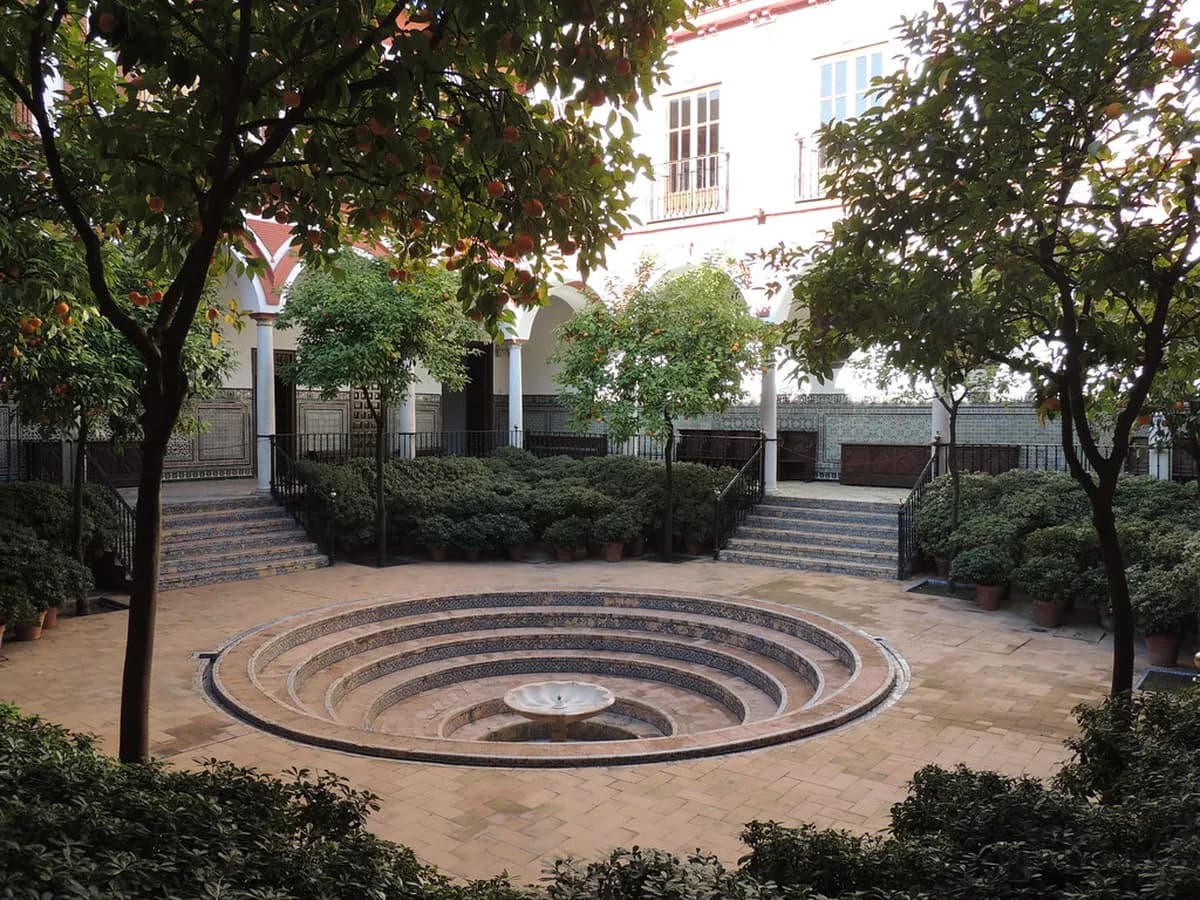
Upon entering, visitors are immediately struck by the serene central courtyard. This elegant space features a fountain and vibrant orange trees, providing a peaceful transition before you step into the hospital's spiritual core.
The main attraction is the church, home to an unparalleled collection of Baroque art. The grand altarpiece, carved by Pedro Roldán, depicts the Burial of Christ with a dramatic realism that anchors the whole nave.
Among the Murillo canvases still on site, look for "The Miracle of the Loaves and Fishes" and "Saint John of God Carrying a Sick Man," both commissioned in 1668 and painted directly for this church. Their warm, luminous style contrasts deliberately with the darker allegories nearby.
Juan de Valdés Leal's two vanitas paintings, "In Ictu Oculi" and "Finis Gloriae Mundi" (1670–1672), are profoundly impactful, showing a decaying bishop and cardinal alongside the tools of death. Together this "Hieroglyphs of Life's End" diptych is often cited as one of the most confrontational works in Spanish Baroque art, and it remains the piece visitors talk about most on the way out.
Visitor Reviews and Essential Tips for a Memorable Experience
Visitors frequently praise the hospital for its peaceful atmosphere and concentrated art collection, often describing it as a tranquil counterpoint to the busier Cathedral and Real Alcázar nearby.
To fully appreciate the art and history, allocate at least 1.5 to 2 hours. That is enough time to read the church slowly, sit in the courtyard, and follow the audioguide without rushing past the smaller side chapels.
The most common mistake is treating the hospital as a five-minute add-on between the Cathedral and the bullring. The collection is small but dense, so rushing undercuts the point — plan it as its own stop, not a footnote to a bigger sight.
Photography is generally allowed, but flash is prohibited to protect the paintings, and visitors should stay quiet near the working chapel areas, since parts of the building remain an active care institution for the elderly, not only a museum.
Flash photography is prohibited to protect the paintings. The upper gallery and working chapel areas are an active care facility—please keep noise to a minimum.
Guided Tours and Audio Guides: Enhancing Your Visit
The included audioguide is the easiest way to enrich a standard visit. It explains the artworks and historical context room by room, catching details — like the symbolism in the Valdés Leal diptych — that are easy to miss on your own.
For deeper access, two upgraded options are worth booking ahead: a guided tour adding entry to the upper gallery costs €15, and a Gregorian chant tour, timed to the brotherhood's liturgical singing, costs €20. Both need advance reservation since capacity is limited.
Independent local guides, often booked through Seville walking-tour operators, run roughly one-hour private visits focused on Mañara's biography and the art's symbolism — useful if you want a narrative thread rather than a room-by-room description. Book any guided add-on a day or two ahead in peak season, since upper-gallery slots sell out first.
Nearby Attractions: Combining Hospital de la Caridad with Your Seville Itinerary
The Hospital de la Caridad's modest scale (1.5–2 hours) makes it easy to slot into a fuller day without dominating your schedule. Yes, it is worth including even on a short one- or two-day Seville itinerary — it delivers a concentrated art-and-history experience larger sights can't match in the same amount of time.
A practical half-day plan: start at the Museo de Bellas Artes de Sevilla for a broader survey of Spanish art, then walk roughly 20 minutes south to the Hospital de la Caridad for a focused, single-site deep dive before lunch in the Arenal district.
Alternatively, pair the visit with the nearby Barrio de Santa Cruz for a leisurely stroll through narrow streets and courtyard patios, or continue on to the Hospital de los Venerables, another historic charitable institution with its own art collection and a useful point of comparison.
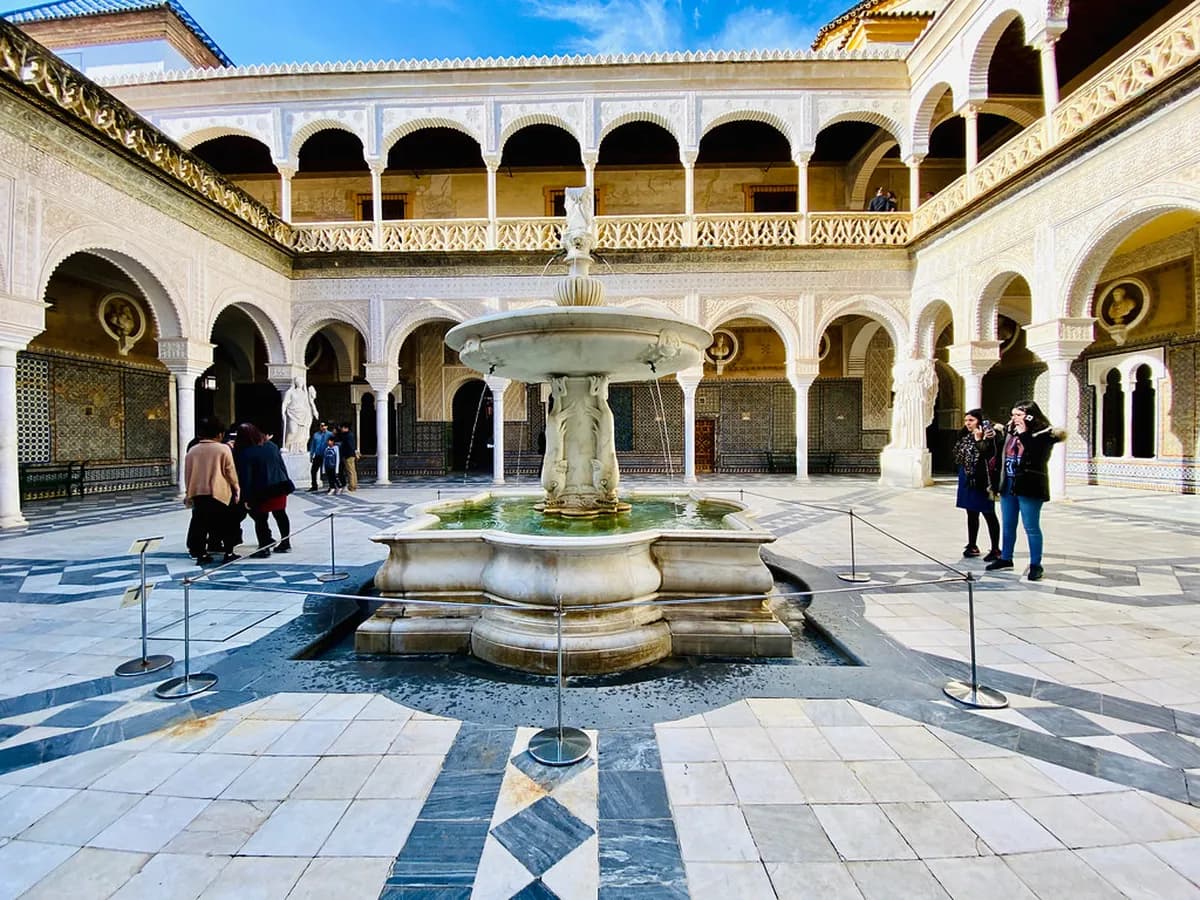
Other notable sites within a short walk include the Casa de Pilatos and the Palacio de las Dueñas. Both offer stunning architecture and gardens, and combining any two or three of these sites in one day gives a comprehensive look at Seville's aristocratic and philanthropic heritage.
Frequently Asked Questions
Where is Hospital de la Caridad located in Seville?
Hospital de la Caridad is located at Calle Temprado, 3, in the heart of Seville's historic Arenal district. It is easily accessible by walking from many central points. You can also take public transport or a taxi.
How much time should you plan for a visit to Hospital de la Caridad?
Most visitors recommend allocating 1.5 to 2 hours for a thorough visit to Hospital de la Caridad. This allows ample time to appreciate the church, its art, and the peaceful courtyards. You can explore the historical context at a comfortable pace.
What art can be seen at Hospital de la Caridad?
Hospital de la Caridad features significant Baroque artworks by renowned Spanish masters. You can see six paintings by Murillo, including 'The Return of the Prodigal Son.' There are also powerful allegories by Valdés Leal and a grand altarpiece by Pedro Roldán. These pieces reflect themes of charity and mortality.
Are guided tours available for Hospital de la Caridad?
Yes, audio guides are typically available for rent at Hospital de la Caridad to enhance your experience. Private guided tours focusing on the hospital's history and art can also be arranged through local tour operators in Seville. These provide deeper insights.
What are the opening hours for Hospital de la Caridad?
Opening hours for Hospital de la Caridad generally run from morning to early evening, with a break at midday. However, times can change seasonally or for special events. It is always best to check the most current schedule on an official Seville tourism website before planning your visit.
Other Charities With a Complete Picture Cycle
Miguel de Mañara commissioned Murillo and Valdés Leal to paint mercy and mortality for a hospital that still houses the elderly, and the programme only works in place. Naples's Pio Monte della Misericordia did the same with Caravaggio and has never moved the picture. Venice's Scuola Grande di San Rocco gave Tintoretto the whole building and more than twenty years.
Visiting the Hospital de la Caridad offers more than just a glimpse into art and history. It provides a moving experience of enduring human compassion. This site stands as a powerful symbol of Seville's philanthropic spirit.
Use this hospital de la caridad visitor guide to ensure a smooth and insightful trip. Take time to absorb the profound beauty and historical significance within its walls. You will leave with a deeper appreciation for this unique institution.
Plan your visit carefully to make the most of your time in this remarkable place. The Hospital de la Caridad truly embodies the heart and soul of old Seville. It promises an unforgettable cultural journey.
For the latest official information, see the Hospital de la Caridad official site and Hospital de la Caridad on Wikipedia.
For more Seville planning, read our things to do in Seville guide.
Continue exploring
More guides you'll find useful