Mucha Museum Visitor Guide: 100 Works, Ivan Lendl's Collection
See nearly 100 original Mucha works in the 18th-century Kaunický Palace, once Ivan Lendl's private collection, 5 minutes from Wenceslas Square.
On this page
Mucha Museum Visitor Guide
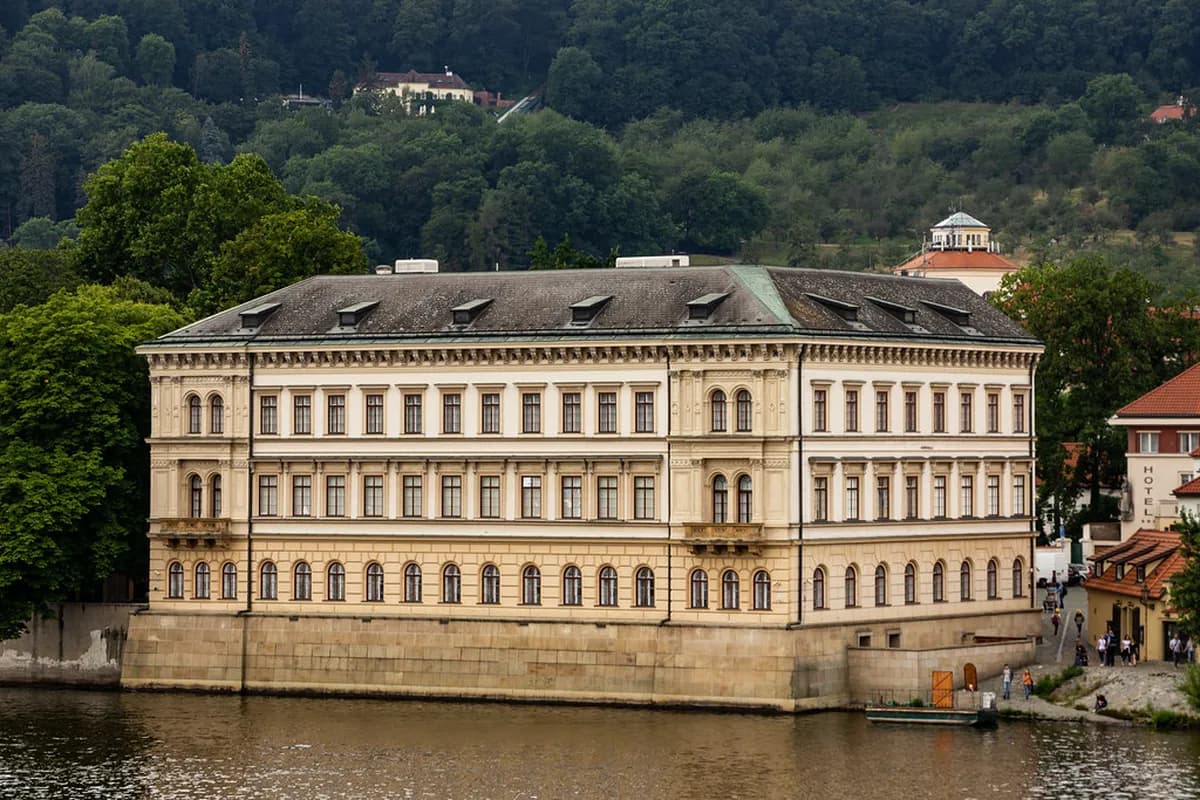
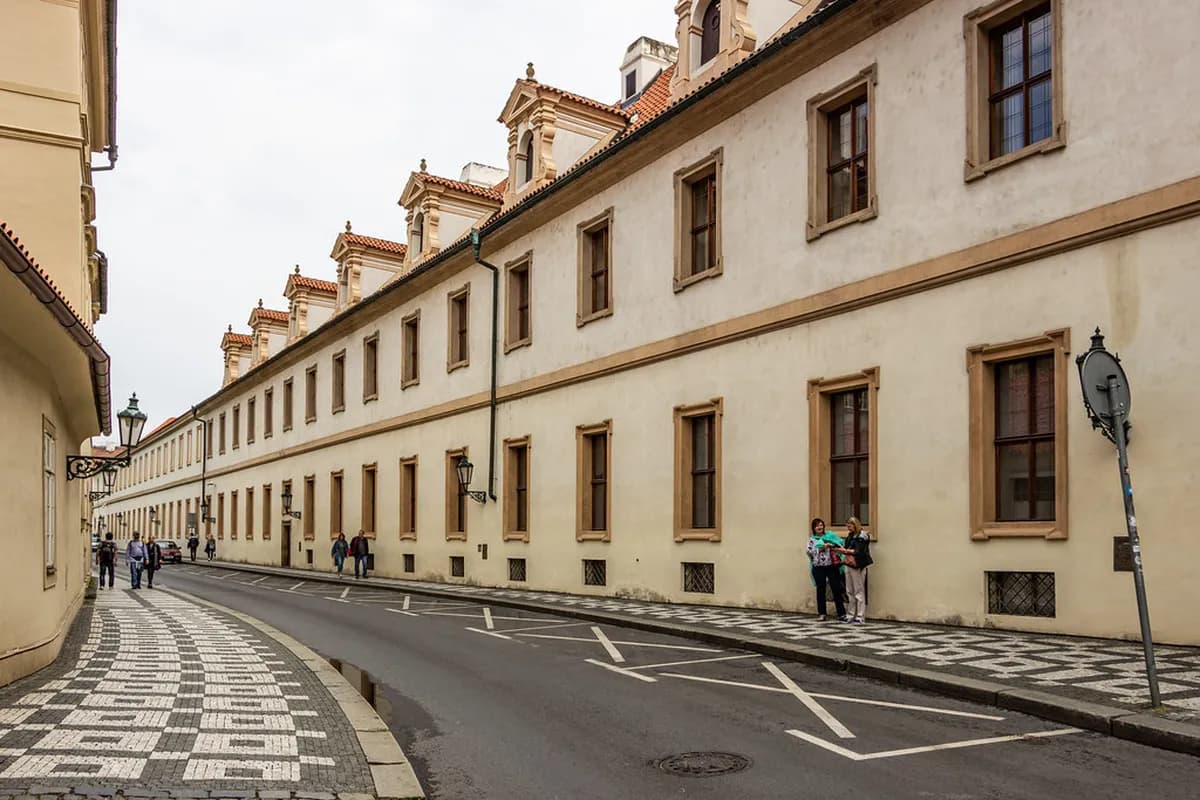
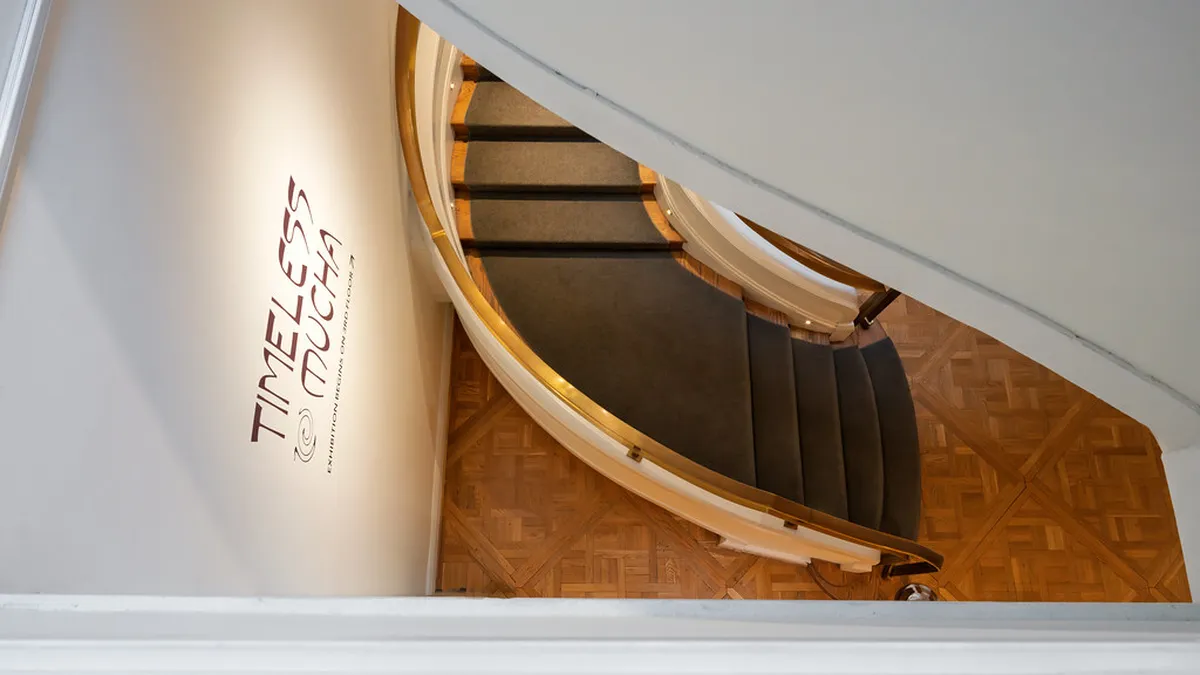
The Mucha Museum at Panská 7 in Prague is the original institution dedicated to Alphonse Mucha, the Czech master of Art Nouveau. Housed in the 18th-century Kaunický Palace since 1998, it displays nearly 100 original works drawn primarily from the private collection of Czech tennis legend Ivan Lendl. The building sits a five-minute walk from Wenceslas Square in the heart of the city, making it an easy addition to almost any Prague itinerary.
This guide covers what to expect on each floor, how much time to budget, practical access details, and how the museum fits into the wider Prague art scene in 2026. One point worth knowing before you arrive: following a 2024 split between the original operator and the Mucha Foundation, there are now two separate Mucha venues in Prague. This guide covers the original at Panská 7. The Mucha Foundation's newer exhibition operates at Savarin Palace on Na Příkopě — different institution, different collection, different ticket.
What You Will Actually See
The Mucha Museum is the only institution in Prague exhibiting exclusively originals by Alphonse Mucha (1860–1939). Opened in 1998 in the Baroque Kaunický (Kounice) Palace at Panská 7, it presents around 100 works drawn from the private collection of tennis champion Ivan Lendl across an intimate 500-square-metre exhibition. Understanding that this is a focused, single-artist museum — not a sprawling national gallery — helps you set the right expectations and plan your time.
The display is organised by theme rather than strict chronology. You move from the celebrated Paris-era theatrical posters into the decorative panels, then through drawings, pastels, photographs, and personal memorabilia from Mucha's studio. The famous decorative cycles — The Four Seasons, The Four Flowers, The Four Arts, and The Four Times of Day — are among the most photographed objects in the building.
A short documentary film on Mucha's life runs in the museum and provides biographical context that enriches the gallery walk; most visitors recommend watching it before moving through the rooms rather than after. Allow time to look closely at the lithographs — the delicacy of line in the hair and fabric is exactly what reproductions cannot capture, and it explains why his style was so widely imitated.
Watch the 18-minute documentary film before exploring the galleries rather than after — it provides biographical context that enriches your understanding of Mucha's work and the historical significance of his art.
Must-See Highlights in the Mucha Collection
The Sarah Bernhardt posters are the centrepiece of the collection. These lithographs — created after Mucha was famously handed the commission on Christmas Day 1894 — launched his international career overnight. The originals carry a delicacy of line that reproductions cannot replicate. Stand close and look at the detail in the hair and fabric to understand why his style became so widely imitated.
The decorative panels are equally worth your attention. Works like The Four Seasons show how Mucha translated the same flowing, organic forms from commercial poster work into fine-art contexts. The museum provides clear printed explanations in English beside each major piece, so you do not need an audio guide to follow the narrative.
One detail worth noting: the monumental Slav Epic (Slovanská epopej) cycle is not displayed here. The Panská 7 museum concentrates on Mucha's posters and decorative work. The Slav Epic has been shown at separate venues; check current Prague listings for its location in 2026. Do not make the trip expecting to see it here.
Visitor Information and Practical Details
The museum is open daily 10:00–18:00, including weekends and most public holidays. Last admission is typically 30 minutes before closing. Adult admission is CZK 300; reduced tickets for children, students, and seniors cost CZK 220; a family ticket (2 adults, 2 children) costs CZK 800. Tickets are available at the door or via the official site at mucha.cz. Walk-in queues are usually short except during the peak summer weeks of July and August.
| Ticket Type | Price (CZK) | Includes |
|---|---|---|
| Adult | 300 | One adult admission |
| Reduced | 220 | Children, students, seniors |
| Family | 800 | 2 adults + 2 children |
The nearest metro stop is Můstek (lines A and B), which puts the museum about a four-minute walk away along Na Příkopě and then left onto Panská. Tram stops on Jindřišská and Václavské náměstí are also within easy walking distance. There is no dedicated parking nearby; public transport is the practical choice. The building is wheelchair accessible.
Photography for personal use is generally permitted without flash. Professional equipment and tripods require prior written permission from management. Some temporary displays may carry their own restrictions — check the signage on arrival. Staff speak English and Czech at minimum.
How Long to Visit and When to Go
Plan 45–75 minutes for a thorough visit. Art students or visitors who want to read every panel may need closer to 90 minutes. The museum is compact enough that it never feels overwhelming, which makes it a reliable option when energy is flagging mid-afternoon. Group tours tend to arrive in the morning, so arriving after 14:00 usually means quieter galleries.
The museum is small by Prague standards, which is both its strength and the most common source of disappointment in reviews. Set the expectation correctly: this is an intimate, curated space, not a sprawling national gallery. The quality and authenticity of the Mucha originals on display justify the admission price for anyone with an interest in Art Nouveau, poster art, or Belle Époque design.
Visiting during the late afternoon also lets you combine the museum with a walk through the surrounding streets before dinner. The blocks between Panská, Na Příkopě, and Wenceslas Square contain several buildings with preserved Art Nouveau facades that form a natural extension of what you have just seen inside.
A family ticket (CZK 800) for two adults and two children represents a meaningful saving compared to buying four individual adult tickets at CZK 300 each.
The Panská 7 Museum vs. the Savarin Palace Venue
Since 2024, visitors searching for Mucha in Prague face a genuine choice between two institutions. The original museum at Kaunický Palace, Panská 7, operates under mucha.cz and centres on the Ivan Lendl collection of approximately 100 original Mucha works. It has been in operation since 1998 and exhibits exclusively original works by Mucha.
The Mucha Foundation, which split from the original operator, opened a new museum at the renovated Savarin Palace on Na Příkopě 10. This venue presents over 90 works from the Mucha family's collections, including pieces previously not shown publicly, presented partly as immersive digital projections alongside physical works. It is the endpoint of the official Prague City Tourism "Mucha's Prague Trail" walking route.
Neither museum is a substitute for the other. If you want to stand in front of original Mucha posters and panels in an intimate historic palace, Panská 7 is the right choice. If you want the most direct connection to the Mucha family legacy and more recently digitised, immersive content, the Savarin Palace is the better pick. Budget visitors choosing one: the Panská 7 museum is the longer-established option and the only one showing exclusively Mucha originals.
Family-Friendly and Budget-Friendly Options
Families traveling with children benefit from the museum's compact size. The galleries are manageable even for younger visitors with limited attention spans, and the bold colour and flowing line of Mucha's posters tend to hold children's interest. A family ticket (CZK 800) covers two adults and two children and represents a meaningful saving over four individual admissions. Ask at the front desk whether educational activity sheets are available — these vary by season.
The museum gift shop is accessible without purchasing an entry ticket and is widely praised in visitor reviews as one of the better museum shops in central Prague. It stocks silk scarves, high-quality art prints, postcards, and branded stationery. Postcards start from around CZK 20 and make low-cost alternatives to the merchandise. The shop is a sensible first stop if you are undecided about whether to buy entry.
Budget travelers should note that no Prague city pass currently includes this museum. There are no combo deals with adjacent attractions at the time of writing in 2026, so the door price is the price. The museum's CZK 300 adult ticket is mid-range by Prague museum standards — comparable to the Municipal House and cheaper than many of the castle complex's individual attractions.
Mucha Museum Reviews and Visitor Experience
Visitor reviews consistently highlight two strengths: the intimacy of the setting and the quality of the gift shop. The Baroque palace interior creates a viewing environment markedly different from purpose-built gallery spaces. Rooms are small enough to let you stand very close to the works without crowds intervening, at least outside peak summer.
The most common criticism is size. Some visitors feel the collection is small relative to the ticket price, particularly those expecting a large national-gallery experience. Setting the expectation correctly — an intimate space of around 100 carefully chosen Mucha originals — tends to shift that perception. A second recurring note is the absence of audio guides in all languages — English is covered, but some Central European visitors have flagged gaps.
The documentary film shown in the museum draws near-universal positive comment. It runs approximately 18 minutes and provides biographical context that enriches the gallery walk. Watching it before you move through the rooms rather than after is the approach most visitors recommend.
Parks, Gardens, and Outdoor Spots Nearby
After the museum, a short walk north reaches the Wallenstein Garden in Malá Strana. The formal hedges, peacocks, and Baroque pond create exactly the kind of composed, decorative atmosphere that echoes Mucha's aesthetics. Entry is free and the garden closes at dusk. It is approximately 20 minutes on foot across the river.
Closer to hand, the Vrtba Garden on the slopes of Petřín Hill is one of Prague's most beautifully structured terraced gardens. The stone balustrading and sculpted figures feel like a three-dimensional rendering of Art Nouveau decorative principles. It charges a small entrance fee and opens from spring through autumn.
For a rest without leaving the immediate neighbourhood, the passages and courtyards behind Wenceslas Square are worth exploring. The Lucerna Passage — a few minutes' walk — has an ornate early-20th-century interior with a glass ceiling and original ironwork that would not look out of place on one of Mucha's decorative panels.
Nearby Museums and Art in Prague
Art lovers who want to extend their day should consider the Kampa Museum on the riverbank in Malá Strana. It focuses on modern Central European art from the post-Art Nouveau era and includes outdoor sculptures on the riverside promenade. Getting there involves a walk across the Charles Bridge, which is itself worth the journey.
The Klementinum, a few minutes north of Old Town Square, offers a Baroque library that rivals any interior in the city for visual impact. Guided tours of the library hall and astronomical tower run every 30 minutes and last about 50 minutes. Its proximity makes it an efficient second stop on an art-and-architecture day.
For those interested in broader decorative arts, the Lobkowicz Palace in the Prague Castle complex holds a private collection that spans paintings, musical manuscripts, and applied arts. It is further from the Mucha Museum but pairs naturally with a morning at the castle. The Strahov Monastery Library nearby is another destination for anyone who found the Klementinum Baroque interiors compelling.
Frequently Asked Questions
How much time should you plan for the Mucha Museum?
Most visitors spend between 60 and 90 minutes exploring the galleries. This allows enough time to view the posters, read the information panels, and watch the 18-minute documentary film. If you are an art student or a deep fan, you might want to allow two hours. Check Mucha.eu for special event times.
Is photography allowed inside the Mucha Museum?
Non-flash photography is generally permitted for personal use in most areas of the museum. However, some temporary exhibitions or specific sensitive items may have restrictions. Always look for signage or ask the staff before taking photos. Professional equipment or tripods are typically not allowed without prior written permission from the management.
Is the Mucha Museum worth visiting for non-art fans?
Yes, the museum is worth a visit because Mucha's work is so iconic to the visual history of Prague. The posters are highly recognizable and the historical context of the Czech nation is fascinating. It is a small, manageable museum that does not require a huge time commitment. The beautiful Baroque palace setting also adds value to the experience.
Where Else the Same Movement Took Hold
Mucha made his name in Paris and brought the style home, which is why this collection sits oddly against the rest of Prague. Berlin's Bröhan Museum collects the German Jugendstil answer as a complete design system rather than a graphic one. Barcelona's Casa Vicens shows how differently the same decades resolved in Catalan modernisme.
The Mucha Museum at Panská 7 is one of the most efficiently designed cultural stops in central Prague. Around 100 original Mucha works, a Baroque palace setting, and a well-stocked gift shop — all within 90 minutes and a short walk from Wenceslas Square. The key is arriving with accurate expectations: it is intimate rather than encyclopaedic, and its strength is the quality and authenticity of the originals rather than scale.
Confirm hours and tickets at mucha.cz before visiting. If you are trying to decide between this and the newer Mucha Foundation venue at Savarin Palace, consider what matters more to you — standing in front of original Mucha posters and panels, or the Mucha family archive and its digital immersion. Both are within the same neighbourhood. Prague rewards the visitor who takes time to look closely.
For authoritative information, refer to the Mucha Museum on Wikipedia.
Continue exploring
More guides you'll find useful