Museum Kampa Visitor Guide Travel Guide
Plan museum kampa visitor guide with top picks, neighborhood context, timing tips, and practical booking advice for a smoother trip.
On this page
Museum Kampa Visitor Guide
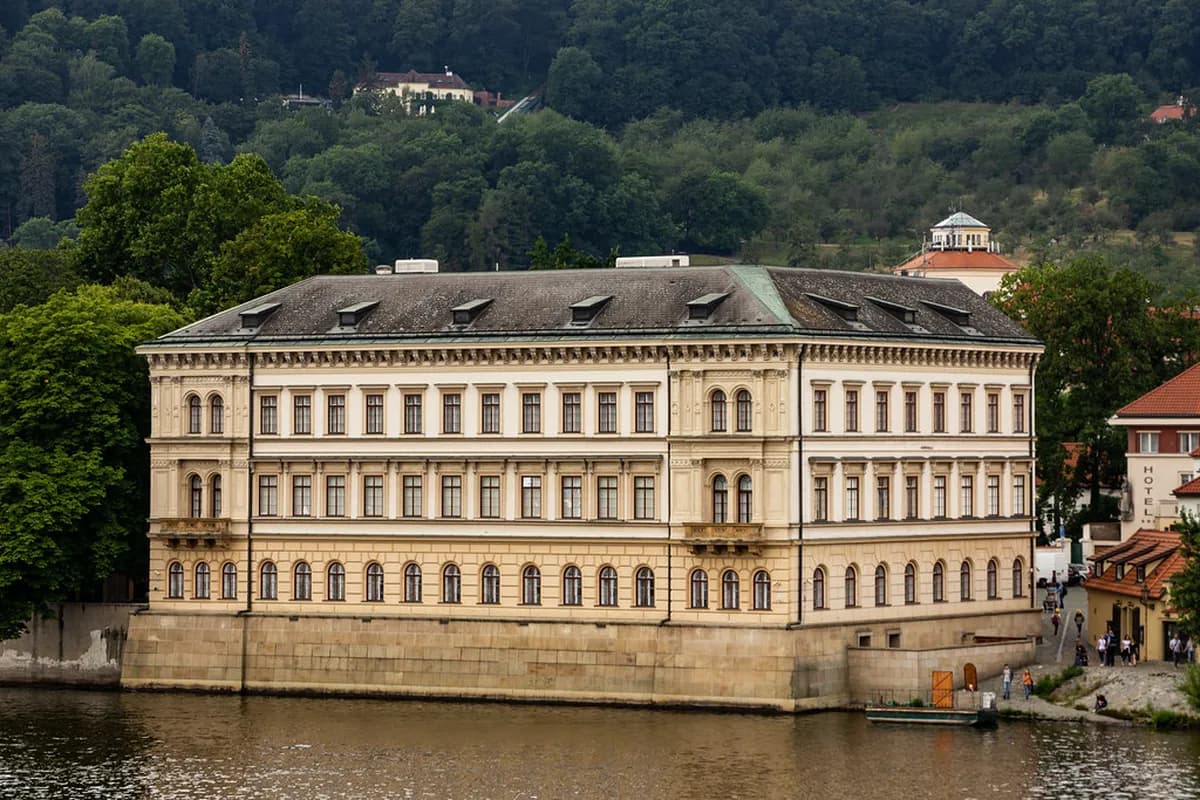
Museum Kampa is one of the most compelling modern art museums in Central Europe, set inside the historic Sova's Mills on Kampa Island beside the Vltava River. The collection anchors on two giants of Czech modernism: František Kupka, a pioneer of abstract painting, and Otto Gutfreund, whose bronze sculptures reshaped cubist form. The riverside setting, visible from Charles Bridge, makes it as scenic as it is culturally rich.
The museum opened in 2003 after art collector Meda Mládková spent years securing the Sova's Mills building for her foundation. What she assembled is not a state institution — it is a private collection shaped by personal friendship with artists who struggled to show their work during the Communist era. That backstory gives every room a different weight than a typical civic gallery.
This guide covers the permanent and temporary collections, ticket options, how to get there, the best times to visit, and practical details that will save you time at the door in 2026. Prices and hours are confirmed: adults CZK 350, open daily 10:00–18:00.
Quick Facts
- Address: U Sovových mlýnů 503/2, 118 00 Prague 1 (Malá Strana, Kampa Island)
- Opening hours: Daily 10:00–18:00, last entry 17:30
- Adult all-exhibitions ticket: CZK 350 | Reduced (students/seniors): CZK 220
- Permanent-collection-only ticket: CZK 200 adult / CZK 110 reduced
- Family ticket (2 adults + up to 3 children under 15): CZK 680
- Children under 6: free
- Lookout tower: CZK 30 additional
- First Tuesday of the month: seniors pay CZK 50 for the whole museum
- Nearest tram stop: Hellichova (trams 12, 20, 22) — 5-minute walk
- Walking from Charles Bridge: 8–10 minutes across the bridge and south along the embankment
- Recommended visit duration: 90 minutes to 2 hours
The ticket office is in a bookshop in one of the outbuildings on the courtyard side, not at the main mill facade. First-time visitors sometimes circle the building before finding it — head through the gate and look left. Keep your ticket stub; the galleries are spread across separate floors and the attendants check at each entry point.
Museum Kampa Prague
Museum Kampa Prague is housed in the historic Sova's Mills, a building whose footprint on this island dates to the 14th century. The mill was a working flour producer for centuries before fires, floods, and the upheavals of the 20th century left it derelict. Meda Mládková acquired the site in the late 1990s, and architects carefully restored it — adding modern glass elements to create a bright contrast with old stone walls — before the museum opened to the public in 2003.
The Jan and Meda Mládek Foundation manages the gallery. Its mission is to support Central European artists and keep their work accessible. Unlike a state-funded institution, the foundation depends on ticket revenue and donations, which is one reason the entrance fee is higher than at some other Prague museums. The quality of the curation justifies it.
There are five main exhibition spaces across the building. Two hold the permanent Kupka and Gutfreund collection. One or two rotate temporary exhibitions — usually contemporary artists from the Central European region. The remaining space has recently featured the Zlatá Husa Gallery, a large private collection of 20th-century Czech art on loan from media mogul Vladimír Železný.
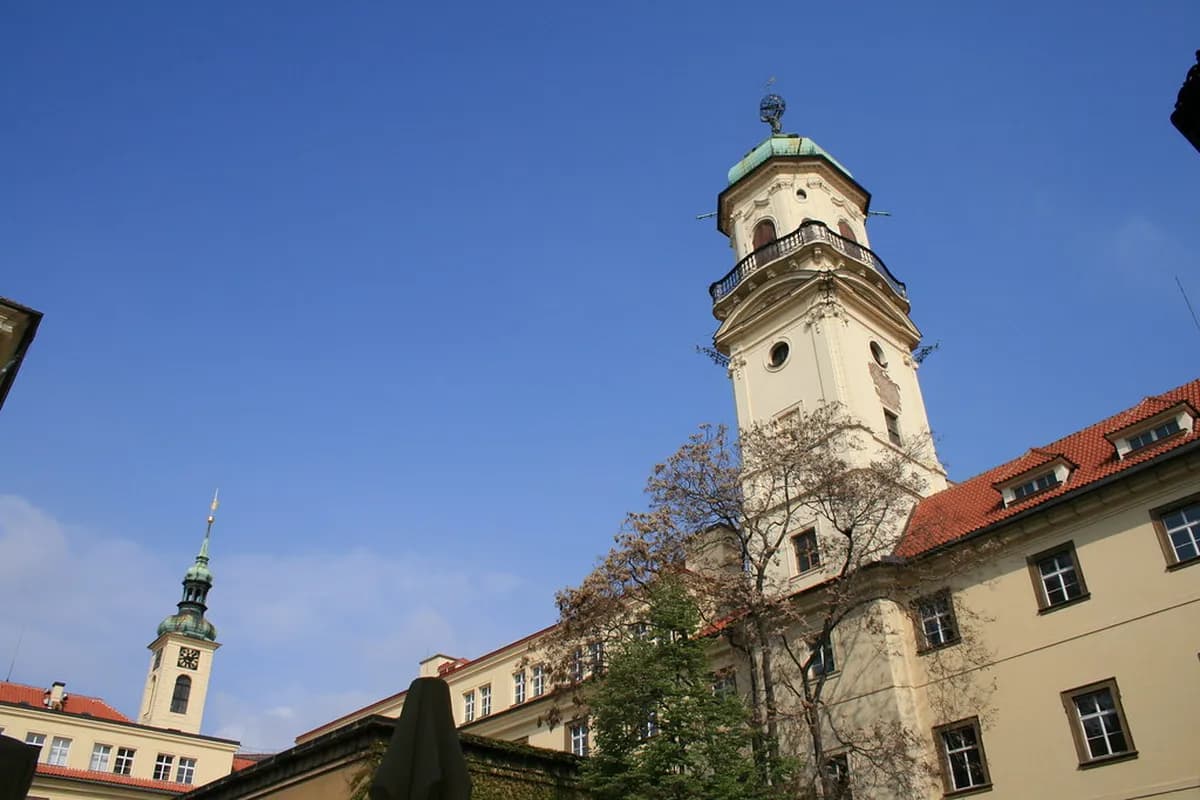
You can learn more about the broader riverfront heritage by visiting the Klementinum on the Old Town side of the river, another example of adaptive reuse of a historic complex.
Introduction: Meda Mládková and her Art Collection
Meda Mládková (born 1919 in Zákupy, Czechoslovakia) left her country after the Communist coup in 1948. She studied economics in Geneva, lived in Paris in the 1950s where she ran a publishing house, and eventually settled in Washington D.C. with her husband Jan Mládek, an economist and co-founder of the International Monetary Fund. It was in Paris that she first met František Kupka and began buying his work.
Over the following decades the Mládeks quietly built a collection of Czech and Central European modern art. Travelling to Czechoslovakia to purchase works from artists who could not exhibit freely was both a passion and a form of solidarity. When Jan died in 1989 — just months before the Velvet Revolution — Meda resolved to honour his wishes and donate the collection to Prague. She set up the Jan and Meda Mládek Foundation and fought for years to secure Sova's Mills as its permanent home.
The personal relationships behind the collection are what set it apart. Many pieces were acquired directly from artists who were friends of the couple. That intimacy is palpable in the hanging: works are grouped to tell a story rather than fill wall space. The museum is, in this sense, a portrait of two lives lived in exile with a fierce attachment to home.
František Kupka: Key to the Museum Kampa Collection
František Kupka (1871–1957) was born in Opočno in what is now the Czech Republic and trained at the academies of fine arts in both Prague and Vienna. He settled in Paris by 1894, working as an illustrator while quietly pushing toward abstraction. By 1909 he had made his break from figurative painting, inspired partly by the Futurist Manifesto and increasingly by theories of colour, form, and Orphism — the idea that music and painting share a common language of rhythm.
Museum Kampa holds one of the largest collections of his work anywhere. The galleries trace his full arc: the early figurative and symbolist canvases give way to increasingly bold explorations of colour and geometry. The pieces where Kupka finds harmony in pure shape — smooth transitions of hue, spiraling forms — are the ones that resonate most. Art historians credit him as an influence on later colour-field painters like Robert Delaunay. Seeing the progression in a single visit makes that lineage legible.
Kupka's work is the anchor around which the wider story of Czech avant-garde art develops in this building. The permanent collection pairs his paintings with the bronze sculptures of Otto Gutfreund, whose cubist figures complement Kupka's two-dimensional experiments. Together they make the case that Prague was a serious node of European modernism, not a peripheral observer.
Modern Movements in Czech Art: the Zlatá Husa Gallery
The Zlatá Husa Gallery — "Golden Goose Gallery" — is the exhibition space for Vladimír Železný's private collection of 20th-century Czech art. Železný, a media entrepreneur, has spent decades building what is now a substantial survey of Czech modernism. The selection celebrates 25 years of his own gallery and is curated by Železný himself, with a particular focus on the 1960s when artists began to push beyond the constraints of socialist realism.
The earlier works in the collection run toward Symbolism: formally trained painters using unusual subject matter but still operating within a recognisable academic tradition. The later pieces are more idiosyncratic and often unsettling in tone. Taken together, they fill in the spaces around Kupka and Gutfreund — showing what their contemporaries were doing, how Czech modern art continued to evolve with increasing personal freedom, and what that freedom cost when the Communist regime periodically tightened its grip.
The four galleries comprising the two main exhibitions hang together well. There is some backtracking involved as you move between the Kupka/Gutfreund permanent rooms and the Zlatá Husa spaces, but the layout is compact enough that it does not feel laborious. If you enjoy private collections shaped by a single sustained vision, this section rewards close attention. Compare it with the Lobkowicz Palace collection at the castle, which takes an entirely different approach to preserving Czech heritage.
Kampa Island and Sova's Mills
Kampa Island sits on the Malá Strana side of the Vltava, separated from the rest of Lesser Town by the Čertovka canal — a man-made waterway built to power the island's mills. The word "Kampa" derives from the Spanish for "field": Spanish troops camped here during the Thirty Years' War. Mills have stood on the island since at least the 10th century. The first documented reference to them appears in 1393.
The site's history is eventful. It was burned during the Hussite Wars, rebuilt in Renaissance stone in 1589, occupied by Swedish artillery, converted to steam in the 19th century, and eventually acquired by the city. After World War II it housed the Czechoslovak Academy of Sciences before falling into disrepair. Meda Mládková acquired it in the late 1990s. The renovation preserved the old stone structure while inserting glass corridors and modern gallery lighting.
The Čertovka canal that flows between the island and Malá Strana is sometimes called "Little Prague Venice." After your museum visit, walk the path along the canal to see the old mill wheel and the small footbridges hung with padlocks. It takes fifteen minutes and provides a completely different angle on the building. Flooding remains a risk — the 2002 floods nearly destroyed the museum before it opened — but advanced barriers are now in place.
Flooding remains a risk on Kampa Island — the 2002 floods nearly destroyed the museum before it opened — but advanced barriers are now in place to protect the building.
Outdoor Sculptures and Kampa Park
Kampa Park surrounds the museum and is free to enter at any time. It is a broad green space popular with locals for picnics and with photographers for its views toward Old Town. The park offers the best angles for photographing the Sova's Mills building itself — walk south along the riverbank for the full facade with the Vltava in the foreground.
David Černý's giant bronze crawling babies are installed near the museum entrance and in the park. These faceless infants — their faces replaced by barcodes — are among the most discussed pieces of public art in Prague. They are accessible around the clock and require no ticket. They make art feel immediate and slightly strange, which is the intended effect. Note: Černý's other famous kinetic work, "Kafka's Rotating Head," is located at the Quadrio shopping center on Národní třída in the New Town — not at Museum Kampa. This confusion appears on travel forums regularly.
For a more formal garden experience, the Wallenstein Garden in Malá Strana is a short walk away. Its geometric hedges and Baroque fountains offer a stark contrast to the informal green of Kampa Park. Combining both in a half-day circuit is easy and worthwhile.
Good to Know Before You Go
The museum is open every day of the week from 10:00 to 18:00, with last entry at 17:30. There are no Monday closures, which is common at state museums. The building is open year-round; winter visits have the advantage of smaller crowds, and the indoor galleries are well heated. Spring and summer bring the best weather for the riverside park before or after your visit.
Photography for personal use (no flash) is generally permitted in the permanent collection galleries. Policies on temporary exhibitions can differ — check with the attendant on the floor before you start shooting. Drone photography is not permitted near the island or over the Vltava without special authorization from the city.
Getting there is straightforward. Take tram 12, 20, or 22 to the Hellichova stop and walk five minutes toward the river. Alternatively, cross Charles Bridge on foot from Old Town and walk south along the Kampa embankment — about 10 minutes at a relaxed pace and probably the most scenic approach. Parking in the area is severely limited and expensive; public transport is the practical choice. There is no dedicated museum parking.
The museum shop in the outbuilding stocks specialist books on Central European art that are genuinely hard to find elsewhere, including monographs on Kupka in English. The small cafe inside the main building is a reasonable stop for coffee; expect standard Prague cafe prices rather than tourist-trap markups.
Photography for personal use (no flash) is generally permitted in the permanent collection galleries, though policies on temporary exhibitions can differ — check with floor attendants before you start shooting.
Plans like a pro. Thinks like you
Arrive at 10:00 on a weekday. The galleries are at their quietest in the first 90 minutes before tour groups from the Charles Bridge area filter in. Most groups arrive between 11:00 and 14:00. A weekday afternoon after 15:00 is the second-best window — schools and large tours tend to depart by then.
Buy tickets online in advance. The box office queue moves slowly on busy days, and some temporary exhibitions have timed entry slots that can sell out. Having a digital ticket on your phone removes the friction entirely. Check the official site at museumkampa.cz for the current temporary exhibition schedule before you go; the permanent Kupka and Gutfreund rooms are always open, but the supplementary spaces rotate.
Add the lookout tower (CZK 30) to your ticket if river views matter to you. It provides a clear sightline toward the Vltava and Charles Bridge that the interior terrace cannot match. If you are visiting on the first Tuesday of the month and qualify for the senior rate, the full museum costs CZK 50 — the best-value art experience in central Prague.
Wear comfortable shoes. The cobblestones of Kampa Island are uneven, and the museum stairwells are narrow and steep in places. After the museum, the Vrtba Garden is a ten-minute walk through Malá Strana and offers terraced views over the rooftops. Combining the museum and the garden is a natural half-day itinerary for this part of the city.
What Travellers Say
Visitors consistently highlight the Kupka permanent collection and the riverside setting as the two main draws. The manageable size of the museum — you can see everything without fatigue — comes up repeatedly as a positive. Many compare it favourably to larger state institutions in Prague where the scale can overwhelm.
The most common complaint is that the label copy beside individual works is thin, especially for visitors who are not already familiar with Central European art history. If that applies to you, consider downloading a basic overview of Kupka's career before your visit, or buy the English-language monograph in the museum shop on your way in rather than on your way out. The context makes the abstract canvases significantly more legible.
A smaller number of reviewers note that the all-exhibitions ticket price feels high compared to other Prague museums. The comparison is worth making honestly: at CZK 350 it is more expensive than the National Gallery venues, but the collection is focused and the building is exceptional. For visitors who are specifically interested in 20th-century Czech art, it is worth every koruna. Casual tourists who prefer baroque painting or medieval artefacts should adjust their expectations accordingly and consider the permanent-collection-only ticket at CZK 200.
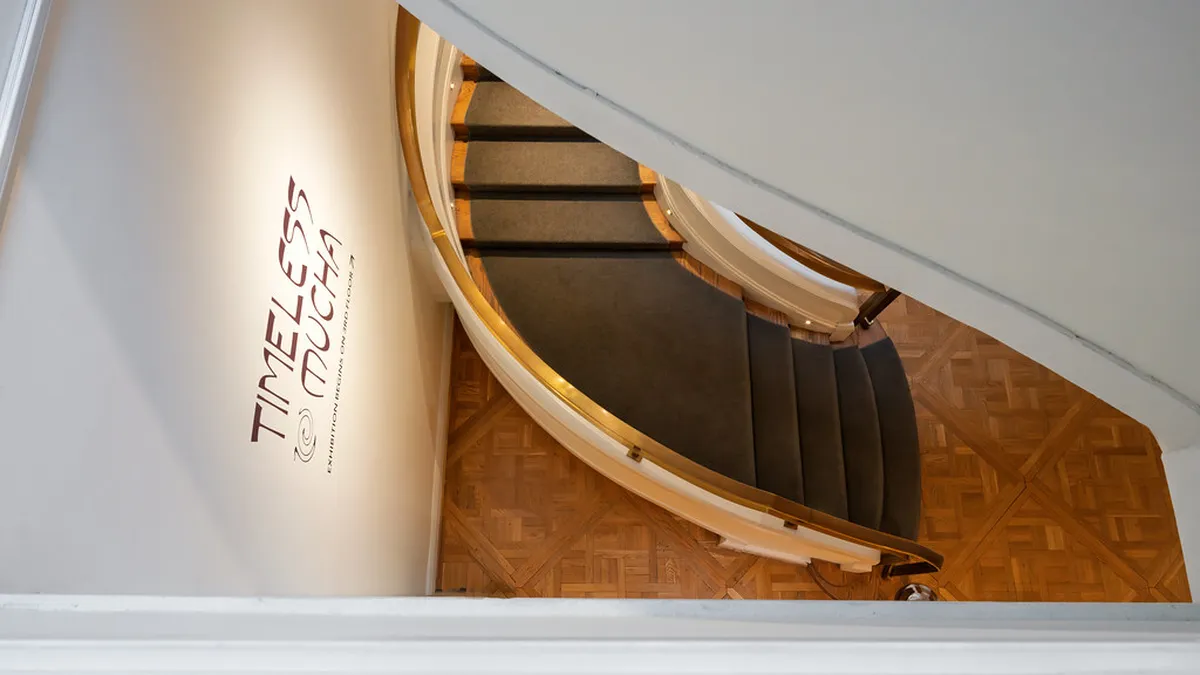
For a broader look at Czech art traditions, the Mucha Museum covers the Art Nouveau period that preceded Kupka's abstraction. Visiting both in the same day maps the full arc of Czech modernism from the 1890s through the mid-20th century.
Frequently Asked Questions
Which museum kampa visitor guide options fit first-time visitors?
First-time visitors should focus on the permanent collection of František Kupka and the outdoor sculptures. These provide a great introduction to Czech modernism and the museum's unique setting. A standard adult ticket offers full access to these highlights. For more tips, check our Prague guide.
How much time should you plan for a Museum Kampa visit?
Most visitors spend between 90 minutes and two hours exploring the galleries. This allows enough time to see the main collections and enjoy the river views from the terrace. If you plan to explore Kampa Park as well, add another hour to your schedule. The pace is generally relaxed.
What should travelers avoid when planning a visit to Museum Kampa?
Avoid visiting during the middle of the day on weekends if you prefer quiet galleries. Large tour groups often arrive between 11:00 and 14:00. Also, do not forget to check for temporary closure dates on the official website. Planning ahead ensures you don't miss any specific exhibitions you want to see.
Is Museum Kampa worth including on a short itinerary?
Yes, it is definitely worth a visit even if you only have two days in Prague. Its central location near the Charles Bridge makes it easy to add to any walking tour. The mix of art and scenic views provides a high-value experience in a short amount of time. It is a unique cultural gem.
Are there any budget-friendly ways to see the art?
The best budget-friendly option is to enjoy the outdoor sculptures in Kampa Park for free. You can see the famous crawling babies and the yellow penguins without a ticket. Additionally, the museum shop and courtyard are open to the public at no cost. These areas provide a great taste of the museum's atmosphere.
Museum Kampa rewards visitors who come prepared. Knowing where to find the ticket office, which tram to take, and what the Zlatá Husa Gallery actually is will save you twenty minutes of confusion and make the visit flow properly. The Kupka collection alone justifies the trip for anyone interested in the origins of abstract art; the setting on Kampa Island makes it worthwhile for everyone else.
The foundation that runs the museum keeps it lean and focused. There is no permanent-collection bloat, no redundant wing you feel obliged to walk through. Two hours is genuinely enough to see everything and still have time for a coffee on the terrace before walking back along the river. That combination of quality, brevity, and location is rare in any city.
We hope this museum kampa visitor guide helps you plan an unforgettable visit in 2026. Book tickets online, arrive early on a weekday, and take the Hellichova tram stop. The art, the building, and the island will do the rest.
For authoritative information, refer to the Museum Kampa official site and Museum Kampa on Wikipedia.
Continue exploring
More guides you'll find useful