Bröhan Museum Visitor Guide: Plan Your Visit to Berlin's Art Nouveau Gem
Discover the Bröhan Museum in Berlin with our comprehensive visitor guide. Get details on collections, current exhibitions, opening hours, accessibility, and tips for your trip.
On this page
Bröhan Museum Visitor Guide: Plan Your Visit to Berlin's Art Nouveau Gem
The Bröhan Museum is Berlin's state museum of Art Nouveau (Jugendstil), Art Deco, and Functionalism. Housed in a former barracks building directly opposite Charlottenburg Palace, it holds one of Europe's most comprehensive collections of decorative arts from the late 19th century through the Second World War era. The collection covers furniture, ceramics, glass, metalwork, and paintings — all assembled by a single passionate collector and donated to the city.
Planning ahead makes a real difference here. The museum is compact enough to explore thoroughly in two hours, but it rewards visitors who know what to look for. This guide covers verified admission prices, transport options, the permanent collection highlights, current exhibitions in 2026, and what makes this museum worth pairing with a full Charlottenburg day.
Planning Your Visit: Essential Information
The Bröhan Museum is open Tuesday to Sunday from 11:00 to 18:00 and closed on Mondays. On public holidays the museum typically stays open on the same schedule, with the exception of 24 and 31 December and Whit Monday. On 1 January it opens at noon. Always confirm via broehan-museum.de if you are visiting around a German bank holiday.
Admission in 2026 is €9 for adults and €6 for reduced-rate visitors (students, seniors, and certain groups). On the first Wednesday of every month — "Happy Wednesday" — everyone pays €4. Visitors under 18 enter free. Several other categories also receive free admission: art history students, ICOM members, Deutscher Museumsbund members, and adult refugees with one companion. The Berlin WelcomeCard does not cover this museum directly, so factor the ticket price into your budget.
The museum is barrier-free throughout. A wheelchair-accessible elevator reaches all floors, accessible restrooms are on site, and guide dogs and service dogs are welcome. Guided tours for deaf visitors can be arranged on request by contacting the museum in advance. The phone number is +49 (0)30 326 906 00.
Photography for personal use is generally permitted in the permanent collection. Audio guides are available and worth picking up if you want context on individual objects. The museum shop near the exit stocks art books, postcards, and design-themed gifts.
Planning ahead makes a real difference here. The museum is compact enough to explore thoroughly in two hours, but it rewards visitors who take time to look closely at the period rooms.
Exploring the Bröhan Museum Collection: Art Nouveau, Art Deco, and Functionalism
Karl H. Bröhan (1921–2000) began collecting Art Nouveau objects in the early 1960s, at a time when Jugendstil was deeply unfashionable. His first serious encounter with the style happened at an exhibition held in the very building that later became the museum — a detail that gives the institution an unusual circularity. He donated the collection to the city of Berlin in 1981; it moved to Schloßstraße 1a in 1983 and became a Berlin state museum in 1994.
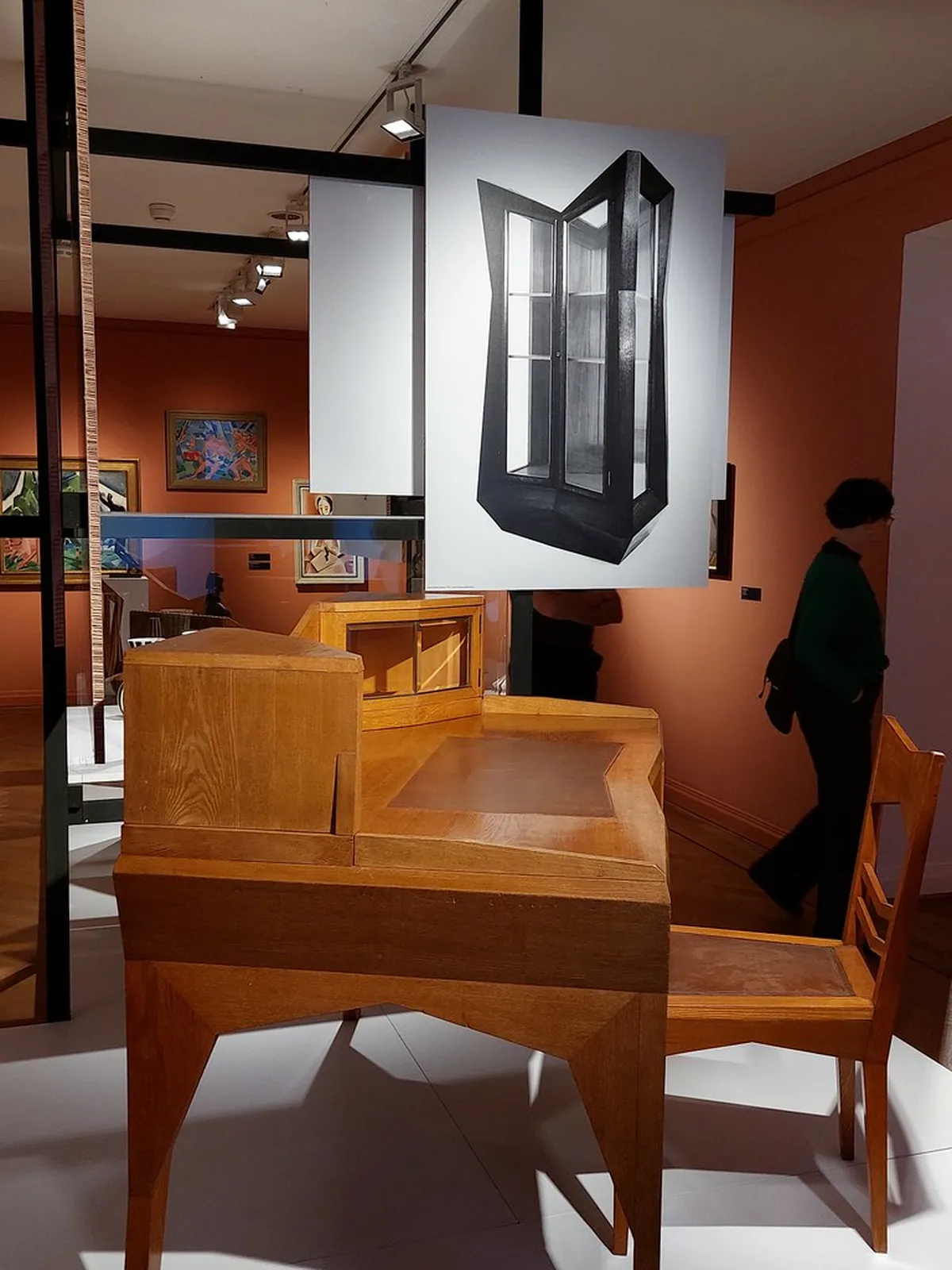
What makes the permanent collection distinctive is its use of fully reconstructed period rooms. Rather than displaying objects in isolation, the museum recreates complete furnished interiors — a dining room, a bedroom, a salon — so you experience Art Nouveau and Art Deco as total environments. This Gesamtkunstwerk approach, the idea that every element from chair to lamp to wallpaper should form a unified whole, is exactly what the original designers intended. Few museums in Europe present decorative arts this way.
Standout pieces in the Art Nouveau galleries include the furniture ensemble by Alfred Grenander (c1900), porcelain figures by Agathon Léonard (1899), and an extensive collection of Sèvres, Royal Copenhagen, and KPM porcelain. The glass section features works by Émile Gallé — including the politically charged "Dreyfus lamp" (1898–1900), which carries an inscription supporting the wrongly accused Jewish officer Alfred Dreyfus. The Art Deco rooms shift to geometric precision: look for pieces by Jean Puiforcat, Jacques Émile Ruhlmann, and Gerrit Rietveld. The Functionalism section, often overlooked in museum summaries, documents the sober design vocabulary that followed Art Deco in the 1930s.
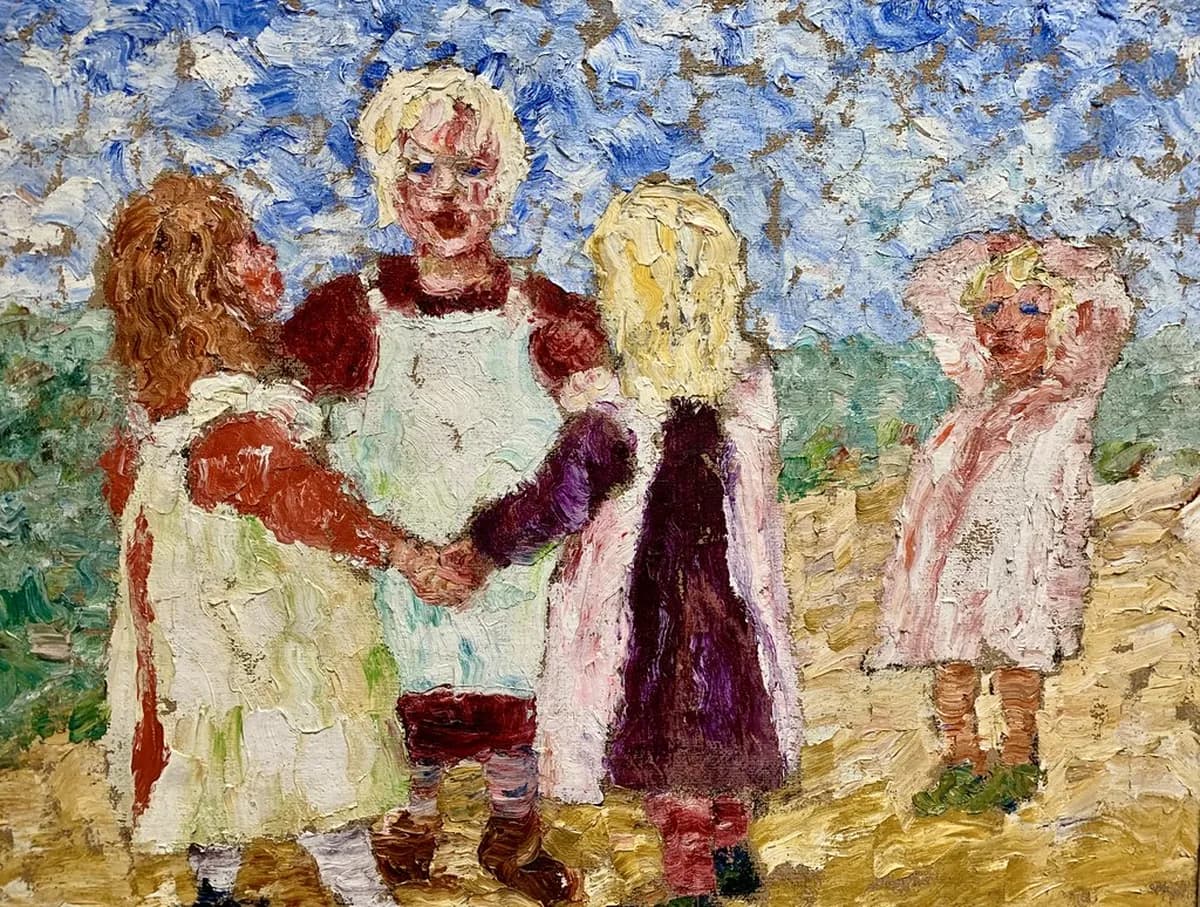
The painting galleries cover the Berlin Secession, the movement that pushed Berlin artists toward Expressionism in reaction against academic conservatism. Willy Jaecke's "Im romanischen Café" (1912) is a crowd favourite — a vivid snapshot of Berlin bohemian life in the years before the First World War. Canvases by Henry van de Velde and Lovis Corinth round out the picture. Labels throughout are in German and English.
The reconstructed period rooms are the museum's signature feature — the cumulative effect of a complete Art Deco or Art Nouveau salon cannot fully be captured in photographs.
Current and Upcoming Exhibitions at Bröhan Museum
The museum runs a programme of temporary exhibitions alongside its permanent display. These typically occupy the ground floor galleries and focus on specific themes, designers, or national schools of Art Nouveau and Art Deco. Check the official website for 2026 dates, as exhibitions change several times a year and booking ahead is recommended for popular shows.
Beyond exhibitions, the museum runs workshops, lectures, and guided thematic tours throughout the year. Some events are free with museum admission; specialist tours occasionally carry an extra charge. Family programmes and children's workshops are scheduled on selected weekends. The museum's events calendar, updated monthly, is the most reliable source for current programming.
Special Focus: "Belles Choses. Art Nouveau Around 1900"
The museum celebrated its 50th anniversary with "Belles Choses. Art Nouveau Around 1900," an exhibition dedicated to French and Belgian Art Nouveau that ran from December 2023 to April 2024. Curated by Anna Grosskopf, it brought together around 250 objects across several ground-floor rooms, drawing on the museum's own holdings as well as loans from the Tauchner private collection in Munich and the Galerie Brockstedt.
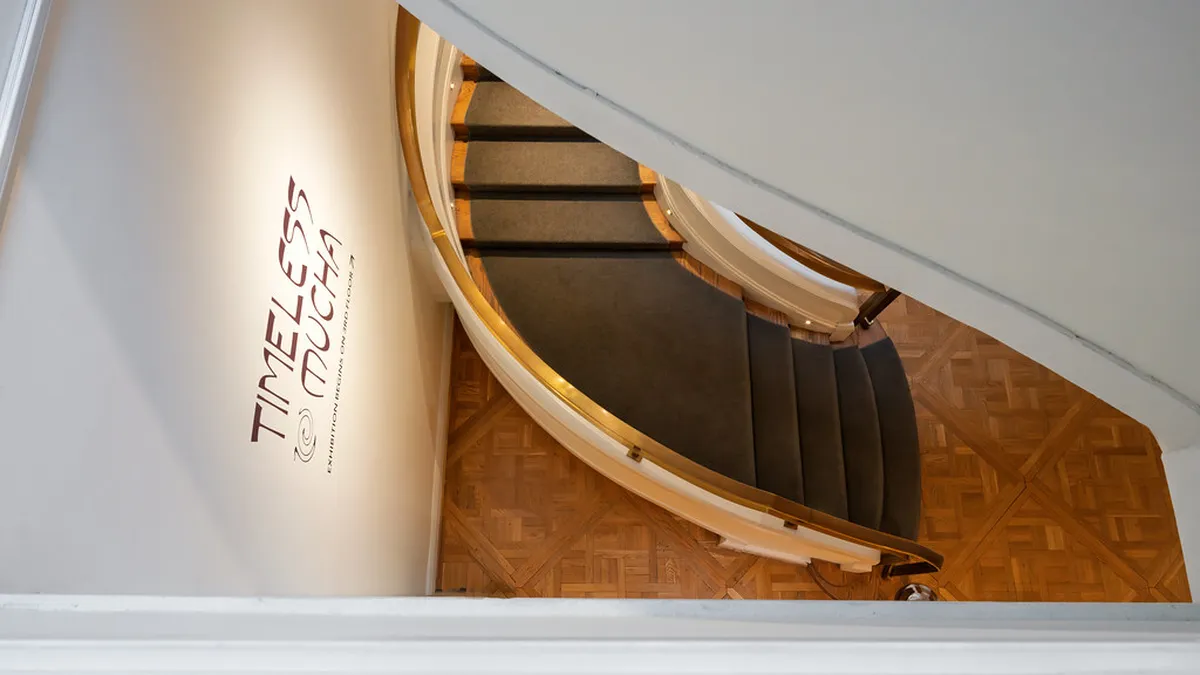
The exhibition traced Art Nouveau's origins — the movement's debt to Japanese woodblock prints, the role of dealers Siegfried Bing and Julius Meier-Graefe in Paris, and the way graphic artists like Alphonse Mucha and Henri de Toulouse-Lautrec used advertising posters to spread the style. Hector Guimard's original railings for the Paris Métro (c1900) were on display, along with Gallé's Dreyfus lamp, Maurice Bouval's thistle lamp, and Edward Colonna's furniture set (c1899).
While this particular anniversary exhibition has closed, the themes it explored — the interplay between nature, craft, and commerce at the turn of the 20th century — are visible throughout the permanent galleries. Visitors interested in the French and Belgian strand of Art Nouveau will find the Bröhan's permanent collection provides the best context in Berlin. Check the museum's exhibition archive for catalogue details and any related programming still available.
Visiting with Children: Design for Children and Family Programmes
The museum hosted a dedicated "Design for Children" exhibition in late 2024 that examined how designers from the Art Nouveau and Art Deco era approached objects made specifically for children — from nursery furniture and toys to illustrated books. The show drew attention to how the same aesthetic values applied to adult decorative arts were extended into the childhood environment, treating children as worthy of considered design rather than simplified imitation.
For families visiting in 2026, the museum offers guided children's tours and hands-on workshops on selected weekends. These are pitched at ages roughly 6–12 and typically run 60–90 minutes. They use the permanent collection as a starting point — children are encouraged to sketch, handle replica objects, and identify natural motifs in the displays. Pre-booking through the museum website is strongly advised as group sizes are capped.
The museum's layout — one building, manageable scale — suits families with younger children better than sprawling multi-building institutions. If you arrive without a booked tour, the permanent collection labels at child height in some rooms and the reconstructed period interiors tend to hold attention well. Weekday mornings are quieter than Saturday afternoons.
Getting to the Bröhan Museum
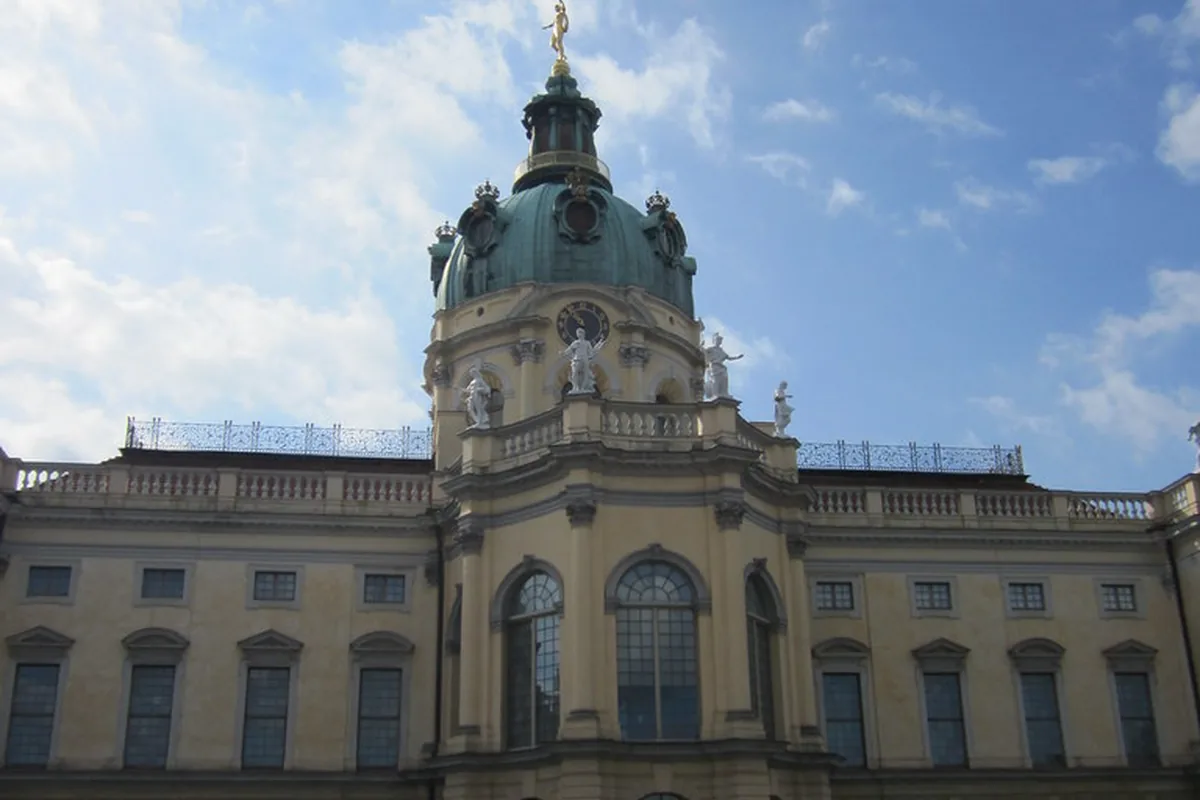
The museum's address is Schloßstraße 1a, 14059 Berlin, in the Charlottenburg district, directly opposite Charlottenburg Palace and next to the Berggruen Museum. It sits on the western edge of central Berlin, roughly 30 minutes from Mitte by public transport.
By bus, the most direct option is bus M45 or 109 to the "Luisenplatz/Schloss Charlottenburg" stop, which leaves you at the museum entrance. Bus 309 also runs along Schloßstraße with stops at both "Schloss Charlottenburg" and "Klausenerplatz." These bus routes are the easiest way in from Zoo station or Ku'damm.
By U-Bahn, the nearest stations are Sophie-Charlotte-Platz (U2) and Richard-Wagner-Platz (U7), each a 10-minute walk through residential streets. Sophie-Charlotte-Platz is the slightly closer and more pleasant route. From Berlin Hauptbahnhof, take the S-Bahn to Westkreuz and then bus 109 directly to Luisenplatz — total journey around 35 minutes. Driving is not recommended: street parking on Schloßstraße is limited and the bus options are faster.
Visitor Tips for a Memorable Experience
The Bröhan's intimate scale — typically around 1.5 to 2 hours for a thorough visit — is consistently praised in visitor reviews. Unlike Berlin's larger state museums on Museum Island, this is a collection where you can genuinely spend time with individual objects rather than racing between highlights. The reconstructed period rooms reward slow looking: the cumulative effect of a complete Art Deco salon is something photographs rarely convey.
First-time visitors often head straight to the glass and ceramics on the upper floors and miss the Berlin Secession painting galleries near the entrance. Go through the paintings first, then work room by room from ground floor upward. This sequence follows the rough chronological arc of the collection — from Art Nouveau's organic beginnings in the 1890s through Art Deco's geometry to the sober Functionalism of the 1930s.
If your budget is flexible, visit on the first Wednesday of the month when admission drops to €4 for all. These Wednesday evenings attract a local crowd rather than tourists, which gives the visit a different atmosphere. Weekday mornings are quietest overall. Combine the visit with the Berggruen Museum next door (Picasso, Matisse, Klee) for a contrasting but complementary full day in Berlin.
Beyond the Museum: Charlottenburg as a Full Day
The Bröhan sits in what is effectively a museum campus. Immediately next door is the Berggruen Museum, part of the Staatliche Museen zu Berlin, holding works by Picasso, Matisse, Klee, and Giacometti. A combined visit to both museums makes a coherent day: Bröhan covers applied and decorative arts from 1880–1940, Berggruen covers fine art from roughly the same era. Across the road is Charlottenburg Palace (Schloss Charlottenburg), Berlin's largest surviving baroque palace with formal gardens stretching behind it — palace and gardens entry is separate but easily walkable.
The Scharf-Gerstenberg collection, also part of the Staatliche Museen campus on Schloßstraße, focuses on Surrealist and Fantastical art — Goya, Redon, Magritte, Ernst — and rounds out the local offer for a serious museum day. The Georg Kolbe Museum, a 20-minute walk away in Charlottenburg's residential west, holds the work of the German expressionist sculptor Georg Kolbe in his original studio and garden.
After the museums, the neighbourhood around Savignyplatz — a 15-minute walk south — has some of Berlin's better mid-range restaurants, independent bookshops, and wine bars. It is distinctly less tourist-facing than Mitte and a good place to end the afternoon. The U-Bahn station Savignyplatz (S-Bahn) connects back to the central rail network from there.
Frequently Asked Questions
What are the opening hours for the Bröhan Museum?
The Bröhan Museum is typically open from Tuesday to Sunday, generally from 10 AM to 6 PM. It is closed on Mondays. However, specific hours can change, especially during holidays or for special events. Always check the Berlin.de Bröhan Museum page or the museum's official website for the most current information before your visit.
How much does it cost to enter the Bröhan Museum?
General admission to the Bröhan Museum usually costs around 8-10 Euros. Reduced prices are available for students, seniors, and certain groups. Children under 18 often receive free admission. Look for potential discounts with the Berlin Welcome Card or other city passes. Check the official website for 2026 pricing details.
Is the Bröhan Museum accessible for wheelchairs?
Yes, the Bröhan Museum is generally wheelchair accessible. It features ramps and elevators to ensure all visitors can navigate the exhibition spaces comfortably. The museum strives to provide an inclusive experience for everyone. Contact the museum directly for specific accessibility needs or questions.
What kind of art is displayed at the Bröhan Museum?
The Bröhan Museum specializes in Art Nouveau (Jugendstil) and Art Deco. Its collection spans from 1889 to 1939. You will find decorative arts, furniture, ceramics, glass, metalwork, and paintings from these periods. The museum showcases European design history.
How long does it take to visit the Bröhan Museum?
Most visitors spend about 1.5 to 2 hours exploring the Bröhan Museum's collections. This allows ample time to appreciate the artworks without feeling rushed. If you plan to attend a guided tour or special exhibition, allocate extra time accordingly. A focused visit can be quite rewarding.
Art Nouveau and Jugendstil Collections Across Europe
The Bröhan's strength is showing Jugendstil as a complete design language rather than a picture-hanging style, and three other cities hold collections that complete the picture. Prague's Mucha Museum is devoted to the Czech artist who defined the movement's poster idiom in Paris. In Budapest, the Miksa Róth Memorial House preserves the workshop and home of Hungary's foremost stained-glass and mosaic artist. Barcelona's Casa Vicens is Gaudí's first house and shows how differently the same era resolved itself in Catalan modernisme.
The Bröhan Museum is one of Berlin's most focused and rewarding museum experiences. Its reconstructed period rooms, deep collection of Art Nouveau glass and ceramics, and the story of a single collector's life's work give it a character that larger institutions can't replicate. At €9 standard admission — or €4 on the first Wednesday of the month — it is also genuinely affordable.
The Charlottenburg location means combining the Bröhan with the palace gardens, the Berggruen, and the Scharf-Gerstenberg collection is easy. Plan for a full morning and afternoon if you want to do all four properly. Arrive by 11:00 when the museum opens, start with the Bröhan, and finish the day on Savignyplatz.
For authoritative information, refer to the Bröhan-Museum on Wikipedia.
Continue exploring
More guides you'll find useful