Designpanoptikum Visitor Guide: Surreal Museum in Berlin
Plan your visit to Designpanoptikum, Berlin's unique museum of bizarre industrial objects. Get practical info, highlights, and nearby attractions for a memorable trip.
On this page
Designpanoptikum Visitor Guide: Explore Berlin's Surreal Museum of Industrial Objects
Designpanoptikum is one of Berlin's most unusual museums — a small, privately owned collection of industrial, medical, and optical objects crammed into a DDR-era Plattenbau building in the historic Nikolaiviertel. Founder Vlad Korneev has spent decades sourcing strange machines from flea markets and city cellars, and he still runs the place himself in 2026. There are no labels, no guided audio, and no room for passivity: visitors are expected to stare, speculate, and occasionally be unsettled.
This guide covers the verified practical details — Thursday and Saturday opening hours, the €14 admission, the walk-in format — alongside what you will actually encounter inside and what to combine with a visit.
Welcome to Designpanoptikum: Berlin's Surreal Museum
Designpanoptikum stands apart from Berlin's mainstream museums in almost every way. It occupies the ground floor of a grey Soviet-era prefab block — the kind of building that feels deliberately unremarkable from the outside. Inside, around ten rooms hold more than 3,000 industrial and medical objects from the last century, arranged in dense, deliberately disorienting clusters rather than chronological or thematic order.
Walk-in visitors need no advance booking — simply arrive during Thursday or Saturday opening hours (12:00–18:00) and pay €14 admission at the door.
Vlad Korneev, a Moscow-born photographer and collector, founded the museum and remains its sole curator and host. His vision is straightforward: objects should speak for themselves. There are no plaques, no interpretive texts, and no QR codes. Whether you are looking at a bionic prosthetic limb, an iron lung, or a cat-shaped submarine, you are on your own.
The museum's location in the Nikolaiviertel — the oldest surviving neighbourhood in Berlin, rebuilt after wartime destruction — adds a layer of historical texture. The building itself retains traces of its previous lives: the walls of one room still bear the original decoration of a former Chinese and GDR-era restaurant that once occupied the space.
Planning Your Visit: Address, Opening Hours, and Contact
Designpanoptikum is at Poststraße 7, 10178 Berlin, in the Nikolaiviertel quarter of Mitte. The entrance is easy to miss — look for the building just off the main pedestrian area, a short walk south-west of Alexanderplatz.
The museum is open on Thursdays and Saturdays only, from 12:00 to 18:00. These are the only public opening days. Do not arrive on any other day expecting entry. Admission is €14 per adult. Groups of more than ten people pay €12 each; groups of more than fifteen pay €11 each. Walk-in visitors need no advance booking — simply arrive during opening hours.
Getting there by public transport is straightforward. The nearest U-Bahn station is Klosterstraße (U2), about a five-minute walk. Alexanderplatz (U2, U5, U8, and multiple S-Bahn lines) is also within comfortable walking distance at around ten minutes. Trams M4, M5, and M6 stop nearby on Karl-Liebknecht-Straße. For the most current contact details and to confirm any seasonal changes to the schedule, check the official website at designpanoptikum.com.
The museum is small and the rooms are tightly packed. Some spaces involve uneven surfaces and narrow passages. Visitors with significant mobility restrictions should contact the museum in advance to discuss access. Photography is permitted throughout — and actively encouraged, given the visual nature of the collection.
A Surreal Walk Through 100 Years of Industrial Design
Korneev has been collecting since the 1990s, sourcing objects primarily from Berlin flea markets, building clearances, and private sales. The range is deliberately wide: medical equipment, aviation components, film and darkroom apparatus, optical instruments, workshop machinery, sport devices, and household tools from roughly the 1880s to the 1980s. The common thread is that these objects are visually strange when removed from their original context.
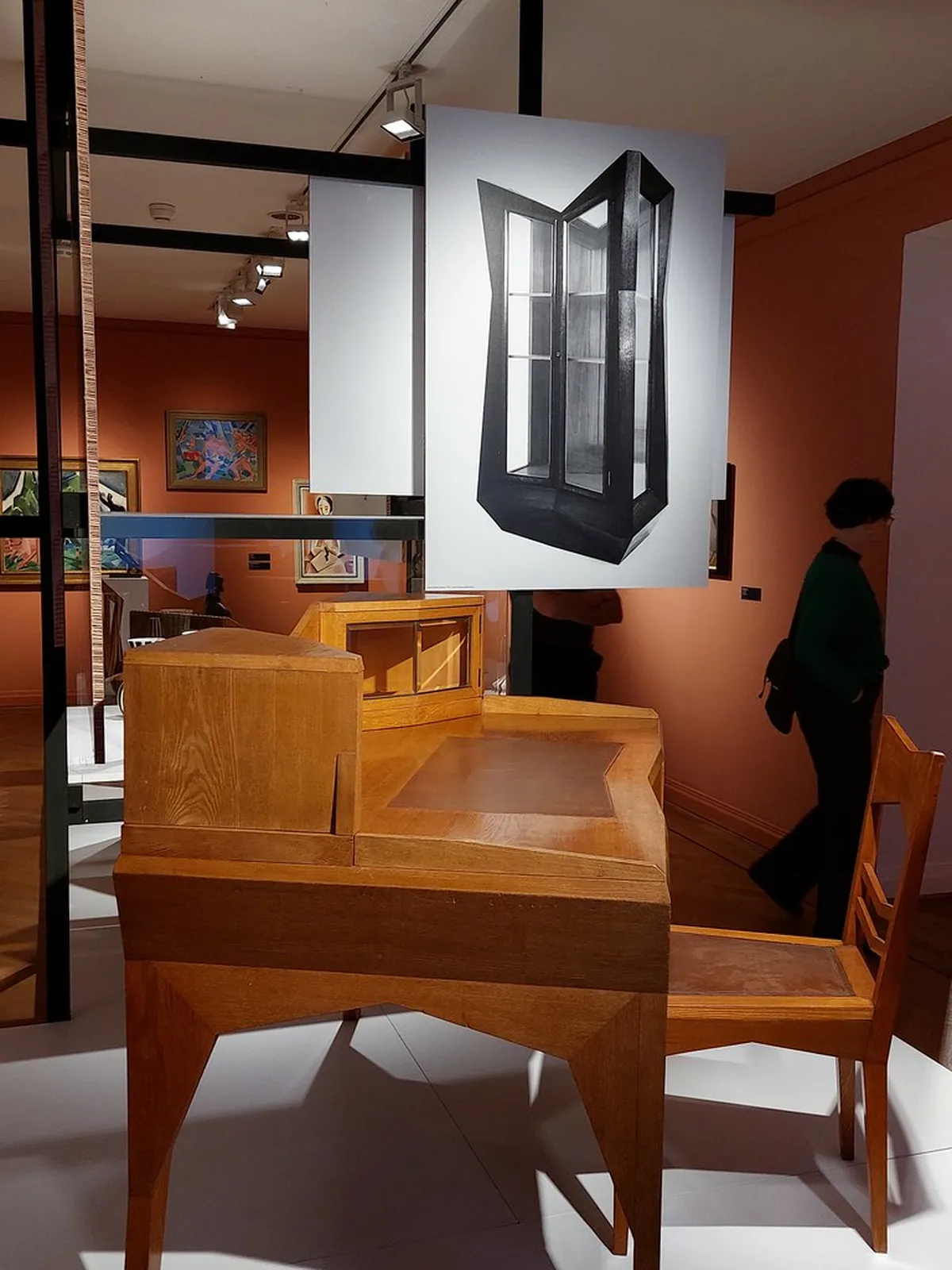
The arrangement in each room reads more like a large-scale installation artwork than a traditional display. Objects sit at unexpected heights, face unexpected directions, and are grouped for visual effect rather than historical accuracy. A dentist's chair might face a plate camera; a rack of prosthetic legs might stand beside industrial lighting rigs. The effect is that familiar shapes become alien.
The DDR-Plattenbau setting is not incidental. Korneev chose a building from the same era as many of his objects, and the grey concrete interior amplifies the atmosphere. The design lamps scattered throughout — themselves part of the collection — provide the only controlled lighting, casting each cluster of objects in its own dim pool. The result is closer to a film set than a museum, which is precisely the intention.
| Visitor Type | Admission Price |
|---|---|
| Individual adult | €14 |
| Group (10+ people) | €12 per person |
| Group (15+ people) | €11 per person |
Highlights: Must-See Bizarre Objects and Installations
The iron lung is one of the most striking objects in the collection. It is a full-scale mechanical ventilator from the mid-20th century — a large metal cylinder designed to breathe for a patient with paralysed respiratory muscles. Out of its clinical setting, it looks like something between a coffin and a boiler, and Korneev has made it a centrepiece of one room precisely because of how dissonant that resemblance is.
The prosthetics and bionic devices form another dense cluster. Rows of artificial limbs, orthopaedic braces, and surgical tools sit alongside each other without context, creating a room that is simultaneously clinical and sculptural. Visitors who work in medicine often find this section particularly absorbing; those who do not find it either unsettling or oddly beautiful.
Film and photography equipment appears throughout several rooms. Large-format plate cameras, darkroom enlargers, projectors, and editing machinery fill shelves and floor space. The optical and mechanical complexity of pre-digital photographic tools is genuinely impressive when massed together. There are also unusual vehicles, protective suits, and — reportedly — a small submarine shaped like a cat, which receives a disproportionate amount of visitor attention.
The on-site remains of the former Chinese and GDR restaurant are worth noticing as you move between rooms. The painted walls and partial decorations have been left in place, which means the museum layers two separate historical strata: the objects inside and the building's own memory.
No labels or interpretive texts exist in the museum — each visitor is invited to speculate about what each object was originally designed to do. The founder values your guesses, even the wrong ones, as part of the experience.
The Guessing Game: Why No Labels Is the Point
The absence of labels is the most discussed aspect of Designpanoptikum, and it is worth understanding what Korneev actually intends by it. The museum is not making an anti-intellectual statement. It is structured around a specific game: visitors guess what each object was originally built to do, and their guesses — particularly the wrong ones — are the experience.
Korneev keeps a running "best-of" list of visitor misidentifications. The iron lung, for instance, has been described by multiple visitors as "a ventilation machine that works more like a metal coffin" — a wrong answer that is also a kind of correct answer about how the object feels. A medical device for sustaining life becomes, through misdescription, something ominous. This collision between actual function and perceived function is what the museum is about.
Visitors who come expecting a conventional informational experience tend to get more out of the museum if they lean into speculation rather than trying to look things up on a phone mid-visit. The objects reward sustained attention. Korneev or a museum host is typically present and will confirm or discuss guesses if asked — but only after visitors have formed their own interpretation.
What First-Time Visitors Should Expect
The museum is genuinely small. Ten rooms sounds substantial, but the rooms are not large, and a quick walk-through takes under twenty minutes. Allow 45 to 60 minutes if you want to engage properly with the objects, and closer to 90 minutes if Korneev is present and in the mood to talk — which is common on less busy afternoons.
Saturdays tend to be busier than Thursdays, particularly in tourist season (May through September). If you want a quieter visit with a better chance of extended conversation with the founder, a Thursday afternoon works well. The museum is at its most atmospheric in the afternoon light when the design lamps compete with daylight coming through the small windows.
There is no café or cloakroom. The museum is not suitable for pushchairs in most rooms. Children who are comfortable with slightly eerie, visually intense spaces often enjoy the experience — the guessing-game format works particularly well for inquisitive children aged eight and up. Younger children may find some of the medical displays unsettling. The visit is entirely self-paced; there is no timed entry or enforced route.
Vlad Korneev speaks English, German, and Russian. English-speaking visitors are well catered for. Group visits of ten or more people are best arranged in advance via the contact form on the official site.
Exploring the Neighbourhood: Nikolaiviertel and Nearby Attractions
Designpanoptikum sits in the Nikolaiviertel, a compact historic district of cobblestone streets and rebuilt medieval-style buildings immediately south-west of Alexanderplatz. The Nikolaikirche — Berlin's oldest church, dating from the 13th century — is visible from Poststraße and worth a few minutes. The Ephraim-Palais, a reconstructed Rococo building on the corner of the quarter, houses changing exhibitions on Berlin's city history.
The Spree River is two minutes' walk away. From the bank beside the Nikolaiviertel you can see the Berlin Cathedral and the east end of Museum Island, which holds five major museums including the Pergamon Museum and the Bode Museum. A combined visit to Designpanoptikum and one of the Museum Island museums makes for a full afternoon that moves between the ultra-mainstream and the very much off it.
Alexanderplatz is a ten-minute walk and provides easy onward connections across Berlin. The Berlin TV Tower (Fernsehturm) observation deck is directly at Alexanderplatz if you want a panoramic view of the city before or after the museum.
Eerie and Unusual Places Near Designpanoptikum
The area around Designpanoptikum has a cluster of unconventional attractions that complement the museum's sensibility. The Stasi Museum in Lichtenberg (accessible by U5 from Alexanderplatz) documents the surveillance infrastructure of East Germany's secret police. The subject matter is historically specific and sobering in a way that pairs interestingly with the DDR-era industrial objects at Designpanoptikum.
The Monsterkabinett on Rosenthaler Straße, roughly fifteen minutes on foot, presents mechanical monsters and moving papier-mâché figures in a basement environment. It is more theatrical than Designpanoptikum and deliberately family-oriented, but shares the same appetite for unsettling the visitor in a controlled way. The Berlin Magic Museum on Große Hamburger Straße explores magic and spirituality across several centuries.
The Museum der Dinge (Museum of Things) in Kreuzberg is the most natural companion visit for anyone drawn to Designpanoptikum's theme. It catalogues German product design and everyday objects from 1880 to the present — broadly the same century as Korneev's collection, but approached through a design-history lens with labels and chronology rather than surreal installation. Comparing the two approaches reveals something about both.
For digital culture, the Computerspielemuseum (Computer Games Museum) near Karl-Marx-Allee traces the history of video gaming with hands-on exhibits. It is lighter in tone than Designpanoptikum but shares the interest in obsolete technology as cultural artefact.
Frequently Asked Questions
What is the Designpanoptikum museum?
Designpanoptikum is a unique museum in Berlin that showcases bizarre industrial objects from the 20th century. It presents these items in surreal, artful installations. The museum encourages visitors to interpret the objects themselves, without traditional labels.
How much does it cost to enter Designpanoptikum?
Entry to Designpanoptikum typically costs around 6-7 Euros per person. However, prices can change, so it is always best to check the official museum website for the most current information before your visit. This ensures you have the accurate ticket price.
What are the opening hours for Designpanoptikum?
Designpanoptikum's opening hours usually begin in the afternoon, often from 11 AM or 1 PM until 6 PM. Specific days and times can vary, so consult the official Designpanoptikum website or Berlin.de museum listings for the most up-to-date schedule. It is wise to verify before planning your trip.
Is Designpanoptikum suitable for children?
Yes, Designpanoptikum can be suitable for children who are curious and enjoy visual exploration. The lack of labels and the strange objects can spark their imagination. Younger children might find some displays a bit eerie, but generally, it is an engaging experience for all ages.
How long does it take to visit Designpanoptikum?
Most visitors spend between 1 to 1.5 hours exploring Designpanoptikum. This allows ample time to absorb the surreal atmosphere and contemplate the various installations. If you enjoy deeper reflection, you might spend a bit longer. Plan accordingly for your visit.
More Surreal and Uncategorisable Collections
The Designpanoptikum belongs to a category best described as collections that refuse to explain themselves. London's God's Own Junkyard packs decades of salvaged neon into a working warehouse. In Venice, Libreria Acqua Alta stores its stock in bathtubs and a gondola because the shop floods, and has become a destination on that logic alone. Prague's Speculum Alchemiae occupies a house with a genuine alchemical laboratory found beneath it.
Designpanoptikum is one of the few Berlin museums that has no obvious comparison point. It is not a historical collection, not a contemporary art space, and not a design archive — it borrows from all three while committing to none of them. Open only on Thursdays and Saturdays from 12:00 to 18:00, with walk-in admission at €14, it asks for relatively little in exchange for something genuinely difficult to categorise. For curious visitors with an afternoon in Mitte, that is a reasonable proposition.
To verify current details, consult the Designpanoptikum on Wikipedia.
Continue exploring
More guides you'll find useful