Stasi Museum Berlin Visitor Guide: Plan Your Chilling Visit
Explore the Stasi Museum in Berlin with our comprehensive visitor guide. Get practical tips on tickets, opening hours, what to see, and how to get there for an insightful experience.
On this page
Stasi Museum Berlin Visitor Guide: Plan Your Chilling Visit
The Stasi Museum in Berlin occupies the actual headquarters where East Germany's secret police ran its surveillance state until the Wall fell in 1989. This is not a reconstruction — you walk through real offices, see real equipment, and stand in the rooms where millions of citizens were monitored, documented, and controlled. If you want a different angle on Berlin's Cold War history, the Anne Frank Zentrum offers an important parallel story. For most visitors, though, the Stasi Museum stands on its own as one of the most sobering and authentically preserved historical sites in Germany. This guide, updated for 2026, covers everything you need to plan a meaningful visit.
Why Visit the Stasi Museum? Historical Significance
The Ministry for State Security, known universally as the Stasi, was among the most effective surveillance organizations ever created. At its peak in the 1980s it employed roughly 91,000 full-time officers and relied on an estimated 189,000 unofficial informants — the Inoffizielle Mitarbeiter — who monitored colleagues, neighbors, friends, and family members. The ratio of informants to citizens was far higher than that of the Nazi Gestapo or the Soviet KGB. Understanding the Stasi's reach reframes how you think about ordinary life in the GDR: who you could trust, what you could say, and what it cost to speak freely.
The museum occupies Building 1 (Haus 1) of the original Normannenstraße complex in the Lichtenberg district. The site has been preserved as both a research center and a memorial since citizens stormed and secured the headquarters on 15 January 1990, preventing the destruction of remaining documents. That act of preservation is why so much is still intact: the furniture, the files, the equipment. Nothing here has been dressed up for tourists. That authenticity is what separates this place from almost every other Cold War site in Berlin.
Founded in 1950, the Stasi served the Socialist Unity Party (SED) as its instrument for suppressing political dissent. It ran 17 remand prisons, conducted psychological torture without leaving physical marks, and maintained files on roughly one-third of the entire East German population. The museum contextualizes all of this, tracing the Stasi from its founding through the peaceful revolution of autumn 1989 and the eventual collapse of the GDR.
Planning Your Visit: Tickets, Hours, and Practical Details
The museum is open Monday to Friday from 10:00 to 18:00, and Saturday, Sunday, and public holidays from 11:00 to 18:00. Last admission is shortly before closing. In 2026, standard adult admission is €12, with a reduced rate of €9 for students, trainees, job seekers, severely disabled visitors, and seniors. Visitors aged 13–18 pay €6, and school groups pay €5 per person. Children under 13 enter free. Always confirm current pricing on stasimuseum.de before you go, as the museum periodically updates its rates.
| Visitor Category | Admission Price |
|---|---|
| Adult | €12 |
| Reduced (students, trainees, job seekers, severely disabled, seniors) | €9 |
| Children and teens (13–18) | €6 |
| School groups (per person) | €5 |
| Children under 13 | Free |
Individual visitors do not need to book tickets in advance — you purchase them at the entrance. Guided tours for groups require prior registration. An audio guide is available in multiple languages and is worth the additional fee: the exhibits contain a great deal of dense text, and the audio guide adds personal accounts and narrative context that make the history feel immediate rather than academic. Plan for at least two hours; visitors who take the audio guide and read the exhibit panels carefully often spend closer to three.
The audio guide is available in multiple languages and adds personal accounts and narrative context that make the history feel immediate. The exhibits contain dense text, so the audio guide substantially enhances the experience.
Photography is permitted throughout most of the museum. The building is largely accessible for visitors with mobility impairments — ramps and elevators serve the main exhibition floors in Haus 1. Some corridors in the historic structure are narrow, and the layout can feel labyrinthine on a first visit. Pick up a floor plan at the ticket desk to orient yourself. The museum is located at Ruschestraße 103, Haus 1, 10365 Berlin, in Lichtenberg.
What to See Inside the Stasi Museum
The centrepiece of the museum is the preserved suite of offices belonging to Erich Mielke, the Minister for State Security from 1957 until the Wall fell. His office, conference room, and private quarters remain exactly as they were in 1989 — down to the furniture, the telephones, and the fixtures. Mielke ran the Stasi for 32 years and built it into a machine that could track virtually any citizen at will. Standing in his office, you understand the banality of that power: it looks like a mid-level bureaucrat's workspace, which is precisely the point.
The permanent exhibition, titled "State Security in the SED Dictatorship," covers three floors. It traces the Stasi's organizational structure, its methods of recruitment, its interrogation techniques, and the role of informants. Display cases hold original spy equipment: cameras concealed in shirt buttons, microphones hidden inside neckties and watering cans, hollow tree stumps used as dead-letter drops. One display that stops almost every visitor shows the Geruchsproben — sealed glass jars containing strips of cloth used to collect the body odor of suspected dissidents. Specially trained dogs could then track a person from that scent sample alone. It is one of the most viscerally unsettling details in the entire museum, and no other Cold War site in Berlin documents the practice with this level of physical evidence.
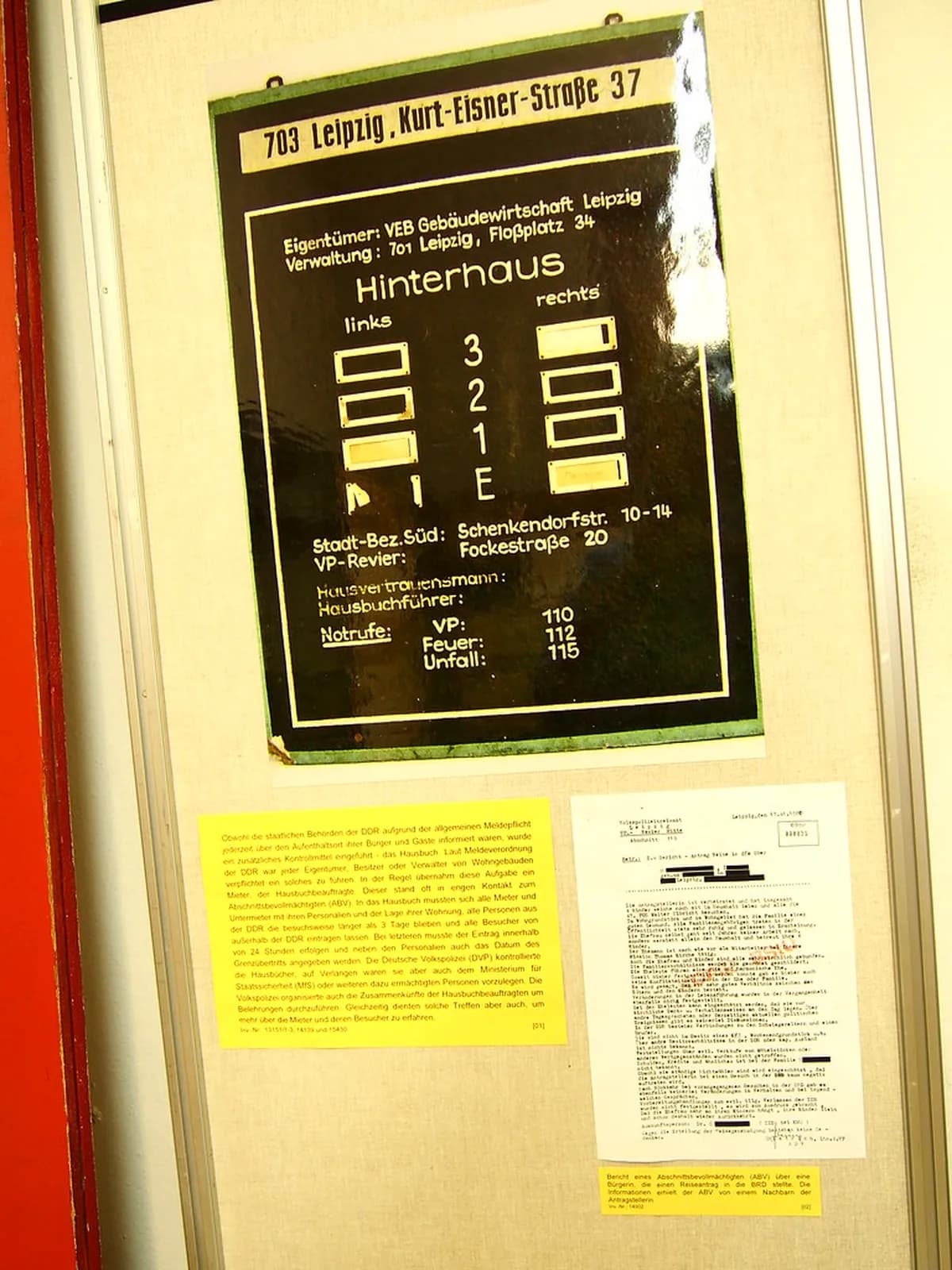
The second floor has been left largely untouched since 1990. Filing cabinets, chairs, and desks sit as they were abandoned the day the building was secured. The Stasi had begun shredding documents when it became clear the regime was collapsing; what remains represents a fraction of what once existed, and archivists are still reassembling torn fragments today. The exhibits here show how the Stasi used psychological pressure — sleep deprivation, prolonged isolation, deliberate disorientation — methods designed to leave no visible marks while breaking a person's resistance completely.
Free public guided tours take place every weekend in both German and English. These tours are led by staff and volunteers, some with personal connections to the history, and they add considerable depth to what you will see in the exhibition. Check the current schedule on stasimuseum.de when planning your visit.
Stasi Museum Reviews: Is It Worth Visiting?
Visitors consistently rate the Stasi Museum as one of the most affecting historical sites in Berlin. The authenticity of the preserved spaces — actual offices, actual equipment, the actual building — creates a weight that reconstructed exhibitions cannot replicate. WhichMuseum reviewers describe it as "informative and chilling" and note that the factual presentation allows visitors to draw their own conclusions rather than being guided toward a particular emotional response. That restraint is one of the museum's greatest strengths.
The main caveat is that the museum is text-heavy. Non-German speakers will find the audio guide or a guided tour essential; some information panels are available in English, French, Spanish, Italian, Swedish, and Polish, but the density of material rewards those who come prepared. Visitors who rush through in under 90 minutes tend to leave with an impression of "interesting spy gadgets" rather than the fuller, more disturbing picture the museum is trying to convey. The building layout can also disorient first-time visitors — the floor plan helps.
The museum works best for anyone with an interest in Cold War history, authoritarian governance, or German reunification. It is less suited to young children: the subject matter involves political repression, psychological torture, and state violence, and most of the content is presented at an adult reading level. Teenagers aged 14 and above who have some historical background will generally find it engaging rather than overwhelming.
Getting There: Public Transport from Central Berlin
The nearest U-Bahn station is Magdalenenstraße on the U5 line, a five-minute walk from the museum entrance. The U5 connects directly to Alexanderplatz (around 10 minutes) and Berlin Hauptbahnhof via transfer at Alexanderplatz. From Alexanderplatz, take the U5 eastbound toward Hönow and exit at Magdalenenstraße. The journey from Alexanderplatz takes roughly 10 minutes. From Berlin Hauptbahnhof, take the S-Bahn or U55 to Alexanderplatz first, then transfer to the U5.
Alternatively, trams M13 and 21 stop at the Frankfurter Allee/Möllendorffstraße intersection, also a short walk from the museum. Tram connections reach Prenzlauer Berg and Friedrichshain without requiring a U-Bahn transfer. A standard AB zone single ticket (Einzelfahrschein AB, around €3.50 in 2026) covers all journeys within the city's AB zone. Validate your ticket before boarding. The BVG app shows real-time departures and will route you from wherever you are staying. If you hold a Berlin Welcome Card, it covers all public transport and includes a discount on museum admission.
Driving is not recommended — parking in Lichtenberg near the museum is limited and the public transport connections are fast. The walk from Magdalenenstraße station takes you past the outer grounds of the former Ministry complex, giving you a sense of the site's scale before you enter.
Pair It with Hohenschönhausen: The Other Half of the Story
The Stasi Museum shows you where the secret police planned and administered its operations. The Gedenkstätte Berlin-Hohenschönhausen — the former Stasi remand prison in the neighboring district — shows you what happened to the people they arrested. Together, the two sites cover the full arc of how the Stasi operated: command, surveillance, detention, and interrogation. No other city in the world has both the headquarters and the primary prison of its former secret police preserved and open to the public within a few kilometers of each other.
Hohenschönhausen is accessible by tram from the Stasi Museum in about 20 minutes: take tram M13 from Frankfurter Allee toward Hohenschönhausen and exit at Freienwalder Straße. The prison memorial runs guided tours exclusively — you cannot walk through independently — and the tours are conducted in large part by former prisoners who were actually held there. The testimonies are first-person accounts of isolation cells, psychological interrogation techniques, and the experience of a system designed to make you feel entirely alone. Booking ahead is strongly recommended, especially on weekends; slots fill fast through the memorial's official site. Tours run in German and English.
A combined visit to the Stasi Museum in the morning and Hohenschönhausen in the afternoon makes for a full day that is emotionally demanding but historically complete. Allow time to decompress between visits — a coffee near Frankfurter Allee gives you a break and puts you on the right tram line for the second leg.
Other Nearby Attractions Worth Combining
The DDR Museum on the Spree riverfront, near the Berlin Cathedral, offers an interactive and considerably lighter look at everyday life in East Germany. It covers what people ate, how they dressed, and what leisure looked like under the SED regime — a useful counterpoint to the Stasi Museum's focus on repression. It is about 20 minutes by U-Bahn from Magdalenenstraße (U5 westbound to Alexanderplatz, then a short walk). Expect queues at the DDR Museum on weekends.
The Berlin Wall Memorial at Bernauer Straße preserves an original stretch of the inner-city border complete with the death strip and a documentation center. It is free to enter and operates as an outdoor monument open around the clock, with the indoor exhibition open Tuesday to Sunday 10:00–18:00. From the Stasi Museum, take the U5 west to Alexanderplatz and then the U8 north to Bernauer Straße. For visitors interested in Cold War espionage from the Western side, the Teufelsberg listening station — the former NSA field station on a hill made of wartime rubble — offers a very different kind of atmosphere.
If you are exploring the Lichtenberg district on foot after your visit, the area around the former Ministry complex preserves a great deal of GDR-era architecture that gives you a sense of what East Berlin actually looked like day-to-day. The Computerspielemuseum is a U-Bahn stop away and provides a completely different but equally historically grounded afternoon if you have children or teenagers in your group.
Tips for a Smooth and Reflective Experience
Visit on a weekday morning to avoid the heaviest crowds. Weekend afternoons and school holidays bring the largest groups, which can make quiet contemplation difficult in the smaller rooms. The months of April, May, September, and October generally offer a better experience than peak summer: fewer visitors and comfortable temperatures for the walk from the U-Bahn station.
Weekday mornings offer a more reflective experience; weekend afternoons and peak summer bring large groups. April, May, September, and October are ideal months for visiting with fewer crowds.
The museum deals with state violence, psychological torture, and the systematic destruction of private life. Some visitors find certain exhibits — particularly the isolation cell reconstructions and the testimonies of those who were detained — genuinely distressing. This is not a reason to avoid the museum, but it is worth knowing in advance, especially if you are visiting with someone who has personal experience of authoritarian surveillance.
Photography is permitted inside without flash. The museum asks visitors to be respectful of the site's memorial character — avoid loud conversations near exhibits that document personal suffering. The tone of most visitors is naturally quiet and attentive; the space itself tends to enforce that. Bring reading glasses if you need them: the exhibit text is dense and the font sizes vary across different display formats.
Free weekend public tours are an excellent option if your schedule allows. They typically run at 11:00 and 14:00 on Saturdays and Sundays, but confirm times on stasimuseum.de before you go. If you arrive without an audio guide and the tours are not running, the English-language information panels are sufficient to follow the main narrative — just budget more time.
Frequently Asked Questions
How much time should you plan for a Stasi Museum visit?
Plan for at least 2 to 3 hours to fully explore the Stasi Museum. This allows enough time to read the exhibits and absorb the historical context. If you opt for an audio guide, you might want to allocate closer to 3 hours.
Is the Stasi Museum worth including on a short Berlin itinerary?
Yes, if you have a strong interest in Cold War history, it is worth including. For a short itinerary, prioritize other key Berlin attractions first. However, its unique insight into state surveillance makes it a compelling choice.
Is the Stasi Museum suitable for children?
The Stasi Museum is generally not recommended for young children due to its serious and complex themes. It might be suitable for older teenagers (12+) with an interest in history. Parental discretion is strongly advised.
What should travelers avoid when planning a Stasi Museum visit?
Avoid visiting on weekend afternoons or during major public holidays to escape the largest crowds. Do not expect lighthearted or interactive exhibits, as the museum's tone is somber and reflective. Also, do not forget to check current opening hours online.
Where Else to Confront Europe's Authoritarian Past
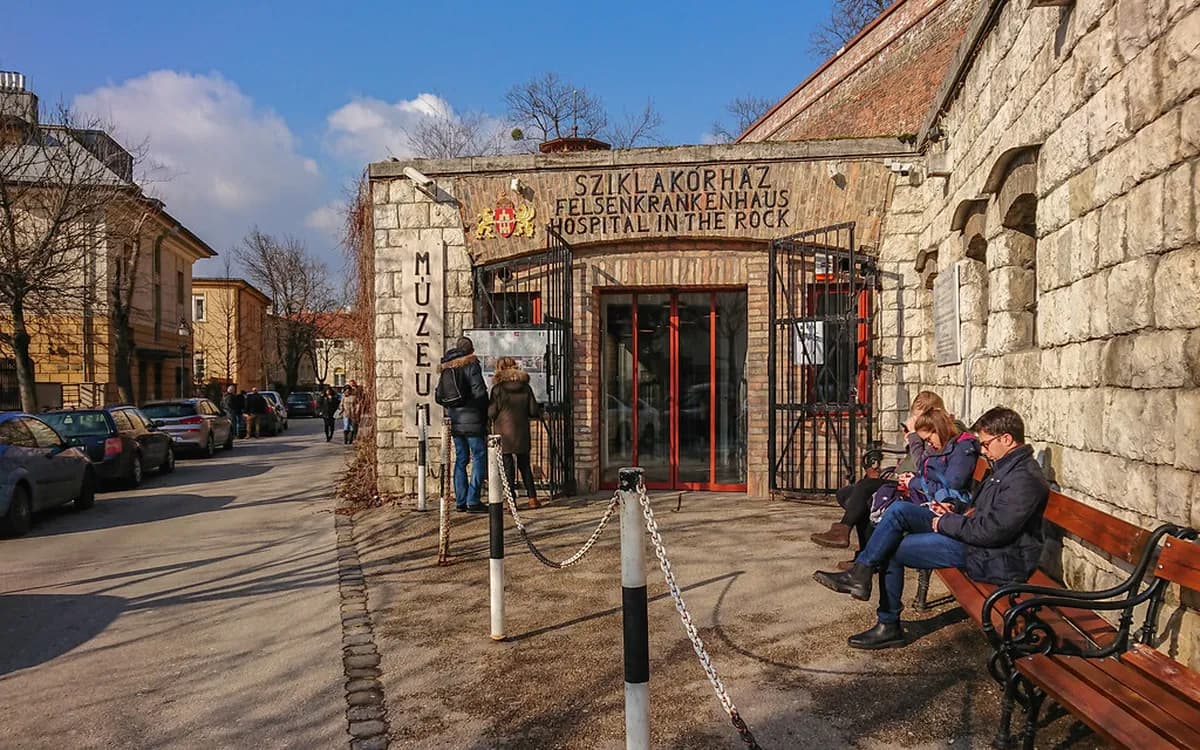
If the Stasi Museum leaves you wanting the wider European picture, three other cities preserve the same story from a different angle. Budapest exiled its Communist-era monuments to a field on the city's edge rather than destroying them, and Memento Park is the result — Lenin and Marx standing in a bare enclosure outside the ring road. Also in Budapest, the Hospital in the Rock runs through the tunnels beneath Buda Castle and ends in a Cold War nuclear bunker. In Lisbon, the Aljube Museum occupies a former political prison and documents resistance to the Salazar dictatorship from inside the cells themselves.
The Stasi Museum is one of the few places in Europe where the machinery of a surveillance state — the desks, the cameras, the files, the offices of the people who ran it — is still physically present and open to the public. It is sobering, occasionally distressing, and entirely essential for anyone who wants to understand what the Cold War meant for the people living inside it. Plan your visit for a weekday, allow at least two hours, and consider pairing it with Hohenschönhausen for a complete picture of how the Stasi operated. Few days in Berlin will leave a deeper impression.
For the latest official information, see the Stasi Museum on Wikipedia.
Continue exploring
More guides you'll find useful