Aljube Museum – Resistance And Freedom Visitor Guide Travel Guide
Plan your Aljube Museum – Resistance and Freedom visit with top picks, neighborhood context, timing tips, and practical booking advice for a smoother experience in Lisbon.
On this page
Aljube Museum – Resistance And Freedom Visitor Guide
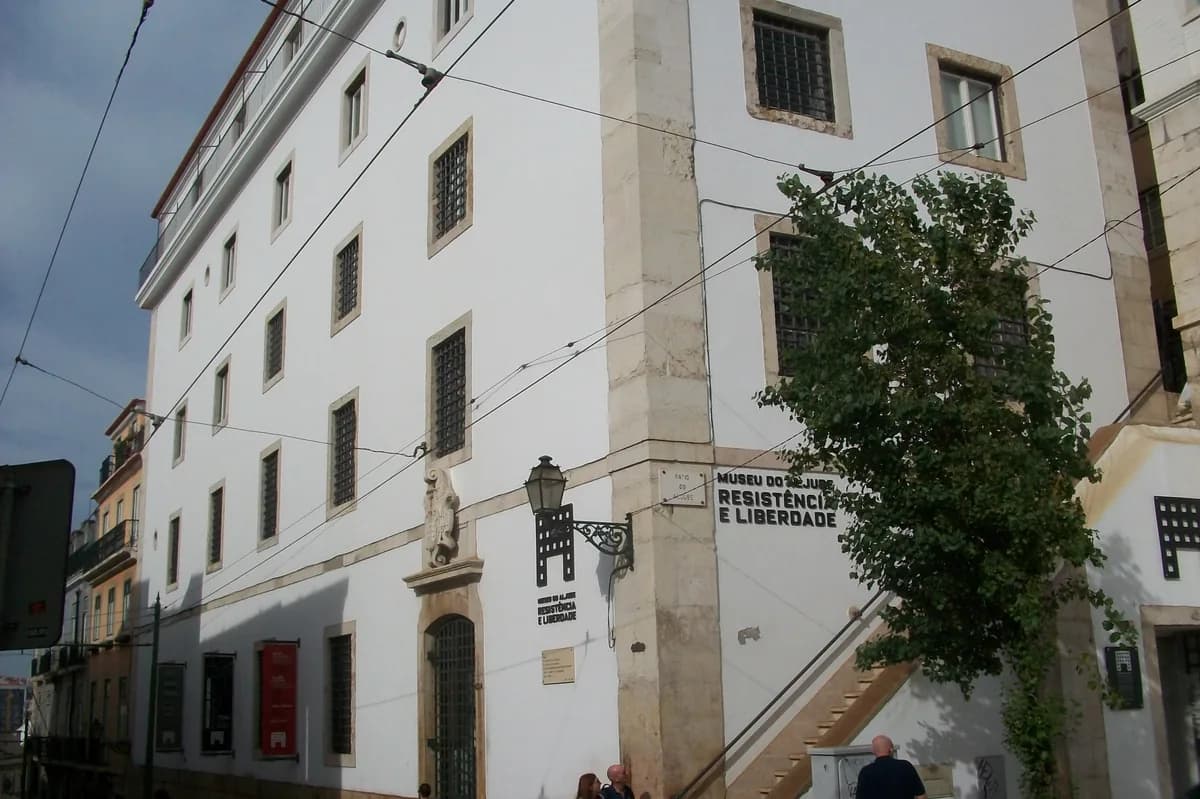
The Aljube Museum – Resistance and Freedom occupies a former political prison on Rua de Augusto Rosa, just uphill from Lisbon's Sé cathedral in the Alfama district.
It chronicles Portugal's Estado Novo dictatorship (1926–1974), the PIDE secret police, and the resistance movements that culminated in the 1974 Carnation Revolution.
This visitor guide covers tickets, opening hours, the floor-by-floor layout, nearby attractions, and the historical angles that make the Aljube one of Lisbon's most substantive museum experiences.
Introduction to Aljube Museum: History & Significance
The Aljube Museum – Resistance and Freedom opened on 25 April 2015, the 41st anniversary of the Carnation Revolution. The date was deliberate. The museum's purpose is to document and preserve the memory of resistance to Portugal's Estado Novo dictatorship, which held the country under authoritarian rule from 1926 to 1974. It is a municipal institution, not a private one, and it carries that public responsibility seriously.
The building's name carries centuries of history. "Aljube" derives from an Arabic root meaning dry well, cistern, or dungeon — a word that captures its almost continuous role as a place of confinement. The Estado Novo regime designated it as a political prison from 1928, and it remained one until 1965. Opponents of the dictatorship — trade unionists, communists, students, journalists, lawyers — passed through its cells, many held without trial or access to legal counsel by the PIDE, the secret political police responsible for surveillance, interrogation and torture.
What most visitor guides overlook is the colonial war dimension. From 1961 to 1974, Portugal fought to keep its African empire — Angola, Mozambique and Guinea-Bissau — against independence movements. The wars conscripted a generation of young Portuguese men and drained the state treasury. They also fractured the military officer corps and produced the Armed Forces Movement (MFA), a group of mid-ranking officers who launched the peaceful coup of 25 April 1974. The Aljube Museum gives significant floor space to this anti-colonial struggle, explaining why the revolution happened when it did and why it took the form it did. Understanding this angle makes the whole exhibition considerably richer.
After the Carnation Revolution, the building stood empty for decades before being converted into a place of memory. Today it serves as one of the clearest accounts available anywhere of how authoritarian regimes sustain themselves and how ordinary people resist them. For visitors interested in modern European history, political rights, or the mechanics of dictatorship, it is not simply one option among many in Lisbon — it is a genuine rarity.
Planning Your Visit: Practical Information
The museum is at Rua de Augusto Rosa, 42, 1100-059 Lisboa. It sits five minutes uphill on foot from the Sé cathedral, and roughly ten minutes from Terreiro do Paço metro station (Blue and Green lines). Tram 28E stops on the same street — scenic but slow, and crowded in peak months. Walking up from the waterfront is the most direct approach and lets you pass through the lower Alfama streets on the way.
Opening hours are Tuesday to Sunday, 10:00 to 18:00, with last admission at 17:30. The museum is closed every Monday and on 1 January, 1 May, and 24, 25 and 31 December. General admission is €4. Visitors aged 13–25 pay €2. Seniors aged 65 and over (non-Lisbon residents) and visitors with disabilities pay €2.80. Children up to 12 enter free. Proof of eligibility is required for reduced-rate tickets.
Several free-entry windows exist that most guides do not flag. Lisbon municipal residents enter free on Sunday and public holiday mornings until 14:00. All visitors enter free on 25 April (Freedom Day) and 18 May (International Museum Day). If either date falls within your Lisbon stay, arriving at opening time is advisable to avoid queues. The Lisboa Card also covers entry to the Aljube Museum and includes unlimited metro, tram, and bus travel — useful if you plan to visit two or more museums in a single day.
Free entry is available to all visitors on 25 April (Freedom Day) and 18 May (International Museum Day), and to Lisbon residents on Sunday and public holiday mornings until 14:00.
| Visitor Type | Ticket Price |
|---|---|
| General admission | €4 |
| Youth (13–25 years old) | €2 |
| Seniors (65+, non-Lisbon residents) | €2.80 |
| Visitors with disabilities | €2.80 |
| Children up to 12 | Free |
| Lisbon residents (Sun & holiday mornings until 14:00) | Free |
For enquiries, group visits or guided tour bookings, contact the museum at +351 215 818 535 or info@museudoaljube.pt. Current hours and any temporary closures are posted on the official Aljube Museum website. The museum has a lift serving all floors and ramp access at the entrance. Audio guides in several languages are available at the ticket desk.
Exploring the Museum: Permanent & Temporary Exhibitions
The Aljube's content is spread across four floors, and the layout repays some orientation before you start. The ground floor holds the museum shop and a gallery space for temporary exhibitions. These rotating shows cover specific aspects of the Estado Novo period, human rights themes, or documentary photography, and change every few months. Check the museum website for the current programme — the temporary shows frequently complement the permanent collection rather than overlap with it.
The first through third floors hold the permanent exhibition, organised thematically rather than in strict chronological sequence. Themes include Estado Novo censorship and propaganda, the PIDE surveillance apparatus, clandestine resistance movements, political imprisonment conditions, the colonial wars in Africa, and the popular and civic opposition that grew through the 1960s and early 1970s. Reconstructed isolation cells on the upper floors convey the physical reality of detention — the dimensions are deliberately claustrophobic. Personal testimonies, letters, and audio-visual records including interview footage with former prisoners anchor the exhibits in lived experience.
The final section of the permanent exhibition is dedicated to "Os que Ficaram pelo Caminho" — literally "Those Who Fell by the Wayside." This section honours the victims who did not survive to see the end of the dictatorship: those who died in prison, were killed resisting arrest, or lost their lives in the colonial war. It is the most emotionally direct part of the museum, and worth allowing time for rather than passing through quickly.
The fourth floor houses the auditorium, a documentation centre, and a library that is open to the public. The library holds primary sources, published memoirs, and academic research on the Estado Novo period — a genuine resource if you want to read further. Above it, a rooftop café with an open terrace overlooks the Alfama rooftops and the Tagus River. It is a practical place to decompress after the weight of the lower floors before continuing into the neighbourhood.
Visitor Experience & Reviews: What to Expect
The Aljube consistently earns strong ratings. TripAdvisor aggregates over 330 reviews with an average of 4.6 out of 5. Reviewers describe it as one of Lisbon's most sobering and worthwhile museum experiences, frequently distinguishing it from the city's more decorative cultural institutions. The exhibit text is translated into English throughout, and the curation is clear even for visitors with no prior knowledge of Portuguese history.
The atmosphere is quieter and more contemplative than larger Lisbon museums. Even in peak summer months, crowds are modest. Expect a steady pace through the floors rather than a rushed overview — the testimonial videos and personal documents reward time spent with them. Visitors who have read some background on the Carnation Revolution beforehand consistently report a richer experience. You can browse visitor accounts on WhichMuseum to gauge what others found most impactful.
One observation that appears repeatedly in reviews: the exhibit language is measured and factual rather than sensationalist. The museum addresses difficult material — torture, disappearances, colonial war casualties — with restraint and clarity. That tone makes it accessible to sensitive visitors and teenagers while remaining unflinching about what the regime actually did. First-time visitors and school groups both figure in the reviews, which reflects how well the museum calibrates its approach across age ranges.
Beyond the Museum: Nearby Attractions in Alfama & Lisbon
The Aljube sits at the edge of the Alfama, Lisbon's oldest and most atmospheric neighbourhood. A short walk downhill brings you to the Sé cathedral — a 12th-century Romanesque structure whose nave is free to enter. Continuing uphill from the museum puts you on the route toward São Jorge Castle, whose ramparts give the best panoramic view in central Lisbon. Entry to the castle costs around €15 for adults and is worth booking in advance in summer.
The narrow streets between the museum and the castle are lined with small Fado venues, tascas serving lunch menus under €12, and miradouros — viewpoints — that reward spontaneous detours. Miradouro das Portas do Sol is a five-minute walk east and worth the stop for its view over the Alfama rooftops toward the river. Miradouro de Santa Luzia, a terrace decorated with historic tile panels, is two minutes further.
For a broader Lisbon museum day, the Museu Nacional do Azulejo — fifteen minutes by taxi or Uber from the Aljube — covers six centuries of Portuguese decorative tile art and pairs naturally with a history-focused morning at the Aljube. For an overview of how to sequence the city's main sights and neighbourhoods, the Lisbon attractions guide covers logistics and timing across the different districts.
Making the Most of Your Trip: Tips for a Smooth Visit
Allow 90 minutes to two hours for the permanent exhibition alone. Add 30 minutes if the current temporary show interests you, and another 20 minutes for the rooftop café if you want to sit with the view. Three hours covers the full visit comfortably without rushing any section. Arriving early matters more here than at many Lisbon museums — the cramped reconstructed cells and testimonial video rooms feel different when you have them to yourself.
Weekday mornings between 10:00 and 12:00 are the quietest window. By midday in summer, school groups and tour operators begin to arrive on the upper floors. Saturday afternoons are the busiest period. If you are visiting on 25 April or 18 May for the free-entry days, aim to be at the door at opening time — queues form quickly on both dates. A Tuesday or Wednesday morning in spring or autumn is the easiest visit.
Weekday mornings between 10:00 and 12:00 offer the quietest experience of the museum's exhibits. Plan your visit for a Tuesday or Wednesday morning in spring or autumn to avoid crowds.
Getting there is straightforward from most of central Lisbon. The metro to Terreiro do Paço (Blue or Green line) followed by a ten-minute uphill walk is the fastest option. Tram 28E is the atmospheric alternative but runs slowly and fills up in peak season. Uber and Bolt both operate in the area if the climb from the waterfront is a concern for any member of your group.
A coherent full-day itinerary pairs the museum in the morning with Alfama's streets after lunch, São Jorge Castle in the late afternoon, and a Fado dinner in the evening. Many visitors describe this combination as one of their most complete days in Lisbon. The museum works as the intellectual anchor for a day that layers history, neighbourhood character, and traditional culture.
The Aljube Museum Shop: Unique Souvenirs & Books
The museum shop occupies part of the ground floor near the entrance. It carries a well-chosen selection of books on the Estado Novo period, political repression in Portugal, and the Carnation Revolution, with titles available in both Portuguese and English editions. Academic monographs and accessible popular histories sit alongside each other — useful for visitors who want to read further before or after the visit. Books on the PIDE, on the colonial war, and on individual resistance figures are reliably stocked.
Beyond books, the shop carries items directly connected to the museum's themes: reprints of clandestine resistance newspapers, facsimile documents from the period, and commemorative editions tied to 25 April anniversary exhibitions. These are more considered alternatives to generic tourist souvenirs and tend to appeal to visitors who found the exhibition genuinely engaging. Postcards drawn from the museum's photographic archive are among the most popular lower-cost items.
Purchasing from the shop supports the museum's operating budget. The Aljube is a Lisbon municipal institution, not a commercially driven attraction — the shop is one of its few direct revenue streams. Anything you take away from here connects to the museum's themes in a way that most souvenir purchases do not.
Frequently Asked Questions
How much time should you plan for the Aljube Museum?
Plan to spend at least 2 to 3 hours at the Aljube Museum to fully engage with its exhibits. This allows enough time to read the detailed information and reflect on the powerful stories presented. Rushing through might diminish the impact of this significant historical site.
What are the opening hours for the Aljube Museum?
The Aljube Museum is typically open from Tuesday to Sunday, 10:00 AM to 6:00 PM. It is closed on Mondays and certain public holidays. Always verify the most current operating hours and any special closures on the Official Aljube Museum Website before planning your visit.
How much do tickets cost for the Aljube Museum?
Standard admission to the Aljube Museum is €4, with reduced prices of €2 for visitors aged 13–25 and €2.80 for non-resident seniors (65+) and visitors with disabilities (plus one companion). Children up to 12 enter free, and entry is free for residents of Lisbon on Sunday and holiday mornings until 14:00, as well as with the Lisboa Card. Check the official museum website for up-to-date pricing.
Is the Aljube Museum worth including on a short Lisbon itinerary?
Yes, the Aljube Museum is highly recommended for a short Lisbon itinerary, especially for those interested in history and human rights. Its central location in Alfama makes it easy to combine with other nearby attractions. It offers a unique and impactful perspective on Portugal's past.
Is the Aljube Museum suitable for children?
The Aljube Museum addresses mature and sensitive historical themes, which might be intense for very young children. However, older children and teenagers can find the museum highly educational and thought-provoking. Parental discretion is advised, but it offers valuable learning opportunities.
Other Museums of Dictatorship and Resistance
The Aljube was a political prison until 1965 and the museum is built inside the cells, which changes how the documents read. Berlin's Stasi Museum occupies the Ministry for State Security's own offices, Mielke's desk included. Budapest's Memento Park took the other route and exiled its Communist statues to a field rather than breaking them up.
The Aljube Museum – Resistance and Freedom is one of the most substantive history museums in Lisbon — not a decorative institution but a direct account of political repression, colonial war, and the fight for democracy.
Its location uphill from the Sé in the Alfama makes it easy to integrate into a full day in the oldest part of the city.
With correct ticket prices (€4 general / €2 youth), reliable hours (Tue–Sun 10:00–18:00), and free admission on 25 April and 18 May, planning is straightforward once you have the details.
Allow time for all three floors of the permanent exhibition and the rooftop café — both are part of the visit.
For official details, visit the Aljube Museum – Resistance and Freedom on Wikipedia.
Planning more of your trip? See our guides to hidden gems in Lisbon.
Continue exploring
More guides you'll find useful