Estufa Fria Visitor Guide: Practical Tips & What to See in Lisbon
Plan your Estufa Fria visitor guide with top picks, neighborhood context, timing tips, and practical booking advice for a smoother trip.
On this page
Estufa Fria Visitor Guide: Your Complete Handbook to Lisbon's Hidden Greenhouse
Tucked inside Parque Eduardo VII at the north end of Lisbon, Estufa Fria is one of the city's least-crowded and most distinctive green spaces. Admission costs €3.10 — or nothing at all on Sundays and public holidays. This guide covers what to see, how to get there, and how to fit it into a wider day in Lisbon in 2026.
What is Estufa Fria? Lisbon's Unique Greenhouse Garden
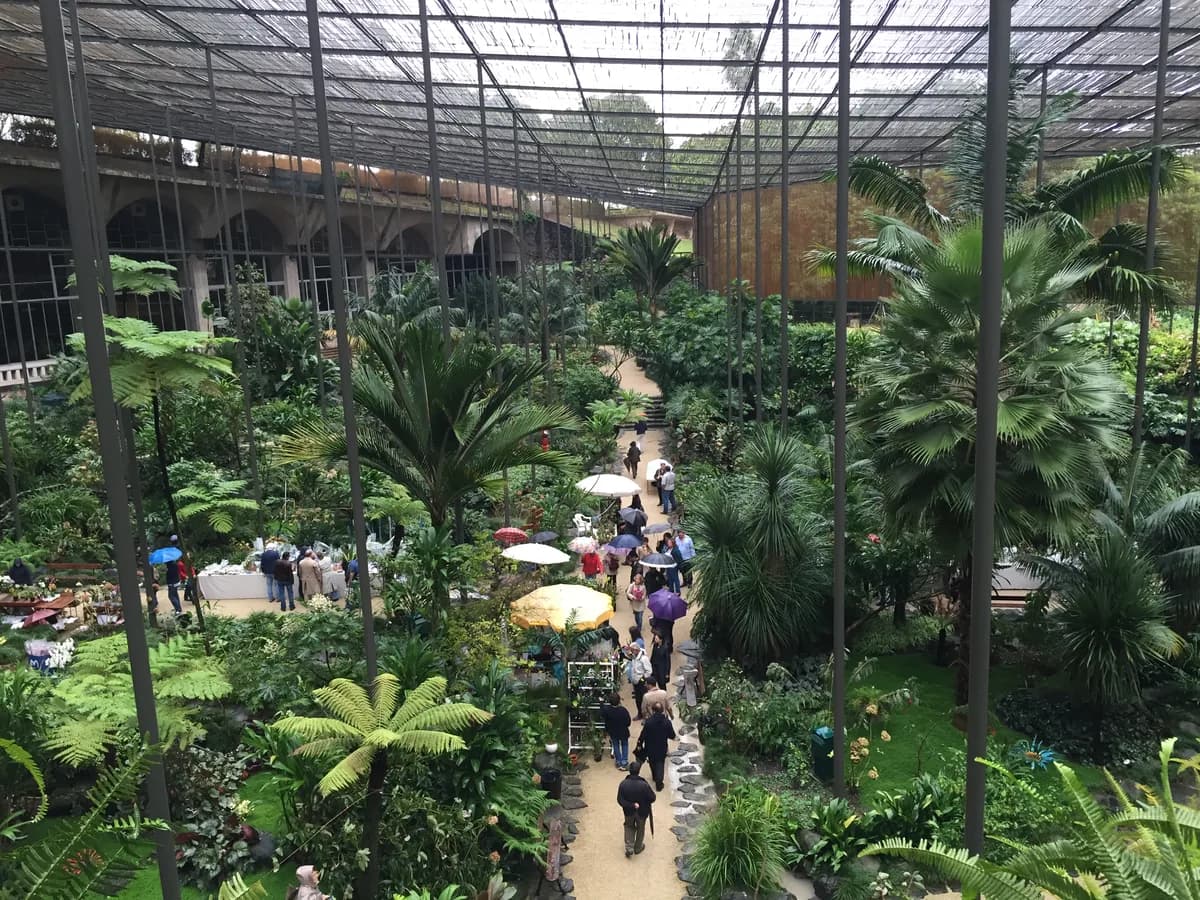
Estufa Fria translates as "cold greenhouse," but the name undersells what it actually is. Unlike a conventional glasshouse, the main structure has no glass and no heating — it is technically a shade house, with a slatted wooden-and-metal roof that admits filtered light and lets outdoor air circulate freely. That open design keeps the interior cool and humid enough for camellias and tree ferns in a city that regularly tops 30 °C in summer.
The garden was built inside a former basalt quarry at the northern tip of Parque Eduardo VII. In 1926 the painter and architect Raul Caraphina discovered the disused quarry, where a local gardener was already using its sheltered walls to protect plants from frost. Caraphina transformed the space into a public garden that opened officially in 1933. It is still managed by Câmara Municipal de Lisboa today, and a major renovation was completed in 2011.
The main Estufa Fria section alone spans over 8,000 m² — more than double the footprint of the Temperate House at Kew Gardens (4,880 m²), which is the largest surviving Victorian glasshouse in the world. The full complex including all three greenhouse sections covers roughly 11,500 m². Despite this scale, Estufa Fria remains one of Lisbon's most overlooked attractions.
Planning Your Visit: Essential Practical Information
Estufa Fria sits at the northern end of Parque Eduardo VII in central Lisbon (postal code 1070-099). The easiest approach by metro is to alight at Parque station (blue line) or Marquês de Pombal (blue and yellow lines) and walk north through the park — around 10 minutes from either stop. Several bus lines also stop near the park's main entrance on Avenida da Liberdade.
Opening hours follow a summer and winter schedule. From the last weekend of March to the last weekend of October, the garden opens daily at 10:00 and closes at 19:00. In winter — from the last weekend of October to the last weekend of March — it opens at 09:00 and closes at 17:00. Last entry is 30 minutes before closing in both seasons. The site is closed on 1 January, 1 May, and 25 December.
Standard admission is €3.10. Reduced tickets cost €1.55 for students and seniors; youth aged 6–18 pay €2.33. Children under 6 enter free. On Sundays and public holidays entry is free for everyone. The Lisboa Card also covers admission — a useful note if you are already using it for metro travel. No advance booking is required for general visits.
| Visitor Type | Price |
|---|---|
| General admission | €3.10 |
| Youth (6–18) / Youth Card holders | €2.33 |
| Students / Seniors | €1.55 |
| Children under 6 | Free |
| Sundays & public holidays (all visitors) | Free |
Arrive at 10:00 on a Sunday for free entry alongside a manageable crowd — combining cost savings with an unhurried morning visit.
Exploring Estufa Fria: Must-See Sections and Highlights
The complex divides into three sections, each with a distinct climate and plant palette. Pick up the free map at the entrance ticket desk — it marks the main plant collections and the water features, which are easy to miss on a first pass.
The Estufa Fria itself is the section that surprises first-time visitors. The slatted roof casts dappled shadows across winding gravel paths, stone steps, small ponds, and cascading waterfalls. The planting is dense: tree ferns, rhododendrons, camellias, banana plants, strelitzias, and colocasias crowd the terraced pathways. Stone arches and statues appear between the foliage. Even on a hot Lisbon afternoon the air inside stays noticeably cool.
At the rear of the main greenhouse, built against the quarry's back wall, are two glass-roofed sections. The Estufa Quente (hot greenhouse) houses tropical plants — coffee trees, mango, bromeliads — in warm, moist air. Beside it, the Estufa Doce (sweet greenhouse) shifts to desert conditions: cacti, aloe, and succulents of varied shapes and sizes fill the space. The contrast between all three sections within a 10-minute walk is one of the most unusual botanical experiences available in any European city.
Tips for a Smooth and Enjoyable Experience
Most visitors cover the full complex in 45 minutes to an hour. Families with young children often need 90 minutes — the fish in the ponds and the winding stone paths tend to slow things down pleasantly. Wheelchair and stroller access works well on the main paved routes, though some side terraces involve steps. Wear comfortable closed shoes: the inner paths are gravel and uneven in places.
Several inner paths are gravel and uneven — comfortable closed-toe shoes with good grip are essential. Some side terraces have steps, so wheeled access is best limited to the main paved routes.
Weekday mornings are the quietest. Summer weekend afternoons bring the most foot traffic, especially along the main Estufa Fria path. If you want free entry alongside a manageable crowd, arrive at 10:00 on a Sunday. In winter, the earlier 09:00 opening makes an unhurried morning visit possible before the rest of the city gets moving.
Photography conditions are consistently good throughout the day. The slatted roof diffuses light evenly, avoiding the harsh shadows common in outdoor gardens at midday. The waterfall in the main greenhouse is the most-photographed spot; the arched bridges over the ponds are an alternative with fewer people in frame.
Beyond the Greenhouse: Nearby Attractions and Itineraries
After Estufa Fria, walk south through Parque Eduardo VII. The hilltop terrace at the top of the park delivers a broad view down Avenida da Liberdade towards the Tagus River and central Lisbon. On the park's eastern side, the Carlos Lopes Pavilion — built for the 1922 World Expo in Brazil and relocated to Lisbon in 1932 — is worth passing by for its elaborate tiled facade.
A 15-minute walk north of the park brings you to the Calouste Gulbenkian Museum, one of the best mid-size art museums in Europe and a natural complement to a morning at the greenhouses. For a harder-edged cultural counterpoint, the Aljube Museum is a metro ride south — it documents Portugal's years under the Salazar dictatorship and takes around two hours.
A practical half-day for 2026: arrive at Estufa Fria at 10:00, spend an hour in the three greenhouses, walk south through the park to the terrace viewpoint, grab coffee on Avenida da Liberdade, then continue to the Gulbenkian by early afternoon. That sequence requires no metro and covers a logical north-to-south sweep through central Lisbon.
Hosting Events at Estufa Fria: A Unique Venue
Beyond its role as a public garden, Estufa Fria also functions as a private event venue. The dedicated space within the complex can accommodate groups of 100 or more and suits gala dinners, buffet dinners, exhibitions, and conferences. Catering is arranged through contracted Lisbon providers. The combination of tropical plants, running water, and stone structures reduces the need for extensive decoration.
Popular dates book up months in advance. Contact Câmara Municipal de Lisboa directly for availability, capacity specifics, and event packages. Given the venue's comparatively low public profile, enquiry turnaround can be faster than at more prominent Lisbon prestige venues — but early contact is still essential for any peak summer date.
Why Estufa Fria Is Worth Your Time in Lisbon
At €3.10 — or free on Sundays — Estufa Fria consistently over-delivers on the experience-to-cost ratio. It is one of the few places in central Lisbon where you can spend a full hour in near-silence, surrounded by hundreds of plant species, without competing with tour groups or paying significant admission.
The slatted-roof shade house design is genuinely unusual — most visitors have never encountered anything quite like it. Combined with the basalt quarry setting, three climatically distinct greenhouse sections, and the free Sunday entry policy, it stands as one of the most distinctive single-hour experiences the city offers. Its continued absence from most top-20 Lisbon lists is arguably its best feature.
Frequently Asked Questions
What is the Estufa Fria and where is it located?
The Estufa Fria is a large, covered botanical garden in Lisbon, Portugal, known for its diverse plant collections. It is nestled within Parque Eduardo VII, just north of the city center. This location makes it easily accessible by public transport or a short walk from central areas.
How much does it cost to enter Estufa Fria?
General admission to Estufa Fria is just €3.10, with reduced rates of €2.33 for youth aged 6–18 and Youth Card holders and €1.55 for students and seniors; children under 6 enter free. Admission is also free for everyone on Sundays and public holidays, and the gardens are included with the Lisboa Card. Check the official Estufa Fria website for the latest pricing.
What are the opening hours for Estufa Fria?
Estufa Fria generally opens in the morning, around 10:00 AM, and closes in the late afternoon or early evening. Specific hours can vary seasonally, so it is always best to verify on the official Lisbon tourism website before your visit. This ensures you have the most accurate information.
Is Estufa Fria wheelchair accessible and good for kids?
Yes, Estufa Fria is largely wheelchair and stroller accessible, with wide, paved main paths. It is also an excellent attraction for children, who often enjoy exploring the lush environment, spotting fish in ponds, and discovering various plants. It offers an engaging and educational experience for families.
Can you host events at Estufa Fria?
Yes, Estufa Fria serves as a unique venue for various events, including private celebrations and corporate functions. Its beautiful natural setting provides a memorable backdrop for any occasion. Contact the Lisbon City Council for detailed information on booking procedures, capacity, and available spaces for events.
Estufa Fria is one of those rare attractions that costs almost nothing and delivers far more than expected.
Three distinct greenhouse climates, a basalt quarry setting, and free Sunday entry make it a practical addition to any Lisbon itinerary.
Go in the morning on a weekday, pick up the map at the entrance, and allow at least an hour.
For authoritative information, refer to the Estufa Fria on Wikipedia.
Planning more of your trip? See our guides to hidden gems in Lisbon.
Browse all Lisbon attractions in our Lisbon attractions hub.
Continue exploring
More guides you'll find useful