Serralves Visitor Guide: Museum, Park & Villa (Porto, Portugal)
Plan your visit to Serralves Foundation in Porto. Discover the Museum of Contemporary Art, explore the stunning Park & Villa, and get practical tips for your trip.
On this page
Your Essential Serralves Visitor Guide: Museum, Park & Villa
Serralves Foundation sits in Porto's western Foz district, about 5 km from the city centre, and brings together three distinct cultural spaces on a single estate.
The Museum of Contemporary Art, the Art Deco Casa de Serralves villa, and an 18-hectare park with formal gardens, woodland, and a treetop walk make this one of Portugal's most ambitious cultural projects.
Most visitors spend at least half a day here. A full day is not unusual, and many leave wishing they had more time.
Introduction to Serralves: Museum, Park & Villa
The Serralves Foundation (Fundação de Serralves) was established in 1989 after the Portuguese state acquired the estate from its last private owner. Its mission is to promote contemporary art, architecture, and environmental awareness, and it has grown into one of the most internationally recognised cultural institutions in the country.
The foundation comprises three components that work as a single experience. The Museum of Contemporary Art holds both a permanent collection and rotating international exhibitions. The Casa de Serralves is a preserved Art Deco villa from the 1930s that now functions as an independent exhibition space. The park connects and surrounds both buildings, blending formal gardens with woodland, sculpture trails, a farm, and a treetop walk.
A combined ticket covers all three areas and is the way most visitors explore the site. The foundation also runs an active programme of concerts, guided tours, educational workshops, and its signature annual festival — all of which help explain why Serralves attracts well over half a million visitors per year.
Planning Your Visit: Tickets, Hours & Best Time to Go
General admission covering all spaces — the Museum of Contemporary Art, the Álvaro Siza Wing, the Park, Treetop Walk, Serralves Villa, and House of Cinema — costs €24. A park-only ticket is €15. Portugal residents pay €20 for all spaces or €12 for the park only. Children under 12 enter free. Visitors aged 12–17, students up to Master's level (maximum age 25), and seniors aged 65 and over pay 50% of the standard price. Porto Card and Youth Card holders receive a 20% discount. Visitors with a certified disability of 60% or more enter free.
One date worth noting: entry to the entire site is free for everyone on the first Sunday of each month. This is well known among Porto residents, so expect larger-than-usual crowds, particularly on sunny mornings from spring through autumn. Arrive at 10:00 when the gates open to beat the midday rush. Booking online in advance is recommended for popular exhibition periods — serralves.pt always shows the current programme and ticket availability.
Opening hours follow a seasonal pattern. From April to September, the site opens weekdays 10:00–19:00 and weekends and public holidays 10:00–20:00. From October to March, weekday hours shorten to 10:00–18:00, with weekends and holidays running 10:00–19:00. The foundation is closed on 25 December and 1 January. The best time for the park is late April to June, when the rose garden is at its peak and visitor numbers are manageable. Early October also offers pleasant weather and fewer summer tourists than August.
Entry to the entire site is free for everyone on the first Sunday of each month. Arrive at 10:00 when gates open to beat the midday crowd.
Exploring the Serralves Museum of Contemporary Art
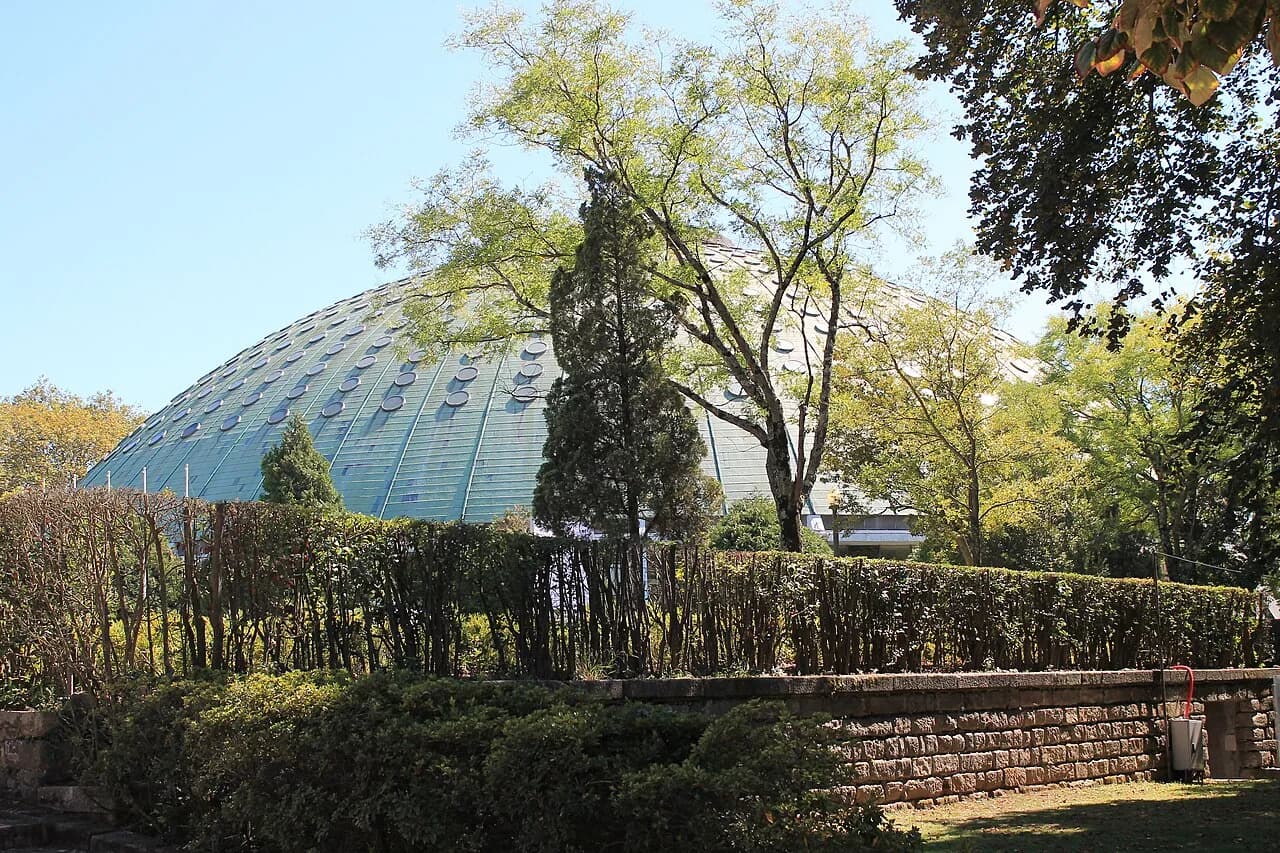
The Museum of Contemporary Art was designed by Álvaro Siza Vieira, the Pritzker Prize-winning Portuguese architect, and inaugurated in June 1999. The building is not a neutral container for art — it is a spatial experience in its own right. Siza laid it out in a U-shape so that the park can enter the building through open courtyards, and natural light is managed differently in each room through skylights, framed windows, and an inverted-table ceiling system in the right wing that diffuses light without glare.
The journey through the museum begins on a covered walkway from the entrance gate — a deliberate decompression between street and interior. The Atrium serves as the building's nerve centre, giving access to the ground-floor galleries, an auditorium in the basement, and a restaurant and terrace on the upper floor with views over the tree canopy. The succession of rooms across the Central Room, the Right Wing, and the Left Wing each feel architecturally distinct: a marble-floored room with large south-facing windows, a wooden-floored room with three progressively rising ceiling heights, and a basement staircase that narrows before opening onto light and space. Pay attention to what the windows frame — ancient chestnut trees, a magnolia courtyard, a strip of park woodland — these framed views are part of Siza's design intent.
A 2022 extension added the Álvaro Siza Wing, significantly expanding the gallery floor area for large-scale installations and permanent collection displays. The site also includes the House of Cinema (Casa do Cinema), a dedicated space for film and moving-image programmes. Both are included in the general admission ticket. Allow at least two hours for a thorough visit of the museum alone.
Discovering the Serralves Park & Gardens
The 18-hectare park was originally laid out alongside the villa in the 1930s in the French formal tradition, before evolving into a richer mix of styles over subsequent decades. Today it contains formal parterres, a rose garden at peak bloom from May to June, ancient woodland with chestnut and plane trees, a lakeside area, kitchen gardens, a working farm, and numerous contemporary sculptures integrated into the landscape.
The Treetop Walk is one of the most visited features, particularly for families. It is a suspended wooden walkway running above the woodland canopy, giving a different perspective on both the trees and the grounds below. The farm section — with chickens, ducks, and small livestock — is consistently popular with younger children. Throughout the park, outdoor art installations by Portuguese and international artists invite discovery; some are permanent, others rotate with the museum's exhibition programme.
A park-only ticket (€15) gives access to all outdoor areas including the Treetop Walk, without entry to the museum galleries. If you are pressed for time or visiting with children who are not museum-focused, the park alone makes a strong half-day visit. Bring picnic provisions from the Foz neighbourhood — benches and lawn areas are plentiful — or use the café and restaurant inside the museum complex.
The Iconic Serralves Villa (Casa de Serralves)
The Serralves Villa is one of Portugal's finest Art Deco buildings. Its distinctive pink façade is immediately recognisable in the park landscape. Carlos Alberto Cabral, a wealthy industrialist, commissioned the house in the late 1920s; construction ran through the 1930s under architect José Marques da Silva and garden designer Jacques Gréber, the latter responsible for the formal parterre layout that still frames the south-facing terrace.
The interior retains original parquet floors, streamlined metal banisters, and period furnishings restored to their 1930s condition. The villa was acquired by the Portuguese state in 1987 and became the historic core around which the Serralves Foundation was established in 1989. It now functions as an exhibition space in its own right, hosting smaller and often site-specific shows that engage directly with the building's architecture and history. The scale is intimate compared to the main museum — rarely more than a few rooms in use at once — which creates a noticeably different viewing experience.
Visitors frequently underestimate how much time the villa deserves. Set aside at least 45 minutes, more if a strong exhibition is running. The terrace off the main reception room looks over the formal garden parterre and is one of the most photographed views on the estate.
Getting to Serralves: Directions & Transportation
Serralves is at Rua D. João de Castro 210, in the Foz do Douro/Lordelo area of western Porto. The address sits about 4–5 km from Porto's historic centre, a 15–20 minute journey by public transport or taxi.
By metro, take line A, B, C, E, or F to Casa da Música station, then connect to bus 201, 203, or 502, all of which stop directly at the Serralves entrance. Bus 201 runs from Cordoaria through Boavista. A taxi or ride-share from the city centre typically costs €8–12 and drops you at the main gate. By car, there is a paid car park on site; it fills quickly on weekends and on free-entry Sundays, so allow extra time.
Cycling is a reasonable option if you are staying in Foz or Boavista. Porto's bike-share scheme Gira has docking stations on Avenida da Boavista, roughly 1.5 km from the entrance. Walking from Casa da Música station takes around 25 minutes through quiet residential streets — workable in good weather if you want to skip the bus.
Tips for Families & Budget Travelers
Families with young children tend to anchor their visit around the park's farm and Treetop Walk rather than the museum galleries. Both are accessible on the park-only ticket (€15 per adult, free for children under 12), which makes a family visit significantly cheaper than the full all-access price. The Treetop Walk has minimum age and height requirements for unaccompanied children; younger children must be with an adult.
For the tightest budget, visit on the first Sunday of the month when entry to the entire complex — museum, villa, park, and Treetop Walk — is free for everyone. Arrive at 10:00 when the gates open to have the galleries and paths quieter before the midday crowd builds. Bring your own food and drink; picnicking is allowed throughout the park and avoids on-site café prices.
Pushchairs and wheelchairs move easily on the museum's main circuits and the park's principal paved paths. Steeper, unpaved sections of the woodland are harder to navigate with a pram; the main garden loop and Treetop Walk approach are manageable. Visitors with a certified disability of 60% or more enter free and can request assistance at the main reception desk on arrival.
Serralves em Festa and Seasonal Highlights
One event defines Serralves every year: the Serralves em Festa festival, typically held over a long weekend in late May or early June. For more than 40 consecutive hours, the foundation opens all areas free of charge and fills the park, museum, and villa with live music, theatre, dance, DJ sets, outdoor art installations, and food stalls. It is one of Porto's most popular free cultural events, drawing tens of thousands of visitors and running through the night. If your Porto trip overlaps with the festival dates, prioritise it — the illuminated park at night and the scale of programming make it a completely different experience from a standard day visit.
Outside the festival, the park changes character with the seasons. The formal rose garden peaks from mid-May to late June and draws visitors specifically during this period. The woodland turns amber and bronze in October and November, with fallen chestnut leaves carpeting the paths. The museum's exhibition programme is most active from September to November and from February to April, when major international touring shows typically open.
The foundation's history reflects Porto's post-1974 cultural renewal. Cabral's Art Deco villa and gardens, commissioned in the late 1920s and completed through the 1930s, became state property in 1987. The foundation followed in 1989, and Álvaro Siza's museum opened a decade later in 1999 — a project that made Serralves a reference point for how contemporary institutions integrate new buildings into historic estates. Understanding this sequence explains why the site feels less like a museum campus and more like an accumulated cultural statement built over generations.
Beyond Serralves: Nearby Attractions in Porto
After leaving Serralves, the Foz do Douro neighbourhood — a 10-minute walk or short bus ride west — offers seafront promenades, good fish restaurants, and a pace markedly different from the tourist-heavy Ribeira. It is worth building 30–60 minutes here into your Serralves day if the timing allows.
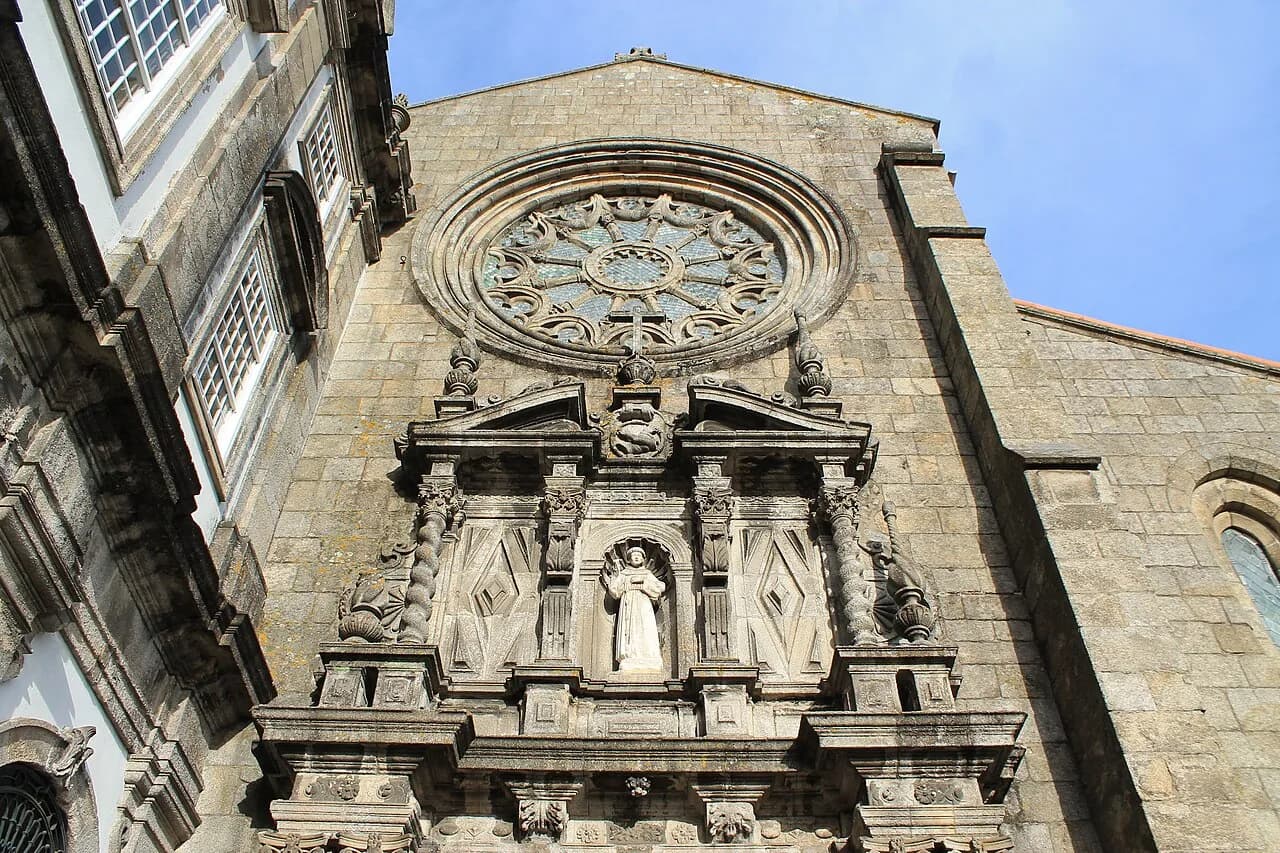
Further into the city, Porto's historic centre holds several major sights. The Igreja de São Francisco in the Ribeira district contains one of Portugal's most spectacular gilded interiors, a 15–20 minute metro ride from the Boavista area near Serralves. The Palácio da Bolsa — the 19th-century stock exchange — draws visitors for its ornate Arabian Room, which took 18 years to decorate.
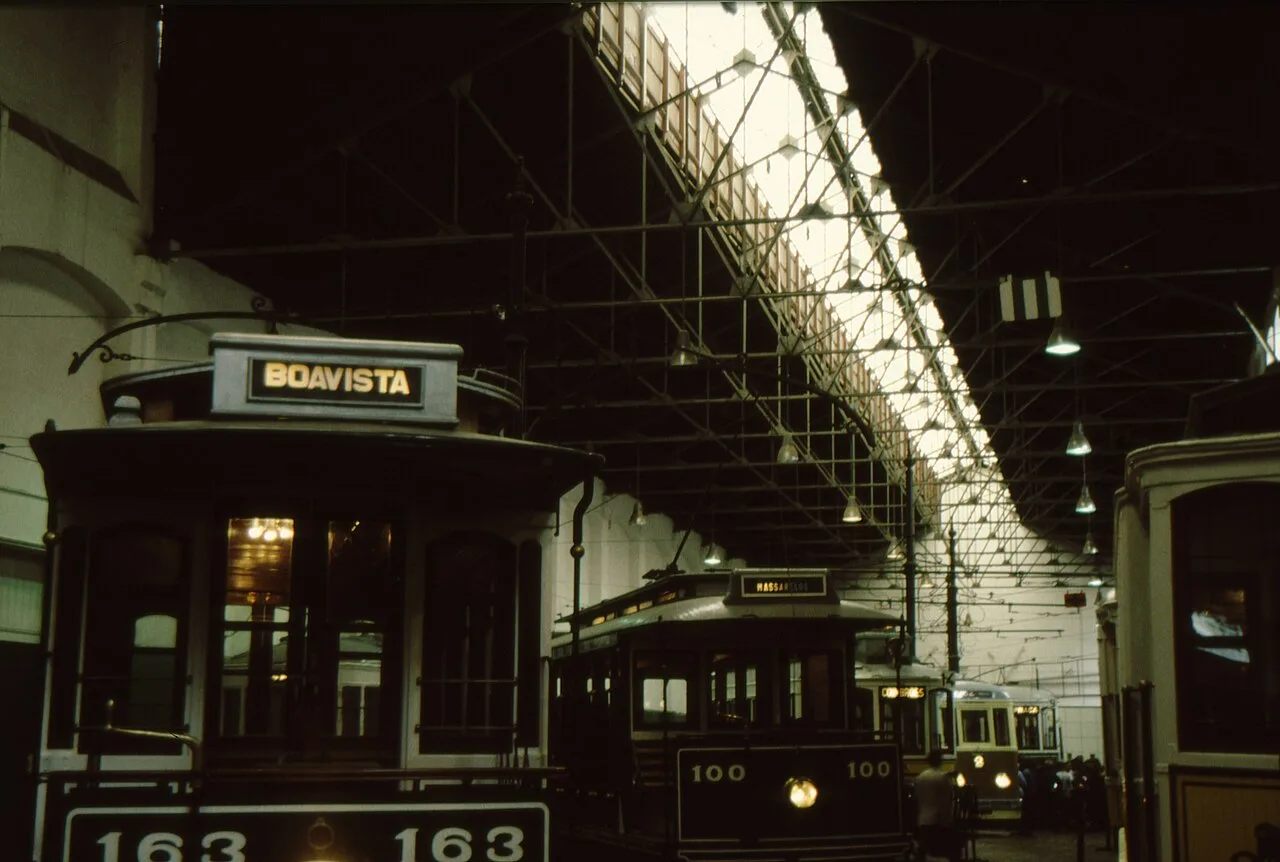
For a more focused detour, the Museu do Carro Eléctrico (Electric Tram Museum) sits close to the Foz waterfront and pairs naturally with a Serralves visit — both are west of the centre and can be combined into the same afternoon. Explore the full range of Porto attractions to plan the rest of your itinerary.
Making the Most of Your Serralves Experience
Wear comfortable shoes — even a museum-and-villa visit involves significant walking, and the park adds another 2–3 km of paths if explored properly. The museum restaurant on the upper floor has a terrace with direct views over the park tree canopy; it serves light lunches and coffee and is worth a stop even as a mid-visit break with a good view. Photography is generally allowed in the park and villa; inside the museum, individual exhibition rules apply and some temporary shows restrict cameras — check at the entrance desk on arrival.
The museum restaurant on the upper floor offers a terrace with direct views over the park canopy — an excellent spot for a mid-visit break with a view.
Guided tours considerably deepen the experience, especially for the museum's architecture. The structural logic of Siza's building becomes much clearer with a knowledgeable guide pointing out the spatial sequences, light systems, and deliberate relationships between interior rooms and the garden outside.
- Museum and villa only (no park): 2–3 hours. Best on rainy days or when time is tight. Start at 10:00 when galleries are quietest.
- Park and Treetop Walk only: 2–3 hours. Good for families and non-museum visitors on the €15 park ticket. Build in farm time for children.
- Full day, all areas: 5–6 hours. Museum in the morning, lunch at the restaurant terrace, then villa and park in the afternoon. Allow time to simply sit in the garden — the pace of the estate rewards slowness.
Frequently Asked Questions
Which Must-See Serralves Attractions options fit first-time visitors?
First-time visitors should prioritize the Museum of Contemporary Art, the Serralves Villa, and a leisurely stroll through the main areas of Serralves Park. These three components offer a comprehensive overview of the foundation's art, architecture, and natural beauty. Allow at least 4-5 hours to experience these highlights without feeling rushed.
How much time should you plan for Parks, Gardens, and Outdoor Spots in Serralves?
To fully appreciate the Serralves Park and Gardens, plan for at least 2-3 hours. This allows ample time to explore the various garden areas, discover outdoor art installations, and enjoy the Treetop Walk. If you plan to have a picnic or simply relax, allocate even more time for this expansive green space.
Is Serralves worth including on a short itinerary in Porto?
Yes, Serralves is definitely worth including, even on a short Porto itinerary. It offers a unique cultural experience distinct from the city's historic center. You can focus on the museum and a quick park walk in 3-4 hours. For more Porto attractions, check out our guide to Porto's best sights.
What should travelers avoid when planning a Serralves visit?
Avoid visiting on national holidays or peak weekend afternoons if you prefer fewer crowds. Also, do not forget to check the official Serralves website for current exhibition schedules and any temporary closures. Relying solely on outdated information can lead to disappointment. Plan your transport in advance, especially if using public transit.
Serralves Foundation offers a rare combination of world-class contemporary art, considered architecture, and a genuinely beautiful park — all within a single admission.
Whether you arrive for the Álvaro Siza building, the Art Deco villa, the Treetop Walk, or the Serralves em Festa festival, the estate consistently rewards the time invested.
Use this guide to plan the visit that matches your priorities, and allow more time than you think you need.
For more Porto planning, see our hidden gems in Porto, Porto neighborhoods guide, and unique things to do in Porto guides.
For official details, visit the Serralves (Museum of Contemporary Art & Park) official site and Serralves (Museum of Contemporary Art & Park) on Wikipedia.
Continue exploring
More guides you'll find useful