Casa do Infante Visitor Guide: History, Tickets, Hours & What to See in Porto
Explore Casa do Infante, Porto's historic Prince's House. Get essential visitor information: opening hours, ticket prices, what to see, and tips for your visit.
On this page
Casa do Infante (Museu Municipal Casa do Infante) Visitor Guide
Casa do Infante — the Prince's House — is one of Porto's oldest surviving civic buildings. Founded in 1325 on the edge of the Ribeira riverfront, it began as the city's Royal Customs House and went on to serve as a royal mint, a birthplace of royalty, and eventually a municipal museum. Today it holds the Porto Municipal Historical Archives and a permanent exhibition on Porto's history, all for just €4 admission.
Its location in the heart of Porto's UNESCO World Heritage historic centre makes it an easy addition to any Ribeira walkabout. Most visitors spend 45 minutes to an hour here, exploring Roman mosaics, medieval artefacts, and the story of Prince Henry the Navigator, who was reportedly born in this building in 1394.
A Glimpse into History: The Story of Casa do Infante
The building's origins trace to 1325, when King Afonso IV ordered the construction of the Alfândega Régia, the Royal Customs House, on the Douro riverbank. It controlled the flow of foreign merchandise arriving by ship — particularly goods from Northern Europe and Italy — and collected taxes for the Crown. At the time, it was the only royal building in Porto.
In 1370, the House of Coin (Casa da Moeda) was incorporated into the complex. Silver and gold coins were minted here for nearly four centuries, overlapping with the customs function. The building also provided living quarters for royal employees during this period.
The name Casa do Infante — House of the Prince — comes from an oral tradition holding that Infante Dom Henrique, Prince Henry the Navigator, was born here in 1394. Because the customs house was the only royal facility in Porto with adequate quarters, it is considered a plausible birthplace. Henry later became the architect of the Portuguese Age of Discovery, sponsoring the expeditions that mapped the African coast and established Atlantic trade routes. A Neo-Manueline plaque at the museum's entrance today commemorates his birth.
The building underwent architectural changes over centuries, eventually falling out of use as a customs facility. In the 20th century it was restored, declared a national heritage site, and opened as a museum in 1991. Archaeological excavations carried out during that restoration uncovered the building's deepest layer: a Roman villa dating to the 4th and 5th centuries, whose polychrome mosaics are now displayed in situ.
What to See and Do at Casa do Infante
The centrepiece of any visit is the permanent exhibition on Porto's history, structured around the building's own evolution. One section focuses specifically on "Prince Henry the Navigator and the New Worlds," tracing Henry's iconography from the 15th century to the present and placing Porto's role in the Age of Discovery in national context. Artefacts include coins minted in the building, pottery recovered during excavations, and documents illustrating the city's medieval trade networks.
The archaeological findings beneath the museum floor are the single most striking sight. Glass panels let you look down into the exposed remains of the Roman villa, including the polychrome mosaics preserved exactly where they were found. The contrast between the medieval stone walls above and the Roman layers below gives a visceral sense of how many civilisations have occupied this same riverbank.
A scale model of medieval Porto is also on display, giving context to how the city looked before centuries of expansion. It's a useful anchor if you plan to walk the historic centre after your visit — you'll recognise streets and boundaries when you reach them in person.
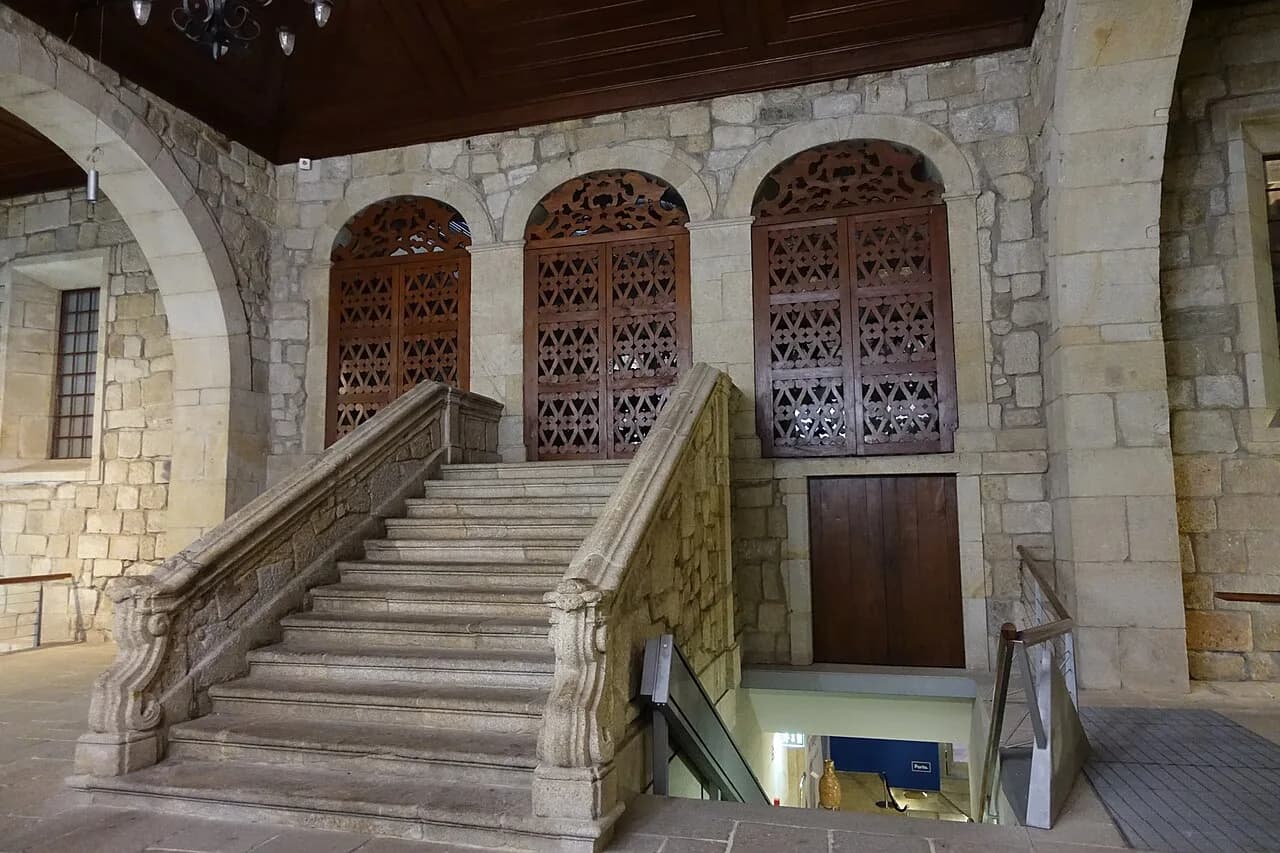
The building itself rewards a slow look. It is constructed in granite, with multiple canopied windows and the characteristic solidity of 14th-century Iberian civic architecture. The Neo-Manueline plaque at the entrance is easy to miss if you walk straight in — pause to read it before heading inside.
Beyond the Museum: Casa do Infante's Living Archive
What sets Casa do Infante apart from most heritage sites in Porto is that it operates as a genuine civic institution, not just a display venue. The building houses five distinct services: the museum, the Porto Municipal Historical Archive, a Thematic Library focused on Porto, a Memory Room, and an Exhibition Room with a rotating programme. There is also an auditorium used for lectures and events.
The Municipal Historical Archive is particularly significant. It holds documents and records relating to Porto from the 14th century onward — manuscripts, civic registers, maps, and administrative correspondence that chart the city's development across seven centuries. Researchers and scholars can access the archive directly, making Casa do Infante a working institution that continues to accumulate Porto's institutional memory.
The Thematic Library holds a curated collection on Porto's history, architecture, and culture. For visitors who want to go deeper after the museum visit, staff can point you to available resources. This layered offer — tourist exhibition on the ground floor, living archive above — makes Casa do Infante more than a one-hour stop if you have a specific historical interest.
Planning Your Visit: Tickets, Hours & Timing
General admission is €4. Visitors aged 65 and over pay €2. Entry is free every Sunday and for holders of the Porto Card — if you are already using a Porto Card for other museums and transport, Casa do Infante is included at no additional cost.
| Visitor Type | Price |
|---|---|
| General admission | €4 |
| Seniors (65+) | €2 |
| Sunday admission | Free |
| Porto Card holders | Free |
Entry is free every Sunday and for Porto Card holders. If you're planning multiple museum visits, the Porto Card pays for itself quickly.
The museum opens Tuesday to Sunday from 10:00 to 17:30 and is closed on Mondays. This is standard for Porto's municipal museums, so plan around it if you are visiting on a Monday. Check the official Porto museum network website before you go, as hours on public holidays can vary.
Most visitors find 45 minutes to one hour sufficient for the exhibition and the Roman mosaics. Allow slightly more time if you want to spend time with the scale model or read the historical panels in detail. If you intend to consult the archive or library, contact the museum in advance to arrange access.
Tuesday through Thursday mornings are consistently the quietest times. If you're visiting on a Sunday for free entry, arrive close to 10:00 to get ahead of the midday rush.
Tickets can be purchased at the entrance on arrival. You can also buy tickets online via the ONLINE TICKET OFFICE to skip the queue, which is worth doing on weekend afternoons in peak season (June–September 2026).
Getting There: Address & Transportation
Casa do Infante is at Rua da Alfândega, 10, 4050-029 Porto, in the Ribeira district, a few steps back from the Douro riverfront. The location is central to the UNESCO-listed historic core, making it walkable from most hotels in the Baixa and Ribeira neighbourhoods.
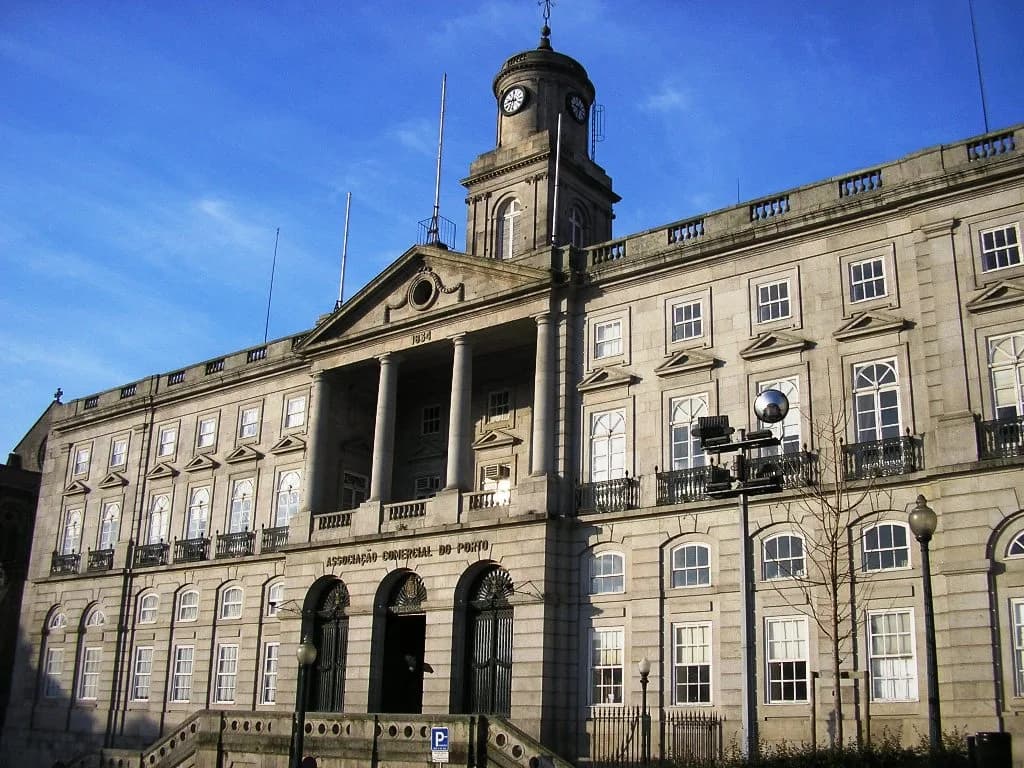
São Bento railway station is the most convenient public transport stop. From São Bento, it is a 10–15 minute walk downhill toward the river, following signs to the Ribeira. The walk is pleasant and passes the Palácio da Bolsa and Igreja de São Francisco.
Several bus lines stop within a few minutes' walk of the museum entrance. The metro does not have a dedicated Ribeira stop, but Line D to São Bento is the next-best option. From there, the downhill walk is straightforward and well-signposted.
Driving and parking in the Ribeira historic centre is difficult. Public parking garages are available a short distance away, but walking or public transport is strongly recommended. Use a map application for live parking availability, or check this Directions link for routes from your starting point.
Making the Most of Your Visit: Insider Tips
Tuesday through Thursday mornings are consistently the quietest times. Weekend afternoons, especially in summer 2026, can be crowded because the Ribeira is one of Porto's most heavily visited districts. If you are visiting on a Sunday for the free admission, arrive close to 10:00 to get ahead of the midday rush.
Porto Card holders should note that free entry to Casa do Infante is one of the card's least-advertised benefits. The card covers multiple Porto municipal museums, so if you are planning to visit Museu Soares dos Reis or the Serralves Museum on the same trip, the card can pay for itself quickly.
The museum is generally accessible, with ramps and elevators available for most areas. If you have specific mobility requirements, contact staff before your visit — the layout of archaeological floor panels means some areas are viewed from fixed vantage points, and staff can advise on the most practical route through the exhibition.
Families with children tend to respond well to the glass-panel mosaics and the scale model. The tactile contrast between the granite walls and the exposed Roman floor catches young attention in a way that display cases often do not. Keep the visit under an hour to maintain focus for younger visitors.
Casa do Infante Tours & Nearby Attractions
Casa do Infante sits in the middle of Porto's densest concentration of historic monuments, making it easy to build a half-day itinerary around the Ribeira without needing transport. Start at the museum when it opens at 10:00, then work outward along Rua da Alfândega toward the riverfront.
The Palácio da Bolsa is a five-minute walk away and represents the other pole of Porto's historic identity — where Casa do Infante shows the medieval trading city, the Bolsa shows the 19th-century merchant republic at its most opulent. Book the Bolsa guided tour in advance, as the Arabian Room is only accessible with a guide.
Immediately adjacent to the Bolsa is the Igreja de São Francisco, a Gothic church whose interior was entirely overlaid with Baroque gilded carvings in the 18th century. It is one of the most visually overwhelming interiors in Portugal and takes about 30–45 minutes.
Many guided walking tours of Porto's medieval centre include Casa do Infante as one of their stops, and the museum's location makes it a natural anchor for a Ribeira district tour. For a full overview of what to see in the area, the Porto attractions guide covers the complete picture. If you prefer a structured tour, half-day Porto city walking tours typically combine Casa do Infante, the Bolsa, São Francisco Church, and the riverfront in a single circuit.
Frequently Asked Questions
How much does it cost to enter Casa do Infante?
A standard adult ticket for Casa do Infante is generally a few euros. Reduced rates are often available for students, seniors, and children. Check the official website or the ticket office for the most current prices and any potential combined passes for 2026.
What are the opening hours for Casa do Infante?
Casa do Infante typically opens from Tuesday to Sunday, often from 10:00 AM to 5:30 PM. It is usually closed on Mondays and public holidays. Always verify the latest schedule on the official Porto City Museum website before your visit.
How long should I plan for a visit to Casa do Infante?
Most visitors find one to two hours sufficient for exploring Casa do Infante. This timeframe allows you to view the exhibitions, archaeological findings, and the historical architecture. Allow more time if you enjoy detailed historical reading.
Is Casa do Infante accessible for wheelchairs?
Yes, Casa do Infante generally offers good accessibility for wheelchair users. The museum provides ramps and elevators to access different floors and exhibition areas. It ensures that most visitors can comfortably explore the site.
What public transport goes to Casa do Infante?
Casa do Infante is well-served by public transport in Porto. You can take several bus lines that stop nearby, or use the metro to São Bento station. From São Bento, it's a pleasant downhill walk to the museum, close to the Ribeira district.
Casa do Infante packs a lot into a compact, affordable visit. The Roman mosaics alone justify the €4 admission, and the permanent exhibition on Prince Henry and Porto's medieval history gives essential context for everything else you'll see in the Ribeira district. Free entry on Sundays and for Porto Card holders makes it one of the easiest decisions in the city.
Plan 45–60 minutes for the museum, then continue on foot to the Palácio da Bolsa and Igreja de São Francisco — the three together make a complete morning in Porto's oldest neighbourhood. The Municipal Historical Archive and library inside the same building offer a deeper layer for anyone with a specific research interest in Porto's history.
For more Porto planning, see our hidden gems in Porto guide.
To verify current details, consult the Casa do Infante (Museu Municipal Casa do Infante) official site and Casa do Infante (Museu Municipal Casa do Infante) on Wikipedia.
Continue exploring
More guides you'll find useful