Capela das Almas (Chapel of Souls) Visitor Guide: Porto's Tiled Gem
Discover Capela das Almas, Porto's iconic blue-tiled chapel. This visitor guide covers history, what to see, practical tips, nearby attractions, and how to.
On this page
Capela das Almas (Chapel of Souls) Visitor Guide: Porto's Iconic Tiled Church
Porto, Portugal, captivates visitors with its rich history and stunning architecture.
Among its many treasures, the Capela das Almas, or Chapel of Souls, stands out as a true visual masterpiece.
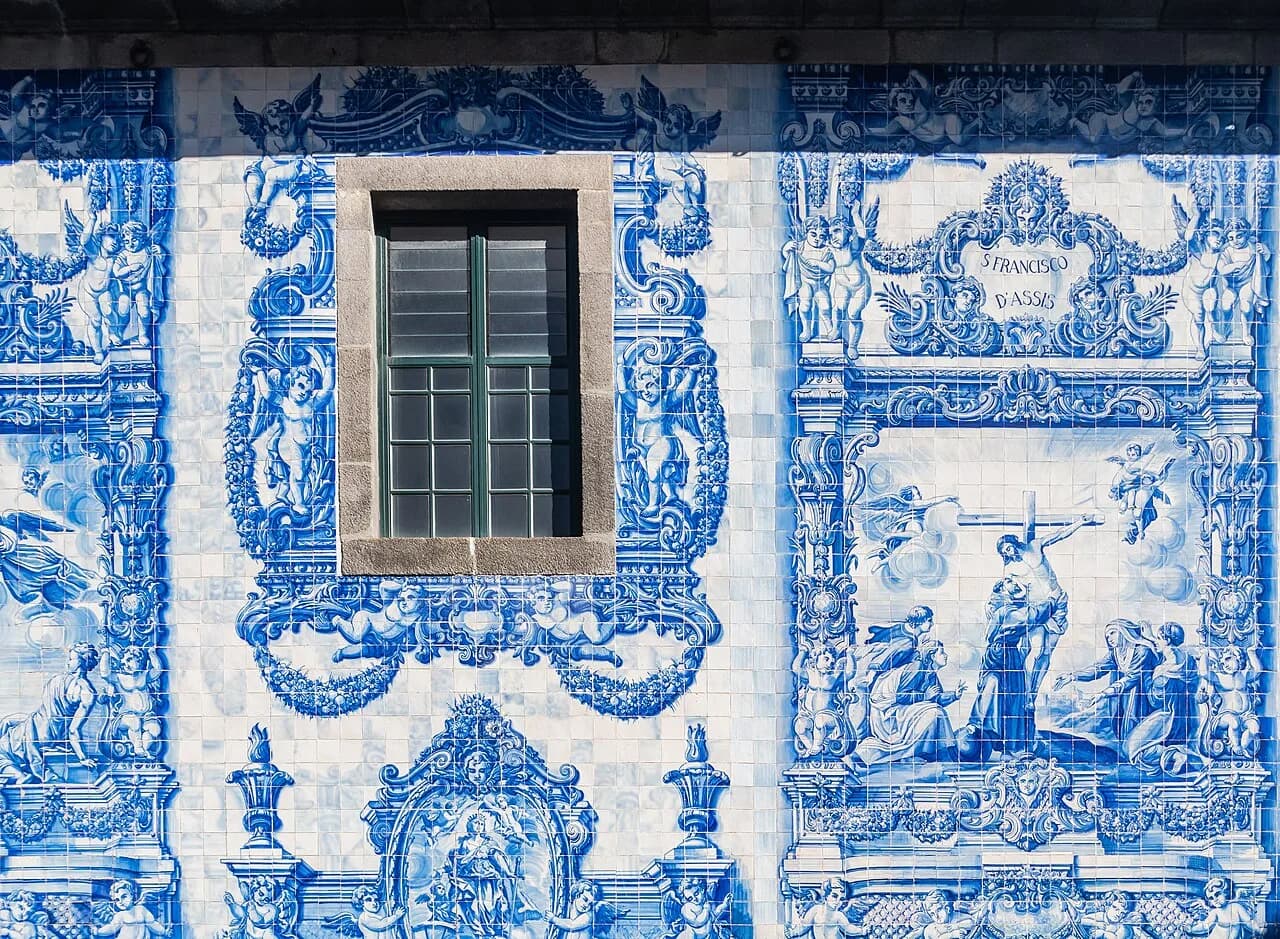
This iconic chapel is famous for its vibrant blue and white azulejo tiles covering its entire exterior, positioned right in the middle of the city's busiest shopping street.
Our comprehensive chapel of souls visitor guide helps you plan your perfect visit to this must-see Porto attraction.
What is Capela das Almas (Chapel of Souls)?
Capela das Almas translates to Chapel of Souls in English. This striking religious building is a parish church dedicated to Santa Catarina, sitting prominently on Rua de Santa Catarina in the Santo Ildefonso district of Porto.
Its primary draw is the breathtaking exterior adorned with 15,947 hand-painted ceramic tiles. These azulejos depict scenes from the lives of saints, particularly Saint Catherine and Saint Francis of Assisi.
What makes the chapel so memorable is its setting. It does not occupy a quiet hilltop or tucked-away square — it appears suddenly in the middle of a busy pedestrian shopping street, which makes its visual impact even sharper. The chapel serves as both an active place of worship and one of Porto's most celebrated cultural landmarks.
A Brief History & The Iconic Azulejos
The site has a long history that predates its famous tiles by centuries. An old wooden chapel dedicated to Saint Catherine originally stood here before being rebuilt in 1719. During that reconstruction, the monk Domingos de Campos Soares preserved two surviving architectural elements from the earlier structure — an arcosolium, or arched niche, on the southern wall, and a cross on the eastern side — integrating them into the new building.
In 1801, the chapel was expanded and restored again, acquiring the neoclassical form you see today. The transformation that made it world-famous, however, came in 1929 when artist Eduardo Leite designed the monumental azulejo panels that now cover the facade. The tiles were produced by Fábrica de Cerâmica Viúva Lamego, a Lisbon manufacturer still in operation today and one of Portugal's most prestigious tile-making workshops. This provenance matters: you can trace a direct line from the tiles on this chapel to the same factory tradition behind some of the most celebrated azulejo work across Portugal.
The blue and white panels cover roughly 360 square metres of exterior wall, depicting biblical scenes and episodes from the lives of saints. In 1993, the chapel was formally listed as a national monument of Portugal, cementing its status as both a religious site and a cultural treasure. These tiles are now one of the most photographed examples of azulejo art in the country.
Is Capela das Almas Worth Visiting?
Absolutely. The chapel earns its place on any Porto itinerary because it delivers an immediate and powerful visual experience for zero entry cost. You can admire the entire exterior for free, making it one of the most accessible cultural stops in the city.
What makes it especially worthwhile is the contrast between the chapel and its surroundings. Finding something this beautiful in the middle of a busy shopping street is quintessentially Porto. Many visitors consider it one of the most beautiful churches in Portugal, and its central location means you pass near it regardless of what else you have planned.
Even a ten-minute pause to take in the facade is rewarding. Adding a quick step inside raises the experience further without requiring much additional time. Reviewers consistently praise its unique beauty and easy accessibility, as reflected across travel platforms including Tripadvisor.com.
Finding Capela das Almas: Location & Getting There
Capela das Almas is located at Rua de Santa Catarina 428, 4000-212 Porto, at the junction with Rua Fernandes Tomás. This central position places it within easy reach of Bolhão Market, Avenida dos Aliados, and much of Porto's historic core.
The Bolhão metro station is just a few minutes' walk away and is served by lines A, B, C, E, and F, making it highly accessible from most parts of the city. Numerous bus lines also stop along or near Rua de Santa Catarina.
Walking from Avenida dos Aliados takes under ten minutes. If you are coming from the Ribeira waterfront area, the walk uphill takes around 20 minutes but passes through some of Porto's most atmospheric streets. Taxis and ride-sharing apps can use the full address above, and the distinctive blue tiled facade makes it instantly recognizable once you are on Santa Catarina Street.
Best Time to Visit & Avoiding Crowds
For the best experience, visit early on a weekday morning, between 08:00 and 10:00. At this time the shopping street is quiet, the light on the blue tiles is soft, and you have the facade largely to yourself for photography. Late afternoon on weekdays, after 16:00, is a second good window.
Weekends draw significantly more visitors to Rua de Santa Catarina, both shoppers and tourists. If you visit on a Saturday or Sunday, aim to arrive right at opening (07:30) before the crowds build. Note that the chapel closes at midday on weekends (07:30–12:45 per current hours); some sources also indicate an evening Mass session may be held on weekend afternoons, so confirm current hours directly with the Diocese of Porto at diocese-porto.pt before planning an afternoon visit on Saturday or Sunday.
Overcast days can actually produce better photos of the tiles than harsh midday sun in summer, which creates uneven shadows across the panels. If photography is a priority, a grey morning in spring or autumn often yields the cleanest results.
Weekday mornings between 08:00 and 10:00 offer the best light and quietest shopping street for viewing the chapel's tiles and photography.
Practical Tips for Your Visit
Entry to both the exterior viewing area and the interior of the chapel is free. No advance booking is required at any point. The exterior of the chapel is always visible, day or night, so even a late evening walk past the tiles on Santa Catarina Street is worthwhile.
If you enter the chapel, dress modestly — covered shoulders and knees are expected. Photography of the exterior is unrestricted. Inside, photography is generally tolerated but should be discreet; avoid using flash and refrain from photographing during Mass out of respect for worshippers. Mass is typically held on weekday mornings; if the chapel feels particularly quiet and reverent when you enter, a service may be in progress.
The chapel is not fully wheelchair accessible inside due to its historic structure. Public restrooms and cafes are readily available along Rua de Santa Catarina, the surrounding shopping district. Keep an eye on your belongings in crowded peak-hour stretches of the street. Most visitors spend 15 to 30 minutes at the chapel, or up to an hour if they explore the interior carefully.
Inside the chapel, dress with covered shoulders and knees, keep photography discreet without flash, and avoid photographing during Mass services to respect worshippers.
Beyond the Tiles: What to See Inside
While the exterior tiles are the main draw, stepping inside reveals a single-nave interior that repays a few minutes of attention. The most striking feature is the large stained glass window positioned above the entrance door, which depicts souls being purified by the blood of Christ — a direct reference to the chapel's name and its role as a place of intercession for the dead. The colorful light it casts across the nave changes character throughout the day.
Look up at the substantial chandelier hanging over the central nave, and note the altars along the side walls, each dedicated to different saints and typically adorned with fresh flowers. The gilded detailing on the main altar is restrained compared to the baroque excess of some Porto churches, but it gives the space a dignified warmth.
Because this is an active Catholic chapel, visitors can light a candle or, in a tradition observed here by local devotees, write a short prayer or letter. This small act connects you with the chapel's living religious function rather than treating it purely as an architectural exhibit. It is one of the details that distinguishes a careful visit from a quick photo stop.
Capela das Almas Tours & Tickets: What You Need to Know
Unlike major museum attractions, the chapel requires no ticket and no advance booking. You walk up, admire the exterior, and step inside whenever the doors are open. The only cost is your time.
Many Porto walking tours include a stop at the chapel as part of a broader historic center or azulejo art route. These tours typically spend 10 to 20 minutes at the chapel before moving on to São Bento station (also famous for its azulejos) or other nearby sights. If the azulejo tradition is a core interest for you, look specifically for tours that pair the chapel with São Bento and the National Tile Museum rather than generic city highlights.
For a more flexible experience, consider a self-guided walk combining the chapel with Bolhão Market and Rua de Santa Catarina. This route covers the main historic shopping district in two to three hours without the constraints of a group schedule. If you do book a guided tour through a platform like Excursionmania.com, confirm that interior access is included in the itinerary, as some tours stay on the exterior only.
Integrating Capela das Almas into Your Porto Itinerary
The chapel is easiest to include as part of a central Porto walking morning. Start at Bolhão Market when it opens, then walk a short block south along Rua de Santa Catarina to reach the chapel. Spend 15 to 30 minutes here, then continue down Santa Catarina Street toward the Majestic Café, one of Europe's most ornate belle époque cafes and a natural stop for coffee before heading further into the city center.
From the Majestic Café it is a few minutes' walk to Avenida dos Aliados and São Bento station, whose vast interior azulejo panels offer a direct comparison with the chapel's exterior tiles — a pairing that gives visitors a clear sense of how central this art form is to Porto's identity. The whole circuit from Bolhão to São Bento takes two to three hours at a relaxed pace.
If your Porto exploration is focused on the Ribeira waterfront, the chapel makes a logical stopping point on the way north from the historic centre. Allow 10 to 15 minutes for exterior viewing and photos, and another 10 to 15 minutes if you plan to go inside.
Nearby Attractions & What to Pair With Your Visit
The area around the chapel is dense with worthwhile stops. Mercado do Bolhão, the city's historic covered food market, is roughly a three-minute walk and a natural complement to the chapel visit — local produce, cheeses, and the lively energy of a working Porto market.
A short walk further brings you to the magnificent Palácio da Bolsa, Porto's former stock exchange, which contains the jaw-dropping Arabian Hall. The ornate gilded interior is a striking contrast to the chapel's tile-covered facade.
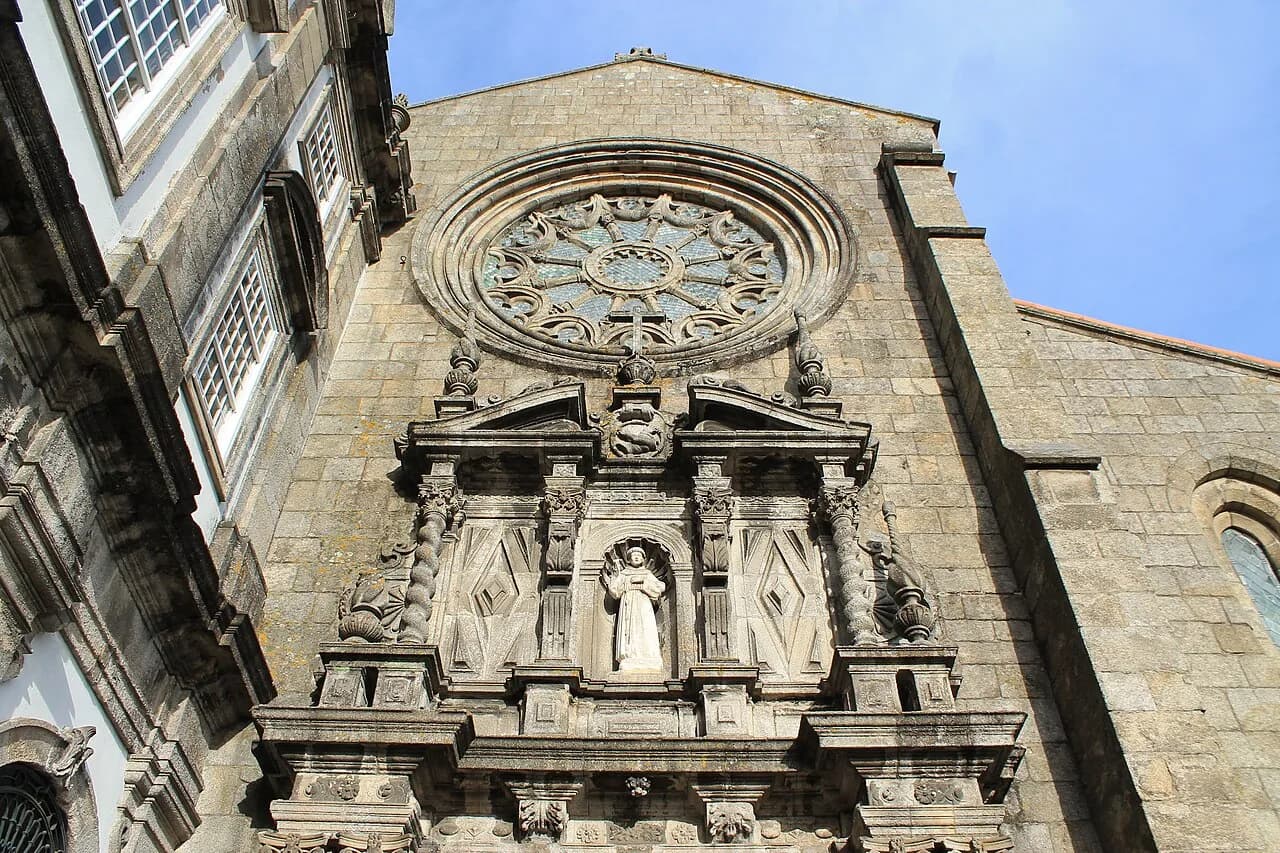
Another nearby gem is the Igreja de São Francisco, renowned for its lavish Baroque gilded woodwork. São Bento railway station, also within easy walking distance, is worth a stop for its vast interior azulejo panels depicting scenes from Portuguese history — making it a direct thematic companion to the chapel.
Rua de Santa Catarina itself is Porto's main pedestrian shopping street and worth a slow stroll. The Majestic Café at number 112 is a landmark in its own right: opened in 1921, its ornate carved interior and mirrored walls make it one of the most elegant café spaces in Portugal.
Other Tiled Churches and Collections in Iberia
Eduardo Leite applied roughly fifteen thousand tiles to the outside of a working parish church in 1929, in a deliberately eighteenth-century style. Lisbon's National Tile Museum explains how the craft got there across five centuries. Seville's Casa de Pilatos shows the Spanish branch, laid into courtyards rather than onto façades.
The Capela das Almas truly embodies the spirit and artistic heritage of Porto.
Its vibrant blue tiles tell stories that captivate every visitor, and the interior offers a quieter, more personal dimension that most first-timers overlook.
This chapel of souls visitor guide provides all you need for an enriching visit — whether you pause for ten minutes or spend an hour tracing every tile panel.
Be sure to add this iconic tiled gem to your unforgettable Porto adventure.
Discover more unique attractions beyond the famous facades — explore our guide to hidden gems in Porto to find lesser-known treasures throughout the city.
To verify current details, consult the Capela das Almas (Chapel of Souls) on Wikipedia and Capela das Almas (Chapel of Souls) on Wikipedia.
Frequently Asked Questions
What is the significance of the tiles on Capela das Almas?
The blue and white azulejo tiles on Capela das Almas depict scenes from the lives of Saint Catherine and Saint Francis of Assisi. These 15,000 tiles, added in 1929 by artist Eduardo Leite, are a beautiful example of traditional Portuguese art. They transform the chapel into a vibrant outdoor gallery, making it a unique landmark in Porto.
How long do you need at Capela das Almas?
Most visitors spend about 15-30 minutes at Capela das Almas. This allows enough time to admire and photograph the stunning exterior tiles. If you wish to go inside the chapel, allow an additional 10-15 minutes for a brief look at the interior.
Is there an entrance fee for Capela das Almas?
There is no entrance fee to view the exterior of Capela das Almas or to attend mass inside. This makes it a very accessible and free attraction for all visitors. However, donations are welcome if you appreciate its upkeep.
What else is near Capela das Almas?
Capela das Almas is centrally located near many other Porto attractions. You can easily walk to Mercado do Bolhão, Rua de Santa Catarina, and Avenida dos Aliados. Other nearby sights include the Majestic Café and the São Bento Railway Station, famous for its own azulejo panels.
Continue exploring
More guides you'll find useful