Jardins do Palácio de Cristal: Porto's Free Green Crystal Gardens
No crystal palace survives here today, but free-roaming peacocks and hillside Douro views make this Porto's best free green escape in 2026.
On this page
Jardins Do Palácio De Cristal (Crystal Palace Gardens) Visitor Guide
The Jardins do Palácio de Cristal sit on a hillside above the Douro in central Porto, offering one of the city's finest free green spaces year-round. Despite the name, there is no crystal palace here today — the original 19th-century glass pavilion was demolished in 1951 and replaced by the domed Super Bock Arena. What remains is a romantic park of themed gardens, viewpoint terraces, and free-roaming peacocks. This 2026 guide covers what to see, how to get there, opening hours, history, and the best things to do nearby.
Welcome to Jardins do Palácio de Cristal: Your Essential Visitor Guide
The Jardins do Palácio de Cristal are among Porto's most underrated free attractions. Many visitors pass through the Cedofeita neighborhood on the way to Livraria Lello without realizing the gardens are a short detour. The park covers roughly 8 hectares of terraced hillside with layered viewpoints, diverse planting, and several cultural spaces including a public library, a small museum, and a 19th-century chapel — all free to enter.
The atmosphere here is noticeably different from Porto's historic center. Local families use the gardens on weekend mornings, and even in peak summer the space rarely feels overcrowded. The main viewpoint terrace offers some of the best panoramic views of the Douro River available anywhere in Porto, rivaling the more famous miradouros but without the tour-group congestion. A weekday morning visit in 2026 gives you both the peacocks and the views at their most peaceful.
What to See and Do at the Crystal Palace Gardens
The most striking feature is the viewpoint terrace overlooking the Douro River, Vila Nova de Gaia, and — on clear days — the river mouth where the Douro meets the Atlantic. The stone-balustrade terrace has benches and improves as you move toward the western edge of the gardens. Sunset from here, with the Arrábida Bridge visible to the southwest, is one of the best free experiences in the city.
The peacocks are the gardens' unofficial mascots. A resident flock roams freely through the central avenues and gathers near the main pathway between the Super Bock Arena and the rose garden. They are generally calm around visitors and display their plumage on warmer mornings. Keep a respectful distance — the birds can become territorial in spring. Peacocks, ducks, and other birds have lived in the park for generations and have become a defining characteristic of the place.
Several themed garden zones spread across the grounds. The rose garden (jardim das rosas) is best in April and May when most varieties are in bloom. The aromatic-plant garden (jardim das plantas aromáticas) rewards a slow walk for its scent and texture contrasts. The Jardim dos Sentimentos (Garden of Feelings) uses dense planting and enclosed paths to create a more meditative feel. Sculptures and fountains mark intersections throughout, with a notable bronze female figure near the western lawn. The Almeida Garrett Municipal Library — a modern public library with around 80,000 volumes, temporary art exhibitions, and free wifi — is worth a stop on a warm afternoon. The small Museum of Romanticism and the 19th-century Chapel of Carlos Alberto round out the cultural stops within the grounds.
A suggested walking circuit for first-time visitors: enter from the Rua Dom Manuel II main gate, turn left toward the Douro viewpoint terrace, follow the western path south through the rose garden, loop back through the aromatic garden toward the Almeida Garrett Library, then finish near the Super Bock Arena before exiting. The full loop takes 45 to 60 minutes at a relaxed pace. This sequence hits the best views first and ends at the arena, where you can check the events board before leaving.
Keep a respectful distance from the peacocks as they can become territorial in spring. These birds have lived in the park for generations and are most docile on cooler mornings.
Planning Your Visit: Practical Tips for Jardins do Palácio de Cristal
Entry to the Jardins do Palácio de Cristal is free for all visitors, every day of the year. The gardens open daily at 08:00. In summer — April through September — they close at 21:00. In winter, October through March, they close at 19:00. These are the confirmed 2026 hours, though events at the Super Bock Arena can occasionally affect access to certain sections. Specific events or concerts at the arena require separate tickets purchased in advance.
Getting there by public transport is straightforward. The metro stops at Carolina Michaelis station, served by lines B, C, E, and F; from the exit it is roughly a 10-minute walk uphill along Rua de Dom Manuel II. Bus lines 200, 201, 207, and 208 stop near the main entrance. From the Clérigos Tower area, the gardens are a 15 to 20-minute walk west. Taxis and rideshare services drop directly at the Rua Dom Manuel II gate.
Parking is limited. A small surface car park sits near the arena entrance but fills quickly on weekends. A paid underground garage is available nearby on Rua Dom Manuel II. For most visitors, public transport or walking from the city center is more practical, especially in summer when driving into the Bonfim and Cedofeita neighborhoods adds significant time.
Most visitors need 1.5 to 2 hours for the main circuit — viewpoints, peacocks, and a couple of the themed areas. Budget 2.5 to 3 hours if you plan to visit the library or the Museum of Romanticism, or if you are attending an event. The main central avenues are flat and suitable for strollers. The terrain near the viewpoint terraces involves some inclines that may require care for wheelchair users, but the majority of the park is accessible.
Public transport or walking from the city center is more practical than driving, especially in summer when traffic into the Bonfim and Cedofeita neighborhoods can add significant time. The metro (lines B, C, E, F at Carolina Michaelis) or buses (200, 201, 207, 208) offer direct access to the main entrance.
The History and Evolution of the Crystal Palace Gardens
The story of these gardens begins in 1865, when Porto hosted the International Exhibition in a purpose-built glass-and-iron pavilion designed by British engineer Thomas Dillen Jones. The structure was consciously modeled on Joseph Paxton's Crystal Palace, built for London's Great Exhibition of 1851, and Porto's version borrowed the name along with the architectural concept. The surrounding parkland was landscaped at the same time, establishing the terraced hillside layout that survives today. The gardens were an immediate success as a public space, and Porto's residents used them throughout the late 19th and early 20th centuries for promenading and outdoor recreation.
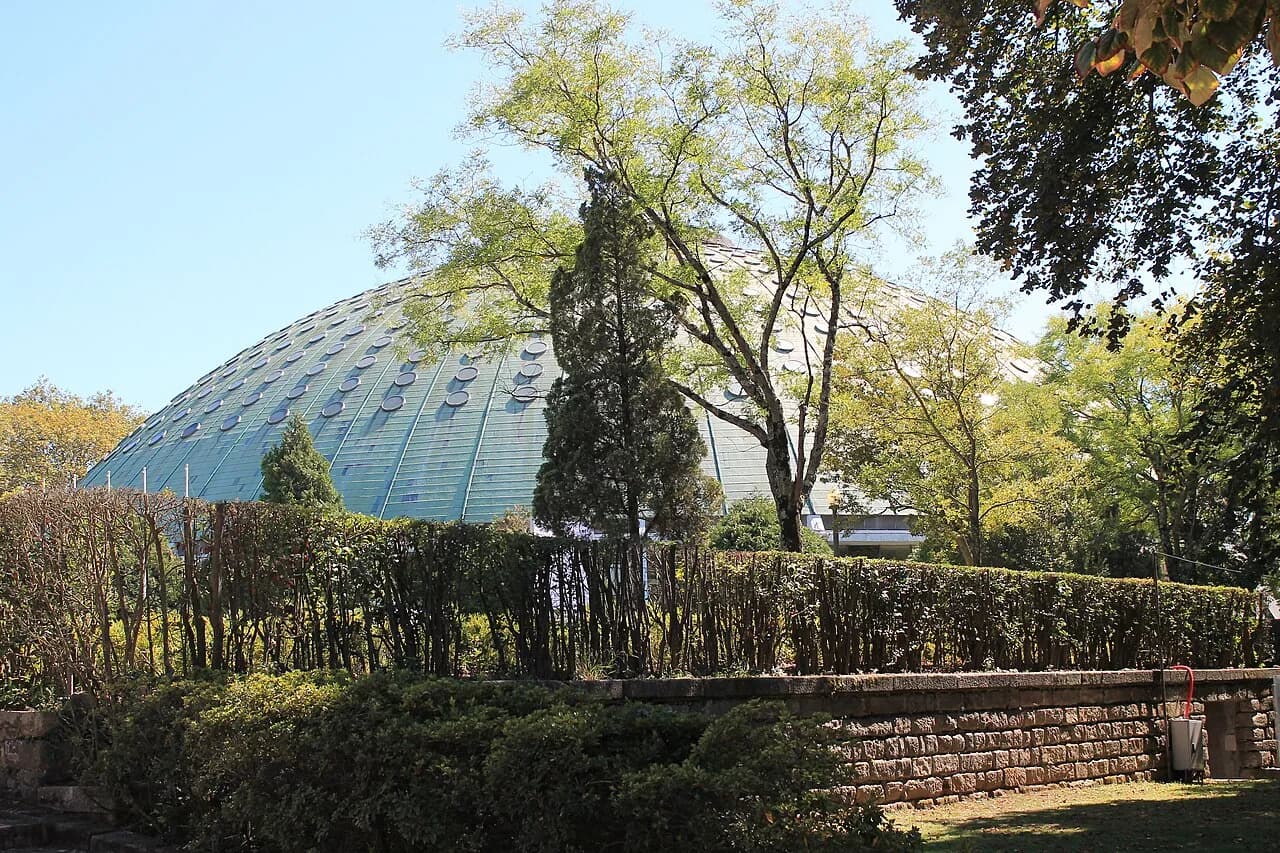
The original Crystal Palace building stood for less than a century. Porto's authorities demolished it in 1951, and the Rosa Mota Pavilion — named in honor of Portuguese marathon champion Rosa Mota — was built on the same footprint, opening in 1956 with its distinctive concrete dome. The arena is now operated under the commercial name Super Bock Arena and continues to host major concerts, sporting events, and trade exhibitions. The dome is visible above the treeline from various points in the gardens and serves as the main landmark that makes the complex identifiable from across the river.
The gardens themselves have been maintained in largely their 19th-century layout for over 160 years, making them an unusually intact example of Victorian-era public park design in continuous use. The Almeida Garrett Library was added to the grounds in 2002, named after the Portuguese Romantic writer and politician João Baptista da Silva Leitão de Almeida Garrett, whose literary period aligns with the original palace era. The Chapel of Carlos Alberto on the grounds predates the Crystal Palace and dates to the early 19th century, adding a further layer of historical depth to the site.
Beyond the Gardens: More Top Attractions in Porto
Porto's two major art museums are both within easy reach. The Museu Nacional Soares dos Reis, Portugal's oldest public museum, is roughly 10 minutes' walk east of the gardens and focuses on Portuguese fine art from the 16th to 20th centuries — a strong historical complement to the Victorian-era setting of the Crystal Palace Gardens. The Serralves Museum and Park is further out in the Foz district, about 20 minutes by taxi, and pairs contemporary art with another large public garden designed in a contrasting modernist style.
The Livraria Lello bookshop and the Clérigos Tower, two of Porto's most visited landmarks, are about 1 kilometer east and reachable on foot in under 20 minutes. Combining a morning in the Crystal Palace Gardens with an afternoon along Rua Miguel Bombarda — the Cedofeita gallery and design district, a 10-minute walk north — creates a coherent day away from the riverfront crowds that suits visitors with interests in culture, art, and architecture.
Nearby Places of Interest and Popular Routes from the Gardens
Several notable attractions sit within easy walking distance of the main gate. The Torreão do Jardim do Palácio, a historic palace tower, is 0.4 km away. The Bom Sucesso Market — a covered market with food stalls, local produce vendors, and several full-service restaurants — is 0.9 km downhill and makes a straightforward lunch stop. The Clérigos Tower is 1 km east, and the walk between the two is mostly flat once you descend from the park, passing through the Cedofeita neighborhood.
The downhill route toward the Douro riverfront takes about 25 minutes on foot and passes through the Bonfim neighborhood, where you will find local cafés and small shops that see far fewer tourists than the historic center. A coffee and pastéis de nata at one of the neighborhood bakeries along the route costs well under €3. The riverfront at Cais da Ribeira is accessible from there, and from the south bank at Gaia you can look back up at the hillside where the gardens and the Super Bock Arena dome are visible from below.
Best Day Trips from Porto to Enhance Your Itinerary
The Douro Valley wine region is the most popular day trip from Porto. Trains run from São Bento or Campanhã stations east to Pinhão in about 2.5 hours, with fares from around €12 one-way; the riverside scenery along the Douro gorge is reason enough for the journey. Guided river cruises from Porto travel upriver to Régua and Pinhão, combining the landscape with wine estate visits and lunch — full-day tours typically run €65–100 per person and depart from Cais da Ribeira throughout the morning.
Braga, one of Portugal's oldest cities and its religious capital, is 50 minutes from Porto by train from around €3.20. The Bom Jesus do Monte sanctuary, with its monumental Baroque staircase and funicular, is the main draw. Guimarães, designated the birthplace of Portugal and a UNESCO World Heritage site, is also around 60 minutes by train and well suited to a half-day visit focused on the castle and the historic center. Aveiro, the canal city often compared to Venice, is an hour south by train and pairs naturally with a stop at the striped-facade houses at Costa Nova beach, 10 minutes further by bus.
Recommended Porto Tours for a Deeper Dive
River cruises on the Douro are the most popular organised experience in Porto. The standard Six Bridges cruise lasts about one hour and passes under all six bridges connecting Porto and Gaia — tickets run €15–20 per person and depart from Cais da Ribeira throughout the day. Longer cruises extend upriver to Régua or Pinhão and include lunch and wine tastings, typically lasting a full day.
Walking tours of the historic center depart several times daily from near São Bento station and Praça da Liberdade, typically lasting 2 to 2.5 hours and covering the cathedral, Ribeira district, and the bridges. Most free tours operate on a tip basis; paid options run €12–20 per person. Wine cellar tours in Vila Nova de Gaia — directly across the river and visible from the gardens' viewpoint terrace — combine a guided cellar walk with a port tasting. Sandeman, Taylor's, and Graham's all offer English-language tours for €15–25 and can be booked on arrival most days outside peak summer weekends.
Frequently Asked Questions
How much time should you plan for Jardins do Palácio de Cristal?
Plan at least 1.5 to 2 hours for a leisurely stroll through the Jardins do Palácio de Cristal. This allows time to enjoy the various themed gardens, spot peacocks, and soak in the panoramic views. If you attend an event at the Pavilhão Rosa Mota or explore every corner, allocate more time.
What are the opening hours for Jardins do Palácio de Cristal?
The Jardins do Palácio de Cristal typically open from early morning until late evening, usually 8 AM to 9 PM, but hours can vary seasonally. It is always best to check the official Porto tourism website for the most up-to-date schedule before your visit, especially during holidays or special events.
Is Jardins do Palácio de Cristal free to enter?
Yes, entry to the Jardins do Palácio de Cristal is generally free for all visitors. This makes it a fantastic budget-friendly attraction in Porto. While the gardens are free, specific events or concerts held at the Pavilhão Rosa Mota (Super Bock Arena) within the park may require paid tickets.
Are there peacocks at Jardins do Palácio de Cristal?
Yes, the Jardins do Palácio de Cristal are home to a resident population of beautiful peacocks. These majestic birds roam freely throughout the gardens, often displaying their stunning plumage. Spotting them adds a magical element to your visit and provides wonderful photo opportunities.
What are the best viewpoints in Jardins do Palácio de Cristal?
The Miradouro do Palácio de Cristal offers spectacular views of the Douro River, Vila Nova de Gaia, and the Ponte da Arrábida. Another excellent spot is near the Pavilhão Rosa Mota, providing sweeping city panoramas. Look for various benches strategically placed for optimal scenic enjoyment throughout the gardens.
Other Terraced Gardens With a Borrowed View
The gardens fall in stages toward the Douro, with hedged rooms opening onto the river at intervals. Florence's Bardini Garden runs the same trick down toward the Arno with a wisteria tunnel and a Duomo view. Prague's Wallenstein Garden is the flat Baroque counterpoint, with a sala terrena and resident peacocks below the castle.
The Jardins do Palácio de Cristal reward visitors who give them more time than a quick photograph from the terrace. The combination of free entry, panoramic Douro views, 160 years of landscaped botanical variety, and unexpected cultural spaces — the library, the chapel, the museum — makes them worth at least a half-morning or afternoon. Use this guide to time your visit, follow the walking circuit through the key zones, and plan what to see in the surrounding neighborhood before or after.
To verify current details, consult the Jardins do Palácio de Cristal (Crystal Palace Gardens) official site.
For more Porto planning, see our hidden gems in Porto and Porto neighborhoods guide.
Continue exploring
More guides you'll find useful