8 Best Viewpoints in Porto (2026)
Discover the 8 best viewpoints in Porto, from the iconic Dom Luís I Bridge to hidden gems. Includes 2026 prices, sunset tips, and photography advice.
On this page
8 Best Viewpoints in Porto
Porto is a city built on hills, and its best feature is the constant shift in perspective as you climb from the riverbank to the granite ridges above. Every terrace, church tower, and scruffy open lot reveals a new angle on the terracotta rooftops, the Douro, and the iron span of the Dom Luís I Bridge. Finding the best viewpoints in porto is less about following a tourist map and more about knowing which alleys to turn down and which lookout points fill up thirty minutes before golden hour. This guide covers all eight must-visit miradouros for 2026, with current prices, exact addresses, and practical notes on timing.
The city's historic center is a UNESCO World Heritage Site, which means the skyline has barely changed in decades — a rare gift for photographers. For context on where each spot sits within the city, the Porto's neighborhoods lays out the districts clearly before you start walking. Most viewpoints cluster around three zones: the historic ridge above Ribeira, the Gaia bank directly opposite, and the quieter western gardens near the Arrábida Bridge. Knowing this geography in advance saves a lot of backtracking on steep cobblestones.
Knowing the the best time to visit Porto matters as much as choosing the right spot — Serra do Pilar at peak summer holds 200 people elbow-to-elbow along its stone wall, while the same terrace at 08:00 in May is almost empty. Bring comfortable shoes with grip; the granite pavements get slippery after any Atlantic rain, which arrives fast and leaves fast throughout the year. Each section below notes the ideal time of day, travel tip, and any entry fee so you can plan a single efficient loop.
Miradouro da Serra do Pilar
This is the postcard shot of Porto. The circular terrace of the Serra do Pilar monastery sits on the Gaia bank directly above the southern end of the Dom Luís I Bridge, framing the bridge, the river, and the entire Porto skyline in a single sweep. It is a UNESCO World Heritage monument in its own right, and the monastery church hosts occasional concerts that draw locals on summer evenings. The main viewing terrace is free to enter and open around the clock.
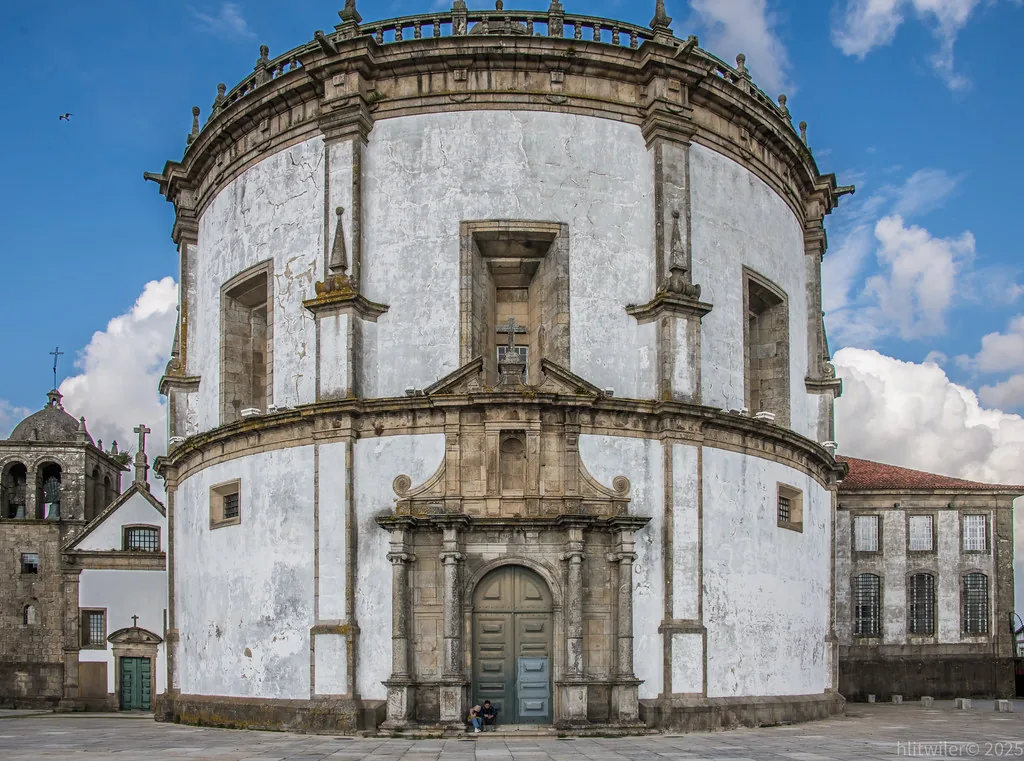
Arrive at least 30 minutes before sunset to secure a position along the low stone wall — the crowd builds quickly and latecomers end up standing behind a wall of phone screens. The Metro Line D runs directly to Jardim do Morro station; from there it is a five-minute uphill walk to the terrace. The interior of the monastery church has restricted visiting hours (typically 09:00–12:30 and 14:00–17:00, closed Mondays), but the exterior terrace is always accessible. For photography, a 24–35 mm lens captures both the bridge and the Porto hillside without distortion at this distance.
On clear days the Atlantic glimmer is visible to the west beyond the river mouth. The light hits the pale stone facades of Porto's Ribeira district at roughly a 45-degree angle in the last 20 minutes before sunset — that is the window to shoot. A zoom lens is useful for pulling in the bridge cables and the Clérigos Tower in the background.
Sé do Porto (Porto Cathedral)
The Porto Cathedral is one of the oldest buildings in the city, a Romanesque fortress sitting on the highest ridge of the historic center. Entry to the cathedral nave is free; the Gothic cloister with its famous 18th-century azulejo panels costs €3 per adult, and children under 10 enter free. Opening hours run 09:00–18:30 in summer (April–October) and 09:00–17:30 in winter (November–March). The Porto Cathedral Official Site keeps current hours updated.
The terrace level above the cloister looks south over the dense Ribeira rooftops with the Dom Luís I Bridge visible in the middle distance — a very different angle from Serra do Pilar. The Bishop's Palace beside the cathedral adds architectural depth to your foreground. This is a morning spot: the sun rises behind you (to the east) and lights the Ribeira district below by 08:30, giving you a warm, shadow-free view of the river before the crowds from the cruise ships arrive.
The walk down from the cathedral toward the river through the medieval lanes is one of the best in the city. Steep stone staircases drop toward the Ribeira waterfront, lined with small azulejo-faced houses, and each landing offers a new framing of the bridge. Do not rush past this descent — it is as rewarding visually as the terrace itself.
Ponte de Dom Luís I
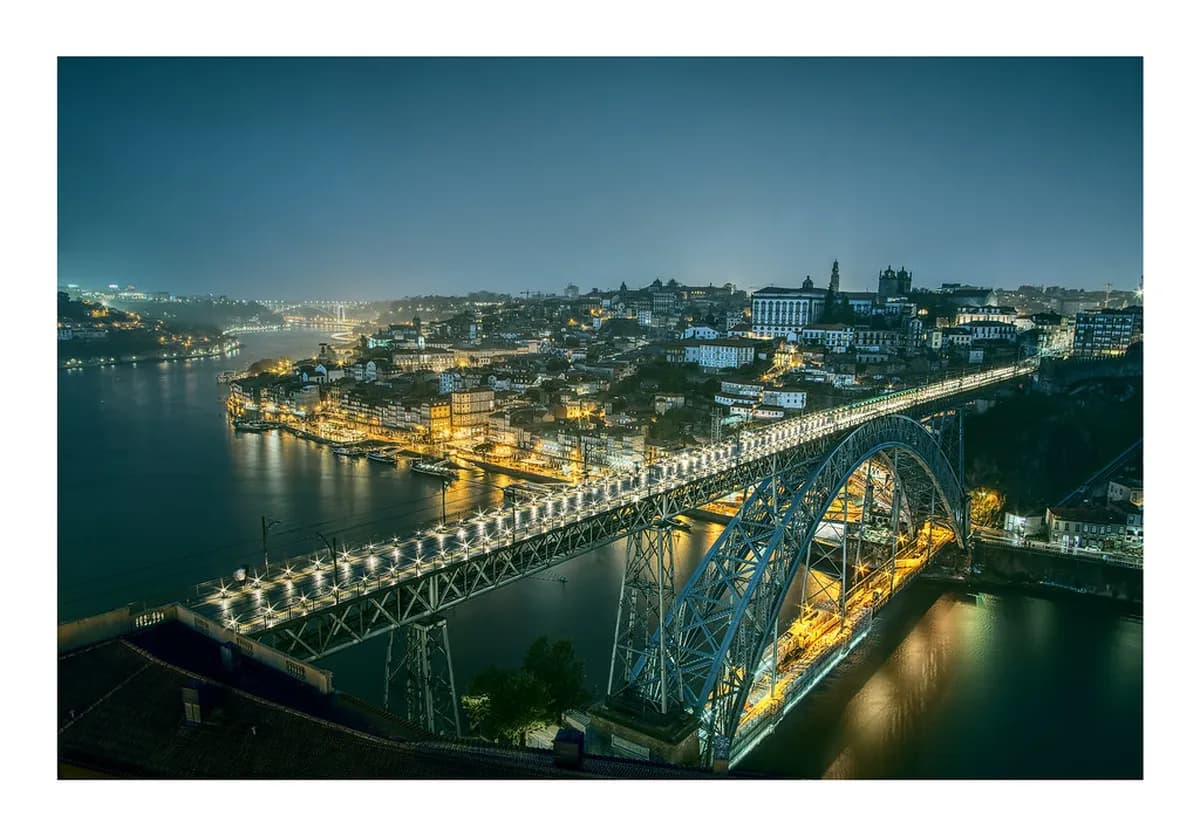
Walking the upper deck of the Dom Luís I Bridge puts you 45 metres above the Douro, and the pedestrian lane runs the full 172-metre span with only a metal railing between you and the drop. The crossing is free, open 24 hours, and shared with the Metro Line D — the tram passes every eight minutes, so the vibration is part of the experience. Looking down the river from the bridge mid-span, the Ribeira quarter stacks up to the left and the port wine lodges of Gaia line the right bank like a row of whitewashed warehouses.
What most visitors miss is the hidden stairway beneath the upper deck on the Porto side. A set of granite steps descends from the bridge's north tower footing down to a mid-level ledge that runs under the arch. This ledge is ungated and gives an underside perspective of the ironwork that no competitor guide mentions — the view back toward the Sé from directly beneath the bridge ribs is unlike anything you see from the standard tourist angles. Find the stairs by walking to the Porto-side tower and looking for the metal gate to the left of the pavement; it is unlocked during daylight hours.
The lower deck of the bridge carries vehicles and runs at river level, accessible from the Ribeira side. For detail shots of the bridge ironwork and the Gaia cellars, the lower deck is better. For the full panoramic sweep of the city, stay on the upper deck and walk to the midpoint before stopping. This is the best place in Porto to understand the scale of the Porto's hidden gems area across both river banks.
Torre dos Clérigos
The Clérigos Tower is the highest point accessible to visitors in the city center, rising 76 metres above the surrounding streets. Reaching the balcony requires climbing 225 narrow, spiral steps carved from granite — the staircase is barely wide enough for two people to pass, so descent and ascent share the same lane in a slow shuffle. Tickets cost approximately €8 per adult and the tower is open daily from 09:00 to 19:00 in normal season, extending to 23:00 during Easter, summer, and Christmas periods. Booking a morning time slot online at torredosclerigos.pt saves you 20–40 minutes in queue during peak months.
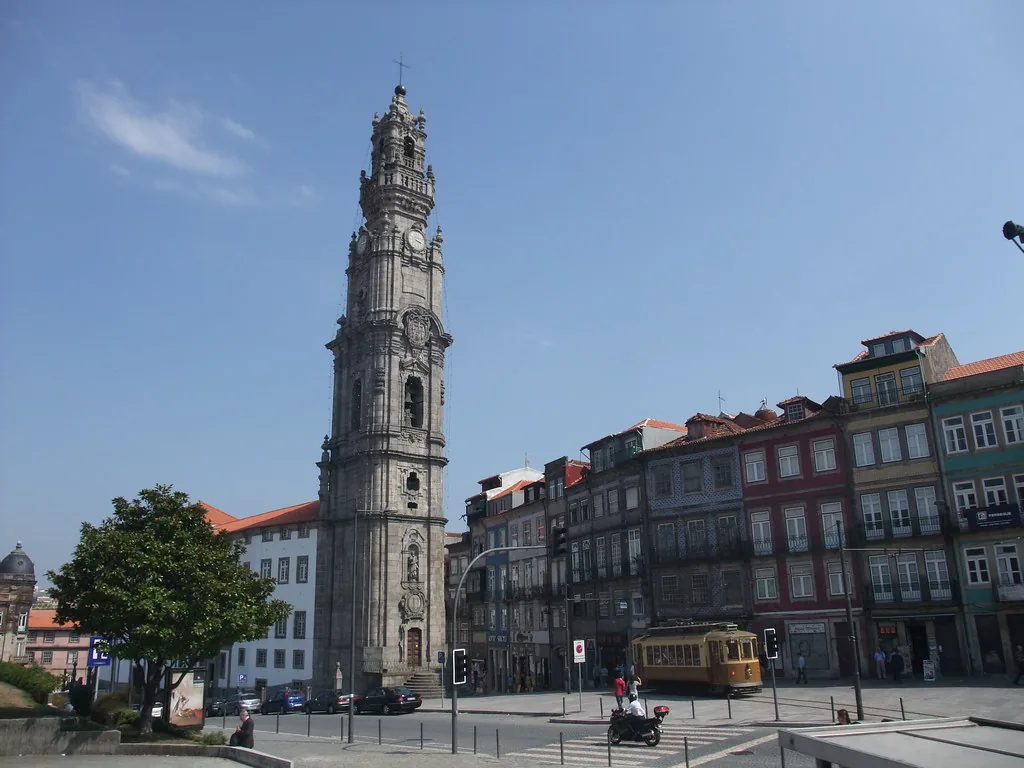
The balcony delivers a genuine 360-degree panorama: you can see the Dom Luís I Bridge, the river mouth, the Atlantic haze to the west, and the green hills of Braga to the north. The surrounding streets of the Baixa district appear directly below, showing the grid-like density of the historic center in a way no other viewpoint can. Photographers should note that the balcony railing is solid stone, so wide-angle shots require holding the camera above shoulder height or using a small tripod positioned against the railing edge.
The Baroque church attached to the tower is itself worth ten minutes — the nave is a tightly curved oval, unusual for its period, and the ceiling is one of the finest examples of gilded woodwork in northern Portugal. Entry to the church is included with the tower ticket. After descending, the terraces around the church square are a pleasant place to sit and adjust your eyes back to ground level.
Miradouro da Vitória
This is the gritty local favourite that most first-time visitors walk straight past. The entrance at R. de São Bento da Vitória 11 looks like a rusted gate into a private lot — there is no sign, no ticket booth, no staff. Push the gate open and you step onto an uneven terrace cut into the cliff face above Ribeira, with a clear sightline over the cathedral, the bridge, and the river. It is free, open at all hours, and almost always quieter than the official miradouros. Locals bring bottles of Vinho Verde and sit on the low walls while the sun goes down.
The viewpoint is a seven-minute walk from the Igreja do Carmo, one of Porto's most photographed azulejo-covered churches. Combining both into a single 30-minute detour makes sense when you are already in the upper Bairro district. The rugged, unfinished quality of the terrace is actually a photographic advantage: the rough stone walls and weathered graffiti give foreground texture that the polished tourist viewpoints lack entirely. Use a wide angle and shoot low to include the terrace floor for depth.
The approach through the steep lanes of the Vitória neighbourhood is itself a highlight of any Porto walk. Small workshops, tiled facades, and cats on window ledges line the route. Do not rush this walk — the entire hillside above Ribeira is one of the most atmospheric urban environments in Portugal, and the miradouro at the end is the reward rather than the point.
Jardins do Palácio de Cristal
These landscaped gardens spread across a bluff west of the city center, offering several informal terrace viewpoints that look south toward the river mouth and the distant silhouette of the Arrábida Bridge. Entry is free and the park is open from 08:00 to 21:00 in summer (April–September) and 08:00 to 19:00 in winter (October–March). The gardens are large enough that even on a busy Saturday afternoon you can find a quiet corner bench with an unobstructed river view.
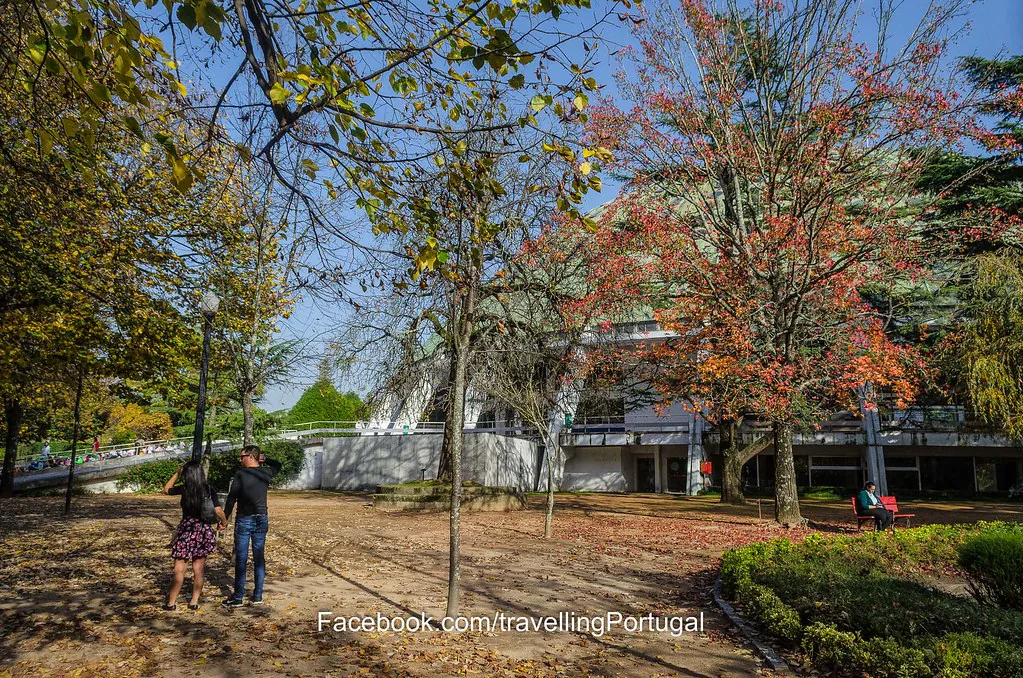
The peacocks are not a gimmick — the park keeps a genuine flock of free-roaming birds that wander the central lawn and occasionally block the path in full display. Families with children tend to spend as long watching the birds as looking at the view, which makes this a practical stop for mixed-age groups. The westernmost terrace is the best vantage point for watching Atlantic fog roll in over the Douro delta at dusk — a phenomenon that happens most evenings from late September through March and turns the entire riverscape into a slow-motion watercolour.
The gardens also connect to the Romantismo Museum and a small sports pavilion, both of which are useful rain shelters if the Atlantic weather turns during your visit. A wide-angle lens covering roughly 24 mm captures the full width of the river and the bridge in the same frame from the main terrace. The light here at golden hour comes from the west behind you, which means your subject — the city and river below — is perfectly lit.
Ribeira Waterfront
Standing at the water's edge in the Ribeira district inverts the usual perspective entirely. Instead of looking down at the bridge from a hillside, you look up at it from the base of the cliff, and the scale becomes genuinely dizzying. The coloured houses of the medieval quarter stack vertically above you while the iron span of the Dom Luís I Bridge soars overhead against the sky. This public promenade is always open, always free, and runs along the entire Porto riverfront from the base of the Sé hill to the western edge of the Bairro de Miragaia.
For a shot that no hilltop viewpoint can replicate, position yourself at the base of the bridge's north pillar and look straight up: the perspective compresses the tower and the river into a single dramatic vertical. This is the angle that best conveys the bridge's actual mass. Morning is the best time — the sun is behind you in the east and the Gaia bank across the river is fully lit, with the port wine lodge signs reflecting in the calm water before the tour boats start churning the surface.
The Ribeira also connects directly to the lower deck of the Dom Luís I Bridge, to the historic Cais da Ribeira steps, and to the departure points for Douro River boat tours. Street performers and outdoor cafes fill the promenade from midday onward, making it one of the most energetic viewpoints on the list — less meditative than Serra do Pilar, but more alive. For context on exploring this district further, the the Ribeira district covers the lanes and restaurants in detail.
Esplanada do Teleférico
The top station of the Gaia cable car sits adjacent to Jardim do Morro, and its terrace offers a clean, modern viewing platform looking directly at the Porto skyline. The cable car itself runs from the riverside Cais de Gaia up to this station and costs approximately €6 one-way or €9 return; the terrace itself is free and accessible by foot via Jardim do Morro from the Metro Jardim do Morro station on Line D. Opening hours for the cable car are generally 10:00–20:00 in summer and 10:00–18:00 in winter, though the terrace path is accessible beyond those hours.
The glass railing at the esplanada is the most unobstructed viewing barrier in Porto — no stone wall, no metal grille, just a clear panel between you and the panorama. This makes it the most photography-friendly platform on this list for capturing the entire Porto waterfront in a single clean frame. The traditional rabelo boats — the flat-bottomed wooden vessels historically used to carry port wine barrels down the Douro — are often moored directly below at the Gaia quay, providing a historical foreground for river shots.
The cable car descent to the riverside takes about five minutes and deposits you directly at the Gaia quay, where the port wine lodge tasting rooms (Graham's, Sandeman, Taylor's) are a short walk along the water. Combining the Esplanada viewpoint with a tasting at a lodge and a walk back across the lower bridge deck to Ribeira makes a self-contained two-hour circuit on the Gaia side that covers three distinct visual experiences in a single afternoon loop.
Free vs. Paid Viewpoints in Porto
Six of the eight viewpoints on this list are completely free to access. The two that charge an entry fee are Torre dos Clérigos (approximately €8 per adult) and the Porto Cathedral cloister terrace (€3 per adult, cathedral nave free). Every other location — Serra do Pilar, the Dom Luís I Bridge upper deck, Miradouro da Vitória, Jardins do Palácio de Cristal, Ribeira waterfront, and the Esplanada do Teleférico terrace — costs nothing. On a budget of zero, you can still see Porto from six distinct angles covering the main river panorama, the city ridge, and the Gaia bank.
The Torre dos Clérigos fee is the most defensible paid entry on the list because it gives access to a viewpoint that is physically impossible to replicate for free anywhere else in Porto. The 360-degree elevated platform shows the city in all four directions simultaneously, and the Baroque interior is included. The cathedral cloister fee is smaller and adds the azulejo-tiled Gothic courtyard as a bonus — even visitors who come only for the free nave view should consider paying the €3 for the cloister alone.
The Gaia cable car (€6–9) is the only transport-based cost and is optional: you can walk to the Esplanada terrace for free. Prioritise the cable car ride only if you have mobility constraints or are travelling with young children who would enjoy the aerial crossing. Otherwise, the walk from Jardim do Morro to the Esplanada terrace takes under ten minutes and costs nothing.
Six of Porto's eight best viewpoints are completely free: Serra do Pilar, Dom Luís I Bridge, Miradouro da Vitória, Jardins do Palácio de Cristal, Ribeira waterfront, and Esplanada do Teleférico terrace. Only Torre dos Clérigos (€8) and the Cathedral cloister (€3) charge entry fees.
Best Sunset Spots in Porto
Porto faces west toward the Atlantic, which means every clear evening ends in a genuine oceanic sunset rather than the urban silhouette you get in landlocked cities. The best position for this is Serra do Pilar — the sun drops roughly in line with the Dom Luís I Bridge from this angle, framing the arch against the orange sky for about 15 minutes before the colours fade. Arrive 30 minutes early and accept that you will be standing close to strangers along the wall. It is worth it. Bring a light layer; the Gaia ridge catches the wind off the river after dark.
The Jardins do Palácio de Cristal is the alternative sunset spot for anyone who finds Serra do Pilar too crowded or too far. The westernmost terrace of the gardens looks over the river mouth with no bridge in the frame — just water, fog, and fading light. This suits landscape photographers more than those who want the iconic bridge silhouette. The atmosphere is noticeably calmer, with locals walking dogs and couples on benches rather than tour groups with selfie sticks.
Miradouro da Vitória catches the last light in a different way: the sun sets behind the observer, which means the Sé and the Ribeira rooftops ahead are bathed in warm front light while you remain in relative shadow. This is a portrait-lighting setup — the city is the subject and the sun is a studio key light coming from behind your shoulder. Less dramatic than Serra do Pilar, but technically excellent for even exposure across the facade textures.
Serra do Pilar is the best sunset spot in Porto: arrive 30 minutes early to secure a position along the stone wall, and the sun frames the Dom Luís I Bridge against the orange sky for roughly 15 minutes before the colours fade. Bring a light layer — the Gaia ridge catches the Atlantic wind after dark.
Gaia Side vs. Porto Side Perspectives
The river divides Porto into two distinct visual experiences. From the Gaia bank — Serra do Pilar and the Esplanada do Teleférico — you look north across the water at the entire Porto hillside. This is the panoramic view most people associate with the city: the stacked terracotta rooftops, the white Sé tower, the Clérigos spire, and the Dom Luís I Bridge as the central spine. The Gaia side is the photographer's default position because the whole city fits in a single frame.
From the Porto side — the Sé terrace, Miradouro da Vitória, Torre dos Clérigos, and the Ribeira promenade — you are inside the city looking out at the bridge, the river, and the Gaia wine lodges. This is the local's perspective: intimate, detail-rich, and full of the sounds and smells of a living city. The bridge appears as a structural presence overhead rather than a scenic backdrop, and the port wine lodge signs on the white Gaia walls across the river read like a billboard viewed from a front porch.
Both sides have their distinct advantages and the ideal itinerary crosses the bridge twice — once on the upper deck heading south to Gaia for the Serra do Pilar sunset, and once on the lower deck heading back to Porto for a Ribeira dinner afterward. The lower deck crossing at dusk, with the bridge lit up above you and the Ribeira reflections in the water below, is one of the best five minutes available anywhere in the city without spending a single euro.
Frequently Asked Questions
What is the best place to watch the sunset in Porto?
The Miradouro da Serra do Pilar is widely considered the best sunset spot. It offers a perfect view of the sun dropping behind the Dom Luís I Bridge. Arrive early to secure a spot on the stone wall.
Are the viewpoints in Porto free to visit?
Many of the best spots, like Miradouro da Vitória and the bridge deck, are completely free. However, climbing the Clérigos Tower or the Cathedral terrace requires a small entry fee. Most public gardens are also free.
How many steps are in the Clérigos Tower?
There are 225 steps to reach the top of the tower. The staircase is narrow and can be challenging for those with limited mobility. The 360-degree view at the summit is worth the effort.
Porto's viewpoints are not interchangeable — each one tells a different part of the city's story. Serra do Pilar gives you the grand establishing shot. Miradouro da Vitória gives you the gritty local truth. Torre dos Clérigos gives you altitude and context. The Ribeira gives you scale. Pick two or three that match your priorities and your legs, and do them properly rather than rushing all eight in a single exhausting day.
The best moments here tend to happen between viewpoints, on the steep lanes connecting them. Leave room in your schedule for unplanned stops. The staircase under the Dom Luís I Bridge, the gate at R. de São Bento da Vitória 11, the fog settling over the Palácio de Cristal at dusk — none of these appear on the standard tourist map. Safe travels through one of Europe's finest cities.
Continue exploring
More guides you'll find useful