National Tile Museum Visitor Guide: Plan Your Lisbon Azulejo Trip
Unlock Lisbon's National Tile Museum with our comprehensive visitor guide. Discover opening hours, ticket prices, must-see exhibits, and tips for an unforgettable Azulejo experience.
On this page
National Tile Museum Visitor Guide: Plan Your Visit to Lisbon's Azulejo Gem
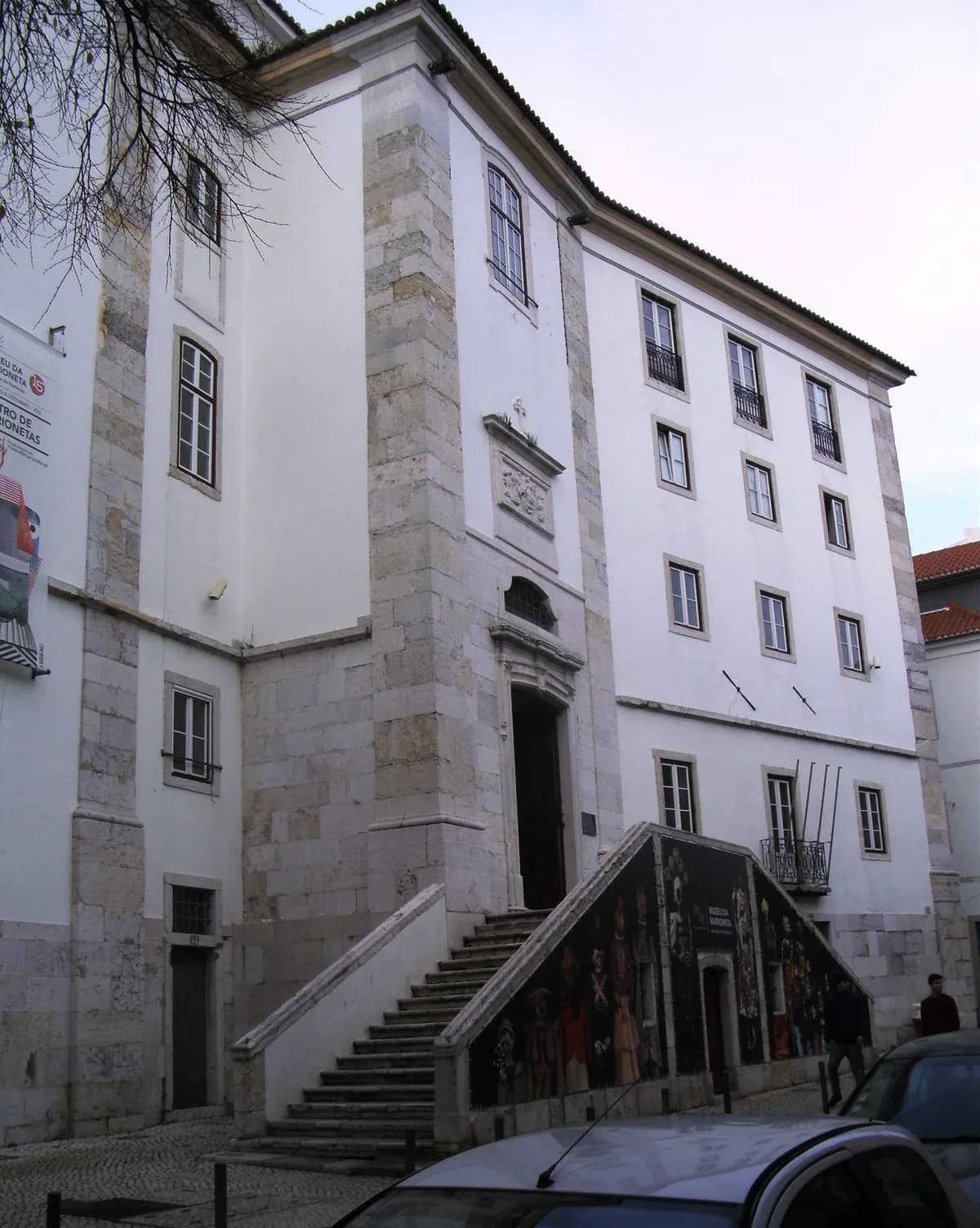
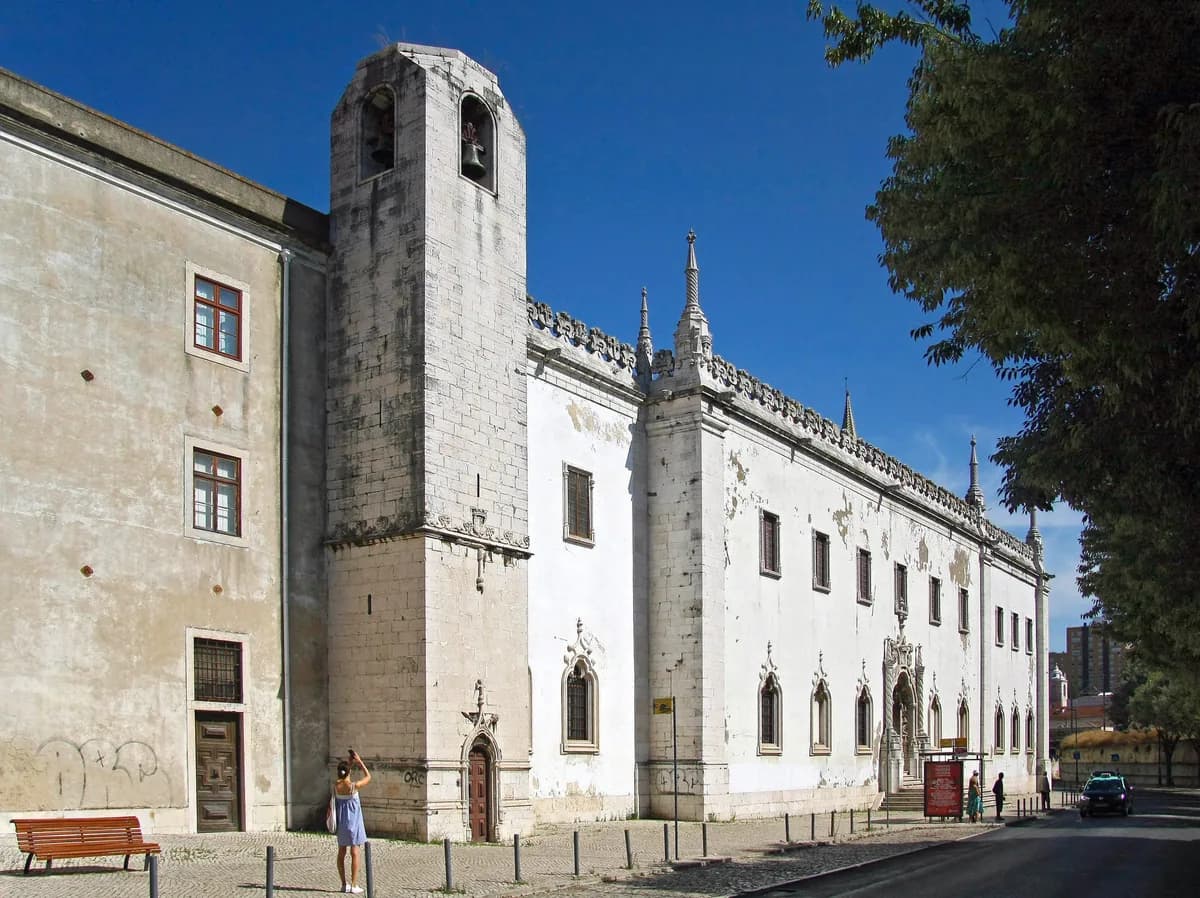
The National Tile Museum — Museu Nacional do Azulejo — occupies a 16th-century convent in eastern Lisbon and holds one of the world's most complete collections of Portuguese ceramic tilework.
Five centuries of azulejo art unfold across its galleries, from Moorish-geometric floor tiles to a 23-metre panel that froze Lisbon's riverfront before the 1755 earthquake destroyed it.
Important note for 2026: the museum has been undergoing a major renovation funded by Portugal's Recovery and Resilience Plan (PRR). Check the official site at museunacionaldoazulejo.gov.pt for the latest reopening dates before you plan your trip. All information below reflects normal operating conditions.
Getting to the National Tile Museum
The museum is at Rua da Madre de Deus 4, in the Xabregas district on the eastern edge of Lisbon. It sits well outside the main tourist corridor, but bus routes make the journey easy once you know which ones to take. There is no metro station at the door.
By bus, line 759 departs from Restauradores Square and reaches the museum in about 15 to 20 minutes, passing through Praça do Comércio and past Santa Apolónia along the route. Bus 742 is the other reliable option — board at B. Madre Deus (Escola) and alight at the Igreja Madre Deus stop, a one-minute walk from the entrance. Lines 718 and 794 also serve the Xabregas area. The Lisboa Card includes free travel on all these services.
By metro, take the Blue Line to Santa Apolónia, then switch to bus 759 or 742 for the final stretch. It is also possible to walk from Santa Apolónia along Calçada da Cruz da Pedra in around 20 to 30 minutes. A taxi or rideshare from the centre takes about 10 minutes and is the most practical choice if you are travelling with children or luggage.
Admission & Tickets
Standard adult admission is €8. A reduced rate applies to visitors aged 13 to 24 and those over 65. Children under 12 enter free, as do visitors with disabilities and one accompanying person. Entry is free for everyone on the first Sunday of each month.
The Lisboa Card covers full entry to the museum at no extra charge — a strong value if you are visiting several Lisbon attractions across one or two days, since the card also includes unlimited public transport. Buying online is worth considering: booking in advance unlocks skip-the-line access, and for €15 you can add a smartphone audio guide that narrates the key exhibits, works offline, and can be replayed as many times as you like.
Alternatively, download the free MNAz app before your visit. It provides a self-guided audio tour in multiple languages and does not require you to pay the audio guide supplement. Tickets are also available at the museum entrance on the day.
The free MNAz app provides self-guided audio tours in multiple languages without paying the €15 supplement, and works offline so you don't depend on spotty museum Wi-Fi inside thick stone walls.
Planning Your Visit
The museum opens Tuesday to Sunday, 10:00 to 18:00, with last entry at 17:15. It closes every Monday and on 1 January, Easter Sunday, 1 May, 13 June (Saint Anthony's Day) and 25 December. Weekday mornings are the quietest time to go — arriving at 10:00 on a Tuesday or Wednesday, you will often have the galleries largely to yourself.
Plan for 1.5 to 2 hours for a comfortable visit at a relaxed pace. Visitors who want to read the room panels in detail, explore both cloisters, and sit for lunch in the café regularly extend that to 3 hours. Download the MNAz app before leaving your accommodation rather than relying on the museum's Wi-Fi, which can be slow inside thick stone walls.
The museum is wheelchair and stroller-friendly, with lifts and ramps connecting all exhibition levels. It also provides 17 tactile replicas in relief, Braille subtitles, and video guides in both Portuguese Sign Language and the International Sign system. For specific accessibility questions, contact the museum at +351 218 100 340 ahead of your visit.
On selected dates throughout the year, the museum runs azulejo tile-painting workshops where visitors can learn traditional glazing techniques. Some workshops even let you make edible tile-shaped treats. These are booked separately from general admission; check the museum events calendar when you confirm your entry date.
Arrive at 10:00 on a weekday—tour groups rarely arrive before 11:00—to enjoy the Grand Panorama and galleries without crowds pressing close to the exhibits.
What to See: Highlights of the Azulejo Collection
The collection runs chronologically from the late 15th century to the present, so the route through the galleries is also a condensed history lesson. Begin in the Techniques Room, which maps the origins of Portuguese tile art — from 15th-century Hispano-Moresque floor tiles imported from Manises, through the first majolica productions (tin-lead glazed earthenware that gives azulejos their characteristic bright, glossy finish). The room's standout piece is the "Our Lady of Life" altarpiece, a formally designated National Treasure created in 1580 from 1,498 tiles, depicting the birth of Jesus with shading techniques that create an illusion of sculptural depth.
The Hunting Room reconstructs a 17th-century noble chamber using six panels salvaged from the former Praia Palace in Belém. The scenes show animals in pursuit rather than blood, and the typical green, gold, and blue palette of the era is displayed at its best. A few rooms later, the Arches Room showcases 18th-century Rococo and Baroque azulejos: a life-sized male invitation figure at the entrance, a cropped panel of the Battle of Alexander against Darius of Persia, and a large chinoiserie panel representing the four seasons.
The single most important piece in the museum is the Grand Panorama of Lisbon on the second floor — a 23-metre blue-and-white panel painted around 1700 and attributed to the Spanish master Gabriel del Barco. Its 1,300 tiles record approximately 14 kilometres of Lisbon's riverfront skyline as it appeared before the 1755 earthquake, including monuments that no longer exist. It is one of the only detailed visual documents of pre-quake Lisbon, and it alone justifies the trip across town.
Two pieces in the cloisters are worth seeking out specifically. "The Chicken's Wedding" (1665) is an enigmatic panel in which all characters are monkeys except for a single chicken arriving in a carriage — its satirical meaning remains debated, with the chicken possibly representing a queen mocking courtly behaviour. "Portrait of a Lady" (1820) achieves a near-impossible veil transparency effect in tile painting, an illusion made unpredictable by the kiln firing process and all the more remarkable for it.
Beyond the Tiles: The Convent of Madre de Deus
The museum occupies the former Convent of Madre de Deus, founded in 1509 by Queen D. Leonor for the Order of Saint Clare. The building is as much an exhibit as its contents. Two cloisters survive: a small Manueline cloister — the Gothic-Renaissance style particular to 16th-century Portugal — and a grander Baroque-era cloister added later. Both have tile-lined walkways and elegant arched galleries, with scenes ranging from the life of Saint Francis to biblical events covering the walls.
The Church of Madre de Deus is the building's most spectacular space. It is a single-nave Baroque church draped in gilded woodwork, with a Roman-style triumphal arch leading to the main chapel. The azulejo panels on the walls carry a deliberate symbolic programme: the left side depicts a life of worldly pleasure, the right a life of religious devotion. Paintings above the tile panels are by Cristóvão Lopes and André Gonçalves, significant Portuguese painters from the 16th and 18th centuries respectively.
Before leaving, step into the café set in the former convent refectory. The walls are lined with 1800s food-themed tiles depicting fish and hanging game ready for the kitchen — an easily overlooked detail that offers a glimpse of domestic convent life. The café serves light lunches and daily specials; the shaded courtyard is a good mid-visit break, particularly in summer.
The History of Portuguese Azulejos
The word azulejo derives from the Arabic az-zulayj, meaning polished stone. The art form reached Portugal via the Islamic south of the Iberian Peninsula in the late 15th century, initially as geometric floor tiles. What made Portugal unusual — and ultimately the country with the world's most extensive and innovative tile tradition — was a combination of practical necessity and geography. Tiles were far cheaper than the tapestries and woven wallcoverings that wealthy European households favoured, and Lisbon's damp Atlantic climate made them dramatically more durable. Azulejos keep interior walls cool in summer, resist salt air, and survive the freeze-thaw cycles that crack plaster and wallpaper. Where other European countries decorated with textiles, Portugal tiled everything.
The 17th and 18th centuries produced the iconic blue-and-white palette that now defines Portuguese tile art internationally. The shift was driven by two sources arriving through Lisbon's port: Chinese porcelain and Dutch Delftware. Both traditions merged with Portugal's Baroque narrative impulse to produce large-scale storytelling panels covering entire church interiors, palace walls, and civic buildings. The museum's chronological route makes this stylistic evolution easy to follow, from the first polychrome experiments to the confident blue-and-white monumentalism of the late Baroque.
Azulejos eventually spread beyond elite interiors into everyday life — railway station walls, shop fronts, apartment facades, metro stations. Lisbon's metro system continues this tradition, with several stations featuring tile murals by prominent contemporary artists. The museum's final galleries document this living continuity, ending with works by some of Portugal's most significant late-20th-century designers.
Insider Tips for Your Visit
Arrive at 10:00 on a weekday for the quietest experience. Tour groups rarely arrive before 11:00, and the Grand Panorama Room in particular is best appreciated without crowds pressing close to the panel. Photography without flash is allowed throughout the museum, including inside the church.
Download the MNAz app at home or in your hotel rather than trying to grab it on the museum's Wi-Fi inside thick stone walls. The app is free and covers the main highlights in multiple languages. If you prefer a paid audio guide with skip-the-line entry, book the combined ticket online before you travel — it saves time on busy summer weekends.
The café in the old refectory is worth a proper stop mid-visit, not just at the end. The food-themed 1800s tiles along the walls are easy to miss if you rush straight through to the gift shop. Lunch specials — typically one fish option, one meat, and soup — are good value, and courtyard tables sit in the shade. The gift shop offers quality reproductions of famous panels and small hand-painted tiles sourced from local workshops.
Did You Know? Fascinating Tile Facts
In October 2023, the National Tile Museum received the "Best Museum in the World" award at the Remarkable Venue Awards. Despite this recognition, it remains far less crowded than Jerónimos Monastery or São Jorge Castle, largely because its Xabregas address keeps it off the standard tourist circuit — which is, of course, the best reason to go.
The Grand Panorama of Lisbon is one of the only detailed visual records of the city before the earthquake of 1 November 1755 levelled much of the downtown core. The 1,300 tiles show monuments that no longer exist alongside landmarks still visible today, making it an irreplaceable document for historians and architects studying pre-quake urban form.
Blue did not always dominate Portuguese tile art. Early azulejos used polychrome palettes — yellow, green, white, and black — copied from Moorish Spain. Blue-and-white only became the defining style in the 17th century, propelled by Chinese porcelain and Dutch Delftware flowing into Lisbon via the city's trade routes. Once adopted, Portuguese tile masters scaled the style far beyond what any other European tradition attempted, including the 14-kilometre panorama now on the museum's second floor.
The museum is the first institution in the world dedicated exclusively to azulejo art — no other country has built an entire national museum around the tile as a singular art form.
Souvenirs & Authentic Azulejo Crafts
The museum shop is the safest starting point for tile souvenirs. Its reproductions are curated and well-made: small hand-painted tiles start from around €5 to €20, and larger framed panels run €50 and upward. Antique salvaged tiles from dealers like Cortiço & Netos (near the castle in central Lisbon) are a separate category priced as collectors' pieces.
Fábrica Sant'Anna, a historic tile factory in Chiado operating since 1741, sells hand-painted tiles made using traditional methods and accepts custom orders for panel designs. Small studios in Alfama and Mouraria offer hand-painted work at various price points. When buying anywhere in the city, flip the tile over: authentic hand-painted pieces have an unglazed, slightly rough back with occasional maker's marks, and subtle brushstroke variation visible on the front. Machine-produced tiles are perfectly uniform, lighter in weight, and often have a printed rather than painted finish — a useful test when a price seems suspiciously low.
Nearby Attractions & What Else to Do in Lisbon
After the museum, the Feira da Ladra flea market at Campo de Santa Clara runs on Tuesdays and Saturdays and is walkable from Xabregas — a practical place to look for antique tiles, old ceramics, and Portuguese ephemera. The National Pantheon (Panteão Nacional) sits directly beside the flea market and its dome gives panoramic views over the city's eastern rooftops.
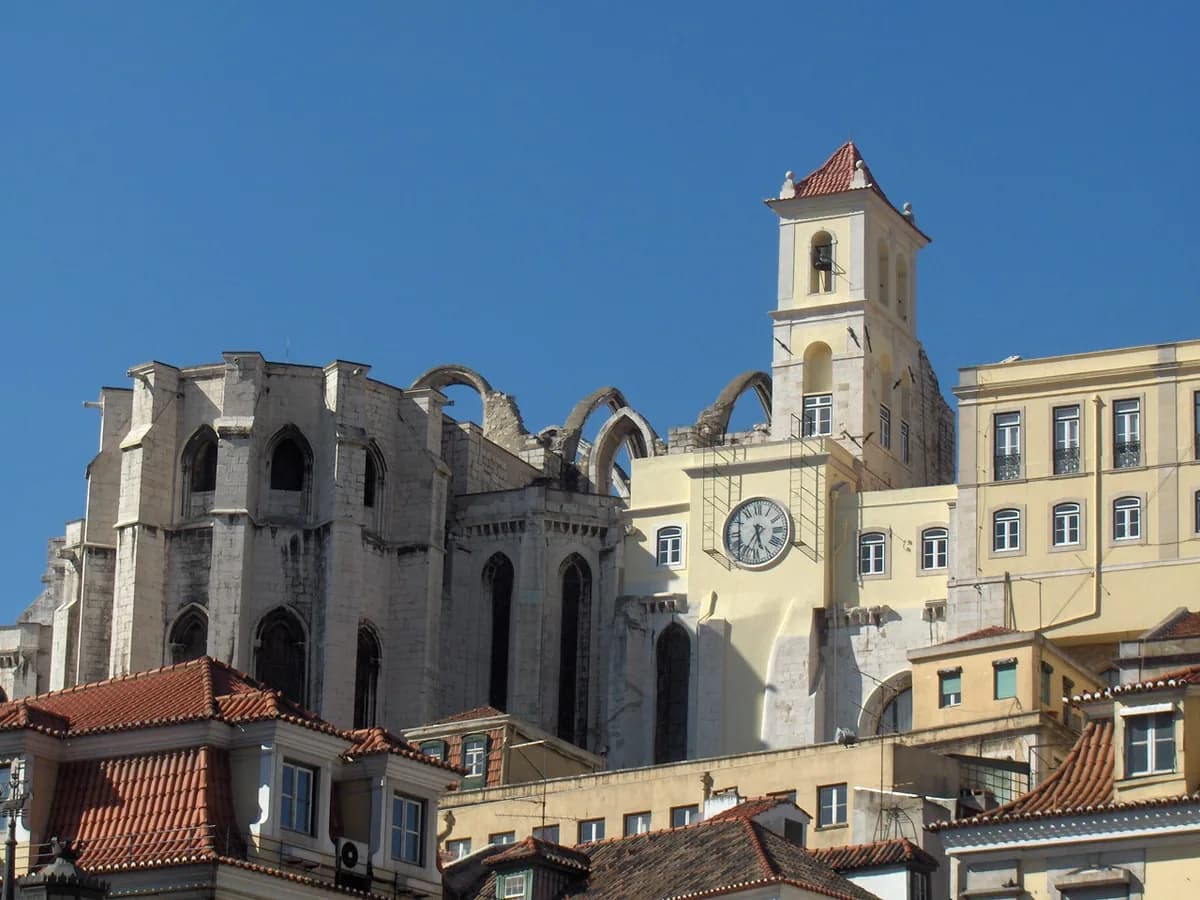
The Alfama district — Lisbon's oldest neighbourhood, full of Fado houses and narrow medieval lanes — is a short bus or taxi ride from the museum and pairs well for a full half-day in eastern Lisbon. For more Lisbon attractions, the Convento do Carmo archaeological museum in the Chiado area is worth adding; its roofless Gothic nave, ruined in the 1755 earthquake, is one of the city's most striking spaces. Santa Apolónia station, a 15 to 20-minute walk from the museum, is also worth a brief stop for its historic architecture before continuing by train or metro.
Other Places to Follow the Tile Trail
Five centuries of azulejo in a former convent, ending with a thirty-six-metre panel of Lisbon before the earthquake. Porto's Capela das Almas shows the industrial-era endpoint, a whole church exterior tiled in 1929. Seville's Casa de Pilatos holds the Spanish side of the same craft, laid into a Mudéjar palace.
The National Tile Museum rewards the effort of reaching it. Its collection is genuinely world-class, the Madre de Deus convent is one of Lisbon's finest buildings, and the Grand Panorama of Lisbon is a piece of history that no photograph of a photograph can fully replicate.
Check the official site before you travel in 2026 to confirm the PRR renovation is complete and normal hours are in effect. Budget at least two hours, download the MNAz app in advance, and arrive early on a weekday for the best experience.
For official details, visit the National Tile Museum on Wikipedia.
Planning more of your trip? See our guides to hidden gems in Lisbon.
Continue exploring
More guides you'll find useful