Unique Things To Do In Lisbon Travel Guide
Plan unique things to do in lisbon with top picks, neighborhood context, timing tips, and practical booking advice for a smoother trip today!
On this page
Unique Things To Do In Lisbon
Lisbon is one of Europe's most rewarding cities for travelers willing to go one street beyond the obvious. The Portuguese capital layers a medieval hilltop quarter over a riverfront of Manueline monuments, wraps both in hand-painted azulejo tiles, and presses a shot of cherry liqueur into your hand before you've even caught your breath. Finding truly unique things to do in Lisbon means mixing the famous landmarks with the local rhythms underneath them.
This guide covers the experiences that top-ranking visitors consistently seek out in 2026 — from iconic viewpoints and UNESCO monuments to whimsical ceramic gardens and one of the world's smallest bookshops. Each section includes practical details on timing, cost, and where to go so you can make real decisions, not just add items to a wishlist.
Best things to do in Lisbon
The best starting point in Lisbon is simply walking. The city is compact enough that most of the historic center — Alfama, Baixa, Chiado, and Bairro Alto — connects on foot, and the steep cobblestone lanes reward slow exploration. Pick up a pastel de nata at a local padaria, follow the sound of a tram rounding a corner, and let the city reveal itself gradually. Bring good shoes; the calcada portuguesa paving is beautiful but slippery, especially after rain.
For a creative twist, spend a Sunday afternoon at the LX Factory Lisbon in Alcântara. This former industrial complex hosts art galleries, independent design shops, the stunning Ler Devagar bookstore with a resident printing press, and a weekly flea market. Entry is free and the venue draws an equal mix of locals and visitors, which keeps the atmosphere grounded.
Beyond the historic center, the riverside districts of Belém and Marvila reward a half-day each. Belém holds the city's grandest monuments and the best pastéis de nata outside your immediate neighborhood. Marvila is a younger creative quarter with giant murals and wine cellars converted into restaurants. Neither requires much planning — just show up and walk.
Famous Attractions In Lisbon
The Belém district contains Lisbon's two UNESCO World Heritage monuments and both are worth the 6 km trip west of the city center. The Jerónimos Monastery (Mosteiro dos Jerónimos) is one of the finest examples of Manueline architecture in existence — its cloister alone justifies the €10 entry fee. Arrive before 10:00 to avoid tour groups. The Belém Tower (Torre de Belém) stands on the river bank five minutes' walk away; tickets cost €6 and queues form by mid-morning in summer, so book online.
Back in the historic center, Castelo de São Jorge dominates the Alfama skyline. The Romans fortified this hill around 200 BC and the site has been a royal palace, a prison, and a National Monument since. Entry is €15 in 2026. The castle walls provide the city's best 360-degree view and the museum inside is small but well-curated. To avoid the worst crowds, aim for the gate when it opens at 09:00 or in the last hour before closing at 21:00 in summer.
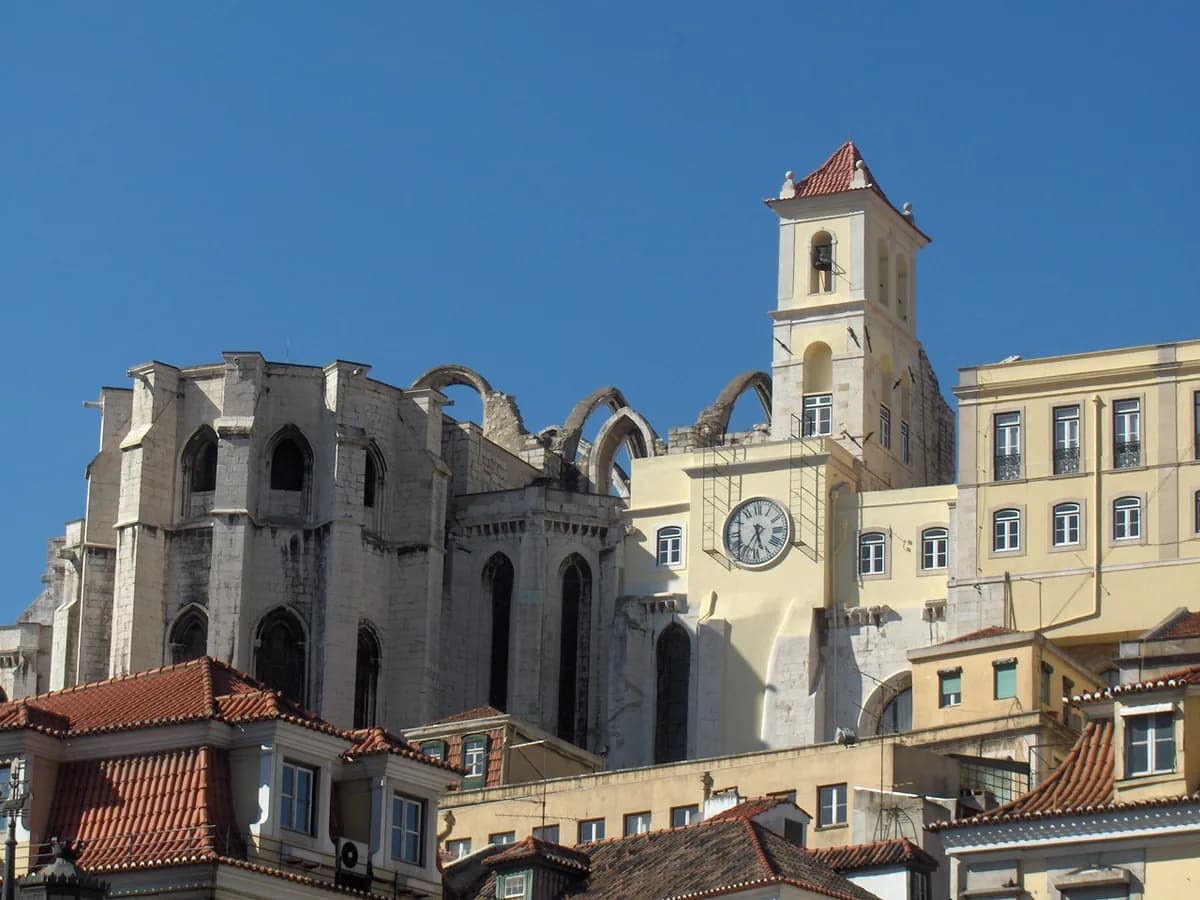
The Santa Justa Lift is the city's famous iron elevator, designed by an apprentice of Gustave Eiffel. The lift itself costs €5.30 for a single ride, but the viewing platform at the top connects directly to the free public walkway around the Carmo ruins — which means you can skip the lift entirely and walk up from behind for the same view at no cost. To see the elevator from its most photogenic angle, position yourself at the bottom of Rua do Ouro looking uphill. Visiting places to visit in Lisbon for free from this walkway is one of the best budget moves in the city.
Do a Lisbon walking tour
A guided walk is the most efficient way to decode Lisbon's layers of history in a short trip. Good guides connect the city's great 1755 earthquake to the Enlightenment, explain why the Pombaline grid of Baixa was rebuilt with cork-lined foundations as a proto-seismic standard, and tell you which buildings survived because they were built on rock versus sand. You leave with a mental map that makes everything else you visit more meaningful.
The most flexible option is a free tour run through Civitatis. The Walking Tour of Lisbon departs daily at 10:00, 11:00, 14:00, and 16:00 from Praça Luís de Camões. A dedicated Walking Tour of Alfama runs at 10:30 and 11:00 daily, covering the cathedral, Portas do Sol viewpoint, and the oldest district's maze-like lanes. There is also a Walking Tour of Mouraria that explores the medieval Moorish quarter and the birthplace of Fado at 11:00 daily.
All three operate on a tips-only basis, so there is no booking fee. Tours run about 2.5 hours each. Reserve your spot online in advance because popular departure times fill up, particularly in June through September. Wear flat shoes and bring a water bottle — the Alfama hills are steep even on a cool day.
Hunt for Street Art and the Pink Street
Lisbon's street art scene is city-council sanctioned, which makes it unusually dense and high-quality. Artists submit proposals and the municipality approves projects, so the murals on residential blocks and derelict walls tend to be large-scale, technically accomplished works rather than tags. The LX Factory and the Mouraria neighborhood contain the highest concentration, but the entire city operates as an open-air gallery. Keep your eyes up on the sides of apartment buildings as you walk — some of the best pieces are easy to miss at street level.
The Mouraria Lisbon guide area features painted portraits of legendary Fado singers on the walls of residential buildings — a tribute project that blends street art with musical heritage. Marvila, further east, hosts some of the largest murals in the city on the sides of old warehouse buildings. The area is a 20-minute Uber ride from Alfama and not heavily visited by tourists, which makes it one of the more genuine street-art walks you can do.
For the Instagram-famous pink street, head to Rua Nova do Carvalho in the Cais do Sodré neighborhood. The street was a working-class red-light district until the early 2010s when the city repainted the pavement hot pink and the bars reinvented themselves as cocktail venues and dance clubs. Some of the original neon signage and worn brass fixtures remain, giving the street a pleasantly layered atmosphere. It is liveliest after 22:00 on weekends and essentially empty before 20:00 on weekdays, when you can photograph it without crowds.
Watch a Fado show
Fado is one of the few UNESCO-listed musical traditions still practiced in its original neighborhoods, and experiencing it in Lisbon carries genuine weight. The music is built around saudade — a Portuguese concept of melancholic longing with no clean translation — and performed by a fadista accompanied by a viola baixo (bass guitar) and a Portuguese twelve-string guitar. A good performance in a small venue is deeply moving even if you speak no Portuguese.
The key distinction for visitors in 2026 is tourist Fado house versus authentic casa de fado. Tourist venues in Alfama advertise dinner-and-show packages starting at €35–60 per person, often with pre-set menus and performances designed for groups rotating in on a schedule. Authentic casas de fado charge a €5–15 cover that is applied directly to your food and drinks bill — meaning the experience costs the same as a normal dinner if you eat and drink. The Alfama Lisbon guide covers several of the genuine options clustered on the upper streets around Rua do Capelão.
One etiquette point that no venue signage explains clearly: arrive before the first set begins, not during it. Walking in mid-song is considered deeply disrespectful in small traditional venues. The audience is expected to be silent during performances — no phone calls, no loud ordering, no side conversations. Applaud at the end of each song. If you observe these basics, the musicians and locals will warm to you quickly. Shows typically begin around 21:00 and run in 45-minute sets with breaks.
Arriving mid-song at a Fado casa is considered deeply disrespectful — always be seated before the first set begins at 21:00. Authentic casas de fado charge a €5–15 cover applied to your food and drinks bill.
Drink some ginjinha (all the better if it's from a chocolate shot glass)
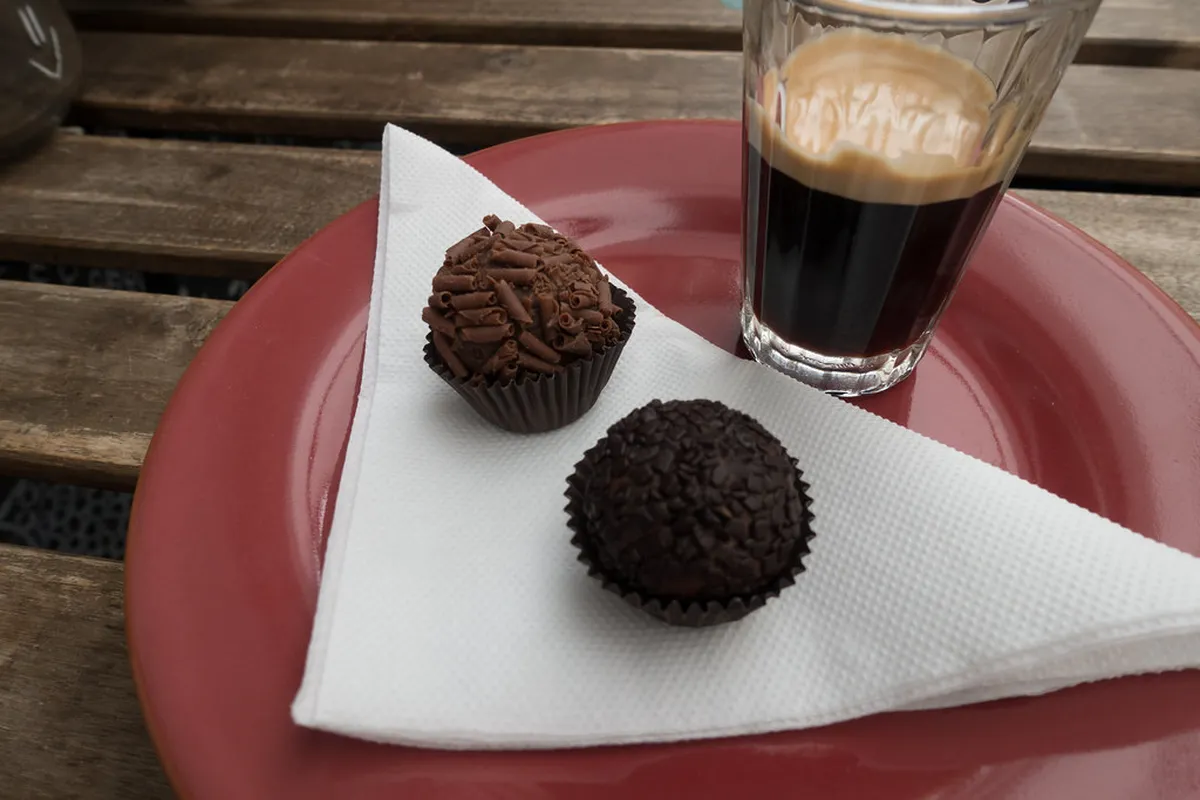
Ginjinha is Portugal's sour cherry liqueur, flavored with cinnamon and sugar, and it has been served at standing-room-only bars in Lisbon for over 180 years. The drink costs €1.50–2.50 a shot depending on where you go. You order it com elas (with cherries) or sem elas (without), and in some spots you have the option of a small edible chocolate cup instead of a glass — which makes an already enjoyable drink noticeably better.
The most famous address is A Ginjinha on Largo de São Domingos, a tiny bar that has been serving only this one drink since 1840. The historic bar in Lisbon is standing room only on the street outside and accepts cash only. It opens at 09:00 and stays busy until late evening. There is no seating and no menu beyond ginjinha — the entire transaction takes about 90 seconds, which is the point.
For a more relaxed version of the same experience, Alfama Gourmet wine bar serves ginjinha shots in chocolate cups alongside Portuguese wine flights. This is the better option if you want to linger. Either way, the chocolate cup version is a genuine Lisbon ritual rather than a tourist gimmick — locals order it this way too. Bring small coins for the traditional spots; most do not have card machines.
A ginjinha shot costs just €1.50–2.50 and can be served in an edible chocolate cup — order it "com elas" to get the cherries included. A Ginjinha on Largo de São Domingos has been serving only this drink since 1840 and is cash-only.
Grab a drink at a rooftop bar or miradouro
Lisbon's hilly topography produces an unusually high density of elevated viewpoints, and local entrepreneurs have placed bars on top of many of them. The best-known paid options in 2026 are Park (on top of a multi-storey car park in Bairro Alto, accessed through the parking garage elevator — genuinely worth the effort to find), Topo in Martim Moniz Square, and the Seen Sky Bar at the Bairro Alto Hotel for a more formal, hotel-rooftop experience.
The free alternative is one of Lisbon's miradouros. These official civic viewpoints are scattered across every hilltop neighborhood and offer the same panoramic views over the orange terracotta rooftops and the Tagus without any minimum spend. Miradouro de São Pedro de Alcântara in Bairro Alto has a garden, benches, and a kiosk bar. Miradouro da Graça is less visited than the more famous Santa Luzia terrace and offers a broader view to the west. For the best sunset light, face west from Miradouro da Senhora do Monte above Graça — it is the highest public viewpoint in the city.
The practical rule is straightforward: if you want a cocktail and a table, go to Park or Topo and arrive before 19:00 to get a spot. If you want the view for free, pick up a bottle of local wine for €4–6 at any supermercado and take it to a miradouro. Sunset at a miradouro with a vinho verde and a cheese board bought from a nearby deli is one of the best value experiences in the city.
Marvel at the porcelain wonders of Jardim Bordallo Pinheiro
The Museu Bordalo Pinheiro and its adjacent garden sit in the northern Campo Grande area, about 20 minutes from the city center by metro (yellow line to Entre Campos, then a short walk). The garden displays enormous ceramic sculptures — giant bees, frogs, crabs, and lizards — hidden among the plants and pathways. The pieces were created by Rafael Bordalo Pinheiro, the 19th-century Portuguese artist best known for his satirical character Zé Povinho, a ceramic figure that became a symbol of the Portuguese everyman.
The garden itself is free to enter. The museum inside charges €3 and is small enough to cover in 45 minutes. The combination gives you a good overview of why Bordalo Pinheiro matters to Portuguese visual culture and why his ceramic style — using organic forms that appear to be growing out of the objects themselves — influenced decorative arts across Europe. This attraction remains largely outside the tourist circuit despite being genuinely excellent.
Check the museum's official website before visiting for updated seasonal hours. The best time to visit the garden is mid-morning before tour groups arrive from the city center. Combine the trip with a walk through the nearby botanical garden (Jardim Botânico da Universidade de Lisboa) for a full half-day away from the more crowded neighborhoods.
Peep inside one of the world's smallest bookstores
Livraria Simão occupies approximately four square meters on the Escadinhas de São Cristóvão staircase in Mouraria, making it one of the smallest operating bookshops in the world. The shelves hold around 4,000 titles — mostly Portuguese literature, local poetry, and second-hand editions — and there is only space for one person inside at a time. The owner typically stands on the step outside so visitors can browse the doorway and ask for recommendations.
Finding Livraria Simão counts as one of the more satisfying secret spots in Lisbon. The shop is not on major tourist maps and sits in a residential lane between the Mouraria square and the Alfama boundary. Look for the wooden sign above a narrow doorway on a staircase street. The owner is knowledgeable and patient with visitors who approach respectfully.
Livraria Bertrand in Chiado is the world's oldest continuously operating bookstore, founded in 1732 and still at the same Rua Garrett address. It is larger and far more visited than Simão, but worth a stop for the literary history alone. For a third bookstore experience, the Ler Devagar inside LX Factory occupies a former printing-press warehouse with floor-to-ceiling shelves, a working printing press on display, and a cafe bar. Visiting all three takes a full afternoon and costs nothing beyond what you choose to buy. Bring cash for Livraria Simão specifically; card machines are not available there.
Food markets and the best things to eat
Lisbon's food market scene gives you a quick, cheap education in what the city actually eats. The Time Out Market at Cais do Sodré is the most visited — an indoor food hall with stalls from several of the city's top-rated restaurants in a single room. It is crowded and prices are higher than a neighborhood tasca, but the quality is consistent and the option range is wide. Arrive before 13:00 or after 15:00 to avoid the worst queues for seats.
For a less touristy alternative, Mercado de Campo de Ourique combines a traditional fresh produce market with ready-to-eat stalls from local vendors. The neighborhood is residential and the lunch crowd is predominantly local, which keeps prices lower and atmosphere calmer. Feira da Ladra, the city's iconic flea market in Campo de Santa Clara, runs every Tuesday and Saturday from around 09:00. Vendors sell antiques, books, vintage clothing, old tiles, and curiosities on blankets and at small stalls. It is one of the oldest markets in Europe and genuinely worth a morning.
On the eating side, three dishes define Lisbon's food identity. Pastéis de nata — flaky egg-custard tarts served warm with cinnamon — are available everywhere but are best eaten within minutes of coming out of the oven. Bacalhau (salt cod) appears on menus in dozens of preparations; bacalhau à Brás (shredded cod with fried potato strips and scrambled egg) and pastéis de bacalhau (deep-fried codfish cakes) are the most accessible introductions. For seafood, grilled sardines are a summer staple from June through September, served at outdoor tables throughout Alfama with nothing but bread and olive oil alongside them.
Practical tips for visiting Lisbon in 2026
The best months to visit are March through May and September through October. June, July, and August bring peak crowds, 35°C+ temperatures, and significantly higher accommodation prices. The city's hills and cobblestones make summer heat genuinely unpleasant for extended walking. Spring and autumn give you warm weather, manageable crowds, and lower costs across the board. If you are concerned about timing, reading the best time to visit Lisbon without crowds guide will help you narrow down specific weeks.
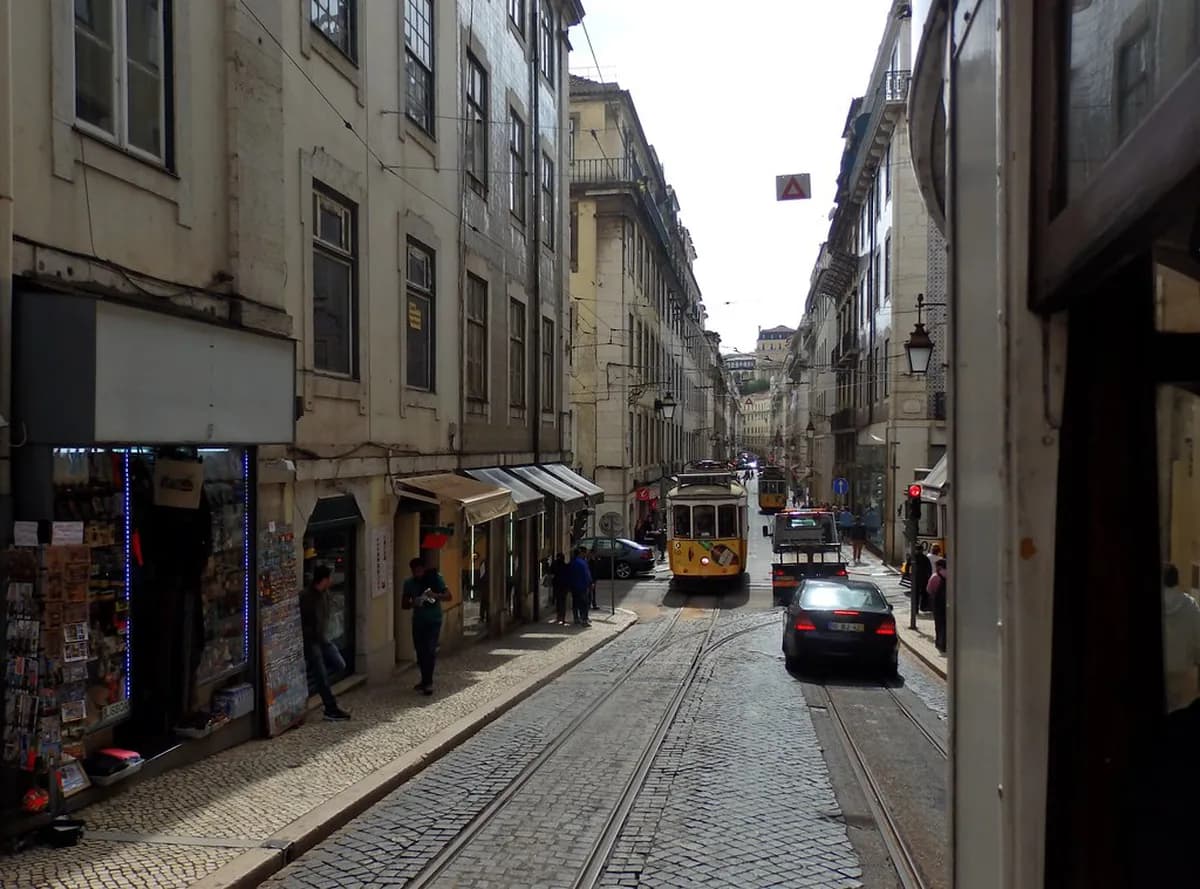
Getting around the city on foot works for most of the historic center. The metro is reliable and covers the outer districts well; a single ticket costs €1.61 and the Viva Viagem card is reusable. Uber and Bolt are available and fairly priced for longer distances — more useful than taxis, which can be harder to flag down in narrow Alfama streets. Tram 28 runs a scenic route through the most photographed neighborhoods but is notoriously crowded and targeted by pickpockets; the same route walked on foot takes about 90 minutes and is more enjoyable at your own pace.
Budget expectations for 2026: a pastel de nata costs €1.20–1.50, a glass of local wine at a bar €2–4, a sit-down lunch at a neighborhood restaurant €10–15 per person with a drink. Many of the city's best museums — including the Cinemateca (film museum) and the Museu do Azulejo (tile museum) — are free or under €5. Visiting famous landmarks like Jerónimos Monastery and Castelo de São Jorge costs €10–15 each but rewards full exploration rather than a quick walk through. Explore more of Portugal beyond Lisbon; Sintra is 40 minutes by train from Rossio station and is a worthwhile full-day addition to any Lisbon trip.
| Attraction / Experience | Entry Cost (2026) | Best Time to Visit | Booking Required |
|---|---|---|---|
| Jerónimos Monastery | €10 | Before 10:00 | Recommended |
| Belém Tower | €6 | Early morning | Yes (online) |
| Castelo de São Jorge | €15 | 09:00 or near close | Recommended |
| Santa Justa Lift | €5.30 (or free via walkway) | Any time | No |
| Museu Bordalo Pinheiro | €3 (garden free) | Mid-morning | No |
| Ginjinha at A Ginjinha | €1.50–2.50 | 09:00 onwards | No (cash only) |
| Fado show (authentic casa) | €5–15 (applied to bill) | Arrive before 21:00 | Recommended |
Frequently Asked Questions
Which unique things to do in lisbon options fit first-time visitors?
First-time visitors should prioritize a guided walking tour of the historic center and a tasting of traditional cherry liqueur. Exploring the creative shops at the LX Factory and watching an intimate Fado show are also fantastic ways to experience local culture. These activities provide a great introduction to the city's unique charm.
How much time should you plan for unique things to do in lisbon?
You should plan at least three to four days to explore these unique sights comfortably. This duration allows you to visit historic museums, wander through artistic neighborhoods, and enjoy relaxed meals without rushing. Allocate half a day for specific outer-district attractions like the ceramic gardens.
What should travelers avoid when planning unique things to do in lisbon?
Travelers should avoid wearing slippery shoes, as the city's steep hills feature smooth cobblestones that can be very hazardous. Also, do not rely solely on credit cards because many small, traditional shops only accept cash. Finally, avoid visiting major viewpoints during the crowded midday hours.
Lisbon offers a beautiful blend of historic heritage, creative culture, and delicious culinary traditions. Exploring beyond the main tourist sights allows you to connect with the authentic local lifestyle. From tiny bookstores to colorful street art, the city holds surprises around every steep corner.
Take your time to wander, taste, and listen to the soul of the Portuguese capital. We hope this guide inspires you to create an unforgettable, unique itinerary for your next trip.
Pair this with our broader hidden gems in Lisbon guide for the full picture.
Continue exploring
More guides you'll find useful