Places To Visit In Lisbon For Free Travel Guide
Plan places to visit in lisbon for free with top picks, neighborhood context, timing tips, and practical booking advice for a smoother trip.
On this page
Places To Visit In Lisbon For Free
Lisbon rewards slow walkers and curious wanderers more than almost any other European capital. The best places to visit in Lisbon for free are not hidden behind velvet ropes — they are the hilltop viewpoints, the tiled alleyways of Alfama, the street art on Calçada da Glória, and the grand riverfront squares that locals use every day. This guide is built for travelers who want to see the real city without a daily spending spiral.
Whether you have two days or two weeks, Lisbon's free attractions carry enough substance to fill an entire trip. The sections below move through the city's neighborhoods and activities in a logical sequence, so you can plan each day without backtracking across the hills.
Start with a Free Walking Tour
The smartest first move in any unfamiliar city is a free walking tour, and Lisbon has excellent options. Sandemans New Europe runs a free two-hour tour of central Lisbon daily. Guides are freelancers paid only in tips, so the incentive is to deliver a genuinely good experience — budget €5–€10 if you enjoy it.
The tour covers the Baixa grid, Rossio Square, and the edges of Alfama, giving you a mental map of the city before you explore independently. Book online the night before; morning slots fill faster than afternoon ones. If you want a deeper dive into Alfama specifically, Sandemans also runs a dedicated Alfama walking tour at the same tip-based model.
Walking the tour route once also reveals which streets deserve a second, slower visit on your own. Most guides point out the best miradouros, so you leave with a personalized shortlist of viewpoints to return to at sunset.
Sandemans' free walking tour runs daily and covers Baixa, Rossio, and the edges of Alfama — book online the night before as morning slots fill first. Tip guides €5–€10 if you enjoy the experience.
Explore the Neighborhoods on Foot
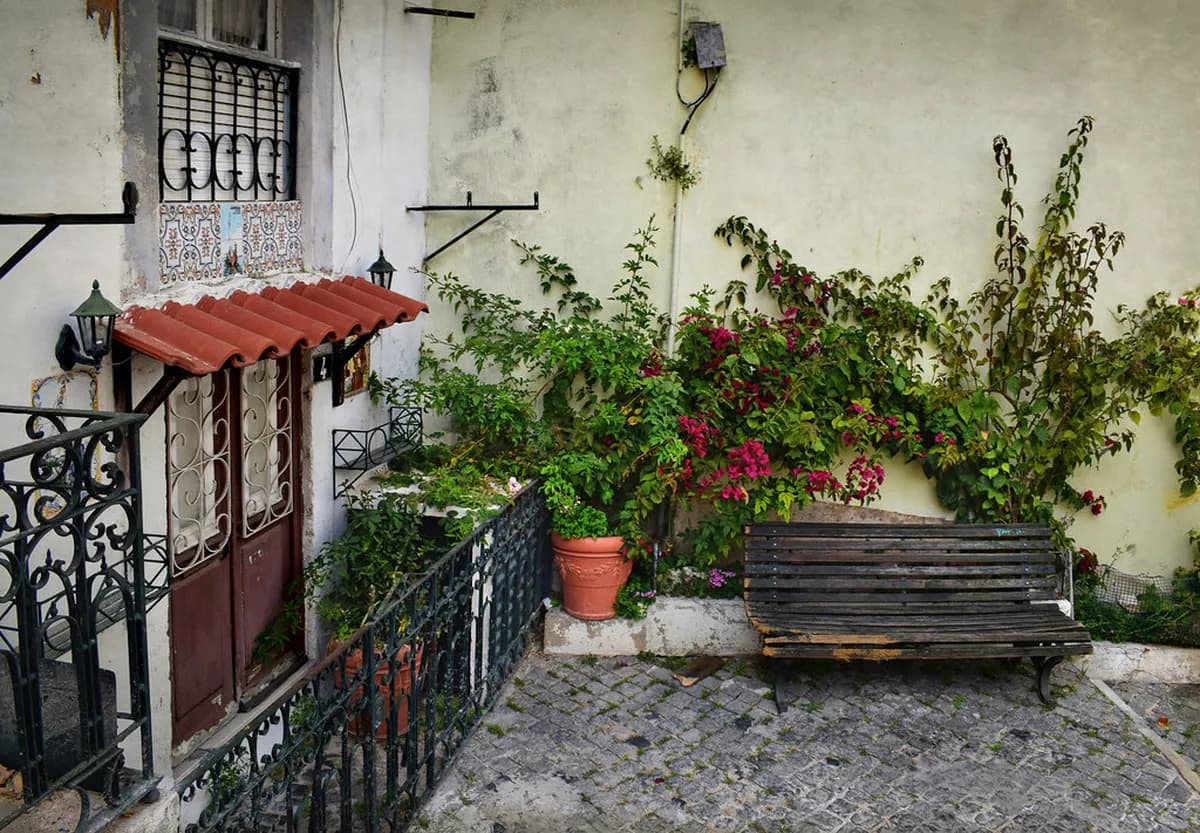
Lisbon is divided into bairros, and several of the most rewarding ones cost nothing to wander. Alfama is the oldest district in the city, one of the few areas that survived the 1755 earthquake intact. Its narrow streets climb steeply from the Tagus waterfront up to the castle, punctuated by small squares and sudden viewpoints. Expect handmade ceramic shops, lines of laundry between buildings, and the sound of Fado drifting from open doorways.
Bairro Alto sits on the opposite hill and has a completely different energy. During the day it is calm — art galleries, independent bookshops, and small coffee bars. By evening it becomes one of the liveliest streets in the city, with residents and travelers spilling out of bars onto the cobblestones. Entry to both neighborhoods is free, and each repays at least two hours of unstructured wandering.
For a more contemporary edge, explore off-the-beaten-path areas like the Alcântara district to reach LX Factory, a converted industrial complex on Rua Rodrigues Faria. Entry is free most days. Street art by Pedro Zamith and Gonçalo Mar covers the outer walls, and the interior hosts independent shops, a famous bookstore called Ler Devagar, and a Sunday market.
Enjoy Panoramic Views from the Best Lookout Points
Lisbon is built across seven hills, and the miradouros at each summit are entirely free. Miradouro da Graça (Largo da Graça) is arguably the best single viewpoint in the city — a wide terrace with a direct sightline over the Alfama rooftops, the castle, the river, and the 25 de Abril Bridge. Go just before sunset when the kiosk at the square is open and musicians sometimes play live. The address is Largo da Graça, 1100-005, Lisboa.
Miradouro de Santa Luzia and Miradouro das Portas do Sol are a two-minute walk apart near the top of Alfama and offer a slightly different angle on the same panorama — both free, both lined with tiled benches. Miradouro de São Pedro de Alcântara in Bairro Alto is a formal garden viewpoint with a map indicating what you can see, useful for orientation. For something quieter, seek out lesser-known secret viewpoints tucked into residential side streets that most tourists walk past.
The Miradouro da Senhora do Monte sits above Graça and is the highest point in the city — on a clear day the view stretches well beyond the bridge. Bring your own coffee from a nearby café and stay for the full golden hour. The only cost is the walk up.
Check Out the Street Art Scene
Lisbon has one of the most ambitious street art cultures in Europe, and all of it is visible for free as you walk. Calçada da Glória is the steepest place to start — take the tram to the top of the incline and walk down slowly, reading the murals as you go. The effect is of an open-air gallery on a gradient. The nearby Elevador da Lavra street holds the "40 anos 40 murais" project, commemorating 40 years of Portuguese democracy with 40 large-format works.
Jardim do Tabaco near the waterfront holds a striking collaboration between artists Vhils and Pixel Pancho, two internationally recognised names whose work commands significant gallery prices elsewhere. The exterior walls of LX Factory (mentioned above) add more large-scale pieces to the same walk. None of this requires a ticket or a reservation — it exists at street level, available to anyone passing by.
Street art in Lisbon changes continuously. Some works are painted over; new ones appear on staircases and retaining walls throughout Mouraria and Intendente. Keeping your eyes up as you climb any of the city's stepped shortcuts is the best way to find pieces that do not appear in any guide yet.
Explore the Gardens and Parks
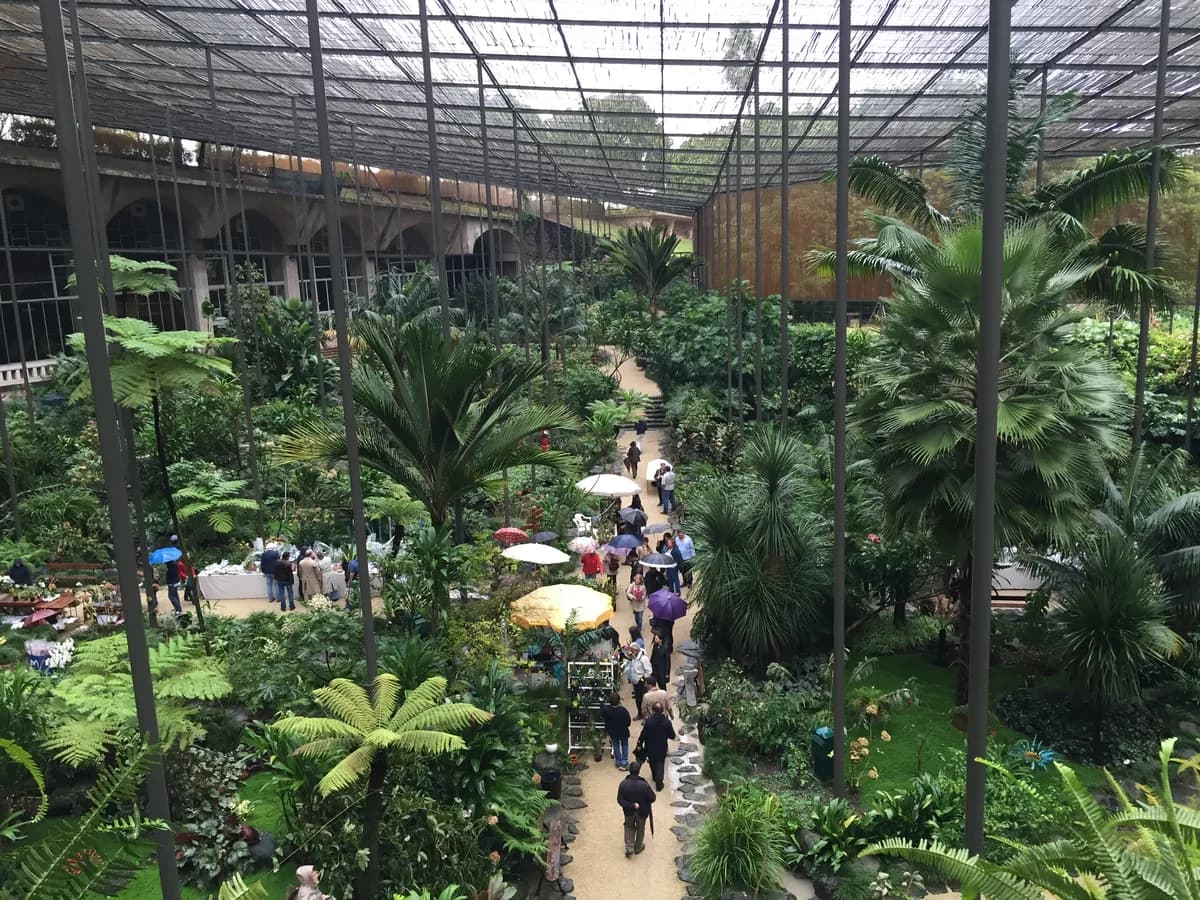
Lisbon's public parks are genuinely pleasant places to spend time, not just filler between sightseeing stops. Eduardo VII Park stretches north from Marquês de Pombal and offers a long, elevated promenade with views back down toward the river. The formal hedged garden at the top is free; the tropical greenhouse (Estufa Fria) charges a small fee but the open park is always accessible. This is a good midday rest stop — benches, shade, and a sense of scale that the tight historic streets do not allow.
The Jardim da Estrela is smaller and more neighborhood-scaled, set around a duck pond and a Victorian bandstand. On weekday mornings it is almost entirely locals — retirees reading newspapers, parents with small children, dogs. It is genuinely free from any tourist-oriented service. The adjacent Prazeres Cemetery is worth a short visit if you are interested in 19th-century funerary architecture.
The Lisbon Botanical Garden (Jardim Botânico) borders Bairro Alto and the Natural History Museum. Standalone entry is €3 per adult in 2026 — technically not free, but among the cheapest cultural admissions in the city. The garden contains species from Portuguese overseas territories and is notably uncrowded compared to the castle or tower.
Visit Belém: Tower, Monastery, and Waterfront
Belém is a 15-minute commuter train ride from Cais do Sodré station — the train itself costs around €1.50 with a Viva Viagem card. The riverside walk between the tower and the Jerónimos Monastery is free. The exterior of Belém Tower (Torre de Belém) sitting at the mouth of the Tagus is one of the most photographed structures in Portugal, and you can get that photograph without paying the €6 entry fee — the surrounding riverside path and gardens are open to all.
At the Jerónimos Monastery, the church on the right-hand side is free to enter and the Manueline stonework inside rivals the paid monastery section. If you want the full monastery, a ticket costs €10 in 2026; the Lisboa Card covers it. The Monument to the Discoveries and the nearby MAAT (Museum of Art, Architecture and Technology) has a free terrace overlooking the river even on days when the main gallery charges admission.
A Belém day works well as a half-day itinerary: train from Cais do Sodré, free exterior walk along the waterfront, free church at the monastery, then a pastel de nata at the famous Pastéis de Belém café (roughly €1.50 each). Total cost with transport under €5, and the visual return is as high as any paid attraction in the city.
Visit Cemitério do Alto de São João
This is one of Lisbon's most overlooked free attractions. Cemitério do Alto de São João sits east of the city center and rarely appears on tourist itineraries. It is an active cemetery, so the appropriate conduct is quiet and respectful — but it welcomes visitors and entry is free.
The cemetery dates from the early 19th century and contains an extraordinary collection of above-ground decorated tombs. The craftsmanship ranges from simple stone monuments to elaborate neoclassical mausoleums with carved figures, iron gates, and tilework panels. It is peaceful on weekday mornings and offers a completely different visual register from the castle-and-viewpoint circuit most visitors follow.
Getting there by metro (Oriente or Roma-Areeiro lines) takes about 20 minutes from the city center. It pairs naturally with a walk through the Mouraria neighborhood on the way back, which has its own street art murals and one of the lesser-visited secret spots in Lisbon.
Take a Break in One of the Main Squares
Praça do Comércio is the grandest public space in Lisbon — a vast riverfront square flanked by yellow arcaded buildings that opens directly onto the Tagus. It is free to walk through, free to sit in, and the river views from the south end are excellent at any time of day. The central triumphal arch leads into the Rua Augusta pedestrian street, worth a slow stroll.
Rossio Square (Praça Dom Pedro IV) a few blocks north is the historic social heart of the city. The wave-patterned black-and-white mosaic pavement is itself worth pausing to notice — the Portuguese cobblestone craft that lines this square is replicated on promenades from Macau to Rio de Janeiro. Surround yourself with café terraces, fountains, and the Teatro Nacional D. Maria II on the north end. Both squares cost nothing and repay an unhurried hour.
Smaller squares scattered through Alfama and Mouraria — Largo das Portas do Sol, Largo do Intendente — offer a more local atmosphere. Largo do Intendente in particular has undergone significant regeneration and now hosts a covered market and several independent cafés alongside its 18th-century tiled buildings.
Get Your Culture Fix at Free Museums and Galleries
Several major Lisbon museums offer free admission on specific days. The Calouste Gulbenkian Museum — one of the finest collections of decorative arts in Europe — is free every Sunday after 14:00. The Museu do Dinheiro (Money Museum) in a former church in Baixa is free Wednesday through Sunday, 10:00–18:00, with no reservation required. The Museu do Oriente is free on Friday evenings from 18:00–20:00.
The National Museum of Ancient Art and the Marionette Museum both offer free first-Sunday-of-the-month admission. MAAT is free on the first Sunday of each month. Arriving at opening time on free days is important — queues at the Gulbenkian on free Sunday afternoons can reach 30 minutes by 15:00.
| Museum | Free When | Hours | Standard Admission (2026) |
|---|---|---|---|
| Calouste Gulbenkian Museum | Every Sunday after 14:00 | 10:00–18:00 | €10 |
| Museu do Dinheiro (Money Museum) | Wednesday–Sunday | 10:00–18:00 | Free always |
| Museu do Oriente | Friday evenings | 18:00–20:00 | €6 |
| National Museum of Ancient Art | First Sunday of month | 10:00–18:00 | €6 |
| MAAT | First Sunday of month | 11:00–19:00 | €9 |
Independent galleries in Chiado and Príncipe Real carry no admission charge at all. These smaller spaces show work by emerging Portuguese and international artists on rotating schedules. Checking the gallery listings on the Lisbon culture agenda (Agenda Cultural Lisboa) before your visit takes five minutes and will surface at least two or three free openings or exhibitions running during your trip.
Free museum days have specific time windows — the Calouste Gulbenkian is free only after 14:00 on Sundays and queues reach 30 minutes by 15:00. Arrive at opening time on free days to avoid waiting.
Listen to Free Live Music and Fado
Traditional Fado is associated with ticketed dinner venues, but free versions exist if you know where to look. Tasca do Chico in Alfama hosts live Fado from 20:00 daily with no entrance fee — you are expected to order a drink and perhaps some petiscos (Portuguese tapas). Cash only. It is intimate, loud, and completely authentic in a way that the larger Fado houses are not.
Street musicians gather in the squares of Alfama most evenings, particularly around Largo das Portas do Sol and the steps leading up from the waterfront. These informal performances are spontaneous and vary by day, but summer evenings almost always produce at least one guitar-and-voice session somewhere in the neighborhood.
In summer 2026, the city runs free outdoor concerts in parks and public squares as part of the annual Lisboa ao Vivo programme. Events range from jazz and electronic music to traditional folk. The schedule is published monthly on the Câmara Municipal de Lisboa website. Most concerts start around 21:00 and run until midnight.
Learn Essential Phrases at Free Portuguese Classes
A few words of Portuguese open more doors in Lisbon than in most European cities — locals notice and respond warmly to any attempt. The organisation SPEAK runs free intercultural language exchange meetups in Lisbon where newcomers learn conversational Portuguese from locals who want to practice another language in return. Sessions are held in cafés and cultural centers across the city, typically in the evenings on weekdays.
These are not formal classes — they are structured social conversations, usually with four to six people at a table rotating between languages. The practical vocabulary you pick up (ordering food, asking for directions, numbers, greetings) makes every subsequent interaction in the city smoother. The social dimension also makes it one of the more interesting ways to spend a Lisbon evening without spending money.
Even without attending a session, learning a handful of phrases before arrival pays dividends. "Obrigado/Obrigada" (thank you), "Faz favor" (please / excuse me), and "Uma bica, por favor" (one espresso, please) are used dozens of times a day and consistently earn a warmer response than defaulting to English at the counter.
When the Lisboa Card Beats Free
Most places to visit in Lisbon for free are genuinely cost-zero. But if your itinerary includes even two or three paid attractions, the Lisboa Card can make the budget math work in your favor. The card costs €21 for 24 hours, €35 for 48 hours, or €44 for 72 hours, and covers unlimited metro, bus, tram, and commuter train travel plus free entry to the Jerónimos Monastery (€10), Belém Tower (€6), the Tile Museum (€5), and dozens more. One Belém day using the card — monastery, tower, train there and back — already breaks even on the 24-hour price.
The card is worth considering if you plan to do the Belém circuit and at least one major museum on the same day. For a trip of four or more days with sightseeing spread out, the day passes may not stack up as well, since the card is valid for consecutive hours, not separate days. Purchase online and collect at the airport or the Lisbon Welcome Center in Praça do Comércio.
The practical middle ground for most budget travelers: use the card on day one or two for the Belém cluster and free museum Sunday, then switch to a loaded Viva Viagem transport card (around €0.65 per tap with stored credit) for the remaining days of neighborhood walking and viewpoint-hopping, where there is nothing to pay for anyway.
How Long to Spend in Lisbon?
Four days is the practical minimum to cover the free highlights without feeling rushed. Day one: free walking tour plus Alfama and Graça on foot. Day two: Belém circuit by commuter train. Day three: free museum (Gulbenkian on a Sunday afternoon, or the Money Museum on any weekday). Day four: Bairro Alto, LX Factory, and the Alcântara waterfront. A day trip to Sintra fits naturally on day five if your schedule allows — the train from Rossio station takes 40 minutes and costs around €2.50 each way.
If you only have two days, concentrate on Alfama plus viewpoints on day one, and Belém on day two. The city's geography rewards walkers but punishes rushed itineraries — the hills are steep and the distances between the main clusters are longer than they look on a map. Build in 20-minute rests at squares and viewpoints rather than trying to march between attractions.
The best time to visit Lisbon without crowds is November through February, when tourist numbers drop sharply and viewpoints are rarely busy. Rain is more likely in winter but the city's covered markets, free museums, and café culture make wet days genuinely pleasant rather than a problem.
Frequently Asked Questions
Which places to visit in lisbon for free options fit first-time visitors?
First-time visitors should start with the scenic viewpoints like Miradouro da Senhora do Monte and the historic streets of Alfama. These iconic locations offer classic views and rich history without any cost. You can learn more in our comprehensive Portugal travel guide.
How much time should you plan for Free Things to Do in Lisbon?
You should plan at least two to three days to explore the free attractions comfortably. This timeframe allows you to walk through different neighborhoods, visit free museums, and enjoy sunset viewpoints without rushing your experience.
What should travelers avoid when planning a budget trip to Lisbon?
Avoid eating at restaurants located directly on major tourist plazas, as they are often overpriced. Instead, walk a few blocks into residential areas to find authentic, budget-friendly local cafes and taverns.
Lisbon delivers an extraordinary return on zero spending. The viewpoints, neighborhoods, street art, squares, free museum days, and live music scenes amount to a full week of activity without a ticket queue in sight. The key is knowing the specific days and times when paid attractions open their doors for free, and building your itinerary around those windows rather than around the tourist-trail defaults.
Start with comfortable walking shoes, a Viva Viagem card loaded with €10, and an afternoon free on a Sunday — the city will handle the rest. Every hill you climb delivers a miradouro worth the effort.
Use our Lisbon hidden gems hub to plan the rest of your trip.
Continue exploring
More guides you'll find useful