Carmo Convent And Archaeological Museum Visitor Guide Travel Guide
Plan carmo convent and archaeological museum visitor guide with top picks, neighborhood context, timing tips, and practical booking advice for a smooth trip.
On this page
Carmo Convent And Archaeological Museum Visitor Guide
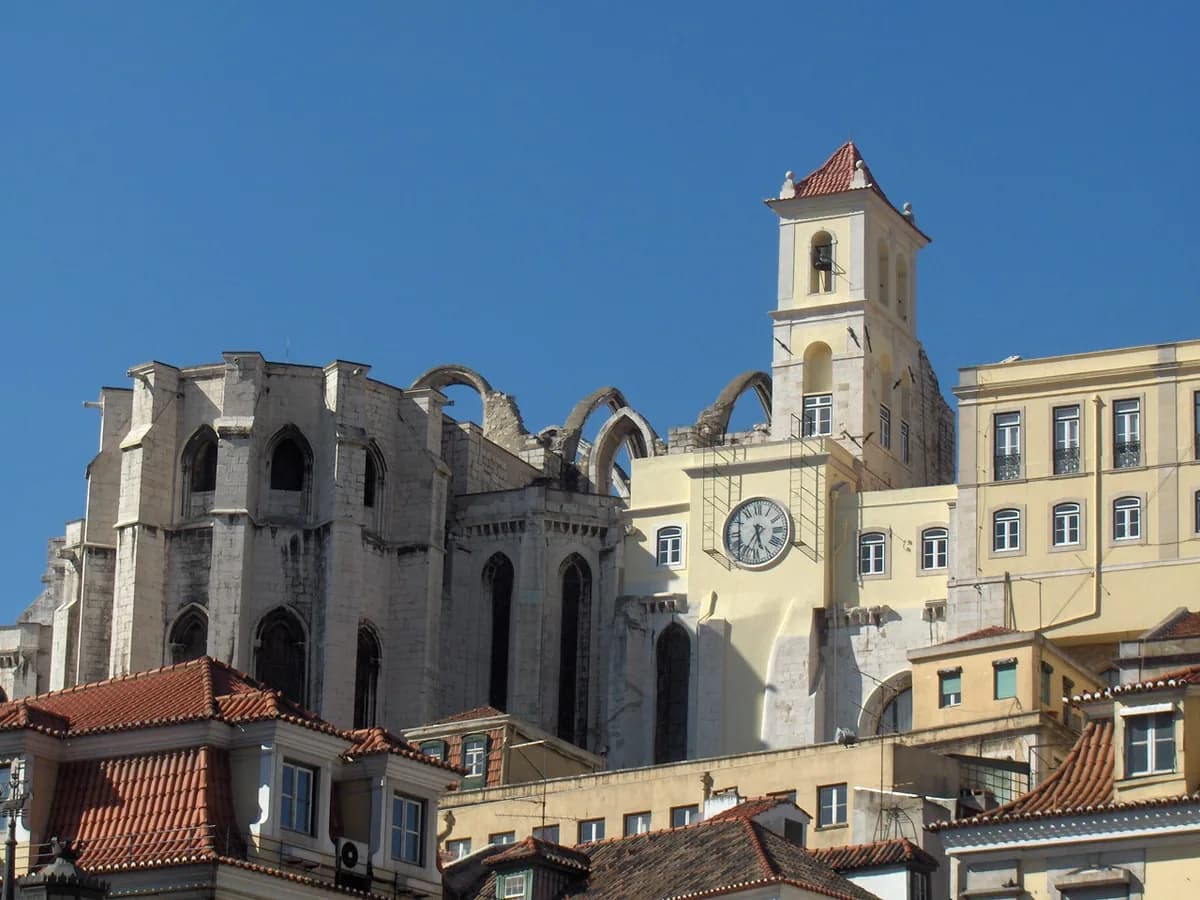
Lisbon's Carmo Convent is the most visible scar the 1755 earthquake left on the city — a roofless Gothic nave where pointed arches frame an open rectangle of sky, exactly as they stood when the roof collapsed that November morning.
Inside the former chancel sits the Carmo Archaeological Museum (Museu Arqueológico do Carmo), run by the Association of Portuguese Archaeologists, displaying medieval tombs, prehistoric tools, and — unexpectedly — Peruvian and Egyptian mummies.
This guide covers what to see, how to get here, ticket prices, opening hours, and the one piece of history almost every visitor misses.
Why Visit Carmo Convent and Archaeological Museum?
The Carmo Convent stands in a category of its own among Lisbon's monuments. Unlike reconstructed ruins or heritage-site recreations, what you see here is the authentic aftermath of a catastrophe. The roof was never rebuilt, and that deliberate choice turned a disaster into a monument. Standing beneath those Gothic arches on a clear morning, with the Lisbon sky visible overhead, is one of the most atmospheric experiences in Portugal.
Paired with the ruins is the Carmo Archaeological Museum, which occupies the former chancel. It is compact — a focused visit takes 45 to 60 minutes — but the quality of individual pieces more than compensates for the small footprint. Medieval royal tombs, Roman stonework, and prehistoric flint tools sit alongside mummies in a setting no modern museum architect could replicate.
The combination of ruined Gothic architecture, a serious museum collection, and a hilltop square (Largo do Carmo) that opens onto the streets of Chiado makes this one stop that earns its place on any Lisbon itinerary, long or short. It is also one of the few historic sites in the city that charges under €10 and delivers genuine depth.
A Brief History of Carmo Convent
The convent was founded in 1389 by Nuno Álvares Pereira, the general who led Portugal's armies to victory at the Battle of Aljubarrota. After his military career Pereira joined the Carmelite Order and is buried on site. The church that rose on this hillside became Lisbon's largest Gothic church, its position above the Baixa district symbolising spiritual authority over the commercial city below. Manueline decorative details were added in the 16th and 18th centuries, giving the building an additional layer of ornamental complexity.
On November 1, 1755 — All Saints' Day — an earthquake estimated between magnitude 8.5 and 9.0 struck at 09:40, just as morning masses were ending across the city. The tremors collapsed the roof and main vaulting of the Carmo church. Fires and a tsunami followed within hours, destroying an estimated 80% of Lisbon's buildings. The convent lost its library of around 5,000 volumes. Reconstruction attempts began the following year but were abandoned, leaving the nave permanently open to the sky.
In 1834, Portugal dissolved its religious orders, and the Carmo Convent subsequently served as a police barracks and a law court. Its current incarnation as a museum site dates to 1864, when Joaquim Possidório da Silva donated the building to the Association of Portuguese Archaeologists, establishing Portugal's first art and archaeology museum here. The chancel was roofed and fitted out for display; the nave was left as it had stood since 1755.
Exploring the Ruins: What to See at Carmo Convent Today
Entering through the Gothic doorway, the immediate impact is vertical. The pointed arches of the nave rise around 23 metres and frame an unbroken rectangle of sky. What remains of the original columns and capitals shows the sophistication of 14th-century Gothic craftsmanship, particularly in the intricate stonework of the surviving corbels. The chancel end retains its roof and forms the museum's main hall; the contrast between the roofless nave and the enclosed apse is itself a record of what the earthquake erased.
Walk the full length of the nave at a slow pace. In the north wall you will see surviving Manueline windows — a style added in the 16th century that blends Gothic structure with marine and naturalistic motifs. At the entrance, look for a stone inscription recording that Pope Clement VII granted 40 days of indulgence to any Christian visiting the church. It is a detail most visitors walk straight past. The scale of the open space only fully registers when you stand at the chancel end and look back toward the entrance door.
Light changes the ruins dramatically by time of day. Midmorning brings direct sunlight through the nave's south side. By mid-afternoon the stone takes on a warm amber quality that is well suited to photography. The open structure also means the ruins are cooler than enclosed churches in summer, which is a practical advantage between June and September.
Mid-afternoon light brings warm amber tones to the stone that are well suited to photography. The roofless nave offers notably cooler temperatures than enclosed churches, making it a practical advantage during June through September visits.
The Carmo Archaeological Museum: Highlights and Collections
The museum occupies the former chancel and sacristy, sheltered beneath the surviving roof section. The display is deliberately eclectic — the Association of Portuguese Archaeologists assembled whatever was judged worth preserving from across the country — and that breadth is part of the appeal. Labels are bilingual in Portuguese and English.
Among the most significant medieval pieces is the Gothic sarcophagus of King Ferdinand I, decorated with carved stonework. Alongside it stands the Baroque tomb of Queen Maria Anna of Austria. The Roman section includes a sarcophagus with relief carvings of the nine Muses, alongside Visigothic artifacts: a belt buckle and a carved stone pillar. Prehistoric pieces range from handaxes and flint tools to early ceramics from Portugal's pre-Roman settlements.
The museum's most-discussed exhibits are its naturally mummified Peruvian individuals, displayed in cases alongside a pair of Egyptian mummies. These draw visitors who were not expecting pre-Columbian South America inside a Gothic Portuguese church. The collection also includes medieval azulejo tile panels, heraldic shields, and Islamic-era ceramics from Lisbon's Moorish period — a reminder that the city changed hands several times before the Carmelites arrived.
Allocate 30 to 45 minutes for the museum alone. Audio guides are available at the entrance for a small supplement if you want narration for the individual pieces.
Largo do Carmo and the End of the Dictatorship
Almost every guide to the Carmo Convent focuses on 1755. Fewer mention what happened in the square outside on April 25, 1974. On the morning of the Carnation Revolution, as the MFA (Armed Forces Movement) moved to overthrow the Estado Novo dictatorship, Prime Minister Marcello Caetano and his government took refuge in the GNR (National Republican Guard) barracks that occupy the southern side of Largo do Carmo. Caetano refused to surrender to the revolutionary rank-and-file and held out through the afternoon.
Late that day, he agreed to hand power to General António de Spínola rather than to a lower-ranking officer — a condition that shaped the transition of power that followed. As word spread, thousands of citizens gathered in Largo do Carmo through the night. The barracks building is still there at the far end of the square and remains an operational GNR post. A small plaque marks the event.
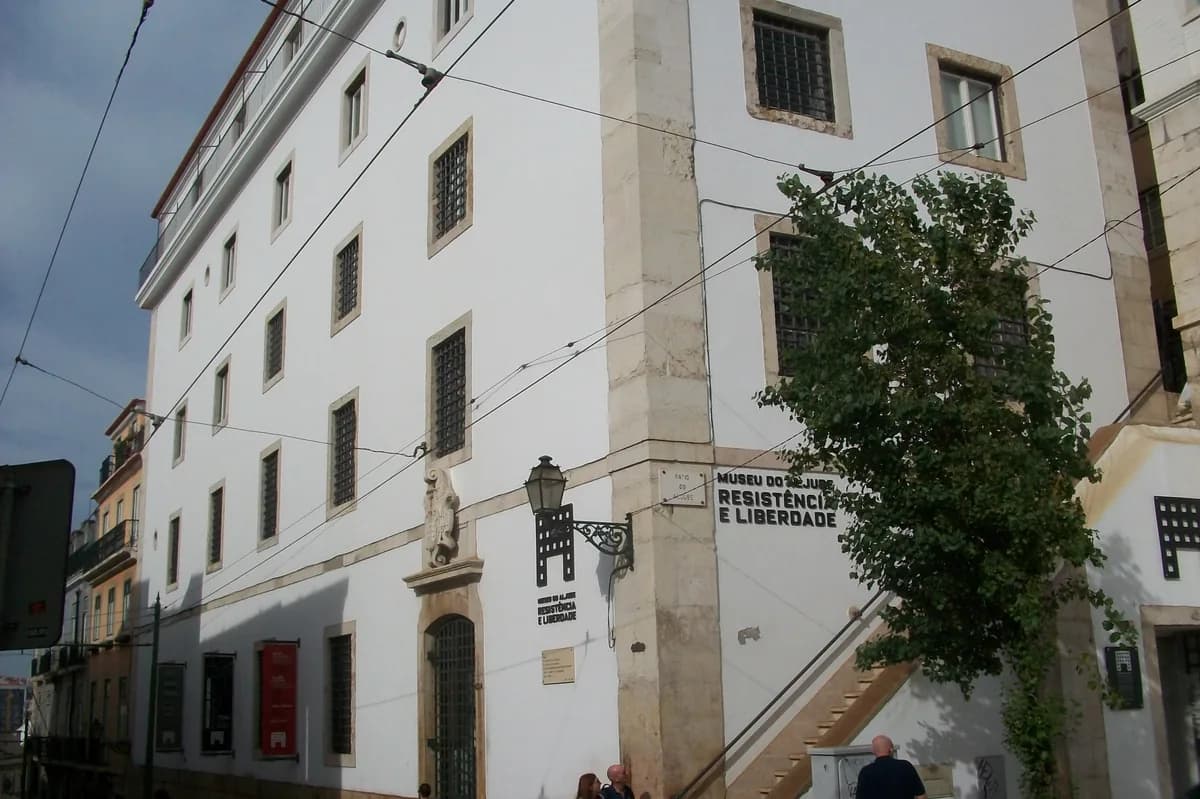
Standing in Largo do Carmo, you are looking at two of the defining moments in Lisbon's modern history: the 1755 earthquake carved into the nave of the convent directly in front of you, and the end of 48 years of dictatorship imprinted on the barracks to your left. Few single public squares in any European capital carry that dual historical weight. The Aljube Museum — a former political prison 15 minutes downhill in Alfama — covers the dictatorship in depth and makes a coherent afternoon pairing with Largo do Carmo.
Practical Information for Your Visit
The Carmo Convent is at Largo do Carmo, 1200-092 Lisbon, in the Chiado district. The easiest approach from the Baixa is via the upper exit of the Santa Justa Lift, which deposits visitors on a walkway directly adjacent to Largo do Carmo — these two sights are natural partners. From Baixa-Chiado metro station (Green and Blue lines) it is a five-minute uphill walk. Tram 28 stops in Chiado; Bus 758 also runs nearby. From Rossio Square the walk takes around ten to twelve minutes uphill.
Opening hours are Monday to Saturday only — the site is closed every Sunday. From November to April: 10:00–18:00 (last entry 17:40). From May to October: 10:00–19:00 (last entry 18:40). The site is also closed on 1 January, 1 May, and 25 December.
Ticket prices in 2026: adults €7, reduced rate €5 for students with valid ID and seniors aged 65+. Lisboa Card holders also receive a 20% discount and qualify for the reduced rate. Children aged 0–14 enter free when accompanied by an adult. Visitors with a reduced-mobility certificate (60%+ incapacity) and one companion enter free. Tickets are sold at the entrance; no advance online booking is required for individual visitors.
Budget 45 minutes to one hour for a relaxed visit covering both the ruins and the museum. The nave has cobblestone ground and is partially uneven; the museum chancel area is flat. Restrooms are on-site. A small gift shop near the exit sells prints and archaeological publications.
| Visitor Category | Ticket Price (2026) |
|---|---|
| Adult | €7 |
| Student / Senior (65+) | €5 |
| Lisboa Card holder | €5.60 (20% discount) |
| Children 0–14 | Free (with adult) |
| Reduced mobility (60%+ certificate) + 1 companion | Free |
Tips for a Smooth Carmo Convent Experience
Arrive in the first 30 minutes after opening to avoid tour groups. Late afternoon — from around 16:00 onward — is consistently quieter than midday and produces better light for photography in the nave. Between June and September the site hosts occasional outdoor concerts and the "Lisbon Under the Stars" evening event, a light and sound show narrating Lisbon's history against the backdrop of the lit Gothic arches. Check the museum's official site (museuarqueologicodocarmo.pt) or Lisbon tourism listings for 2026 event dates and any separate ticket requirements.
Wear shoes with grip — the nave cobblestones are uneven in places. Bring a light layer even in summer; the open-air structure funnels wind. Photography is permitted throughout, and the roofless nave means you will rarely need flash indoors. The interplay of light and the Gothic stonework changes significantly with cloud cover, so consider the weather when planning your timing.
If your Lisbon itinerary includes three or more paid attractions and you plan to use public transport, the Lisboa Card typically pays for itself. Confirm 2026 inclusions and pricing at an Ask Me Lisbon tourism desk (Praça do Comércio or Figueira Square) before purchasing. The card also covers metro, bus, and tram travel, which simplifies getting between Chiado, Alfama, and Belém in a single day.
The nave has uneven cobblestone ground in places and the open-air structure funnels wind. Wear shoes with good grip and bring a light layer even in summer months.
Nearby Attractions and Experiences
The square outside the convent, Largo do Carmo, is a natural starting point for exploring Chiado on foot. The streets leading downhill toward Baixa pass some of Lisbon's best independent bookshops — Livraria Bertrand, considered the oldest operating bookshop in the world, is about a ten-minute walk. Chiado also has good espresso and a dense concentration of ceramics and textile shops without the souvenir-market pressure of Alfama.
Bairro Alto's grid of streets is quiet by day — good for lunch — but becomes the centre of Lisbon's bar and Fado nightlife by 22:00. For a more traditional Fado experience tied to the music's roots, Alfama district is a 20-minute walk east. Family-run Fado venues there are informal and typically start around 20:00; book a table in advance for weekend evenings. Martim Moniz Square, further east, offers a multicultural street-food scene on weekends with a fusion market and DJs.
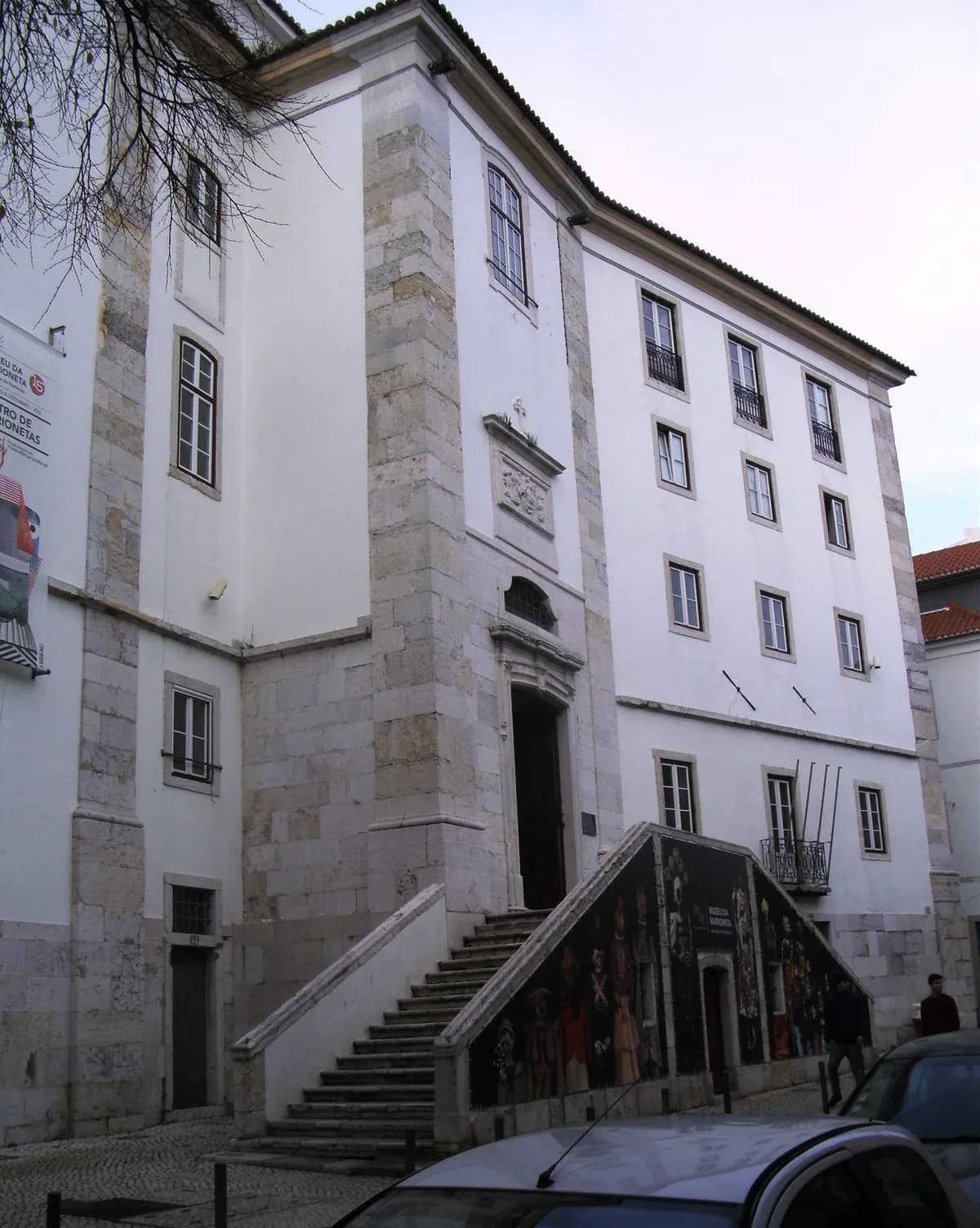
For a themed afternoon pairing with the convent's history: combine Largo do Carmo with the Aljube Museum in Alfama (the Carmelite religious history feeds into the Estado Novo political prison) and end with Fado. The Museu da Marioneta is a quieter, family-friendly option in the same direction. For a full day of Lisbon museums, the Gulbenkian is in the opposite direction (metro north) and pairs well with a morning at Carmo followed by an afternoon there.
Frequently Asked Questions
Why visit Carmo Convent and Archaeological Museum?
You should visit Carmo Convent to witness the striking ruins of a Gothic church, left roofless by the 1755 earthquake. It offers a powerful historical experience and unique architectural beauty. The on-site archaeological museum also houses fascinating artifacts spanning millennia, providing deep insights into Portugal's past.
How much time should you plan for a Carmo Convent and Archaeological Museum visitor guide?
Plan to spend approximately 1.5 to 2 hours exploring the Carmo Convent and Archaeological Museum. This allows enough time to wander through the impressive ruins and examine the diverse collections in the museum. You can enjoy the historical atmosphere without feeling rushed during your visit.
What should travelers avoid when planning a Carmo Convent visit?
Travelers should avoid visiting in the middle of the day during peak season to escape the largest crowds. Also, do not forget comfortable shoes, as the ruins have uneven surfaces. Avoid relying solely on public transport schedules without checking for current updates, especially on weekends or holidays.
Is Carmo Convent worth including on a short Lisbon itinerary?
Yes, Carmo Convent is definitely worth including, even on a short Lisbon itinerary. Its central location makes it easy to access, and the unique blend of historical ruins and archaeological exhibits offers a profound experience in a relatively short time. It provides a distinct perspective on Lisbon's history and resilience.
Other Ruins Deliberately Left Open to the Sky
The 1755 earthquake took the roof and Lisbon decided not to replace it, so the Gothic arches frame weather instead of vaulting. London's St Dunstan-in-the-East made the same decision after the Blitz and let a garden grow through the shell. Athens's Hadrian's Library has stood roofless so long the ruin is the monument.
The Carmo Convent and Archaeological Museum earns its place on a short Lisbon itinerary and rewards a longer one. The roofless nave, the medieval royal tombs, the unexpected mummies, and the square outside where a revolution ended in 1974 — no single admission fee in Lisbon packs that range of history into under an hour.
Combine it with the Santa Justa Lift below and the Aljube Museum in Alfama, and you have a thematically coherent half-day through five centuries of the city's defining moments.
For authoritative information, refer to the Carmo Convent and Archaeological Museum official site and Carmo Convent and Archaeological Museum on Wikipedia.
Planning more of your trip? See our guides to hidden gems in Lisbon.
Continue exploring
More guides you'll find useful