Off The Beaten Path Lisbon Travel Guide
Discover off the beaten path lisbon secrets with local neighborhood tips, crowd-free viewpoints, and practical day-trip booking advice for your next trip.

On this page
Off The Beaten Path Lisbon
Lisbon captures hearts with its historic trams, yellow facades, and famous custard tarts. But finding the city's quieter soul means stepping away from the crowded plazas and looking for an off the beaten path Lisbon that most visitors never reach. The good news is that the alternatives are just as compelling — and rarely have queues.
Many visitors spend their entire trip between Alfama and Belém without realizing how much surrounds them. By exploring quieter streets and overlooked museums, you discover Hidden Gems In Lisbon Travel Guide that feel genuinely local. This guide covers the best in-city spots and the coastal escapes within easy reach of the capital in 2026.
Prazeres Cemetery and the Streets of Mouraria
The Prazeres Cemetery is Lisbon's largest and one of its most atmospheric. It opened in 1833 after a cholera epidemic, and today its winding alleys are lined with elaborate stone mausoleums, carved statues, and tiny chapel-houses with coloured doors. Well-known Portuguese artists and aristocratic families are buried here, and the steep lanes open up to views of the 25 de Abril bridge on the horizon. Take tram 28 to the last stop — the ride itself is a highlight.
Mouraria, the old Moorish quarter just below the castle walls, is widely regarded as the birthplace of Fado. The neighbourhood resisted gentrification longer than Alfama and still feels like a working-class village inside a capital city. A walk through the Mouraria Lisbon Guide Travel Guide will take you past community vegetable gardens, hand-painted street art, and tiny restaurants serving lunch menus for under €10. The Intendente square nearby is also worth the detour — it went from a red-light district to one of Lisbon's more interesting dining squares in the space of a decade.
Both spots are best visited on weekday mornings. By midday the cemetery gets warm and the tram 28 becomes packed with tourists. Arrive at the cemetery around 09:00 and you will often have the alleys entirely to yourself.
Museums and Cultural Spots Worth Seeking Out
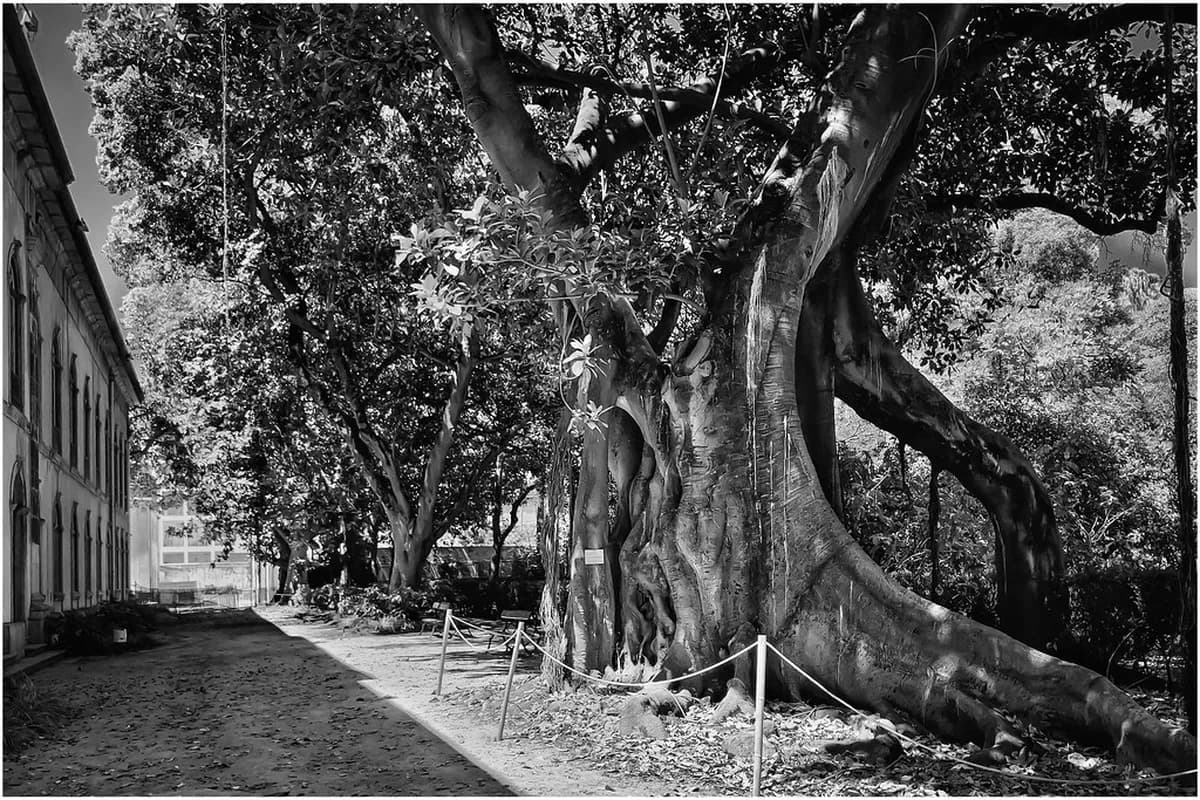
The Museu Bordalo Pinheiro is one of the most undervisited museums in the city. It celebrates Rafael Bordalo Pinheiro, a 19th-century artist who invented Portuguese political caricature and transformed the ceramics industry. The collection is playful and strange — satirical drawings, painted cabbage-leaf plates, giant ceramic frogs climbing the walls of the adjacent Bordalo Pinheiro Garden. The garden is accessed through the Palácio Pimenta courtyard next door, where peacocks wander freely around a crumbling fountain. Admission is €5 and there is almost never a queue.
What no other off-the-beaten-path Lisbon guide consistently highlights is the Museu Nacional do Azulejo, housed inside the former Convent of Madre de Deus in the Beato district. This is a genuinely undervisited gem. The building itself — a 16th-century convent with Manueline doorways and gilded baroque cloisters — is worth the visit before you even see a single tile. The collection traces azulejo history from its Islamic origins through to contemporary geometric design, including a stunning 36-metre panoramic panel of pre-earthquake Lisbon. Getting there requires a bus or Uber (it sits far east of the tourist trail near Xabregas), and that alone keeps the crowds away. Open Tuesday to Sunday, 10:00–18:00; admission €5.
For more free cultural options, there are several Places To Visit In Lisbon For Free Travel Guide, including community libraries and independent galleries that rotate exhibitions monthly. The Marvila district — Lisbon's answer to Brooklyn — hosts a cluster of contemporary galleries and craft breweries inside converted warehouses along the waterfront. The area is roughly 20 minutes east of Cais do Sodré by Uber and rarely appears on standard itineraries.
Parks, Gardens, and Quiet Outdoor Corners
The Estufa Fria greenhouse sits inside Eduardo VII Park but feels completely separate from the city around it. Cool, shaded pathways wind through exotic ferns, bamboo groves, and small streams. It is one of the best spots in Lisbon on a hot afternoon, and entry costs just €3.30. Most tourists walk through the upper park to the viewpoint and leave without ever discovering this place.
The Estufa Fria greenhouse inside Eduardo VII Park costs just €3.30 entry and stays cool even in summer — arrive after 14:00 on hot days when the light filters best through the canopy.
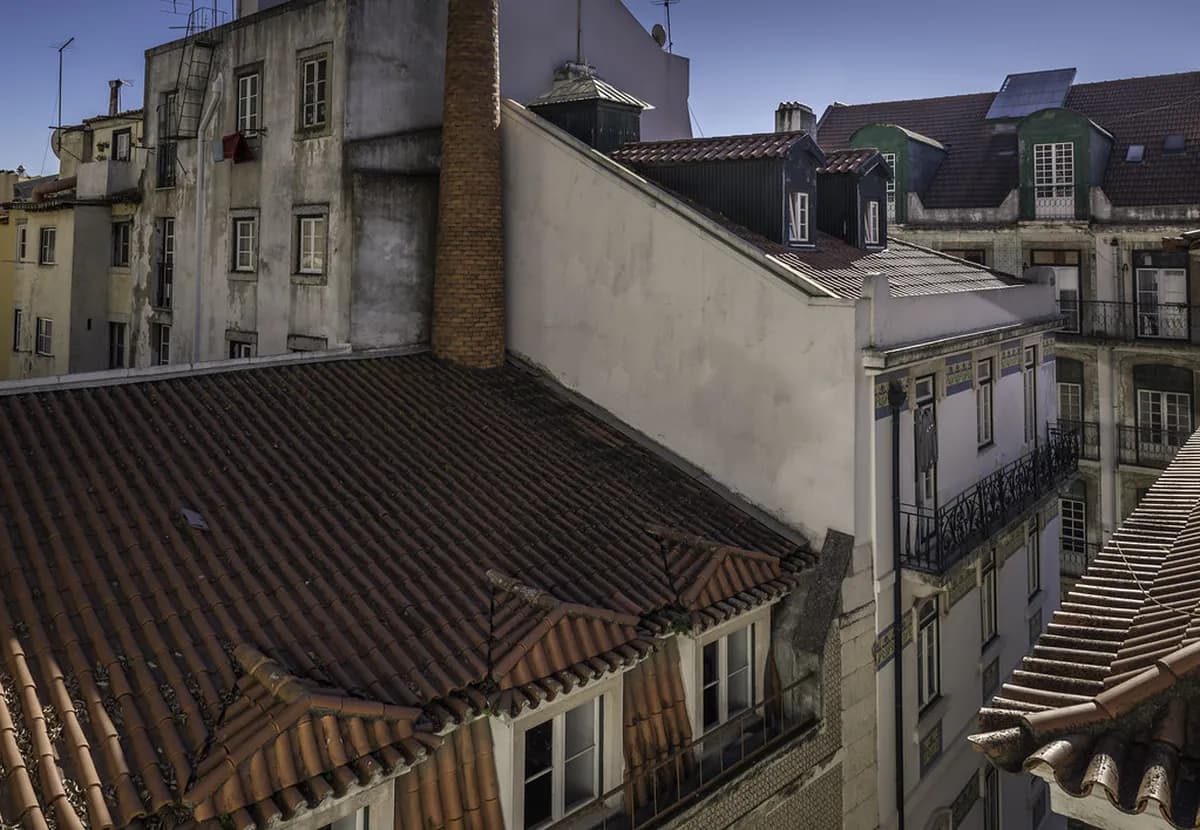
The Jardim do Torel, tucked above Avenida da Liberdade, has a small grassy slope, old-fashioned striped deck chairs, and one of the quieter views over the city rooftops. In August the park installs a small paddling pool area. It is almost always calmer than the more photographed Miradouro de São Pedro de Alcântara, and the approach through Rua de São José passes some excellent tiled building facades.
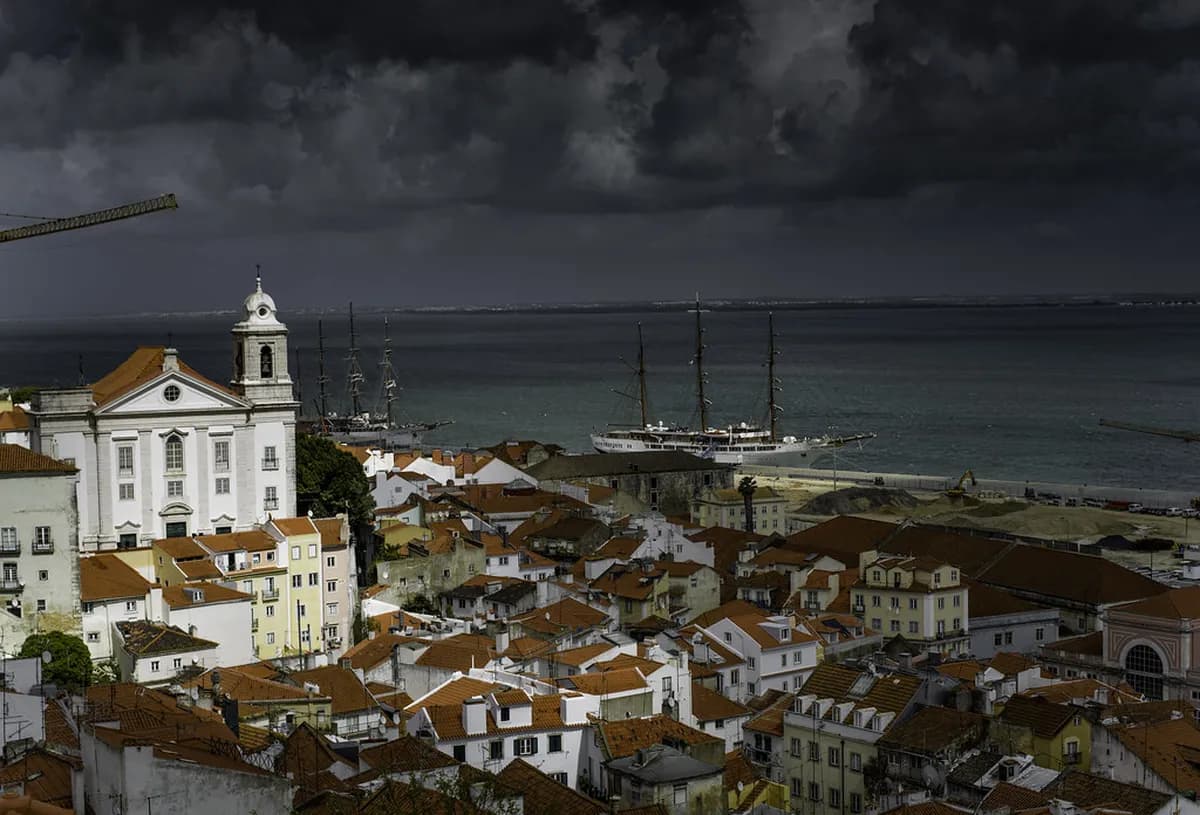
For panoramic views from Graça, the hilltop neighbourhood above Alfama, local families gather at Miradouro da Graça on summer evenings to drink coffee and enjoy the cool breeze. It sees a fraction of the visitors that Portas do Sol gets, and the surrounding streets have good neighbourhood restaurants where a meal with wine rarely costs more than €15 per person.
Lisbon's Prison: the Most Surprising Building in the City
The old Lisbon Prison — formally the Cadeia do Limoeiro — is one of those structures you pass without registering what it is. The building was completed in 1875 and sits near the cathedral on Rua do Limoeiro. Its towers, steeples, and Gothic-inflected details peek above a high surrounding wall in a way that feels completely out of place against the typical Alfama streetscape. Political prisoners were held here during different regimes, including the Estado Novo dictatorship.
You cannot enter the working parts of the building, but the exterior is striking enough to justify a ten-minute detour from the cathedral. Most visitors walk straight past it without stopping. The contrast between the monumental prison architecture and the colourful tourist streets on either side is stark — and it says something real about the city's layered history that the guidebooks tend to skip.
Take a moment to read the plaques on the wall and look up at the roofline. The structure is still in use as a correctional facility, which adds to the unsettling quality of standing outside it. It connects naturally to a broader walk through the Alfama and Castelo districts if you want to understand how the city's administrative and religious power was concentrated in this same hillside quarter for centuries.
Azenhas do Mar and Colares: Sintra Without the Palace Chaos
Azenhas do Mar is a whitewashed village that literally clings to the side of a cliff above a natural ocean pool. The pool fills with each rising tide and is swimmable from June through September. The village is only 40 kilometres from Lisbon, but it rarely appears on day-trip itineraries. The views from the clifftop terrace — white houses cascading down toward the Atlantic — are genuinely postcard-quality without requiring a Sintra palace ticket.
Colares, a short drive inland, is Portugal's smallest wine region and one of its most unusual. The vines grow in sandy soil close to sea level, which historically protected them from the phylloxera plague that destroyed most of Europe's vineyards in the 19th century. The Adega Cooperativa de Colares still produces wine here, and a tasting visit costs very little. The red Ramisco grape is the thing to try — it produces a tannic, mineral wine that is hard to find anywhere else.
A hiking trail connects Colares to Praia da Adraga, one of the wildest beaches in the Sintra-Cascais Natural Park. The walk takes around 90 minutes each way. Pack a picnic and allow a full day to combine Azenhas do Mar, a Colares wine stop, and the beach. Planning Day Trips From Lisbon Travel Guide this way lets you cover multiple coastal spots efficiently. A rental car is essential — there is no practical public transport linking these three points.
There is no practical public transport linking Azenhas do Mar, Colares, and Praia da Adraga — a rental car is essential for this coastal loop. Budget at least a full day and check road conditions before driving the narrow cliff-side roads.
Nazaré and Ericeira: Beyond the Big Waves
Nazaré gets attention for its massive winter surf — the record-breaking waves at Praia do Norte attract crowds from October to March. But the town has real depth beyond the spectacle. The old upper town, Sítio, reached by funicular, still has women selling dried fish from street stalls in traditional seven-layered skirts. The seafood at the harbour restaurants is caught the same morning. Visit between April and September and you get all the charm with far fewer surfer-watchers competing for table space.
Ericeira, an hour north of Lisbon by car, was designated a World Surfing Reserve in 2011 — one of only a handful in Europe. The centre is cobbled streets and whitewashed houses trimmed in blue, with a clifftop position above several beaches. Even for non-surfers, the town has an easy atmosphere that larger resorts lack. Sunset at Praia da Foz do Lizandro, a wide beach just outside the village centre, offers a more peaceful version of the Atlantic than anything you get close to Lisbon itself.
Both towns work well as overnight stops. Staying one night in Ericeira and one in Nazaré gives you a genuine feel for the central Portuguese coast without rushing. The drive between them along the N8 passes through small farming villages and eucalyptus forest, and takes about 75 minutes.
Sesimbra, Cabo Espichel, and Praia das Bicas
Sesimbra remains a working fishing town despite its proximity to Lisbon — about 40 kilometres south. That fishing economy means the seafood is genuinely fresh and the restaurants cater to local Portuguese families rather than tour groups. Visit between October and May and the beaches are almost empty while the water temperature stays above 16°C. In summer it draws Lisbon day-trippers, so book cheap accommodation with sea views well in advance if you travel July to August.
Cabo Espichel is 15 kilometres west of Sesimbra and one of the most atmospheric spots on the entire Setúbal Peninsula. An 18th-century pilgrimage sanctuary sits abandoned on the clifftop, its arcaded wings flanking a church above a sheer drop to the sea. Wind is near-constant here — bring a jacket regardless of season. There are sometimes sheep grazing in the courtyard in front of the sanctuary, adding to the surreal, end-of-the-world feeling. On the way back from the cape, the road passes viewpoints over Sesimbra that are worth the stop.
Praia das Bicas requires navigating a winding road down a cliff face — drive slowly and allow time to turn around if you meet oncoming traffic. At the bottom you get a beach with powerful Atlantic surf, dramatic rock formations, and almost no facilities. The wooden stairs down to the sand are steep. It is one of the best sunset spots in the greater Lisbon area, particularly in autumn when the light hits the cliffs from the west.
| Destination | Distance from Lisbon | Best Season | Car Required | Highlight |
|---|---|---|---|---|
| Azenhas do Mar | ~40 km | June–September | Yes | Clifftop ocean pool |
| Sesimbra | ~40 km | October–May | Yes | Working fishing town, fresh seafood |
| Cabo Espichel | ~55 km | Year-round | Yes | Abandoned pilgrimage sanctuary on cliff |
| Ericeira | ~50 km north | Year-round | Yes | World Surfing Reserve, cobbled centre |
| Nazaré | ~120 km north | April–September | Yes | Old upper town, dried fish stalls |
Parque Natural do Sudoeste Alentejano: Portugal's Wildest Coastline
The Costa Vicentina — formally the Parque Natural do Sudoeste Alentejano e Costa Vicentina — is the most protected stretch of coastline in Western Europe. Development inside the park is tightly restricted, which is why the beaches here look the same as they did fifty years ago. Praia da Bordeira is the one to head for first: a wide arc of soft sand backed by dunes and a river estuary, with barely a building in sight. Most days outside July and August you will share it with a handful of locals and a few kite-surfers.
Getting here from Lisbon takes roughly two hours by car. There is no practical public transport to the park's interior. Carry a Portugal travel guidebook with a detailed map because mobile signal drops regularly on the back roads between beaches. The unpaved tracks inside the park can be rough — drive slowly, and check the weather forecast before setting out, as coastal paths flood quickly in winter.
Sagres, at the southwest tip, makes a good base. It is a small town with a handful of guesthouses, a fish market, and the dramatic Fortaleza de Sagres on the cape. Praia da Ponta Ruiva, just north of Sagres, offers a sunset that other beach guides in Portugal struggle to match. Pack water and food for the day — facilities between beaches are minimal, and the solitude is the point.
How to Plan an Off-the-Beaten-Path Lisbon Trip
Group the in-city spots by neighbourhood to avoid Lisbon's steep hills becoming a problem. The Prazeres Cemetery, Jardim do Torel, and the Estufa Fria all sit in the northwestern part of the city and work well together in a morning. The prison, Mouraria, and the Museu Bordalo Pinheiro each require a separate journey east and north — trying to combine all of them in one day will exhaust you before lunch.
Timing matters for the viewpoints and parks. Finding the Best Time To Visit Lisbon Without Crowds Travel Guide is mostly about being early. Most of these quieter spots see their first visitors around 10:00, so arriving at 09:00 gives you a full hour of genuine peace. The city also empties noticeably in early morning during weekdays — locals are at work and tour groups have not yet deployed.
For day trips, a rental car is almost always the right answer. Sesimbra, Azenhas do Mar, Colares, and Cabo Espichel are all reachable by bus from Lisbon, but the connections are slow and the schedules infrequent. Keep some cash on hand for smaller cafes and market stalls, which rarely take cards. Wear shoes with grip — cobblestone streets in Lisbon and in coastal towns like Ericeira are polished smooth and can be genuinely slippery after rain.
Frequently Asked Questions
What are the best places in Portugal off the beaten path?
The best off-the-beaten-path spots include the wild Alentejo coastline, the quiet forest village of Barao de Sao Joao, and the clifftop town of Azenhas do Mar. These destinations offer stunning scenery and authentic local culture away from massive tourist crowds.
Which off the beaten path lisbon options fit first-time visitors?
First-time visitors should explore the historic streets of Mouraria and the creative hub at LX Factory. These spots are easy to reach from the center but offer a more unique, artistic atmosphere than typical sightseeing routes.
How much time should you plan for off the beaten path lisbon?
You should plan at least two full days to explore these alternative sights. This allows you to visit quiet local neighborhoods, historic cemeteries, and take a scenic day trip to the surrounding coastal cliffs.
Exploring the lesser-known sides of the Portuguese capital offers a deeply rewarding journey. From quiet cemetery walks to wild Atlantic cliffs, these experiences create lasting memories. You will discover a slower, more authentic side of local life.
Planning your trip with these unique spots in mind ensures a peaceful adventure. Embrace the quieter paths and let the city surprise you at every turn.
Continue exploring
More guides you'll find useful