
Mouraria Lisbon Guide Travel Guide
Plan your trip with our Mouraria Lisbon Guide. Discover top picks, neighborhood context, timing tips, and practical booking advice for a smoother trip.
On this page
Mouraria Lisbon Guide
Mouraria is the oldest continuously inhabited quarter in Lisbon, and for many visitors it becomes the most memorable part of the trip. Unlike Alfama next door, it has gentrified slowly. The streets still feel lived in, the restaurants are local, and the fado here carries genuine weight.
This mouraria lisbon guide covers every practical decision you need — what to see, where to eat, how to get there, and how long to stay. Whether you have two hours or a full afternoon, the neighborhood rewards careful wandering.
A Brief History of Mouraria
The name tells the story. Mouraria means "place where Moors live," and the district was created in 1147 when Christian king Afonso Henriques reconquered Lisbon from the Moors. The Muslim population was expelled from inside the castle walls and resettled on the hill's northern slope — outside the city proper. They remained there for over three centuries before the final expulsion of Muslims and Jews in 1496.
The 1755 earthquake that flattened much of Lisbon spared Mouraria, largely because the Marquis of Pombal had little interest in rebuilding a poor quarter. That neglect preserved the medieval street plan intact. The same narrow alleys and steep staircases you walk today follow paths laid out in the 12th century.
For much of the 19th and 20th centuries, the district was a working-class neighborhood associated with sailors, fishmongers, and fado singers. It was here, in the early 19th century, that Maria Severa — widely regarded as the first professional fado singer — was born and performed in the taverns of Largo da Severa. Fado carries her DNA. Groups like the Associação Renovar a Mouraria have worked since 2008 to preserve this heritage while supporting community-led regeneration rather than tourist-driven displacement.
Must-See Mouraria Attractions
Start at Praça Martim Moniz, the large square at the foot of the neighborhood. It is a practical hub: tram 28 departs from here, the metro stop is directly below, and the square hosts a weekend market with international food stalls. From here, walk north into the network of alleys that make up the historic core.
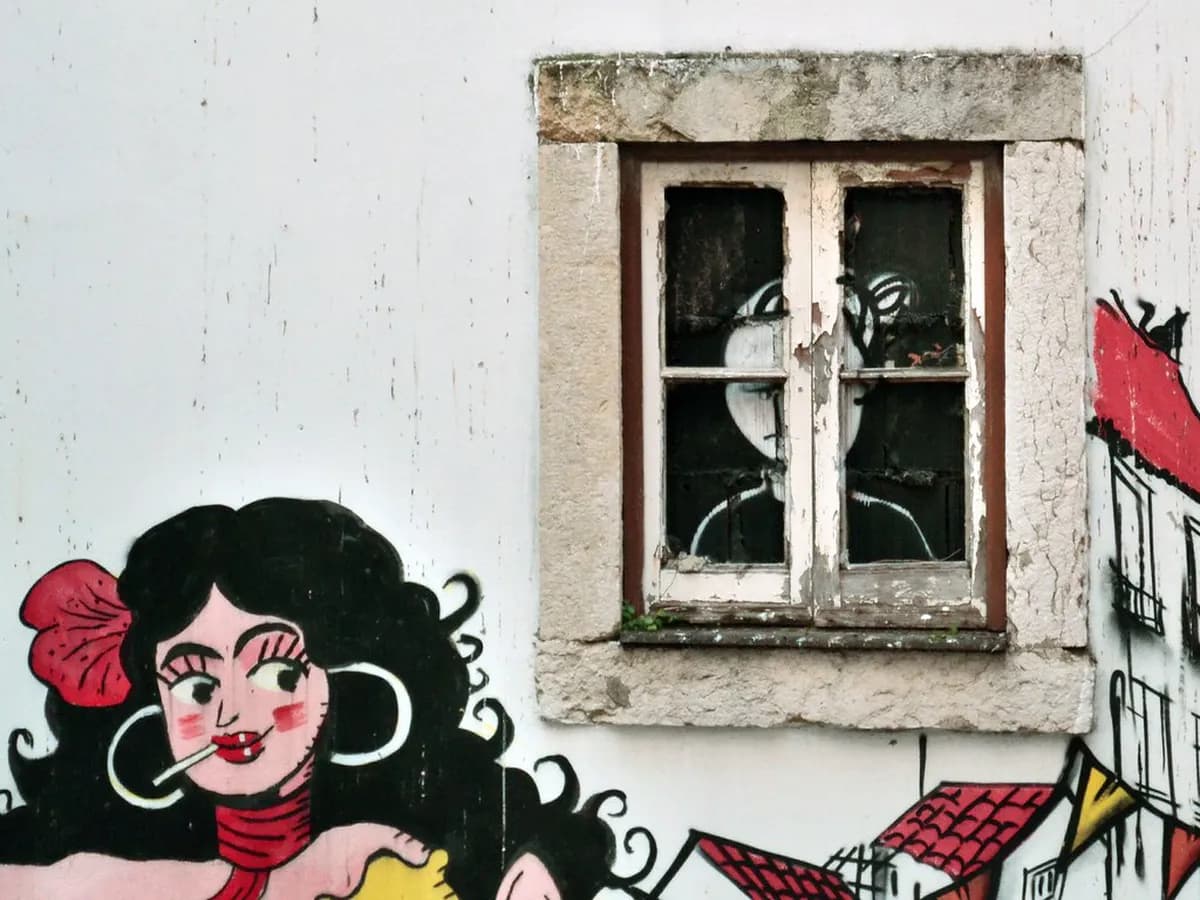
Rua do Capelão is the most photogenic street in the district. A stone guitar marks its entrance, and the walls display large-format portraits and stories of the fado singers who were born or performed here — an open-air gallery captured by photographers including Vernaccia. The street feeds directly into Largo da Severa, the small square named after Maria Severa. Her former house is now the Maria da Mouraria fado house and restaurant.
Two minutes from Largo da Severa, the Casa-Museu Fernando Maurício honours another Mouraria fado legend. Entry is free and visits are informal — ring the bell during opening hours. Nearby, the Church of St. Mary Magdalene (Igreja de Santa Maria Madalena) is a striking 12th-century gothic structure rebuilt after the 1755 earthquake, and usually quiet enough to enter without queuing.
- Rua do Capelão — free, open 24h, fado mural gallery and birthplace of Portugal's first fadista
- Largo da Severa — free public square, best visited late afternoon when locals gather
- Casa-Museu Fernando Maurício — free entry, ring bell, closed Mondays
- Igreja de Santa Maria Madalena — free entry, typically open 09:00–18:00
- Praça Martim Moniz — free, weekly international market Saturdays 10:00–19:00
| Attraction | Admission | Hours | Highlights |
|---|---|---|---|
| Rua do Capelão | Free | Open 24h | Fado mural gallery; birthplace of Maria Severa |
| Largo da Severa | Free | Open 24h | Historic square; locals gather from late afternoon |
| Casa-Museu Fernando Maurício | Free (ring bell) | Closed Mondays | Fado legend's home museum |
| Igreja de Santa Maria Madalena | Free | 09:00–18:00 | 12th-century gothic; quiet, no queues |
| Fado Museum (Alfama) | €5 (€3.50 students) | Tue–Sun | Audio stations with original fado recordings |
| Jardim da Cerca da Graça | Free | Daily (café from 09:00) | Castle views, terraced garden, kiosk espresso €1.20 |
Museums, Art, and Culture in Mouraria
Mouraria is Lisbon's most visually dense street-art neighborhood. The revitalization project that began in the 2010s invited muralists to paint directly on the old stone facades, and the results are strikingly good. Walk any block between Rua da Mouraria and Rua do Capelão and you will pass six or seven substantial works. The photography on Rua do Capelão — shot in documentary style by Šarūnas Burdulis and others — stands out for its human scale.
The Fado Museum sits just across the boundary in Alfama at Largo do Chafariz de Dentro, a 10-minute walk from Largo da Severa. Entry costs €5 for adults, €3.50 for students and seniors, free under 12. It covers fado's full history from 1820s Mouraria through to contemporary recordings, and includes audio listening stations where you can hear the originals rather than read about them.
For live fado, Maria da Mouraria is the neighbourhood's most authentic house. Performances run Tuesday to Sunday from 20:00. Dinner with fado starts at around €35 per person; listen-only entry on selected evenings is cheaper — check the calendar on their website. Booking ahead is essential on weekends.
Parks, Gardens, and Outdoor Spots in Mouraria
The Jardim da Cerca da Graça is the best green space within walking distance of the district. Built on the ruins of a former convent garden, it opened in 2015 and offers a long terraced park with unobstructed views of São Jorge Castle. The kiosk café near the upper entrance is open daily from around 09:00 and serves coffee and cold drinks at standard prices (€1.20 for an espresso). Entry is free.
The Jardim da Cerca da Graça is free to enter and open daily, with a kiosk café serving espresso for €1.20 near the upper entrance. It offers unobstructed views of São Jorge Castle with far fewer visitors than the paid castle grounds.
Largo do Intendente, a 10-minute walk north, functions as the neighborhood's living room. By day it is quiet and residential. By early evening locals bring chairs outside and the square fills up, particularly on warm nights. It is the one spot in the area where you reliably sit next to more Portuguese residents than tourists.
For castle views without the castle entrance fee (€15 adults in 2026), the Miradouro de Santa Luzia and the Miradouro das Portas do Sol are both reachable on foot in 15 minutes through Alfama. The walk up is steep but the panorama over the Tagus is the reward.
Where to Eat in Mouraria
The food scene here is more varied than in any other central Lisbon neighborhood, and considerably cheaper than Alfama or Chiado. Start with the Portuguese classics: Zé da Mouraria on Rua da Mouraria serves enormous portions of roasted codfish and garlic steak. Portions are designed to share. O Velho Eurico nearby does petiscos — small sharing dishes — in a louder, livelier atmosphere. Both require reservations at dinner.
What makes Mouraria genuinely different is its multicultural kitchens. Indian and Bangladeshi restaurants cluster around Rua do Benformoso, two minutes east of Martim Moniz, where a full curry lunch costs under €8. Cape Verdean and West African restaurants occupy several of the side streets between the square and Intendente. None of this appears in the standard tourist guides. It is the culinary residue of the diverse communities that settled here over decades, and it is excellent value. No competitor in the SERP properly maps this for first-time visitors.
Sem Restaurant, near the Mouraria shopping center, offers the upscale option: a seasonal tasting menu with natural wines sourced from small Portuguese producers. It is the right choice if you want a longer sit-down meal rather than a walk-and-eat afternoon. Budget around €50–70 per person with wine. For pastel de nata, the kiosk inside the Mouraria shopping center produces a dependable version at standard prices (€1.20–1.50 each).
Family-Friendly and Budget-Friendly Options in Mouraria
Most of Mouraria's best sights cost nothing. The street art, the fado mural gallery on Rua do Capelão, the Church of St. Mary Magdalene, and the Jardim da Cerca da Graça are all free. You can spend a full three hours in the district without paying a single entry fee. For families, the open squares at Martim Moniz and Intendente give children room to move without the tight-corridor stress of Alfama.
There are many Places To Visit In Lisbon For Free Travel Guide concentrated in and around this neighborhood. Budget travelers do well here because the local bakeries, Indian lunch spots on Rua do Benformoso, and the neighborhood tascas all price for residents rather than tourists. A full lunch with wine rarely exceeds €12 per person at the traditional spots. Compare that with €25–35 in Alfama or Bairro Alto for equivalent food.
One practical note for families with young children: the cobblestone streets are steep and uneven. Avoid bringing a pushchair into the upper alleys. The lower section around Martim Moniz and the Jardim da Cerca da Graça is accessible and stroller-friendly. Tram 28 passes the bottom of the hill and gives a scenic, seated alternative to the steep walk up.
Mouraria's upper alleys have steep cobblestone streets with gradients exceeding 15% that become slippery after rain. Avoid bringing a pushchair into the historic lanes — keep strollers to the flat lower area around Martim Moniz square.
How to Get to Mouraria and Get Around
The easiest access point is Martim Moniz metro station on the Green Line (Linha Verde). From Rossio it is one stop and takes three minutes. From Oriente station (the main rail hub) take the Green Line to Martim Moniz directly — around 15 minutes. Exit the metro and you are standing at the edge of the neighborhood.
Tram 28 stops at Martim Moniz and runs a scenic route through Alfama and Graça. It is useful for getting from Mouraria up to the Graça viewpoint or down to Chiado, but it runs crowded during peak hours (10:00–14:00 and 16:00–19:00). Single ticket costs €3.00 in 2026 bought on board; buy a 24-hour Viva Viagem card at the metro for €6.80 if you plan to use trams and metro together.
Bolt and Uber both operate in Lisbon and reach Martim Moniz reliably. A ride from the airport to Mouraria runs €15–20 and takes around 25 minutes depending on traffic. Taxis from the airport rank are slightly more expensive (€20–28). Do not attempt to drive into the neighborhood itself — the lanes are too narrow and parking is effectively impossible.
How to Plan a Smooth Mouraria Day
Two hours is the minimum for a walk-through covering the main streets, the Rua do Capelão gallery, and a coffee stop. A half-day (four to five hours) lets you add the Fado Museum, lunch, and the Jardim da Cerca da Graça. A full day means you can also explore Alfama's castle and viewpoints, since the two neighborhoods share a hill and flow naturally into each other.
Timing matters. Arrive before 11:00 or after 15:00 to avoid the worst of the tour-group traffic on the fado mural street. The neighborhood is at its best from 17:00 onward when locals come outside and the light on the castle walls turns golden. If you plan to eat at Zé da Mouraria or O Velho Eurico, book at least one day ahead for dinner sittings.
Wear flat, rubber-soled shoes. The cobblestones become slippery after rain and the gradient on some streets exceeds 15%. Bring a small water bottle — there are no tourist-facing hydration stations in the upper alleys. A basic route: metro to Martim Moniz → Rua do Capelão → Largo da Severa → Casa-Museu Fernando Maurício → Jardim da Cerca da Graça → lunch at Zé da Mouraria or the Indian lunch strip on Rua do Benformoso → Intendente square for an afternoon drink. Find more ideas for Hidden Gems In Lisbon Travel Guide that extend naturally from a Mouraria base.
Mouraria and the Neighborhoods Around It
Mouraria sits between Alfama to the east and Intendente to the north. Understanding these boundaries helps you plan without backtracking. Alfama is the more touristy neighbor: it has the castle, the miradouros, and the Fado Museum, but it is also more expensive and more crowded. The smart approach is to start in Mouraria in the morning, then walk east into Alfama after lunch when the tour buses have thinned out. Our Alfama Lisbon Travel Guide covers that side of the hill in detail.
Bairro Alto, roughly 20 minutes on foot or one metro stop west, offers the sharpest contrast to Mouraria. During the day it is a neighborhood of independent bookshops, small galleries, and quiet streets. After 21:00 it becomes Lisbon's main late-night bar district, with dozens of small bars on every block. If your evening involves fado dinner in Mouraria followed by drinks in Bairro Alto, that is a genuinely good night.
Príncipe Real, five minutes uphill from Bairro Alto, is the city's most elegant residential quarter — 19th-century mansions, a covered antiques market, and garden terraces with Tagus views. It is a useful contrast after the tight medieval lanes of Mouraria: wide streets, shaded squares, and restaurants priced for Lisbon's professional class rather than tourists. Check our guide for more on Off The Beaten Path Lisbon Travel Guide options that connect these neighborhoods.
Frequently Asked Questions
Is Mouraria safe for tourists to visit?
Yes, Mouraria is generally very safe for visitors during the day. Just keep an eye on your belongings in crowded areas, as you would in any popular city. The neighborhood has a very welcoming community feel that makes travelers feel secure.
What is the best time to visit Mouraria?
The best time to visit is in the late afternoon when the streets come alive with music. You can enjoy cooler temperatures and see local residents gathering outside their homes. It is also perfect for planning a traditional dinner.
How do I get to the Mouraria neighborhood?
You can easily reach the area by taking the green metro line to the Martim Moniz stop. From there, it is just a short walk into the historic heart of the district. Tram 12 also stops nearby for a scenic ride.
Can I find traditional food in Mouraria?
Yes, the area is famous for its authentic restaurants and diverse culinary scene. For more dining options, check out our guide to the best local restaurants in Lisbon. You will love the traditional dishes prepared by local chefs.
Mouraria rewards visitors who slow down. The history is older than most of Europe's tourist sites, the food is better value than anywhere else in central Lisbon, and the fado here has roots rather than just a stage. Give it at least half a day in 2026 and you will understand why locals still consider it the soul of the city.
Continue exploring
More guides you'll find useful
.jpg)
.jpg)