Real Fábrica De Tapices Visitor Guide Travel Guide
Plan your visit to Real Fábrica de Tapices with top picks, neighborhood context, timing tips, and practical booking advice for a smoother trip.
On this page
Real Fábrica De Tapices Visitor Guide
The Real Fábrica de Tapices (Royal Tapestry Factory) is one of Madrid's most distinctive cultural institutions — a working factory that has produced hand-woven tapestries and carpets since 1721, and still does today. Access is exclusively by guided tour, so advance booking is essential. This guide covers exact tour times, the booking process, ticket prices, what to see inside, and practical rules to help you plan a smooth visit in 2026.
A Brief History of the Royal Tapestry Factory
The factory was founded in 1720 under King Philip V to supply tapestries and carpets to the Spanish Royal Family's palaces. Its work can be found in every royal residence — Palacio Real, Palacio del Pardo, Palacio de La Granja de San Ildefonso, Palacio de Aranjuez — and in national and international institutions worldwide. That this 300-year-old institution still operates as a living workshop rather than a static museum is what makes it unusual.
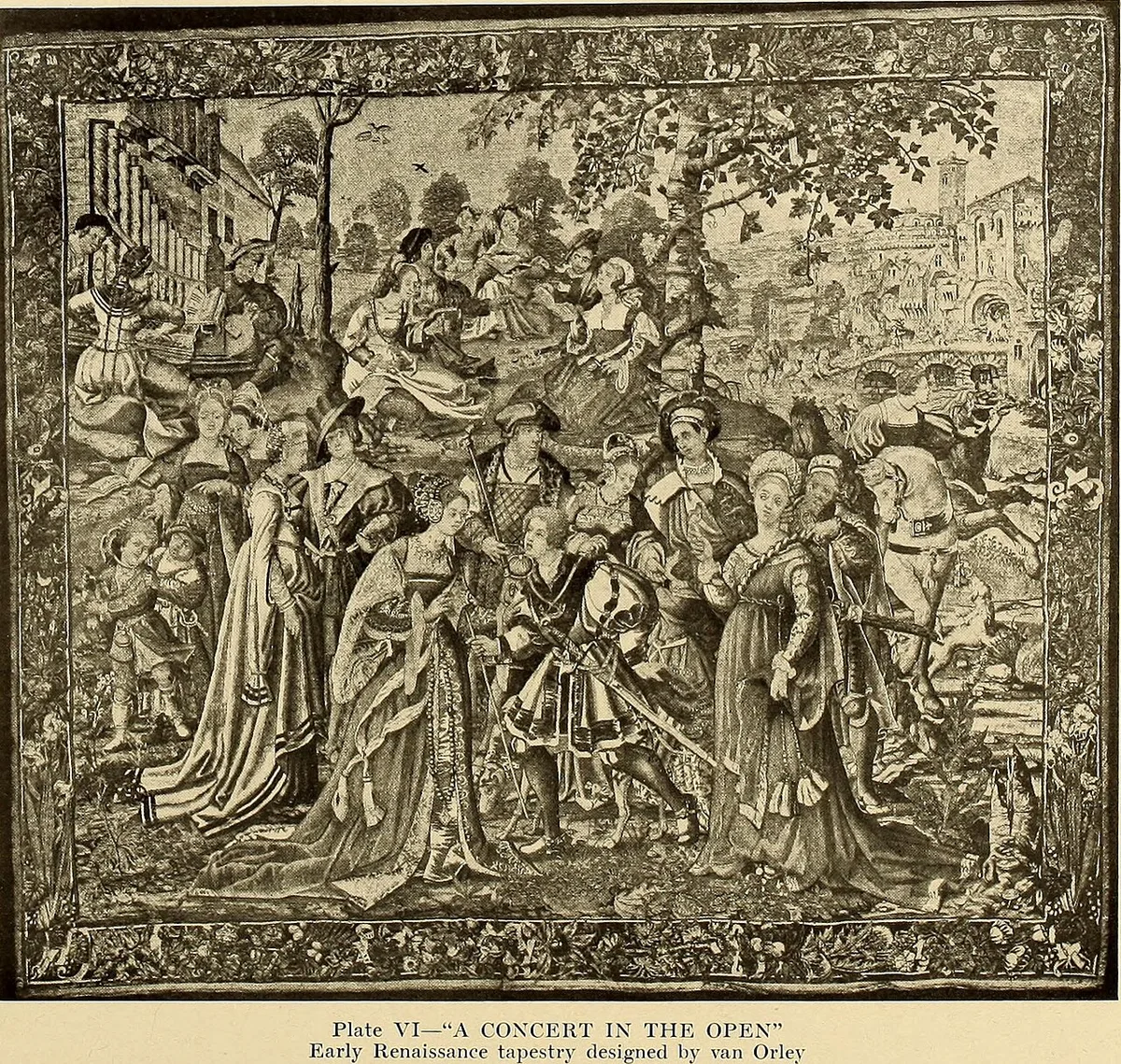
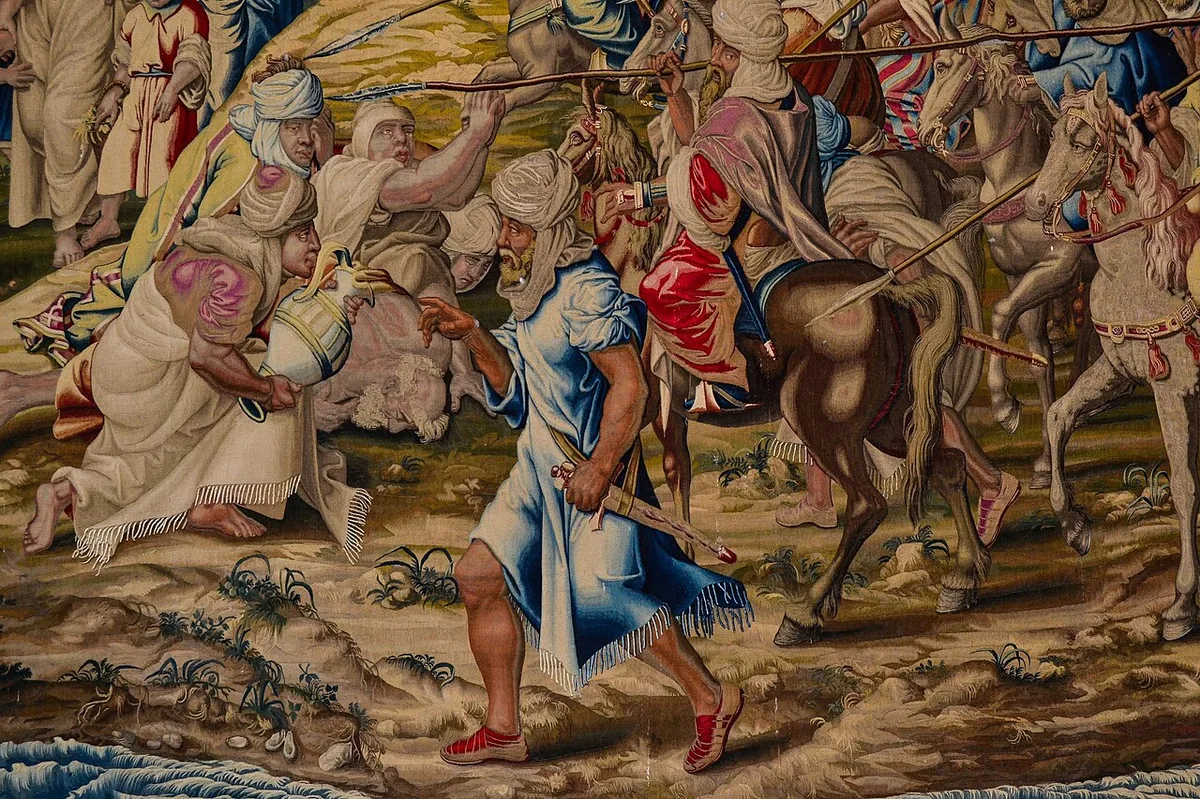
The collection spans several centuries and artistic traditions. Its most celebrated holding is the Acts of the Apostles (Los Hechos de los Apóstoles), a series of tapestries woven in Flanders in the 17th century from cartoons by Raphael Sanzio. The factory also holds pieces based on designs by Francisco de Goya — who created numerous cartoons depicting 18th-century Spanish daily life — alongside works by Teniers, Juan Gris, and contemporary Spanish painters including Pérez Villalta.
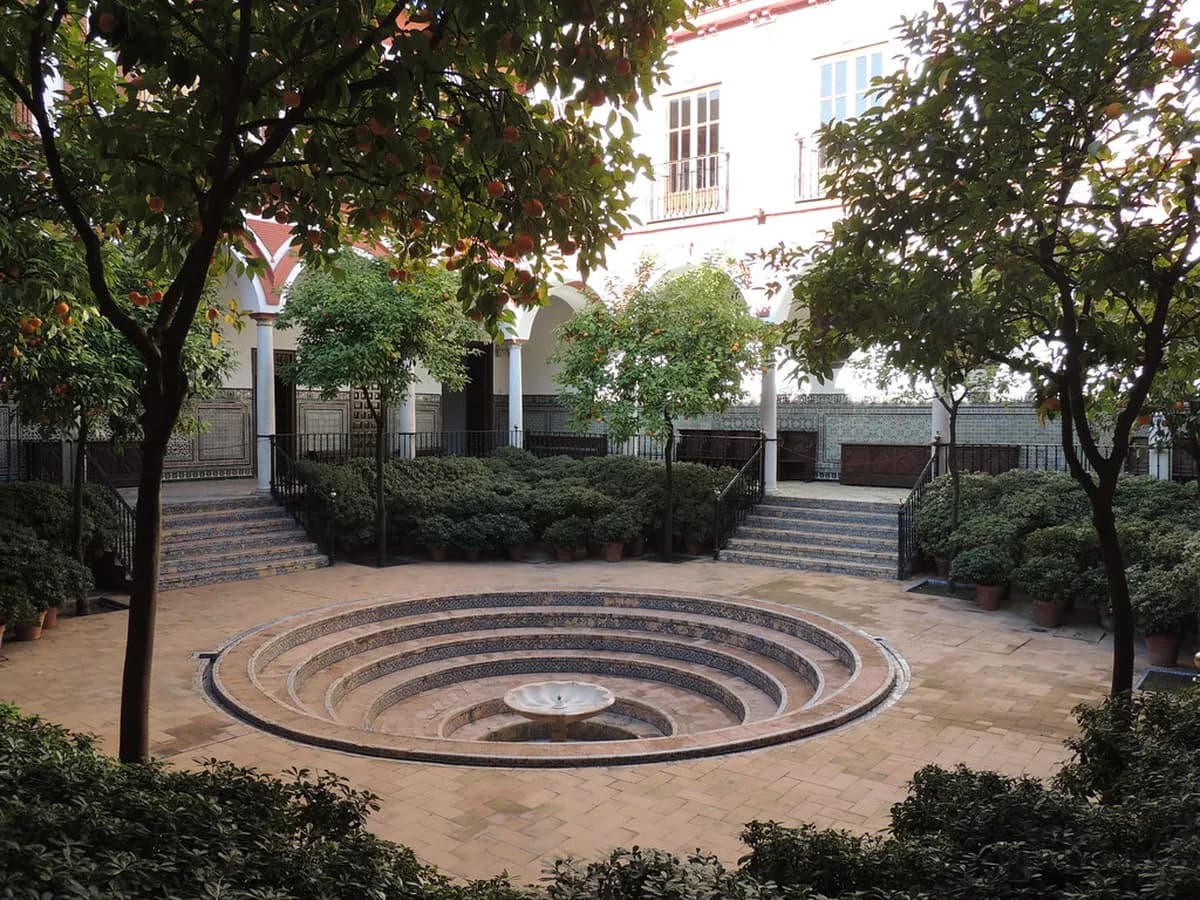
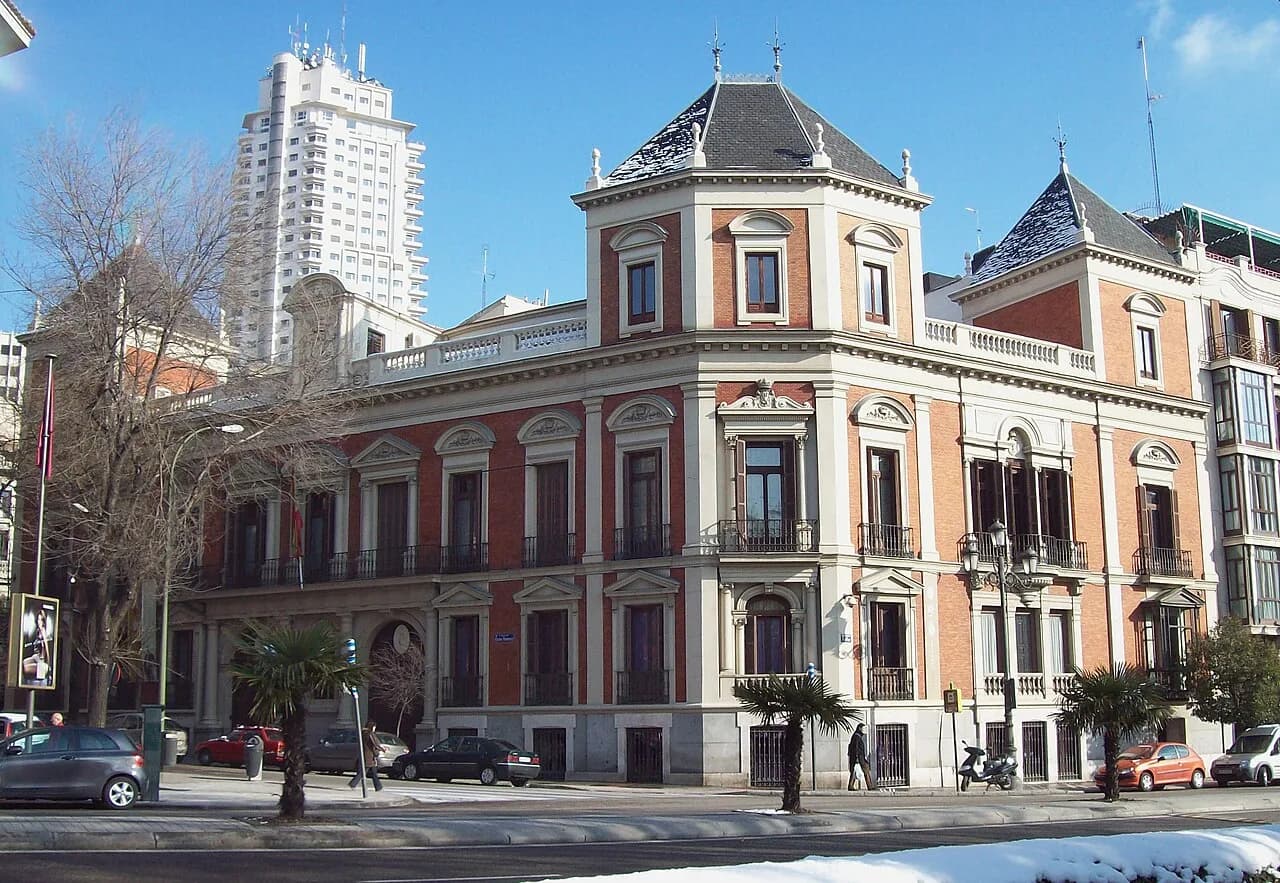
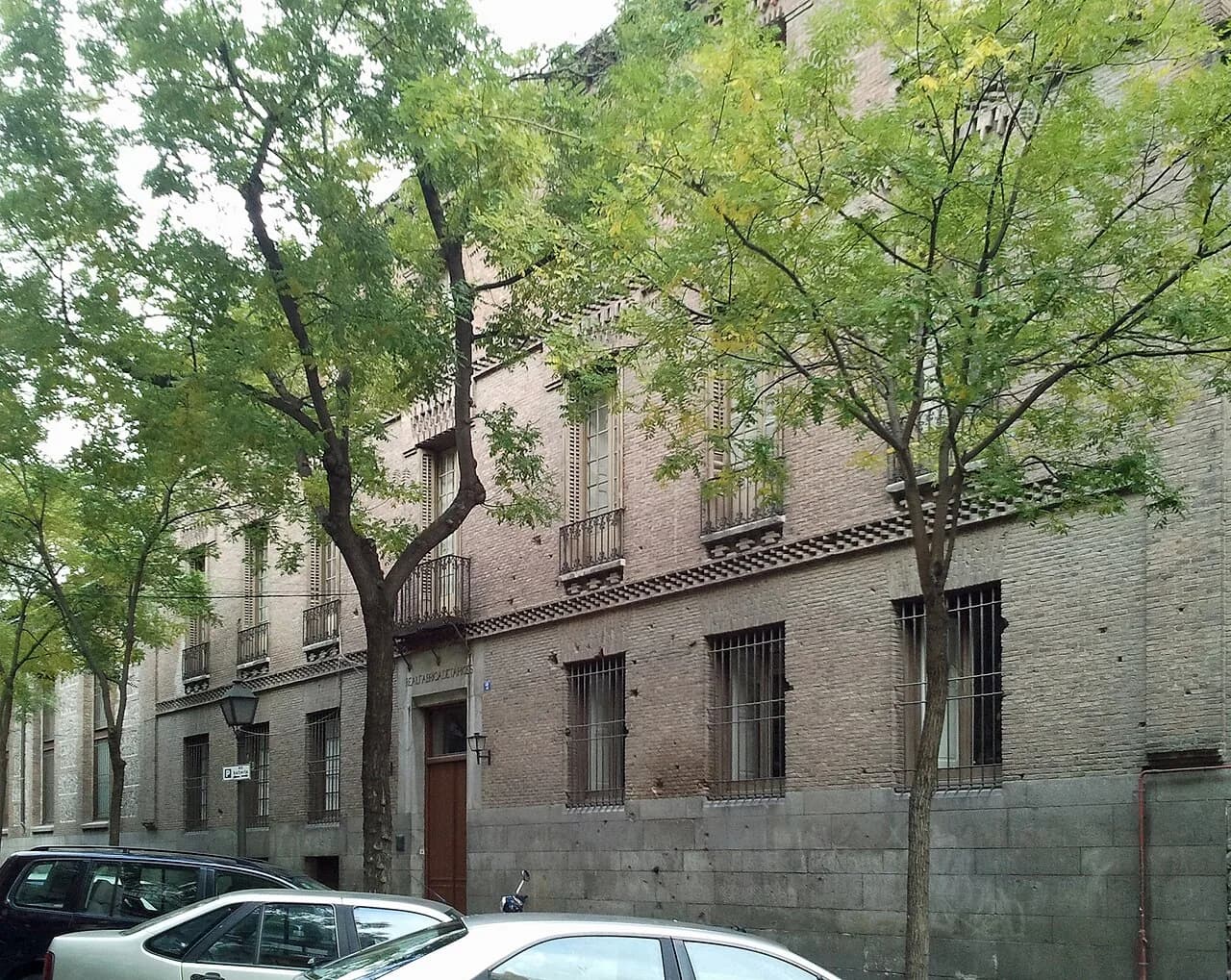
The building itself is a neomudéjar structure on the Paseo del Arte, Madrid's art walk linking the Prado, Thyssen-Bornemisza, and Reina Sofía. Behind the main building, a historic garden has been expanded to include a collection of dye plants and fibre-producing species from across the world — cotton, linen, and plants historically used to obtain vegetable dyes by different cultures. It is a quiet, genuinely rewarding corner that most visitors rush past.
Planning Your Visit: Essential Information
Location and transport. The factory is at Calle de Fuenterrabía 2, 28014 Madrid. The nearest metro stations are Atocha (Line 1), Estación del Arte (Line 1), and Menéndez Pelayo (Line 1). Buses 10, 14, 24, 26, 32, 37, 54, and 102 all stop nearby. The Cercanías local train stops at Madrid-Atocha, roughly a 10-minute walk. Street parking is limited; public transport is the practical choice. The location also makes it easy to combine with other stops on any Madrid itinerary.
Opening hours. The factory opens Monday to Friday, 10:00–14:00. It is closed on Saturdays, Sundays, and throughout August. Guided tours depart at 10:00, 11:00, 12:00, and 13:00 each weekday. From Monday to Thursday, an additional afternoon tour runs at 16:00 (minimum 8 visitors required for this session). On Tuesdays and Thursdays, a dedicated English-language tour runs at 09:00 — the only fixed English session each week.
Ticket prices. General admission for the guided tour is €6. A reduced rate of €5 applies to unemployed visitors, those aged over 65 or pensioners, visitors with disabilities, students, and children under 18 (valid accreditation required). One detail that is rarely highlighted: the Monday 10:00 morning tour is free of charge. If your schedule is flexible and a Monday visit is possible, this is an exceptional option — the full guided workshop experience at no cost.
| Ticket / Session | Price / Time |
|---|---|
| Guided tour (general) | €6 |
| Guided tour (reduced) | €5 |
| Tours Mon–Fri | 10:00, 11:00, 12:00, 13:00 |
| Extra tour Mon–Thu | 16:00 |
| Weekends & August | Closed |
The Monday 10:00 tour is free of charge — the same full guided workshop experience as a paid session, at no cost. Dedicated English-language tours run on Tuesdays and Thursdays at 09:00; specify your language preference when emailing your booking.
Entry is by guided tour only at fixed times — there is no drop-in or self-guided access. The factory is closed on weekends and throughout all of August. Book your slot by email (visitasmuseo@realfabricadetapices.com) well in advance; popular sessions fill quickly.
Accessibility. The main workshop and exhibition areas are accessible. Contact the factory directly before your visit at (+34) 91 434 05 50 or informacion@realfabricadetapices.com to confirm specific requirements. As an active industrial workplace, access across certain workshop floors may be limited by machinery placement.
Guided Tours: What to Expect and How to Book
Access to the factory is exclusively by guided tour — there is no self-guided or drop-in entry. Each tour runs approximately 45 minutes and accommodates between 5 and 15 visitors. The small group size means you will be close to the artisans and able to ask questions; this is not a large-museum shuffle through a corridor. Afternoon groups require a minimum of 8 visitors to run.
The factory also offers exclusive tours for groups of up to six people, which provide access to areas not open during standard tours. These are worth enquiring about if you want a more in-depth experience or if you are visiting as a private group. Details are available through the booking email.
Booking is done by email only — not through an online ticketing system. Send a request to visitasmuseo@realfabricadetapices.com including the full names, ID numbers (passport or national ID), and telephone numbers of all visitors. Once the factory confirms availability and tour time, payment is made by bank transfer before the visit. This is the only accepted booking method; walk-in entry is not available. Book at least several days in advance. Popular slots — particularly the free Monday 10:00 tour and the Tuesday and Thursday English sessions — fill quickly.
Tours run in Spanish and English. The Tuesday and Thursday 09:00 sessions are dedicated English-language tours. All other scheduled tours are in Spanish, though guides may accommodate English speakers if the group allows. Specify your language preference clearly when sending your booking email.
What to See: Workshops, Collections and Exhibitions
The working workshop is the centrepiece of any visit. You will watch artisans hand-weaving tapestries on high-warp and low-warp looms using techniques maintained since the 18th century. Seeing a weaver complete just a few centimetres of a complex design in the time you are standing there recalibrates how you read any tapestry hanging in a palace or museum.
The collection spans several artistic traditions. Look for the Acts of the Apostles series after Raphael cartoons, Goya-designed tapestries depicting 18th-century Spanish daily life, and Flemish genre scenes after Teniers. Alongside the tapestries, the factory displays its historic working tools: looms, spinning wheels, winders, and graphic archive cardoons. These are not props — they are the actual instruments still in use. Works from the National Archaeological Museum and the Museum of Decorative Arts are also held here on deposit.
In 2026, the current temporary exhibition is Al'Qala: Hilos de Historia, running from April 2026, which brings together historic and contemporary textile pieces in collaboration with artists and institutions from Jordan, Lebanon, Kuwait, Palestine, and Syria. The factory also circulates traveling exhibitions to venues across Spain. Check the official website for current programming before your visit, as schedules change.
After the indoor tour, step into the garden. The ethno-botanical section displays dye plants and fibre-producing species from across the world, integrated into the garden's original historic design without irreversible changes. It adds a quiet, practical dimension to what you have just seen inside.

Rules and Tips for a Smooth Visit
Photography, video recording, and audio recording are strictly prohibited inside the factory unless you have obtained prior written authorisation. This applies to all areas — workshops, exhibitions, storage, machinery, and staff. It is not a loosely enforced guideline; it protects intellectual property around production processes and the image rights of employees. Keep your phone in your pocket while inside.
As an active industrial site with machinery in operation, the factory requires all visitors to wear closed, sturdy footwear. Flip-flops, unstable sandals, excessively high heels, and loose-fitting clothing that could catch in machinery are not permitted. Non-compliant visitors may be refused entry. Read this before planning your outfit for the day, especially if you are coming directly from hotel check-in or another casual activity.
Arrive at least 10 minutes before your scheduled tour time. Tours cannot be delayed for late arrivals given the fixed group structure and the artisans' working schedule. If you need to cancel or reschedule, contact the factory by email as early as possible. The minimum group size of 5 means very small parties may occasionally find their slot merged with another group.
The factory closes throughout August. If your Madrid visit falls in late July or September is unavailable, the Museum of Decorative Arts (Museo de Artes Decorativas), which holds pieces connected to the factory's extended collection, is a nearby alternative open year-round.
Beyond the Factory: Nearby Attractions in Madrid
The factory sits on the Paseo del Arte, which means the Prado, Thyssen-Bornemisza, and Reina Sofía are all within a 10–15 minute walk. A morning at the factory and an afternoon at the Prado makes for a coherent thematic day — both institutions are deeply connected through tapestries and decorative arts, and seeing the factory first changes how you read the decorative works at the Prado.
El Retiro Park is a five-minute walk north of the factory. After a 45-minute guided tour, the park is a natural next stop — the Palacio de Cristal exhibition pavilion and the rose garden are both worth the short detour. For other intimate historic institutions, the Museo Lázaro Galdiano and the Museo Cerralbo offer similarly detailed collections in former private homes.
The Descalzas Reales Monastery in central Madrid holds a notable tapestry collection — the Triumph of the Eucharist series after Rubens cartoons — which pairs well with what you will have seen at the factory. It is about 20 minutes by metro from Atocha. For a full overview of what the city offers, the Madrid attractions hub covers the wider landscape.
Gift Shop and Souvenirs
The factory's gift shop stocks items directly tied to its heritage: miniature tapestries, carpet fragments, and small textile pieces made using the same traditional methods practiced in the workshops. These are not mass-produced souvenirs but small-scale craft objects. The shop also carries specialist publications on tapestry history, Goya's cartoons, and the factory's own editorial releases — harder to find elsewhere in Madrid.
Purchasing from the shop directly supports the factory's conservation and production work. As an institution that operates as both an active workshop and a cultural site without the footfall of a major museum, purchases here carry more direct impact than at a larger venue.
FAQs about Visiting the Real Fábrica de Tapices
Frequently Asked Questions
What is the Real Fábrica de Tapices?
The Real Fábrica de Tapices is the Royal Tapestry Factory in Madrid, Spain. Founded in 1721, it is an active factory that produces and restores tapestries and carpets. It also serves as a museum, showcasing traditional weaving techniques and historical art. It is a unique cultural institution.
How long should I plan for a visit to the Real Fábrica de Tapices?
Plan for at least 1.5 to 2 hours for a comprehensive visit to the Real Fábrica de Tapices. This allows enough time for a guided tour and some independent exploration. If you only wish to see the main areas, one hour might suffice. However, a guided tour is highly recommended.
Is the Real Fábrica de Tapices worth including on a short Madrid itinerary?
Yes, the Real Fábrica de Tapices is definitely worth including, even on a short Madrid itinerary. Its unique focus on traditional craftsmanship offers a distinct cultural experience. It provides a fascinating contrast to the city's art museums. The factory is easily accessible by public transport.
What should travelers avoid when planning a visit?
Travelers should avoid visiting without checking opening hours and tour availability, especially on public holidays. Do not expect to walk in for a guided tour without booking in advance. Also, avoid rushing through the experience. Take your time to appreciate the intricate work.
Are there any rules or restrictions for visitors?
Yes, visitors should respect the ongoing work of the artisans and avoid touching exhibits. Flash photography might be restricted in certain areas. Keep noise levels low, particularly during tours. Always follow the instructions of your guide or staff members. These rules ensure preservation and a good experience.
The Real Fábrica de Tapices is one of the few places in Madrid where you can watch centuries-old craft being practiced at full professional scale, on the same looms, with the same techniques, producing work destined for the same royal institutions it has supplied since 1721. The guided-tour-only format is a feature, not a limitation — it keeps groups small and the experience focused. Book your tour by email in advance, wear the right footwear, and consider the Monday 10:00 slot if budget matters. The factory rewards visitors who prepare.
For the latest official information, see the Real Fábrica de Tapices official site and Real Fábrica de Tapices on Wikipedia.
For more Madrid exploration, discover our Madrid Off the Beaten Path and Hidden Gems in Madrid guides.
Continue exploring
More guides you'll find useful