15 Unusual Things to Do in Seville (2026)
Discover the secret side of Seville with 15 unusual things to do, from buying sweets from cloistered nuns to hidden palaces and backstreet flamenco bars.
On this page
15 Unusual Things to Do in Seville
After five visits to the Andalusian capital, I still find myself discovering quiet corners that most guidebooks overlook. Seville is famous for its massive cathedral, but the real magic happens in the narrow alleys and behind heavy wooden doors. My most recent trip revealed that the city's best experiences are often the most subtle and surprising ones. This guide focuses on 15 Best Hidden Gems in Seville: Secret Spots & Local Tips that offer a break from the usual tourist crowds.
Updated for 2026, this list reflects current entry prices and the latest opening schedules. You will find that many of these spots require a bit of extra effort to locate within the winding historic center. The rewards include tasting ancient recipes from nuns and stepping into private aristocratic palaces that feel frozen in time. I have included practical tips for each location to help you navigate the city like a seasoned local expert.
1. Buy Yemas de San Leandro from Cloistered Nuns
The Convento de San Leandro on Plaza de San Ildefonso sells egg-yolk sweets called yemas through a wooden rotating hatch called a torno. Ring the bell beside the heavy wooden door, and you will hear a nun's voice from behind the grille asking for your order. You never see her face — only the torno spins back with a small box of sweets wrapped in tissue paper. It is one of the oldest commercial transactions still practiced in the city.
Bring exact cash in the €10–€20 range, as the nuns do not accept cards or give change easily. Arrive between 10:00 and 13:00 for the best availability, since popular flavors sell out by early afternoon. The sign on the door lists the available pastries and their prices. Beyond the yemas, look for tocino de cielo, a sweet egg custard that uses the same surplus yolks left over from the wine industry's use of egg whites for clarifying barrels.
This transaction works because Seville's wine producers historically donated leftover egg yolks to convents. The nuns turned a practical gift into a centuries-old artisanal recipe that outlasted the winemaking tradition that created it. Finding the door — it is an unremarkable wooden arch on a small plaza — is half the adventure.
2. Explore the Lush Gardens of Palacio de las Dueñas
The Palacio de las Dueñas is the Seville residence of the House of Alba, one of Spain's oldest aristocratic dynasties. It opened to the public in 2016 and still feels quietly undiscovered compared to the Alcázar. The Gothic-Mudéjar architecture includes a central courtyard ringed by orange and lemon trees, marble columns, and tiled archways covered in climbing jasmine. The poet Antonio Machado was born here in 1875, and a small room commemorates his life and work.
Entry costs around €10–€13 per adult and the palace is open daily from 10:00 to 18:00, with extended hours until 20:00 in summer months. Visit early on a weekday morning to experience the jasmine scent at its strongest before the midday heat burns it off. The private collection inside includes Flemish tapestries, Roman busts, and portraits of the Alba family spanning four centuries.
Unlike the Alcázar, there are no timed entry slots and rarely a queue. This makes it a reliable option for escaping the midday heat with a slow, self-guided walk through the shaded galleries. Compare prices to the Alcázar and you will quickly realize the palace offers more intimacy per euro.
3. Find the Semicircular Plaza del Cabildo
Plaza del Cabildo hides behind a nondescript passage just south of the cathedral entrance on Avenida de la Constitución. Walk through the low archway and you step into a semicircular space ringed by painted arches and a central fountain. It is one of the most photogenic squares in the city and almost no one in the surrounding tourist crowds knows it exists. The arches are decorated with frescoes by local artist José Palomar and the proportions of the space feel deliberately theatrical.
The plaza is free to enter and open during daylight hours. On Sunday mornings between 10:00 and 14:00, collectors gather here for a small stamp and coin market — one of the city's oldest weekly traditions. Even on a quiet weekday the space is calming, with the fountain providing ambient sound that drowns out the noise of the nearby main street.
The trick to finding it is to look for the Almacén de Anticuarios sign on the archway — the same tunnel that leads to the antiques dealers also opens onto the square. Most people walking past assume it is a service entrance and keep moving.
4. Visit the Quiet Neighborhood of San Lorenzo
San Lorenzo sits northwest of the cathedral and receives a fraction of the foot traffic that the Santa Cruz district absorbs. The neighborhood centers on a shaded plaza where locals drink morning coffee and walk dogs in peace. You will find few souvenir shops and almost no queue-forming tourist infrastructure here, which makes it feel like an entirely different city. The whitewashed streets lead past family-run bakeries, hardware shops, and bars that have not updated their signage since the 1970s.
This is also one of the better areas for 9 Essential Tips and Spots for the Best Tapas in Seville, with small neighborhood bars serving pincho-sized portions for €1.50–€2.50 apiece. Most bars here serve food from 13:00 to 16:00 and again from 20:00 until late. Bar Rodriguez on Calle Teodosio is the reference point: a tile-fronted, no-frills bar that chalks your tab on the counter and pours cold Cruzcampo in proper ceramic mugs. Arrive before 14:00 to get a standing spot at the bar before the neighborhood workers fill it.
The Basílica de Jesús del Gran Poder anchors the plaza at the heart of the neighborhood. The church houses a deeply venerated 17th-century sculpture of Christ by Juan de Mesa, and its procession during Semana Santa is considered one of the most emotionally charged in all of Spain. Even outside Holy Week it is worth stepping in for five minutes to understand what Sevillian religious devotion actually looks like up close.
5. Stay or Tour the 17th-Century Palacio Bucarelli
Palacio Bucarelli is a restored Baroque palace in the San Lorenzo district that operates as a boutique hotel and cultural space. Guided tours of the main floor run regularly and cover the original painted ceilings, the central fountain courtyard, and a collection of period furniture that was assembled from Sevillian estates. The building dates to the late 1600s and was the seat of a prominent mercantile family during Seville's trading-empire peak.
Tour prices typically run €12–€18 depending on the guide and depth of the session. If you book a room, you gain evening access to the courtyard after the day tours have ended — the fountain lit from below and the upper gallery lit by lanterns makes it one of the more quietly romantic spaces in the city. Rates start around €150 per night during shoulder season.
The palace is considerably less visited than the Alcázar or Dueñas because it lacks the marketing infrastructure of the bigger attractions. That is precisely its appeal: the tour groups are small, the guide tends to go off-script, and the whole experience runs at the pace you choose. Check availability directly through the hotel website as third-party booking platforms do not always list the tour option.
6. Experience Raw Flamenco at La Carboneria
La Carboneria on Calle Levíes was a coal merchant's warehouse until the 1970s, when it became the city's most famous informal flamenco venue. There is no stage in the traditional sense — performers work the back room of what functions as a regular bar, with the audience standing or sitting on wooden benches pushed against the walls. The performances usually start around 22:00 and happen most nights, though not every night, so arrive flexible and ask at the bar when the next session begins.
There is no cover charge. A drink costs €5–€8 and that is the understood exchange for the show. The atmosphere is nothing like the tourist tablaos near the cathedral: the audience includes locals, the lighting is dim, and the emotional intensity of the guitar and singing does not build toward a choreographed climax — it builds because the performers are in conversation with each other, testing ideas. Arrive by 21:00 to find a good position before it fills up.
La Carboneria sits in the Santa Cruz neighborhood but feels entirely removed from the tourist circuit that surrounds it. Flamenco here reflects its Romani and Andalusian roots rather than its performance-industry version. Many visitors report it as the single most memorable evening of their Seville trip precisely because nothing is designed to impress them.
7. Dine in the Courtyard of Casa Manolo Leon
Casa Manolo Leon is a restaurant installed inside a 19th-century stately home in the historic center. The courtyard table is the one to request — a rectangular garden patio enclosed by carved stone galleries with potted ferns and a small fountain. The building's proportions are aristocratic without being cold, and the effect of dining under the open sky in what feels like a private family residence is genuinely unusual in a city full of restaurant courtyards.
The menu runs through refined Andalusian cooking: gazpacho with garnishes, slow-cooked ox tail, and seasonal desserts that use local citrus and almonds. Expect to pay €35–€60 per person for a full dinner with wine. The best time to book the courtyard table is 21:00 on a weekday, when the temperature drops enough that the outdoor space feels pleasant and the tourist crowds have drifted back to their hotels. Weekend evenings book out two to three weeks in advance in spring and autumn.
This is one of the better entries on the 12 Best Restaurants in Seville: The Ultimate Foodie Guide list for travelers who want atmosphere alongside the food rather than just technical cooking. Call ahead to specify the garden patio rather than the interior rooms — the staff will accommodate the request when availability allows.
8. Spot Rosina's Balcony from The Barber of Seville
The balcony on Plaza de Alfaro in the Santa Cruz neighborhood is associated with the opera "The Barber of Seville" by Gioachino Rossini, premiered in 1816. The plot follows Count Almaviva serenading Rosina from the street below while she appears on the balcony above. The exact address is Plaza de Alfaro 12, and the building's ironwork balconies overlook the outer wall of the Alcázar gardens on one side and the narrow alley below on the other — the geography matches Rossini's stage directions closely enough to make the legend plausible.
It is a free, public exterior site open at any hour. The building as it stands today dates from after the opera was written, which is a fact most competitors mention without explaining: the opera was set in Seville but the story is fictional, adapted from a French play by Beaumarchais. Rossini's Seville was a literary stage set, not a map. The balcony is the city's wry contribution to that fiction — it exists because tourists wanted it to exist, and Sevillians obliged.
The best time to photograph it is early morning before 09:00, when the low sun hits the ironwork directly and the alley below is empty. Stand with your back to the Alcázar wall for the classic framing shot.
9. Browse History for Free at Archivo de Indias
The Archivo de Indias is a UNESCO World Heritage Site that houses over 80 million pages of documents from the Spanish colonial empire, including original letters signed by Columbus and Magellan. The building was designed by Juan de Herrera — the same architect responsible for El Escorial — and completed in 1598. It stands between the Cathedral and the Alcázar, two of the most visited monuments in Spain, yet most visitors walk past its entrance without stopping.
Admission is completely free. Opening hours run Tuesday through Saturday 09:30 to 17:00 and Sunday 10:00 to 14:00. The ground floor features a long vaulted hallway lined floor to ceiling with archive boxes, giving a sense of the sheer physical scale of the colonial record. The upstairs gallery rotates displays of original maps and correspondence; during 2026 the featured exhibition focuses on the cartographic surveys commissioned by Felipe II.
Spend at least thirty minutes here. The building's interior courtyard has the same clean geometric proportions as the Escorial — restrained, rational, and surprisingly beautiful for a building designed primarily for storage. It is the best free cultural stop in a city where free entry is rare and crowds are the default.
10. Soak in the AIRE Ancient Baths
AIRE Ancient Baths occupies a restored Mudéjar palace on Calle Aire in the Santa Cruz district. The thermal circuit includes several pools at temperatures ranging from 36°C to cold-plunge level, a steam room, and a candlelit relaxation area. The signature experience is the rooftop pool, which faces the lit-up Giralda tower after dark and is one of the more unusual views you can get of that landmark.
A basic thermal circuit starts around €60 per person and sessions last ninety minutes, though you can extend by booking a massage add-on. Book the latest evening slot available — 21:00 or 22:00 — for the Giralda view and the quietest atmosphere. The daytime sessions are fine but the baths feel designed for evening visits when the stone walls cool and the candlelight becomes the primary light source. Book at least a week ahead during peak spring months, as the venue has limited capacity.
The water temperature sequence — warm, hot, cold — follows the hammam tradition that Moorish Seville inherited from its Islamic period. AIRE has turned this tradition into a polished product, which means it is not cheap and not rough-edged in the way the traditional Turkish baths in Istanbul are. But the combination of the architecture, the Giralda view, and the silence from the outside city makes it worth the price for one evening.
11. Admire the Altarpieces at Iglesia del Divino Salvador
The Iglesia del Divino Salvador stands on Plaza del Salvador and is the second-largest church in Seville after the Cathedral. Its pink sandstone facade dominates the square, but most visitors circling the Cathedral miss it because it is three blocks north. Inside, the nave is lined with Baroque altarpieces covered in gilded carvings that match the Cathedral's Retablo Mayor in ambition if not in size. The main altarpiece by Cayetano de Acosta, completed in 1770, is among the finest examples of Sevillian Baroque in the city.
A joint ticket with the Cathedral costs around €11–€12 and includes entry to both sites. Opening hours run 10:00 to 17:30 most days, with limited Sunday afternoon access. Buy your ticket here first: the ticket office is less busy than the Cathedral entrance, and the combined ticket allows you to bypass the Cathedral's longest queue and enter via a secondary door.
The church also contains a 17th-century figure of Christ by Juan Martínez Montañés — the same sculptor responsible for the Cathedral's most celebrated works. Seeing both pieces in the same visit makes for an unexpectedly coherent survey of Golden Age religious sculpture without the weight of a full museum visit.
12. Tour the Private Palacio de Los Marqueses de Salinas
The Palacio de Los Marqueses de Salinas — also called Casa de Salinas — is a 16th-century Renaissance palace tucked behind a plain street-level door near the city center. Its ground floor contains Roman mosaics, Mudéjar arches, and a central patio with marble columns that rivals anything in the more famous Casa de Pilatos. The key difference: Casa de Pilatos draws large tour groups with advance bookings, while Salinas typically runs guided tours of ten to twelve people on the hour through the morning.
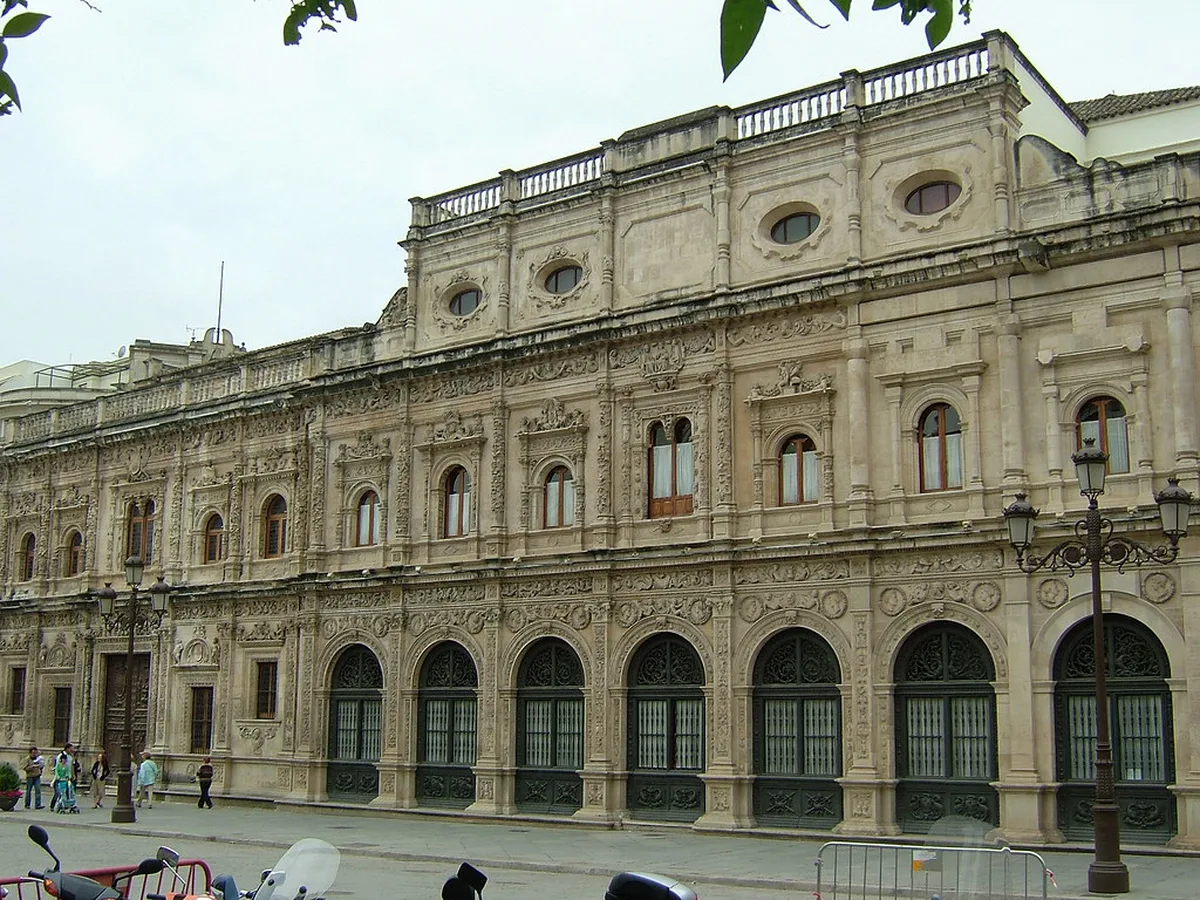
Tours cost approximately €8–€10 and run between 10:00 and 13:00 most mornings. The family that owns the palace still lives on the upper floors, which the guide will mention matter-of-factly while showing you the 400-year-old tiles below their living quarters. That combination of active residence and museum-quality preservation is something Seville uniquely normalizes, and Salinas is the purest example of it in the city.
If you are visiting Casa de Pilatos and find it crowded, come here immediately afterward. The walk takes eight minutes, the audience is a fraction of the size, and the architectural quality is comparable. This is the better version of the same experience for travelers who already know what they are looking for.
13. Escape the Heat at Museo de Bellas Artes
The Museo de Bellas Artes is housed in a former Baroque convent on Plaza del Museo, about fifteen minutes' walk west of the Cathedral. It holds the most significant collection of Sevillian painting in the world, anchored by major works by Bartolomé Esteban Murillo and Francisco de Zurbarán. The former convent church functions as the central gallery hall, with paintings hung to ceiling height under a vaulted nave — the combination of sacred architecture and serious art creates an atmosphere that the Prado's formal galleries cannot replicate.
Entry is free for EU citizens and €1.50 for all other visitors. It is open Tuesday through Sunday, 09:00 to 21:00 from June through September and 09:00 to 18:00 the rest of the year. The three interior courtyards are tiled and shaded, making the museum one of the most reliably cool buildings in the city during the brutal July and August afternoons when outdoor sightseeing becomes genuinely difficult.
The museum is rarely crowded even in peak season. Its location one block off the main tourist circuit is enough to deter the casual visitor. Plan a two-hour visit to cover the permanent collection without rushing. This is the single best free cultural option in Seville for travelers who want depth rather than spectacle.
14. Sip Tinto de Verano Like a Local
Tinto de verano — literally "summer red wine" — is Seville's actual local drink, and understanding it exposes one of the clearest fault lines between tourist and local Seville. It is made by mixing cheap red wine with lemon-flavored soda (gaseosa de limón), typically at a 1:1 ratio, served over ice in a tall glass. Locals order it throughout the year, not only in summer. Sangria, by contrast, is something most Sevillians associate with tourist bars and will not order themselves.
The cultural nuance is in how you order. Ask for "tinto de verano" and any bar in San Lorenzo or Triana will hand you a proper version. Ask for "sangria" in the same bar and the bartender may give you a look. In tourist restaurants near the Cathedral, the situation reverses: sangria is often the house specialty and the tinto de verano comes from a commercial plastic bottle rather than a poured mix. The bottled version (Casera is the main brand) is sweeter and lighter. The poured version uses actual cheap table wine and fresh gaseosa and costs €2.50–€4.50 per glass.
If you want to be specific, ask for "vino con limón" — this signals to the bartender that you want the simple poured version rather than anything bottled or premixed. Bar Rodriguez in San Lorenzo and most of the terrace bars along Calle Betis in Triana make it correctly without prompting. This is less a sightseeing tip than a passport to being treated like a person who knows where they are.
15. Catch the Giralda View from Patio de Banderas
Patio de Banderas is a broad rectangular square lined with orange trees just inside the walls of the Alcázar complex. Most visitors reach it accidentally as an exit route after the Alcázar tour and walk straight through toward the Cathedral without pausing. Those who stop discover that a small tunnel in the far corner of the square — not the main exit toward Plaza del Triunfo — frames a perfectly composed view of the Giralda tower between two stone walls.
This is a public space, free and open twenty-four hours. The archway view is best photographed at sunset when the stone of the tower turns deep ochre, or just after sunrise when the square is empty and the light comes in low from the east. The square itself has a quiet domestic quality that feels incongruous given its location directly against the Alcázar walls — orange trees, a central fountain, residents walking through on their way to the street.
A 10 Essential Tips for a 3-Day Seville Itinerary should build the Patio de Banderas into the late afternoon slot after the Alcázar closes, when the square empties of tour groups and the light on the Giralda is at its best. It costs nothing, takes ten minutes, and produces the most reproduced photograph in the city — but most visitors who take it have no idea why the view is so good from that specific angle.
Practical Tips for Navigating Seville's Hidden Spots
Walking is the only practical way to reach most locations on this list. The streets of Santa Cruz and San Lorenzo are too narrow for buses and often blocked to cars. Wear shoes with solid soles — the historic cobblestones become slippery after rain or watering, and the pavements around the Cathedral are uneven. The entire route from the Convento de San Leandro to Patio de Banderas is under two kilometers, making it possible to cover most of the list in a single long morning.
Cash is essential for at least three stops: the Convento de San Leandro torno accepts only cash; Bar Rodriguez in San Lorenzo keeps no card machine; and some private palace tours at Salinas and Bucarelli prefer cash for small group bookings. Carry at least €40 in small notes. Most other sites on the list accept cards, but having cash prevents the specific frustration of being turned away at a convent door for lack of coins.
Heat management matters from May through September. The Museo de Bellas Artes, Palacio de las Dueñas, and Archivo de Indias are the three best air-conditioned or deeply shaded options for the 14:00–17:00 window when outdoor temperatures regularly exceed 35°C. Group those three visits together into the afternoon and save the outdoor locations — Patio de Banderas, Plaza del Cabildo, San Lorenzo — for early morning or the hour before sunset.
The Convento de San Leandro's rotating hatch (torno) has been in continuous use for centuries, making it one of the oldest active commercial transactions in Seville. The nuns who operate it are cloistered and never appear face-to-face with customers — you only hear their voices through the wooden door.
Many of Seville's hidden palaces, including the Palacio de las Dueñas and Palacio Bucarelli, charge significantly less than the Alcázar (€10–€13 vs €15+) and offer smaller tour groups. Visit these lesser-known alternatives to avoid the crowded main attractions while experiencing equally impressive Baroque and Renaissance architecture.
Frequently Asked Questions
How do I buy sweets from the nuns in Seville?
Locate the convent door and look for a small wooden hatch called a 'torno'. Ring the bell, state your order from the posted list, and place your cash on the rotating shelf. The nun will spin the shelf to provide your sweets without making eye contact.
Are the hidden palaces in Seville expensive to visit?
Most private palaces like Palacio de las Dueñas or Salinas cost between €10 and €13 for entry. This is significantly cheaper than the main Alcázar and usually includes a guided tour or audio guide. They offer excellent value for the level of historical detail provided.
What is the best time to find hidden gems without crowds?
The best time is usually right when they open at 10am or during the traditional siesta hours between 2pm and 5pm. Many tourists head to lunch during this time, leaving the smaller museums and palaces much quieter. Always check if a specific site closes for the afternoon break.
Finding the unusual things to do in Seville is the best way to connect with the city's true character. From the quiet cloisters of San Leandro to the hidden frescoes of Plaza del Cabildo, these spots offer lasting memories. I encourage you to step off the main thoroughfares and explore the layers of history that make this city unique. Your journey through Spain will be much richer for the effort you put into finding these secrets.
Remember to pace yourself and allow time for spontaneous discoveries along the way. The beauty of Seville often lies in the details you find when you aren't strictly following a map. I hope this guide helps you experience a side of the city that most visitors never get to see.
Continue exploring
More guides you'll find useful