10 Best Flamenco Shows in Seville: Authentic Guide (2026)
Discover the most authentic flamenco shows in Seville. Our guide covers top-rated tablaos, local peñas, ticket prices, and tips for booking the perfect performance.
On this page
10 Best Flamenco Shows in Seville
Finding a flamenco show in Seville is easy. Finding the right one takes more thought. The city is saturated with options — from grand theaters near the Giralda to free bar nights in Triana — and the difference in quality between them is enormous. This guide focuses on the venues that professionals and long-term residents actually recommend in 2026.
Seville is the undisputed spiritual capital of flamenco. The art was born here, shaped by generations of gitano families who lived in the working-class quarters across the river. Whether you want a polished theater production or a cramped social club where the performers outnumber the audience, this city delivers both extremes better than anywhere else in the world.
The Rich History of Flamenco in Seville
Flamenco did not begin on a stage. It emerged in the 18th century from the marginalized gitano communities of Andalusia, shaped by a collision of Romani, Sephardic, and Moorish influences that was unique to southern Spain. The art form carried the grief, joy, and defiance of people who had no other platform. Seville, with its dense gitano population concentrated in the working-class quarters, became the epicenter of this evolution.
By the 19th century, cafés cantantes — singing cafes — brought flamenco out of private homes and into commercial spaces for the first time. These venues allowed artists to professionalize while still preserving the emotional intensity of what practitioners call cante jondo, or deep song. The two main pillars of this era were the guitar and the voice, long before dance took center stage in the tourist imagination.
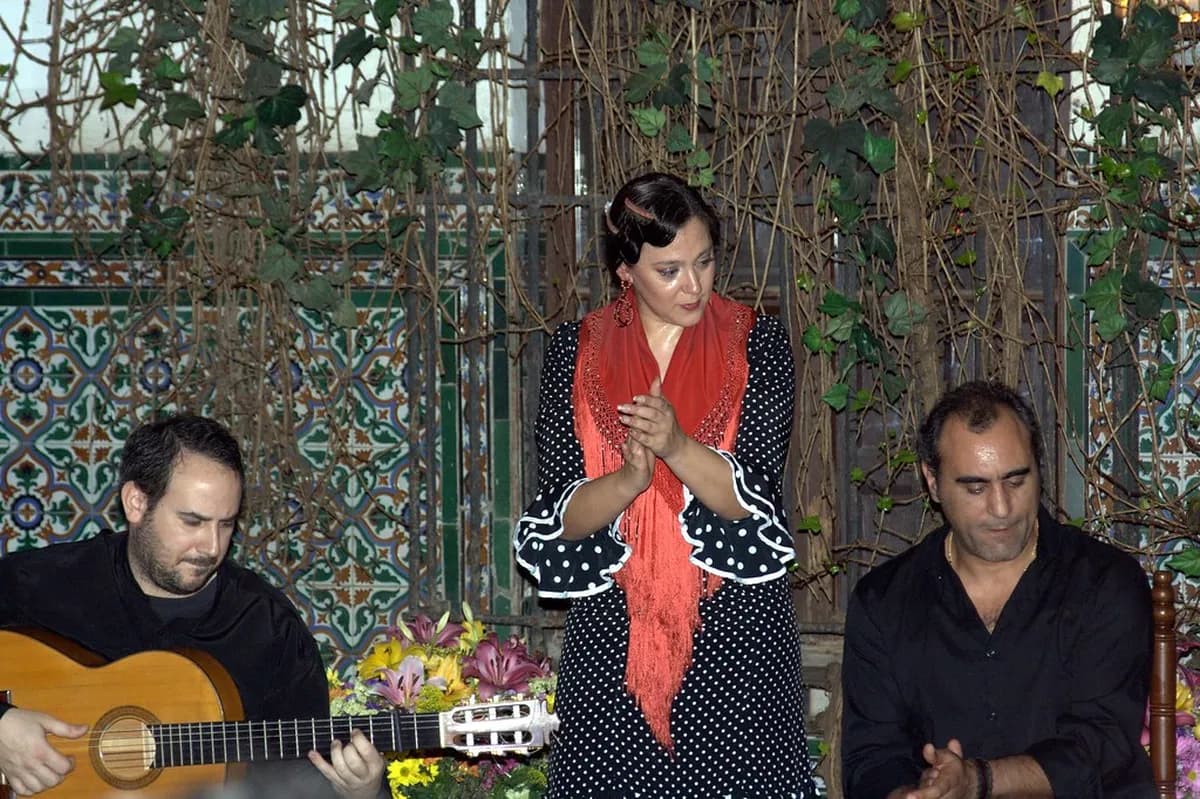
UNESCO added flamenco to its list of Intangible Cultural Heritage of Humanity in 2010, recognizing the art form's unique cultural weight. The art is built on three inseparable pillars: cante (voice), baile (dance), and toque (guitar). To these, performers add jaleo — the rhythmic handclaps, shouts, and encouragement that pass between artists on stage and that you will hear most clearly in a small, acoustic venue.
The neighborhood of Triana remains the living root of this tradition. Gitano families settled here for centuries, and the quarter produced many of the most celebrated names in flamenco history. Walking its streets today, you can still find small guitar workshops and community peñas where the art is practiced out of love rather than commerce.
What to Expect: The Three Pillars of Flamenco
Most visitors arrive at a flamenco show expecting spectacular dancing, but the cante — the singing — is what separates a transcendent performance from a tourist routine. The cantaor or cantaora sings in a raw, broken style that is physically demanding and emotionally extreme. When a singer reaches a state of peak intensity, you can hear it in the cracks and sudden shifts of their voice. This is the moment flamenco people call duende: a physical and emotional force that travels through the room.
The baile, or dance, is built around the zapateado — the rapid, complex footwork that generates much of the percussive rhythm. A skilled dancer uses the floor as an instrument, producing patterns of sound that interact with the guitar and the singer. This is why seating close to the stage matters: from the back of a large theater you hear the feet, but from the front of a small tablao you feel them.
The guitar — toque — is the connective tissue of the performance. The guitarist does not simply accompany; they respond, prompt, and sometimes challenge the singer and dancer in real time. Much of what you will witness in a live show is improvised within a fixed rhythmic structure called a palo, of which there are dozens of distinct styles. Soleares and bulerías are the palos you will encounter most often in Seville. Knowing this turns the show from a spectacle into a conversation you can follow.
Top-Rated Flamenco Tablaos and Theaters
Tablaos are purpose-built performance venues with a raised wooden stage designed to amplify the sound of footwork. They are the modern descendant of the 19th-century singing cafes, and while they cater primarily to visitors, the performances are real. Performers compete fiercely for tablao slots in Seville; these are professional engagements, not tourist-grade acts.
- La Casa del Flamenco (Calle Ximénez de Enciso, Santa Cruz) — Set in the main courtyard of a 15th-century palace, this is widely considered the best acoustic venue in the city. The marble columns and arched stonework amplify unamplified sound naturally. No microphones, no dinner service, no distractions. Tickets cost €25 for general admission, €20 for students under 26 or Seville residents with accreditation, and €15 for children aged 12 and under. Children under 6 are not recommended. Shows run daily at 19:00 and 20:30. Doors open 20 minutes before the show; no seat reservations.
- Teatro Flamenco Sevilla (near the city center) — This is Seville's only dedicated flamenco theater, offering a larger stage and professional lighting production. It is the right choice if you want choreographed ensemble work with multiple dancers moving simultaneously. Standard tickets run approximately €25–€30. Performances are scheduled at 17:30, 19:30, and 21:00 daily. Photography is allowed, but flash is prohibited.
- Museo del Baile Flamenco (Calle Manuel Rojas Marcos, Santa Cruz) — Founded by legendary dancer Cristina Hoyos, the museum combines a world-class exhibition with nightly shows in a covered courtyard open to the sky. The Puro Flamenco show runs three times daily at 17:00, 19:00, and 20:45. A combined museum and show ticket costs around €29; the show alone is approximately €25. Photography is not permitted during the performance.
- Tablao El Arenal (Calle Rodo, near the Maestranza bullring) — One of the oldest commercial tablaos in the city, offering both a show-only option and a dinner-and-show package. Show-only tickets start at around €40; the full dinner package reaches €80–€85. Two sessions nightly at 19:00 and 21:30, each lasting approximately 90 minutes. Best suited for visitors who want a complete evening without moving between venues.
- Tablao Los Gallos (Plaza de Santa Cruz) — Operating since 1966, this is the longest-running tablao in the city. Entry is approximately €35 and includes one drink. Shows at 19:00 and 21:00 nightly in an intimate, unamplified room. The historic building holds fewer than 80 seats, which means no bad sightlines and an intensity that larger venues cannot replicate.
- Casa de la Memoria (Calle Cuna) — A cultural center focused on flamenco purity. Tickets are approximately €22 per person and frequently sell out several days ahead. Daily shows at 18:00, 19:30, and 21:00 depending on the season. Strictly no drinks, no smoking, and no photography — creating the closest thing to a rehearsal-room atmosphere available to the public.
For current schedules and online tickets, check the Teatro Flamenco Sevilla and La Casa Del Flamenco official sites directly. Prices and show times shift with seasonal demand, particularly around Semana Santa in spring and the Feria de Abril in late April, when shows sell out weeks in advance.
| Venue | Location | Ticket Price | Show Times | Atmosphere |
|---|---|---|---|---|
| La Casa del Flamenco | Santa Cruz | €15–€25 | 19:00, 20:30 | Intimate courtyard, no amplification |
| Tablao Los Gallos | Plaza de Santa Cruz | €35 (incl. drink) | 19:00, 21:00 | Historic, <80 seats, unamplified |
| Tablao El Arenal | Near Maestranza | €40–€85 | 19:00, 21:30 | Commercial, dinner packages available |
| Casa de la Memoria | Santa Cruz | €22 | 18:00, 19:30, 21:00 | Cultural center, strict no-distractions policy |
| Museo del Baile Flamenco | Santa Cruz | €25–€29 | 17:00, 19:00, 20:45 | Museum + show, covered courtyard |
| Teatro Flamenco Sevilla | City center | €25–€30 | 17:30, 19:30, 21:00 | Dedicated theater, choreographed ensemble |
Authentic Flamenco Peñas and Local Bars
A peña flamenca is a membership-based social club that exists entirely outside the commercial tablao circuit. These clubs were founded by artists and aficionados to preserve the art form, and their events are not staged for tourists. The performances are in Spanish, the audiences are mostly local, and there is no production value whatsoever. What there is, when the night goes well, is a rawness that no tablao can manufacture.
- Peña Flamenca Torres Macarena (Barrio de la Macarena) — One of the most accessible peñas for visitors. Holds a public gathering every Thursday at 20:00 and ticketed shows on some weekends, though you must go to the door to buy a ticket. Entry by small donation, typically €10–€15. Expect a bar, plastic chairs, and performers who are playing for each other as much as for the audience.
- La Carbonería (Calle Levíes, Santa Cruz) — A large, lively cultural bar that offers free flamenco on most evenings starting around 21:00. There is no cover charge, but the expectation is that you buy drinks or tapas. The space is casual and loud compared to a tablao — more like a Seville nightlife experience than a concert. Good for a first taste; not where you go if you want focused, high-quality performance.
- Bar Pura Esencia (Triana, near the riverbank) — An intimate neighborhood venue with shows at approximately 20:00 and 22:00. Tickets around €20, often including a glass of local manzanilla. The small room and proximity to the stage make this one of the most emotionally direct flamenco experiences in the city.
Flamenco bars — venues like Lo Nuestro in Triana — operate on a different rhythm altogether. Performers arrive when they arrive; shows typically do not start before 22:00 or 23:00 on weekends. There is no ticketing, no schedule, and no guarantee. You go, you drink, and you wait. If the night comes together, it is the most exciting thing you will see in Seville. If it does not, you have had a good drink in a historic bar.
Best Neighborhoods: Santa Cruz vs. Triana
Most visitors see flamenco in Santa Cruz because the neighborhood is the historic center — the Giralda, the Alcázar, and the winding alleys of the former Jewish Quarter are all within walking distance. The tablaos here occupy restored palaces and aristocratic courtyards, and the setting reinforces the elegance of the art. If you are on a 3-day Seville itinerary and want to stay central, Santa Cruz is the logical base.
Triana, across the Isabel II Bridge, is where the art was actually forged. The district has been a Romani neighborhood since the medieval period, and its streets produced a disproportionate share of flamenco's most important names — from El Niño Ricardo to Fernanda de Utrera. The venues here are smaller, less polished, and less marketed. Many do not have websites. That is a feature, not a flaw.
The practical difference is atmosphere. Santa Cruz delivers a refined experience in beautiful surroundings. Triana delivers something that feels less staged, because in many cases it is less staged. For a first-time visitor, Santa Cruz is the safer bet for guaranteed quality. For a return visitor who wants to feel the living tradition rather than witness a curated version of it, Triana is the only choice.
Both neighborhoods are safe and walkable at night. After a show in either area, you will find excellent tapas within five minutes on foot. The walk back along the river between the two neighborhoods, particularly at night, is one of the better experiences Seville offers for free.
Ticket Prices, Schedules, and Discounts
Ticket prices across Seville's main tablaos in 2026 run from approximately €20 to €40 for a standard show-only seat. The following are the most reliable reference points for planning:
- La Casa del Flamenco: €25 general / €20 students under 26 or Seville residents / €15 children up to 12
- Tablao Los Gallos: €35 including one drink
- Tablao El Arenal: €40 show-only / €80–€85 with dinner
- Casa de la Memoria: €22
- Museo del Baile Flamenco (show only): €25 / combined with museum €29
- Teatro Flamenco Sevilla: €25–€30 depending on seat tier
The Seville resident discount available at La Casa del Flamenco (€20 instead of €25, with local ID or accreditation) is a detail most travel guides skip. The student discount for those under 26 applies at several venues — always ask at the box office if you carry a valid ISIC or university card. These discounts are not prominently advertised but are consistently honored.
Ticket prices vary widely based on venue type and seating. The most authentic experience is not always the most expensive — La Casa del Flamenco (€25) offers superior acoustics compared to larger commercial tablaos charging €40–€85. Dinner packages can triple the cost without improving performance quality; eat separately and attend the show-only option instead.
Booking in advance is essential for peak season. During Semana Santa (April) and Feria de Abril (late April to early May), the most popular shows sell out two to three weeks ahead. In summer (June–August), demand from international visitors is high; book at least 48–72 hours ahead for La Casa del Flamenco or Los Gallos. In the quieter winter months, same-day tickets are often available at the door. Most venues open their box offices from 10:00 to 21:30.
Book at least 48–72 hours ahead during peak season (April–August). Popular venues like Casa de la Memoria and Tablao Los Gallos sell out days in advance during Semana Santa and Feria de Abril.
If you are on a tight budget, the 8 Best Ways to Experience Free Things to Do in Seville list includes reliable street performance at Plaza de España, particularly around sunset. La Carbonería's free nightly sessions are another zero-cost option, though the quality varies considerably from one evening to the next.
How to Choose the Most Authentic Experience
The most common mistake visitors make is assuming that higher price equals more authentic performance. In practice, the relationship is reversed: many of the most powerful flamenco in Seville happens in rooms with no lighting rigs, no ticketing system, and no air conditioning. Price reflects production value and convenience, not artistic depth.
Look for venues that perform without amplification. Microphone-free acoustics — as in La Casa del Flamenco's 15th-century courtyard — reveal details in the guitar and the voice that a sound system conceals. You hear the physical effort of the music rather than a cleaned-up version of it. This is the closest you will get in a public venue to the private salon performances where flamenco was originally developed.
Avoid large dinner shows if artistic quality is your priority. These packages are designed to keep tour groups comfortable, and the food service running between performers disrupts the emotional arc of the show. Eat before, go for the show only, and then find one of Seville's best restaurants afterward. The separation improves both experiences.
One reliable signal of a high-quality performance is the interaction between the three performers — singer, dancer, and guitarist — during the show itself. In scripted tourist routines, each plays their part in a fixed sequence. In genuinely skilled performances, they respond to each other: the dancer's feet answer the guitar, the singer's improvised lyrics comment on the dance. When you see that live conversation happening on stage, you are watching the real thing. That interaction — rather than elaborate costuming or theatrical lighting — is what the locals come to see.
Show Etiquette and Practical Tips
Flamenco is a serious art form and the etiquette in intimate venues reflects that seriousness. Talking during a performance is considered disrespectful and will earn a pointed look from both performers and locals in the audience. At smaller tablaos and peñas, the performers can see the audience clearly — any disengagement is noticed.
Photography policy varies by venue. At Teatro Flamenco Sevilla, photography without flash is permitted. At Museo del Baile Flamenco and Casa de la Memoria, no photography at all is allowed during the show. At most tablao and peña settings, there is typically a brief window at the very end for photos. Follow the performers' cues rather than staff announcements — the performers themselves usually signal when this moment has come.
Clapping during flamenco is not the same as applause. Rhythmic palmas — handclapping at specific points within the musical structure — is part of the performance itself, often led by the performers. If you are not confident in the rhythm, refrain from clapping during the number and applaud between pieces. Clapping off-beat during a complex zapateado sequence is the quickest way to identify yourself as a tourist to every local in the room.
Arrive at least 15 minutes before the show. Most venues do not assign specific seats, and the front rows — where you can see the footwork clearly — go first. At Casa de la Memoria and La Casa del Flamenco in particular, the front-row proximity is a significant part of the experience. Getting there early is the simplest upgrade available at no extra cost. Check which venues are fully wheelchair accessible before booking: Seville's historic venues vary considerably in accessibility, and not all tablaos in old palaces can accommodate wheelchairs on their ground floors.
Pair this with our broader Seville tourism attractions guide for the full city overview.
Frequently Asked Questions
Which flamenco show in Seville is best for first-time visitors?
La Casa del Flamenco is ideal for first-timers due to its central location and incredible acoustic sound. The intimate courtyard setting ensures you can see every detail of the performance without the distraction of microphones or dinner service.
Do I need to book Seville flamenco tickets in advance?
Yes, booking at least 24 to 48 hours in advance is highly recommended for the top-rated venues. Popular spots like Tablao Los Gallos and Casa de la Memoria often sell out, especially during the busy spring months.
What is the difference between a tablao and a peña?
A tablao is a commercial venue designed for public performances with professional staging and ticketing. A peña is a local social club where members gather to preserve the art, offering a more raw and less touristy experience.
Seville remains the world capital of flamenco, and the range of experiences available in 2026 is wider than ever — from the stripped-back acoustic purity of La Casa del Flamenco to the late-night social chaos of a Triana bar where nothing starts before midnight. The right choice depends entirely on what you want to feel, not how much you want to spend. Pick a venue, book ahead, arrive early, and pay attention to the conversation happening between the three performers on stage. That is where flamenco actually lives.
For more on planning your time in the city, see our guide to exploring Seville over three days.
Continue exploring
More guides you'll find useful