Pinacoteca Ambrosiana Guide: 9 Tips for Your Visit
Plan your visit to Pinacoteca Ambrosiana with our guide to masterpieces by Caravaggio and Leonardo, ticket booking tips, and walking directions from the Duomo.
On this page
Pinacoteca Ambrosiana Visitor Guide: 9 Essential Tips for Your Visit
Milan is home to many world-class museums, but this gallery holds a special place in the city's history. This pinacoteca ambrosiana visitor guide helps you navigate one of the most important cultural landmarks in Europe. Exploring these halls is one of the most rewarding Milan attractions for any culture lover.
You will encounter masterpieces that defined the High Renaissance and the Baroque period within these historic walls. The collection serves as a testament to the enduring power of Italian art and intellect over several centuries. This guide provides the essential details you need for a smooth and memorable visit to the gallery.
The Ambrosiana is best understood as two linked experiences rather than one generic museum. The Pinacoteca is the picture gallery, while the Biblioteca Ambrosiana is the historic library that preserves manuscripts, printed books, and Leonardo material. Plan your route so you leave time for both sides of the institution.
Must-See Masterpieces: Caravaggio, Leonardo, and Raphael
The Pinacoteca Ambrosiana houses some of the most famous works of art in all of Italy. You will encounter masterpieces that defined the High Renaissance and the Baroque period in every room. The collection includes iconic paintings by Caravaggio and Leonardo da Vinci that draw thousands of visitors annually. Every hall offers a new perspective on the history of European creativity and artistic evolution.
Visitors often flock to see the 'Basket of Fruit' by Caravaggio in Room 6 of the gallery. This painting is widely considered the first true still life in the history of Western art. You can see the incredible detail in the decaying leaves and the dusty skin of the grapes. It remains a powerful example of realism from the late sixteenth century that continues to inspire modern artists.
Raphael's massive preparatory drawing for 'The School of Athens' is another essential stop on your tour. This cartoon is nearly eight meters wide and shows the artist's meticulous planning process for the Vatican fresco. The gallery recently restored this work to reveal its original charcoal and chalk details for public viewing. It provides a rare look at how a Renaissance genius structured a complex scene with multiple figures.
Leonardo da Vinci's 'Portrait of a Musician' is the only male portrait attributed to the master. The unfinished nature of the painting allows you to see his unique brushwork techniques and layering process. You should also explore the Lombard art collection featuring works by Luini and the master Bramantino. These artists helped shape the local aesthetic during the Sforza dynasty in the heart of Milan.
Do not treat the visit as a three-masterpiece sprint. The broader collection gives useful context for Milanese art from the Renaissance into later centuries, with Lombard painters, decorative arts, and works connected to artists such as Titian, Botticelli, Brueghel, Morazzone, Procaccini, Crespi, Hayez, and Appiani. If you have limited time, see the headline works first, then use the remaining rooms to understand how Milan's local school developed around them.
- Caravaggio's Basket of Fruit
- Type: Oil painting
- Significance: First still life
- Room: Located in Room 6
- Date: Painted in 1599
- Leonardo's Portrait of a Musician
- Type: Oil painting
- Significance: Unfinished masterpiece
- Room: Located in Room 10
- Date: Painted in 1485
- Raphael's School of Athens Cartoon
- Type: Charcoal drawing
- Significance: Preparatory work
- Room: Located in Room 5
- Date: Created in 1509
- Leonardo da Vinci's Codex Atlanticus
- Type: Manuscript collection
- Significance: Engineering genius
- Location: Library hall
- Date: 1478 to 1519
The History of the Ambrosiana Library and Gallery
Cardinal Federico Borromeo established the Ambrosiana Library and Gallery back in 1618. He wanted to create a cultural institution that was open to everyone who loved art and literature. The Cardinal donated his private collection of 172 paintings to form the core of the new gallery. This generous act made it the first public art gallery in the entire world for common citizens.
The library currently holds around 30,000 manuscripts and over 750,000 printed books from across the globe. You can find rare treasures like the Muratorian fragment, which is the oldest list of New Testament books. The collection also includes the famous Codex Atlanticus containing the scientific drawings of Leonardo da Vinci. These documents represent centuries of scientific discovery and philosophical thought from the best minds in history.
Walking through the library feels like stepping back into the seventeenth century for a brief moment. The tall wooden shelves are packed with ancient volumes that smell of old parchment and history. Scholars from around the globe visit this site to study its unique linguistic and theological texts. It serves as a vital bridge between the classical past and the modern world of academic research.
Don't miss the specific checklist of rare manuscripts during your self-guided tour of the library halls. Look for the Virgil codex that once belonged to the famous Italian poet Petrarch in the fourteenth century. You should also find the Greek manuscripts that influenced early Renaissance scholars across the Italian peninsula. These items highlight the library's role as a global center for humanistic learning and cultural exchange.
- The Muratorian Fragment
- Type: Ancient parchment
- Significance: Oldest Bible list
- Date: Written in 170 AD
- Location: Library collection
- Petrarch's Virgil Codex
- Type: Illuminated manuscript
- Significance: Personal poet volume
- Date: From the 1300s
- Origin: Medieval Italy
- Leonardo's Codex Atlanticus
- Type: Technical drawings
- Significance: Engineering genius
- Volume: Twelve large books
- Subject: Flight and war
- Greek Humanist Texts
- Type: Classical manuscripts
- Significance: Renaissance influence
- Origin: Ancient Byzantium
- Subject: Philosophy and science
Ticket Prices and How to Book Passes
Buying your tickets in advance is the best way to ensure a smooth visit to the museum. Standard adult entry typically costs around 15 euros for access to the main gallery and the library. You can purchase these passes through the official website to avoid long lines at the main door. Booking a specific time slot helps the museum manage the flow of visitors throughout the day.
Combined tickets are available for those who want to see the nearby Crypt of San Sepolcro as well. This option provides a discount compared to buying separate entries for each historical site in the area. The crypt is located just a few steps away and offers a different look at medieval Milanese history. It is a great choice for travelers who enjoy religious history and ancient Roman architecture.
Families and students can often benefit from reduced pricing at the ticket office near the entrance. You should bring a valid ID to prove your eligibility for these lower rates during your visit. Children under a certain age may even enter for free when they are accompanied by an adult. Always check the latest price updates before you arrive at the museum entrance to avoid any surprises.
Group bookings are handled differently and often require a reservation several weeks in advance for large parties. If you are traveling with more than ten people, contact the office directly for professional assistance. They can provide specific instructions on how to organize your arrival and entry for the whole group. Large groups may also be eligible for a dedicated welcome from the museum staff upon arrival.
- Standard Adult Entry
- Cost: Around 15 euros
- Includes: Gallery and Library
- Booking: Online is recommended
- Best for: General visitors
- Combined Crypt Ticket
- Cost: Around 20 euros
- Includes: Gallery and San Sepolcro
- Value: Best for history
- Duration: Four hours total
- Reduced Student Pass
- Cost: Around 10 euros
- Includes: Full museum access
- Requirement: Valid student ID
- Age: Under 26 years
- Guided Group Tour
- Cost: Varies by size
- Includes: Expert commentary
- Booking: 3 weeks advance
- Size: Over 10 people
| Ticket or visit type | Best for | Booking note | Common mistake to avoid |
|---|---|---|---|
| Self-guided gallery and library visit | First-time visitors who want flexibility | Choose a timed entry before building the rest of your day | Arriving without enough time for the library rooms |
| Combined visit with the Crypt of San Sepolcro | Travelers focused on early Milan and religious history | Keep the next part of your itinerary nearby | Booking back-to-back sights with no buffer |
| Ad Artem guided tour | Visitors who want interpretation of the masterpieces | Check tour language, meeting point, and group size before payment | Assuming every tour includes the same rooms |
| School, family, or workshop visit | Families, students, and organized groups | Reserve well ahead during the academic year | Waiting until the week of travel to request a slot |
Getting There: A 5-Minute Walk from the Duomo
The gallery is located in the heart of the city and is very easy to find on foot. You can reach the entrance with a simple 5-minute walk from the famous Milan Duomo cathedral. Head west from the main cathedral and follow the signs toward the quiet Piazza Pio XI. This central location makes it a perfect addition to any Milan itinerary.
Public transportation is the most convenient way to reach the historic center of the city. You can take the red metro line M1 or the yellow line M3 to the Duomo station. From there, the walk through the narrow streets is pleasant and full of local Italian shops. Taxis can also drop you off nearby, but many streets are strictly restricted to pedestrians only.
Visualizing the route is easy if you look for the tall brick walls of the Ambrosiana building. The neighborhood is filled with historic architecture that dates back several centuries to the Renaissance. You will pass by small cafes where you can grab a quick espresso before your museum tour. The short distance from the main square allows you to maximize your sightseeing time in Milan.
For the simplest route in 2026, use Duomo station as your landmark, walk toward Via Torino, then turn into the quieter streets around Piazza Pio XI. If you prefer to avoid the busiest part of Piazza del Duomo, Cordusio on the M1 line can also work as a nearby approach. Drivers should treat the area as a drop-off zone rather than a parking destination because the historic core is dense, pedestrian-heavy, and controlled.
Opening Hours and the Best Time to Visit
The Pinacoteca Ambrosiana is generally open from 10:00 AM until 6:00 PM throughout the week. You should note that the museum is usually closed on Wednesdays for maintenance and private events. Arriving right at 10:00 AM is the best strategy for avoiding the largest crowds of the day. Early visitors often have the most famous rooms to themselves for a short while after opening.
Weekend visits tend to be much busier than those during the regular work week in Milan. Saturday and Sunday afternoons often see an influx of local families and weekend travelers from nearby. If you must visit on a weekend, try to book a late afternoon slot for a quieter experience. The light in the gallery changes beautifully as the sun begins to set over the city skyline.
Seasonal variations can also affect how busy the museum feels throughout the year of 2026. Spring and autumn are peak travel seasons in Italy, so expect more tourists during these pleasant months. Winter visits are often much quieter and offer a more intimate experience with the Renaissance art. Always verify the current hours on the official website before you finalize your travel plans for the day.
The best practical slots are usually the first morning entry or the quieter part of the late afternoon, especially if your priority is Caravaggio, Leonardo, or Raphael without crowd pressure. Avoid planning this museum as a quick stop between timed Duomo visits unless you have at least two hours free. The rooms reward slow looking, and the library portion can feel rushed if you leave it until the last minutes of your visit.
Arriving right at 10:00 AM is the best strategy for avoiding the largest crowds of the day.
Guided Tours and Educational Workshops
Ad Artem serves as the official educational partner for the Pinacoteca Ambrosiana in the city center. They offer a variety of guided tours that cater to different interests and age groups of visitors. You can join a general tour or choose a specialized session focused on Leonardo da Vinci's work. These experts provide deep context that you might miss when exploring the halls on your own.
Educational workshops are also available for schools and groups of young students visiting the gallery. These programs focus on the techniques used by Renaissance masters like Raphael and the local artist Luini. Participants can learn about the history of pigments and the structure of classical compositions used in paintings. It is an engaging way to introduce children to the world of fine art and history.
Private tours can be arranged for those who want a more personalized experience during their visit. You can ask your guide specific questions about the Cardinal's collection or the library's long history. These tours often include access to areas that are not always open to the general public today. Booking a private guide is a fantastic way to celebrate a special occasion in the heart of Milan.
A guided visit is most useful if you want help connecting the gallery, the library, and the Ambrosiana's religious and civic history. Independent travelers can still do well with a focused route: start with Caravaggio, Leonardo, and Raphael, then spend your remaining time on the Codex Atlanticus displays and Lombard rooms. Families should check whether a playful visit or workshop is available in the right language before committing to a date.
Essential Visitor Tips: Audio Guides and Rules
Picking up an audio guide is highly recommended for first-time visitors to the gallery. These devices provide detailed commentary on the most significant paintings and manuscripts in the entire collection. You can move at your own pace while listening to stories about the lives of the artists. The guides are available in several languages to accommodate international travelers from around the world.
Photography is permitted in most areas of the gallery as long as you do not use a flash. This rule helps protect the delicate pigments in the ancient paintings from potential light damage over time. You should also avoid using tripods or selfie sticks inside the narrow corridors of the library. Always look for signs in each room to confirm the specific camera rules before taking a photo.
Large bags and backpacks must be stored in the cloakroom before you enter the main gallery rooms. This policy prevents accidental damage to the artwork and makes the rooms easier for everyone to navigate. You should also wear comfortable walking shoes as the floors are made of historic stone and wood. Small lockers are available for your personal items near the main entrance for a small fee.
If you need step-free access, wheelchair assistance, or extra time moving between rooms, contact the museum before booking so staff can confirm the best route through the historic building. The surrounding streets are short but can be busy, uneven, and crowded around the Duomo approach. Build in a few extra minutes if you are arriving with children, mobility needs, or luggage that must be checked.
Large bags and backpacks must be stored in the cloakroom before you enter the main gallery rooms.
- Book the museum before lunch if you want the calmest first look at the major paintings.
- Do not skip the library because the Codex Atlanticus context is part of the Ambrosiana's identity.
- Do not bring a large backpack unless you are comfortable using the cloakroom.
- Check tour language carefully if booking through an educational provider.
- Leave a buffer before another timed attraction, especially on weekends and rainy days.
Nearby Attractions: The Crypt of San Sepolcro and Beyond
The Crypt of San Sepolcro is located just around the corner from the main gallery entrance today. This underground site was built on the location of the ancient Roman forum of the city. You can see beautiful frescoes and historic masonry that date back to the eleventh century in the crypt. It is a quiet and atmospheric place that offers a break from the busy city streets nearby.
You should also consider visiting the San Maurizio al Monastero Maggiore while you are in the area. This church is often called the 'Sistine Chapel of Milan' due to its incredible wall-to-wall frescoes. It is only a ten-minute walk from the Ambrosiana and is usually free for the public to enter. The vibrant colors and detailed scenes are truly breathtaking for any lover of Italian religious art.
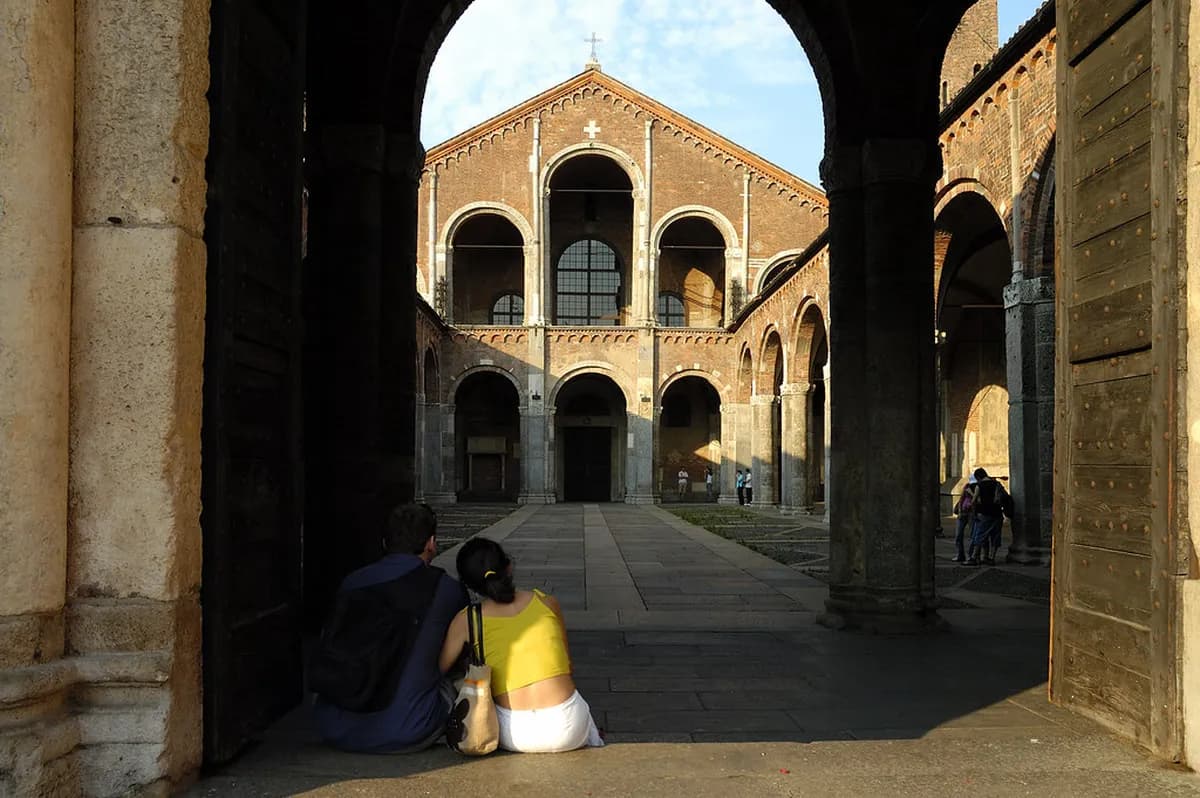
Another nearby landmark is the Basilica di Sant'Ambrogio, which is one of the oldest churches in the city. It represents the pinnacle of Romanesque architecture and houses the remains of the city's patron saint. Walking between these sites allows you to see the different layers of Milanese history over the centuries. The central district is packed with hidden gems that are easy to explore on foot in one day.
Frequently Asked Questions
How long does it take to visit Pinacoteca Ambrosiana?
A typical visit to the gallery and library takes about two hours for most travelers. This allows enough time to see the major masterpieces by Caravaggio and Leonardo da Vinci. If you plan to study the manuscripts in detail, you should budget for at least three hours.
Is it worth visiting Pinacoteca Ambrosiana?
Yes, it is absolutely worth visiting for any art lover or history enthusiast in Italy. The collection contains some of the most significant works from the High Renaissance period. It offers a quieter and more intimate experience compared to the larger museums in the city center.
What are the most famous paintings in Pinacoteca Ambrosiana?
The most famous works include Caravaggio's 'Basket of Fruit' and Leonardo da Vinci's 'Portrait of a Musician'. You should also see Raphael's large cartoon for 'The School of Athens' and the Codex Atlanticus. These pieces represent the highest achievements of the Renaissance masters in one location.
Can I take photos in Pinacoteca Ambrosiana?
Photography is generally allowed for personal use in the gallery as long as you do not use a flash. You might also enjoy visiting the Villa Necchi Campiglio for a look at twentieth-century Milanese design. Always check for specific signs in each room to confirm the current rules.
Visiting the Pinacoteca Ambrosiana is a highlight for anyone interested in the cultural soul of Milan. You will walk away with a deeper appreciation for the genius of the Renaissance masters and scholars. The combination of a world-class art gallery and an ancient library is truly unique in Europe.
Use this pinacoteca ambrosiana visitor guide to plan your journey through centuries of human achievement. Remember to book your tickets early and take your time in the quiet library halls during your visit. Each masterpiece tells a story that has survived for hundreds of years to inspire us today.
Whether you are an art historian or a casual traveler, this museum will leave a lasting impression on you. The legacy of Cardinal Borromeo continues to inspire visitors from all over the world in the modern age. Enjoy your time exploring one of the most beautiful Milan attractions during your next trip to Italy.
For more Milan planning, see our What to Do in Milan for 3 Days and Milan Things to See guides.
For the latest official information, see the Pinacoteca Ambrosiana official site and Pinacoteca Ambrosiana on Wikipedia.
Continue exploring
More guides you'll find useful