10 Best Food Experiences in Amsterdam: A Local Guide (2026)
Discover the best food in Amsterdam, from traditional stroopwafels and bitterballen to Indonesian rijsttafel and modern Michelin-starred classics.
On this page
10 Best Food Experiences in Amsterdam
Amsterdam's dining scene runs far deeper than its postcard image of cheese shops and pancake houses. The city holds one of Europe's most layered food cultures — rooted in centuries of colonial trade, immigrant communities, and a fierce local pride in simple, honest cooking. Whether you are planning a three-day Amsterdam plan or a longer stay, knowing where to eat is as important as knowing what to see.
This guide cuts through the tourist-trap clutter and focuses on what the city actually does best in 2026: iconic Dutch snacks eaten standing up, colonial-era feasts you share across a crowded table, brunch spots that have earned their queues, and modern restaurants that punch well above their price point. All prices listed are current as of mid-2026.
Iconic Dutch Snacks: Stroopwafels and Bitterballen
Two snacks define Amsterdam street food more than any others, and both are best eaten standing up, slightly too hot, with something cold in your other hand. The stroopwafel is a thin waffle sandwich filled with liquid caramel syrup. Fresh from the griddle at Rudi's Original on the Albert Cuyp Market, it costs €2.50 to €5.00 depending on size. Eat it immediately — within two minutes the caramel sets and you lose the gooey centre that makes it worth the trip.
Stroopwafels must be eaten within two minutes of coming off the griddle — after that, the caramel sets and loses the molten centre that makes them worth seeking out.
Bitterballen are the other essential: small deep-fried spheres of slow-cooked beef ragout, rolled in breadcrumbs and served with sharp mustard. The ones at Holtkamp (Vijzelgracht 15) are widely considered the city's finest — they sell them in boxes of 10 to take home and reheat, but you can often buy them hot on the spot. At De BallenBar inside the Foodhallen, you can sample a tasting platter of six different flavours for €9 to €14. The critical rule with both: always let them cool for 30 seconds before biting in. The interior stays molten far longer than the exterior suggests.
Poffertjes — tiny silver-dollar-sized pancakes dusted with icing sugar and butter — are another classic worth tracking down. Most market stalls and traditional cafes serve them as a snack or dessert for around €6 to €9 a plate. They are lighter than a full Dutch pancake and far easier to eat on the move.
| Snack | Price Range | Where to Find | Best Timing |
|---|---|---|---|
| Stroopwafel | €2.50–€5.00 | Rudi's Original (Albert Cuyp Market) | Eat within 2 minutes of griddle |
| Bitterballen (10 pieces) | €9–€14 | De BallenBar (Foodhallen), Holtkamp (Vijzelgracht 15) | Cool for 30 seconds before biting |
| Poffertjes (plate) | €6–€9 | Market stalls, traditional cafes | Anytime — lighter than full pancakes |
| Dutch fries (medium cone) | €4.50–€6.50 | Vlaams Friteshuis Vleminckx (Voetboogstraat) | 11:00–19:00 daily |
| Raw herring (portion) | €4–€6 | Stubbe's Haring (Singel 485) | May–July for 'Hollandse Nieuwe' |
Where to Find the Best Authentic Dutch Fries
Dutch fries are not Belgian fries, even though both cultures take them seriously. The Amsterdam version tends to be thicker, double-fried, and served in a paper cone with an extraordinary range of sauces. The default order is 'frietsaus' (a milder Dutch mayonnaise), but the real move is the 'Oorlog' — a mix of peanut sauce, mayo, and raw onion that sounds chaotic and tastes exactly right.
Vlaams Friteshuis Vleminckx (Voetboogstraat, near Spui) has been frying since 1957 and still draws a queue that stretches into the alley. A medium cone runs €4.50 to €6.50. Hours are 11:00 to 19:00 daily, though they close earlier on quieter weekday mornings. For a higher-spec version, Fabel Friet uses Agria potatoes grown in Dutch soil, cut and cooked on-site each day. Their truffle mayo with grated Parmesan is a legitimate upgrade, though the house piccalilli sauce (a spiced mayo similar to Belgian samourai) is the one regulars order.
One practical note on sauce etiquette that confuses first-timers: ordering 'sauce on top' is the Dutch default, meaning it goes on the fries in the cone. If you want to dip separately and keep the fries crispy, ask for 'saus apart' — sauce on the side. Neither option is wrong, but knowing the difference stops you from getting a soggy cone by accident.
Traditional Dutch Comfort Food and Moeders
To understand the local palate, look toward the family dinner table of the past. Traditional Dutch food is designed to be filling, warming, and honest in its preparation. The star is usually stamppot — a rustic mash of potatoes and vegetables like boerenkool (kale), carrots, or sauerkraut — served with a smoked sausage or a slow-cooked meatball in rich gravy. It is winter food by design, which means it tastes best between October and March when the canal wind has a genuine bite.
Moeders Restaurant on Rozengracht has been serving these dishes since the 1990s in a deliberately chaotic dining room. The walls are covered in framed photos of customers' mothers, and the atmosphere is loud, friendly, and deliberately unpretentious. Main courses run €19 to €28. Ask for the 'Sudderlapje' — beef brisket slow-cooked until it collapses — and pair it with a Dutch jenever to complete the experience. If you are exploring the city-centre highlights, Rozengracht is an easy tram ride west from Dam Square.
The Pantry near Leidseplein is a useful alternative when Moeders has a long wait. They serve goat cheese croquettes, a baked dish of beef and cauliflower with Old Amsterdam cheese, and poffertjes for dessert. Prices are slightly lower and the atmosphere is equally warm. Vegetarians will find more options here than at Moeders, where the menu is heavily meat-focused.
The Indonesian Rijsttafel Experience
The most celebrated meal in Amsterdam was invented in the Dutch East Indies. A rijsttafel ('rice table') is a colonial-era format for sampling dozens of Indonesian regional dishes at once — satay skewers, fish curries, tempeh, rendang beef, prawn crackers, and multiple sambals — all served in small bowls around a centrepiece of steamed or coconut rice. It was originally a Dutch way of experiencing a breadth of flavours that would have taken weeks of travel across the archipelago to encounter naturally.
For a full rijsttafel in the city centre, Kantjil & De Tijger (Spuistraat 291) is a reliable choice, open daily 12:00 to 22:00. A full spread for two runs €35 to €55 per person. For a higher-end interpretation, AMOI in the Jordaan refines the format with better-quality ingredients and a more composed presentation — expect to pay €55 to €75 per person and book at least two weeks ahead. If budget is the priority, several neighbourhood takeaways in the Oost and Pijp districts serve a condensed mini-rijsttafel for one at around €18 to €22 — good for solo diners who want the experience without committing to a full table.
Work through the dishes from milder to hotter. The beef rendang — slow-braised in coconut milk and spices until nearly dry — should come last, not first. Ask for extra sambal on the side if you want more heat; most restaurants default to a moderate level for tourist audiences. The communal nature of the format makes it the best meal to share with a group in the city.
Best Brunch and Breakfast Spots
Amsterdam's brunch scene has grown quickly over the past five years and now sits comfortably among Europe's best. Bakers and Roasters in De Pijp (Eerste Jacob van Campenstraat 54) is the one most visitors should prioritise. The cafe blends New Zealand and Brazilian influences — think eggs Benedict with pulled pork, banana bread French toast, and specialty flat whites — and the queues on weekend mornings are long for good reason. They open at 08:30 and close at 15:00 daily, take no reservations for small groups, and operate a digital waitlist via their website. Add your name before you leave your accommodation.
Breadwinner in the Jordaan (Tweede Laurierdwarsstraat 50) is less well-known internationally but equally strong. Their bagels are New York in texture — firm crust, dense and chewy interior — and their cream cheese is made in-house. The smoked salmon and pastrami options are the most ordered, and the queue tends to be shorter than Bakers because the space is smaller and the concept more specific. Budget €12 to €18 for a full bagel with coffee.
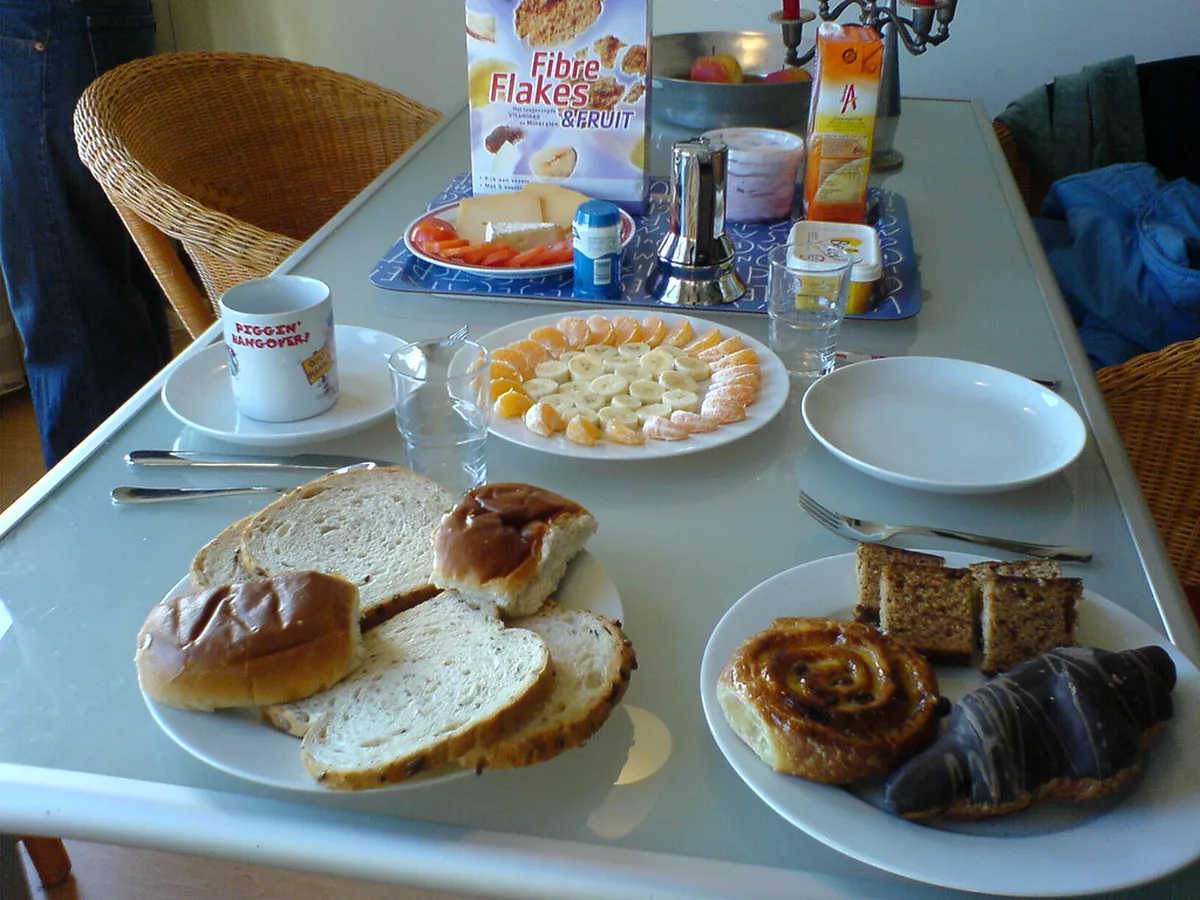
For a more local experience, most Dutch bakeries open before 08:00 and sell fresh broodjes (bread rolls) with cheese, egg, or ham for €3 to €5. These are what office workers eat at their desks across the city. You will find them at every neighbourhood bakery, priced far below any cafe that targets tourists with the word 'brunch' on its awning.
Borrel Culture: Historic Brown Bars and Craft Beer
A 'borrel' is the Dutch version of after-work drinks, and it is a genuine social institution rather than a loose suggestion. It typically runs 16:00 to 19:00 and involves beer, bitterballen, and the kind of relaxed conversation that has no agenda. The setting for a proper borrel is a bruine kroeg ('brown bar') — named for the dark wood panelling and decades of atmosphere that coats the walls. Many of these bars have been operating since the 17th century and have not changed their formula since.
In't Aepjen on Zeedijk 1 is one of the oldest — housed in one of the only two remaining wooden buildings in Amsterdam, dating to the 1500s. It takes its name from the sailors who used to settle their bar tabs with monkeys brought from Asia; the collection of monkey decorations is still there and still strange. Cafe de Wetering (Weteringstraat 37) has a functioning fireplace upstairs and is quieter than most, making it the best choice for a conversation. Cafe de Doffer in the 9 Straatjes neighbourhood is the most social, with a large food menu that runs until late.
For craft beer, Brouwerij 't IJ operates out of a functional windmill at Funenkade 7. They brew their own ales on-site — the Zatte (tripel, 7.5% ABV) and Natte (dubbel, 6.5%) are the two to try — and serve them in a taproom that opens daily at 14:00. A glass costs €5 to €7. Order a platter of local aged Gouda and ossenworst (a cured Amsterdam beef sausage) to turn it into a proper borrel. These bars sit away from the central tourist circuit and count as our hidden gems guide for anyone who has only ever drunk in the Leidseplein hotel bars.
The correct order for a traditional kopstootje is a small glass of jenever alongside a tulip glass of cold Dutch lager. The jenever goes first — a small, clean sip — then the beer follows as a chaser. It is old-fashioned in the best sense and costs around €6 to €9 for both. Many smaller brown bars are still cash-only, so carry coins.
Top Modern Classic Restaurants in Amsterdam
Amsterdam's strongest dining category in 2026 is what local food writers call 'modern classics' — restaurants that prioritise seasonal cooking, informal atmosphere, and genuinely good service over hype. These are the places that repeat visitors return to rather than the ones that trend on social media for a month and then disappear.
Café Modern (Meidoornweg 2, Amsterdam Noord) leads this category. It has been running a five-to-seven-course surprise menu since 2011, changing with the seasons and never announcing the dishes in advance. A dinner runs €65 to €85 excluding wine. Take the free ferry from behind Central Station — the 10-minute crossing across the IJ is worth factoring into your evening. Book at least three weeks ahead during summer. Roef in Watergraafsmeer opened in late 2025 and is already producing accomplished small-plate cooking; the red gurnard with yellow beetroot and buttermilk sauce has been widely praised by locals. Wijmpje Beukers in De Pijp does not take reservations but has a short, elegant à la carte menu of five starters and five mains — arrive before 18:30 or expect a wait.
Kop van Oost is worth visiting for the setting alone — it overlooks the Brouwerij 't IJ windmill from across the water — but the updated menu of shareable dishes (lamb satay, baked cauliflower with miso, sweet potato ravioli) makes it a full meal rather than just a drink stop. For something more adventurous, Nomads in Oostpoort changes its entire menu concept every six months, moving through a different country's cuisine with each rotation. The Jordan edition in 2025 drew strong reviews; check their current theme before booking.
Haring: The Raw Herring Ritual Most First-Timers Get Wrong
Raw herring — haring — is Amsterdam's most polarising food and also the one where tourists most visibly get it wrong. The fish is lightly salted and cured (not cooked), served chilled with finely chopped raw onion and gherkins. The classic way to eat it is to hold the fish by the tail, tilt your head back slightly, and lower it into your mouth in a few bites. This is not performance — it is simply the most practical way to handle the soft, slippery texture.
Herring season (May–July) brings 'Hollandse Nieuwe' — younger, fattier fish considered the finest of the year. Quality drops outside peak season, so buy from dedicated haringhandel carts, not tourist-facing snack bars.
The version served in a soft white bun (broodje haring) is the tourist-friendly adaptation and is perfectly acceptable, but the flavour is more diluted. If you want to understand why locals treat this as a genuine pleasure rather than a dare, eat it the traditional way at a haringhandel cart. Stubbe's Haring at Singel 485 (near Koningsplein) has been operating since 1922 and is consistently cited by Amsterdam food writers as the most reliable cart in the city. A portion costs €4 to €6. The herring season runs May through July, when the first 'Hollandse Nieuwe' of the year arrives — younger, fattier fish that are considered the finest of the season.
Outside of peak season, the quality drops slightly but the product is still good. The key is buying from a dedicated haringhandel rather than from a tourist-facing snack bar, where the fish may have been sitting longer than it should. Any cart with a queue of office workers at lunchtime is a reliable sign of quality.
Fine Dining and Michelin-Starred Magic
Amsterdam has 26 Michelin-starred restaurants as of the 2026 guide, making it one of the denser concentrations in northern Europe relative to city size. The flagship experience for first-timers is Restaurant 212 (Utrechtsestraat 2), which operates with counter seating around an open kitchen — chefs serve each course directly. Tasting menus run €150 to €250 per person. The reservation window opens exactly three months in advance online; book the morning the window opens if you want a realistic chance.
For those who want the calibre without the full commitment, several Michelin-starred restaurants offer lunch menus at substantially reduced prices. The same kitchen, the same ingredients, a shorter format. Lunch at a one-star venue typically costs €65 to €95 compared to €130 to €180 for dinner. Dress codes at Amsterdam's starred restaurants are almost universally 'smart casual' — no jacket required, but trainers and shorts read as disrespectful to the kitchen's effort. When to book: dinner reservations at any serious restaurant in Amsterdam need at least two to four weeks of lead time in peak summer (June to August); shoulder season (September to November, March to May) is easier at two weeks.
The gap between a modern classic like Café Modern (€65 to €85 for a surprise menu) and a Michelin-starred tasting menu (€150 to €250) is real but not always proportional in pleasure. The starred venues offer more technical precision; the modern classics offer more warmth and spontaneity. If you are choosing between the two for a single special dinner, ask what matters more to you — the craft or the conversation.
Navigating Amsterdam's Food Markets and Vending Machines
The Albert Cuyp Market in De Pijp runs Monday to Saturday from approximately 09:30 to 17:00 and is the largest outdoor market in the Netherlands. It stretches for nearly a kilometre along Albert Cuypstraat and sells everything from fresh stroopwafels (Rudi's stall near number 182) to kibbeling (deep-fried battered cod pieces) and warm poffertjes. The back half of the market is less crowded than the entrance and often has better pricing on produce. Budget €15 to €25 to eat your way through it properly.
The Noordermarkt in the Jordaan operates on Saturday mornings from 09:00 to 16:00 and has a different character — more artisanal, quieter, focused on organic produce and specialty foods. This is the market for aged Gouda, sourdough, and local honey rather than street food. Winkel 43, located on the corner of Noordermarkt, serves what many consider the city's best apple pie — thick-crusted, warmly spiced, served with a mountain of whipped cream for around €5. The queue for a table is always long by 10:00, so arrive early or take it to go.
FEBO is the city's 24-hour vending machine fast-food chain. Heated glass cubbies in the wall dispense fresh-cooked kroketten, burgers, and kaassoufflés for €2.50 to €4.00. The 'Rundvleeskroket' — beef ragout in a crispy shell — is the most traditional item and the one to start with. FEBO operates across dozens of locations, many open around the clock, making it the default stop on Amsterdam after dark. Pay contactless or with coins; most machines accept both. Despite the utilitarian format, the quality is consistently better than its price suggests.
Frequently Asked Questions
What is the most famous food to eat in Amsterdam?
The most famous food is the stroopwafel, a thin waffle with caramel filling. Other iconic items include thick Dutch fries with mayonnaise and savory bitterballen snacks. For a full meal, the Indonesian rijsttafel is the city's most celebrated dining experience.
How much does a typical meal cost in Amsterdam?
A casual lunch or street food snack usually costs between €5 and €15. Dinner at a mid-range restaurant typically ranges from €25 to €45 per person. Fine dining and tasting menus can exceed €100, especially in the city center.
Do I need to tip at restaurants in Amsterdam?
Tipping is appreciated but not mandatory as service is included in the bill. Rounding up to the nearest five or ten euros is standard for good service. For exceptional dining experiences, a 10% tip is considered very generous by locals.
Amsterdam rewards the curious eater who is willing to venture beyond Dam Square. The city's best food is often found standing at a market stall, squeezed into a brown bar at 17:00, or on the north bank of the IJ in a former garage. Book your modern classic dinners two to three weeks ahead, arrive at brunch spots before 09:30 on weekends, and always eat your stroopwafel warm. Your 2026 trip will be significantly more memorable for it.
Continue exploring
More guides you'll find useful