3-Day Amsterdam Itinerary: 7 Essential Sections for a Perfect Trip
Plan the ultimate 3 days in Amsterdam with this resident-backed itinerary. Includes museum booking secrets, neighborhood guides, and the I Amsterdam card math.
On this page
3-Day Amsterdam Itinerary: What to Do in Amsterdam for 3 Days
Three days is the sweet spot for a first visit to Amsterdam. You have enough time to walk the historic canal belt, stand inside two world-class museums, eat your way through a street market, and still catch a free ferry to the industrial north. This guide is built around that 72-hour window — no filler, no day trips, just the city itself at a pace that leaves room to get pleasantly lost.
Each day in this 2026 itinerary focuses on a distinct part of the city so you group your walking and avoid criss-crossing town unnecessarily. Day 1 covers the historic center and Jordaan. Day 2 takes you south to Museum Square and De Pijp. Day 3 crosses the water to NDSM Wharf and Amsterdam Noord. Book the Anne Frank House before you read anything else — more on that below.
| Day | Focus Area | Key Stops |
|---|---|---|
| Day 1 | Historic Center & Jordaan | Anne Frank House, De 9 Straatjes, Begijnhof, Ons' Lieve Heer op Solder, Bloemenmarkt, Canal cruise, Brown bars |
| Day 2 | Museum Square & De Pijp | Rijksmuseum, Van Gogh Museum, Vondelpark, Albert Cuypmarkt, Indonesian restaurants |
| Day 3 | NDSM Wharf & Amsterdam Noord | Free GVB Ferry, NDSM street art, Pllek restaurant, Brouwerij 't IJ craft brewery, Red Light District |
Essential Amsterdam Travel Tips Before You Go
The single most important booking task is the Anne Frank House. New ticket slots open every Tuesday at 10:00 AM CET, exactly six weeks ahead. Set a calendar reminder for the Tuesday that lands six weeks before your arrival date and be at your device on time — slots go in minutes. Do not rely on the day-of queue; waiting times in peak season exceed three hours and you may still not get in. The official booking page is annefrank.org.

Anne Frank House tickets release every Tuesday at 10:00 AM CET, exactly six weeks ahead. Book immediately on release day — slots typically sell out within minutes during peak season.
The Van Gogh Museum works differently. Tickets release gradually in the weeks before your visit rather than in a single weekly wave. Check the museum's own site about three to four weeks out and book a morning slot — galleries are noticeably quieter before noon. The Rijksmuseum also requires advance tickets; walk-ups are technically possible but result in long queues at the entrance.
Understand the local vocabulary before you arrive. A "coffee shop" (always written as two words in Dutch signage) sells cannabis products legally to adults aged 18 and over. A "cafe" or "koffiehuis" is where you get an actual espresso. A "brown bar" (bruin cafe) is a traditional Dutch pub, often dating to the 18th century, identified by its dark wooden interior and amber lighting. Mistaking a coffee shop for a cafe is the most common first-timer error in the city.
Watch the bike lanes. They are marked in red asphalt, run alongside pedestrian pavements, and are not optional infrastructure — cyclists move fast and have right of way. Look both ways before stepping off a kerb, especially near Amsterdam Centraal where the volume of bikes is heaviest. Tram tracks are the second hazard: thin wheels catch in the grooves, so step over them rather than along them.
The free GVB ferries behind Amsterdam Centraal are not just for tourists. The 15-minute NDSM ferry crossing provides a stunning view of the city skyline and waterfront that surpasses most paid canal cruises.
Where to Stay: Best Neighborhoods for a 3-Day Base
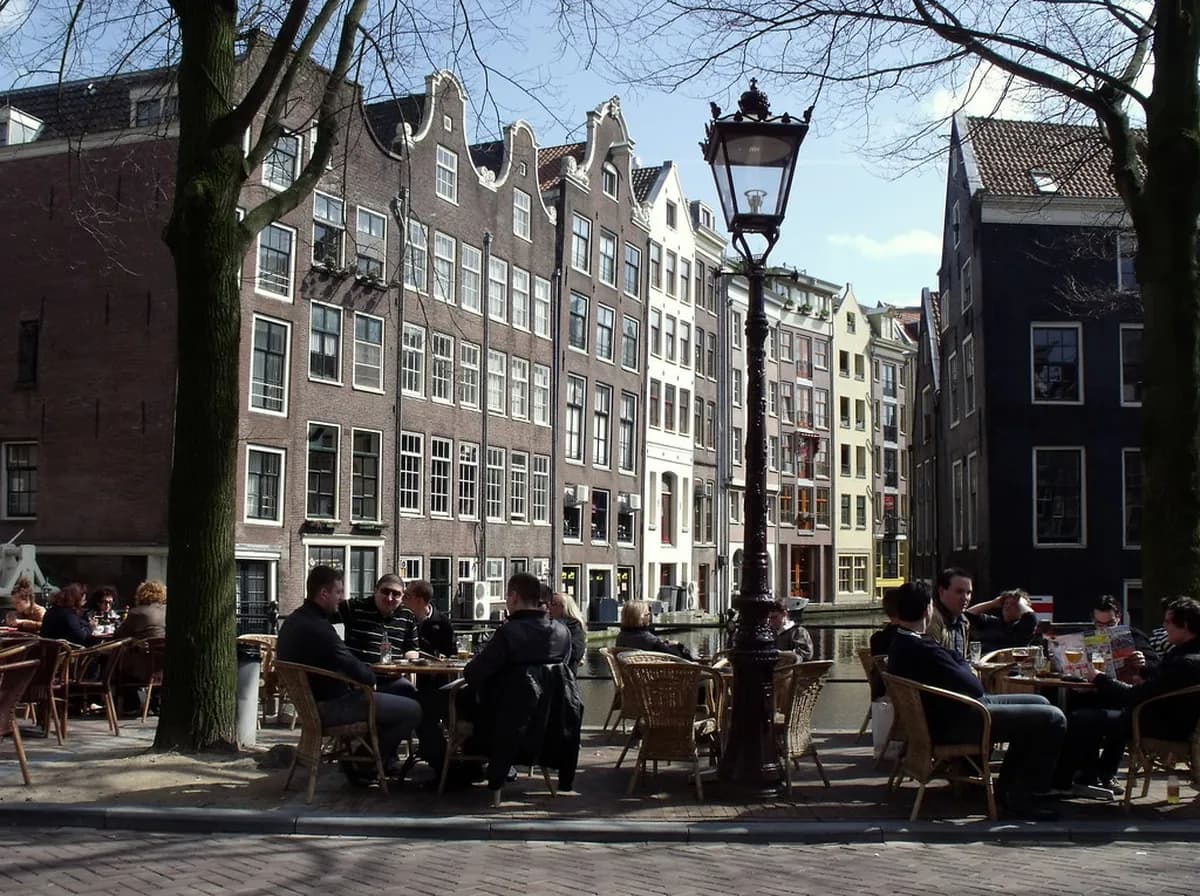
The Jordaan is the most popular base among repeat visitors and for good reason. You are on the ring of the most photogenic canals, within walking distance of the Anne Frank House, and surrounded by independent cafes and boutiques in the 9 Straatjes. The trade-off is price — hotels here cost more than elsewhere in Amsterdam — and the walk to Museum Square takes around 25 minutes on foot. If budget is a concern, the Jordaan is where you splurge or skip.
Dam Square and the city center offer the best transit access. Amsterdam Centraal is a 10-minute walk and every tram line passes through. The downside is noise: the area around Damrak and the Red Light District stays loud until 03:00 AM on weekends. If you are a light sleeper or traveling with children, look for hotels on the quieter side streets one or two blocks back from the main drag rather than directly on the canal-tourist corridor.
De Pijp suits younger travelers and anyone prioritizing food. The Albert Cuypmarkt is literally outside your front door, the tram to Museum Square takes four minutes, and hotel rates run 15–25% lower than equivalent rooms in the Jordaan. The neighborhood is further from Amsterdam Centraal (about 20 minutes on the metro), which matters if you are arriving late or departing early. For most 3-day visitors, De Pijp is the best value base on the map.
Day 1: Historic Center, Jordaan, and Canal Magic
Start at the Anne Frank House at your booked slot (morning slots are recommended). The visit takes 60–90 minutes and it is a genuinely moving experience regardless of whether you have read the diary. The museum is on Prinsengracht, right on the edge of the Jordaan, so you step out directly into the neighborhood. From there, walk south along the canal and turn into De 9 Straatjes — nine short cross-streets lined with vintage clothing, record shops, and local design studios. Budget an hour to browse.
The Begijnhof is a short detour worth making. It is a medieval courtyard hidden behind an unmarked door on Gedempte Begijnensloot, near the Spui square. Step through and you are in a quiet garden surrounded by 17th-century almshouses where residents still live. It costs nothing to enter and most visitors walk straight past it. Right around the corner, Ons' Lieve Heer op Solder (Our Lord in the Attic) is a hidden Catholic church built secretly inside three canal houses during a period of religious suppression in the 17th century. Entry is around €16. The context it provides about Dutch history and the tension between tolerance and persecution is one of the most interesting hours you can spend in the city.
For the afternoon, walk to the Bloemenmarkt on the Singel canal. This floating flower market operates year-round and is a good place to pick up tulip bulbs as souvenirs — just confirm with the vendor that your country permits their import. Then spend a slow hour or two wandering Herengracht and Keizersgracht, the two grandest canals in the UNESCO-listed belt. In the evening, join a canal cruise with a live captain rather than a recorded audio guide. The difference in engagement is significant. Most 90-minute cruises depart near Centraal or from the Jordaan jetties and cost €15–€25.
Finish Day 1 with dinner in the Jordaan and a drink in a brown bar. Cafe Chris on Bloemstraat is one of the oldest, dating to 1624. For dinner nearby, Indonesian takeaway at Pondok Indah on the canal is a local staple — bring cash and expect a short queue. The connection between Amsterdam and Indonesian cuisine is not incidental; see the Day 2 section for the full story.
Day 2: Museum Square and the Vibrant De Pijp
Take tram line 2 or 12 to Museumplein (Museumplein stop). Arrive at the Rijksmuseum when it opens at 09:00 — the queues build quickly after 10:00 even with pre-booked tickets. Budget three to four hours for a serious visit. Rembrandt's The Night Watch, displayed in the Gallery of Honour, is the anchor piece, but the Dutch Golden Age collection surrounding it is equally strong. Do not skip the museum's library room on the upper floor, a wood-paneled hall with floor-to-ceiling shelves that most visitors miss entirely. Check the Rijksmuseum Collections online before you go to shortlist the rooms that matter most to you.
Cross Museumplein to the Van Gogh Museum in the afternoon. Book a slot starting around 13:30 to give yourself breathing room after the Rijksmuseum. The permanent collection covers Van Gogh's full career — from the dark earthy palette of his Brabant years through to the electric color of his Arles period. Sunflowers, Almond Blossom, and The Bedroom are all here. One practical note: the Van Gogh and the Rijksmuseum together cost around €40–€45 in 2026 tickets. If you have also bought Anne Frank House tickets (€16) and are planning a canal cruise, the I Amsterdam City Card math starts to work in your favour — see the dedicated section below.
Vondelpark is a five-minute walk from the Van Gogh Museum. After back-to-back museums, 30 minutes sitting on the grass does more for the rest of your trip than any additional sight. In the evening, move to De Pijp for dinner. The neighborhood's multicultural food scene is one of the best in the Netherlands, and it is directly explained by the where to eat in the city history that is rooted in the Dutch colonial period.
Amsterdam's Indonesian Food Heritage: More Than Just Stroopwafels
Amsterdam has one of the most genuinely multicultural food scenes in Europe, and the Indonesian influence is the deepest thread. The Netherlands colonized the Indonesian archipelago for over 350 years, and when Indonesia gained independence in 1945, hundreds of thousands of Dutch-Indonesian families moved to the Netherlands. Their food culture came with them. Today, Indonesian restaurants in Amsterdam are not tourist novelties — they are part of the city's actual culinary identity.
The dish to order is rijsttafel, literally "rice table." It is a Dutch-Indonesian invention: a spread of 10–20 small dishes — rendang, satay, gado-gado, sambal varieties, tempeh — served around a central bowl of rice. The concept was formalized by Dutch colonists as a way of presenting Indonesian cuisine to European guests. Tujuh Maret in De Pijp is consistently recommended and reservations are required most nights. Budget around €35–€45 per person. Sari Citra, also in De Pijp, is the more casual and affordable alternative.
Beyond Indonesian food, De Pijp reflects Amsterdam's Surinamese community as well. Surinam was another Dutch colony, and Surinamese roti shops — flatbread wraps with curried potato and chicken — are scattered through the neighborhood. The Albert Cuypmarkt itself is a good place to try haring (raw herring with onions), a genuinely Dutch street food that predates every tourist attraction in the city. One vendor, one toothpick, eaten standing up: that is the correct method.
Day 3: NDSM Wharf and Off-the-Beaten-Path Gems
Walk to the back of Amsterdam Centraal Station and take the free GVB ferry to NDSM Wharf. The crossing takes 15 minutes and the ferry runs every 15–30 minutes throughout the day. The ride itself is worth it: you get a view of the IJ waterway and the city skyline from the water that no paid canal cruise replicates, because you are looking back at the full sweep of the historic center from the north. This is the our hidden gems guide angle the brief identifies — a genuinely free, genuinely local experience that skips the tourist infrastructure entirely.
NDSM is a former shipyard that was derelict by the 1980s and is now Amsterdam's largest street-art complex and creative hub. The main building is a vast industrial hall covered floor-to-ceiling in graffiti murals, with artist studios, a skate park, and rotating pop-up spaces inside. Pllek is the restaurant here built from shipping containers and set on a terrace over the water — it opens from noon and the food is good. Noorderlicht is the greenhouse-style cafe next door, which is particularly atmospheric in late afternoon light.
If you are in Amsterdam on the first or second weekend of the month, check whether the IJhallen flea market is running at NDSM. It is the largest flea market in the Netherlands — hundreds of stalls selling vintage clothing, furniture, records, and Dutch antiques. Bring cash. The dates are published on ijhallen.nl. On non-market days, the wharf is still worth 2–3 hours of wandering. Take the ferry back to Centraal and spend the late afternoon at Brouwerij 't IJ, a craft brewery installed inside a working windmill on the east side of the center. The entry-level tasting costs less than the Heineken Experience ticket and the beer is produced on site. It is a far more honest version of Dutch beer culture.
The evening of Day 3 is the natural time to walk through the Red Light District if you are curious. Go on foot rather than by organized tour — the area is compact and walkable in 45 minutes. The district is significantly less aggressive during the day, but the visual impact is more striking at night. Photography of the workers in the windows is illegal and the rule is enforced.
Navigating the City: Trams, Bikes, and Ferries
Amsterdam's GVB tram network covers the routes you need on this itinerary. Tram 2 and 12 connect the city center to Museumplein. Tram 24 runs between De Pijp (Albert Cuypmarkt stop) and the center. From 2025, ticket machines at stops have been phased out. You pay by tapping your contactless debit or credit card — or your smartphone — directly on the card reader when you board and when you exit. This OVpay system is the same technology used across Dutch public transport and it charges automatically. A single journey costs around €1.10. Do not attempt to buy a ticket on the tram from the conductor for cash if you can avoid it; the surcharge makes it the most expensive option. The GVB route map is the clearest resource for planning tram trips.
Bikes are the fastest way to cover the city once you have the canal-ring layout in your head. Rental shops cluster around Centraal Station and rent for around €12–€18 per day. MacBike and Star Bikes Rental are the two most visible chains; independent shops typically charge slightly less. The rules: ride in the dedicated red-asphalt lanes, signal with your arm before turning, and never lock to anything except a designated bike rack or a fixed lamppost. Bikes are stolen in volume in Amsterdam — use the two-point lock provided (wheel lock plus chain) and accept that anything left unlocked will be gone.
The ferries behind Centraal Station are free and they are not just for tourists. Four routes cross the IJ: the NDSM ferry (longest, 15 minutes), the Buiksloterweg ferry (5 minutes, runs 24 hours), and two shorter crossings. All are operated by GVB and bikes ride free. For visitors doing this 3-day itinerary, the NDSM ferry on Day 3 is the only one you need — but the Buiksloterweg ferry is worth a spontaneous return trip on any evening for the night view of the city from the north bank.
Maximizing Your Budget with the I Amsterdam City Card
The 72-hour I Amsterdam City Card costs €125 in 2026 (check iamsterdam.com for the current price, which adjusts seasonally). It includes free entry to over 70 museums and attractions, one free canal cruise, and unlimited GVB public transport for the card's duration. The question is whether it covers enough of what you actually plan to do.
Here is the honest math for this 3-day itinerary. Rijksmuseum entry is €22.50. Van Gogh Museum is €22. Anne Frank House is €16. A 90-minute canal cruise is around €18. Three days of GVB tram travel at around €5 per day totals €15. That stack — without the card — comes to roughly €93.50 for the major items. The card costs €125, so you are €31.50 short of breaking even on the must-see items alone. The card only justifies itself if you add at least two more attractions: the Heineken Experience (€23), the Eye Film Museum (€12.50), Moco Museum (€20), or the Amsterdam Museum (€17.50). If you plan to visit the Heineken Experience on Day 3 and one more mid-tier attraction, the card pays for itself. If you are skipping Heineken and the Eye Film Museum, buy individual tickets and pocket the difference.
One practical note: the Anne Frank House is not included in the City Card. It requires a separate booking regardless. Factor that €16 into your budget either way. The card is available from the tourist office at Schiphol, the iAmsterdam store near Centraal, or online with delivery to your hotel.
Book in Advance: Essential Amsterdam Reservations
The Anne Frank House is the non-negotiable advance booking. As noted in the tips section above, tickets release on Tuesdays at 10:00 AM CET, six weeks ahead. Use the official booking site only — third-party resellers charge significant markups for the same time-slot. If you miss the six-week window entirely, check the site on the morning of your planned visit from 09:00 — a small number of day-of tickets sometimes appear, but this is unreliable in summer.
The Van Gogh Museum and the Rijksmuseum both require tickets and both sell out popular time slots. Book the Rijksmuseum at least two to three weeks ahead for morning slots in summer (June–August). The Van Gogh is more flexible outside peak season but three weeks advance booking is still the safe standard. Canal dinner cruises are the only major booking that can typically be done same-day or one day ahead — private boat tours for groups should still be reserved in advance. Check the Amsterdam's top museums article for any smaller attractions worth adding to your list.
If you are visiting in April, the King's Day national holiday (27 April) fills the entire city with orange-clad revelers and street markets. The canals are crowded with private boats and the atmosphere is unlike any other day of the year. Hotels and museums book out months in advance for this date — plan accordingly or intentionally build your trip around it. The annual Amsterdam Light Festival (November–January) is the equivalent winter draw, projecting large-scale art installations along the canals after dark.
Add an Extra Day: Day-Trip Options
If you have four days, the day trips from Amsterdam are very accessible by train. Zaanse Schans is the most popular option for seeing traditional Dutch windmills in operation — the train to Zaandam takes 17 minutes from Centraal, then a 15-minute walk. The site is free to enter; individual windmills charge a small entry fee. Arrive before 10:00 AM to beat the coach groups.
Haarlem is a quieter alternative for a half-day trip. It has the same canal-house architecture as Amsterdam but at a fraction of the tourist density. The Grote Kerk (Great Church) dominates the main square and the Frans Hals Museum houses one of the finest collections of Dutch Golden Age portraiture outside Amsterdam. Trains run every 10 minutes and the journey takes 15 minutes. Utrecht is worth considering for a full extra day — its split-level canal wharves (lower-level terraces at water level) are genuinely different from Amsterdam's street-level canal banks and the old-town center is relaxed and well-preserved.
Frequently Asked Questions
Is 3 days enough for Amsterdam?
Yes, three days is the perfect amount of time for first-timers. You can see the major museums, explore the Jordaan, and take a canal cruise. It allows for a relaxed pace without missing the icons.
How far in advance should I book the Anne Frank House?
You should book exactly six weeks in advance on a Tuesday morning. Tickets are released at 10:00 AM CET and sell out very quickly. Always use the official website for the lowest prices.
Is the I Amsterdam City Card worth it for 72 hours?
The card is worth it if you visit at least four major museums. It includes public transport and a canal cruise which adds great value. Check the I Amsterdam City Card Official Site for the current list.
Amsterdam is a city that rewards those who plan their time well. Following this 3-day itinerary ensures you see the best of the capital. From the historic Jordaan to the modern NDSM Wharf, you will see it all. I hope you enjoy the canals as much as I did.
Remember to book your museum tickets as early as possible. Keep an eye on the bike lanes and enjoy the local food. Your trip to the Netherlands will be a truly memorable experience. Safe travels on your upcoming Dutch adventure.
Continue exploring
More guides you'll find useful