Free Things To Do In Naples Travel Guide
Plan free things to do in naples with top picks, neighborhood context, timing tips, and practical booking advice for a smoother trip.

On this page
Free Things To Do In Naples
Naples, Italy rewards budget travelers more than almost any other major European city. The historic center is a UNESCO World Heritage Site you can wander for free, the cathedral charges nothing for entry, and the best pizza on earth costs around two euros. This guide focuses primarily on Naples, Italy — the city most people are searching for — with a dedicated section on Naples, Florida for those planning a Gulf Coast trip.
In 2026 the city is more accessible and safer than ever, with visible policing in tourist zones and several formerly rough neighborhoods now firmly on the visitor trail. You do not need a big budget to see the best of it. You need comfortable shoes, a sense of direction, and a willingness to eat standing up.
Must-See Naples Attractions
The historic center — Centro Storico — is the single best free experience in the city. Spaccanapoli cuts straight through it: a long, arrow-straight street that splits Naples like a cleaver, lined with Baroque churches, crumbling palazzi, and laundry strung between balconies. It is a UNESCO World Heritage Site and it costs nothing to walk its full length. Budget two hours minimum; the side streets reward slow exploration.
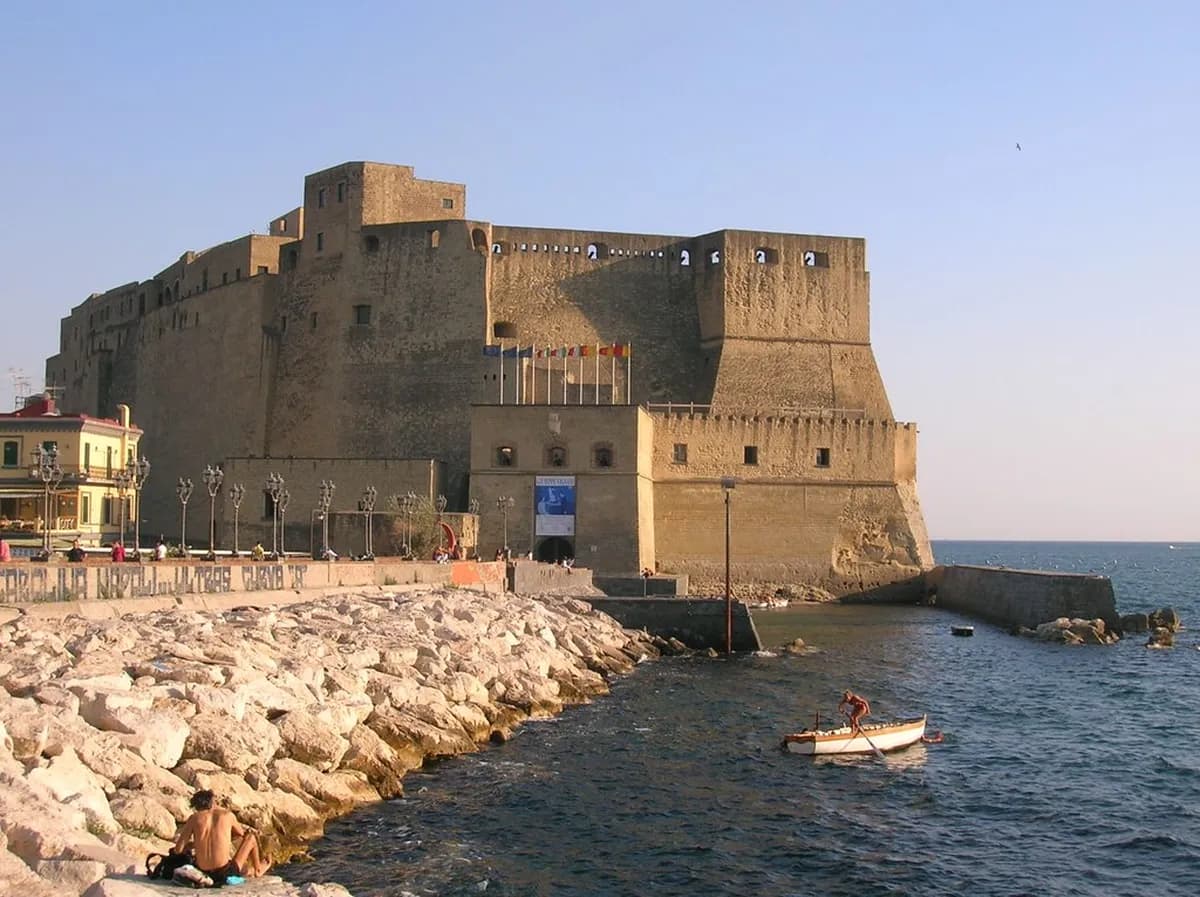
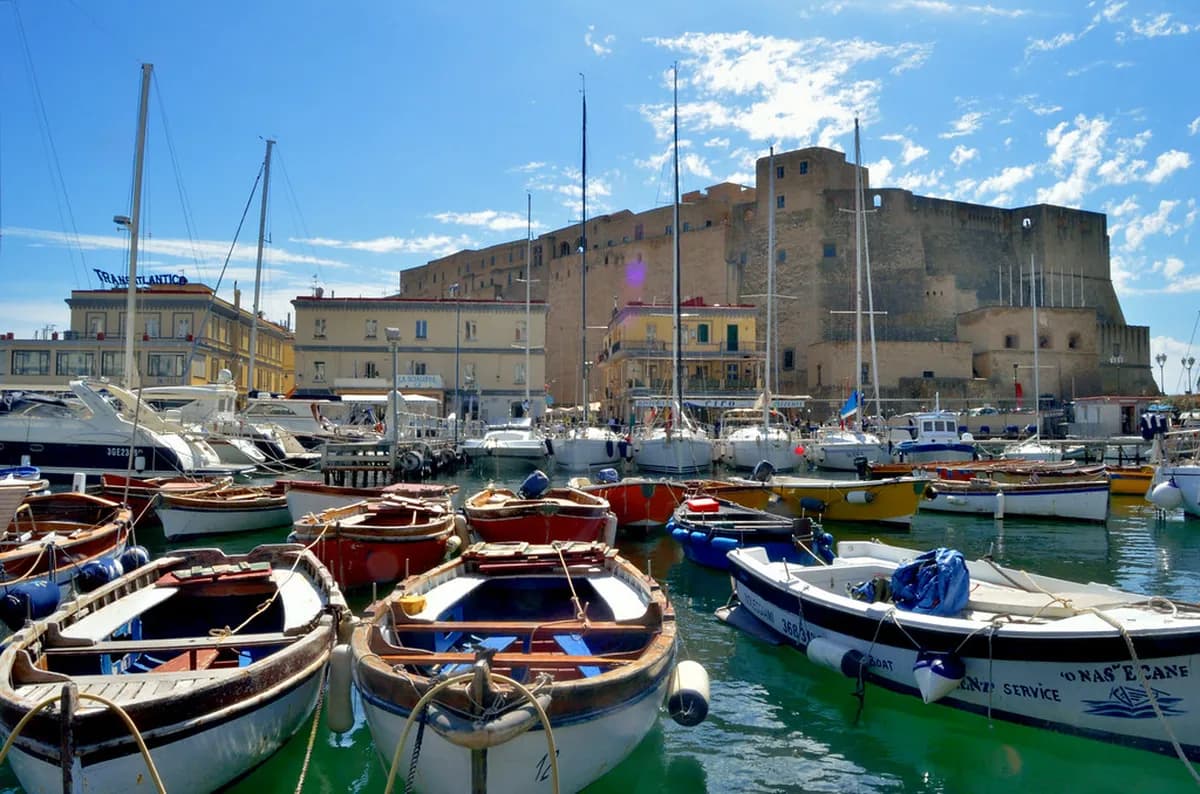
Down at the waterfront, Castel dell'Ovo sits on a small island connected to the mainland by a causeway. Entry to the castle courtyard and the exterior terraces is free, giving you unobstructed views of Mount Vesuvius across the bay. The surrounding Borgo Marinari fishing quarter has a handful of trattorias — skip the tourist menus and look for a counter selling fried seafood by the cone.
The neighborhood of Chiaia, between the castle and Piazza del Plebiscito, is one of Naples' most elegant stretches. The Piazza itself is free and vast — a semicircle of colonnades fronting the royal palace. It is best visited on Sunday mornings before the tour coaches arrive.
Museums, Art, and Culture in Naples
The Cathedral of Naples (Duomo di Napoli) stands on Via del Duomo in the historic district and is free to enter. Built around 1300 and dedicated to the city's patron saint San Gennaro, it contains layers of architectural history from ancient Roman ruins in the crypt up to 18th-century ceiling frescoes. Opening hours are Monday to Saturday 08:00–12:30 and 16:30–19:00; Sundays 08:30–13:30 and 17:00–19:30.
The cathedral is also the site of the Blood Miracle of San Gennaro, one of the strangest recurring events in any European city. Three times a year — December 16, the first Saturday of May, and September 19 — a vial of the saint's dried blood is brought to the altar. If the blood liquefies, the city is considered safe for the coming season. If it stays solid, Neapolitans brace for disaster. The blood stayed solid in 1980 before a catastrophic earthquake killed 3,000 people, in 1944 before Vesuvius erupted, and in 2020 during the worst of the COVID-19 pandemic. Whether or not you believe the legend, the emotional intensity of the crowd during the ceremony is unlike anything else in Italy. Attendance is free.
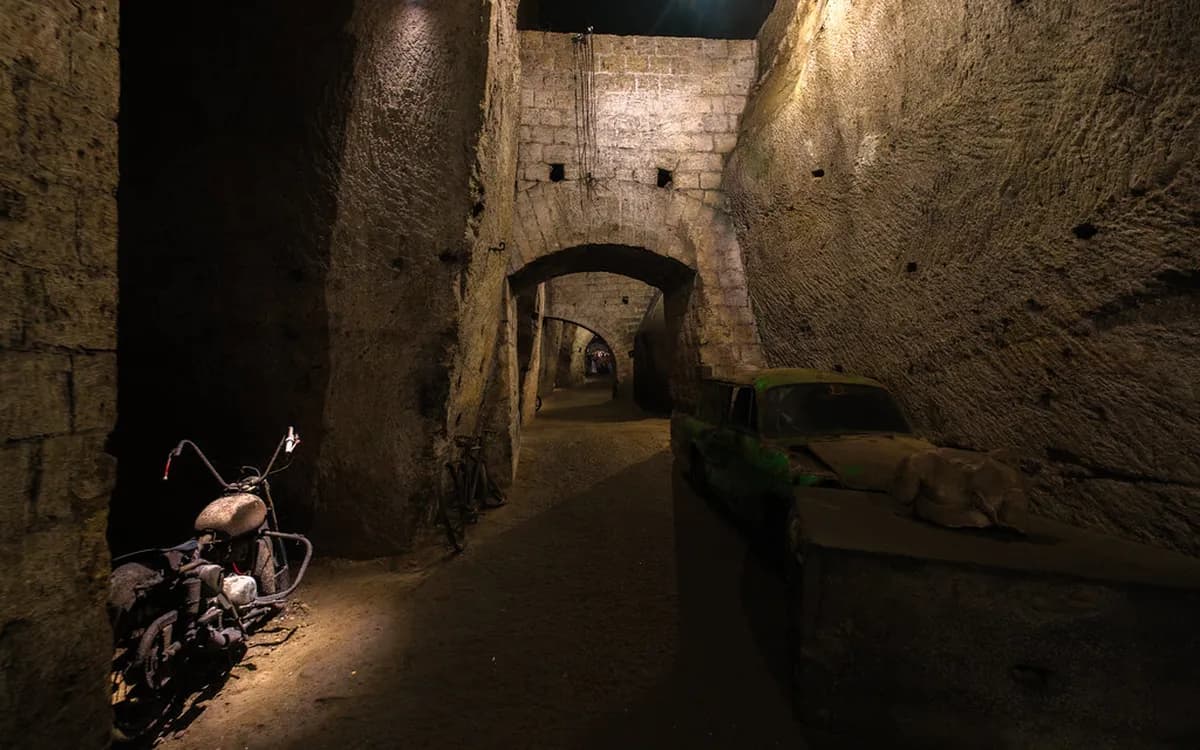
Naples is also dense with free churches containing world-class art. The Cappella Sansevero near the cathedral holds the Veiled Christ sculpture — one of the most technically astonishing marble works ever carved — though the chapel charges a small admission. The surrounding streets have at least a dozen smaller churches with remarkable interiors that are always open and always free. If you want to explore Napoli Sotterranea via the official Napoli Sotterranea tunnel tour, expect to pay around 10 euros — it is not free, but it is among the most memorable 90-minute experiences in the city for history enthusiasts.
Vomero and Castel Sant'Elmo
The Vomero neighborhood sits high above the historic center and feels like a different city: wider streets, fresher air, trendy cafes, and a noticeably calmer pace. It is home to Castel Sant'Elmo, a hexagonal fortress built in the 1300s that provides one of the most expansive viewpoints in all of southern Italy — sweeping 360 degrees from Sorrento to Mount Vesuvius to the islands of the bay. Entering the castle museum costs 5 euros, but walking around the exterior plaza and enjoying the full panorama is completely free.
Getting up to Vomero is part of the experience. The Funicolare di Montesanto runs daily from 07:00 to 22:00 and accepts the same ticket as the Naples metro — a single ride costs 1.10 euros and counts as one of the city's great value journeys. Alternatively, take the steep public staircase from Via Toledo for free; it is a genuine workout but the views open up with every flight.
Once in Vomero, the Pedamentina staircase leading back down toward Certosa di San Martino passes through quiet residential streets few tourists bother with. The Certosa itself charges entry, but the terrace outside the entrance offers identical views at no cost.
Eating in Naples: Pizza, Sfogliatella, and What to Expect
Naples is the birthplace of pizza and a margherita or marinara at a proper local pizzeria costs around 2–4 euros — less than a cappuccino in Milan. L'Antica Pizzeria da Michele on Via Cesare Sersale and Sorbillo on Via dei Tribunali are the two most famous names; both serve only the classics and both have queues that start forming before noon. The wait at da Michele is often 45–60 minutes at peak lunch hour. It is worth it once. Go before 12:00 or after 14:00 to cut the wait significantly.
For something sweet, Neapolitan bakeries serve sfogliatella — a shell-shaped pastry filled with ricotta, cinnamon, and candied peel — for around 1.50 euros. The oldest and most celebrated sfogliatella in the city comes from La Sfogliatelle Mary inside the Galleria Umberto shopping arcade. The Spanish Quarter (Quartiere Spagnoli) is packed with small family bakeries that also stock babà, a rum-soaked sponge cake that costs less than a euro. Gelato gets all the international press, but sfogliatella is the local obsession and it is far cheaper.
Deep-fried pizza (pizza fritta) is another street food original worth trying. You will find stalls throughout the historic center selling it for around 2 euros — a half-moon of dough filled with ricotta, salami, or provola, fried to order. It was historically a working-class food sold from carts because ovens were too expensive for poor families. Today it is having a revival among younger Neapolitans.
A full day of eating in Naples can cost under €10 — a Margherita pizza runs €2–4, a sfogliatella pastry is around €1.50, and a babà costs under €1 at a Spanish Quarter bakery. Skip gelato chains and follow the locals to small family bakeries for the best prices.
Parks, Gardens, and Outdoor Spots in Naples
The Villa Comunale is a long public park stretching along the waterfront between Chiaia and Mergellina. It is free, open daily, and one of the most pleasant places in the city to sit and watch the bay. Locals use it for morning runs; it fills with families on weekend afternoons. At the far end near Mergellina, several small kiosks sell coffee and taralli (crunchy ring-shaped snacks) at local prices — this is not a tourist zone and you will pay accordingly.
For a longer outdoor escape, the Parco Virgiliano on the Posillipo headland sits on the western edge of the city with views across to Pozzuoli and the volcanic Campi Flegrei. Entry is free. The walk from Mergellina metro station takes about 30 minutes uphill through an attractive residential district. The park itself is quiet, shaded, and almost entirely unknown to first-time visitors — which makes it one of the best differentiators on this list.
If you are traveling in summer, the cliffside beaches below Posillipo — accessible via steep steps from the road — are used by locals as swimming spots. They are free, informal, and not sign-posted, which is entirely the point. Bring water and shoes with grip for the descent.
| Activity | Cost | Best time | Neighborhood |
|---|---|---|---|
| Walk Spaccanapoli (UNESCO) | Free | Morning, any day | Centro Storico |
| Castel dell'Ovo exterior + terraces | Free | Before 10:00 | Santa Lucia |
| Cathedral of Naples (Duomo) | Free | Mon–Sat 08:00–12:30 | Centro Storico |
| Castel Sant'Elmo exterior plaza | Free (museum €5) | Any time | Vomero |
| Villa Comunale park | Free | Morning / weekday | Chiaia / Mergellina |
| Parco Virgiliano | Free | Morning, avoid peak summer | Posillipo |
| Via S. Gregorio Armeno (Christmas street) | Free to walk | Before 10:00 | Centro Storico |
| Margherita pizza (da Michele) | €5.50–7.50 | Before 12:00 or after 14:00 | Centro Storico |
Christmas Street in Naples – Via S. Gregorio Armeno
Via S. Gregorio Armeno is a short cobblestone street in the old town where every shop sells handmade nativity scenes (presepi) year-round. The craft is centuries old and the figures range from traditional shepherds and the three wise men to highly specific celebrity additions: Diego Maradona has had a permanent presence here since his Napoli playing days, and recent years have added figures of politicians, footballers, and TV personalities. It is entirely free to walk through and window-shop.
Strolling through this street is one of the most unique Hidden Gems In Naples Travel Guide that visitors often overlook because it sounds like a tourist trap — but the craftsmanship is genuine and the artisans work in open-air workshops where you can watch the carving and painting in progress. Visit before 10:00 to avoid the compressed afternoon crowds; the street is genuinely narrow and can feel claustrophobic at peak hours. Keep a hand on your bag throughout.
Family-Friendly and Budget-Friendly Options in Naples
Naples with children is very manageable if you plan around two things: food stops every 90 minutes and avoiding packed metro carriages. The historic center is compact enough that most major free attractions are within a 20-minute walk of each other. Piazza del Gesù Nuovo, surrounded by cafes and gelaterias, is a natural rest point mid-route and always has space for kids to run around.
The best budget meal for families is pizza by the slice (pizza a portafoglio) — a full-sized margherita folded in quarters and handed over in paper for around 1.50 euros. Kids eat the same pizza adults do here; there is no separate children's menu because nobody needs one. For families wanting to find the 10 Best Pizzerias in Naples: The Ultimate Dining Guide, neighborhood spots away from the main tourist streets typically have shorter waits and lower prices than the famous names.
The Napoli Sotterranea underground tour is popular with older children (roughly 8 and up) who can handle low ceilings and tight passages. It is one of the few paid attractions genuinely worth the cost for families — approximately 10 euros per adult — because the two-hour tour covers World War II history, ancient aqueducts, and Roman-era cisterns in a way that holds attention without requiring any prior knowledge.
How to Plan a Smooth Naples Attractions Day
Group your morning around the historic center while energy is high. Start at the Cathedral of Naples before 09:00 to beat the crowds, then walk Spaccanapoli west toward Piazza del Gesù Nuovo. The entire stretch takes 2–3 hours at a relaxed pace. Stop for pizza before noon — queues at the famous spots double after 12:30.
In the afternoon, take the funicular or walk up to Vomero for the Castel Sant'Elmo views, then descend through the residential streets rather than retracing your steps. This loop avoids backtracking and passes through neighborhoods where locals actually live. By late afternoon, head back down to the waterfront at Borgo Marinari near Castel dell'Ovo for the golden hour views across the bay.
On safety: tourist areas in 2026 are well-policed and no more dangerous than Paris or Lisbon. The practical precautions are simple — keep your phone in a front pocket, use a crossbody bag rather than a shoulder bag, and avoid Scampia and Secondigliano after dark (both are far from any tourist site). The areas around Garibaldi station can feel chaotic but are not genuinely threatening. First-time visitors consistently report the city feels safer than they expected.
Group your morning around the historic center while energy is high — start at the Cathedral of Naples before 09:00 to beat the crowds, then walk Spaccanapoli west. Stop for pizza before noon, as queues at famous spots double after 12:30.
How Many Days Do You Need in Naples?
A single day is enough to eat pizza, walk the historic center, and see the cathedral — which is why Naples works well as a day trip from Rome (2–3 hours by high-speed train). But a single day only scratches the surface. The hidden Naples 3-day itinerary gives you enough time to cover all the free highlights without rushing, visit Pompeii as a half-day excursion, and actually sit down to eat rather than bolting between stops.
With two full days you can cover the historic center and Cathedral on day one, Vomero and the waterfront on day two, and still feel like you have not rushed. Three days allows the Campi Flegrei volcanic area west of the city — Pozzuoli's ancient amphitheater and the Solfatara crater — which most visitors skip entirely but which are among the most dramatic free outdoor sites in southern Italy.
Book accommodation in the Chiaia or historic center neighborhoods to keep transit costs at zero. Staying further out saves money on the room but adds metro costs and commuting time that offset the saving. Central Naples is also safer for solo travelers and families navigating unfamiliar streets at night.
Naples, Florida: Free Things to Do on the Gulf Coast
If you are searching for Naples, Florida rather than Italy, the free options here are primarily beach and nature-focused. The Gulf Coast delivers calm, shallow water and some of the best shelling beaches on the eastern seaboard. The Naples Pier is a free local landmark at the end of 12th Avenue South — the wooden pier stretches 1,000 feet into the Gulf and draws crowds for the nightly sunset. Dolphins are a regular sighting from the end of the pier in the early morning.
For families, Lowdermilk Park has a free playground, picnic tables, and beach access. Street parking along 5th Avenue South is free for the first few blocks before the beach corridor, which makes it the most practical free parking option in central Naples. The Naples Depot Museum in downtown Naples charges no admission and covers the rail history of Southwest Florida through vintage equipment and interactive exhibits — it is particularly useful for a rainy afternoon with kids.
Shelling is one of the defining activities of this coastline. Vanderbilt Beach and Delnor-Wiggins Pass State Park (a small day-use fee applies at the latter) produce consistent finds including lightning whelks, fighting conchs, and calico scallops. The best shelling is at low tide, early morning. A useful overview of the region's free activities — including a broader look at Naples, Marco Island, and the Everglades — is available at the Paradise Coast visitor resource.
Frequently Asked Questions
How many days do you need in Naples?
We recommend spending at least three days to fully experience the rich culture and historic sights. This duration allows you to explore the historic center, visit hilltop viewpoints, and enjoy delicious local pizza without rushing your daily itinerary.
Is it safe to travel to Naples?
Yes, it is generally safe for tourists who stay alert and follow basic safety precautions. Keep your personal belongings secure in crowded areas, avoid quiet side streets at night, and use reputable transportation options to ensure a smooth journey.
Which free things to do in naples options fit first-time visitors?
First-time visitors should prioritize walking through the vibrant historic center and visiting the stunning Cathedral of Naples. These top attractions are completely free, easy to navigate, and offer an excellent introduction to the unique local heritage and culture.
Naples, Italy is one of the few major European cities where a genuinely immersive day can cost under 10 euros total — pizza, coffee, walking tour of a UNESCO heritage site, and cathedral with world-class art all included. The key is knowing which neighborhood to start in, when to arrive at the famous spots, and how to eat like a local rather than a tourist. Plan for three days if you can, but even a single afternoon in the historic center leaves most visitors wanting to come back.
Whether you are exploring the ancient streets of southern Italy or the sunny Gulf beaches of Florida, both cities named Naples reward visitors who travel with curiosity rather than a credit card. Start with the historic center, follow your nose toward the pizza, and work outward from there.
Continue exploring
More guides you'll find useful