Spaccanapoli Naples Travel Guide
Plan your visit to spaccanapoli naples with top local picks, historical neighborhood context, timing tips, and practical booking advice for a smoother trip.
On this page
Spaccanapoli Naples: The Ultimate Historic Guide
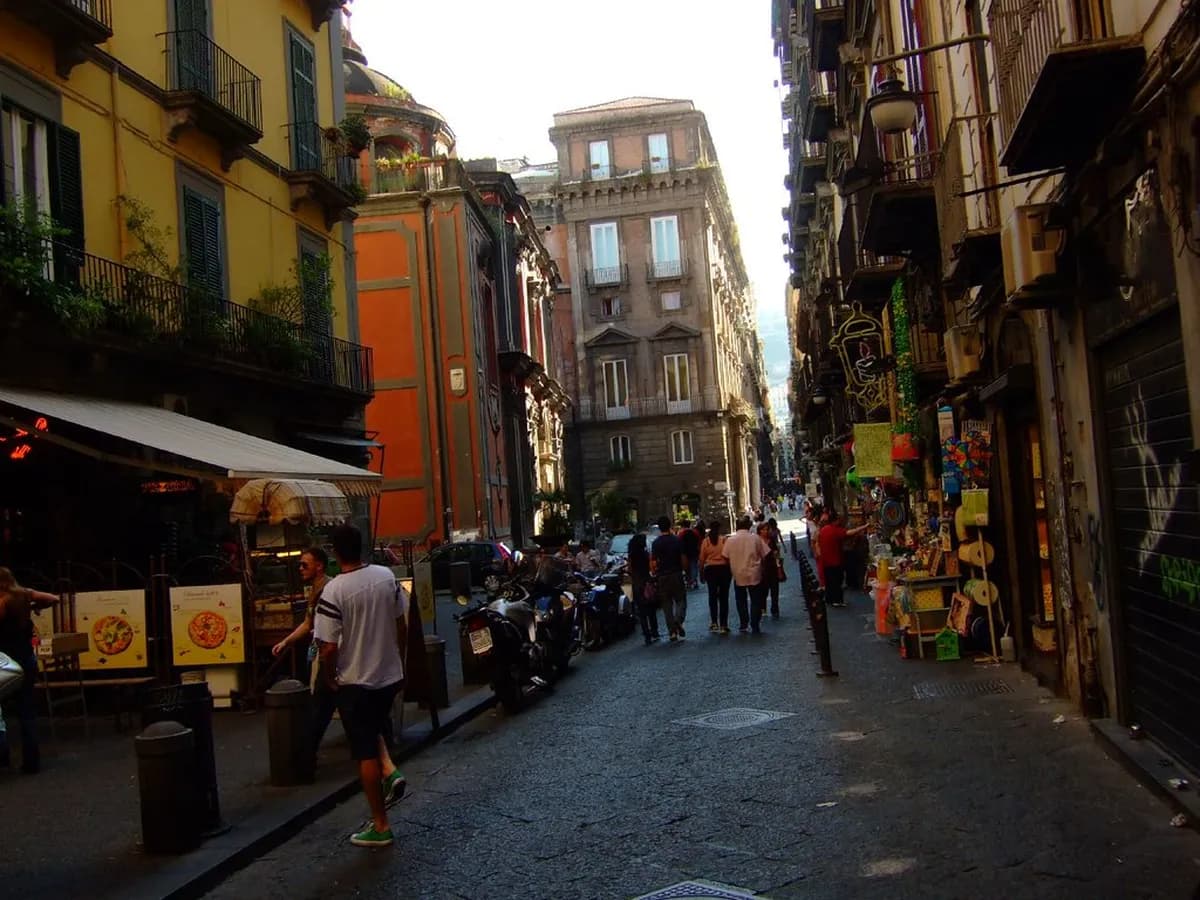
Spaccanapoli is the ancient spine of Naples, a narrow east-west street that has split the city in two for more than two thousand years. Its name says it plainly: spacca means "to split," and the street does exactly that, cutting a ruler-straight line through the dense tangle of the historic center. From above, the effect is startling — a laser-cut groove through one of the most chaotic urban fabrics in Europe.
The street traces the path of the ancient decumanus inferior, one of the three main axes laid out by Greek colonists when Naples was still called Neapolis. That grid has barely changed. Walking it today means you are following the same line as merchants, priests, and soldiers from the Greek, Roman, and medieval eras. You can discover several Hidden Gems In Naples Travel Guide simply by turning into the side alleys that branch off the main street.
Historical Background and Route
Spaccanapoli is not a single street but a chain of connected streets sharing one unbroken alignment. Starting at Piazza del Gesù Nuovo in the west, it runs as Via Benedetto Croce, then becomes Via San Biagio dei Librai, and finally Via Vicaria Vecchia before reaching the Forcella district in the east. The total distance is roughly two kilometers.
Naples' historic center, which contains Spaccanapoli, was inscribed as a UNESCO World Heritage Site in 1995. The original Greek grid also included perpendicular cross-streets called cardini, and you can still trace them in the narrow lanes cutting north and south off the main axis. Two parallel decumani run alongside Spaccanapoli: Via dei Tribunali to the north (the decumanus maior) and the quieter Anticaglia street further above.
Over the centuries the street accumulated layers of human activity — medieval marketplaces, Baroque palaces, Renaissance churches, and in 2026 a dense concentration of independent cafes, artisan workshops, and street food vendors. The mix of grandeur and ordinary life is what makes it unlike any other historic street in Italy.
Must-See Spaccanapoli Attractions
The western anchor of the street is the Chiesa del Gesù Nuovo on Piazza del Gesù Nuovo. Its exterior is covered in diamond-point rusticated stone that looks unlike any other church facade in Italy — and legend holds that the carved symbols carry encoded meaning. Inside, a corner wall is lined with 35 saintly busts dating from the 17th century, each housing relics of early Christian martyrs. This is one of the two "spooky" stops that locals consistently recommend.
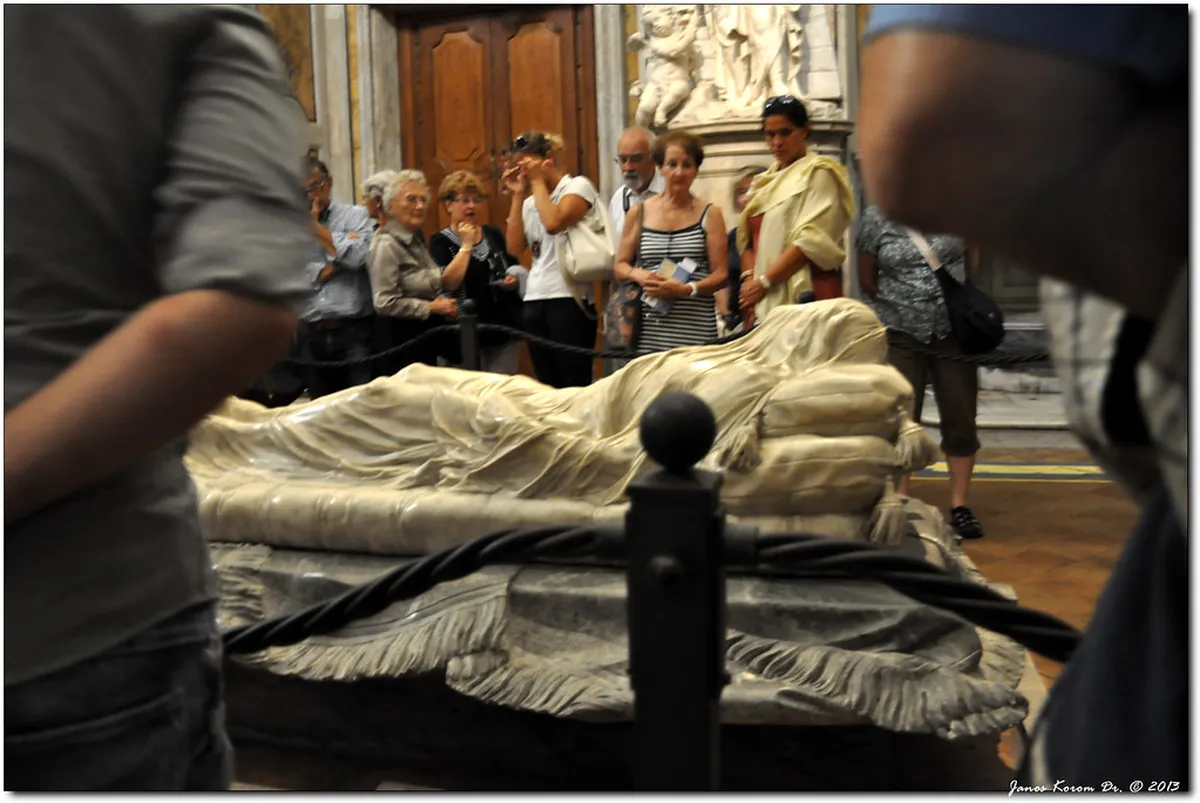
Book the Cappella Sansevero (Veiled Christ) online in advance — tickets cost around €8–€10 and same-day slots sell out by mid-morning in peak season. Arrive before 10:00 for the shortest queues.
Directly across the piazza is the Santa Chiara Monastery complex. The Gothic church is impressive, but the real draw is the Cloister of Santa Chiara behind it: shaded walkways decorated with hand-painted majolica tiles from the 18th century, depicting pastoral scenes and local life. Admission to the cloister costs around €6. It is one of the few genuinely quiet spaces in the entire historic center.
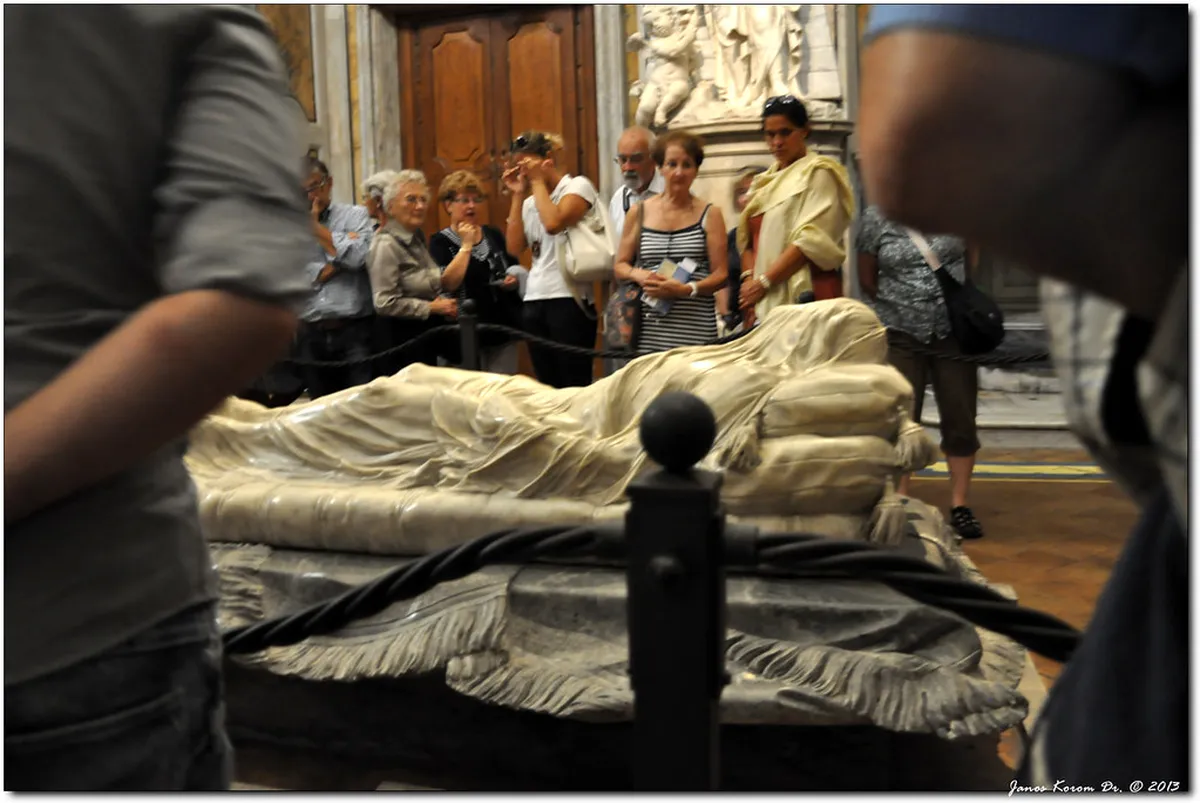
The Cappella Sansevero sits a short walk east, on Via Francesco de Sanctis. It holds the Veiled Christ, a marble sculpture by Giuseppe Sanmartino from 1753 in which the veil draped over Christ appears genuinely transparent. The chapel is small and gets crowded; book online in advance (around €8–€10) and arrive before 10:00 to avoid queues.
Do not walk past Piazzetta Nilo without stopping. A marble statue of the Nile river god reclines in a niche on the corner, flanked by small figures. It was a gift to Naples from Alexandrian merchants who lived in this quarter during Roman times, and locals still drape the statue with offerings and trinkets. Most visitors pass it without knowing what they are looking at.
Museums, Art, and Culture in Spaccanapoli
The Pio Monte della Misericordia stands a block north of Spaccanapoli on Via dei Tribunali. It houses Caravaggio's The Seven Acts of Mercy, painted in 1607 and considered one of his finest works. The painting is enormous and still hangs in the church for which it was commissioned, giving it a spiritual weight that museum display cases cannot replicate. Entry is around €8.
San Domenico Maggiore anchors the square of the same name midway along the street. This Gothic church was a center of Neapolitan intellectual life during the Renaissance — Thomas Aquinas studied here. The interior holds dozens of paintings and funerary monuments from the 14th to 17th centuries. Entry is free, though donations are appreciated.
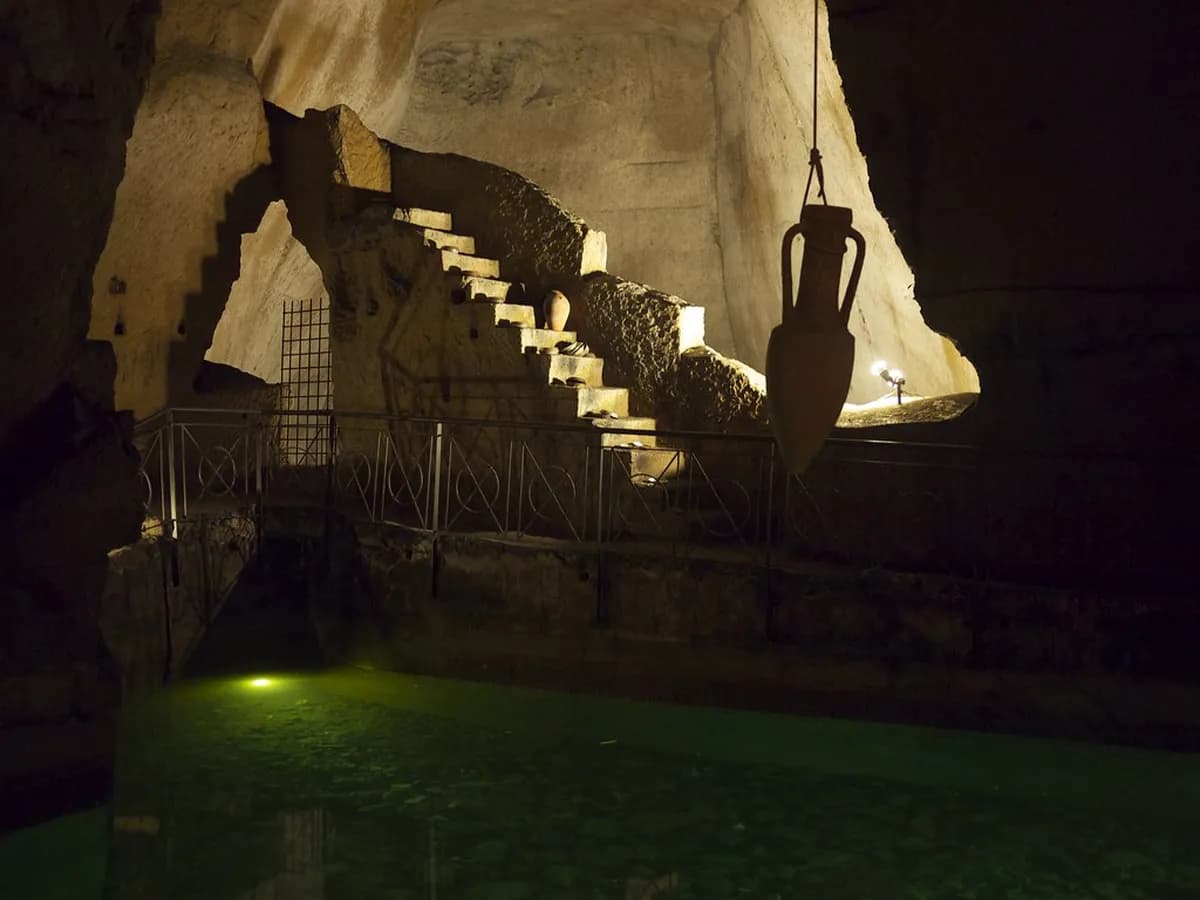
For anyone curious about what lies beneath, the Napoli Sotterranea Underground Naples Travel Guide network enters from Piazza San Gaetano, a few minutes' walk north. Napoli Sotterranea descends into tunnels cut 2,400 years ago as Greek cisterns, later used as Roman aqueducts and wartime shelters. Tours run throughout the day and cost around €10–€15. Book ahead in summer.
Street art fans should walk to Via Duomo. The artist Jorit (Ciro Cerullo) painted a hyper-realistic, building-scale portrait of San Gennaro — the patron saint of Naples — on a residential wall. The face gazes out with a directness that stops most passersby. Jorit works globally but Naples is his home base, and this piece has become an unofficial symbol of the city's contemporary identity.
Spooky Spaccanapoli: The Skull Churches
Naples has a long documented relationship with the cult of the dead, and Spaccanapoli is where it is most visible. The Chiesa di Santa Luciella ai Librai was abandoned for thirty years before reopening in 2019. In the lower level of the church sits a skull with a bone deformity that creates the appearance of ears. From around 1900 onward, Neapolitans would pray to this skull and whisper wishes to it — a tradition you can still participate in.
The lower level also contains a vertical cross-section of the street's paving layers, each era stacked directly on top of the previous one: Greek, Roman, medieval, and modern stone. It looks like a geological core sample, except the strata are centuries of human civilization. No competitor describes this properly, but it is one of the most intellectually striking things on the entire street. Admission is free or by small donation.
The Chiesa del Gesù Nuovo reinforces the theme. The far left corner of its nave holds the 35 relic-bust wall mentioned above. The church is free to enter and opens from approximately 07:00 to 13:00 and 16:00 to 19:30. Go in the morning before the tour groups fill the piazza outside.
Via San Gregorio Armeno: Year-Round Christmas
Via San Gregorio Armeno cuts between Spaccanapoli and Via dei Tribunali and is probably the most-photographed alley in Naples. Every shop on the street sells handcrafted Nativity scene figures, called presepe. The tradition traces back to at least the 1300s, but the elaborate scenes that Neapolitan workshops produce today — sometimes with hundreds of moving figurines — took off in the 18th century when noble families competed to build the most elaborate displays.
What makes the street genuinely unusual is that it operates like this every day of the year, not just at Christmas. Tourists and locals alike crowd the alley to watch artisans paint and carve. The figurines now include contemporary celebrities alongside the traditional shepherds and angels; spotting which politicians and footballers have been immortalized in terracotta is part of the fun. Budget around an hour for the street and expect to pay €15–€150 for finished figurines depending on quality and size.
Where to Drink Coffee on Spaccanapoli
Naples has one of the most specific coffee cultures in Italy, and the expectations on Spaccanapoli are accordingly high. Caffetteria Mexico at Via Domenico Capitelli 11 is a consistent local favorite, brewing Passalacqua coffee from a Naples-based roastery. Espresso here costs around €1.20 at the bar, as it should.
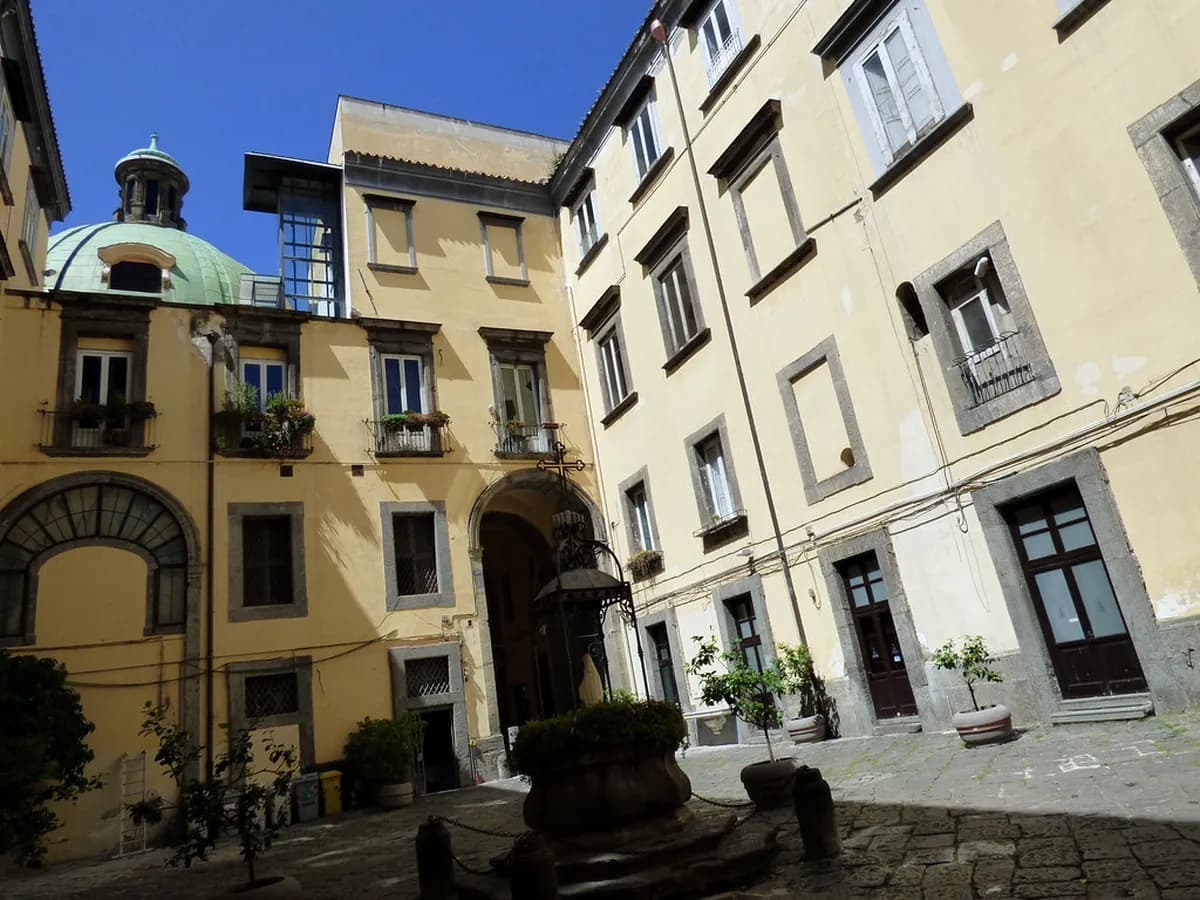
Cuccuma Caffè uses a traditional Neapolitan pot-brewing method called cuccuma. The bartenders will walk you through the process if you ask. Palazzo Venezia has a courtyard hidden up a flight of stairs from the street — easy to miss if you do not know to look for the entrance — where you can drink coffee away from the noise of the main road.
One practical note: standing at the bar is cheaper and faster than sitting at a table. Neapolitans drink espresso in under two minutes and move on. If you want to linger, order a caffè sospeso (a "suspended coffee" paid forward for a stranger) and explain you would like to sit — staff will accommodate you.
Where to Eat on Spaccanapoli
For street food, the main options are tightly clustered. Taralleria Napoletana sells taralli napoletani — dry ring-shaped biscuits flavored with pepper and lard. Pan' e Muzzarell' at Via Domenico Capitelli 14 sells fresh mozzarella, sometimes still warm, tucked into bread. Il Cuoppo does freshly fried cuoppo: a paper cone of fried seafood or vegetables for around €3–€5. These are all walkable from each other and worth combining into one sweep of the street. More street food spots fill the surrounding blocks if you want to extend the circuit.
For a sit-down lunch without paying tourist prices, find a tavola calda. These are small restaurants that cook a fixed set of traditional dishes fresh each morning, present them buffet-style, and serve them until they run out — usually by 14:30. Spiedo d'Oro on Spaccanapoli is one of the best in the city. If they are serving genovese — beef and onions slow-cooked until almost dissolved, served as a pasta sauce — order it. It is not on tourist menus elsewhere in Naples.
Palazzo Petrucci in Piazza San Domenico Maggiore is a gourmet pizzeria that uses seasonal toppings like grilled pumpkin and pancetta alongside the classics. They have outdoor seating directly in the piazza and a rooftop terrace. Expect to pay €10–€16 per pizza. Book for dinner; lunch walk-ins are usually possible mid-week.
| Spot | Type | Price range | Best for |
|---|---|---|---|
| Il Cuoppo | Street food | €3–€5 | Quick fried snack on the go |
| Caffetteria Mexico | Café | €1.20 espresso | Authentic local coffee |
| Taralleria Napoletana | Street food | €2–€4 | Traditional taralli biscuits |
| Spiedo d'Oro (tavola calda) | Lunch restaurant | €8–€12 | Traditional genovese pasta |
| Palazzo Petrucci | Gourmet pizzeria | €10–€16 | Creative seasonal pizza |
Family-Friendly and Budget-Friendly Options
Spaccanapoli requires essentially no entrance fees to enjoy at street level. The churches — Gesù Nuovo, San Domenico Maggiore, Santa Luciella — are free. The Nile statue, the street art, the artisan workshops on Via San Gregorio Armeno, and the street food stalls cost nothing to browse. A full morning on Spaccanapoli with coffee and one street food stop will come to under €10 per person if you skip the paid attractions.
Children tend to engage well with Via San Gregorio Armeno — the moving figurines and the celebrity terracotta figures hold attention. The Santa Luciella skull chamber is age-dependent: some kids love it, some find it genuinely disturbing. The Santa Chiara cloister (€6) is a good reset point if children need a quieter, shadier break from the street energy. Strollers are difficult on the cobblestones; a carrier works better.
Budget travelers can access several more sites for free, including the Free Things To Do In Naples Travel Guide that require no advance planning. The Cappella Sansevero and the Santa Chiara cloister are the only spots on the main Spaccanapoli route that charge meaningful admission, and both are worth the price if your schedule allows.
How to Plan a Smooth Spaccanapoli Day
Spring (April to June) and autumn (September to October) are the best seasons. Temperatures in those windows average 18°C–25°C, which is comfortable for a full day on foot. August is survivable but crowds peak and temperatures hit 30°C+; churches close for midday riposo between roughly 13:00 and 16:00, which cuts your window significantly.
Churches along Spaccanapoli close for midday riposo between roughly 13:00 and 16:00, especially in August. Plan all church visits for the morning window to avoid finding doors locked mid-tour.
Start from the western end at Piazza del Gesù Nuovo by 09:00. Work east along the street, making detours north to Via dei Tribunali for the Pio Monte della Misericordia and Via San Gregorio Armeno. Reach the underground Naples entrance at Piazza San Gaetano before noon if you have booked a tour. Lunch at a tavola calda by 13:00, then use the afternoon for the Cappella Sansevero (which stays open later) and the San Gennaro mural on Via Duomo.
Getting there is straightforward. The nearest metro stations are Dante and Toledo on Line 1 (exit Dante for the western start point). Buses on Corso Umberto I stop near the eastern end. Because most streets in the historic center are pedestrian-only or very narrow, walking is faster than any vehicle once you are in the area. Keep valuables in a zipped inner pocket and book the Cappella Sansevero online before you leave your accommodation — same-day tickets sell out by mid-morning in peak season. You can explore further using a hidden Naples 3-day itinerary if you want to structure the rest of your trip.
Frequently Asked Questions
Spooky Spaccanapoli: Skeletons in the…churches?
Yes, Spaccanapoli features unique churches like Chiesa di Santa Luciella ai Librai, which houses the famous skull with ears. These sacred sites reflect Naples' historical connection to the cult of the dead. Explore these fascinating 18 Unusual Things to Do in Naples to experience this unique local tradition firsthand.
Which spaccanapoli naples options fit first-time visitors?
First-time visitors should focus on the main stretch of Spaccanapoli, starting at Piazza del Gesù Nuovo. Be sure to visit the Santa Chiara Cloister and the Sansevero Chapel. These central locations are easy to navigate and offer a perfect introduction to the history of the city.
How much time should you plan for spaccanapoli naples?
You should plan to spend at least one full day exploring Spaccanapoli. This allows enough time to visit the major churches, enjoy a traditional pizza lunch, and wander the craft shops. A slower pace lets you absorb the lively street atmosphere without rushing.
What should travelers avoid when planning spaccanapoli naples?
Travelers should avoid visiting during the peak afternoon heat when many churches close their doors. Avoid carrying valuable items in open pockets due to crowded streets. Finally, do not forget to book museum tickets online in advance to avoid long entrance lines.
Is spaccanapoli naples worth including on a short itinerary?
Yes, Spaccanapoli is absolutely worth including on even a short trip to Naples. It packs centuries of history, incredible street food, and famous landmarks into one walkable line. It offers the most concentrated dose of authentic Neapolitan culture in the entire city.
Visiting spaccanapoli naples offers an immersive journey into the colorful soul of this historic Italian city. From the ancient Greek street grid to the delicious street food, every moment spent here reveals something fascinating.
Whether you admire majestic art or simply enjoy the lively local atmosphere, this street will leave a lasting impression. You can discover even more remarkable sights by exploring a detailed multi-day Naples itinerary guide for your next trip.
Continue exploring
More guides you'll find useful