Rione Sanita Naples Travel Guide
Plan your trip to rione sanita naples with top local picks, neighborhood context, timing tips, and practical booking advice for a smoother Italian holiday.
On this page
Rione Sanita Naples: The Ultimate Local Guide
Tucked away just north of the historic center lies Rione Sanità, a vibrant neighborhood that for decades sat outside the standard tourist circuit. Today it draws travelers who want to see Naples as it actually lives — not a polished postcard version but a district of baroque palaces, underground catacombs, open-air markets, and street art that covers entire building facades. The area sits at the foot of the Capodimonte hill, north of the old viceregal walls, and encompasses Via Sanità, Piazza Sanità, and the adjoining Borgo dei Vergini.
The neighborhood carries its history visibly. Its name comes from the Latin salubritas — "clean air" — because the valley's fresh breezes made it a refuge during medieval plagues. That link between life and death runs through everything here, from the Christian catacombs beneath your feet to the Fontanelle Cemetery carved into the yellow tuff cliffs. If you want to experience some of the most 18 Unusual Things to Do in Naples, this neighborhood is the starting point.
This guide covers the specific sights, practical logistics, food stops, and one piece of cultural history that most visitors entirely miss. Allow at least four hours; a full day is better.
The Rione Sanità: Beating Heart of Neapolitan Daily Life
Rione Sanità represents all the contradictions of Naples in a single valley. The district is officially part of the Stella quarter, wedged between the Piazza Vergini to the south and the Capodimonte hill to the north. Despite being geographically central, it spent much of the 19th and 20th centuries feeling like a suburb — a consequence of the bridge built over it that effectively cut the neighborhood off from passing foot traffic.
What that isolation preserved is remarkable. Market vendors still call out prices in dialect. Children play football in the narrow streets. The smell of ragù drifts from open windows at midday. This is the neighborhood that produced Totò, Italy's greatest comic actor, who called it "the most famous in Naples." Walking here without a fixed agenda — just drifting from piazza to alley — is itself a worthwhile activity.
The best entry point in 2026 is Metro Line 1 (Museo stop) or Line 2 (Cavour stop), then a short walk north past Piazza Cavour. Bus lines R4, 139, and C63 also stop near the neighborhood entrance. Most sights are concentrated within a 15-minute walk of each other, though the terrain is hilly and the cobblestones are uneven — wear sturdy footwear.
History of Rione Sanità
The valley that became Rione Sanità was a burial ground long before it was a neighborhood. Greek settlers established hypogea here, and early Christians followed with catacombs during the first centuries CE. The area's association with death — and the miraculous cures attributed to the catacombs' cool air — gave it its name. By the 16th century it was one of the least-contaminated zones in Naples, its fresh valley air contrasting with the dense and disease-prone city center.
In the 17th century the valley hosted the city's hangmen's lazaret during the plague of 1652, later converted into the San Gennaro dei Poveri hospital. A generation later, the area's destiny shifted: ambitious architects designed palatial residences for the Spanish nobility, and the Rione briefly became a stage for aristocratic display. The palaces of Sanfelice and Spagnolo date from this era.
In the 18th century the Royal Family used the Rione Sanità road as their route between the city center and the Reggia di Capodimonte. The new bridge built to speed up that journey — the Ponte della Sanità — eventually sealed the neighborhood's fate as a place apart, visually separated from the city around it. That physical enclosure paradoxically kept the neighborhood's identity intact.
The Sanità's Bridge
The Ponte della Sanità — also called the Ponte Maddalena Cerasuolo — is the first thing you notice when you arrive. It looms over the surrounding buildings at a height that feels almost theatrical, passing directly above rooftops and washing lines. Construction began under Giuseppe Bonaparte in the early 19th century and was completed under Gioacchino Murat.
The bridge solved a traffic problem for the Royal Family but created an urban one for the Rione. By routing through-traffic overhead, it effectively bypassed the neighborhood entirely. Residents below watched the city's commercial life move away from their streets. The sense of being a suburb inside the city center — close to everything, connected to nothing — became embedded in the local identity.
Standing beneath the bridge today and looking up gives you the whole compressed drama of the Rione: ancient apartment facades, laundry strung between windows, and this enormous stone arch soaring above it all. It is one of the most visually striking spots in all of Naples, and almost no mainstream tour stops here. Take ten minutes to walk the underside of the bridge before heading into the streets beyond.
The Historic Palazzi of Rione Sanità
The two great baroque palaces of the Rione are Palazzo dello Spagnolo and Palazzo Sanfelice, both designed by Ferdinando Sanfelice in 1738. Palazzo dello Spagnolo sits in the Borgo dei Vergini square, partially hidden by market stalls. Its most famous feature is the "ali di falco" (falcon wing) staircase, a double-ramp exterior stair that curves upward like a stage set. The palace was originally the Moscati family's property; when they went bankrupt they sold to a Spaniard named Tommaso Atienza, which gave the building its name. The building is now private, but if you ask politely at the gate, most days someone will let you photograph the courtyard.
Palazzo Sanfelice, a short walk away, is similar in ambition but slightly less ornate. Its octagonal courtyard and the staircase that climbs through arches of decreasing scale create a disorienting perspective effect — the point of view shifts completely as you ascend each flight. Both palaces are open to the street and free to observe from outside. They demonstrate why Naples was briefly, in the 18th century, one of the most architecturally innovative cities in Europe.
A third notable building is the Palazzo del Principe di Sannicandro, with centuries-old frescoes visible through open courtyards. Unlike the Spagnolo and Sanfelice, this one sees almost no visitors. It is a good example of the Rione's broader pattern: extraordinary historic fabric hidden in plain sight, accessible to anyone willing to look up.
The Catacombs of San Gennaro and the Underground Rione
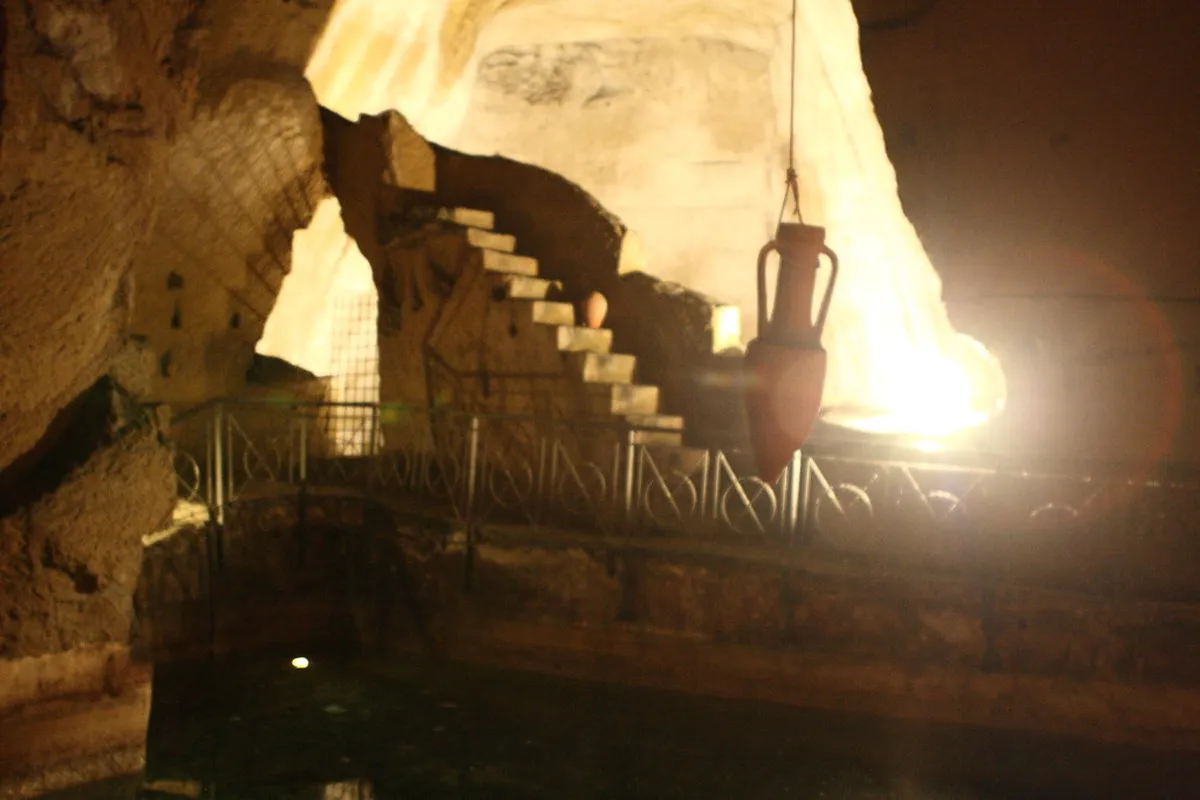
The Catacombs of San Gennaro at Via Capodimonte 13 are the neighborhood's headline attraction and one of the most impressive underground sites in southern Italy. Unlike the Roman catacombs, the Neapolitan versions are spacious and well-ventilated — the tuff is soft enough to carve large rooms and galleries, and the temperature stays between 15 and 22 degrees Celsius year-round. The tour covers two levels and approximately three thousand tombs, including the original burial site of San Gennaro, Naples' patron saint. Tickets cost around €11 in 2026; book online at catacombedinapoli.it to avoid queuing.
Catacomb tickets cost around €11 in 2026 and should be booked online at catacombedinapoli.it to avoid queuing — the first tour slot fills fastest. The underground temperature stays between 15 and 22 degrees Celsius year-round, making it a welcome cool retreat on hot summer days.
What makes these catacombs unusual is the community story behind their revival. The site had been abandoned for years when local parish priest Father Antonio Loffredo organized neighborhood youth to clean, restore, and reopen the catacombs in 2006. The cooperative that now runs tours, La Paranza, is made up of young people from the Rione itself. Visiting is not just a history lesson — it is a direct contribution to the neighborhood's ongoing effort to reclaim its own heritage.
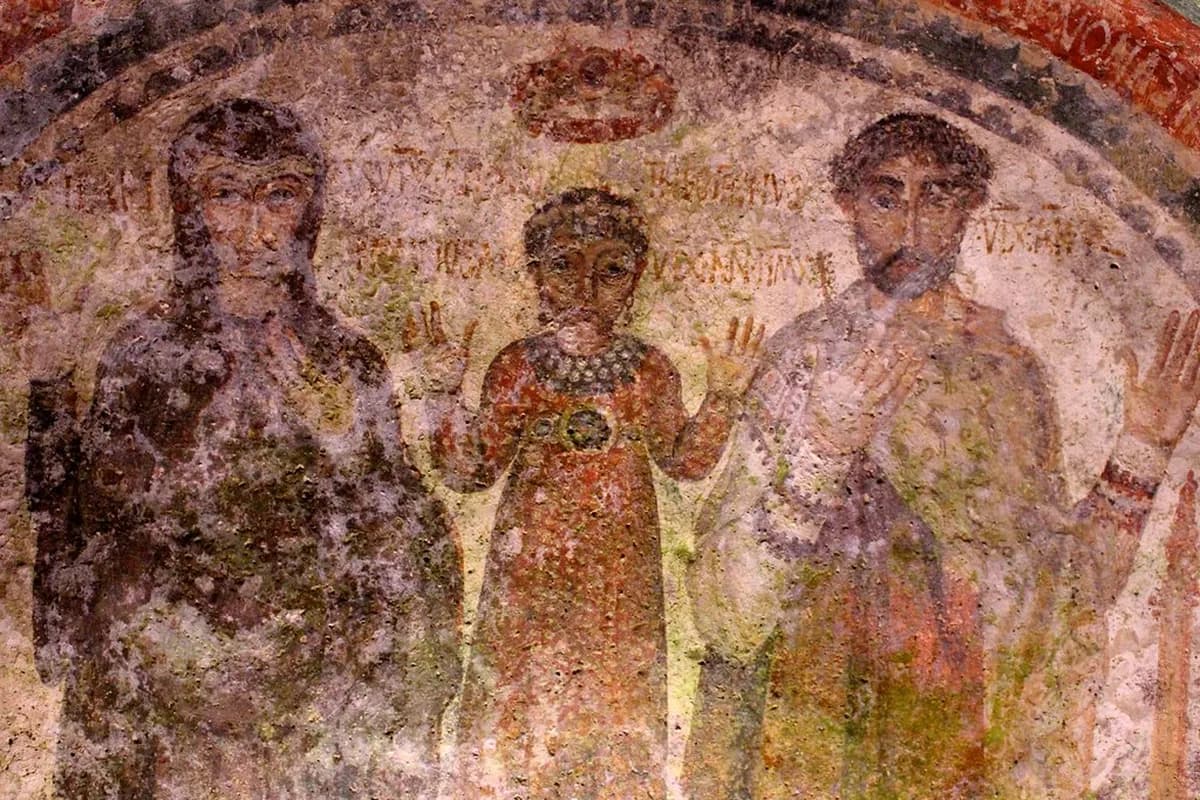
Below the Basilica of Santa Maria della Sanità lie the separate Catacombs of San Gaudioso, reachable through the basilica itself. Both sets of catacombs contain early Christian frescoes and mosaic fragments. You can cover both in a combined visit; allow two to three hours for both underground sites together. These are among the most compelling Beautiful Places In Naples Travel Guide that most visitors skip entirely.
The Basilica of Santa Maria della Sanità
The Basilica of Santa Maria della Sanità is the spiritual center of the neighborhood, immediately recognizable by its dome covered in yellow and green majolica tiles — visible from the Sanità bridge above and from the streets below. It was built on a paleochristian foundation, and entering the basilica takes you through four distinct layers of time: the baroque exterior, the 17th-century nave, the crypt accessed via a monumental staircase, and the early Christian catacombs below.
Inside, the pulpit stands unusually central in the nave. The main altar contains the Madonna della Sanità, considered the oldest surviving image of the Virgin in Campania, dating to the 5th or 6th century. In a side chapel, the statue of Saint Vincenzo — the "Angel of the Apocalypse," depicted with real wings — is one of the more arresting objects in the church. Entry to the basilica itself is free; catacomb access requires the separate ticket mentioned above.
The basilica is open daily from approximately 09:00 to 13:00 and again from 16:00 to 18:30. Dress code is enforced: cover shoulders and knees. Sunday mornings see the building full for mass, which creates a completely different atmosphere — quieter, more devotional — than the tourist visits on weekday mornings.
Stella (Rione Sanità)
Stella is the administrative quarter that contains Rione Sanità, and understanding the distinction helps you navigate the area. While "Rione Sanità" refers to the valley neighborhood with its catacombs and palaces, "Stella" is the broader district that also takes in the upper slopes toward Capodimonte and several additional historic churches. Walking from the valley floor uphill into Stella reveals a different pace — fewer tourists, more residential streets, and baroque churches that open only for early morning mass.
The quarter's history runs parallel to the Rione's: it was always a place on the edge of the city's formal boundaries, neither fully aristocratic nor fully working-class. That in-between quality persists. Streets in Stella feel quieter than the Rione's market-level energy, and the architecture shifts subtly — fewer grand palaces, more modest 18th-century residential blocks with worn facade decoration.
If you are combining Rione Sanità with a visit to the Capodimonte Museum, Stella is the natural route between the two. The walk uphill from Piazza Sanità through the Stella quarter takes about 20 minutes on foot. It is an underused route that most visitors skip in favor of a taxi or bus, but it passes several small churches and a neighborhood bakery circuit worth the detour. For more on combining these sights, see our hidden Naples 3-day itinerary.
The Fontanelle Cemetery
The Fontanelle Cemetery is carved into the tuff hillside at Via Fontanelle 80 and holds one of the most distinctive burial traditions in Europe. The site began as a tuff quarry that was abandoned in the 1600s; after the plague of 1656 and cholera in 1826 overwhelmed the city's formal cemeteries, tens of thousands of bones were relocated here. The name comes from the natural springs ("fontanelle") that once ran through the area.
What grew around the bones was the cult of the anime pezzentelle — "pauper souls." Locals would adopt a skull, clean it, place it in a glass-covered box, and care for it in exchange for graces communicated through dreams. Some skulls became neighborhood celebrities: the "Couple" laid together in a shared coffin; the "Crying Concetta," whose skull regularly collected condensation interpreted as tears; the "Captain," known for dramatic supernatural demands. The Catholic Church suppressed the cult in the 1960s, but traces of it persist in the Fontanelle's atmosphere.
Admission is typically free when the site is open, but it has undergone periodic closures for structural safety checks — always verify current status on the Naples municipal website before visiting. When open, a guided tour (available in English on weekend mornings) is the best way to navigate the legends. The site offers a completely different register from the nearby Catacombs Of Naples San Gennaro Travel Guide — less formally organized, more raw, and arguably more emotionally powerful.
The Fontanelle Cemetery has undergone periodic closures for structural safety checks — always verify current status on the Naples municipal website before visiting. When open, English-language guided tours run on weekend mornings only.
Totò, the Murals, and the Rione Sanità on Screen
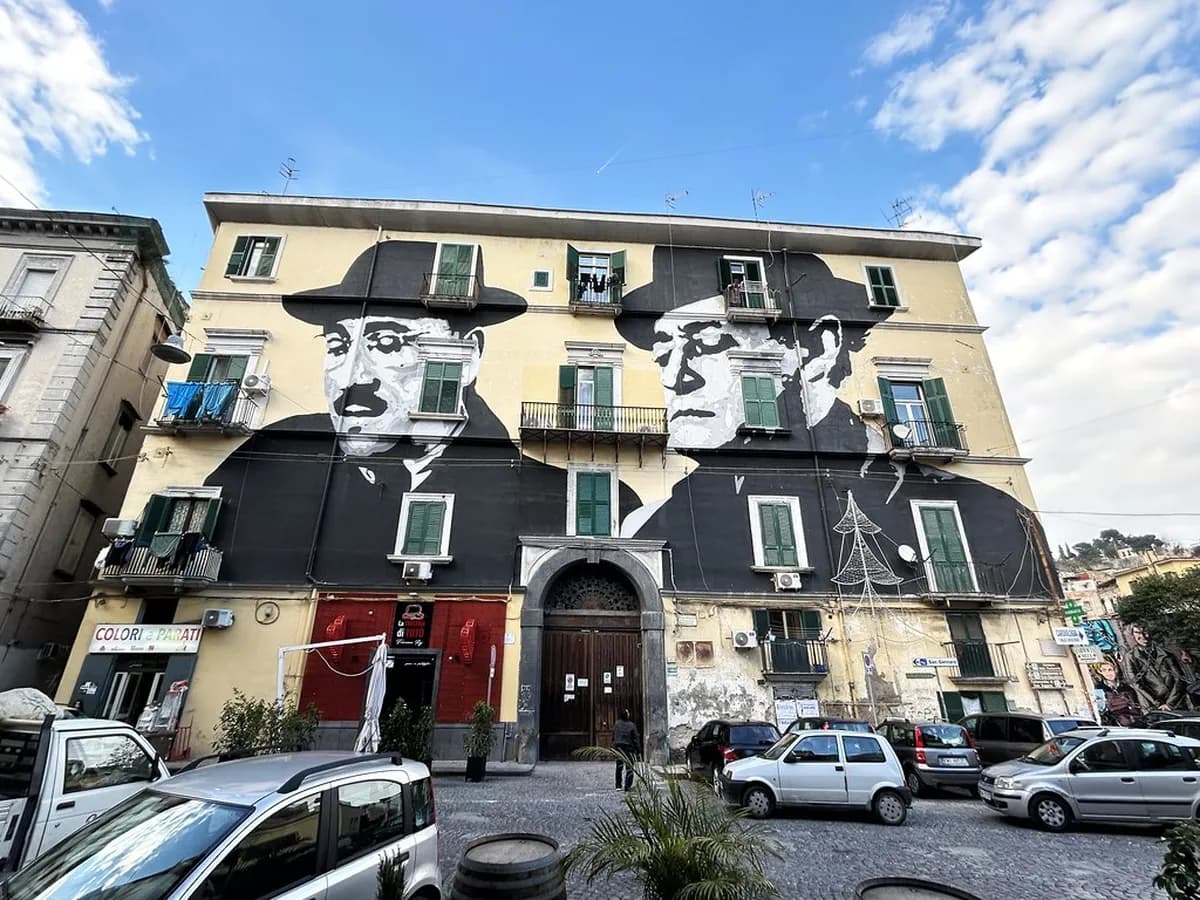
Via Santa Maria Antesaecula 109 is the birthplace of Antonio De Curtis, better known as Totò, the comic actor and playwright who remains one of the most beloved figures in Italian cultural history. The building is private and not open to visitors, but the facade is covered in murals and commemorative plaques, and simply standing there gives a specific kind of emotional texture to the visit. Nearby, inside the Nuovo Teatro Sanità — built within an 18th-century church that had been abandoned for years — a mural of "Totò and Pasolini" marks the spot where the two collaborated on the 1964 film Uccellacci e Uccellini. The theatre itself still operates year-round as a community performance space; checking their schedule for evening shows is worth it if your visit overlaps.
The Rione's film history extends beyond Totò. Scenes from L'Oro di Napoli (1954) and Ieri, oggi e domani (1963) were shot on these streets. More recently, Season 3 of Gomorra used the neighborhood extensively as a backdrop. The visual contrast between the cramped alleyways, the soaring bridge overhead, and the baroque church domes makes it obvious why directors keep returning.
The street art that covers the Rione today is a continuation of this artistic tradition. Artists including Jerico and Francisco Bosoletti have painted large-scale murals across building facades — "Luce" by Tono Cruz, showing neighborhood children's faces across an entire wall, is one of the most photographed. The murals are not a curated gallery walk; they appear unexpectedly on the sides of residential blocks, on stairwells, on the concrete pillars under the bridge. That randomness is the point. No map covers all of them, which means the only way to find them is to walk without a fixed route.
Jago Museum
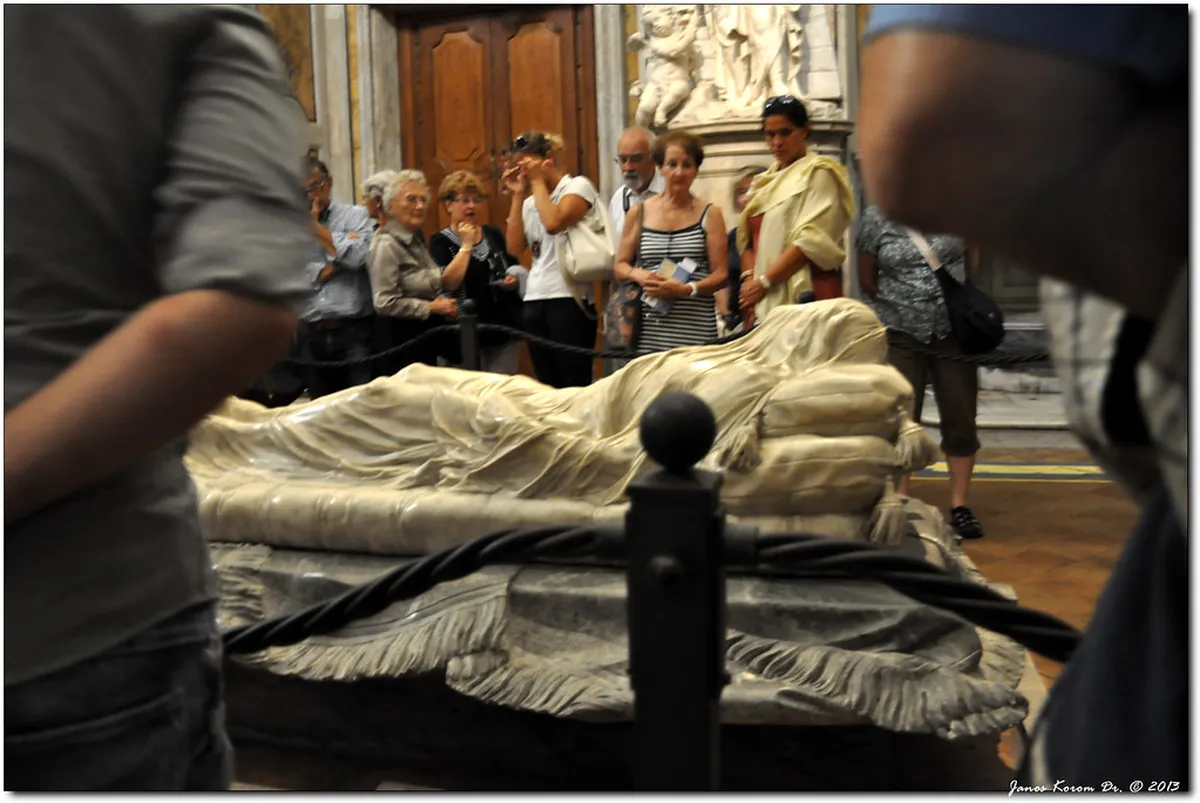
Inside the 17th-century church of Sant'Aspreno ai Crociferi, the Jago Museum presents the work of the sculptor Jago — an Italian artist whose hyperrealistic marble figures have generated significant international attention. The church had been abandoned before the Comunità San Gennaro foundation and the La Paranza cooperative converted it into an exhibition space. The collaboration between Jago and the neighborhood is deliberate: he chose Rione Sanità specifically because of what he called its "incredible human and artistic capital."
The current permanent installation includes several large marble sculptures displayed in the church's nave, where the original sacred architecture provides a striking counterpoint to the contemporary work. Admission costs around €8–12; check the official Jago Museum website for current tickets and booking. The museum is closed on Tuesdays. Allow 45 minutes to an hour for a thorough visit.
The Jago Museum is a useful benchmark for how the Rione has changed since 2010. A decade ago, none of these cultural institutions existed; the catacombs were closed, the churches were in disrepair, and the neighborhood's reputation discouraged visitors. The transformation has been led almost entirely by local cooperatives and community organizations — not by outside investment or municipal tourism development. That history is worth knowing before you visit, because it changes how you read the experience.
The Virgin Market and the Flavors of the Rione
The Mercato dei Vergini on Via dei Vergini is one of the most active open-air markets in Naples. Stalls run the full length of the street with seasonal fruit and vegetables, cured meats, household goods, and bootleg DVDs. The market operates every morning except Sunday; it is busiest between 08:00 and 12:00. Unlike the fish market at Porta Nolana or the antiques at Poggioreale, this one is genuinely for locals — vendors know their regulars, prices are in Italian only, and the atmosphere is completely transactional rather than performative.
The food stops around the market are specific and worth knowing by name. Concettina ai Tre Santi on Via Arena della Sanità is widely considered one of the best pizzerias in the city — book weeks ahead for dinner, or arrive at 12:30 on a weekday for a shorter queue at lunch. Poppella on Via Arena della Sanità is the source of the famous fiocco di neve (snowflake) pastry: a soft brioche filled with ricotta cream and wild strawberries that has become the neighborhood's defining food souvenir. Get there before 10:00 to guarantee stock. Isabella De Cham produces fried street food including cuoppo di frittura — mixed fried seafood in a paper cone — for around €5 at the counter.
For evenings, Enoteca Sepe is a wine bar that functions as an informal neighborhood living room: locals bring bottles, sit outside on folding chairs, and talk until late. It operates with minimal signage and no formal reservation system. If you want a window into the Rione Sanità that no guided tour provides, spend two hours here after dinner. Bring cash everywhere — card machines are unreliable at market stalls and smaller venues throughout the neighborhood.
| Food Stop | Specialty | Best For | Booking |
|---|---|---|---|
| Concettina ai Tre Santi | Neapolitan pizza | Lunch (12:30 weekday) or dinner | Book weeks ahead for dinner |
| Poppella | Fiocco di neve pastry (ricotta & strawberry brioche) | Morning | Arrive before 10:00 |
| Isabella De Cham | Cuoppo di frittura (fried seafood cone, ~€5) | Lunch snack | Walk-in at counter |
| Enoteca Sepe | Local wine bar, informal | Evening | No reservations, cash only |
| Mercato dei Vergini stalls | Seasonal produce, cured meats | Morning 08:00–12:00 | Walk-in (Mon–Sat) |
How to Plan a Smooth Rione Sanità Day
A practical sequence for a full day visit: arrive at 09:00 and go directly to the Catacombs of San Gennaro — the first tour slot fills fastest and the underground temperature is pleasant before the midday heat sets in. After the catacombs, walk through the Basilica of Santa Maria della Sanità (30 minutes), then move north to Palazzo dello Spagnolo and Palazzo Sanfelice. The walk between these points passes through the Borgo dei Vergini, where the market is still active through mid-morning.
The Fontanelle Cemetery, Jago Museum, and Totò's birthplace can fill the late morning. Use the 13:00–15:00 siesta period — when most small shops close — for lunch at Concettina ai Tre Santi or a cheaper option from a market stall. The afternoon is the right time for the Stella quarter walk toward Capodimonte if you want green space. The Capodimonte Park is free; the art museum inside the palace costs around €16 but can be skipped if your focus is the Rione itself.
Safety in 2026: the neighborhood is welcoming and heavily visited during daylight hours. Keep bags closed and avoid displaying expensive equipment in crowd-heavy spots like the market. Evening visits to the main piazze are generally relaxed, particularly around Piazza Sanità and the Nuovo Teatro Sanità area. For further context, the Free Things To Do In Naples Travel Guide guide covers nearby day-trip options that pair well with a Rione Sanità visit.
Frequently Asked Questions
Is rione sanita naples safe for tourists to visit?
Yes, the neighborhood is generally safe for tourists who stay aware of their surroundings. Avoid displaying expensive items and keep your bags secure in crowded markets. Many travelers share positive experiences on Tripadvisor.com regarding their daytime visits.
How do you get to the rione sanita naples district?
The easiest way to reach the district is by taking the Naples Metro Line 1 or Line 2. You can get off at the Piazza Cavour station and walk a few minutes north. Alternatively, several local buses stop near the main entrance bridge.
What is the best time of day to explore Rione Sanità?
Morning is the best time to visit because the local street markets are vibrant and fully active. Most historic churches and catacombs also open early and close by the afternoon. Planning a morning trip helps you avoid the intense midday heat.
Visiting rione sanita naples offers an unforgettable journey into the authentic heart of Southern Italy. From its deep historic roots to its thriving modern art scene, this neighborhood has something for everyone. You will leave with a deeper appreciation for the resilient spirit of the local Neapolitan people.
Make sure to plan your itinerary carefully to get the most out of your exploration. Whether you stay for a few hours or a whole day, the district will leave a lasting impression. Pair this with our broader hidden gems in Naples guide for the full picture.
Continue exploring
More guides you'll find useful