Quartieri Spagnoli Naples Travel Guide
Plan your trip to the quartieri spagnoli naples with top picks, neighborhood history, timing tips, and practical booking advice for a smoother Italian holiday.
On this page
Quartieri Spagnoli Naples
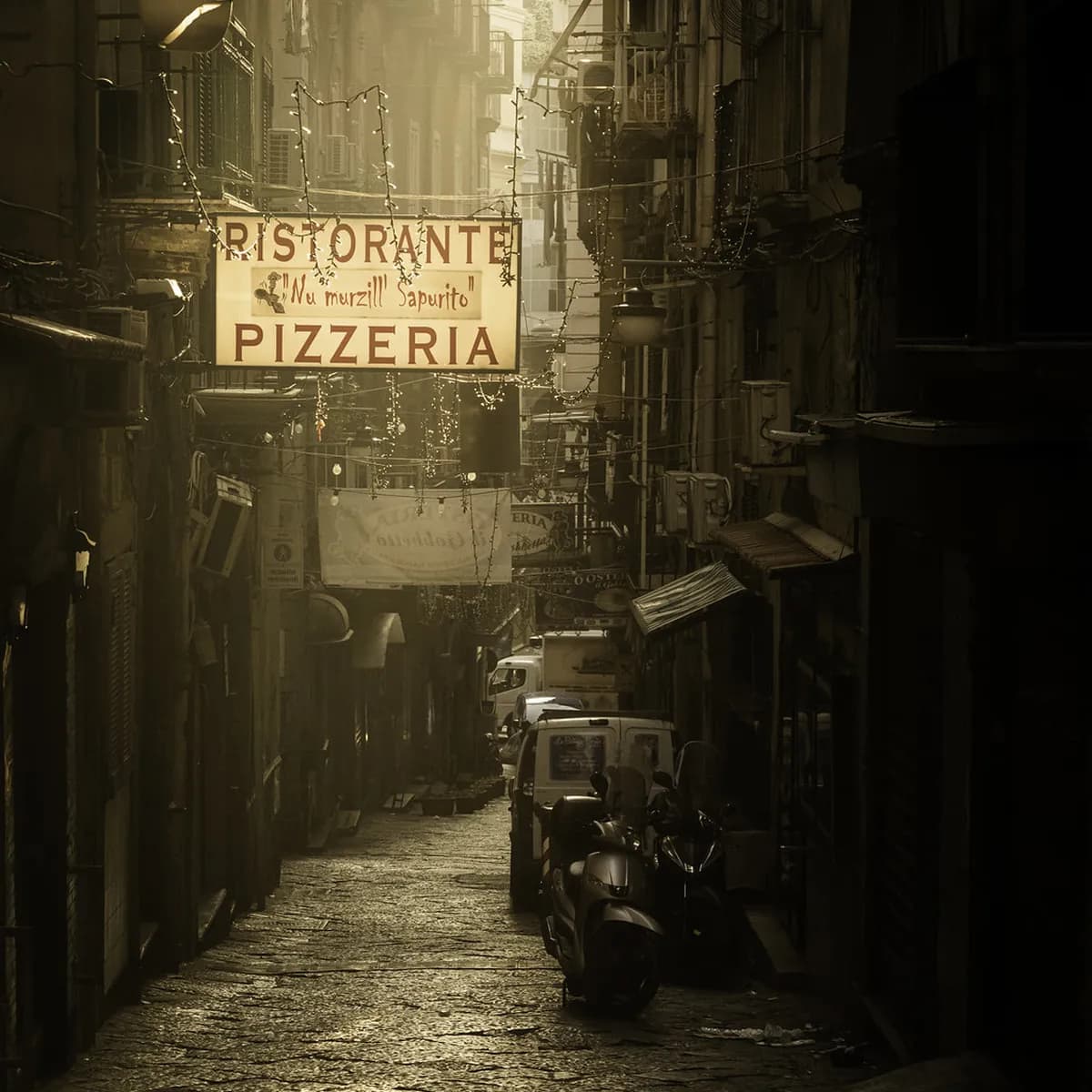
The Quartieri Spagnoli is one of Naples' most viscerally alive neighborhoods. Narrow 10-foot lanes built by Spanish rulers in the 1500s still channel the same chaotic energy they were designed to contain. Laundry strings connect the upper floors, street shrines dot every corner, and the smell of frying pizza drifts from doorways barely wide enough for two people to pass.
This district sits west of the historic center, wedged between Via Toledo and Vomero Hill. It takes about 20 minutes to walk its full length, but most visitors spend two to three hours here. Our guide covers the key landmarks, the best murals, where to eat, and the practical details that make the visit run smoothly.
History of the Spanish Quarter
Spanish viceroys commissioned the Quartieri Spagnoli in the 1600s as a military garrison. The brief was simple: house large numbers of troops in a tight, controllable grid of streets. Builders carved the neighborhood into rows of 10-foot-wide lanes running roughly parallel, each bordered by five-story residential blocks that blocked sunlight from reaching the cobblestones below. The district's origins trace back to Spanish rule under the command of Viceroy Pedro de Toledo.
When Spain's grip on southern Italy eventually loosened, the garrisons emptied and a poorer civilian population moved in. The concentration of young soldiers had already embedded a reputation for rowdiness and black-market trading. That reputation lingered for centuries, well into the 20th century, when guidebooks routinely advised tourists to stay out. Naples grew into Italy's third largest city while the Quartieri remained deliberately off the tourist circuit.
That changed slowly from the 1990s onward. Street-art projects, grassroots cultural initiatives, and a growing appetite among visitors for "authentic" Naples gradually repositioned the district. The evolution of the Spanish Quarters reflects how this once-military settlement transformed into a vibrant multicultural community. By 2026 the neighborhood draws as many curious travelers as it does regulars buying fish from the Pignasecca stalls. The bassi — single-room ground-floor apartments that open directly onto the street — still exist exactly as they have for 400 years, offering an unchanged window into Neapolitan working life.
Must-See Attractions in the Quarter
Largo Maradona is the neighborhood's most visited square. A three-story mural of Diego Maradona at Via Emanuele De Deo was created spontaneously by a local fan and has become a city-wide pilgrimage site. Maradona led Napoli to two Serie A titles — at the time an unprecedented achievement for a club from Italy's south — and the shrines left beneath the mural by locals reflect how deeply that bond runs. Football fans and non-fans alike stop here.
Vico Totò nearby celebrates the great Neapolitan comedian and actor Totò in the same spirit. Smaller murals, tiled street signs, and handmade plaques mark the sites connected to him. The street is quieter than Largo Maradona and gives a more intimate sense of the neighborhood's pride in its cultural figures.
The Palazzo della Stamperia, a former royal printing house on a central lane, is worth finding for its facade alone. Access to the interior is restricted, but the building's scale and weathered stonework stand out in a street full of residential blocks. History lovers who want to discover more of this character should also check our guide to secret spots in Naples.
Murals, Street Art, and Culture
The most discussed piece of contemporary street art in the quarter is La Pudicizia by Argentine artist Francisco Bosoletti. Painted on the side of a residential building, the giant image references the famous veiled marble sculpture in the Sansevero Chapel. Bosoletti used soft neutral tones and a negative-space technique that makes the figure appear to shift as the light changes throughout the day. The original Veiled Christ sculpture by Giuseppe Sanmartino remains one of Naples' most iconic artworks. It is a few minutes' walk from the Maradona mural and easy to combine in the same route.
Via Montesilvano functions as the neighborhood's dedicated street-art corridor, sometimes called the "Montmartre of Naples." A sequence of large-scale murals covers the full height of the buildings lining this lane. Works range from social-realist portraits of working-class Neapolitans to abstract compositions by international artists invited by local cultural associations. It is less crowded than the Maradona site and worth allocating 20 minutes.
The mural of Filomena Marturano, inspired by Eduardo De Filippo's famous Neapolitan play, appears on a building close to one of the bassi clusters. The image captures the dramatic character at a pivotal moment from the play and serves as a reminder that the quarter's cultural references are as likely to come from theater and literature as from football. For a deeper look at the city's artistic side, the remarkable marble sculpture in the Sansevero is a 15-minute walk from the quarter's eastern edge.
Salvatore Iodice's workshop on Minervini street produces sculptures and installations from recycled materials collected in the neighborhood. Studio visits are free and informal — knock during daytime hours. The work connects the street-art culture of the quarter with more formal artistic practice and provides good context for the murals around it.
Churches and Sacred Sites
The Chiesa di Santa Maria Francesca delle Cinque Piaghe sits on a side street off Vico Tofa, and most visitors walk past it without noticing. This is a mistake. The ground-floor chapel is narrow and quiet, but the main draw is upstairs in the preserved apartment of Maria Francesca delle Cinque Piaghe — Naples' only female saint. At the center of the shrine is a wooden chair. Local belief holds that sitting on the chair can help women struggling with infertility, and the faithful still come daily to do exactly that. Other artifacts include the saint's flagellation tools and clothing bearing marks of her stigmata. Entry is free; the atmosphere inside is genuinely unlike anywhere else in the city.
The Church of Sant'Anna di Palazzo occupies Via Sant'Anna di Palazzo, one of the calmer streets in the quarter. Its Baroque interior is in good condition and rarely crowded. The street itself is a useful orientation point for walkers — artisan workshops and traditional food stores line the route, and it connects easily to both Pignasecca market and the lower end of Via Toledo.
The Montecalvario Church and former convent on Montecalvario street holds Baroque paintings and decorative tilework typical of 18th-century Neapolitan religious architecture. Entry is free. The convent courtyard offers a few minutes of quiet that is hard to find elsewhere in the quarter.
Pignasecca Market
La Pignasecca is an open-air market just off Via Toledo and is one of the oldest continuously operating markets in Naples. Its name comes from the pine forest that was cleared to make way for the Spanish Quarter — a reminder that this dense urban grid was once open land. Today the market covers a piazza and spills into several adjoining lanes from early morning until mid-afternoon, six days a week. Sunday trading is lighter.
The stalls sell everything from seafood — sea urchins, octopus, enormous prawns, monkfish — to vegetables, cheese, and household goods. Butchers display organ meats in the traditional Neapolitan manner: lungs and intestines hung on hooks, with hearts and kidneys arranged on the counter below. It is confronting if you are not used to it and worth seeing even if you are not buying.
For eating, ask for a cuoppo: a paper cone filled with lightly battered fresh anchovies or mixed fried seafood. It costs around €3–4 from market stalls and is the standard Pignasecca snack. Card machines are increasingly common at stalls, but carrying €10–20 in cash remains practical for smaller purchases. Many of the top-rated Naples dining spots source their daily fish and produce here, which tells you something about the quality.
La Pignasecca market operates every morning except Sunday, busiest between 08:00 and 12:00. Carry €10–20 in cash for market stalls — card machines are available but smaller purchases are quicker and easier in cash. A cuoppo of fried seafood costs €3–4 and is the neighborhood's defining street snack.
Via Sant'Anna di Palazzo and the Quarter's Streets
Via Sant'Anna di Palazzo runs from the western side of Via Toledo deep into the quarter. It is a good starting point for a walking route because it is easy to find and relatively wide by the neighborhood's standards. The Church of Sant'Anna di Palazzo anchors the street's midpoint with its Baroque facade. From here you can move north toward the Maradona mural or south toward the Pignasecca in around 10 minutes in either direction.
Largo Baracche is a small open square tucked inside the grid, used by residents as an informal meeting point. It has no tourist infrastructure — no cafes with English menus, no information boards — but sitting here for 15 minutes gives a more honest picture of daily quarter life than any of the main landmarks. Children play football against the walls while older residents occupy the benches. It is the kind of place that feels genuinely unchanged.
The Palazzo Cattaneo-Barberini, near the Toledo metro station, is a late-Renaissance palazzo with a notable courtyard. The interior is privately occupied, but the gateway and ground-floor archway are visible from the street. It represents the aristocratic layer of the quarter's history, which coexisted uncomfortably with the garrison character of the lanes around it.
Where to Eat in the Quarter
Osteria della Mattonella on Via Nicotera is a neighborhood institution recognizable by its 18th-century majolica tile decoration and the vintage musical instruments hanging from the walls. The La Marangio family has run it for decades. Order La Genovese — pasta with a slow-cooked beef and white wine sauce — which is the house signature and one of the better versions of this underrated Neapolitan classic in the city.
Alimentari da Maria operates from a four-table trattoria attached to a working delicatessen. The antipasto platter draws from producers across Italy. The maccheroni allo scarpariello — a pecorino-heavy pasta traditional to the Spanish Quarter — is the dish to order. Reserve ahead; the trattoria side fills quickly at lunch.
For pizza, Pizzeria Speranzella near the quarter's southern border charges around €5 for a Margherita from a wood-fired oven. It is a credible introduction to Neapolitan pizza without the queues or prices of the city's more famous establishments. For sweet pastries, the Pintauro Pasticceria just off Via Toledo sells sfogliatelle — ricotta-filled, shell-shaped pastries dusted with icing sugar — that are warm, crisp, and worth the short queue that usually forms outside.
| Spot | Type | Signature Dish | Approx. Cost |
|---|---|---|---|
| Osteria della Mattonella | Trattoria | La Genovese (beef & onion pasta) | €10–15 |
| Alimentari da Maria | Deli-trattoria | Maccheroni allo scarpariello | €8–12 |
| Pizzeria Speranzella | Pizzeria | Margherita (wood-fired) | ~€5 |
| Pintauro Pasticceria | Pastry shop | Sfogliatella (warm) | €1.50–2 |
| Pignasecca market stalls | Street food | Cuoppo (fried seafood cone) | €3–4 |
Outdoor Spots and Getting Out of the Quarter
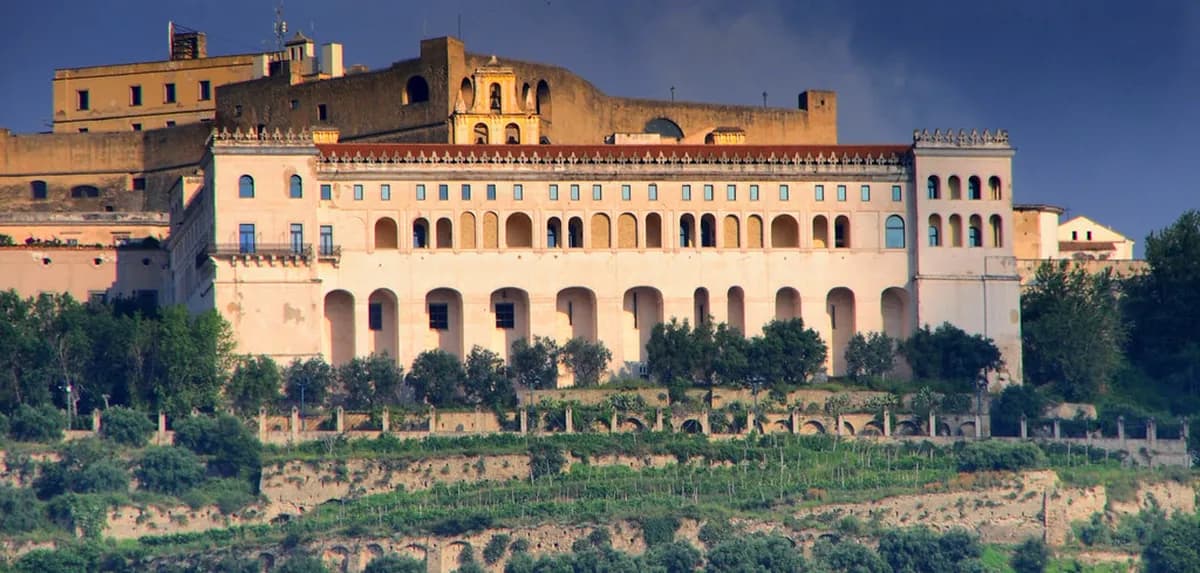
The Pedamentina is a 414-step staircase route connecting the lower quarter to the hilltop of Vomero. It has existed since the 14th century, originally built to transport building materials up the hill. The route begins near the Quartieri Spagnoli Park and ends close to Castel Sant'Elmo. The climb takes 20–30 minutes at a steady pace. The panorama from the top — Vesuvius, the Bay of Naples, and the rooftops of the historic center — justifies the effort, especially at sunset. If you want to reach the elevated Vomero district without climbing, the funicular from Piazza Montesanto covers the same distance in four minutes.
Scooters move through the pedestrian lanes of the Quartieri Spagnoli without warning and at speed. The cobblestones are large-block and become slippery after rain — wear shoes with grip. Morning visits before 10:00 are the least crowded and coolest in summer.
The Piazza del Plebiscito is a five-minute walk from the quarter's southern edge. Arriving from the confinement of the narrow lanes into Naples' largest open square produces a genuine sense of spatial relief. The Royal Palace facade, the domed colonnades of the Church of San Francesco di Paola, and the wide fanned cobblestones fill the space. From there the Galleria Umberto I — Naples' ornate 19th-century arcade — is another three-minute walk and worth 20 minutes inside.
Budget and Family Considerations
The quarter is almost entirely free to explore. The murals, bassi, street life, churches, and market are all no-cost experiences. A full morning walk covering the Maradona mural, La Pudicizia, Via Montesilvano, the Pignasecca, and the Sant'Anna di Palazzo church typically costs under €10 per person including a cuoppo from the market and a coffee at one of the pavement bars. For more ideas, see our guide on zero-cost Naples attractions.
Families with young children should be aware that scooters move through the pedestrian lanes without warning and at speed. The cobblestones are uneven. Morning visits before 10:00 are the least crowded and coolest in summer. Children generally respond well to the market — the scale, smell, and spectacle of Pignasecca holds attention in a way that churches do not.
Getting There and Practical Tips
The easiest approach is Metro Line 1 to Toledo station. From the exit it is a three-minute walk west to the quarter's main entrance streets. Line 1 connects Toledo to Piazza Dante in two stops and to the city's main Napoli Centrale rail hub in around 10 minutes. The funicular from Piazza Montesanto provides direct access from the Vomero hill side.
The best visiting months are May, September, and October. Summer temperatures in the quarter regularly reach 30°C and the narrow lanes trap heat. August is the most crowded month with the least breeze. Shoulder season brings temperatures between 18°C and 25°C, manageable for the Pedamentina climb and comfortable for long street walks. Bring comfortable shoes with grip — the large-block cobblestones and flagstones become slippery after rain.
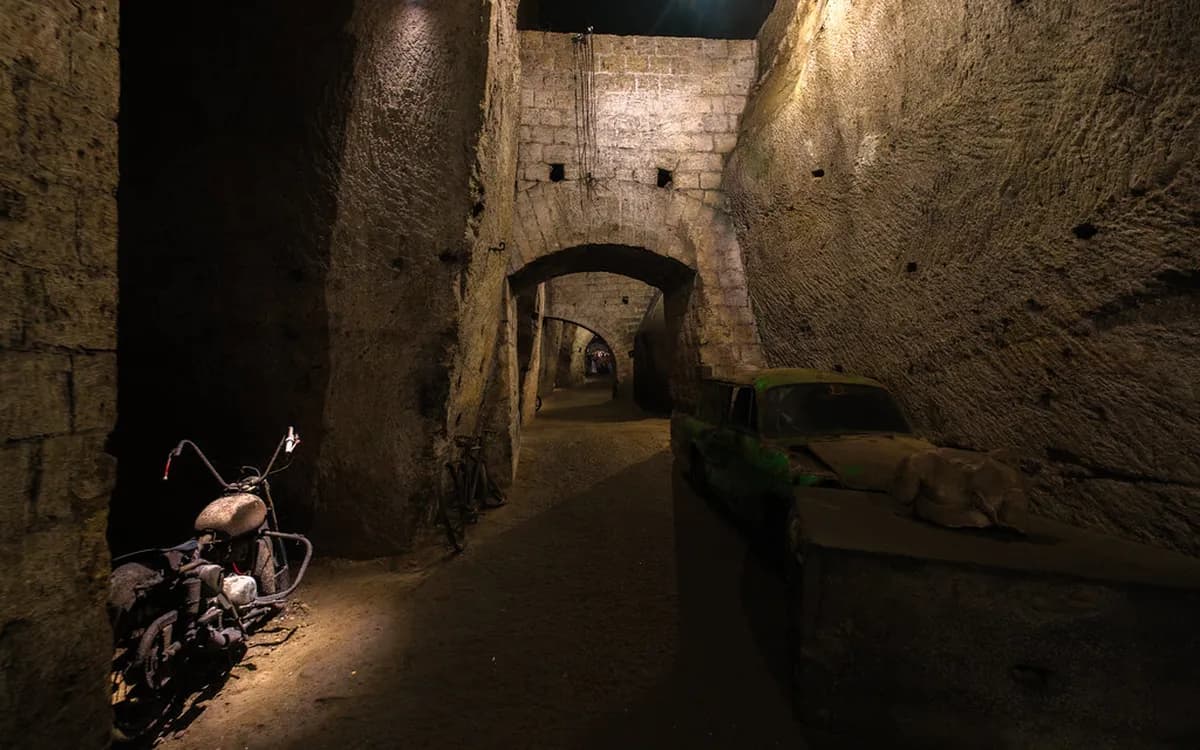
Carry some cash. ATMs are available on Via Toledo and near the Toledo metro exit. Pignasecca stall vendors increasingly accept cards, but smaller amounts are easier to handle in cash. The coperto service charge (typically €1.50–€3) is added to restaurant bills throughout Naples — it is normal practice and not an error. Keep bags zipped and worn in front. Also consider exploring the fascinating tunnels of Napoli Sotterranea excavations before or after your walk — the entrance on Via dei Cristallini is 15 minutes from the quarter on foot.
Frequently Asked Questions
Which quartieri spagnoli naples options fit first-time visitors?
First-time visitors should start their walk along the lively street of Via Toledo before heading to Largo Maradona. This route provides a safe, bustling introduction to the district's famous street art and local atmosphere. You can easily find delicious street food stalls along this path.
How much time should you plan for quartieri spagnoli naples?
You should plan to spend about two to three hours exploring the main streets of the district. This time frame allows you to admire the murals, visit a historic church, and enjoy a quick pastry. Morning visits are best for avoiding the afternoon crowds.
What should travelers avoid when planning quartieri spagnoli naples?
Travelers should avoid carrying valuable items in open bags because scooters and busy crowds can create opportunities for pickpockets. It is also wise to avoid walking through quiet alleys alone late at night. Stick to well-lit main streets for a safer experience.
The Quartieri Spagnoli rewards visitors who move slowly and pay attention to what is on the walls, in the doorways, and at the market stalls. The main landmarks — the Maradona mural, La Pudicizia, the Pignasecca — are genuinely worth seeing. But the neighborhood's character comes through most clearly in the bassi, the shrines, and the squares like Largo Baracche where tourist infrastructure simply does not reach.
If you want to continue your adventure, you can explore more of Italy with our travel guides. Enjoy your journey through these historic streets and embrace the lively energy of the local community.
Continue exploring
More guides you'll find useful