Cappella Sansevero Veiled Christ Travel Guide
Plan cappella sansevero veiled christ with top picks, neighborhood context, timing tips, and practical booking advice for a smoother trip.
On this page
Cappella Sansevero Veiled Christ
Naples holds many artistic treasures, but few capture the imagination like the Cappella Sansevero. This historic chapel sits quietly in the winding streets of the old city center, just off Piazza San Domenico Maggiore. Inside, you will find the legendary Veiled Christ, a marble sculpture that has stunned visitors and art critics for over 270 years.
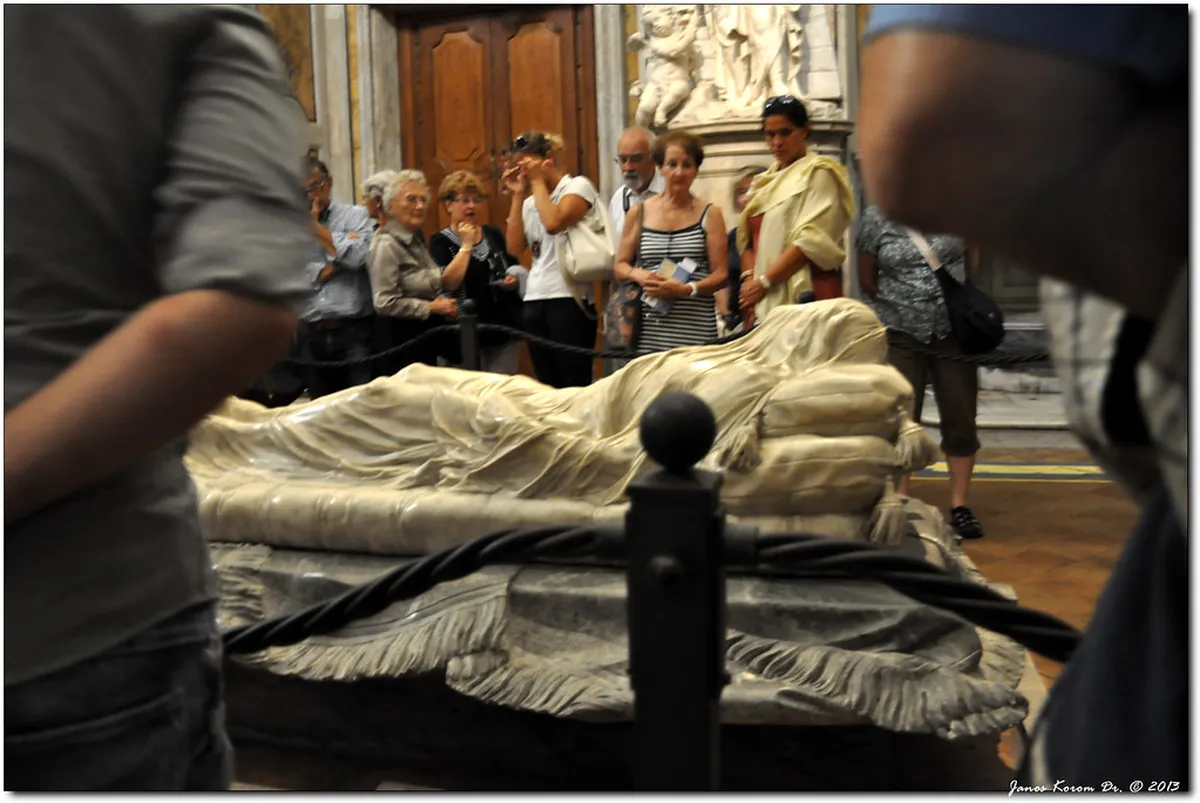
Giuseppe Sanmartino carved the work from a single block of white marble in 1753. The veil covering the body of Christ appears so thin and transparent that many visitors still find it hard to believe it is stone. Antonio Canova, one of the greatest sculptors in history, declared he would have given ten years of his life to be its author — and reportedly tried to purchase it during a visit to Naples. You can easily pair this visit with other Beautiful Places In Naples Travel Guide for an unforgettable day.
This guide covers the chapel's history, its major sculptures, practical visit information, and how to get there. It also explains the hidden symbols that make this site unique in all of Italian Baroque art.
The Sansevero Chapel (Cappella Sansevero)
The Sansevero Chapel was originally built in the early 1600s after a legendary apparition of the Virgin Mary. Very little of that original structure survives. In the 1740s, Prince Raimondo di Sangro completely redesigned the space according to a personal iconographic program that combined Catholic devotion, Masonic philosophy, and alchemical symbolism.
Raimondo di Sangro was a remarkable figure: inventor, alchemist, patron of the arts, and Grand Master of Neapolitan Freemasonry. He hired the finest painters and sculptors of the period, briefing each on the precise role their work would play in his larger vision. The artists themselves were reportedly unaware of the full scheme. The result is one of the most intellectually dense interiors in Italy.
Beyond the Veiled Christ, the chapel contains two other major sculptural works. La Pudicizia (Modesty) by Antonio Corradini, dedicated to the Prince's mother who died when he was an infant, depicts a woman draped in a semitransparent veil — a direct visual echo of the Egyptian goddess Isis. Il Disinganno (Release from Deception) by Francesco Queirolo portrays a man freeing himself from an intricate marble net representing sin, guided by a putto symbolizing human intellect. The net is often cited as one of the most technically demanding pieces of marble carving ever attempted.
The chapel also serves as a family mausoleum. The statues of the Virtues alternate with funeral monuments to family members, each assigned a specific place in the initiation sequence Raimondo envisioned. Walking through the nave, you are following a path designed to end at the Veiled Christ as its ultimate revelation. This remains one of the most unforgettable cultural encounters in the city for anyone with an interest in art or history.
Symbols and Mysteries of the Chapel
The original floor of the Cappella Sansevero was designed as a labyrinth. For initiates in Masonic tradition, navigating a labyrinth represented the journey toward knowledge and self-understanding. The floor was removed in the late 19th century after water damage, but fragments were preserved and are still visible. Most visitors walk straight to the Veiled Christ without realizing the floor beneath them was once part of a ritual path.
The tools of the Passion placed at Christ's feet — the crown of thorns, pliers, and ropes — are not merely religious decoration. Within the chapel's Masonic framework, they carry layered meanings. The crown and rope recall suffering and mortal limitation. The pliers suggest the possibility of release. Together, they form a threshold image: the end of earthly life and the beginning of a journey toward divine understanding, the same journey the labyrinthine floor once invited visitors to complete on foot.
Many also read the Veiled Christ's marble shroud as a metaphor for truth: visible yet partially obscured, tangible yet elusive. This interpretation connects the central sculpture to every other element in the chapel. The veil over Modesty, the net over Disillusion, the transparent gauze concealing the anatomical figures below — all share the same visual language. Raimondo built a space where concealment is itself the message.
These layers of meaning are easy to miss without context. The audio guide (€3.50, available in Italian, English, Spanish, and German, with a separate children's version) addresses much of this symbolism explicitly and is worth the extra cost. You can explore more of Naples' layered cultural identity along the nearby historic spine of the old centre corridor.
An Extraordinary and Still Impressive Work
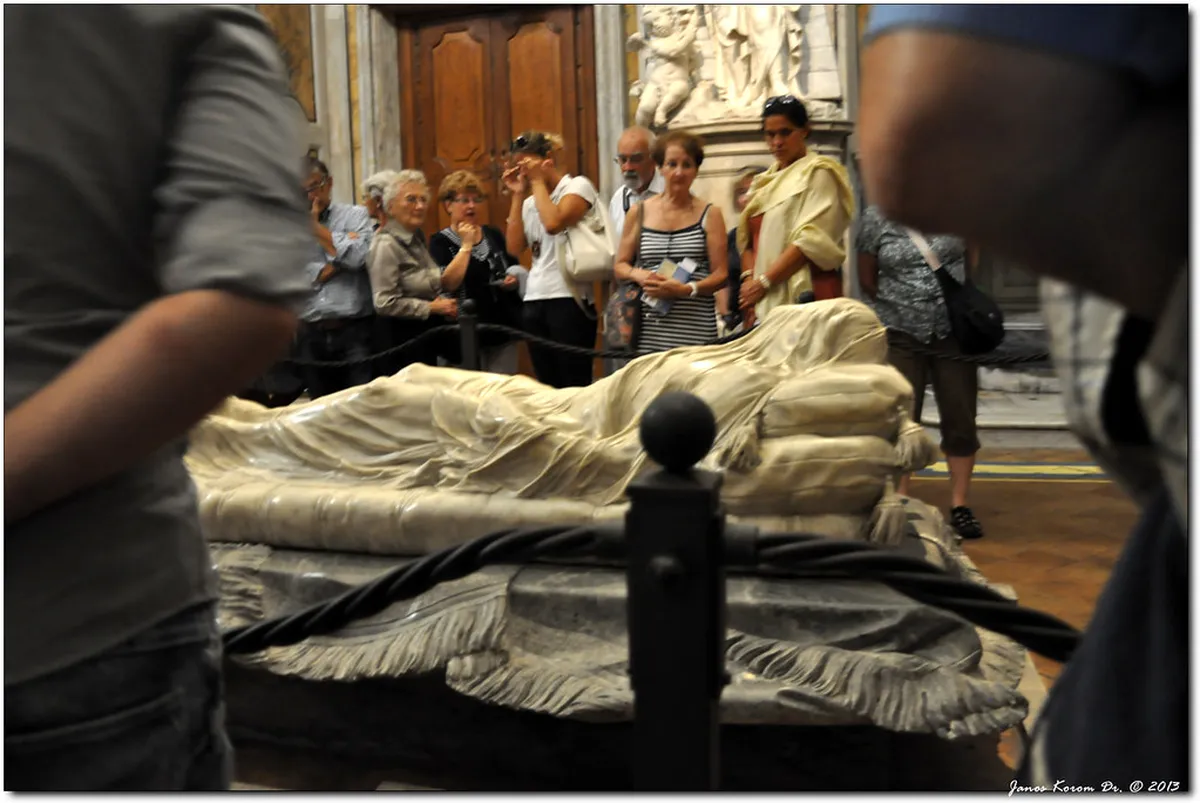
The Veiled Christ depicts the dead body of Christ lying on a marble mattress, life-size, covered by a veil carved from the same single block of stone. The veil is paper-thin in places — light actually passes through the drapery in several spots. Every muscle and wound of the figure beneath is visible through it. No part of the statue is a separate piece attached later.
For centuries, popular legend held that Prince Raimondo had used an alchemical process to "marbleize" real fabric, which would explain the hyper-realism. Some accounts even claimed he had blinded Sanmartino afterward to prevent him from producing a rival work. Modern scientific analysis dispels both stories: the entire statue is carved marble, and Sanmartino went on to produce other significant works. The legend itself, though, is part of the chapel's mystique and will likely follow you home.
What makes the Veiled Christ technically extraordinary is the handling of two separate visual surfaces in a single material. The sculptor had to understand how both the veil and the body beneath it would read from every angle. Visitors typically walk a full circle around the pedestal and find that the illusion holds from every viewpoint. Antonio Canova's famous declaration that he would have traded a decade of his own life to be its creator remains the best summary of the sculpture's standing among professionals.
The Curious Experiment of the Anatomical Machines
In the underground chamber below the chapel, two skeletal figures stand inside glass cases. Made by Giuseppe Salerno, a physician from Palermo, these Anatomical Machines display the complete human circulatory system in extraordinary detail. One figure is male, the other female. The female figure shows the remains of a fetus at her feet, indicating she died during labor — though that fetus was stolen in the 1990s.
The precision of the circulatory detail sparked the most disturbing of the chapel's rumors: that Prince Raimondo injected a hardening liquid into two living servants to preserve their blood vessels intact. Extensive scientific study has since confirmed this is false. The veins and arteries are constructed from iron wire, wax, and silk fibers, not biological material. The skeletons themselves are real human remains.
These figures represent the Enlightenment curiosity that ran parallel to the chapel's religious and esoteric themes. They are fascinating medical history objects as much as they are art. Note that the underground chamber is accessible only via a 19th-century spiral staircase, meaning wheelchair users cannot visit this section. The nave and sacristy upstairs are fully wheelchair accessible. This underground exhibit is perfect for those drawn to 18 Unusual Things to Do in Naples.
Visiting the Veiled Christ
The chapel is open Wednesday through Monday from 09:00 to 19:00 (last entry at 18:30). It is closed every Tuesday. Tickets must be booked online in advance with a reserved timed entry slot via the official website of the Sansevero Chapel. A grace period of 15 minutes is allowed after your slot time. Same-day walk-in tickets are almost never available, particularly in spring and summer 2026.
Ticket prices in 2026: full entry is €12, reduced entry for visitors aged 10 to 25 and students is €5, and children under 9 enter free. The optional multilingual audio guide costs an additional €3.50 and covers both the chapel and the anatomical machines. Free Wi-Fi is available inside, and there is a small bookshop near the exit.
| Visitor type | Ticket price (2026) | Audio guide | Underground chamber access |
|---|---|---|---|
| Adult (full) | €12 | +€3.50 | Yes (via spiral staircase) |
| Age 10–25 / students | €5 | +€3.50 | Yes |
| Children under 9 | Free | Children's version available | Yes |
| Wheelchair users | €12 | +€3.50 | No (staircase only) |
Photography and video recording are strictly prohibited throughout the entire building, including the underground chamber. Strollers are not permitted. Babies must be carried in a sling or carrier. The nave and sacristy are wheelchair accessible, but the underground chamber with the Anatomical Machines is not, due to the spiral staircase. Plan to spend between one and two hours for a thorough visit. Budget travelers will find that the €12 entry fee represents exceptional value for what the chapel delivers.
Tickets must be booked online with a timed entry slot — same-day walk-in availability is essentially zero in spring and summer 2026. The optional multilingual audio guide (€3.50 extra) is highly recommended given the chapel's dense symbolism.
Getting to the Veiled Christ
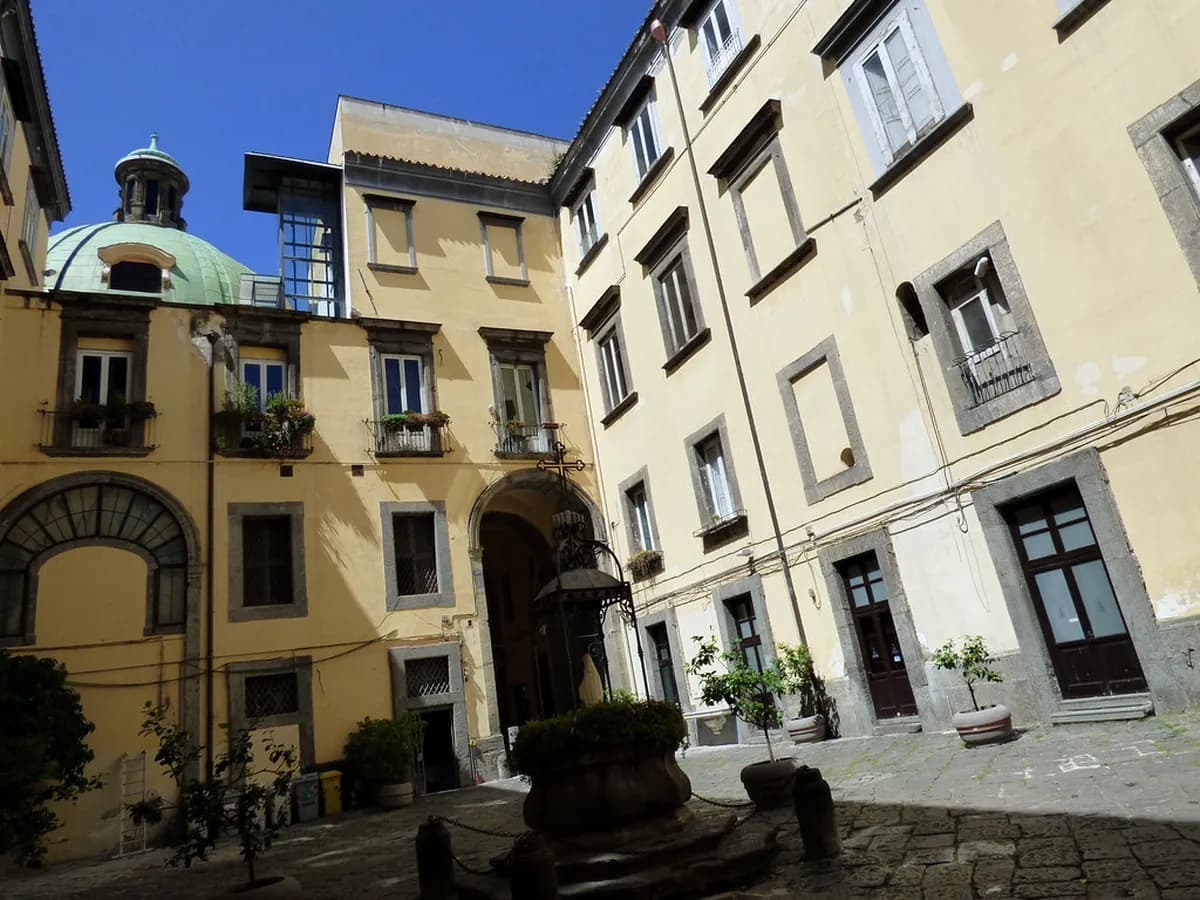
The Sansevero Chapel is at Via Francesco de Sanctis 19/21, a short walk from Piazza San Domenico Maggiore in Naples' historic center. The surrounding streets are pedestrianized and closed to most vehicles. Do not attempt to drive to the entrance. Use GPS or Google Maps, as the chapel is not prominently signposted and first-time visitors regularly walk past it.
From Naples Centrale (Piazza Garibaldi), the easiest options are Metro Line 1 to the Università or Dante stops (about 15 minutes), or Metro Line 2 to Cavour. Bus routes 151 and tram 1 also connect Piazza Garibaldi to the area. If you are arriving by Alibus from the airport, take the shuttle to Piazza Municipio and switch to Metro Line 1 (Dante stop). Arriving by ferry or cruise ship, walk from the port to Piazza Municipio and take the metro, or walk the full 40 minutes through the historic center.
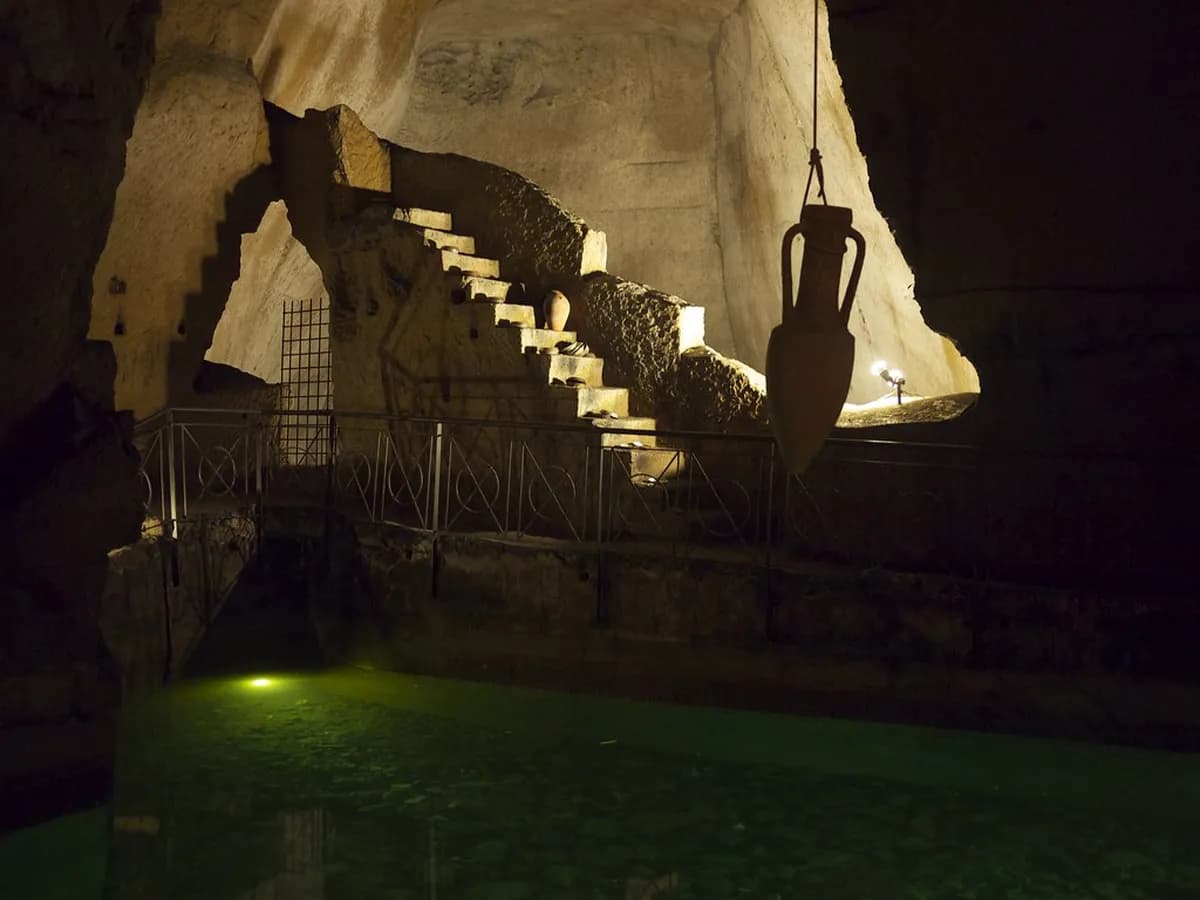
If driving to Naples, park at the Brin garage near the Porto highway exit and take bus 154, or park near Piazza Garibaldi and use the metro. Keep comfortable shoes on — the cobblestone streets of the centro storico are uneven and the walk from any metro stop is 10 to 15 minutes on foot. Add this visit to a hidden Naples 3-day itinerary and combine it with Napoli Sotterranea nearby.
Dining Near the Veiled Christ
The streets surrounding the chapel are among the most densely packed in Naples for traditional restaurants, pizzerias, and street food. Via dei Tribunali and Via San Biagio dei Librai run parallel to the chapel and both have numerous options within a five-minute walk. Arrive hungry — the quality-to-price ratio in this part of the city is consistently high.
For pizza without the hour-long queues of the famous names, Donna Sofia on Via dei Tribunali 89 is well-regarded by locals and visitors alike. For pasta, 120 Grammi on Via Mezzocannone serves spaghetti with various sauces and also packages it to take away. Friggitoria Verace on Via San Pietro a Maiella is the go-to spot for traditional Neapolitan fried street food — cuoppo (fried fish and vegetables in a paper cone) is the signature order. Tandem, also nearby, is known for its slow-cooked ragù, served on pasta or in a bowl with bread.
Most of these spots do not take reservations for lunch, so arrive before 13:00 or after 14:30 to avoid the longest waits. The best pizzerias in Naples are a short walk away if you want to compare further. Budget roughly €10 to €20 per person for a full sit-down meal in this neighborhood.
Tips for Visiting the Area
Book tickets weeks ahead, especially for weekend slots or any day in April through June. Tuesday closures catch a surprising number of visitors by surprise each year — double-check the calendar before you plan your day. The quietest periods are weekday mornings in January, February, and November, when crowd levels are low enough to have extended time in front of the Veiled Christ without being pressed by other visitors.
- Arrive two to three minutes before your timed slot — not earlier, as queuing space is limited.
- Use the audio guide; the symbolism is dense and much of it is lost without context.
- No strollers: use a baby carrier or sling instead.
- Photography is banned — trying to sneak a shot will result in immediate removal.
- The underground chamber (Anatomical Machines) is not wheelchair accessible.
- The chapel is difficult to find without GPS; use navigation even if you know the general area.
- Budget-friendly activities abound nearby — combining this visit with a walk through the zero-cost options along Via dei Tribunali costs nothing extra.
- Allow at least one hour; two is better if you want to read all the information panels.
The chapel is small. The total interior space is modest, and visitor numbers are capped by the timed-entry system. This means your experience depends heavily on respecting the slot time and not lingering beyond a considerate amount of time during peak periods.
Photography and video recording are strictly forbidden throughout the entire chapel, including the underground chamber. Staff actively monitor the rooms and will remove visitors who attempt to photograph the artworks — do not try to sneak a shot.
Frequently Asked Questions
How much time should you plan for cappella sansevero veiled christ?
You should plan to spend about 45 to 60 minutes inside the Sansevero Chapel. This allows you enough time to admire the Veiled Christ, the ceiling frescoes, and the anatomical machines downstairs without feeling rushed. Be sure to arrive exactly at your scheduled entry time.
What should travelers avoid when planning cappella sansevero veiled christ?
Travelers should avoid waiting until the last minute to buy tickets. Same-day tickets are rarely available at the door, so booking online weeks in advance is essential. Also, avoid taking photos inside the chapel, as photography is strictly forbidden.
Is cappella sansevero veiled christ worth including on a short itinerary?
Yes, the chapel is absolutely worth including even on a short trip. Because the visit takes less than an hour, you can easily fit it into a busy sightseeing day. Its central location in the historic district makes it highly convenient for quick stops.
Can you take photos inside the Sansevero Chapel?
No, photography and video recording are strictly prohibited inside the chapel to protect the artworks and maintain a respectful environment. Staff members actively monitor the rooms to enforce this rule. Visitors are encouraged to focus on the live experience instead.
A visit to the Cappella Sansevero and its Veiled Christ is one of the most concentrated art experiences available in southern Italy. The chapel is small, the ticket price is modest, and the quality of what it contains — from Sanmartino's marble veil to Queirolo's impossible net to the eerie Anatomical Machines below — is genuinely world-class.
Book tickets in advance, get the audio guide, and allow yourself two unhurried hours. The symbolism rewards attention. Visitors who rush through miss half of what Raimondo di Sangro built into every corner of this space.
After the chapel, the historic center offers excellent food, the underground tunnels of Napoli Sotterranea, and the long straight spine of Spaccanapoli — all within walking distance. This part of Naples is dense with discovery at every scale. Pair this with our broader complete guide to secret Naples attractions for the full picture.
Continue exploring
More guides you'll find useful