Once In A Lifetime Things To Do In Naples Travel Guide
Plan once in a lifetime things to do in naples with top picks, neighborhood context, timing tips, and practical booking advice for a smoother trip.

On this page
Once In A Lifetime Things To Do In Naples
Naples rewards travelers who show up ready to engage. Whether you're tracing ancient cobblestones in southern Italy or watching dolphins from a Gulf Coast pier in Florida, both cities named Naples deliver experiences that are genuinely hard to replicate anywhere else. This guide covers the must-do bucket-list activities at both destinations, with practical timing, costs, and the local details that most travel articles skip.
The Italian Naples — Napoli — is chaotic, affordable, and deeply authentic. It's the birthplace of pizza, home to one of the world's greatest archaeological museums, and the launch pad for day trips to Pompeii, Herculaneum, and the Amalfi Coast. The Florida Naples is the opposite in energy: quiet, upscale, and built around its waterfront. Both are worth the trip. Knowing what to prioritize at each is the difference between a good visit and a genuinely unforgettable one.
Things to Do in Naples, Italy
Start in the historic center, a UNESCO World Heritage Site that has been continuously inhabited since 470 BCE. Walking down Spaccanapoli — the ruler-straight street that bisects the old city — takes you past Gothic churches, noisy workshops, and street shrines stacked between buildings. The Spanish Quarter runs parallel to the west and is equally atmospheric. Spend at least a morning getting lost here before booking anything else.
The view from Vomero, the elevated residential neighborhood above the city, is one of those moments that stops most visitors in their tracks. Take the historic funicular up to Castel Sant'Elmo — the star-shaped fortress has been in use since the 13th century — and walk back down along the castle stairs. Wear closed-toe shoes; the descent involves uneven stone steps.
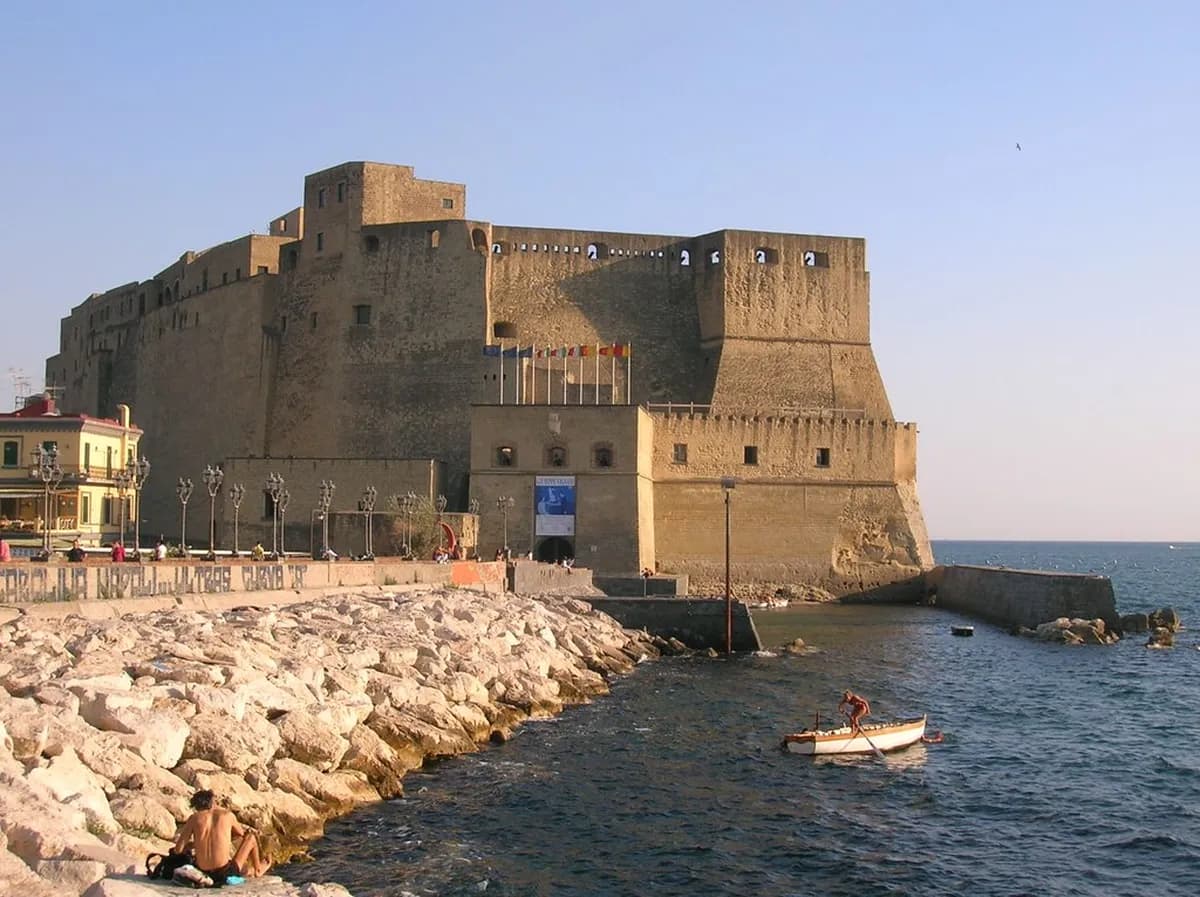
On the waterfront, Castel dell'Ovo sits on a small island connected to the Lungomare promenade. The castle itself is free to enter and gives excellent views back toward the city. Sunset from the promenade in front of the castle is one of the most photographed moments in Naples — arrive by 19:00 in summer to get a good spot.
Castel dell'Ovo is free to enter and gives excellent views back toward the city skyline and Mount Vesuvius. Arrive by 19:00 in summer for sunset from the Lungomare promenade — it is one of the most photographed moments in Naples and the terrace fills up quickly.
Eat Pizza, Seafood, and Breakfast Pastries Like a Local
Eating in Naples is not optional — it's the main event. Naples is where pizza was invented, and the price-to-quality ratio here is unlike anywhere else in Europe. At a traditional pizzeria, expect to pay €4–6 for a full margherita in a casual spot. At more well-known places like L'Antica Pizzeria Da Michele or Sorbillo, you'll pay €6–8 and likely wait in line. Both queues are worth it. Da Michele has been operating since 1870 and keeps the menu deliberately short: margherita, marinara, cosacca, or the half-and-half marita. Sorbillo offers more toppings and has a formal queue system inside.
What most visitors skip entirely is Neapolitan breakfast culture. Locals eat sfogliatelle — long, curved pastries with flaky layers wrapped around ricotta cream, sometimes flavored with orange, cardamom, or candied lemon peel. Gran Caffè Gambrinus on Piazza del Plebiscito has been serving these since 1860. One sfogliatella with a short espresso costs under €4 and is a better start to the day than any hotel breakfast.
For fresh seafood, the historic harbor area near Castel dell'Ovo has a cluster of restaurants with outdoor seating and daily catches. Portions are generous and prices are reasonable by Italian coastal standards. A seafood pasta dish runs €12–18 at most establishments along the Lungomare.
| Must-Try Food | Where to Find It | Typical Cost | Best Time |
|---|---|---|---|
| Pizza margherita (sit-down) | L'Antica Da Michele / Sorbillo | €6–8 | Dinner (19:30+) |
| Pizza a Portafoglio (street) | Via dei Tribunali area | €1.50–2.50 | Lunch or any time |
| Sfogliatella riccia | Gran Caffè Gambrinus | Under €4 (with espresso) | Morning |
| Pasta alla Genovese | Traditional trattorias near Piazza Cavour | €8–12 | Sat–Sun lunch |
| Seafood pasta | Lungomare near Castel dell'Ovo | €12–18 | Lunch or dinner |
Museums, Art, and Underground Naples
The National Archaeological Museum is essential, not optional. It holds the most significant collection of Roman-era artifacts in the world, including thousands of objects rescued from Pompeii and Herculaneum: mosaics, frescoes, bronze statues, and the famous Secret Room of erotic art. Skip-the-line admission costs around €32. The museum is vast — budget three hours minimum and focus on the Pompeii collection if time is short.
Cappella Sansevero contains the Veiled Christ, an 18th-century marble sculpture by Giuseppe Sanmartino that makes grown adults stop mid-stride and stare. The illusion of a translucent veil draped over a human face, carved entirely from a single block of marble, is genuinely difficult to believe when you're standing in front of it. Admission is €8, and the chapel is small enough to see properly in under an hour. Book tickets online — walk-up entry is often sold out by mid-morning.
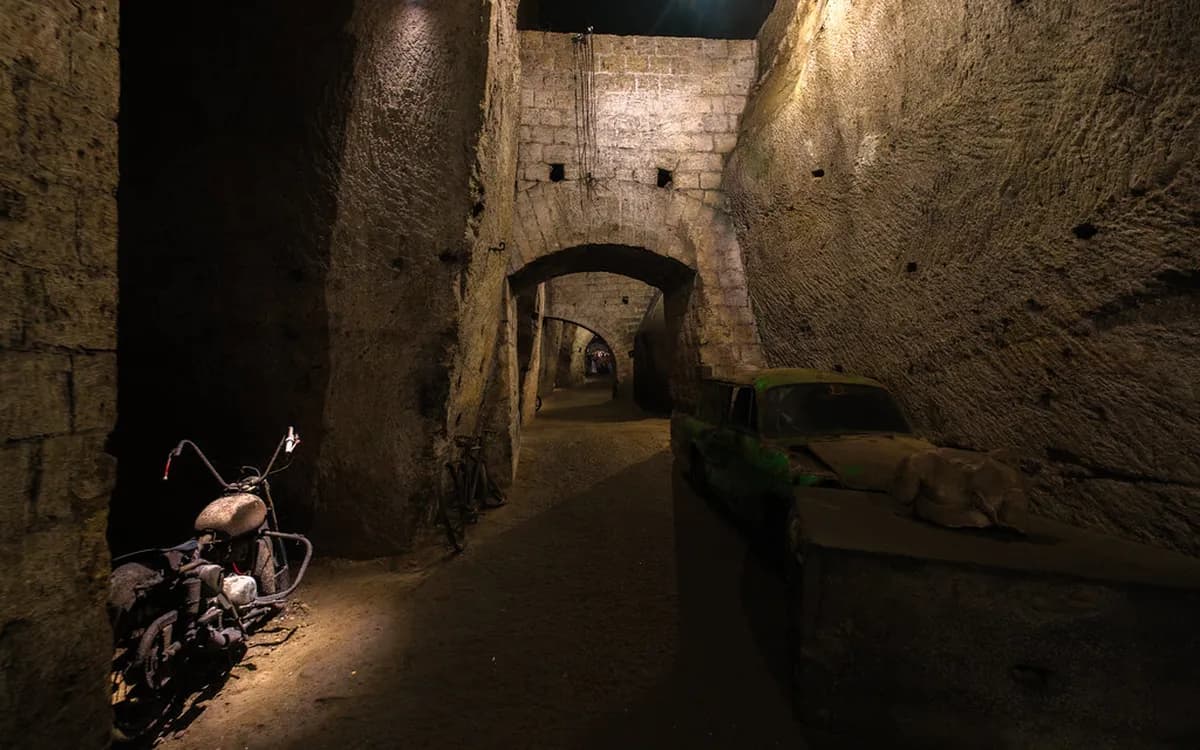
Beneath the streets, Napoli Sotterranea Underground Naples Travel Guide tours run through ancient Greek aqueducts and World War II air raid shelters. The passages date back 2,400 years and were repurposed repeatedly across different eras. Guided tours run roughly every 30 minutes and cost around €15 per person. Children tend to love the tight tunnels — it is one of the more genuinely family-friendly attractions in the city.
Cappella Sansevero sells out by mid-morning most days — book tickets online in advance as walk-up entry is often unavailable. The National Archaeological Museum's skip-the-line tickets (around €32) save significant waiting time in summer peak season.
Day Trips: Pompeii, Herculaneum, and the Amalfi Coast
Pompeii is 35 minutes from Naples on the Circumvesuviana commuter line. You can take the train from Naples to Pompeii on the Circumvesuviana Line independently for a few euros, or join a guided tour. The independent option is fine if you're comfortable reading a map; the guided option is worth it for context — the plaster casts of victims and the restored frescoes mean more when someone explains what you're looking at. Bring water and sun protection regardless of season. There is almost no shade inside the site.
Herculaneum is actually better preserved than Pompeii and less crowded. The train from Naples to Ercolano takes 15 minutes. The site is smaller and more manageable on foot, which makes it a better choice for travelers with limited mobility or children. You can realistically do Herculaneum in 2–3 hours versus a full day at Pompeii.
For the Amalfi Coast, the cheapest option is the bus from Naples to Positano via Sorrento. The journey takes longer than the tour option but the coastal road scenery is spectacular. Alternatively, a guided group tour to Positano, Ravello, and Amalfi costs around €50–70 per person and includes stops at multiple towns. The ferry from Naples to Positano is the most scenic option of all and takes roughly 90 minutes in good conditions.
Is Naples Safe, and How Much Time to Spend
Naples is significantly safer than its reputation suggests. Petty theft is the main concern, particularly on Spaccanapoli and around the train station at Piazza Garibaldi. Keep your phone in a front pocket, carry only the cash you need, and use a crossbody bag rather than a backpack in crowded areas. Beyond that, Naples is a normal busy city. Walking at night in the Spanish Quarter and historic center is fine. Solo female travelers report no particular issues staying in well-reviewed accommodation near the center.
Three days is the minimum to do Naples justice. Day one covers the historic center, Piazza del Plebiscito, and Castel dell'Ovo. Day two is the National Archaeological Museum and Cappella Sansevero in the morning, underground tour in the afternoon. Day three works best as a Pompeii or Herculaneum day trip. If you have a fourth day, the Amalfi Coast or Vesuvius fills it completely.
Follow the 3-day Naples itinerary to build a structured schedule that covers the city's main highlights without backtracking. Leave gaps in the afternoon for wandering — some of the best discoveries in Naples come from turning down an unmarked side street.
Things to Do in Naples, FL
Naples, Florida sits on the southwest Gulf Coast and operates at an entirely different pace from its Italian namesake. It is compact, clean, and oriented around beaches, water, and high-end dining. The downtown area along 5th Avenue South and 3rd Street is walkable and lined with boutique stores, galleries, and open-air restaurants. Most visitors can cover the core of downtown on foot in an afternoon.
Naples Pier is the town's most iconic landmark: a 1,000-foot wooden structure extending into the Gulf of Mexico. Sunrise is the best time to visit — the pier is quiet and the light off the water is extraordinary. Dolphins and manatees are regularly spotted from the pier year-round. Entry is free.
For outdoors and wildlife, the options around Naples, FL are genuinely exceptional. Kayaking through the mangrove tunnels of Rookery Bay, about 30 minutes from downtown, is consistently rated the top nature experience in the area. Guided tours take small groups through narrow waterways where you're close enough to spot roseate spoonbills, ospreys, and river otters. An Everglades airboat tour adds another dimension — the Everglades ecosystem begins less than an hour east of Naples, and Captain Jack's Airboat Tours is one of the longer-running operators in the area. Budget two to three hours for either excursion.
Discover Popular Tours & Experiences in Naples, FL
Sand Dollar Shelling and Boat Tours are among the most in-demand excursions on this stretch of coast. Captains take small groups out to remote barrier islands where shelling conditions are far better than the main beaches. Morning departures give you the best chance of finding intact sand dollars, lightning whelks, and horse conchs before the tide changes. Spots fill weeks ahead in peak season (December through March) — book early.
Tin City, a waterfront collection of local shops and restaurants built into old fishing docks, is the most distinctive shopping and dining experience in Naples, FL. It's casual, local, and nothing like the luxury strip on 5th Avenue. Pincher's Crab Shack at Tin City is a reliable spot for stone crab claws, which are the signature local seafood. Stone crab season runs October 15 through May 15 — if you're visiting outside that window, the oysters and clams are still excellent.
The Baker Museum at Artis-Naples (5833 Pelican Bay Blvd) is the cultural anchor of the city. It hosts major traveling exhibitions of contemporary and modern art and has permanent holdings that include a significant Dale Chihuly glass collection. Admission runs around $20 for adults. The Naples Players, based at Sugden Community Theatre on 5th Avenue South, puts on a full season of professional-quality productions. Check the current 2026 program online before your trip — shows often sell out.
Planning Your Trip to Naples Last Minute
For Italian Naples, the main thing to pre-book is Cappella Sansevero — it sells out by late morning most days. The National Archaeological Museum rarely sells out entirely, but skip-the-line tickets save significant waiting time in summer. Pompeii entry can also be booked online in advance at no extra fee; the site accepts walk-ups but queues at the main entrance grow long from 10:00 onward. Everything else — restaurants, the funicular, the catacombs — is generally accessible without advance booking if you arrive early in the day.
For Florida Naples, the waterfront boat tours (shelling, kayaking, Everglades) are the first things to book in winter peak season. Hotels in Naples, FL can also be expensive and scarce in January and February. If you arrive without reservations in those months, look at neighboring Marco Island or Bonita Springs, which are 20–30 minutes away and generally have more availability.
Last-minute travelers in Italian Naples have an advantage the competition doesn't mention: many of the city's best churches — including Gesu Nuovo, San Lorenzo Maggiore, and the Cloister of Santa Chiara — are walk-in attractions with low or no admission fees. The Cloister costs €7 (€5 for students and seniors over 65). These are genuinely world-class spaces and never sell out. Building your itinerary around the free and low-cost options leaves room to splurge on one or two booked experiences without stress.
Treat Yourself to a Shopping Excursion
In Italian Naples, Galleria Umberto I is the place to start. Built in 1887, this neoclassical glass-domed arcade runs on a criss-cross layout with four entrance points and a stunning zodiac mosaic on the center floor. The arcade itself is free to enter; the shops inside range from mid-range clothing to cafes. It's a better use of time than a generic shopping street because the architecture alone makes it worth the detour.
Via San Gregorio Armeno, a narrow street between Spaccanapoli and Via dei Tribunali, is famous for its nativity scene workshops that operate year-round. The figurines here are genuinely handmade and include everything from traditional religious pieces to satirical celebrity figures. Quality varies considerably between vendors — the workshops that show you the production process are typically the ones with better craftsmanship.
In Naples, Florida, 5th Avenue South and 3rd Street in downtown are the main shopping corridors — boutiques, galleries, and restaurants in a walkable strip. For something more eclectic, Flamingo Island Flea Market (north of Naples on US-41) has hundreds of vendors and is a genuine local institution for cheap souvenirs, vintage goods, and produce. Bring cash.
Best eSIM for Italy: Holafly
Navigating Naples without reliable mobile data is genuinely harder than in most European cities. The streets in the historic center are narrow and unlabeled, transit apps rely on live data, and Google Maps is the fastest way to confirm which funicular stop gets you to Castel Sant'Elmo without backtracking. A Holafly eSIM covers all of Italy with unlimited data plans and activates by scanning a QR code before departure. No SIM card swapping at the airport required.
Setup takes under five minutes. Scan the QR code on your phone before boarding, and the eSIM is ready to use the moment you land at Naples Capodichino (NAP). The service works on compatible iPhones and Android devices — check Holafly's compatibility list before purchasing. For a two-week Italian trip, the cost typically works out cheaper than roaming charges on a home carrier plan.
Frequently Asked Questions
Is Naples Safe for solo travelers?
Yes, Naples is generally safe if you take basic precautions during your visit. Avoid carrying large amounts of cash and keep your belongings secure in crowded tourist areas like Spaccanapoli. Stick to well-lit streets at night to ensure a worry-free visit.
Where can I eat fresh seafood and devour organic gelato in Naples?
For fresh seafood, head to the historic harbor of Castel dell'Ovo in Italy or Tin City in Florida. Afterwards, treat yourself to delicious organic gelato at local artisan shops. Both locations offer incredible dining options that highlight fresh, high-quality ingredients.
What is the best way to enjoy the great outdoors in Naples, Florida?
You can enjoy the great outdoors by booking a kayak tour through the mangrove tunnels. Visiting the beautiful Naples Pier is another fantastic option for spotting local marine wildlife. These outdoor activities offer great scenic views and memorable nature experiences.
Can I visit the Baker Museum or see featured theater shows nearby?
Yes, art lovers should visit the Baker Museum at Artis—Naples for fine contemporary art. You can also catch featured theater shows hosted by the talented Naples Players. These cultural venues provide excellent entertainment options for visitors of all ages.
Both Naples destinations reward travelers who look past the headline attractions. In Italy, the best moments are often found in a morning pastry queue or a side street in the Spanish Quarter. In Florida, it's the mangrove tunnel at sunrise or a shelling boat pulling away from the dock before the crowds arrive. Neither city needs to be perfect to be worth it — they just need your full attention.
Plan for at least three full days in Italian Naples and two in Florida Naples if you want to move beyond the surface. Book the two or three experiences that require advance reservations, leave the rest open, and follow your appetite. Both cities will take care of the rest. Pair this with our broader hidden gems in Naples guide for the full picture.
Continue exploring
More guides you'll find useful