Free Things To Do In Paris Travel Guide
Plan free things to do in paris with top picks, neighborhood context, timing tips, and practical booking advice for a smoother trip.
On this page
Free Things To Do In Paris
Exploring the French capital does not have to break your travel budget during your next European vacation.
Paris rewards walkers. Its most celebrated landmarks are spread across open public space, riverbanks, and historic neighborhoods that cost nothing to enter.
This guide covers the best free things to do in Paris in 2026, organized by category so you can plan a full day — or a full week — without paying a single entry fee.
Seine Riverbanks and Iconic Viewpoints
Walking the banks of the Seine is consistently ranked as the single best free activity in Paris. The stretch between Pont de l'Alma and Pont de Sully passes Notre Dame Cathedral, the Île Saint-Louis, and a series of bouquiniste book stalls that have lined the quais since the 16th century.
Notre Dame itself is free to approach from the parvis (the square in front) and from the Île Saint-Louis side across the river. The cathedral reopened in December 2024 after five years of restoration, and the exterior stonework and twin towers look cleaner than they have in decades. Entry to the nave is free though timed reservations are recommended to avoid queues.
For the most photographed view of the Eiffel Tower without paying anything, head to the Champs de Mars. The wide lawn stretches from the tower's base to the École Militaire and is always open. Every evening from dusk the tower sparkles for five minutes at the top of each hour. You can find many Paris's secret viewpoints that give a less-crowded angle on the same icon. The Trocadéro esplanade, directly across the Seine, provides the classic straight-on view and is equally free.
Free Museums in Paris: The First-Sunday Rule
The Louvre, Musée d'Orsay, and Centre Pompidou all waive admission on the first Sunday of each month. This is genuinely useful — normal adult tickets run €22 at the Louvre and €16 at the d'Orsay — but the policy creates predictable crowd surges. On summer first Sundays (June through August), the Louvre queue can reach three hours before the 09:00 opening.
The practical workaround is timing. First Sundays in November, December, January, and February draw roughly 60% fewer visitors than summer equivalents. If your travel dates fall outside the free Sunday window, under-26 visitors from any country enter all three museums for free any day of the year. EU citizens under 26 also have free access to most national monuments.
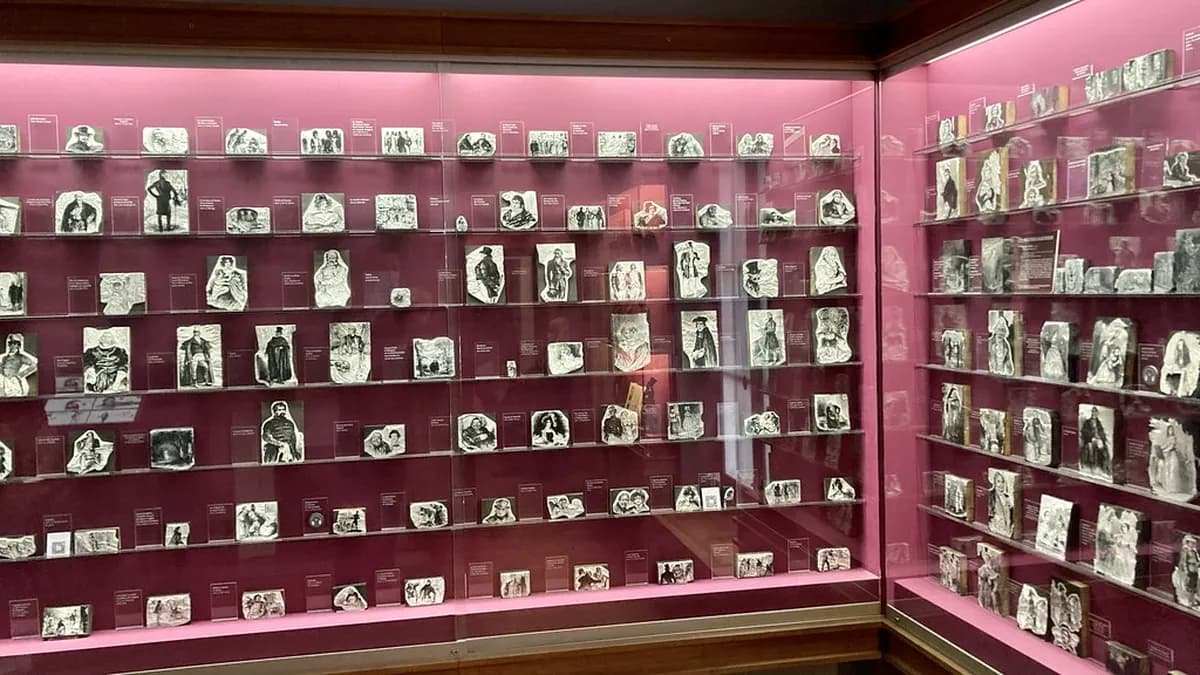
City-owned museums never charge entry regardless of which day you visit. The Petit Palais on Avenue Winston Churchill houses an impressive permanent collection of paintings, sculpture, and decorative arts at no cost. The Musée Carnavalet in the Marais tells the full history of Paris across 100 rooms and is also permanently free. The Musée de la Vie Romantique in the 9th arrondissement focuses on the Romantic period and feels like a private house — free entry, small crowds year-round.
Two more City of Paris museums belong on the same free list. The Maison de Balzac in Passy is the only one of the writer's Paris homes still standing, and the permanent collection costs nothing. In the Marais, the Musée Cognacq-Jay shows its eighteenth-century holdings in a sixteenth-century mansion, also free.
The Louvre, Musée d'Orsay, and Centre Pompidou all waive admission on the first Sunday of each month — normal adult tickets run €22 at the Louvre and €16 at the d'Orsay. Under-26 visitors from any country enter all three museums free on any day of the year.
You should consult the official Department of Tourism's website for a complete and current list of participating institutions, as the policy is confirmed annually.
On summer first Sundays (June–August), the Louvre queue can reach three hours before the 09:00 opening. First Sundays in November through February draw roughly 60% fewer visitors than summer equivalents — plan accordingly to make the most of the free entry day.
Montmartre and the Marais: Best Free Neighborhoods
Montmartre in the 18th arrondissement is the most atmospheric free district in the city. The climb up the butte rewards you with panoramic views over the rooftops before you even reach the Sacré-Cœur Basilica, which itself is free to enter. The interior is open daily from 06:00 to 22:30. The square in front draws street artists, but the quieter streets behind the basilica — Rue Lepic, Rue des Abbesses — give a more genuine picture of the neighborhood. Read more in the dedicated guide to Montmartre beyond the basilica.
The Marais in the 3rd and 4th arrondissements is another neighbourhood that rewards aimless walking. The Place des Vosges, Paris's oldest planned square built in 1612, is completely free to enter and sit in. The covered arcades surrounding it are open to pedestrians without charge. The Marais also contains some of the best examples of 17th-century hôtel particulier architecture in the city, visible directly from the street.
Both neighborhoods are dense with free gallery spaces. The Marais in particular has dozens of contemporary art galleries concentrated on Rue de Bretagne and Rue du Plâtre that operate as commercial spaces — meaning they are free to browse with no obligation to buy.
Parks, Gardens, and Outdoor Spaces
The Jardin du Luxembourg in the 6th arrondissement is one of the finest free outdoor spaces in Europe. The 23-hectare garden surrounds the Palais du Luxembourg and features the famous octagonal pond where children rent wooden model sailboats. Locals play chess on stone tables near the orchard, and the garden hosts free tennis courts (bookable via the city parks app). The Medici Fountain at the eastern end is one of the most romantic spots in Paris and consistently undervisited.
The Tuileries Garden, connecting the Louvre to the Place de la Concorde, is always open and free. It is particularly good in late spring when the flower beds are at their peak. The garden also hosts a temporary funfair in summer that is free to walk through even if the rides are not.
The Parc des Buttes-Chaumont in the 19th arrondissement is the city's most dramatic park — 25 hectares of sculpted terrain with a lake, a cliff, a suspension bridge, and a small temple on a rocky island. Almost no tourists visit it. The Palais Royal gardens adjacent to the Louvre offer a more central option: symmetrical arcades, pop-up exhibitions, and Daniel Buren's iconic striped columns, all free and open daily.
Canal Saint-Martin and Local Hangouts
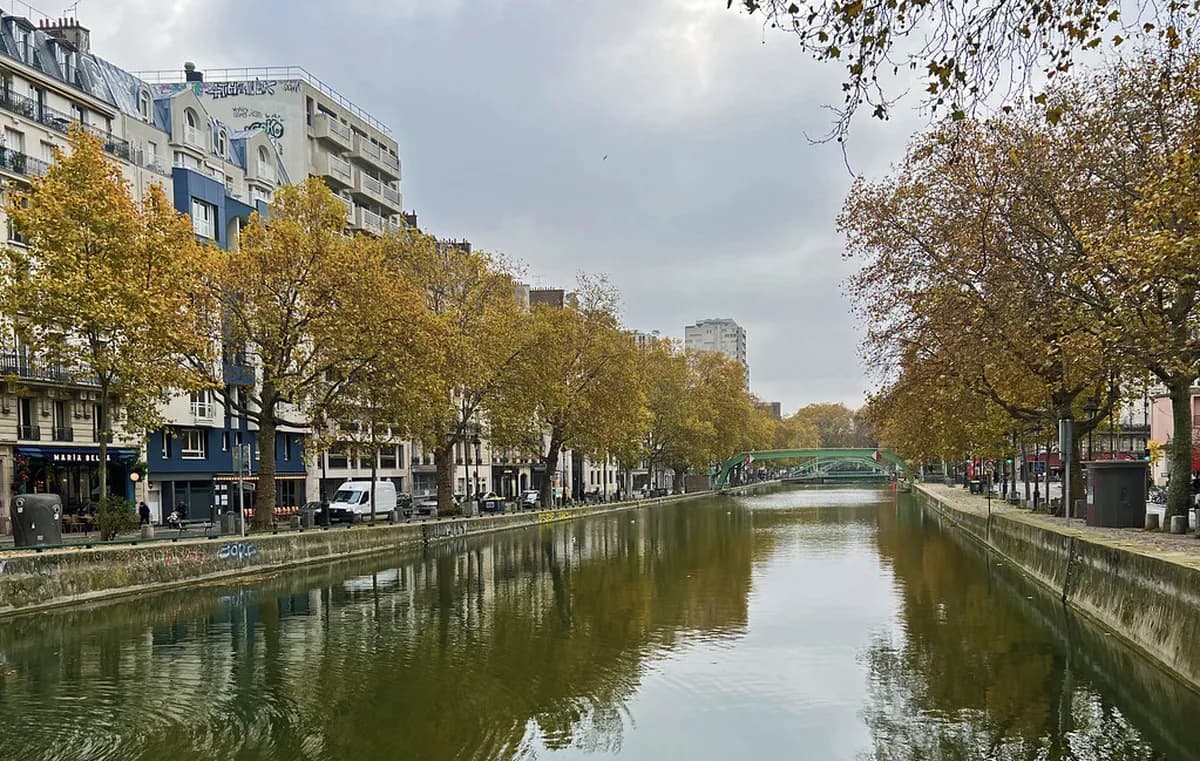
The Canal Saint-Martin in the 10th arrondissement has become the city's most reliably local free attraction. The 4.5 km waterway runs between the Bassin de la Villette and the Seine, lined with iron footbridges, lock gates, and plane trees. On summer evenings the stone banks fill with Parisians who bring their own drinks and food — the canal functions as an open-air living room for the neighbourhood.
The Bassin de la Villette at the northern end is Paris's largest artificial lake and hosts free swimming during July and August (open from 10:00 to 19:00, no charge). The Parc de la Villette beyond it is a 55-hectare cultural park that is free to enter and walk through. It hosts free outdoor cinema screenings throughout summer on the large lawn, announced annually by the city.
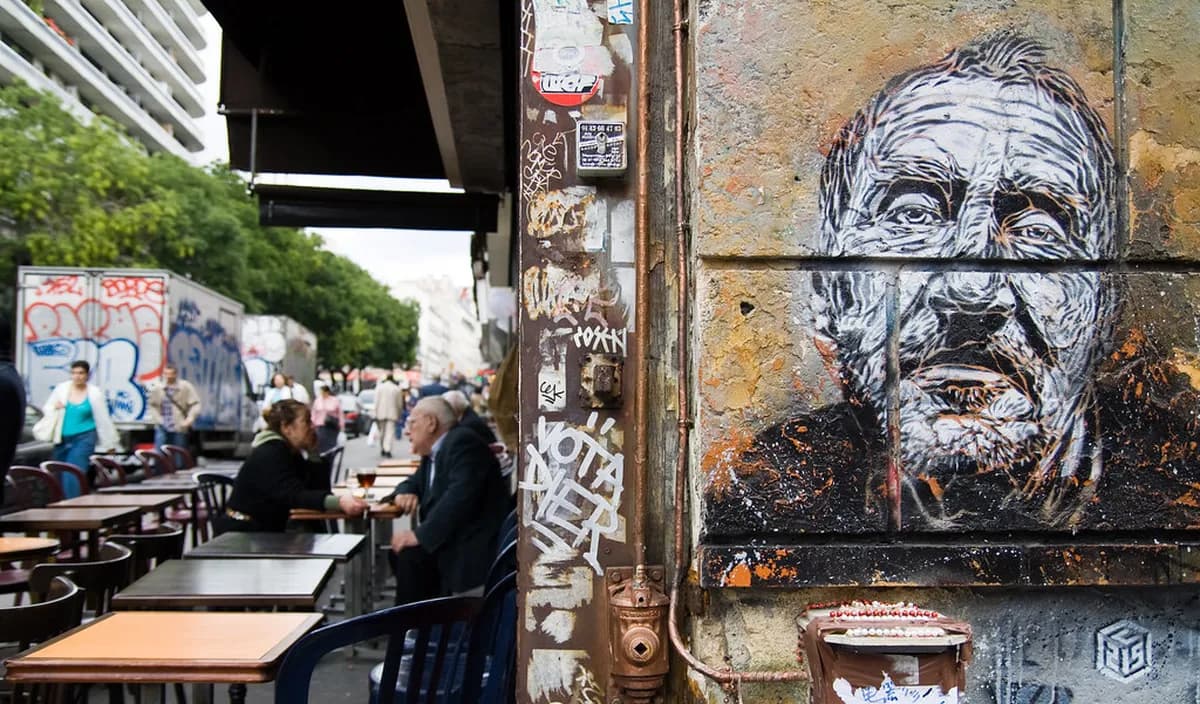
Further east, Belleville offers free street art on a scale you will not find anywhere else in Paris. The hillside neighbourhood has murals on almost every wall, and the artists change regularly. The Belleville guide covers the best streets to follow.
Covered Passages and Free Architectural Wonders
Paris has around 20 surviving 19th-century covered passages — glass-roofed shopping arcades that predate the department store. They are legal public thoroughfares, meaning they are free to enter any time they are open, typically from about 07:00 to 22:00. The Galerie Vivienne near the Palais Royal is the most ornate, with mosaic floors and curved glass ceiling. Passage du Grand Cerf near the Arts et Métiers metro stop has the highest glass roof of any passage in Paris at six metres. The the covered passages lists all the best examples with opening hours.
Sainte-Chapelle is not free to enter, but the exterior courtyard of the Palais de Justice complex is accessible without a ticket and gives a clear view of the Gothic spire. The Institut du Monde Arabe on the Seine embankment is free to enter the building's atrium, where the famous photosensitive facade panels are best appreciated from inside.
The Palais de Chaillot across from the Eiffel Tower houses the Cité de l'Architecture et du Patrimoine. The exterior terrace is always free and provides one of the best elevated views of the tower that is not on any tourist map. The terrace is accessible via a short walk through the building's public entrance hall.
Père Lachaise and Cultural History Without a Ticket
Père Lachaise Cemetery in the 20th arrondissement is free to enter and is one of the most visited sites in the entire city. The 44-hectare grounds house the graves of Oscar Wilde, Édith Piaf, Jim Morrison, Marcel Proust, and Frédéric Chopin, among many others. Pick up a free map at the main entrance on Boulevard de Ménilmontant — without it, finding specific graves in the 70,000-plot cemetery is genuinely difficult.
The cemetery is open Monday to Friday from 08:00 to 18:00, and weekends from 08:30. There is no fee at any time. It is quietest on weekday mornings, when you can walk the gravel paths in near silence. The northeastern section, furthest from the main entrance, contains the oldest and most architecturally elaborate funerary monuments and sees very few visitors.
Free Markets and Street Food Browsing
Paris has over 70 covered and open-air markets, most of which are free to browse. Marché d'Aligre in the 12th arrondissement is the cheapest and most chaotic food market in the city, running Tuesday to Sunday from 09:00 to 13:00. The adjacent flea market section sells books, vinyl, and bric-a-brac at genuinely low prices. Marché des Enfants Rouges in the Marais, Paris's oldest covered market (opened 1615), is free to walk through and hosts food stalls from a dozen countries including Morocco, Japan, and Italy.
Local boulangeries sell fresh baguettes for €1.20–1.50 and sandwiches for €4–6, which is the cheapest lunch in the city. Many of the where locals eat in Paris offer a fixed-price lunch menu (formule) from €12–15 that includes a starter and main course — far cheaper than dinner at the same place.
The the city's flea markets covers the major weekend markets including Saint-Ouen (the world's largest antique market, free entry) and the smaller neighbourhood markets worth visiting for atmosphere rather than buying.
| Free Attraction | Arrondissement | Hours | Notes |
|---|---|---|---|
| Seine riverbanks / Notre-Dame parvis | 4th | Always open | Cathedral nave free with timed reservation |
| Jardin du Luxembourg | 6th | 07:30–dusk | 23 hectares, Medici Fountain |
| Parc des Buttes-Chaumont | 19th | 07:00–22:00 (seasonal) | 25 ha, suspension bridge, free |
| Père Lachaise Cemetery | 20th | Mon–Fri 08:00–18:00 / Wknd 08:30 | 44 ha, free map at entrance |
| Musée Carnavalet | 3rd | Tue–Sun 10:00–18:00 | Always free, history of Paris |
| Sacré-Cœur interior | 18th | Daily 06:00–22:30 | Free entry, panoramic exterior views |
Planning Your Free Day in Paris by Neighborhood
The most efficient approach is to cluster activities by arrondissement so you walk between them instead of paying for the Metro. A Left Bank day could combine the Jardin du Luxembourg, the Musée de la Vie Romantique (9th), and an evening walk along the Quai Saint-Bernard — roughly 5 km of walking that passes through four arrondissements.
A Right Bank day could start at the Palais Royal gardens, continue through the Marais to Place des Vosges, then end at the Canal Saint-Martin for an evening by the water. The total distance is around 4 km. Grouping activities this way means a single €2.15 Metro ticket per journey rather than multiple crossings. Consider starting before 09:30 at popular outdoor sites to avoid the largest crowds.
For the full picture of what the city hides beyond the free landmarks, the hidden gems in Paris guide covers lesser-known streets, staircases, and public courtyards that most visitors never find.
Frequently Asked Questions
Which free things to do in paris options fit first-time visitors?
First-time visitors should prioritize the stunning views from the Sacré-Cœur Basilica and the historic Tuileries Garden. Walking along the Seine River at sunset provides a classic Parisian experience without costing any money. These iconic locations offer a perfect introduction to the city's unique charm and architectural beauty.
How much time should you plan for free things to do in paris?
You should allocate at least two full days to explore the major free landmarks and public parks across the city. Many travelers spend three to four hours just wandering through the historic streets of Montmartre or the Marais. Planning your route carefully helps you maximize your time at each beautiful location.
What should travelers avoid when planning free things to do in paris?
Avoid visiting major museums on the first Sunday of the month if you dislike extremely large crowds. While entry is free, the lines can be very long and may eat into your sightseeing time. Check for free and reduced rate offerings on other days to avoid the peak rush.
Heading to Ireland next? See our Dublin hidden-gems guide.
Paris remains one of Europe's most accessible destinations for budget travelers who know where to look. From the Seine quais to the covered passages, from Père Lachaise to the Parc de la Villette, the city offers more genuinely free experiences than almost any other major capital.
The key is timing and grouping: visit city-owned museums on weekdays, save national museum free Sundays for winter months, and walk between neighborhoods rather than riding between them.
Start planning your affordable adventure today to experience the full depth of the French capital on your own terms.
Continue exploring
More guides you'll find useful