12 Unusual Things to Do in Milan: Hidden Gems & Secret Spots (2026)
Discover Milan off the beaten path. From the Bone Chapel to secret flamingos and igloo houses, explore 12 unusual things to do in Milan for a unique trip.
On this page
12 Unusual Things to Do in Milan
After the Duomo and The Last Supper, most first-time visitors to Milan run out of ideas. But the city rewards the curious: bone-decorated chapels, pink flamingos behind iron gates, concrete igloo houses in a quiet residential street, and a giant marble middle finger aimed at the stock exchange. These are not obscure or hard to reach — they are simply the spots that standard travel guides skim past in favor of fashion weeks and Aperol spritzes.
This guide was refreshed in 2026 with current admission prices and opening hours drawn from official sources. It also absorbs the intent of "crazy things to do in Milan" — some of these spots are genuinely strange. Finding hidden gems in Milan takes a bit of planning; grouping them by neighborhood makes it easier to cover several in a single half-day walk.
San Bernardino alle Ossa: The Chapel of Bones
Tucked behind the church of Santo Stefano Maggiore in Piazza Santo Stefano, this small baroque chapel has walls and ceilings covered in thousands of human skulls, vertebrae, and thigh bones arranged in deliberate geometric patterns. The bones were collected from the city's overflowing medieval cemetery during the 14th century and moved here when ground space ran out. The result is less morbid than it sounds — Milanese Baroque craftsmanship turned human remains into an act of devotion.
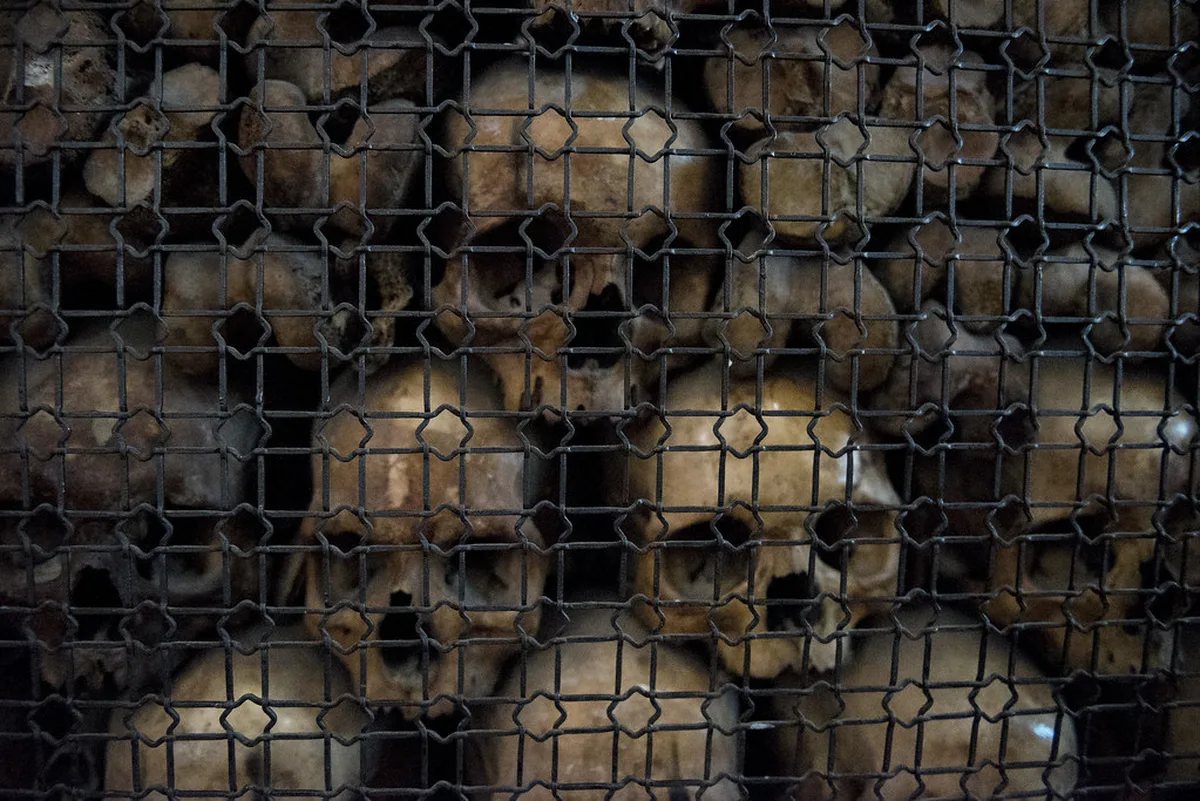
Entry is free, and the chapel is typically open Monday to Friday 08:00–12:00 and 14:30–18:00, with shorter hours on weekends. Go early on a weekday morning; tour groups from the Duomo occasionally pass through around midday. The chapel sits a seven-minute walk from the Duomo itself, so it pairs well with a morning in the historic center. San Bernardino alle Ossa is directly comparable to the more famous Capuchin Bone Church in Rome, but it receives a fraction of the visitors.
Arrive before 11:00 AM on weekdays to avoid tour groups from the Duomo. The chapel closes for two hours around midday (typically 12:00–14:30), making early morning the best window for peaceful exploration of the bone-decorated interior.
The Igloo Houses of Maggiolina (Via Lepanto)
Via Lepanto in the Maggiolina district contains a row of circular concrete houses built in 1946 by architect Cesare Pea. They were designed as affordable housing for families displaced by wartime bombing, and the rounded shape was a deliberate structural choice to save materials. Locals call them "le casette tonde" — the round little houses. They are still occupied private residences, which is part of what makes them unusual: this is not a museum piece, just a street where people live in domes.
The nearest metro stop is Marche on the M5 lilac line, about a ten-minute walk away. The street is public and free to walk along at any hour. Stay on the pavement and keep noise down — residents are accustomed to curious visitors but this is their home. The best photos come from standing at the eastern end of the block in the morning, when the light hits the curved facades cleanly. Pair this stop with Pirelli HangarBicocca, which is in the same northern district.
Ponte delle Sirenette: Milan's First Iron Bridge
The Ponte delle Sirenette — Bridge of the Little Mermaids — was cast in iron in 1842, making it Milan's first iron bridge. It originally spanned the Naviglio canal but was relocated to Sempione Park in 1929 when urban development swallowed the canal. The four mermaid sculptures at the corners are cast-iron figures of unusual delicacy for an industrial-era bridge; look closely and the detail in their tails and hair is remarkable.
Sempione Park is free to enter and open from 06:30 until late evening. The bridge is easy to find near the pond in the central section of the park. This is a pleasant detour if you are already visiting the Castello Sforzesco, which is directly adjacent. The bridge makes a quiet, romantic photo spot in the early morning before the park fills with joggers and families.
Palazzo Acerbi: The Legend of the Devil's House
At Corso di Porta Romana 3, a 17th-century palace carries a persistent reputation as the Devil's House. The legend ties to the 1630 bubonic plague that killed roughly half of Milan's population. The building's wealthy owner reportedly continued hosting extravagant parties while the city died around him — an act that locals attributed to a pact with the devil rather than simple callousness. Whether the legend is fact or invention, the dark reputation stuck.
The cannonball embedded in the facade is real and verifiable. It dates from the Five Days of Milan in March 1848, when Milanese citizens fought Austrian troops in the streets. The ball lodged in the stone at eye level near the main entrance and was never removed — partly as a memorial, partly because extracting it would have required significant masonry work. The building can be viewed for free from the public pavement at any time of day. Visiting at dusk, when the carved stone faces around the doorway catch low shadows, produces the most atmospheric effect.
Cimitero Monumentale: An Open-Air Art Museum
Milan's Monumental Cemetery opened in 1866 and was designed from the start as a civic showpiece rather than a purely functional burial ground. The tombs and mausoleums commissioned by wealthy Milanese families read as a compressed survey of Italian sculpture from the late 19th century to the 1970s. Art Nouveau figures, Futurist bronze reliefs, and Fascist-era marble heroics stand within a few meters of each other. The Campari family tomb, which reproduces the Last Supper in life-sized bronze, is among the most striking pieces.
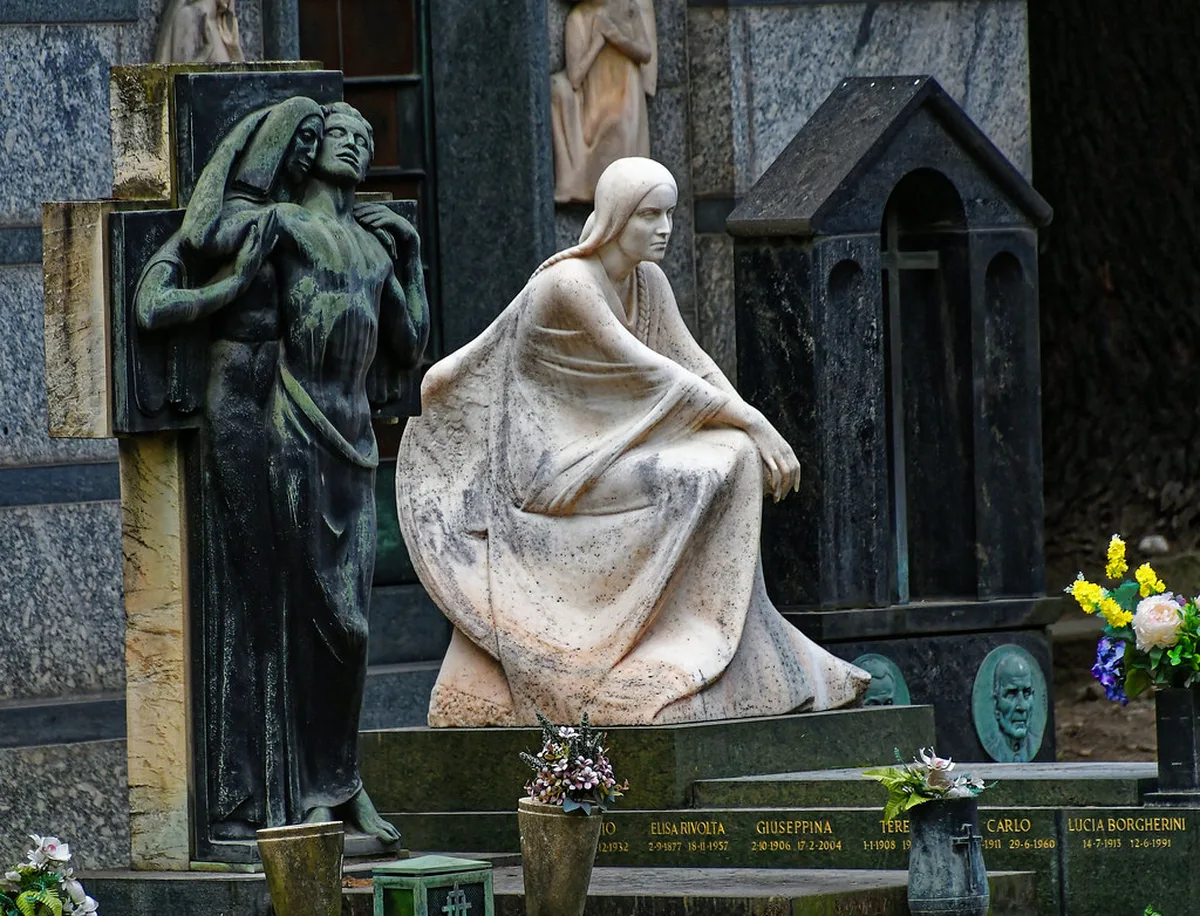
The cemetery is located near Porta Garibaldi and is open Tuesday to Sunday from 08:00 to 18:00. Entry is free. Collect a map at the entrance; without one, it is genuinely easy to miss the most important monuments in the 250,000 square meter site. Allow at least 90 minutes. The cemetery does not appear in most standard Milan itineraries, which means crowds are thin even on weekends — a rare quality for a free attraction this close to the city center.
Visit early morning (08:00–09:30) for solitude and the best light for photography. The Campari family tomb (Last Supper in bronze) is in the central section near the main entrance; ask at the information desk if you want specific directions. Closed Mondays — plan around this when coordinating a multi-site itinerary.
MUDEC: Global Cultures in the Tortona District
The Museum of Cultures (MUDEC) sits in a former Ansaldo factory in the Tortona district, converted by British architect David Chipperfield. The undulating glass atrium at the building's center is as much the draw as the collection itself — Chipperfield preserved the industrial skeleton and layered transparent exhibition spaces inside it, so natural light shifts throughout the day in ways that a purpose-built museum cannot replicate. The permanent collection covers ethnographic art from Africa, the Americas, Oceania, and Asia, drawn from the city's historic holdings.
The permanent collection is free on most days; temporary exhibitions typically cost €12–18 per adult. Opening hours are 09:30–19:30 daily, with extended hours until 22:30 on Thursdays and Saturdays. MUDEC is a ten-minute walk from the Porta Genova metro station (M2 green line). The Tortona district around it has become one of Milan's design-industry hubs, with independent studios and concept stores filling adjacent former factories. If you are visiting during Milan Design Week in April, the entire neighborhood transforms into an open exhibition.
Isola and Via Padova: Street Art and Urban Exploration
The Isola neighborhood sits just north of the Garibaldi skyscraper cluster and feels deliberately resistant to the polished money of Porta Nuova directly beside it. The streets around Via Borsieri and Piazza Archinto carry large-format murals commissioned through the Mural Art Legacy project. Some cover entire building ends; others are tucked into alleyways visible only at a specific angle. The neighborhood's independent cafes and bookshops fill ground floors that were once mechanics' workshops and small factories.
The Frida bistrot on Via Antonio Pollaiuolo is the correct place to stop for a drink. The courtyard is graffiti-covered, the crowd is local, and the aperitivo hour runs from around 18:00. Isola is easily reached via the Zara or Isola stops on the M5 lilac line. Separately, Via Padova in the eastern part of the city offers a denser concentration of street art with a different character — rawer and more contested, reflecting the neighborhood's history of rapid demographic change. Both areas cost nothing to explore on foot and are safe to walk in the evening.
If you want a Milan 3-day itinerary that includes these districts, block the morning of your second day for Isola and spend the afternoon in the Tortona/Navigli cluster to the south.
Pirelli HangarBicocca: Massive Contemporary Installations
A former Pirelli locomotive factory in the northern Bicocca district now houses one of the largest contemporary art spaces in Europe. The Seven Heavenly Palaces by Anselm Kiefer — seven concrete towers standing between 14 and 18 meters tall — are the permanent anchor. Kiefer created the towers specifically for the space in 2004, embedding books, photographs, and lead materials into the concrete. The industrial ceiling height of the original factory is the reason this work could be made; no conventional gallery could contain it.
Entry is free for all visitors. The museum is open Thursday to Sunday from 10:30 to 20:30. Take the M5 lilac line to Bicocca station, then walk ten minutes. The surrounding Bicocca district was a blighted industrial zone until the 1990s redevelopment — the university campus, the Arcimboldi theatre, and HangarBicocca were all part of the same regeneration plan. It is a legitimate half-day destination on its own, and the combination with the Igloo Houses on Via Lepanto (a 20-minute walk away) makes a coherent off-center northern Milan itinerary.
Villa Invernizzi: The Secret Flamingos of Milan
Behind the iron fence of a neoclassical villa on Via Serbelloni, in the quiet Quadrilatero del Silenzio district east of the public gardens, a flock of Chilean flamingos has lived for decades. The birds belong to the private villa and are visible through the fence railings without entering the property. There is no fee and no visiting schedule — you either see them or you don't.
The best time to observe the flamingos is between 08:00 and 10:00, when they are most active near the pond at the garden's center. The fence runs along Via Serbelloni; position yourself near the gate for the clearest view. Do not use flash photography or make sudden noise — this is a private residential property and the birds are sensitive to disturbance. The district around the villa is called the Quadrilatero del Silenzio specifically because it has almost no traffic and very few shops. It is one of the calmest residential pockets in central Milan and worth a slow walk even if the flamingos are sheltering out of sight.
L.O.V.E. Sculpture: Maurizio Cattelan's Provocative Art
In Piazza degli Affari, directly in front of the Palazzo Mezzanotte — which houses the Italian Stock Exchange — stands a four-meter marble hand with every finger except the middle one truncated at the knuckle. The title is an acronym for the Italian words for freedom, hate, vendetta, and eternity. Maurizio Cattelan installed it in 2010 during Milan's design week as a temporary piece aimed at financial institutions in the wake of the 2008 crisis. The city decided to keep it permanently, which adds a layer of absurdity the artist likely appreciated.
The sculpture is in a public square and can be viewed at any hour, for free. It is a ten-minute walk from the Duomo. The truncated fingers are as important as the raised one — Cattelan cut them rather than simply folding them, which makes the gesture more anatomically unsettling. The work sits in a district that is otherwise fairly quiet on weekends, so a Saturday morning visit allows you to photograph it without crowds. Nearby is the Pinacoteca Ambrosiana, which contains Leonardo da Vinci's original preparatory drawings for The Last Supper.
Navigli District: Beyond the Tourist Aperitivo
The Navigli canals are on every Milan itinerary, but most visitors arrive at 19:00 for spritz and leave by 21:00, missing two of the district's most unusual corners. The Vicolo dei Lavandai — Washermen's Alley — is a narrow passage just off the Naviglio Grande that preserves the original stone washing troughs where laundry was scrubbed by hand until the 1950s. Small plaques explain the washermen's guild that operated here. At 07:30 on a weekday morning, with canal mist still rising and nobody else around, it is the most atmospheric spot in Milan.
On the last Sunday of every month, the Naviglio Grande hosts a major antique and flea market running from roughly 08:00 to 19:00. Dealers spread vintage furniture, old photographs, Art Deco ceramics, and genuine junk along both banks of the canal. The crowd is Milanese rather than touristic; prices reflect this. The combination works well as a single morning: arrive at Vicolo dei Lavandai before 09:00 while it is quiet, then walk fifty meters to the market as it fills. By midday the canal banks are packed and the best pieces are gone.
The free things to do in the city extend throughout Navigli — beyond the washing troughs and the market, the canal path itself toward Porta Ticinese passes small workshops, vintage record shops, and ceramics studios that are worth browsing at no cost. The area is reached by metro M2 green line to Porta Genova.
Albergo Diurno Venezia: Underground Art Deco Time Capsule
Beneath Piazza Oberdan lies one of the most intact Art Deco interiors in Italy. The Albergo Diurno Venezia opened in 1925 as a "day hotel" — a concept that provided arriving travelers with private bathing rooms, barbers, hairdressers, and luggage storage before the age of hotel lobbies with shower facilities. It closed in 1985 and was left essentially untouched for three decades. The original mosaic floors, brass fixtures, ceramic tiles, and mahogany barber chairs are all in place.
Access is managed by FAI (Fondo Ambiente Italiano) and is limited to specific open days and heritage weekends. Guided tours typically cost around €10 per person and run for approximately 45 minutes. Check the FAI website before visiting, as dates are published in advance and spots fill quickly. This is the one entry on this list that requires advance planning — you cannot simply turn up. The reward is a space that feels genuinely undiscovered, despite sitting under one of the city's main squares.
How to Plan Your Unusual Milan Itinerary
These twelve spots divide naturally into three geographic clusters. The city center cluster — San Bernardino alle Ossa, Palazzo Acerbi, and the L.O.V.E. Sculpture — can be covered in a single three-hour morning walk from the Duomo. The northern cluster — Igloo Houses and Pirelli HangarBicocca — works as a half-day trip on the M5 lilac line. The southern cluster — MUDEC, Navigli, and Vicolo dei Lavandai — pairs well for an afternoon and evening, finishing at the canal aperitivo bars around 18:00.
The four sites that require timing or logistics: Villa Invernizzi flamingos (morning only, no flash), Albergo Diurno Venezia (FAI open days, book ahead), Navigli antique market (last Sunday of month), and Cimitero Monumentale (closed Mondays). Buy a 24-hour transport pass (€7.20 in 2026) if you plan to cross between clusters in one day. The M5 lilac line is the key route for the northern sites; M2 green handles the Navigli and Tortona areas.
Comfortable shoes and a small amount of cash are the only practical requirements. Many of the smaller churches and historic buildings close for two hours around midday — plan outdoor sites like the igloo street, the L.O.V.E. sculpture, and Villa Invernizzi for that window. Most of these spots are free or cost under €12, making them collectively one of the best-value itineraries in any major Italian city.
Frequently Asked Questions
What is the most unusual museum in Milan?
Pirelli HangarBicocca is widely considered the most unusual museum due to its massive industrial scale and permanent installations. Visitors can explore these towering concrete structures for free in a former locomotive factory.
Where can I see the best street art in Milan?
The Isola neighborhood and the area around Via Padova are the top spots for urban murals. These districts feature works by local and international artists that cover entire building facades.
Is the Bone Church in Milan free to visit?
Yes, San Bernardino alle Ossa is free to enter, though donations are encouraged for maintenance. It is located near the Duomo and is open most days until 6pm.
Milan is a city of layers that requires a bit of effort to truly understand beyond its famous cathedral. By visiting these 12 unusual spots, you will see a side of the city that most tourists completely miss. Whether you are fascinated by the macabre or the modern, these hidden gems offer a more authentic and memorable Italian experience.
Remember to respect the local neighborhoods and private residences as you explore these off-the-beaten-path locations. The city's secret wonders are waiting for those willing to look past the glitz of the fashion district.
Continue exploring
More guides you'll find useful