13 Best Things To Do In Milan For Young Adults (2026)
Explore the top things to do in Milan for young adults. From Duomo rooftops to Navigli aperitivos and CityLife skyscrapers, discover the best of Milan in 2026.
On this page
13 Best Things To Do In Milan For Young Adults
Milan runs at a different speed than the rest of Italy. While Rome trades on ancient ruins and Florence on Renaissance painting, Milan trades on energy — fashion weeks, Michelin-starred kitchens, and canal-side aperitivos that stretch past midnight. It is Italy's most forward-looking city and one that rewards younger travelers who want more than a museum queue.
I last updated this guide in early 2026 after spending a week re-testing the best spots across Navigli, Isola, and Porta Nuova. Understanding what Milan is famous for beyond the postcard shots is the fastest way to build a trip that doesn't feel like a school excursion. The 13 picks below balance iconic landmarks with the neighborhoods where locals actually spend their weekends.
Each entry includes current prices, opening hours, and a booking note where it matters. Milan rewards preparation — two of these experiences sell out months in advance — but the rest are walk-in friendly and surprisingly affordable.
Free entry attractions include Galleria Vittorio Emanuele II (24 hours), Parco Sempione, Bosco Verticale street viewing, Isola street art circuit, and the Braidense National Library (weekdays). Many museums offer free entry on the first Sunday of each month.
Duomo di Milano and the Rooftop Terraces
The Duomo is the undeniable starting point for any Milan visit. The cathedral took roughly six centuries to complete and its facade is loaded with over 3,400 statues and 135 marble spires — numbers that only make sense when you are standing directly in front of them. Do not walk straight inside; spend ten minutes circling the exterior first.
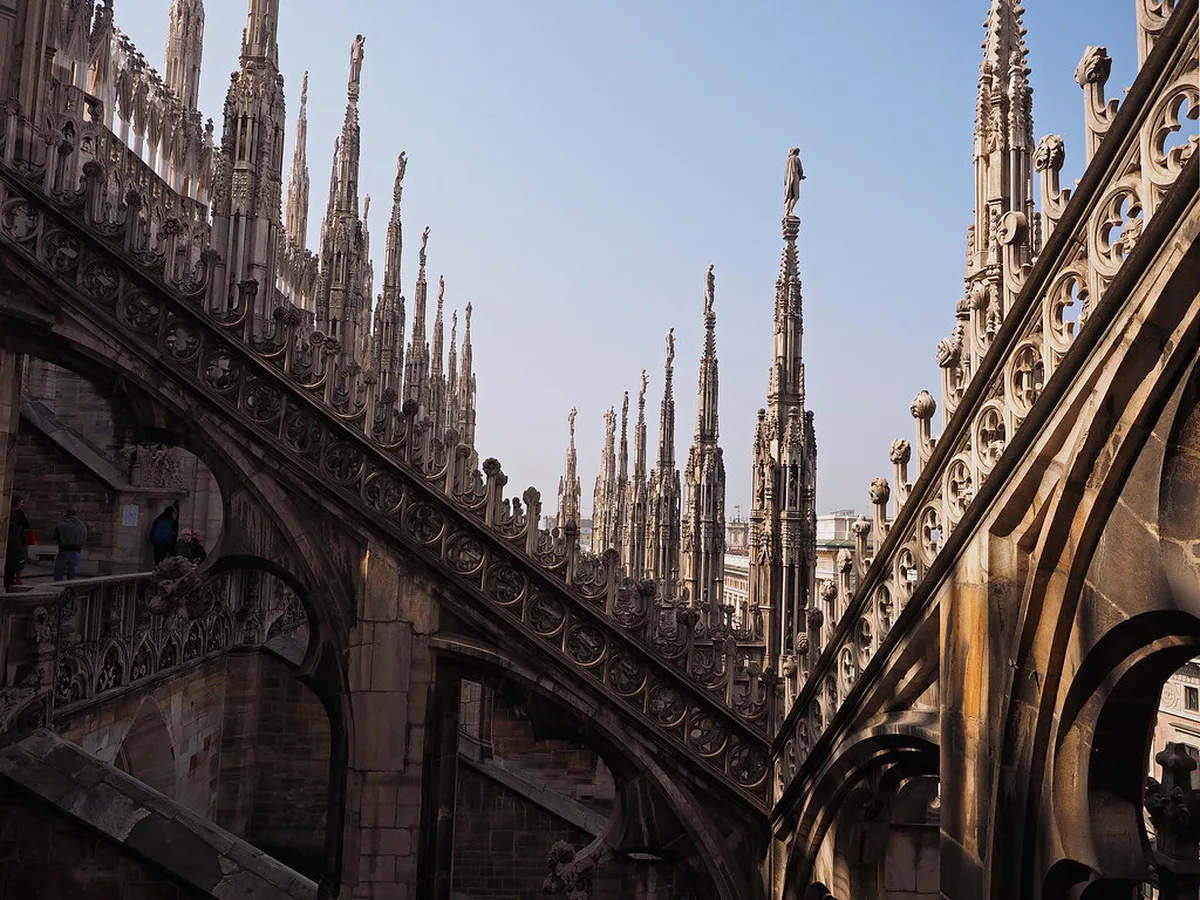
The rooftop terraces are the real draw for young adults. You walk among the Gothic spires at close range, with the Alps visible on clear days and the city grid laid out below you. Terrace tickets cost €15 via stairs or €25 via elevator in 2026. Book through the official Duomo di Milano website at least a week ahead in high season — the ticket office queues can consume an entire morning.
Arrive before 09:30 to get the terraces largely to yourself. The light is better in the early morning anyway, and Piazza del Duomo below is calm enough to photograph without tour groups in every frame. If you want a free alternative view of the rooftops, head to the seventh floor of the La Rinascente department store directly behind the piazza — the terrace café has one of the best angles in the city and costs nothing to enter.
Galleria Vittorio Emanuele II: Luxury and Local Tradition
The Galleria connects directly to the Duomo's northern exit and is the most elegant covered arcade in Italy. Dating from 1867, it has housed Louis Vuitton, Prada, and Gucci flagship stores for decades, alongside historic cafes like Biffi and Savini that have been serving espresso since the building opened. Entry is free and the arcade never closes.
The local ritual worth joining is the bull mosaic spin: find the mosaic of a bull embedded in the central octagon floor, place your heel on a specific anatomical detail, and spin three times for luck. Locals and travelers do this without irony. Visit after 21:00 if you want the grand iron-and-glass vault mostly to yourself — the architectural photography at night is excellent and the tourist volumes drop sharply.
Resist the urge to eat or drink inside the Galleria itself unless you want to pay three times the going rate for a cappuccino. Walk two streets east into the side streets around Via Speronari for the same quality at neighborhood prices.
Navigli District: The Heart of Milanese Aperitivo Culture
The Navigli canal district is where Milan's social life concentrates, especially for the 20s-to-35s crowd. Two canals — Naviglio Grande and Naviglio Pavese — run through a neighborhood filled with bars, independent restaurants, vintage clothing stores, and street art. The atmosphere between 18:00 and 22:00 on a Friday or Saturday is the most electric you will find in the city.
Aperitivo is the ritual to understand. Most Navigli bars charge between €10 and €15 for a drink — an Aperol spritz, a Campari soda, or a local craft beer — and the drink comes with unrestricted access to a complimentary food spread. The spreads range from olives and bruschetta at budget bars to substantial buffets of pasta, risotto, cold cuts, and focaccia at busier spots. Many travelers figure out quickly that one €12 aperitivo drink plus the buffet replaces a sit-down dinner entirely, cutting food costs significantly without sacrificing quality or atmosphere.
Most Navigli bars charge €10-€15 for a drink with unrestricted access to a complimentary food spread (pasta, risotto, cold cuts, focaccia), making aperitivo a budget-friendly dinner alternative. The antique market runs on the last Sunday of every month from 08:00 to 18:00 with hundreds of stalls selling vintage furniture and collectables.
Walk further down Naviglio Pavese away from the tourist concentration near Porta Ticinese for bars that skew younger and more local. The antique market along Naviglio Grande runs on the last Sunday of every month — browse hundreds of stalls selling vintage furniture, old photographs, and collectables from around 08:00 to 18:00. Check our guide on Milan nightlife for young adults for the best late-night continuation options after aperitivo.
Getting here is easy: take the green metro line (M2) to Porta Genova FS station, then walk three minutes to the main canal bank. A single metro ride costs €2.20 and is valid for 90 minutes across the network. For current route maps and schedules, check the Milan public transport portal.
Teatro alla Scala: World-Class Opera Without the Full Price
La Scala is the most prestigious opera house on the planet. Inaugurated in 1778, it hosted premieres by Verdi, Puccini, Bellini, and Rossini, and the red-velvet horseshoe auditorium with its extraordinary acoustics has barely changed. Even if opera isn't your usual listening, attending a performance here shifts your understanding of what live music can be.
Museum tickets cost approximately €12 and often include access to peek into the auditorium balconies when rehearsals are not scheduled. The museum itself covers La Scala's entire history with original scores, costumes, and portraits of the composers who defined it. Visit on a weekday afternoon for the best chance of an unobstructed theater view.
For performances, the loggione (upper gallery) seats offer good sightlines at prices starting from around €30 — a fraction of prime orchestra positions. Book through the official La Scala website well in advance for any production during the main season (December to July). Last-minute tickets occasionally surface at the box office on performance days if you are already in the city.
Leonardo da Vinci's The Last Supper: Book Three Months Ahead
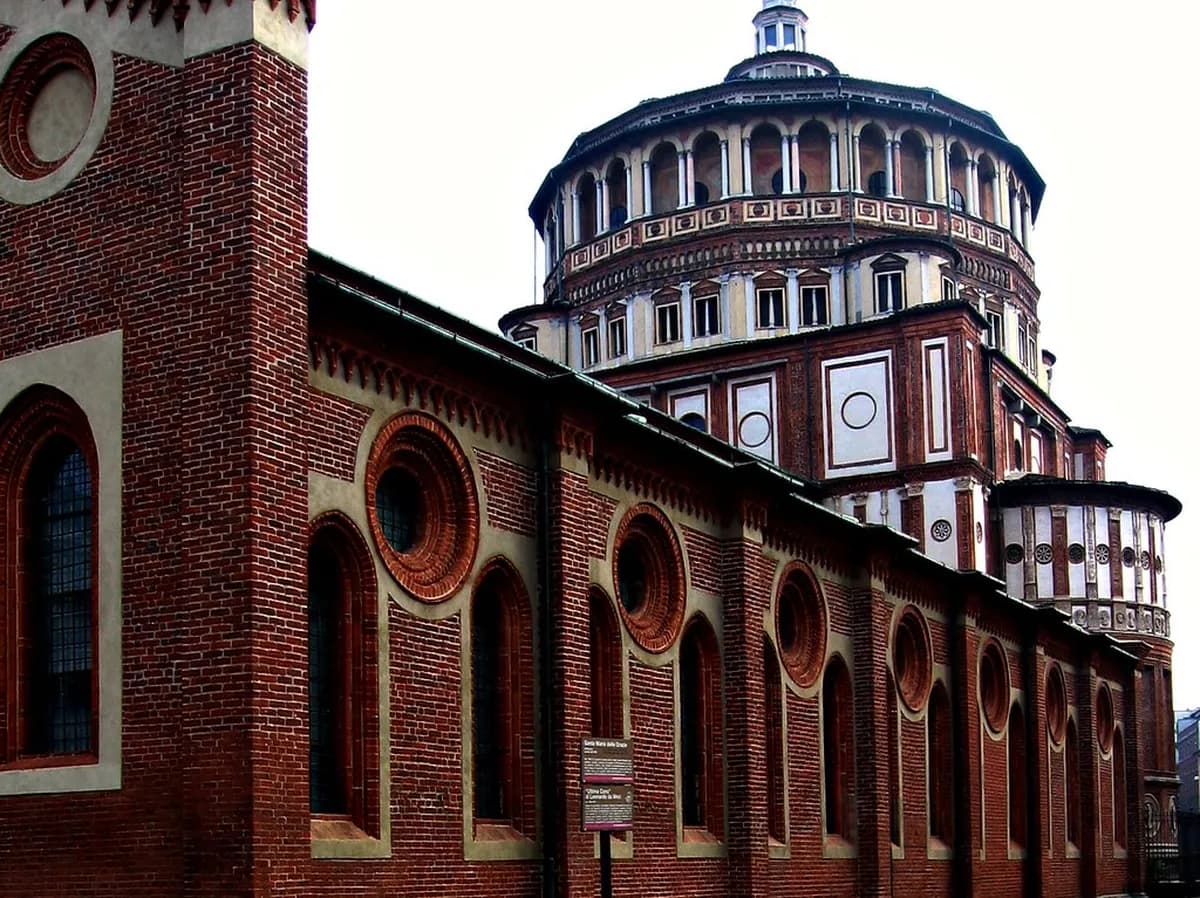
Seeing The Last Supper is the single experience in Milan that requires the most advance planning. Leonardo painted this mural between 1495 and 1498 on the refectory wall of Santa Maria delle Grazie, a UNESCO World Heritage Site in the Magenta district. The viewing experience is carefully managed: timed 15-minute slots, groups capped at 25 people, and humidity-controlled access chambers before you enter.
Tickets cost €15 plus a €2 booking fee through the official site (vivaticket.it) and open for booking exactly three months before the visit date. Slots disappear within minutes of opening. If official tickets are gone — which they usually are — search for guided walking tours from reputable providers that pre-purchase blocks of tickets. These tours cost roughly €50 to €80 per person but guarantee entry and add context that makes the 15 minutes substantially richer.
Opening hours run Tuesday through Sunday from 08:15 to 19:00. Monday is closed. The mural's scale is smaller than most visitors expect from photographs, but the emotional intensity of the composition — the moment Christ announces betrayal, the 12 disciples frozen in individual reactions — hits harder in person than any reproduction suggests.
Castello Sforzesco and Parco Sempione
The Sforza family's enormous 15th-century brick fortress anchors the northwestern edge of the historic center. It now houses several art museums including collections of ancient Egyptian artifacts, Renaissance sculpture, and Michelangelo's last unfinished work, the Rondanini Pietà. The combined museum ticket costs around €10, with free entry during the final hour before closing on Tuesdays and Wednesdays.
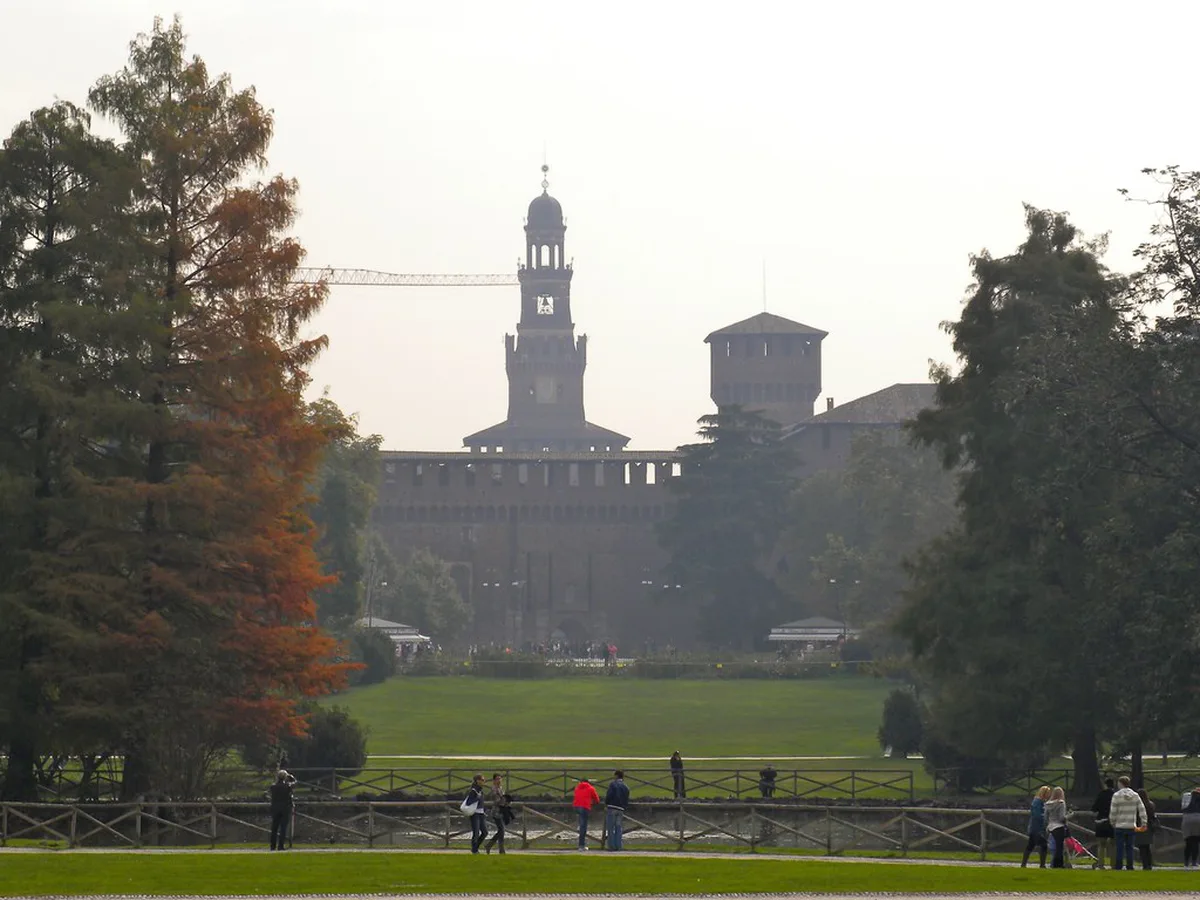
Behind the castle stretches Parco Sempione, Milan's largest central park and the place where local families, joggers, and students with textbooks converge every decent-weather afternoon. Walking straight through the park toward the Arco della Pace at the far end takes about 20 minutes and provides some of the best ambient Milan photography — the Neoclassical arch frames the greenery beautifully, especially in late afternoon light.
The Triennale Design Museum sits on the park's eastern edge and is worth an hour if design culture interests you. The café on the top floor has reliable food at non-tourist prices and a terrace that overlooks both the park and the castle. It is the kind of spot that almost no first-time visitor finds, which is reason enough to go.
Brera District: Art, Architecture, and a Hidden Library
Brera is the artistic heart of central Milan — a grid of narrow cobblestone streets north of La Scala that feels noticeably calmer than the tourist-heavy Duomo zone. The Pinacoteca di Brera art gallery anchors the neighborhood. Admission costs €15 to €18, with free entry on the first Sunday of every month (expect larger crowds). The collection focuses on Northern Italian Renaissance and Baroque painting, with standouts including Raphael's Marriage of the Virgin, Caravaggio's Supper at Emmaus, and Mantegna's Dead Christ.
Inside the same palace as the Pinacoteca is one of Milan's best-kept practical secrets: the Braidense National Library, an 18th-century reading room open to visitors free of charge on weekdays. The frescoed ceiling and floor-to-ceiling shelving make it one of the most beautiful interiors in the city, and almost no travel guide sends people there. It takes five minutes to visit and costs nothing.
The streets around Via Fiori Chiari and Via Madonnina fill with people during aperitivo hour (18:00 onwards), with many independent bars and restaurants that skew toward a younger, local crowd rather than tourists. This neighborhood is also the best base for gallery hopping — dozens of small contemporary art spaces operate around Brera, most of them free to enter.
Modern Milan: CityLife, Porta Nuova, and the Vertical Forest
The northern and western districts of Milan offer the clearest view of what the city looks like when it is not curating its Renaissance heritage for tourists. Porta Nuova, reached by metro to Garibaldi FS on the green line, centers on Piazza Gae Aulenti — a raised public plaza surrounded by glass towers that feels closer to Singapore than southern Europe. The Unicredit Tower here was designed by César Pelli, the architect behind the Petronas Towers in Kuala Lumpur.
Two streets west of the plaza stands Bosco Verticale (Vertical Forest), twin residential towers covered in thousands of trees and plants representing about two hectares of woodland growing vertically on structural brackets. Designed by Stefano Boeri, the towers won the International Highrise Award in 2014 and remain the most photographed building in the new Milan. You cannot enter the residences, but the surrounding streets offer excellent angles.
The CityLife district, accessible by metro M5 (purple line) to Tre Torri station, takes the concept further with towers by Zaha Hadid, Arata Isozaki, and Daniel Libeskind alongside a large free public park and a shopping mall open daily from 09:00 to 21:00. The park is where Milan's western residential population actually spends its evenings — a much more local atmosphere than the tourist corridors of the center. Exploring both Porta Nuova and CityLife is free and takes roughly two hours on foot between them.
QC Termemilano: The Urban Spa Worth the Splurge
Built into a structure partly dating back to the city's ancient Roman walls, QC Termemilano is the most distinctive wellness experience in Milan and one that competitors to this city rarely mention. The spa occupies a converted 1920s tram depot at Porta Ticinese, near the Navigli district, and runs thermal pools, saunas, steam rooms, and relaxation areas across two floors of preserved industrial architecture.
Day passes in 2026 cost between €50 and €65, which includes use of all facilities, a robe and towels, and access to the snack buffet. The spa stays open until 23:00, making it a logical end to a long day rather than a mid-afternoon diversion. Bring your own flip-flops to save a few euros on the optional rental.
The sauna located inside a restored historic tram car parked in the original depot hall is the detail that justifies the price. It is genuinely unusual — sitting in a wood-paneled tram cabin that hasn't moved since the 1960s, sweating in a space that once carried commuters across the city. Book online a day or two ahead on weekends as capacity is limited.
Isola District: Street Art, Craft Beer, and the Alternative Circuit
Isola sits directly north of Porta Nuova and has spent the last decade transitioning from working-class neighborhood to Milan's most credible creative district. The streets around Via Pastrengo and Via Pepe are densely covered in large-scale murals — some commissioned, some not — by Italian and international street artists. Walking the neighborhood costs nothing and takes roughly 90 minutes to cover thoroughly.
The craft beer scene here is the strongest in central Milan. Several bars stock serious Italian craft production alongside imported Belgian and German labels, at prices well below the tourist-area equivalent. Aperitivo in Isola skews younger and less polished than in Brera or Navigli, which is its appeal. The area is most alive between 19:00 and midnight Thursday through Saturday.
Isola also sits directly adjacent to Bosco Verticale in Porta Nuova, so combining both districts in a single afternoon loop makes geographic sense. Take M2 green line to Garibaldi FS, walk through Piazza Gae Aulenti to photograph the towers, then continue on foot ten minutes north into Isola. You can find more local alternatives to the standard tourist circuit in our guide to the hidden gems of Milan.
Fondazione Prada: Contemporary Art in a Former Distillery
The Fondazione Prada complex in the Largo Isarco area south of the center is one of the most ambitious contemporary art institutions in Europe. Rem Koolhaas designed the conversion of a 1910 gin distillery, preserving the original industrial structures while adding bold new buildings including the gold-leafed Haunted House pavilion. The complex hosts rotating exhibitions of international contemporary art across multiple interconnected galleries.
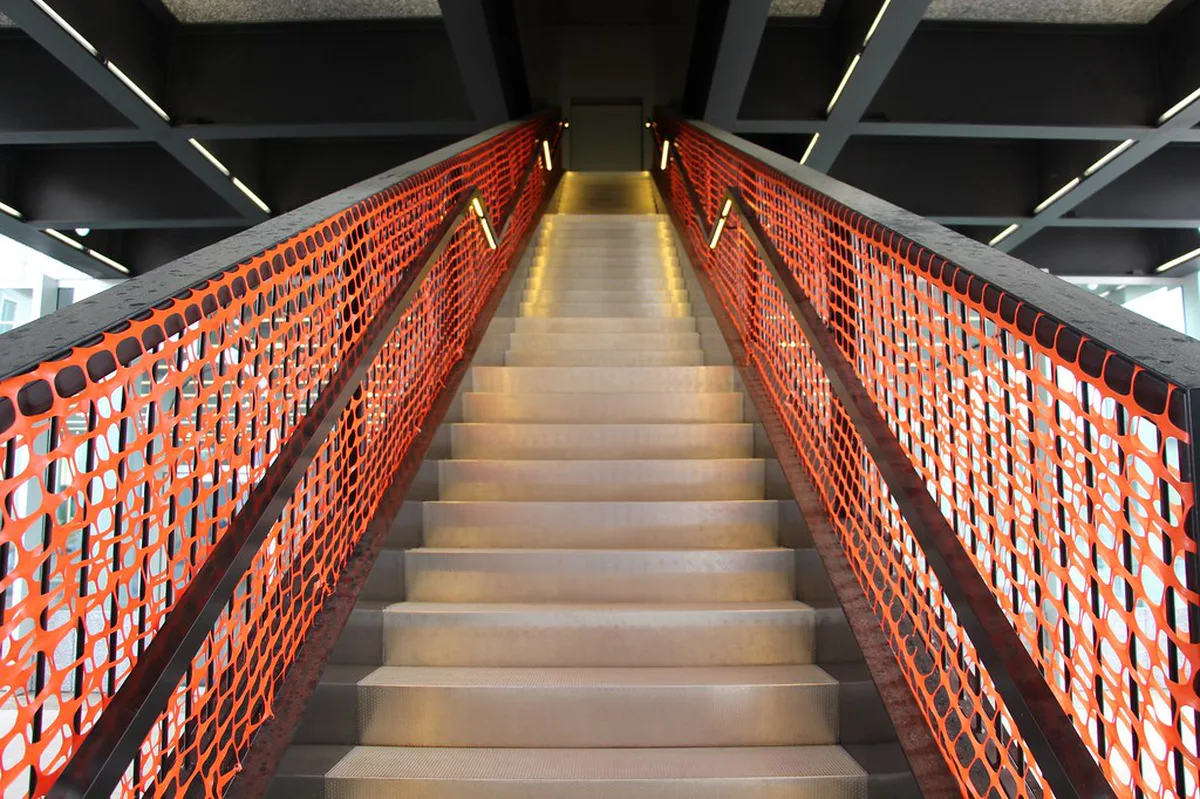
Standard admission costs €15 and covers all current exhibitions. The foundation is open daily from 10:00 to 19:00 and closes on Tuesdays. Allow at least two hours. The permanent collection alone justifies the entry price, but the temporary shows are consistently at a level matching major European museums.
The Bar Luce inside the complex was designed by filmmaker Wes Anderson in his signature pastel-symmetrical style. It looks precisely like a set from one of his films, and it serves reasonable espresso and aperitivo drinks without a significant markup. This café has become an attraction independent of the art, and rightfully so — it is a genuinely immersive designed space rather than just a themed room.
Best Day Trips: Lake Como and Lake Maggiore
Milan's position in the Lombardy plain makes it the ideal base for Italian Lakes day trips. Lake Como is the most popular and most accessible: direct trains from Milano Centrale or Milano Cadorna run to Como San Giovanni in approximately 40 minutes, with a round-trip ticket costing around €10. The main Como city is heavily touristed in summer — take the local ferry instead to Varenna or Bellagio for a quieter, more photogenic experience on the same ticket.
Lake Maggiore offers a noticeably different character. The lake is wider and less dramatic than Como, with a slower pace that appeals to travelers who want gardens, afternoon boat rides, and the Borromean Islands rather than Instagram cliffside villages. Trains from Milano Centrale reach Stresa in about an hour, making it a clean day trip. The contrast between the lake's tranquility and Milan's urban density is genuinely striking — more than most visitors expect. See our full guide on the day trips from Milan for timings and transport options.
One practical note: renting an electric car opens up routes between the two lakes and along the western shore of Maggiore that public transport doesn't serve well, but city parking in Milan itself runs around €18 per day. For a pure day trip, the train remains the most efficient option and removes any parking calculation from your itinerary.
Savouring Milan: Where to Eat Like a Local
Milanese cuisine is heavier and richer than the Mediterranean-lite cooking tourists often associate with Italy. The three dishes worth ordering in any trattoria: risotto alla Milanese (saffron-stained rice cooked in bone marrow broth), cotoletta alla Milanese (butter-fried breaded veal, thicker and more indulgent than a Wiener Schnitzel), and ossobuco (braised veal shank slow-cooked until it falls from the bone, traditionally served with risotto or polenta). These are not tourist compromises — they are the actual food locals eat.
The best-value lunch option in the city is the neighborhood trattoria lunch menu, typically two courses plus water for €13 to €18. Trattorias around Brera and the streets behind Sant'Ambrogio basilica are the most reliable. Avoid anything immediately surrounding Piazza del Duomo — the restaurants on the piazza charge a geographic premium for food that is rarely worth it. Walking ten minutes south or east consistently delivers better meals at lower prices.
For breakfast, the Milanese standard is a cornetto (lighter and more buttery than a croissant) plus a standing espresso at a bar counter. Budget €1.50 total. Sit down at the same bar and the price doubles for no reason beyond furniture. Paying at the counter first (bring your receipt to the bar) is the standard protocol at most traditional coffee bars in the city.
Planning Your Milan Itinerary: Sample Schedules
For a two-day trip, split the city into two geographic zones. Day one covers the historic core: Duomo rooftops first thing (09:00), Galleria and La Scala museum mid-morning, lunch in Brera, Pinacoteca di Brera and the Braidense Library in the afternoon, then Castello Sforzesco and Parco Sempione before heading to Navigli for aperitivo at 18:30. This day is walkable in its entirety — no metro required from Duomo to Navigli.
Day two covers the modern city and a cultural heavyweight: morning at Porta Nuova and Bosco Verticale, then Isola for street art and coffee, lunch near Garibaldi, afternoon at Fondazione Prada (allow the travel time south by metro M3 yellow line to Lodi T.I.V.U. station), and finish at QC Termemilano spa near Navigli for the evening. If The Last Supper is on your list, it slots best into a Day 1 morning — book it first and build the rest of the day around its 15-minute slot. See our detailed guide on a three-day Milan plan if you have more time.
The metro covers the distances between zones quickly. A single journey costs €2.20 and is valid for 90 minutes. All metro gates in 2026 accept contactless bank cards and mobile wallets directly — you do not need to buy paper tickets or navigate the ticket machines at all. Tap in, tap out. This makes the network far more accessible for international visitors than it was even three years ago. For a deeper dive into Milan's history and cultural context, Milan's Wikipedia entry provides excellent background on the city's architecture and attractions.
Practical Tips and Budget Guidance
The city is more budget-manageable than its fashion-capital reputation suggests. Free or low-cost highlights include: Galleria Vittorio Emanuele II (free entry, 24 hours), Parco Sempione and Castello Sforzesco courtyards (free), Bosco Verticale viewing from the street (free), Isola street art circuit (free), Braidense National Library (free weekdays), and the Piazza Gae Aulenti modern architecture walk (free). The Pinacoteca di Brera and Museo del Novecento both offer free entry on the first Sunday of each month — if your dates align, this saves €15 to €18 per museum.
On transport: a 24-hour unlimited metro and tram pass costs €7, a 48-hour pass costs €12.50, and a 72-hour pass costs €17. For three or more metro journeys per day the pass pays for itself. Airport connections cost separately — the Malpensa Express train from MXP runs every 30 minutes to Milano Centrale (€13 one-way, 52 minutes) or Cadorna (€13, 40 minutes). The Linate shuttle bus from LIN to Centrale costs €5 and takes about 25 minutes in normal traffic.
Milan runs on reservations for its headline attractions. Book The Last Supper three months in advance, the Duomo terraces one week in advance in summer, and La Scala performances as soon as the season schedule drops in spring. Everything else in this guide is walkable or bookable on the day.
Frequently Asked Questions
Is Milan expensive for young adults on a budget?
Milan can be pricey, but it is manageable with smart planning. You can enjoy free walking tours, €10 aperitivos, and affordable metro rides. Focus on free sites like Parco Sempione to keep costs down.
What is the best neighborhood for young adults to stay in?
Navigli is the best area for those who want to be near the nightlife and social scene. Brera offers a more upscale, artistic vibe, while Isola is perfect for travelers seeking a hip, local atmosphere.
Do I need to speak Italian to get around Milan?
English is widely spoken in the city center, especially by younger locals and hospitality staff. Knowing basic Italian phrases like 'grazie' is appreciated but not strictly necessary for a successful trip. Most signs are bilingual.
Milan is a city that rewards those who look past the industrial exterior to find its creative heart. By mixing iconic landmarks like the Duomo with the modern energy of the Navigli canals, you will experience the best of Italy. I hope this guide helps you navigate the city's unique landscape and discover why it remains a favorite for young travelers.
Whether you are here for the world-class art or the trendy social scene, Milan offers something for every type of explorer. Pack your most stylish yet comfortable shoes and get ready to fall in love with this dynamic Italian metropolis.
Continue exploring
More guides you'll find useful