Rome's Bone Chapel: Capuchin Crypt Hours & Tickets
See how Capuchin friars' bones form Rome's eeriest chapel art, plus 2026 tickets, hours, dress code, and accessibility tips for a smooth visit.
On this page
Capuchin Crypt Visitor Guide: Your Essential Plan for Rome's Bone Chapel
The Capuchin Crypt is one of Rome's most unusual sacred sites: an underground ossuary beneath Santa Maria della Concezione dei Cappuccini where the bones of Capuchin friars form decorative chapels, symbols, and reminders of mortality. This Capuchin Crypt visitor guide focuses on the practical details that matter in 2026: tickets, opening hours, transport, dress code, accessibility, guided-tour choices, and how to fit the visit into a central Rome itinerary.
Last updated June 2026. Always verify last-minute closures and booking rules with the official Capuchin Crypt website before your trip, especially around religious holidays.
Quick Answer: The museum and crypt are open Monday to Sunday from 09:30 to 13:30 and from 14:30 to 18:30, with last entries at 12:30 and 17:30. Full admission is €10.00 and reduced admission is €6.50, with an audioguide included. Booking ahead is recommended on weekends and from roughly April to October.
What is the Capuchin Crypt? A Brief History and Significance
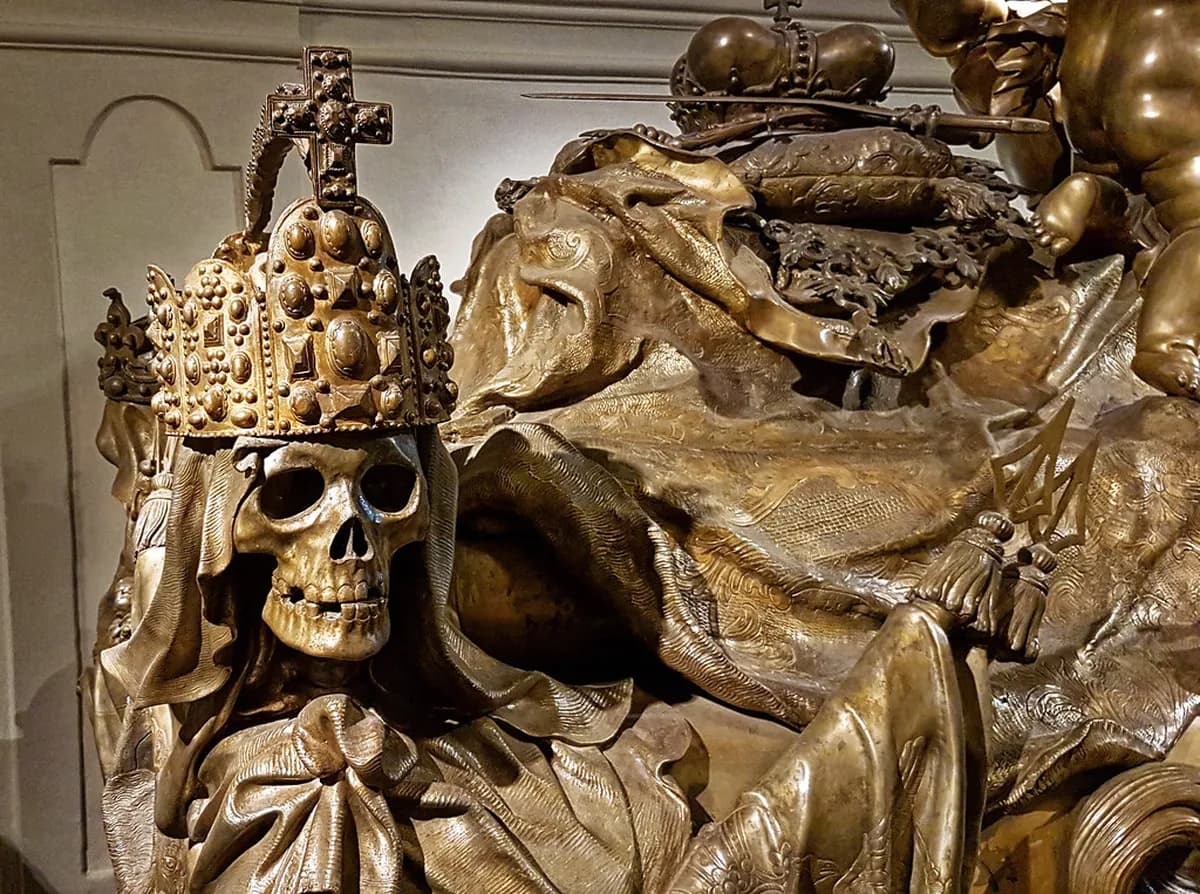
The Capuchin Crypt is not simply a macabre display; it is a spiritual memento mori. Located beneath the Church of Santa Maria della Concezione dei Cappuccini, the crypt contains the remains of thousands of Capuchin friars arranged into patterns, lamps, arches, and religious motifs. The message is direct: life is temporary, death is universal, and the body returns to dust.
The friars intended the bone chapels as a respectful meditation on death and resurrection, not as a spectacle. That context matters. Visitors who arrive expecting a horror-style attraction often miss the point and may also run into etiquette problems inside a working religious site.
Expect a quiet, compact visit rather than a large underground complex. You move first through the Capuchin Museum, then into the crypt chapels. The strongest visit is slow and observant: read the museum context, keep your phone away, and leave time to absorb the final chapel rather than rushing through for a quick look.
Capuchin Crypt Tickets, Hours & Location
The ticket covers the Capuchin Museum and the crypt; you do not buy a separate crypt-only ticket. The official address is Via Vittorio Veneto 27, 00187 Rome, near Piazza Barberini and the lower end of Via Veneto. The museum entrance is separate from the main church entrance, so look for the museum/crypt signage rather than walking into the church nave.
The museum and crypt are open Monday to Sunday from 09:30 to 13:30 and from 14:30 to 18:30, with last entries at 12:30 and 17:30. It is closed on Easter Sunday, 25 December and 1 January. If you are planning around lunch, note the midday closure; arriving just after 13:00 can mean waiting until the afternoon session.
According to the official museum site, full admission is €10.00 and reduced admission is €6.50 (including an audioguide). A reduced group rate of €7.50 per person applies for groups of at least 10. Children up to age 6, visitors with disabilities, and Capuchin friars enter free. An additional €1.50 fee per ticket applies to online bookings.
| Ticket option | Best for | Price note |
|---|---|---|
| Full admission | Most adult visitors | €10.00, audioguide included |
| Reduced admission | Eligible visitors with ID | €6.50, audioguide included |
| Group admission | Groups of at least 10 | €7.50 per person |
| Free admission | Eligible free-entry categories | Free where eligible |
| Online booking | Weekends, holidays, April to October | Adds €1.50 per ticket |
- Step 1: Check the current session hours before you leave, especially around Easter, Christmas, New Year's Day, and any religious event.
- Step 2: Choose the correct ticket type and bring ID if you qualify for a reduced or free entry category.
- Step 3: Book online for busy periods, or arrive early in either the morning or afternoon session if buying at the entrance.
- Step 4: Go to Via Vittorio Veneto 27 and enter through the Capuchin Museum, not through the main church door.
- Step 5: Keep shoulders and knees covered, silence your phone, and plan for 30-45 minutes inside.
How to Get to the Capuchin Crypt in Rome
The easiest public-transit route is Metro Line A to Barberini. From Barberini station, walk up Via Vittorio Veneto for about two minutes to the museum entrance. This is usually the simplest route from Termini, the Spanish Steps area, and other Line A stops.
Buses also stop around Piazza Barberini and Via Veneto, but central Rome traffic can make them less predictable. Use a bus if you are already near a direct route; otherwise, the metro is more reliable for timed-entry planning. From the Trevi Fountain, allow about 10-15 minutes on foot. From the Spanish Steps, allow about 15 minutes, with some uphill walking depending on your route.
- Best transit choice: Metro Line A to Barberini, then a short uphill walk.
- Best walking pairing: Trevi Fountain, Piazza Barberini, and Spanish Steps before or after the crypt.
- Best arrival buffer: Arrive 10-15 minutes before your timed slot so you can find the museum entrance and pass any ticket checks without rushing.
- Common mistake: Planning to arrive during the midday closure or entering the church first instead of the museum entrance.
Guided Tours: Enhancing Your Capuchin Crypt Experience
A guided tour is not required, but it can make the crypt easier to understand. The bone chapels are visually striking, yet the meaning comes from Capuchin theology, the friars' ideas about death, and the relationship between the museum and the ossuary. If you prefer independent visits, the included audioguide is usually enough for a compact, focused stop.
Consider a guided tour if you want a deeper explanation of the symbols, if you are visiting with children or first-time Rome travelers who need context, or if you are combining the crypt with other underground or religious sites. Avoid booking a tour purely for "skip-the-line" value unless it clearly fits your schedule; the crypt is small, and a good timed entry plus early arrival often solves the queue issue.
- Choose the audioguide: Best for solo travelers, tight schedules, and visitors who want to control the pace.
- Choose a guide: Best for symbolism, religious context, and a more structured visit.
- Check inclusions: Confirm whether museum entry, the crypt, audioguide, and any nearby sites are included before you pay.
Beyond the Bones: The Capuchin Museum Experience
Before entering the crypt, visitors pass through the Capuchin Museum. This is more than a waiting area; it explains the Capuchin Order, its Franciscan roots, and the spiritual ideas behind the bone chapels. Do not skip it unless you are genuinely short on time.
The museum displays religious objects, manuscripts, vestments, paintings, and material connected with the friars' austere daily life. Exhibits about St. Francis of Assisi and the Capuchin branch of the Franciscan tradition help explain why the crypt is meant as a meditation on humility rather than a decoration made for tourists.
A practical flow is to spend 15-25 minutes in the museum, then move into the crypt slowly. The museum gives you the vocabulary for what you are about to see: mortality, prayer, poverty, resurrection, and remembrance. Without that context, the chapels can feel like a shocking visual stop instead of a coherent religious space.
Optimizing Your Visit: Timing, Flow & What to Expect
The crypt and museum together usually take 30 to 45 minutes. A rushed visit can be finished faster, but the site works better when you allow time to read the museum panels and pause in the chapels. If you are pairing the crypt with the Trevi Fountain or Spanish Steps, put the crypt first when you want a quieter tone, or last when you want a reflective close to the route.
The best times are early in the morning session and early in the afternoon session, after the site reopens. Weekdays are usually calmer than weekends, and November to March tends to feel quieter than the high-season months. Avoid arriving near the last-entry time unless you are comfortable with a short visit.
- Know before you go: Photography and filming are prohibited inside the museum and crypt.
- Dress code: Cover shoulders and knees, as you would for churches in Rome.
- Bag planning: Travel light; large bags can make the narrow spaces awkward even if storage rules vary.
- Visitor flow: Museum first, crypt chapels second, then exit through the museum/shop area.
- Mindset: Treat the site as a cemetery and place of worship, not as a photo stop.
The crypt and museum together usually take 30 to 45 minutes. Allow time to read the museum panels and pause in the chapels rather than rushing through.
Combining Your Visit: Nearby Attractions in Rome
The Capuchin Crypt sits in a convenient part of central Rome, so it works well as a short anchor stop in a larger walking route. Piazza Barberini is just nearby, with Bernini's Triton Fountain and good transit connections. From there, the route naturally continues toward the Trevi Fountain, the Spanish Steps, or the art collections around the historic center.
A short 10-minute walk from the crypt leads to the Trevi Fountain, while the Spanish Steps are about 15 minutes away on foot. For art and palace interiors, the Galleria Doria Pamphilj is a strong option about a 20-minute walk away, and Palazzo Colonna is another excellent nearby Baroque stop, reachable in about 25 minutes.
A simple half-day route is: Capuchin Crypt, Piazza Barberini, Trevi Fountain, then either the Spanish Steps or a gallery visit. This gives the day a useful contrast: solemn reflection, public squares, and major Roman landmarks without too much backtracking across Rome.
Dress Code & Etiquette for the Capuchin Crypt
As a sacred religious site and cemetery, the Capuchin Crypt requires modest dress. Cover shoulders and knees, and bring a light scarf or layer if you are visiting Rome in warm weather. The dress code is not only a formality; it reflects the religious setting and the presence of human remains.
Photography and filming are strictly prohibited in both the museum and crypt. Keep your phone away rather than trying to take a discreet picture. The ban protects the solemn atmosphere and prevents the chapels from being treated as a visual novelty.
Keep voices low, avoid eating or drinking inside, and supervise children closely. The crypt can be meaningful for older children who understand the context, but it may be unsettling for younger visitors. If anyone in your group is sensitive to human remains, preview the plan before you book.
Photography and filming are strictly prohibited in both the museum and crypt. Keep your phone away during the visit to maintain the solemn atmosphere and respect the sacred space.
Accessibility Information for Visitors
The Capuchin Crypt is a historic religious complex, so accessibility is limited in parts of the visit. The museum entrance is relatively straightforward from street level, but the crypt itself involves stairs and compact spaces. Visitors who cannot manage stairs should contact the museum before booking to confirm the current access options.
Wheelchair users and visitors with significant mobility limitations may find the crypt chapels difficult or impossible to access without assistance. Strollers are also awkward in the narrow, solemn spaces; a baby carrier is usually more practical if you are visiting with an infant.
If accessibility is a concern, build extra time into the visit and avoid last-entry slots. The site is short, but moving slowly through stairs, corridors, and ticket checks is easier when you are not trying to beat closing time.
Frequently Asked Questions
How long does it take to visit the Capuchin Crypt?
A typical visit to the Capuchin Crypt and Museum takes about 30 to 45 minutes. You can spend longer if you wish to examine the exhibits in more detail. Allocate enough time for quiet reflection in the crypt chapels.
Is the Capuchin Crypt worth visiting?
Yes, the Capuchin Crypt offers a unique and thought-provoking experience, unlike other Roman attractions. It provides a profound spiritual and historical perspective on life and death. Many visitors find it to be a deeply moving and memorable site.
Is the Capuchin Crypt open to the public?
Yes, the Capuchin Crypt is open to the public as part of the Capuchin Museum and Crypt complex. The museum and crypt are open Monday to Sunday from 09:30 to 13:30 and from 14:30 to 18:30, with last entries at 12:30 and 17:30. It is closed on Easter Sunday, 25 December and 1 January.
Do you need to book Capuchin Crypt tickets in advance?
Booking Capuchin Crypt tickets online in advance is highly recommended, especially during peak tourist season. This helps guarantee your entry and can save you time waiting in lines. On-site tickets are available, but queues can be long.
What should I wear to the Capuchin Crypt?
Visitors to the Capuchin Crypt should dress modestly, covering both shoulders and knees. This is a sign of respect for the religious nature of the site. Avoid tank tops, short shorts, and mini-skirts, as you may be denied entry.
Can you take photos in the Capuchin Crypt?
No, photography is strictly prohibited inside both the Capuchin Museum and the crypt chapels. This rule is enforced to maintain the solemnity of the sacred space. Please respect this policy and keep your cameras and phones put away.
Is the Capuchin Crypt free to enter?
No, it is not free for most visitors. Full admission is €10.00 and reduced admission is €6.50. Free entry applies only to eligible categories, including children up to age 6, visitors with disabilities, national tour guides, and Capuchin friars.
Are guided tours worth it at the Capuchin Crypt?
A guided tour is worth it if you want help interpreting the symbolism, theology, and history behind the bone chapels. If you prefer a shorter independent visit, the included audioguide is usually enough.
Other Ossuaries and Bone Chapels in Europe
The Capuchin crypt arranges the bones of some 3,700 friars into architecture, a practice that recurs across Catholic Europe. Naples has the Catacombs of San Gennaro, two levels of rock-cut burial galleries with fifth-century frescoes still legible. In Lisbon, the Carmo Convent keeps its earthquake ruin roofless and its archaeological museum holds mummies and tombs in the former nave.
The Capuchin Crypt offers a truly unique and profound experience in Rome. It stands apart from the city's more conventional historical sites. By following this visitor guide, you can ensure a smooth and respectful visit. Prepare for a moment of quiet contemplation amidst the city's bustle.
From understanding its history to navigating tickets and transport, your visit will be well-informed. The Capuchin Crypt invites you to reflect on life's deeper meanings. It is an essential stop for those seeking a different kind of Roman encounter.
To verify current details, consult the Capuchin Crypt official site and Capuchin Crypt on Wikipedia.
For more Rome planning, see our hidden gems in Rome guide.
Continue exploring
More guides you'll find useful