Casa di Goethe Visitor Guide: History, Tips & What to See in Rome
Plan your visit to Casa di Goethe in Rome with our comprehensive guide. Discover its history, collections, practical tips, and nearby attractions for an enriching experience.
On this page
Casa di Goethe Visitor Guide: Explore Goethe's Roman Home
Casa di Goethe offers a focused window into literary history in the heart of Rome. This intimate museum celebrates Johann Wolfgang von Goethe in the apartment where he lived during his famous Italian Journey. It is the only German museum located outside Germany, and this casa di goethe visitor guide is designed for travelers who want practical details as well as cultural context.
Goethe stayed here from 1786 to 1788, when Rome's ruins, artists, libraries, and social circles reshaped his writing and his sense of himself as an artist. The museum preserves the atmosphere of that Roman chapter through letters, paintings, drawings, books, and historical documents. It is less about spectacle than about understanding how a place can change a person.
Use this 2026 guide to plan the visit clearly: what to see, how long to allow, what tickets cost, how to get there, and which nearby Rome attractions pair well with the museum. Casa di Goethe works especially well as a quieter cultural stop between Piazza del Popolo, Via del Corso, and the Spanish Steps.
Why Visit Casa di Goethe? More Than Just a Museum
Casa di Goethe offers more than a glimpse into a famous writer's life. It gives visitors a compact, readable view of 18th-century Rome as a crossroads for artists, scholars, travelers, and collectors. The rooms help explain why Rome was not just a stop on Goethe's route, but the place where his Italian Journey became a creative turning point.
The museum is worth considering even if you are not a German literature specialist. Its strongest themes are easy to recognize: travel, reinvention, friendship, looking carefully at art, and learning from a city. Because the house is small and central, it also works well for travelers who want a meaningful cultural visit without committing half a day.
Its location on Via del Corso is part of the appeal. You step out of one of Rome's busiest shopping streets into a quieter set of rooms tied to European intellectual history. That contrast makes Casa di Goethe a useful pause between larger, more crowded sights.
A Glimpse into Goethe's Roman Life and Legacy
Johann Wolfgang von Goethe arrived in Rome in 1786, embarking on his transformative 'Italian Journey'. He found profound inspiration in the city's ancient ruins and vibrant artistic scene. This period marked a crucial turning point in his literary career. Rome helped him rediscover his artistic self.
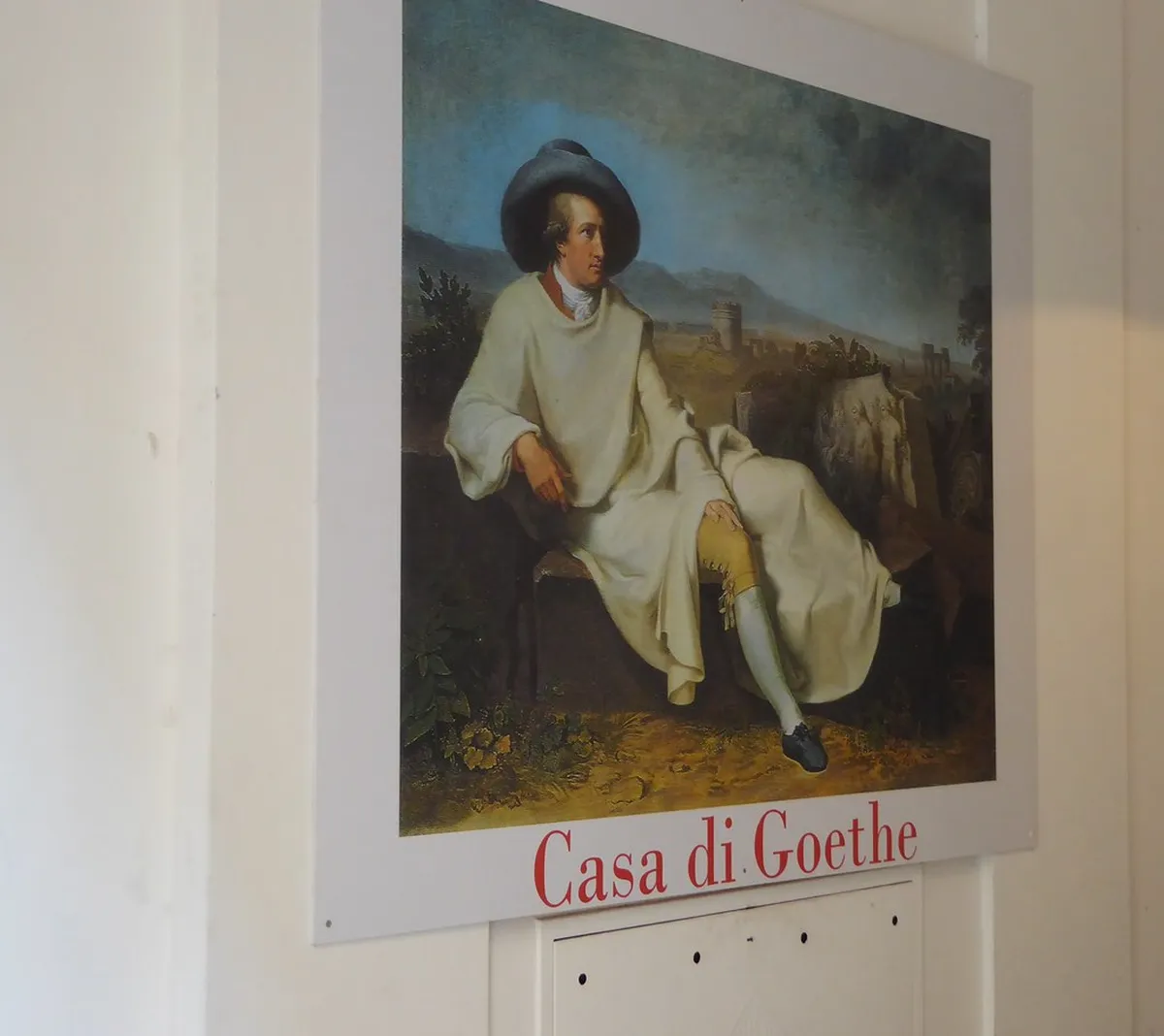
Goethe shared his Via del Corso apartment with several German artists, including Johann Heinrich Wilhelm Tischbein. These companions fostered a lively intellectual environment. Their shared experiences and discussions enriched Goethe's stay. The museum highlights these important friendships.
During his Roman residency, Goethe studied classical art and architecture, produced drawings, and wrote extensively about what he observed. This is the significance of Goethe's Italian journey: it was a deliberate search for artistic renewal, not just a leisurely trip south. His time in Rome later shaped works such as 'Italian Journey' and 'Roman Elegies', and the museum presents that creative period through objects, images, and context rather than through a large monument.
What to See: Exhibitions and Collections at Casa di Goethe
Casa di Goethe and its collection focus on the apartment where Goethe lived and on the network of people who shaped his Roman stay. The permanent exhibition uses letters, paintings, drawings, books, and historical documents to show how Goethe worked, observed, and moved through the city. Instead of rushing, look for details that connect domestic life with the larger artistic world outside the windows.
The collection also includes works linked to Goethe and to artist friends such as Johann Heinrich Wilhelm Tischbein, Friedrich Bury, and Johann Georg Schütz. These pieces help visitors picture the Rome that Goethe encountered: ancient fragments, studio conversations, portraiture, and a city being studied by foreign artists with intense attention.
Temporary exhibitions add another reason to check the museum before visiting. They often explore Goethe's influence, German-Italian cultural exchange, or related art-historical themes. The official museum site, Casadigoethe.it, is the best place to confirm what is on view in 2026.
The media gallery is useful if you want a clearer frame for Goethe House Rome, especially before reading every label. It adds context around the Italian Journey and helps visitors connect individual documents or artworks to the larger story of Goethe in Rome.
Planning Your Visit: Practical Information and Tips
Casa di Goethe is at Via del Corso, 18, 00186 Rome RM, Italy, close to Piazza del Popolo and within walking distance of the Spanish Steps. For public transit, the simplest approach for many visitors is Metro A to Flaminio, then a short walk through Piazza del Popolo and down Via del Corso. Buses and trams serving the Piazza del Popolo area can also work well, but walking is often the easiest final step in this part of the historic center.
The museum is open Tuesday to Sunday from 10:00 a.m. to 6:00 p.m., with last admission at 5:30 p.m. It is closed on Mondays. Check Casadigoethe.it before setting out, especially around holidays, temporary exhibition changes, or private events.
Standard admission is €6 and the reduced ticket is €5. A family ticket costs €17. Entry is free for children up to 10 years old and for ICOM members. Guided tours are €40 (plus €2 per member for school or student groups). Guided tours of the permanent and temporary exhibitions are available by prior appointment in Italian, German, and English.
Most visitors should allow 1 to 1.5 hours. If you plan to read labels closely, use the media gallery, or see a temporary exhibition, build in the longer end of that range. The best time to visit is usually a weekday morning or early afternoon, when Via del Corso is easier to navigate than during peak shopping hours.
Common mistakes are easy to avoid: do not arrive on Monday, do not expect a large state museum, and do not leave it until the final half hour before last admission. If step-free access or lift access is important for your group, contact the museum before you go, because historic house museums can have practical constraints that are not obvious from a map.
For more Rome planning, see our hidden gems in Rome guide, unusual things to do in Rome, and Hidden Rome 3-day itinerary.
The best time to visit is usually a weekday morning or early afternoon, when Via del Corso is easier to navigate than during peak shopping hours.
Casa di Goethe Reviews: What Visitors Say
Casa di Goethe reviews often emphasize the museum's peaceful, intimate atmosphere. Visitors like that it feels different from Rome's headline sights: smaller, quieter, and more reflective. The setting on Via del Corso also surprises people, because the entrance sits in a busy area while the visit itself feels calm.
Positive comments usually focus on the historical context, the connection to Goethe's Italian Journey, and the chance to see art and documents tied to his Roman circle. Literature enthusiasts get the most from the visit, but art and history travelers also find value in the way the museum explains cultural exchange between Germany and Italy. Tripadvisor.com offers many helpful visitor perspectives.
The main drawback is scale. This is a compact house museum, not a full-day attraction, and travelers who arrive expecting a large collection may feel underwhelmed. A quick pre-visit read on Goethe's life or on the Italian Journey makes the rooms easier to appreciate.
Overall, Casa di Goethe is best for travelers who want a thoughtful cultural stop, a quieter break from crowded monuments, or a literary angle on Rome. It is especially useful on a short itinerary because the visit is meaningful but not time-consuming.
Casa di Goethe is closed on Mondays. Plan your visit for Tuesday through Sunday, from 10:00 a.m. to 6:00 p.m., with last admission at 5:30 p.m.
The Vibrant Atmosphere of 18th Century Rome: Goethe's Inspiration
Goethe arrived in Rome during a fascinating period, a city teeming with artistic and intellectual energy. The Eternal City was a magnet for European artists, scholars, and travelers. This vibrant atmosphere profoundly influenced his creative spirit. He found constant stimulation in the Roman environment.
The city's ancient ruins, like the Colosseum and Roman Forum, deeply moved Goethe. He spent countless hours sketching and reflecting on their grandeur. These historical sites offered a tangible link to classical antiquity. They provided a rich backdrop for his philosophical musings.
Beyond the ancient monuments, 18th-century Rome was a hub for contemporary art and social life. Goethe engaged with local artists and intellectuals, exchanging ideas and perspectives. He frequented cafes, attended operas, and explored the city's lively markets. This immersion enriched his understanding of Italian culture.
His experiences in Rome helped Goethe reconcile his artistic and scientific interests. The city's beauty and complexity inspired new ways of thinking and writing. Casa di Goethe allows visitors to imagine this bustling, inspiring environment. It showcases Rome's enduring power to captivate creative minds.
Nearby Attractions and Experiences Around Casa di Goethe
Casa di Goethe's central location on Via del Corso makes it easy to fold into a 2- to 3-hour neighborhood plan. Start at Piazza del Popolo, visit the museum for 1 to 1.5 hours, then continue along Via del Corso or walk toward the Spanish Steps. This gives the visit a strong sense of place without making the day feel crowded.
Just a short walk away, Piazza del Popolo offers a grand neoclassical setting and a useful orientation point at the northern end of the historic center. The Spanish Steps are also close enough to combine with Casa di Goethe, especially if you want a route that balances literature, city views, and central Rome street life.
For an art-focused continuation, consider the Galleria Doria Pamphilj, a magnificent private art collection in a historic palace. Another nearby option is the Palazzo Colonna, which pairs well with Casa di Goethe if you want more aristocratic interiors, paintings, and Roman cultural history.
For a break, choose a cafe on one of the side streets rather than sitting directly on the busiest stretch of Via del Corso. A coffee stop before the museum works well if you want to arrive focused; a longer lunch afterward is better if you plan to continue toward other central Rome attractions.
Frequently Asked Questions
Which Casa di Goethe visitor guide options fit first-time visitors?
First-time visitors should use a comprehensive guide covering history, practical tips, and nearby attractions. This article provides all essential details for an informed visit. It helps you understand the museum's significance and plan your itinerary effectively. You can also check the official website for current information.
How much time should you plan for Casa di Goethe?
Plan to spend approximately 1 to 1.5 hours at Casa di Goethe. This allows enough time to explore the permanent collection, temporary exhibitions, and media gallery. The museum offers a focused experience without being overwhelming. You can adjust your visit duration based on your interest level.
What should travelers avoid when planning a visit to Casa di Goethe?
Avoid visiting without checking the official website for current opening hours and special closures. Do not expect a large, sprawling museum; it is an intimate house museum. Try not to rush through the exhibits; take time to appreciate the historical context. Also, avoid relying solely on outdated information.
Is Casa di Goethe worth including on a short itinerary?
Yes, Casa di Goethe is definitely worth including, even on a short itinerary, especially for those interested in history or literature. Its central location and manageable size make it easy to fit into a busy day. It provides a unique cultural experience that differs from typical Roman attractions. It offers a peaceful break from the crowds.
What are the opening hours for Casa di Goethe?
The museum is open Tuesday to Sunday from 10:00 a.m. to 6:00 p.m., with last admission at 5:30 p.m. It is closed on Mondays. Always verify the current schedule on the official Casadigoethe.it website before your visit.
How much do tickets to Casa di Goethe cost?
Standard admission is €6 and the reduced ticket is €5. A family ticket costs €17. Entry is free for children up to 10 years old and for ICOM members. Guided tours are €40 (plus €2 per member for school or student groups).
What is the significance of Goethe's Italian Journey?
Goethe's Italian Journey marked a major creative renewal. In Rome, he studied classical art, architecture, and contemporary artists, then used those experiences to reshape his writing and his understanding of artistic life.
Are guided tours available at Casa di Goethe?
Yes. Guided tours of the permanent and temporary exhibitions are available by prior appointment in Italian, German, and English. A guided tour costs €40.
What other attractions are near Casa di Goethe?
Piazza del Popolo, Via del Corso, and the Spanish Steps are the easiest nearby stops. For more art and interiors, consider continuing to Galleria Doria Pamphilj or Palazzo Colonna.
Casa di Goethe offers a compact but rewarding look at the life, friendships, and Roman influences of a major European writer. Its value comes from intimacy: the rooms help you imagine Goethe not as a distant name, but as a traveler studying the city around him.
With clear opening hours, modest ticket prices, and a central location near Piazza del Popolo, the museum is easy to include in a 2026 Rome itinerary. Pair it with a walk along Via del Corso, the Spanish Steps, or another nearby art collection for a stronger cultural thread.
Visit Casa di Goethe when you want a quieter attraction that still feels deeply connected to Rome. It is a useful reminder that the city is not only ancient ruins and grand churches, but also apartments, studios, letters, and the personal journeys they preserve.
For authoritative information, refer to the Casa di Goethe on Wikipedia.
Continue exploring
More guides you'll find useful