Palazzo Colonna Visitor Guide: Hours, Tickets & What to See
Plan your visit to Palazzo Colonna with our comprehensive guide covering opening hours, ticket information, must-see attractions, and practical tips for a memorable experience.
On this page
Palazzo Colonna Visitor Guide: Hours, Tickets & What to See
Palazzo Colonna is one of Rome's great aristocratic palaces: still tied to the Colonna family, still filled with its historic art collection, and still open to the public only in limited windows. Visitors come for the Baroque Great Gallery, the private-apartment atmosphere, the gardens on the Quirinale Hill, and a quieter alternative to Rome's busier museums. Discovering this hidden gem promises an unforgettable experience in the heart of Rome.
This Palazzo Colonna visitor guide focuses on the practical decisions that matter in 2026: which entrance to use, when to book, which ticket type to choose, what to prioritize inside, and how to avoid the common mistakes caused by the palace's unusual access rules.
Planning Your Visit to Palazzo Colonna
Visiting Palazzo Colonna requires more planning than most central Rome attractions because regular public access is limited. Saturday morning is the main window for individual visitors, while Friday morning visits are guided and reservation based. From Sunday to Thursday, and on Friday and Saturday afternoons, access is normally possible only through private tours arranged in advance.
For Saturday mornings, choose between the short tour of the Galleria and gardens for €15 and the complete tour including the Princess Isabelle Apartment for €25. FAI cardholders pay €20 for the complete tour, and the official Saturday audioguide costs an additional €5. The Friday exclusive guided complete tour costs €35, or €30 for FAI cardholders.
Book ahead if Palazzo Colonna is a priority, especially in spring, autumn, or around public holidays. The most common mistake is treating it like a walk-up museum and discovering too late that the public window has passed. A second mistake is buying the shorter itinerary when you specifically want the Princess Isabelle Apartment, which is included only with the complete tour.
Saturday visits are strictly limited to 9:15 AM – 1:15 PM (last access). Arrive early to maximize time in the galleries and gardens.
Palace of the Gods: Why Palazzo Colonna Stands Out
Palazzo Colonna truly earns its title as a 'Palace of the Gods' with its unparalleled opulence. Unlike many public museums, it retains the intimate feel of a noble residence. The sheer scale and lavish decoration distinguish it from other Roman palaces. Every room tells a story of wealth, power, and artistic patronage.
The Great Gallery, a highlight of the palace, is a breathtaking example of Baroque splendor. Its frescoed ceilings and marble floors create an immersive experience. Gilded stucco, ancient sculptures, and intricate tapestries adorn the walls. This visual feast showcases the Colonna family's immense artistic legacy.
Architectural details throughout the palace reflect centuries of design evolution. From Renaissance foundations to Baroque additions, each era left its mark. The harmonious blend of styles creates a unique aesthetic. Visitors gain a deeper appreciation for Rome's architectural heritage here.
Saturday Morning Access: Via della Pilotta Entrance
Saturday mornings offer the most common opportunity for individual visitors to explore Palazzo Colonna. The entrance for these visits is at Via della Pilotta, 17, a short walk from Piazza Venezia, the Trevi Fountain area, and the Quirinale. Use this address for standard Saturday entry rather than the Piazza SS. Apostoli entrance, which is used for Friday tours, private tours, and accessible entry.
The preserved official opening window for Saturday public visits is 9:15 AM to 1:15 PM, with last access at 1:15 PM. Aim for the first half of the morning if you want the calmest visit and the best chance to enjoy the Great Gallery before later arrivals. Late arrivals have less room for delays, security checks, photos, or a garden stroll.
Audioguides are available for Saturday morning visitors at an additional cost of €5.00. They are offered in Italian, English, French, Spanish, German, Russian, Portuguese, Chinese, Japanese, and Polish, and work by scanning a QR code on your phone. Bring charged headphones if you want to avoid listening through your speaker in the galleries.
Because the palace is still a private residence and not a full-day museum, check the official website before you go for closures or event changes. If you are deciding between independent and guided visiting, use Saturday for flexibility and Friday for a more structured art-history experience.
Exclusive Rooms: Yellow Room and Private Chapel
Beyond the famous Great Gallery, Palazzo Colonna holds several more intimate rooms that make the palace feel different from a standard museum. The Yellow Room, for example, is valued for its domestic scale, color, and furnishings rather than for spectacle alone. It helps visitors understand how ceremonial grandeur and private family life coexisted inside the same complex.
The Private Chapel adds a quieter register to the visit. Its devotional setting, small scale, and decorative detail show the family's religious identity alongside its political and artistic ambitions. These rooms are especially rewarding if you are interested in how Roman noble families used architecture to display both status and piety.
Access depends on the itinerary. If you want the deeper palace experience, check that your ticket or tour includes the complete route and, in particular, the Princess Isabelle Apartment. Do not assume every room mentioned in reviews or private tour descriptions is included in the shorter Saturday visit.
The Colonna Family's Art Collection: Highlights and Significance
The Colonna family's art collection is a treasure trove spanning centuries of artistic patronage. It features works associated with masters such as Tintoretto, Veronese, Guido Reni, Perugino, Bronzino, Rubens, Annibale Carracci, and Cosmè Tura. Seeing the works in a palace setting, rather than in a neutral museum gallery, is part of the attraction: paintings, sculpture, frescoes, furniture, and architecture all reinforce the family's self-image.
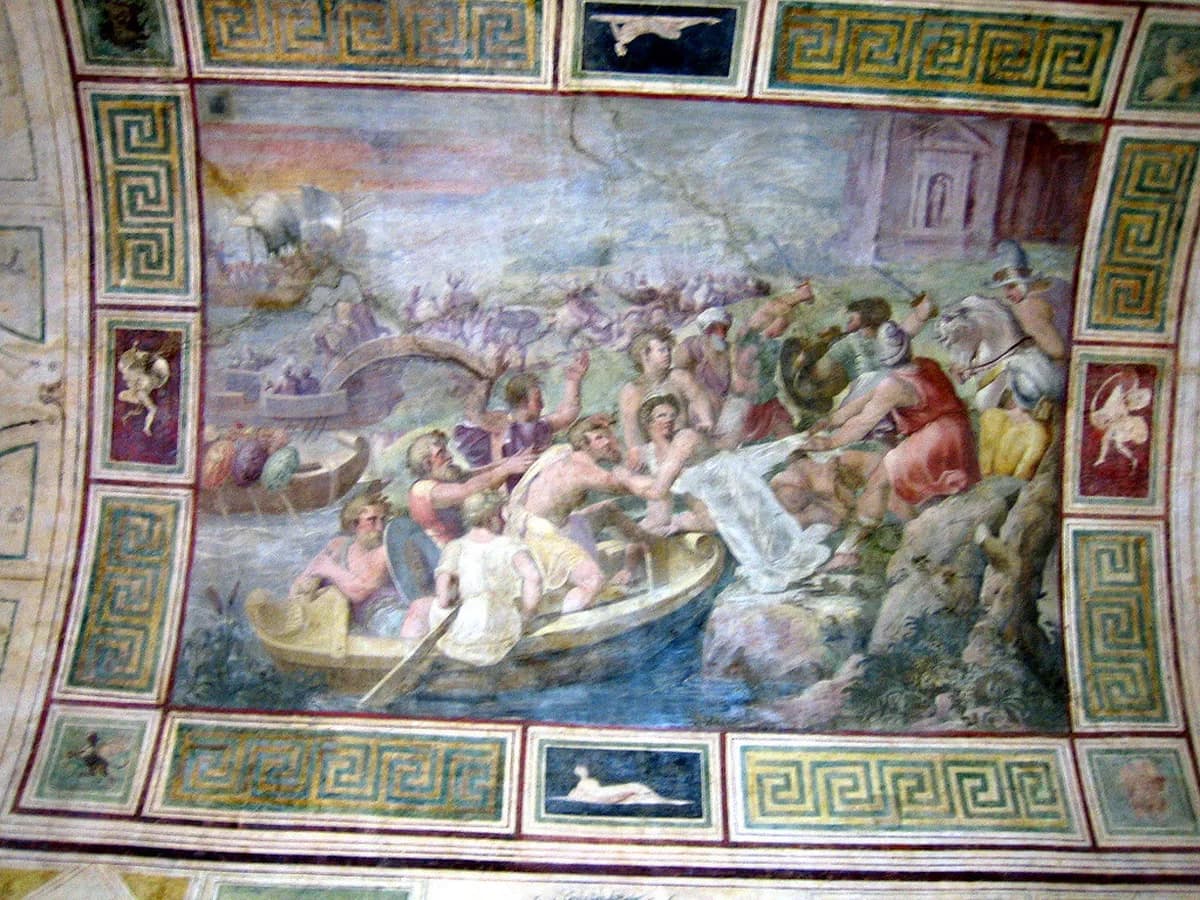
The Great Gallery is the central highlight. Its ceiling program celebrates Marcantonio II Colonna and the Battle of Lepanto, while the marble, gilding, mirrors, and dense picture hang create one of Rome's most theatrical Baroque interiors. Give yourself time to look up, then step back and read the room as a whole before focusing on individual canvases.
Look also for the cannonball lodged near the steps, a physical trace of the 1849 conflict in Rome. It is an easy detail to miss if you move through too quickly, but it gives the palace a vivid link to the city's modern political history as well as its aristocratic past.
Friday Morning Access: Piazza SS. Apostoli Entrance
Friday morning access is a different experience from the standard Saturday visit. The entrance is at Piazza SS. Apostoli, 66, and visits are guided by reservation only. This is the route to consider if you want more interpretation, a controlled pace, or a complete guided format rather than a primarily independent Saturday visit.
The Friday exclusive guided complete tour costs €35, with a €30 rate for FAI cardholders. Because it is reservation based, do not arrive expecting same-morning availability. Confirm the language, meeting time, and exact entrance before setting out, since the Friday entrance is not the same as the Saturday Via della Pilotta entrance.
Friday can be a good choice for art-focused visitors, but it is less flexible. Saturday is better if your main goal is to fit Palazzo Colonna into a broader central Rome walk. In either case, leave buffer time before your next booking; palace visits often run longer than expected once you reach the gallery and gardens.
Gardens on the Hill of the Quirinale: A Serene Escape
Beyond the palace rooms, the Colonna Gardens offer a serene escape on the Quirinale Hill. They provide a change of rhythm after the gilded interiors, with terraces, greenery, architectural fragments, and views across central Rome. Exploring them adds another dimension to the visit and helps explain the scale of the palace complex.
The gardens connect the lower palace spaces with the higher ground of the Quirinale. Historically, they functioned as a private sanctuary for the Colonna family, not just as decorative scenery. Today, they are one of the best reasons to avoid rushing through the short tour.
Access to the gardens depends on the ticket or tour selected, so check the itinerary details before booking. Wear comfortable shoes for slopes, steps, and uneven outdoor surfaces. Visitors with mobility needs should contact the palace in advance and use the Piazza SS. Apostoli, 66 accessible entry rather than assuming the Saturday route will be suitable.
Classical Architecture and Internal Gardens: Design and Experience
Palazzo Colonna exemplifies a rich blend of classical architecture, evolving through various periods. The palace's foundations date back to the Roman Republic, with significant medieval and Renaissance additions. Its current Baroque splendor reflects extensive renovations from the 17th century. This layered history is evident in its diverse structural elements.
The internal gardens play a crucial role in the palace's design, offering tranquil courtyards and green spaces. These gardens break up the imposing architecture, providing natural light and ventilation. They create a harmonious balance between the built environment and nature. Visitors can appreciate the thoughtful integration of these elements.
Strolling through these spaces reveals intricate details, from ancient statues to decorative fountains. The interplay of stone, water, and foliage enhances the overall aesthetic. This design approach creates a sense of grandeur and intimacy simultaneously. It truly elevates the visitor experience.
A Hidden Baroque Gem: Unveiling Rome's Secret Palace
Palazzo Colonna remains a hidden gem in Rome compared with Rome's headline ruins, churches, and Vatican collections. Its limited public access is part of the reason: many travelers simply miss the Saturday-morning window or assume the palace is closed to ordinary visitors. Those who plan around the schedule are rewarded with one of the city's richest interiors.
The palace offers an authentic experience of a noble Roman residence, unlike many public museums. You gain a sense of stepping into a lived-in dynastic setting rather than viewing art removed from its original context. This intimacy makes the palace especially strong for travelers who have already seen Rome's major ancient sites and want a more layered aristocratic story.
Its lower profile also changes the mood of the visit. Even when tickets are sold out, the experience usually feels more contained than Rome's blockbuster attractions. The tradeoff is that you have fewer chances to correct a missed booking, so plan Palazzo Colonna early in your Rome itinerary rather than leaving it for your final morning.
Discovering the Elegant Padiglione Pio
Within the vast Palazzo Colonna complex lies the elegant Padiglione Pio, a distinct and historically rich section. This pavilion often serves as a venue for special events and private functions. It showcases a different facet of the Colonna family's architectural patronage. Its design reflects later classical influences.
The Padiglione Pio houses its own collection of artworks and historical artifacts. These pieces often complement the main gallery's collection. Exploring this area provides further insight into the family's extensive holdings. It is another example of the palace's layered history.
Access to the Padiglione Pio might be restricted to specific tours or events. Inquire about its availability when planning your visit. It offers a quieter, often more exclusive, experience. This pavilion adds to the overall grandeur and historical depth of Palazzo Colonna. You can find more details on Galleriacolonna.it.
How to Get There, Best Time, and Nearby Planning
For Saturday visits, navigate to Via della Pilotta, 17. The palace sits between Piazza Venezia, the Trevi Fountain area, and the Quirinale, so it works well as part of a central Rome walking route. Several city buses stop around Piazza Venezia and Via del Corso; from there, expect a short walk through the historic center. If you are arriving by taxi, confirm the entrance address because Piazza SS. Apostoli, 66 is used for Friday tours, private tours, and accessible entry.
The best time to visit is early in the Saturday morning window, especially if you want quieter photos and enough time for the gardens. Avoid scheduling Palazzo Colonna immediately after a fixed-entry attraction across town. A modest delay on public transport can matter when the last access time is firm.
Nearby, Palazzo Colonna pairs naturally with churches and squares around Piazza SS. Apostoli, the Quirinale area, and other palace collections such as Palazzo Spada. Keep the day realistic: Palazzo Colonna rewards slow looking, so it is better paired with one or two nearby stops than squeezed between multiple timed museum entries.
Saturday visits use Via della Pilotta, 17; Friday and accessible entry use Piazza SS. Apostoli, 66. Confirm your entrance address when booking to avoid arriving at the wrong location.
First-Time Visitor Tips and Common Mistakes
- Choose the right ticket. The €15 short tour covers the Galleria and gardens; the €25 complete tour is the one to choose for the Princess Isabelle Apartment.
- Use the correct entrance. Saturday public visits use Via della Pilotta, 17. Friday tours, private tours, and accessible entry use Piazza SS. Apostoli, 66.
- Bring your phone and headphones. The Saturday audioguide works by QR code and costs €5.00 on top of the ticket price.
- Plan for steps and uneven surfaces. The gardens and historic interiors are not as straightforward as a modern museum route.
- Check photography rules on arrival. Policies can vary by room, event, and tour type, so follow staff instructions rather than relying on old reviews.
Frequently Asked Questions
How long does it take to visit Palazzo Colonna?
A typical visit to Palazzo Colonna usually lasts between 1.5 to 2 hours. This allows enough time to explore the Great Gallery, various rooms, and the gardens. Guided tours might extend this duration slightly for more in-depth commentary. Consider allocating extra time if you wish to linger over specific artworks or architectural details.
Is Palazzo Colonna worth visiting?
Yes, Palazzo Colonna is absolutely worth visiting for its unparalleled Baroque splendor and rich history. It offers a unique glimpse into a private Roman noble residence. The extensive art collection and magnificent interiors provide a truly memorable experience. Many visitors consider it one of Rome's hidden gems.
Can you visit Palazzo Colonna on any day?
No, Palazzo Colonna has limited public access. It is primarily open to individual visitors on Saturday mornings. Specific guided tours may be available on Friday mornings or other days by special arrangement. Always check the official website for current opening days and times to plan your visit accordingly.
What are the opening hours for Palazzo Colonna?
For general public visits, the preserved official Saturday window is 9:15 AM to 1:15 PM, with last access at 1:15 PM. Friday morning visits are guided and by reservation only, while other days generally require a private tour booked in advance.
How much are tickets to Palazzo Colonna?
On Saturday mornings, the short tour of the Galleria and gardens costs €15, while the complete tour including the Princess Isabelle Apartment costs €25. FAI cardholders pay €20 for the complete tour, and the Friday exclusive guided complete tour costs €35, or €30 for FAI cardholders. The Saturday audioguide costs an extra €5.00.
Are audioguides available at Palazzo Colonna?
Yes. On Saturday mornings, audioguides are available for €5.00 on top of the ticket price. They are offered in Italian, English, French, Spanish, German, Russian, Portuguese, Chinese, Japanese, and Polish, and are accessed by scanning a QR code with your phone.
What famous movie was filmed in Palazzo Colonna?
The best-known film connection is Roman Holiday. The final press-appearance scene from the 1953 Audrey Hepburn and Gregory Peck classic was shot in the Palazzo Colonna Gallery. If this is a priority for your visit, focus time on the ceremonial gallery spaces rather than rushing straight to the gardens.
Other Private Palaces You Can Still Walk Into
The Colonna family has held this palace for eight centuries and opens the Great Hall for a few hours a week, which puts it in rare company. Milan's Museo Bagatti Valsecchi was furnished by two brothers as a working Renaissance house and is still shown as one. In Seville, Palacio de las Dueñas remains the Alba family's residence, with the courtyards open around their use of it.
Palazzo Colonna offers an extraordinary journey into Rome's aristocratic past and artistic heritage. Its magnificent galleries, exclusive rooms, and serene gardens create a truly immersive experience. This guide provides the practical details needed for a rewarding visit. You can now confidently plan your exploration of this Baroque masterpiece.
Remember to check the official website for the most current information on opening hours and ticket availability. Embrace the opportunity to discover one of Rome's most stunning private palaces. Your visit to Palazzo Colonna will undoubtedly be a highlight of your time in the Eternal City. It is a true testament to timeless beauty.
For official details, visit the Palazzo Colonna on Wikipedia and Palazzo Colonna official site.
For more Rome planning, see our unusual things to do in Rome guide.
Continue exploring
More guides you'll find useful