12 Most Beautiful Places in Madrid Travel Guide (2026)
Discover the most beautiful places in Madrid with our expert guide. Explore iconic landmarks, hidden gems, and scenic views for your 2026 trip.
On this page
12 Most Beautiful Places in Madrid
Madrid's beauty is not confined to its grand plazas or royal palaces. It shows up in a golden-lit rooftop terrace at dusk, a centuries-old restaurant cellar, and a park hiding a bronze devil in its quieter paths. This guide covers the 12 most beautiful places in Madrid for 2026, organized as dedicated experiences rather than a simple checklist, so you can plan each visit with the right timing and expectations.
Our editors have walked every neighborhood and cross-referenced the top SERP results to make sure this list reflects what actual visitors are prioritizing right now. Whether you are visiting for the first time or returning after years away, these spots consistently deliver the visual payoff travelers come to Madrid for. We have updated all opening hours and prices for 2026. Check the madrid.es official site for any temporary closures or event schedules.
Many of these locations cluster near the historic center, making it easy to combine three or four in a single half-day. Start early to beat the tour groups at the major landmarks, and save the rooftops and markets for late afternoon. Madrid rewards the unhurried visitor who takes time to linger.
Tour the Debod Egyptian Temple
The Temple of Debod is one of the most unexpected sights in Europe: a genuine 2nd-century BC Egyptian temple standing in a Madrid park, reflected in shallow rectangular pools as the sun sets over the city. Egypt gifted the temple to Spain in 1968 in gratitude for Spanish archaeologists who helped save the Abu Simbel monuments from rising Nile floodwaters after the Aswan Dam construction. It was dismantled stone by stone and rebuilt in the Parque de la Montaña, near the Royal Palace.
Entry to the interior is free and the site is generally open Tuesday to Sunday from 10:00 to 20:00 in summer (shorter hours in winter — confirm on the city website before visiting). The interior has limited capacity, so queues form quickly in high season. Arrive at least 45 minutes before sunset to secure a spot by the pools and watch the ancient stone glow orange against the Madrid skyline.
The surrounding park offers one of the best sunset vantage points in the city, with the Royal Palace visible to the south and the Casa de Campo beyond. It is free to sit on the grass and linger as long as you like. This combination of a genuine ancient monument and a world-class city sunset makes Debod one of the most photographed spots in Madrid for good reason.
Arrive at the Temple of Debod at least 45 minutes before sunset to secure a spot by the reflecting pools — the interior has limited capacity and queues form fast in high season. Entry to both the park and interior is free.
El Retiro Park and the Crystal Palace
El Retiro is a 350-acre UNESCO World Heritage park in the heart of Madrid, and it contains more beautiful sub-destinations than most visitors realize. The most iconic entry point is the Estanque Grande, a large rectangular lake flanked by a neo-baroque monument to Alfonso XII, where you can rent rowboats from 10:00 to 20:00 for around €6 per 45 minutes. The park is free to enter and open from 06:00 to midnight in summer.
The Palacio de Cristal, located in the quieter eastern section, is arguably the most visually striking structure in the park. Built in 1887 from iron and glass, it sits beside a small pond and hosts free contemporary art exhibitions from the Reina Sofía Museum. The glass walls catch the light differently at each hour, making it worth visiting both in the morning and the late afternoon.
For a quieter detour, head to the Jardines de Cecilio Rodríguez, a formal garden tucked into the southern area of the park where peacocks roam freely among trimmed hedges and fountains. Most visitors walk straight to the lake and miss this completely. The rose garden blooms at its peak in May and early June — plan accordingly if flowers are a priority. Beyond its beauty, El Retiro connects naturally to the Madrid's hidden gems that most tourists overlook entirely.
Take a Day Trip to Toledo or Segovia
Madrid's central location makes it an ideal base for day trips to two of Spain's most visually stunning historic cities. Toledo, a UNESCO World Heritage Site about 75 km south, is a walled medieval city perched on a rocky outcrop above the River Tagus. Its mix of Christian, Jewish, and Moorish architecture in tight cobblestone streets produces a visual density that Madrid simply cannot match. High-speed RENFE trains run from Atocha Station and reach Toledo in around 30 minutes.
Segovia, approximately 90 km north, offers two of the most dramatic sights in Spain: a Roman aqueduct with 163 arches still standing without mortar after 2,000 years, and the fairy-tale Alcázar castle that Disney allegedly used as inspiration for Cinderella's Castle. Trains from Chamartín take about 30 minutes on the high-speed line. Both cities are easily done as full-day guided tours departing from central Madrid, which simplifies logistics significantly.
The best time to visit both cities is spring or autumn, when the crowds are lighter and the temperature stays manageable for walking. Summer months push temperatures above 35°C in both cities, which makes the stone streets uncomfortable by midday. Book guided day tours at least a few days in advance during peak season, as the best operators sell out quickly. For a different kind of visual experience away from the capital, these trips are genuinely worthwhile additions to any Madrid itinerary.
Soak in the Rooftop Views from RIU Hotel's 360° Rooftop Bar
The 360° Rooftop at Hotel RIU Plaza España sits atop the Edificio España, one of the most recognizable skyscrapers on the Madrid skyline. From the terrace you can walk the full perimeter of the building and see the city from every direction: the Gran Vía stretching east, the Casa de Campo green belt to the west, and the Sierra de Guadarrama mountains on a clear day. A glass walkway section lets you look straight down to the street below, which is either thrilling or terrifying depending on your tolerance for heights.
Entry costs between €6 and €11 depending on the time of day, with the terrace open until 01:00. This is one of the rooftop bar scene for the sunset over the western suburbs. Drinks are priced at typical Madrid rooftop rates — around €10–€14 per cocktail. Arrive before 19:00 on weekends to avoid the longest queues; the line at 20:30 on a Sunday regularly stretches well beyond the lobby.
The bar is not the cheapest way to see Madrid from above, but the 360-degree access and the glass floor make it more of an experience than a standard rooftop drink. Non-hotel guests are welcome during bar hours. If you prefer a calmer alternative, the Palacio de Cibeles observation deck (covered below) offers comparable views for just €3 with a booked time slot.
Check Out El Rastro Flea Market (Sundays Only)
El Rastro is one of the largest and oldest open-air flea markets in Europe, transforming the streets of the La Latina neighborhood every Sunday and public holiday from 09:00 to 15:00. Hundreds of vendors line Ribera de Curtidores and the surrounding side streets selling vintage clothing, antiques, leather goods, jewelry, art prints, and second-hand curiosities. The sheer visual density of the market — stalls packed across steep cobblestone streets in a centuries-old quarter — makes it one of the most characterful experiences in Madrid regardless of whether you buy anything.
The main arteries (Calle de Toledo, Calle de Embajadores, Ronda de Toledo) carry the highest vendor density and the most tourist foot traffic. For more unusual finds and genuinely old antiques, head into the adjacent covered galleries like Galerías Piquer on Ribera de Curtidores, which hosts dealers in vintage furniture and art. Bring cash — many vendors do not accept cards — and keep your belongings close. Pickpockets are active here, particularly in the densest sections near the main street.
The market closes sharply at 15:00 regardless of weather, after which the surrounding tapas bars fill immediately with both vendors and visitors. La Latina is one of Madrid's best food neighborhoods, so staying in the area for lunch after the market is a natural continuation of the morning. The Statue of the Fallen Angel in El Retiro (covered below) is reachable by metro from La Latina in about 15 minutes if you want to combine the two in one day.
Eat Churros con Chocolate at San Ginés
Chocolatería San Ginés has operated since 1894 from a narrow passage off Calle Arenal, a few minutes' walk from Puerta del Sol. The interior — dark green wood paneling, marble counters, tiled walls, and the persistent aroma of frying dough — has changed very little in over a century. A plate of six churros with a cup of thick, dense hot chocolate costs around €6, and the chocolate is the kind you use as a dip rather than a drink: deep brown, barely pourable, and properly sweet without being cloying.
The establishment is open 24 hours a day, seven days a week, which makes it genuinely useful at any point in a long Madrid night. Early morning (07:00–09:00) sees mostly locals on their way to work; the mid-morning and afternoon slots tend to draw longer queues of tourists. If you want a quieter experience with the atmosphere at its best, arrive just after opening or late at night after 23:00. The green-and-white tiled facade on the alley exterior is one of the most photographed café fronts in the city.
San Ginés is worth visiting as much for the historic interior as for the food itself. It is not a trendy brunch spot or a modernized tourist trap — the furniture is original, the recipe is the same, and the marble counter seating is genuinely beautiful in a way that newer places cannot replicate. For a broader food experience in the same neighborhood, the Mercado de San Miguel is a five-minute walk.
See the World's Only Statue Dedicated to the Devil
Hidden in the southern section of El Retiro Park, the Fountain of the Fallen Angel (Fuente del Ángel Caído) depicts Lucifer mid-fall, arms outstretched, twisting atop a fountain pedestal. Completed in 1878 by sculptor Ricardo Bellver, it is widely recognized as the only public monument in the world dedicated specifically to the devil. The statue sits exactly 666 meters above sea level, a coincidence that contributes to its reputation. Surrounded by a small pond and dense shade trees, it feels surprisingly secluded even during busy park hours.
The statue is free to visit at any time El Retiro is open (from 06:00 in summer). Most visitors entering from the main northern gates never reach this corner of the park, which keeps it genuinely quiet even on weekend afternoons. Combine it with a walk through the Jardines de Cecilio Rodríguez, located just a few minutes to the north, for a self-guided circuit through El Retiro's most overlooked half. The contrast between the manicured gardens with roaming peacocks and the eerie bronze figure of Lucifer makes for a striking afternoon.
The statue is best viewed in early morning light or on overcast days when the bronze oxidation shows its full green-grey tones without harsh shadows. Photography is permitted and unrestricted. If you are visiting with children, the dramatic subject matter tends to generate more interest here than at the larger, more formal monuments in the park.
Try the Tapas and Wine at Mercado de San Miguel
Mercado de San Miguel is housed in a cast-iron and glass structure built in 1916, located directly off the northeast corner of Plaza Mayor. The building's glazed iron skeleton — arched windows, ornate ironwork, internal steel columns — was restored to its original design in 2009 and is genuinely beautiful at any hour, but most striking after dark when the interior lights make the glass walls glow amber from the street outside. Entry is free; individual vendor prices vary.
Inside, around 30 stalls sell high-quality gourmet versions of Spanish classics: jamón ibérico, Galician octopus, anchovies from Cantabria, local cheeses, fresh oysters, and a well-edited wine list focused on Spanish regions. Individual plates typically run €4–€10. The market is open from 10:00 until midnight Sunday to Thursday and until 01:00 on Friday and Saturday. Midday and early evening are the busiest periods; arriving at 10:00 or after 22:00 offers the best atmosphere without fighting for standing space at the counters.
San Miguel is not a budget market — the food quality reflects the prices, and the setting commands a premium for the architecture alone. It is best treated as a tasting experience or a pre-dinner aperitivo stop rather than a primary meal. The Plaza Mayor is literally a one-minute walk, making it easy to combine both in a single evening stroll through the historic center.
Walk Down Gran Vía During Sunset
Gran Vía is Madrid's main commercial boulevard, running roughly east-west for about 1.3 km between Calle de Alcalá and Plaza de España. Built in stages between 1910 and 1931, the street required the demolition of dozens of medieval blocks to create a single grand avenue of Beaux-Arts, Art Nouveau, and Art Deco buildings. The result is one of the most architecturally layered streets in Europe, most visible during the golden hour when low western sunlight catches the stone facades and the rooftop statuary of buildings like the Metropolis (corner of Alcalá) and the Telefónica tower.
Walking the length of Gran Vía is free and takes about 20 minutes at a relaxed pace. The best viewpoint for the Metropolis building's winged victory statue is from the intersection with Calle de Alcalá, looking northwest. At night the street is fully lit and vibrant with theater-goers and diners until well past midnight. The evening atmosphere has a distinctly different energy from the daytime shopping crowds — fewer buses, more pedestrians, and a cinematic quality to the lit-up facades that daylight photos rarely capture.
If you want to combine Gran Vía with a rooftop view, the RIU Hotel rooftop at the western end (Plaza de España) and the Círculo de Bellas Artes rooftop (€5 entry, near the eastern end on Calle de Alcalá) frame the boulevard from opposite ends. The Círculo de Bellas Artes terrace is smaller and less well-known than the RIU, but the view looking down Gran Vía from that angle is arguably the most photogenic in the city for architecture lovers. For more ways to explore the city on a budget, see our guide to budget Madrid attractions.
| Place | Entry | Best Time | Key Feature |
|---|---|---|---|
| Temple of Debod | Free | 45 min before sunset | Egyptian temple + sunset views |
| El Retiro Park (Crystal Palace) | Free | Morning or late afternoon | 1887 iron-and-glass pavilion |
| RIU Rooftop (360°) | €6–€11 | Before 19:00 weekends | Full-perimeter city views |
| Palacio de Cibeles deck | €3 | 10:30 weekday morning | View down Paseo del Prado |
| Sobrino de Botín interior | Free to view (dining ~€28–€32) | Off-peak hours | World's oldest restaurant (1725) |
| Gran Vía at sunset | Free | Golden hour heading west | Art Deco/Beaux-Arts facades lit |
Eat Your Way Through Madrid's Best Restaurants
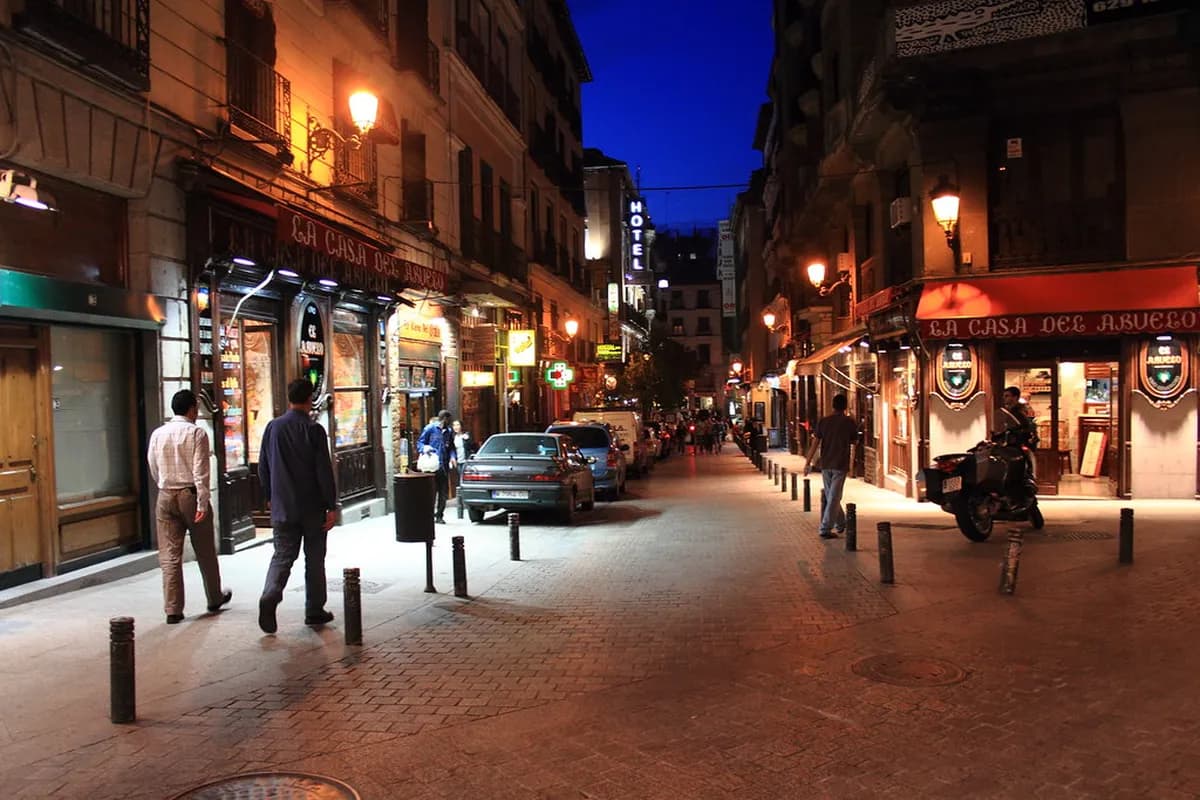
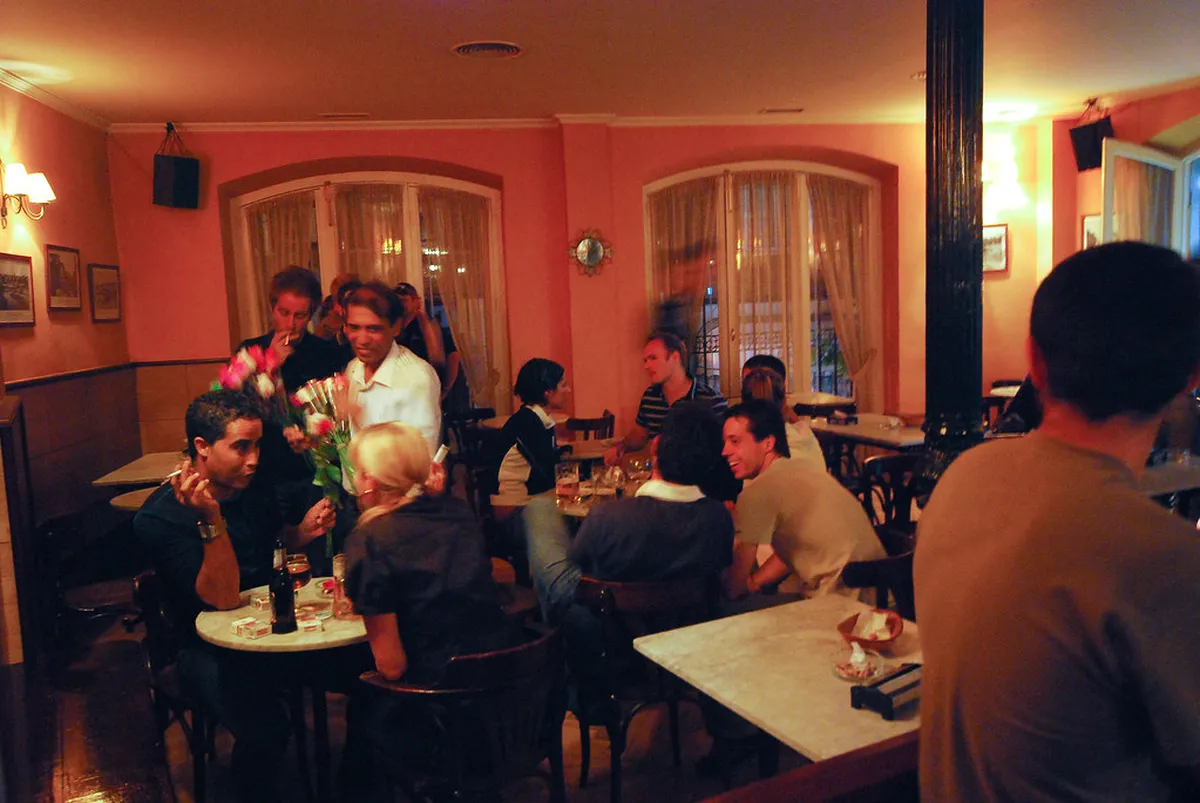
Madrid's food scene is one of the most underrated in Western Europe, and the city's restaurant interiors are as worth visiting as the food itself. The Malasaña and Chueca neighborhoods host the most interesting independent restaurants: expect tiled walls, exposed brick, vintage bar fittings, and narrow spaces that feel designed for exactly the kind of long, unhurried meal Madrid dining culture demands. Dinner service starts at 21:00 at most places — arriving before 20:30 marks you as a tourist, but the early time slots are also quieter and easier to get a table without a reservation.
For a structured introduction to Madrid's food geography, a guided tapas and wine tour covers La Latina and the area around Plaza Mayor in about three hours, hitting a curated selection of bars and markets. These tours typically cost €60–€85 per person and are widely available through GetYourGuide and similar platforms. They are particularly useful for first-time visitors who want context alongside the food — understanding which regions produce which wines and cured meats makes subsequent eating out more interesting.
The contemporary Madrid dining in neighborhoods like Chueca offer some of the most visually striking interiors in the city alongside genuinely good food. If you only have one sit-down dinner in Madrid, prioritize a spot in Malasaña or La Latina over the tourist-menu restaurants immediately around Plaza Mayor, which prioritize volume over quality. The Spanish culinary calendar also means many restaurants close for most of August — check reservations in advance if you are visiting in summer.
Sobrino de Botín: The World's Oldest Restaurant
A short walk from Plaza Mayor sits Sobrino de Botín, founded in 1725 and recognized by the Guinness World Records as the oldest continuously operating restaurant on earth. Most visitors to Madrid walk past without realizing what is inside. The interior is a four-story building of low timber ceilings, terracotta tile floors, candlelit stone arches, and narrow staircases worn smooth by three centuries of use. The original wood-fired oven from 1725, still in daily operation in the basement kitchen, has never been extinguished. The visual atmosphere of the lower dining room — particularly by candlelight — rivals any museum interior in the city.
Francisco de Goya is said to have worked here as a waiter in his youth before his painting career took off. Ernest Hemingway ate here regularly and mentions the restaurant in The Sun Also Rises. The house speciality is cochinillo asado (roast suckling pig) cooked in that original oven, priced at around €28–€32 per serving. Reservations are strongly recommended, especially on weekends and during high season; book at least a week in advance online.
Even if you do not dine here, stepping inside the entrance hall during off-peak hours to see the original architecture costs nothing. The building at Calle de los Cuchilleros 17 (just off the southwestern corner of Plaza Mayor) is itself a historic monument. No other "most beautiful places" guide in Madrid covers Botín from a purely visual and atmospheric angle — the assumption is always that it is only about the food. In reality, the 18th-century interior is one of the most genuinely beautiful rooms you can walk into for free in the city center.
Get a Panoramic View from Palacio de Cibeles
The Palacio de Cibeles is the neo-Gothic white building that anchors the Plaza de Cibeles roundabout at the top of the Paseo del Prado. Originally built as the central post office (1919), it now serves as Madrid's City Hall and a cultural center. The observation deck on the sixth floor costs €3 per person and is open Tuesday to Sunday from 10:30 to 14:00 and 16:00 to 19:30. Time slots are allocated to control crowd density, so booking a morning slot one or two days in advance avoids disappointment.
The view from the terrace looks directly down the Paseo del Prado axis toward the Prado Museum and the Retiro beyond — considered one of the most symmetrical and visually compelling urban vistas in Spain. To the north, the Metropolis building dome is close enough to see in architectural detail. On a clear day the Sierra de Guadarrama mountains frame the western horizon. At €3 per person, this is the best-value panoramic point in the city by a considerable margin compared to the RIU rooftop.
The building's exterior is also worth examining at street level. The white stone facade and the twin towers that flank the central block are lit at night and best viewed from across the Plaza de Cibeles where the full symmetry is visible. The famous Cybele fountain in the center of the roundabout — depicting the Roman goddess in her lion-drawn chariot — adds a further layer of visual drama to this corner of Madrid. Visiting at around 10:30 on a weekday morning combines a quiet terrace experience with the best light for the view down Paseo del Prado.
The Palacio de Cibeles observation deck costs just €3 and offers views directly down the Paseo del Prado — the best-value panoramic point in the city. Book a morning time slot one or two days ahead to avoid disappointment.
Is Madrid Worth Visiting in 2026?
Madrid continues to invest in its public spaces and pedestrian infrastructure, making the central districts more walkable and visually coherent than they were five years ago. The 2026 cultural calendar includes major exhibitions at the Prado and the Reina Sofía, with several international retrospectives announced for spring and autumn. Travel experts at The Daily Express consistently highlight Madrid as one of Europe's most underrated capitals relative to the quality of its cultural offer.
Spring (April–June) and autumn (September–November) remain the best windows for outdoor visits: temperatures stay between 15°C and 25°C, the parks are in full color, and the rooftop bars are comfortable without the August heat. July and August push temperatures above 38°C in the city center, which makes outdoor walking unpleasant by midday. August also sees partial closures of neighborhood restaurants as owners take their own holidays — Madrid in August is hotter, quieter, and less complete than any other month.
The city remains one of the most affordable major capitals in Western Europe for the quality of dining, accommodation, and culture it provides. A full day covering most of the free locations on this list — El Retiro, Debod, Lavapiés, Gran Vía, and Palacio de Cibeles — costs under €10 total including the observation deck fee. Madrid rewards visitors who treat it as a city to live in for a few days rather than a checklist to complete in 48 hours. You can find more inspiration for your journey on our Spain travel resources.
Frequently Asked Questions
What is the most beautiful street in Madrid?
Gran Vía is widely considered the most beautiful street due to its grand architectural styles. It features iconic buildings like the Metropolis and the Carrion, which look spectacular when illuminated at night.
When is the best time to photograph Madrid?
The golden hour just before sunset offers the most flattering light for Madrid's sandstone and brick buildings. Late spring and early autumn provide clear skies and comfortable temperatures for outdoor photography sessions.
Are the beautiful places in Madrid free to visit?
Many of Madrid's most scenic spots, including El Retiro Park and the Temple of Debod, are free. Some museums and palaces offer free entry windows on specific weekday evenings for all visitors.
Madrid is a city that reveals its true beauty to those who take the time to wander beyond the main plazas. From the glass walls of the Crystal Palace to the sunset views at the Temple of Debod, the aesthetic variety is endless. We hope this guide helps you find the most photogenic and inspiring corners of the Spanish capital.
Remember to book tickets for popular sites like the Royal Palace in advance to secure your preferred time slot. Whether you are visiting for the art, the food, or the architecture, Madrid will likely exceed your expectations. Safe travels as you explore one of the most vibrant and beautiful cities in Europe.
Continue exploring
More guides you'll find useful