Madrid Nightlife Guide Travel Guide
Plan your ultimate madrid nightlife guide with top picks, neighborhood context, timing tips, and practical booking advice for a smoother trip to Spain.
On this page
Madrid Nightlife Guide
Madrid earns its reputation as Europe's night capital with good reason: the city genuinely does not sleep. Bars fill after 23:00, clubs peak at 03:00, and venues close at sunrise. This madrid nightlife guide covers where to go, when to go, and exactly what to expect across the city's most rewarding neighborhoods for 2026.
Whether you want craft cocktails in a literary quarter, techno in an industrial mega-club, or a guided pub crawl to meet people quickly, Madrid has a specific district for each objective. Understanding that geography is the first step to planning a great night out.
Use this guide to a self-guided old-town walk and connect the daytime sights with the best evening streets nearby.
When the Night Starts in Madrid
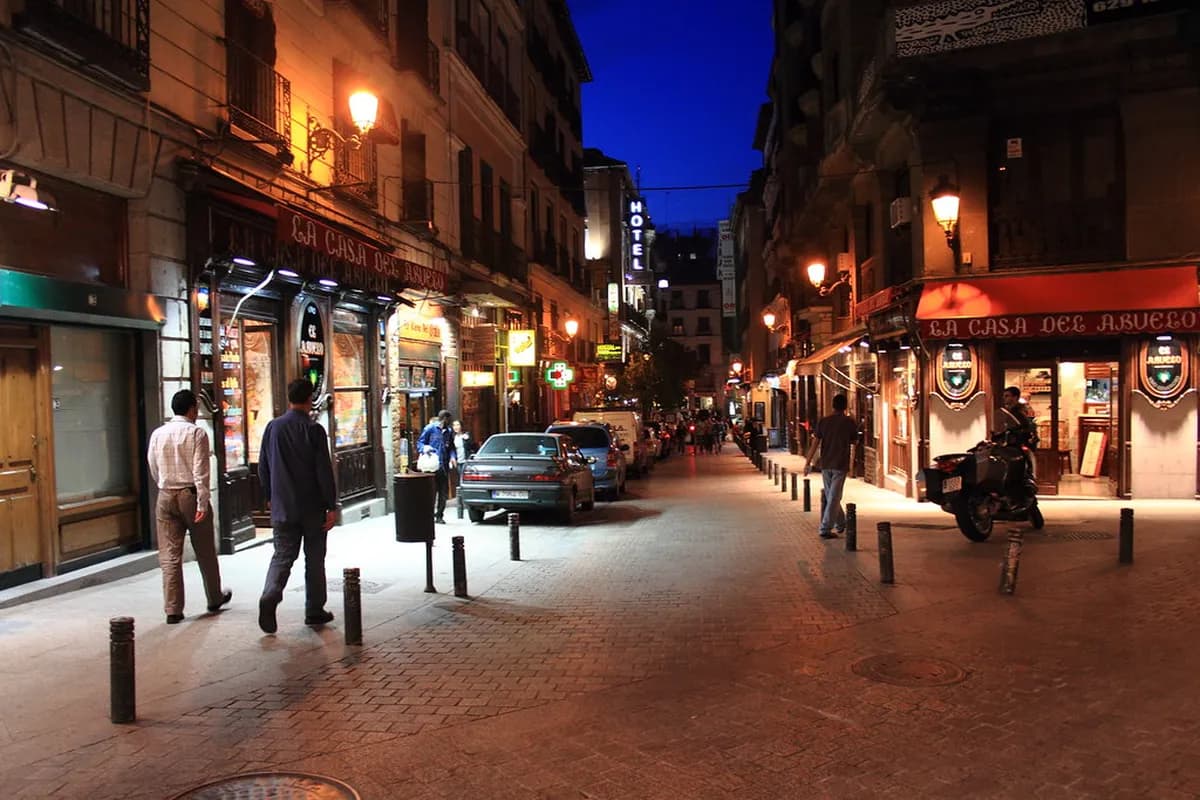
Madrid runs on a schedule that surprises most first-time visitors. Locals sit down for dinner between 21:00 and 23:00 — a habit shaped partly by the city's hot summers, where the heat only lifts after dark. If you arrive at a restaurant before 21:00 on a weekend, you will often be the only table seated.
Bars start filling around 23:00. Clubs open their doors at 01:00 or 02:00 but are genuinely empty until 02:30 or 03:00. Peak atmosphere on a Friday or Saturday night falls between 03:00 and 05:00. Many venues legally operate until 06:00, and some licensed after-parties continue beyond that.
The practical implication: sleep in on your night-out day. Plan dinner for 21:30 or later. If you arrive at a club at midnight, you will stand in a large room with the DJ and twelve other confused tourists. Patience is the single most useful skill in the Madrid nightlife toolkit.
Cover charges at clubs typically run €10–€20. Drinks cost €5–€10 for beer or wine and €12–€15 for cocktails at mid-range venues. Upscale spots in Salamanca and Chamberí can charge €18–€25 per cocktail. Most venues accept card, but carrying €30–€40 in cash avoids queues at coat checks and cash-only bars.
Madrid clubs are genuinely empty before 02:30 AM — arriving at midnight means paying entry to stand in a near-empty room. Save your energy: dinner at 21:30, bars from 23:00, clubs from 02:00 or later.
Top Nightlife Districts in Madrid
Madrid's neighborhoods each attract a distinct crowd and set a distinct mood. Choosing the right district based on your group size, music preference, and budget is more important than choosing the right specific venue — the street energy carries you once you are in the right area.
Malasaña is the city's bohemian core, thick with vintage shops, hipster cafes, and live music bars. The crowd skews creative and young. Clubs here lean toward indie, techno, and electronic music, and the atmosphere is casual — smart jeans and trainers pass most doors. Siroco on Calle San Dimas is a reliable anchor for electronic music nights that run until 05:00.
Huertas (Barrio de las Letras) occupies the historic literary quarter between Sol and Atocha. It draws students, literary-minded travelers, and anyone who prefers cocktail bars and jazz over mega-clubs. Plaza de Santa Ana is the social center: dozens of terrace bars surround it, and the energy builds from early evening through to 02:00 without requiring a club entry fee. For recommended dining spots before your evening begins, see our dining recommendations for restaurants in the Huertas area.
Chueca is Madrid's LGBTQ+ neighborhood and one of the most inclusive nightlife zones in Europe. The bars and clubs here welcome all orientations and attract a cosmopolitan mix. The energy skews loud, colorful, and high-volume. Eslava Theater — which dates to 1871 — hosts themed club nights on weekends, including drag shows and queer-specific parties. Chamberí, specifically the Miguel Angel street strip, is the upscale counterpart: bottle service, dress codes, and internationally recognized DJs in polished venues. Budget accordingly if you head there.
Types of Nightlife Venues in Madrid
Madrid's night scene divides into several formats, and mixing them across an evening gives the fullest picture of the city. A typical local night moves from tapas bar to cocktail bar to club — each phase has its own rhythm and its own set of best spots.
Tapas bars like Revoltosa on Calle del Prado and En Busca del Tiempo in Huertas serve as social lubricant. They are affordable (a round of small plates and two drinks rarely exceeds €25 per person), stay lively until midnight, and require no planning beyond walking in. Cocktail bars occupy the next tier. Salmon Guru on Calle Echegaray currently ranks in the world's top 15 cocktail bars — arrive before 21:00 or face a queue. Bad Company 1920 near Sol is disguised as a 1920s prohibition speakeasy with free entry and outstanding mixed drinks.
For clubs, Kapital on Calle Atocha is the landmark — seven floors, each with a different musical genre ranging from hip-hop and reggaeton to R&B and electronic. Entry costs around €18 on weekends and the dress code is enforced. Fabrik sits 20 minutes south of the city center in Humanes and holds 4,000 people; it is the correct choice if techno with world-class sound is the priority. Macera Club in Las Letras combines a craft gin bar on the ground floor with a basement techno room — Thursday nights before 23:00 are free entry.
Flamenco rounds out the evening options for those who want culture alongside the nightlife. Corral de la Morería is the oldest venue and most prestigious. Tickets run around €53 per person including a drink — expensive but unlike anything else in the city, and worth one evening on a longer trip.
| Venue | District | Type | Entry (weekend) | Music |
|---|---|---|---|---|
| Kapital | Atocha | Mega-club (7 floors) | ~€18 | Hip-hop, R&B, Electronic |
| Fabrik | Humanes | Industrial techno club | ~€20 | Techno |
| Macera Club | Las Letras | Craft bar + basement | Free before 23:00 Thu | Techno |
| Barcelo Theater | Tribunal | Multi-floor club | Varies | Mixed |
| Corral de la Morería | Opera | Flamenco venue | ~€53 (incl. drink) | Flamenco |
Nightlife: Literary Quarter - Huertas
Huertas deserves its own section because it functions as the ideal entry point for first-time visitors and delivers the most distinctly Madrileño evening experience. The neighborhood was home to Cervantes and Lope de Vega in the 16th and 17th centuries; today the same narrow streets host craft beer bars, jazz clubs, and wine taverns that stay open until 03:00.
Start at Plaza de Santa Ana around 22:00. The square is surrounded by terrace bars on three sides. Order a glass of house Tempranillo or a cañita (a small draft beer, roughly €2.50) and watch the crowd build. You can stay on the plaza for an hour and easily move from one bar to the next without walking more than 30 meters. By midnight the energy is high and the streets fill with people moving between venues.
Cervecería Alemana on the plaza has been open since 1904 and was a regular haunt of Ernest Hemingway. It is worth one drink for the atmosphere alone. Jazz Café on Calle Moratin, a short walk away, offers live sets most evenings with no cover charge — just a minimum drink order. If you want to continue into the small hours, Huertas connects directly to the Las Letras club strip along Calle Echegaray and Calle Huertas, where you can pick up the night from a quieter bar start.
Best Clubs in Madrid
Madrid's club scene spans from massive commercial venues to underground rooms with 200-person capacity. The right choice depends on your music preference and tolerance for crowds. All the major clubs are busier and safer on Fridays and Saturdays — avoid going on a Wednesday expecting a full experience.
Kapital on Calle Atocha 125 is the city's most famous club and the one most visitors mean when they ask about the best clubs in Madrid. Seven floors cover R&B, hip-hop, reggaeton, house, and electronic. VIP tables and bottle service are available. Arrive after 02:00 and wear something smart. Toy Room Madrid in the Salamanca district is the premium option for an exclusive experience: multiple VIP rooms, top-tier international DJs, and a high-end crowd. Dress code here is strict — trainers will be turned away.
For electronic music specifically, Fabrik in Humanes is the correct answer. The industrial space holds 4,000 people, the sound system is world-class, and the weekend events regularly feature internationally recognized DJs. Macera Club in Las Letras is the mid-size techno alternative if you do not want to travel out of the city center. For solo travelers who want a safe, inclusive atmosphere with no pressure, Barcelo Theater near Tribunal station has multiple dance floors and a strong reputation for security and consent culture.
If you want to skip research entirely, the Madrid Pub Crawl takes you through three bars and one club in four hours for around $15 USD, with shots included. It is the fastest way to learn which streets and venues suit your taste before committing a full night to one spot. You can check out the city's livelier options for more evening activity recommendations beyond clubs.
Nightlife for Different Travelers
The right district and venue type changes significantly depending on who you are traveling with. Madrid accommodates every configuration, but pairing the wrong venue with the wrong group makes for a flat night.
Solo travelers do best starting in Huertas, where the terrace bars encourage conversation and the scale is human. Joining the Madrid Pub Crawl is the single fastest way to meet people — it is specifically designed for solo travelers and groups who want to socialize. Barcelo Theater and Sala Coco are the safest solo club options, both known for attentive staff and inclusive atmospheres. Avoid Chamberí and Salamanca on your first night alone; the VIP-table culture there is not conducive to spontaneous socializing.
Couples looking for a romantic evening should head to a rooftop first. The Azotea del Circulo de Bellas Artes on Calle Alcala offers a 360-degree view of the city skyline — there is a cover charge around €5 but it is worth it for the setting. Terraza de Oscar is another strong option, with ambient lighting and an LGBTQ+-friendly environment. For music, Thundercat hosts nostalgic 70s, 80s, and 90s sessions — a significantly different mood from high-volume techno and a better fit for a date night.
Friend groups have the most flexibility. Lula Club in the city center is spacious enough for large parties and offers table reservations with bottle service. Kapital handles big groups across multiple floors without the bottleneck of smaller venues. For something underground, Cadavra operates until early morning and consists of several rooms — the majority of the crowd is local, which makes for genuine interactions rather than tourist-bubble socializing.
From Tardeo to La Previa: Nightlife Vocabulary You Need
A handful of Spanish nightlife terms will orient you immediately and signal to locals that you understand how the evening is supposed to work. The three most important are tardeo, la previa, and ir de cañas.
Tardeo (from tarde, meaning afternoon) describes afternoon socializing — drinks and music that starts around 17:00 or 18:00 on a Sunday. It is a fixture of Madrid social life, particularly in Malasaña, and offers a lower-energy, cheaper alternative to the late-night scene. Many visitors underestimate tardeo and then find themselves exhausted by 23:00. If you want to experience the full arc of a Madrid social day without committing to a 05:00 finish, tardeo is the correct format.
La previa is the pre-party: drinks at someone's apartment or a cheap bar before heading to the club. This is standard practice and explains why Madrid's clubs are empty until well past midnight — most people are still in la previa. If locals invite you to la previa, accept. It is the fastest way to spend a genuinely local evening rather than a tourist-circuit night.
Ir de cañas (going for small beers) describes the tapas bar crawl format: one cañita and a small plate per bar, then move on. This is what the early part of a Madrid evening looks like before transitioning to cocktails or clubs. Knowing these terms helps you follow the local pace described throughout this madrid nightlife guide rather than trying to force the night into a pattern imported from another city.
Getting Around Madrid at Night — Including the Buho Bus
Madrid's metro runs until approximately 01:30 on weekdays and 02:30 on Friday and Saturday nights. After those times, you have three options: night buses, taxis, or rideshare apps. Most visitors do not know the night bus network, which is a genuine advantage once you learn it.
The Buho (owl) buses are Madrid's 26-line night bus network, operating from roughly 00:00 to 06:00 and covering every major neighborhood including Malasaña, Chueca, Huertas, Salamanca, and the outer club districts. Fares are the same as daytime metro fares (around €1.50–€2 with a travel card). The main hub is Plaza de Cibeles. Using the Buho after a club means paying €2 rather than €15–€30 for a taxi at 04:00 — a meaningful saving across multiple nights. Routes are labeled N1 through N26 and maps are available at any metro station or via the CRTM transport app.
Taxis and Uber/Cabify are reliable but surge-priced after 03:00 on weekends. A ride from the center to a hotel within the M-30 ring typically costs €10–€18 in normal hours and €20–€30 after 03:00 on a Saturday. Cabify often undercuts Uber in Madrid by 10–15% at peak times. For moving between districts during an evening — say from Huertas to Malasaña — walking is usually fastest if the distance is under 25 minutes, as traffic is slow in the center after midnight.
Essential Tips and Local Nightlife Etiquette
Arriving at a club before 01:00 marks you as a tourist immediately and means paying entry to stand in an empty room. The correct move is to arrive at bars around 22:30–23:00 and not consider a club until 02:00 at the earliest. This is the single most actionable timing adjustment a visitor can make.
Dress codes are enforced at Salamanca and Chamberí venues. Smart casual — clean trousers or jeans without rips, a collared shirt or blouse, clean shoes — passes at most mid-range clubs. Trainers and shorts will be turned away at Kapital and Toy Room. If you are unsure, check the venue's Instagram before you leave your hotel. Doormen in Madrid make decisions quickly and rarely discuss them.
Tipping in Spanish bars is optional but appreciated. Rounding up to the nearest euro or leaving €1 per round is standard. Tipping 10–15% at sit-down service in a nightclub or rooftop bar is appropriate. Locals do not tip at casual tapas bars but do leave coins on the counter at traditional taverns — following that cue is fine.
Pickpockets operate in crowded club entrances, at Puerta del Sol late at night, and on the night buses. Keep your phone in a front pocket or a zipped inside bag. Drink spiking occurs rarely but does happen — do not leave drinks unattended and do not accept drinks from strangers in clubs. Madrid is broadly safe for solo travelers and LGBTQ+ visitors, but standard big-city awareness applies in any crowded venue after 03:00.
Dress codes at Kapital and Toy Room Madrid are strictly enforced — trainers and ripped jeans will be turned away. Check the venue's Instagram before leaving your hotel if unsure.
Before you go out, save €15–€20 for transport home, separate from your drinks budget. Running out of cash at 04:00 and relying on a card that a club's reader rejects is a common and avoidable problem. The Madrid Go City Pass covers daytime attractions but does not apply to nightlife — it is worth buying if your trip includes multiple museums and you want to budget the days separately from the evenings.
Hidden Gems and Late-Night Alternatives
Not every good evening in Madrid ends at a mega-club. The city has a layer of smaller, more local venues that most visitors never find because the algorithm keeps pushing the same top-10 lists. These spots are where Madrileños actually go when they are not taking friends to Kapital for the first time.
Sala Equis in Lavapiés is a former adult cinema converted into a bar and screening room. Entry is free. Craft cocktails run €8–€10. On weekend evenings the main screen shows art-house and cult films while the bar fills with a creative, mixed-age crowd. It is a completely different evening from anything else in this guide and worth two hours of any Madrid trip. Cafe Berlin near Gran Vía opens late and runs until dawn with a diverse DJ lineup covering disco, house, and electronic — the crowd is local, the drinks are reasonably priced, and the door policy is relaxed compared to the bigger clubs.
For something genuinely unusual, try a late-night offbeat Madrid experience like a private cocktail masterclass or a rooftop flamenco pop-up, which appear sporadically on Airbnb Experiences and Eventbrite. These typically run €25–€40 per person, require booking 48 hours ahead, and accommodate groups of 8–12. They are the version of a Madrid evening that no guidebook covers because they are too specific and too variable — but they are consistently the experiences visitors remember most clearly.
The sunset cocktail experience offer a completely valid alternative to clubs on a warm evening. Several stay open until 02:00 and the atmosphere is social without requiring dancing or shouting over a sound system. For visitors who find the club format exhausting, rooftop bars plus a long dinner is a fully satisfying Madrid night that still runs until well after midnight.
Frequently Asked Questions
When Do People Go Out in Madrid?
Most locals do not head to bars before 11:00 PM, and major clubs usually start filling up after 2:00 AM. If you want to experience the city like a local, plan to have a late dinner first. Many venues stay open until sunrise.
How is the Nightlife in Madrid?
The nightlife is incredibly energetic, diverse, and welcoming to travelers of all ages. You can find everything from cozy historic wine taverns to seven-story dance clubs. The city's social culture is highly active every day of the week.
What should travelers avoid when planning madrid nightlife guide?
Avoid arriving at major clubs too early, as they are often empty before midnight. Do not forget to dress appropriately for upscale venues in Salamanca. Always book your club tickets in advance to avoid long wait times.
Which madrid nightlife guide options fit first-time visitors?
First-time visitors should start in Huertas or join a guided offbeat Madrid tour. This helps you get familiar with the local layout safely. Joining an organized crawl is also highly recommended.
Madrid's nightlife is an unforgettable spectacle that every traveler should experience at least once. By following this madrid nightlife guide, you can safely navigate the city's diverse and lively neighborhoods.
Whether you choose massive mega-clubs or historic taverns, Spain's capital will capture your heart. For more help, Can't decide between Madrid and Barcelona? Check out this handy guide to compare both cities.
Continue exploring
More guides you'll find useful