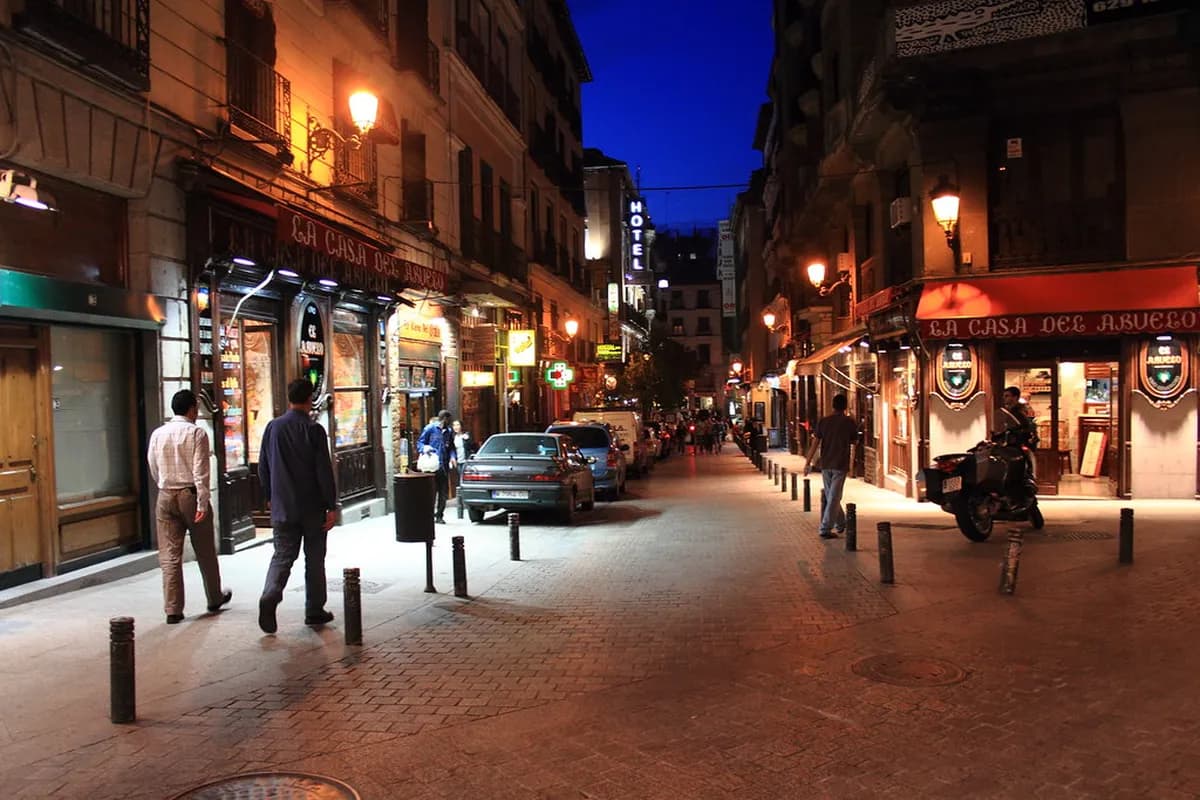
Madrid Old Town Walking Guide Travel Guide
Plan your madrid old town walking guide with top spots, timing tips, and local secrets. Get your free itinerary and start exploring today!
On this page
Madrid Old Town Walking Guide
Madrid's old town packs an extraordinary amount of history into a compact, walkable area. The core route — from Puerta del Sol to the Royal Palace — covers roughly 2.5 kilometres and takes between 90 minutes and three hours depending on how many stops you enter. Our comprehensive traveling in Spain guide helps you navigate this ancient city with confidence. This madrid old town walking guide lays out a clear sequence of stops, practical entry details, and the hidden moments that most visitors miss.
The old town sits entirely within the old Habsburg city grid, and all major sights are within easy walking distance of each other. You need no car, no organised tour, and no advance bookings for most stops. The route works equally well as a morning outing or an afternoon walk finishing at sunset near the palace walls. Comfortable shoes are the only real requirement.
Route Overview: 12 Stops in 90 Minutes or a Full Day
The classic self-guided walking tour of Madrid starts at Puerta del Sol and moves west along Calle Mayor toward the Royal Palace. A focused walker who skips museum interiors can cover all 12 stops in around 90 minutes. If you enter the Royal Palace, the Almudena Cathedral crypt, and the Prado Museum, budget a full day and split it into morning and afternoon halves.
The numbered stops in order are: (1) Puerta del Sol, (2) Plaza Mayor, (3) Mercado de San Miguel, (4) Basílica de San Miguel, (5) Monasterio del Corpus Christi, (6) Plaza de la Villa and Casa de la Villa, (7) Muralla Árabe (Arabic Walls), (8) Almudena Cathedral, (9) Royal Palace (Palacio Real), (10) Plaza de Oriente, (11) Teatro Real, and (12) Chocolatería de San Ginés. The route forms a rough loop, so you finish close to where you began.
Elevation is moderate but worth noting. There is a gentle uphill section between Plaza Mayor and the Royal Palace along Calle Mayor. The descent from the palace grounds back toward Plaza de Oriente and the theatre is easy. Families with pushchairs should use Calle de Bailén rather than the cobbled back lanes.
Start at 09:30 when Puerta del Sol is calm and the nun-cookie hatch at Monasterio del Corpus Christi opens. Aim to reach the Royal Palace by 11:00 to avoid the midday rush — the queue outside can stretch for over an hour by noon.
Must-See Madrid Attractions Along the Route
Puerta del Sol is the natural starting point for any walking tour. The square marks kilometre zero of Spain's national road network — look for the small stone plaque on the ground in front of the old post office (now the Madrid regional government building). The famous bear-and-strawberry-tree bronze sculpture stands on the eastern side and is free to photograph around the clock. The neon Tío Pepe sign, restored after a public campaign in 2012, lights up the square's roofline after dark. This plaza sits at the heart of Madrid's historic Habsburg quarter, built during Spain's golden age of royal power.
Plaza Mayor is a five-minute walk east along Calle Mayor. This ochre-coloured, arcaded rectangle was completed in 1619 and has survived three major fires. The Casa de la Panadería on the north side is covered in colourful mythological frescoes and houses a tourist office with free entry between 11:00 and 14:00 and again from 17:00 to 19:00. Cafes inside the square charge tourist prices; better-value bocadillos and coffee are available in the side streets immediately outside.
The Royal Palace (Palacio Real) is the route's architectural centrepiece. With over 3,400 rooms and a facade of grey Guadarrama granite, it is one of the largest palaces by floor area in Europe. The official residence of the Spanish royal family, it is used for state ceremonies rather than as a daily residence. Tickets range from free (under certain conditions for EU nationals) to €12 for the main circuit; audio guides are available for an extra charge. For current hours and ticket details, visit the official Patrimonio Nacional Palace page before your visit.
Museums, Art, and Culture in Madrid
Madrid's Golden Triangle of Art sits just south of the old town and can be tagged onto either end of the walking route. The Prado Museum is the anchor, housing the world's finest collection of Spanish painting. General admission costs €15 in 2026, but entry is free Monday to Saturday from 18:00 to 20:00 and Sunday from 17:00 to 19:00. Arrive at the free-entry opening time to avoid the worst queues, and go straight to the Velázquez rooms on the first floor before the crowds arrive.
The Reina Sofía, two blocks south of the Prado, holds Picasso's Guernica and the strongest collection of 20th-century Spanish art in the world. General admission is €12, with free entry on Monday afternoons and during limited evening windows. If you want to discover unique spots beyond the big museums, check out these hidden Madrid experiences for less-visited cultural spaces.
Inside the old town itself, the Almudena Cathedral museum is a quieter cultural stop. The cathedral took over 100 years to build — its foundation stone was laid in 1883 and Pope John Paul II consecrated it in 1993. Entry to the main cathedral is free (a €1 donation is suggested). Climbing to the cupola costs €6 and rewards you with rooftop views over the Royal Palace and the old Arab walls below. For current hours and museum ticket information, check the Almudena Cathedral official website directly.
| Stop | Entry | Hours (general) | Notes |
|---|---|---|---|
| Puerta del Sol | Free | Open 24h | Kilometre Zero plaque |
| Plaza Mayor | Free | Open 24h | Tourist office free 11:00–14:00 |
| Royal Palace | €12 (free for EU nationals at certain times) | Check official site | 3,400+ rooms; book ahead |
| Almudena Cathedral | Free (cupola €6) | Check official site | 100+ years to build |
| Arabic Walls (Muralla Árabe) | Free | Open 24h | 9th-century original walls |
| Chocolatería San Ginés | ~€6 (churros + chocolate) | Open 24h | Since 1894 |
Parks, Gardens, and Outdoor Spots in Madrid
Retiro Park is the green heart of the city and offers a peaceful escape from the cobblestones. This vast public park is free to enter and opens daily at 06:00. You can rent a rowboat on the large lake for under €10. It is one of the scenic Madrid spaces to relax between sightseeing sessions.
Plaza de Oriente is the walking route's best outdoor pause point. This ornamental garden sits directly across Calle de Bailén from the Royal Palace and contains 44 limestone statues of Visigoth and Spanish kings originally intended for the palace roofline. Entry is free. The equestrian statue of Felipe IV at the centre was the first ever built to balance on a horse's two hind legs — Galileo assisted the sculptor with the calculations for weight distribution.
The Sabatini Gardens, running along the north side of the Royal Palace, are neoclassical and peaceful. They close later in the evening than most tourist sites and are at their best around dusk when tour groups have thinned. Entry is free. Visiting during dusk provides a quieter experience away from afternoon tour groups and gives excellent angled light for photography of the palace's northern facade.
Two Stops Most Walkers Skip (But Shouldn't)
The Monasterio del Corpus Christi on Calle del Codo, just north of Basílica de San Miguel, is genuinely one of the most unusual stops in Madrid. The cloistered nuns of this 17th-century convent sell handmade cookies and biscuits through a revolving wooden hatch in the wall — a torno — without ever showing their faces. Look for the chocolate-brown door marked number 3 and press the buzzer labelled "Monjas". Ask "dulce?" to confirm they are selling. Pay in cash only; no cards accepted. Go before 13:00 for the widest selection. Hours are 09:30 to 13:00 and 16:00 to 18:30. This stop costs a few euros and delivers a story worth retelling for years.
The Muralla Árabe (Arabic Walls) on Cuesta de la Vega, below the Royal Palace, is free and almost always uncrowded even when the palace queue stretches for an hour. These are genuine 9th-century defensive walls built by Emir Mohamed I of Córdoba — not a reconstruction. A short stretch survives along a sunken walkway planted with gardens. Access the viewing area from the steps off Calle de Bailén, south of the palace. The panels on-site explain the original 40,000-square-metre Moorish fortress of which these walls were a part. Most visitors rush between the cathedral and the palace entrance without ever stepping down to see them.
Family-Friendly and Budget-Friendly Options in Madrid
Madrid's old town is one of Europe's most budget-friendly walking destinations. The majority of the route's outdoor stops — Puerta del Sol, Plaza Mayor, Plaza de Oriente, the Arabic Walls — cost nothing at all. You can find many excellent free Madrid attractions with your family woven directly into the walking route. Walking tours are a cheap way to learn about local history without paying for a guide.
Families will enjoy exploring the bustling El Rastro flea market on Sunday mornings. This historic open-air market fills the streets of La Latina neighbourhood, a short walk south of the main route. It runs from 09:00 until 15:00. Watch your pockets closely, as crowded markets attract pickpockets.
El Rastro flea market (Sundays 09:00–15:00) is one of Madrid's most active pickpocket zones. Keep phones and wallets in a zipped front bag, especially in the densest sections along Ribera de Curtidores.
For lunch, Mercado de San Miguel on the northwest corner of Plaza Mayor is the natural stop on the walking route. While some stalls charge gourmet prices, you can buy individual tapas for two to three euros each. It is one of the many where locals actually eat that lets every member of the family choose differently. Hours are Sunday to Thursday 10:00 to midnight, and Friday to Saturday 10:00 to 01:00.
How to Plan a Smooth Madrid Old Town Day
A successful day of sightseeing in Madrid starts with the right timing. Begin at 09:30 when Puerta del Sol is calm and the nun-cookie hatch at Corpus Christi opens. Reach the Royal Palace by 11:00 to beat the midday rush. Use the hot siesta period between 14:00 and 17:00 for indoor museum visits or a long lunch at a local restaurant off the main squares.
Timing is crucial when visiting popular spots. Many smaller churches and indoor attractions close for siesta in the early afternoon. The Prado and Reina Sofía stay open through the afternoon but have peak crowds from 11:00 to 14:00. Plan your outdoor plaza visits for the cooler morning and evening periods in summer; Madrid temperatures regularly exceed 35°C in July and August.
Public transport is cheap, safe, and very easy to use. A ten-trip metro card (Metrobús T-10) costs under €12 and covers the city centre. The metro card can be shared among multiple travelers in your group. Metro lines 1, 2, and 3 all stop at Sol station, which drops you directly at the tour's starting point. If arriving from Barajas airport, take metro line 8 and transfer at Nuevos Ministerios; the journey takes about 40 minutes and costs around €5.
Major Landmarks: What to Expect at Each Stop
The Almudena Cathedral is Madrid's most important religious building. Its exterior blends neo-Gothic and neo-Romanesque styles; the interior is unexpectedly modern, with white walls, contemporary artwork, and a vivid geometric ceiling added during a 1990s restoration. The crypt beneath the building is the most atmospheric part — 400 columns, 20 decorated chapels, and stained glass create an entirely different mood from the main nave above.
Casa de la Villa on Plaza de la Villa served as Madrid's town hall from 1693 until 2007. The Habsburgs commissioned this granite-and-brick building with two distinct front doors: one for civic business, one for the prison it also housed. Free guided tours run in Spanish and English every Monday at 17:00 — no booking required. The interior contains Goya paintings, 17th-century tapestries, and a remarkable stained-glass roof that few tourists ever see.
Teatro Real (Royal Theatre), at the end of the route near Plaza de Oriente, is Madrid's principal opera house. Built over a natural aquifer, its exceptional acoustics are partly credited to the water below the stage. Tours of the building cost €8 to €10 and depart in English daily at 10:00. Tickets for performances sell out well in advance for the main season, which runs from September through June. The rooftop terrace restaurant is open without a show ticket and has unrestricted views over the plaza.
Directions to the Starting Point
Your walking tour begins at the iconic Puerta del Sol square. This central plaza is easily reached by metro lines 1, 2, and 3; exit at Sol station to arrive directly in the square. Several local bus routes also stop nearby. The tour's end point at Chocolatería de San Ginés on Pasadizo de San Ginés is a three-minute walk back to Sol, making the route effectively a loop.
If you are arriving from the main Barajas airport, take metro line 8. Transfer at Nuevos Ministerios to continue into the city centre. The airport metro journey takes about 40 minutes and costs around €5. Taxis carry a flat rate of €33 from the airport to any address in the city centre.
For those staying near Atocha train station, the walk to Puerta del Sol takes about 20 minutes heading northwest along Calle de Atocha. A three-minute Cercanías commuter train ride also covers this stretch and is free if you hold a valid long-distance Renfe ticket. Both options work well; the walk passes through a pleasant residential stretch of La Latina.
Frequently Asked Questions
Which madrid old town walking guide options fit first-time visitors?
First-time visitors should choose a classic self-guided route starting at Puerta del Sol. This covers major highlights like Plaza Mayor and the Royal Palace in under three hours. For a deeper dive, consider a budget-friendly where to go out at night to explore the historic taverns after dark.
How much time should you plan for a Madrid old town walking guide?
You should plan at least two to three hours for a standard walking guide. This allows enough time to view major landmarks and take short photo breaks. If you want to visit museums along the way, extend your schedule to a full day.
What should travelers avoid when planning a Madrid old town walking guide?
Avoid planning your walk during the hot mid-afternoon hours in summer. Many local shops close for siesta, and the heat can be intense. Also, avoid wearing uncomfortable shoes on the historic cobblestone streets of the old town.
Is a Madrid old town walking guide worth including on a short itinerary?
Yes, a walking tour is highly recommended even for short visits. It is the fastest way to experience the city's rich history and vibrant atmosphere. You can easily fit the main sights into a single morning or afternoon.
A self-guided walk through Madrid's old town is a truly rewarding experience. From grand plazas and golden-age palaces to a revolving cookie hatch in a convent wall, the route rewards curiosity at every turn. Using this madrid old town walking guide ensures a smooth and memorable journey through 2026. Pack comfortable shoes and an appetite for both history and churros.
Plan your timing carefully to avoid the midday heat in summer and take advantage of free museum hours and public parks along your route. For more inspiration, explore our guide to the unusual outings around Madrid. Have a wonderful time discovering all the historic treasures of Spain.
Continue exploring
More guides you'll find useful