Fun Things To Do In Madrid For Young Adults Travel Guide
Plan fun things to do in madrid for young adults with top picks, neighborhood context, timing tips, and practical booking advice for a smoother trip.
On this page
Fun Things To Do In Madrid For Young Adults
Madrid offers an incredible energy that makes it one of the absolute best European destinations for younger travelers. Finding the most no-cost things to do ensures an unforgettable Spanish adventure.
This travel guide breaks down top experiences, local secrets, and practical tips for navigating the capital in 2026. From hidden street art to ancient Egyptian temples, the city rewards curious travelers who venture beyond the obvious sights.
Eat Your Way Through Madrid's Best Restaurants
Spanish food culture represents a major highlight of any trip to the lively capital. Young foodies can explore a wide variety of Madrid's of-the-moment dining to sample modern culinary creations alongside centuries-old classics.
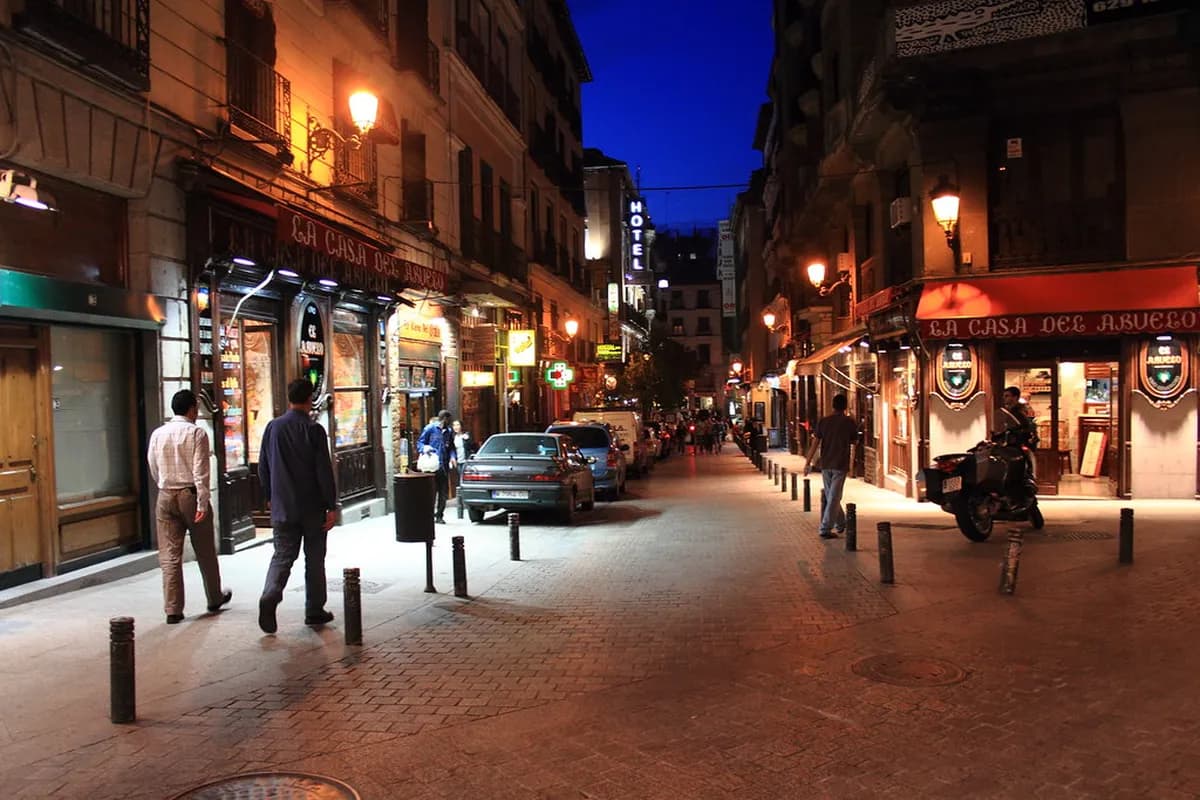
To enjoy a truly authentic experience, head to the La Latina neighborhood for a Sunday tapas crawl. This social dining style is the perfect way to meet other travelers and friendly locals without spending a fortune. Budget around €20 per person for a satisfying evening moving between bars.
One important detail for newcomers: Madrid eats late. Dinner before 21:00 marks you as a tourist, and most kitchens don't hit their stride until 22:00. Leaning into that rhythm makes the whole experience feel more genuine.
- Casa Labra near Sol — a historic tavern specializing in fried cod croquettes, standing room only, and very affordable.
- Juana La Loca in La Latina — a modern tapas bar known for its elevated Spanish potato omelet and intimate atmosphere.
Check Out El Rastro Flea Market (Sundays Only)
Every Sunday morning, La Latina transforms into one of Europe's most animated open-air flea markets. El Rastro stretches across Calle de Toledo, Calle de Embajadores, and Ronda de Toledo, with hundreds of vendors selling clothes, jewelry, vintage finds, art prints, and leather goods. Most stalls open by 09:00 and pack up around 15:00, so arriving before 10:00 gives you the best selection and manageable crowds.
Cash is essential here — many vendors do not accept cards. Expect to negotiate on price, especially later in the morning when sellers are more willing to deal before packing up. The surrounding neighborhood bars fill up after the market closes, so a post-browse vermouth in La Latina is the natural next step.
El Rastro runs every Sunday and public holiday from 09:00 to 15:00 — arriving before 10:00 gives you the best selection before the crowds arrive. Bring cash, as most vendors do not accept cards.
El Rastro is free to browse and functions as a genuine community event, not a polished tourist market. You will find cheap souvenirs alongside legitimately interesting vintage pieces, so keep an eye out and take your time wandering the side streets off the main drag.
Explore Retiro Park Beyond the Main Lake
El Retiro is far larger than most first-time visitors expect, and the central lake with its rowboats and Alfonso XII monument is only the beginning. The Rose Garden (Rosaleda) blooms best in May and early June, when hundreds of varieties fill the air with scent and color. The Crystal Palace, a stunning iron-and-glass greenhouse, hosts free contemporary art exhibitions year-round and is worth the walk to find it.
Tucked away in the quieter southern end of the park are the Jardines de Cecilio Rodríguez, a formal garden where peacocks roam freely across the pathways. Most visitors never make it this far, which makes the gardens feel genuinely serene on even a busy weekend. The Fountain of the Fallen Angel — the world's only public statue dedicated to the devil — stands a few minutes' walk from the gardens, making an easy circuit out of both.
The park is free to enter and open daily. Give yourself at least two hours to explore beyond the main entrance, and bring water since the open sections offer little shade in summer. Retiro Metro station (Line 2) drops you at the main gate.
Tour the Debod Egyptian Temple
An ancient Egyptian monument sits surprisingly in the middle of a public park in western Madrid. The historic Temple of Debod was gifted to Spain by Egypt in 1968 as a thank-you for helping save the Abu Simbel temples from flooding during construction of the Aswan High Dam. It dates back to the 2nd century BC, making it one of the most genuinely ancient things you can see in Spain.
Visiting in the late afternoon allows you to catch one of the most stunning golden hours in the city. The stone arches reflected in the shallow surrounding pools create the kind of photograph that looks almost too good to be real. Entry to the grounds is free; check the official madrid.es website for current interior opening hours before your visit, as they vary by season.
Give yourself about 45 minutes here. The nearby park also offers clear sightlines to the Royal Palace and western skyline, which glow beautifully at dusk. This is one of the most underrated sunset spots in the entire city.
Mercado de San Miguel
Located just steps from Plaza Mayor, this historic iron-and-glass market serves as a legendary gastronomic hub. Dozens of high-end stalls offer gourmet Iberian ham, fresh oysters, local cheeses, vermouth, and small plates designed for grazing rather than sitting. The architecture alone is worth a walk-through even if you don't spend anything.
The market gets genuinely crowded during peak lunch and dinner hours, particularly on weekends. Going mid-morning on a weekday keeps the experience relaxed and the aisles navigable. For a less tourist-heavy alternative, the trendy Mercado San Anton in Chueca draws a younger local crowd and has a rooftop terrace.
Prices run higher than neighborhood markets, but the quality and atmosphere justify one visit. Grab a glass of cava, take a lap around all the stalls before committing to anything, and enjoy the standing-room-only energy.
The Oldest Restaurant in The World
History buffs and food lovers alike should make time to see Sobrino de Botín during their trip. Founded in 1725, this iconic establishment holds the official Guinness World Record as the oldest continuously operating restaurant on earth — nearly 300 years of uninterrupted service.
The restaurant is famous for its suckling pig (cochinillo), slow-roasted in a wood-fired oven that has reportedly been burning since the day the restaurant opened. Dining in the atmospheric cellar feels like stepping directly back into eighteenth-century Spain. Ernest Hemingway ate here regularly, and Francisco de Goya reportedly worked in the kitchen as a young man before finding his footing as a painter.
Reservations are essential, especially during peak summer months — book several weeks in advance online. Combine a meal here with a broader exploration using a a self-guided old-town walk to make the most of the surrounding streets.
Things You Can Only Do in Madrid
The Spanish capital holds several experiences that exist nowhere else in the world. One of the most memorable is buying freshly baked cookies from cloistered nuns at the Monasterio del Corpus Christi (also known as Las Carboneras), tucked behind a discreet door near Plaza Mayor. You place your order through a rotating wooden hatch called a torno, slide your cash across, and moments later a box of Nevaditos — powder sugar-dusted shortbread — rotates back to you without you ever seeing the nuns. Bring cash, as cards are not accepted.
Another entirely unique experience is the Fountain of the Fallen Angel inside Retiro Park. It is widely recognized as the only public monument in the world dedicated to the devil — a bronze Lucifer frozen mid-fall, surrounded by a small pond and shady trees. Most visitors walk straight past it without noticing.
For more of these quirky attractions, look for unusual outings. Wandering beyond the main tourist zones is where these local secrets reveal themselves.
Urban Art in Madrid
While the city is famous for the Prado and Reina Sofía, its streets host an equally impressive contemporary creative scene. The neighborhood of Lavapiés serves as an open-air canvas for local and international artists, with entire building facades covered in large-scale murals, political artwork, and constantly changing graffiti pieces.
La Tabacalera, a former tobacco factory turned community cultural center, is worth the detour. Its basement corridors are filled with striking urban art that reflects the multicultural identity of the surrounding neighborhood. Entry is free on most days, and the programming changes regularly throughout 2026.
Unlike more polished street art circuits in other European cities, Madrid's feels raw and unmediated. A guided street art tour can help you decode the social and political stories behind specific pieces, but wandering independently through Lavapiés on a weekday afternoon works just as well.
Money Heist Filming Locations
Fans of the hit Netflix series can visit several iconic locations around the city without booking anything in advance. The exterior of the "Royal Mint of Spain" used in the show was actually filmed at the Spanish National Research Council (CSIC) building on Calle de Serrano — a handsome early 20th-century structure that photographs well even if you don't know the show.
Plaza de Callao is where red bank notes famously rained down from the sky in one of the series' most memorable scenes. Standing in this central square, flanked by the Gran Via's ornate facades, you immediately understand why the show's directors chose Madrid rather than a studio set.
These locations are easy to visit on foot while exploring the central shopping district. Combine the television tour with a visit to some nearby where locals dine for an efficient afternoon.
Walk Down Gran Via During Sunset
Gran Via is Madrid's main boulevard — a wide, gleaming street lined with ornate early 20th-century buildings that earns comparisons to Times Square without the commercial clutter. Walking it during sunset, when the sky turns pink and orange behind the white stone facades and the street lights flicker on, is one of the most atmospheric free experiences in the city.
Start from Plaza de España at the western end and walk east toward Callao and Sol. The route passes the iconic Metropolis Building, which was built in 1911 and still anchors the skyline from almost every angle. After dark, Gran Via fills with locals heading to dinner and bars — the energy shifts noticeably from daytime tourist traffic to something genuinely residential and alive.
The street itself is free to walk, and the best sunset timing from June through September is roughly 21:00–21:30. Gran Via also serves as the natural staging ground for a post-sunset visit to the RIU rooftop, which is just a short walk away.
Take a Day Trip from Madrid
The surrounding region offers incredible destinations just a short RENFE train ride away. Toledo, Spain's former medieval capital, packs ancient synagogues, a Gothic cathedral, and winding stone streets into a compact city that feels completely different from Madrid. The train from Atocha station takes about 30 minutes and runs frequently.
Segovia is equally rewarding. Its Roman aqueduct — remarkably intact after two millennia — is visible from the moment you arrive, and the Alcázar castle at the cliff's edge is said to have inspired Disney's Cinderella Castle. Young travelers love exploring the cobblestone streets and sampling the region's famous roast meats. For a scenic escape closer to the city, the Madrid Teleférico cable car runs over the lush Casa de Campo park for a very affordable price.
Wear comfortable shoes for any of these trips — both Toledo and Segovia involve sustained uphill walking on uneven cobblestones. Bring a bottle of water and plan to be out for the full day.
People Watch at Puerta del Sol and Plaza Mayor
No visit to the capital is complete without spending time in its two most famous public squares. Puerta del Sol serves as the symbolic center of Spain — the zero-kilometer marker from which all national road distances are measured sits beneath the square. It is one of the busiest pedestrian crossroads in Europe and endlessly entertaining to simply sit and observe.
Just a short walk west, Plaza Mayor offers a grand enclosed space surrounded by historic red buildings with matching arcades. Street performers, portrait artists, and travelers fill the vast stone plaza throughout the day, and the Christmas market held here in December is one of the best in Spain. The outdoor cafes inside the plaza charge premium tourist prices — grab a traditional calamari sandwich (bocadillo de calamares) from a nearby side street instead, for €3–4 versus €12 at a plaza table.
Eat Churros con Chocolate at San Ginés
Chocolatería San Ginés has been serving churros since 1894, making it the oldest and most famous churros bar in the city. The dark wood paneling, tiled walls, and rich aroma of frying dough inside feel unchanged from a century ago. Order a plate of churros with the thick, creamy hot chocolate — it is dense enough to coat the churros without ever feeling watered down, nothing like the thin hot chocolate sold elsewhere in Europe.
The practical advantage over competitors nobody mentions: go at 08:00 when they open. On a weekday morning you will share the place with a handful of locals and construction workers rather than a tourist queue. San Ginés is open every day of the year with no set closing time, so it also works as a late-night stop after a long evening out — locals know it as an informal 04:00 institution for those heading home after the clubs.
San Ginés is located at Pasadizo de San Ginés, just off Calle del Arenal a two-minute walk from Sol. A full plate of churros with chocolate costs around €5. It is one of the only places in Madrid where the experience genuinely matches the hype.
Madrid eats very late — dinner before 21:00 marks you as a tourist. Sobrino de Botín requires reservations several weeks in advance during peak summer months, so book online well before your trip.
Soak in the Rooftop Views from RIU Hotel's 360º Rooftop Bar
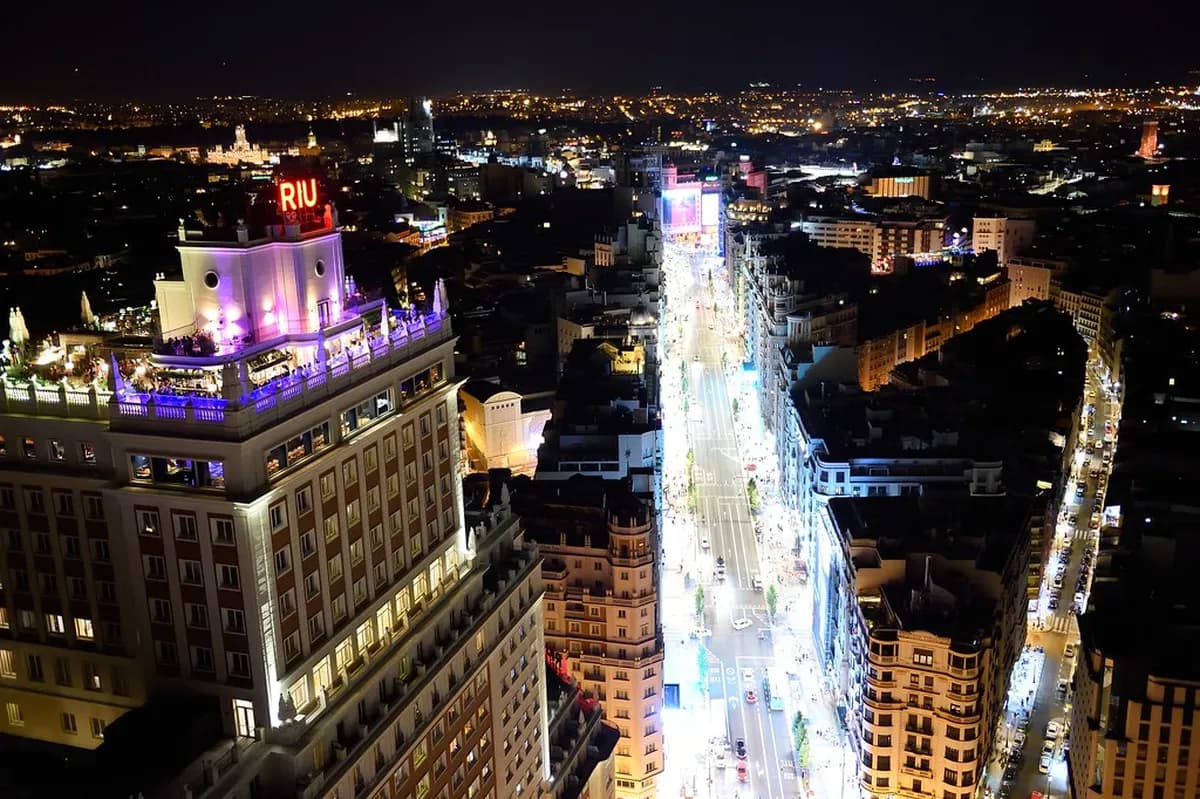
For the ultimate panoramic view of the city skyline, head to the top of the Edificio España. The RIU Plaza España hotel features an incredible terrace on the twenty-seventh floor with a glass walkway suspended high above the streets. It is easily one of the the city's best terrace views for young travelers looking for a combination of drama and accessibility.
This rooftop is extremely popular, especially on weekend evenings. Arriving Sunday evening around 19:00 typically means a manageable wait; by 20:30 the queue outside can stretch significantly. Entry fees vary by time of day and include a drinks credit. Watching the sun drop below the western skyline from the glass walkway, with the city spread out in every direction, is worth every euro of the cover charge.
For a less crowded but equally stunning alternative, the Palacio de Cibeles observation deck on Plaza de Cibeles offers 360-degree views including sightlines down Gran Via, the Metropolis dome, and on clear days the Sierra de Guadarrama mountains in the distance. Entry costs around €3, timed slots keep it uncrowded, and arriving right at opening means near-empty terraces for photographs.
| Experience | Cost | Best Timing | Booking Needed? |
|---|---|---|---|
| El Rastro Flea Market | Free to browse | Sun 09:00–15:00 | No |
| Temple of Debod | Free (grounds); free interior Tue–Sun | 45 min before sunset | No |
| Sobrino de Botín dinner | €€€ | Evening (21:00+) | Yes — weeks in advance in summer |
| RIU Plaza España rooftop | Entry fee + drinks | Sun ~19:00 for manageable wait | Recommended |
| Churros at San Ginés | ~€5 per plate | 08:00 weekdays (least crowded) | No |
| La Tabacalera urban art | Free | 18:00–22:00 (varies) | No |
Frequently Asked Questions
What is the best neighborhood for young adults to stay in Madrid?
Malasaña is the best neighborhood for young adults due to its trendy boutiques, vintage shops, and hipster cafes. It offers a lively atmosphere both day and night, making it perfect for exploring. Staying here puts you within easy walking distance of major central attractions.
How can young adults get around Madrid on a budget?
The public metro system is the most affordable and efficient way to travel around the city. Purchasing a ten-trip multi-card offers great savings compared to buying individual single tickets. The city is also highly walkable, allowing you to save money while exploring historic streets.
What is the nightlife like in Madrid for young travelers?
Madrid features a legendary nightlife scene that typically starts very late and runs until sunrise. You can find everything from multi-story clubs to cozy local pubs across different neighborhoods. For a complete overview of the top party spots, check out our comprehensive where the city comes alive after dark.
Madrid is a dynamic capital that truly caters to the energy and interests of younger travelers. From eating world-class tapas to exploring ancient Egyptian temples and hidden street art, the city offers endless memorable experiences across every budget.
Pack your most comfortable walking shoes — the best version of this city is discovered on foot, one neighborhood at a time. Your 2026 trip to this sunny European destination is ready to begin.
To see the full depth of Madrid's secret attractions and experiences that often get overlooked by guidebooks, explore our the city's secret corners.
Continue exploring
More guides you'll find useful