Cosmocaixa Barcelona Visitor Guide: Plan Your Perfect Trip
Plan your CosmoCaixa Barcelona visit with top picks, neighborhood context, timing tips, and practical booking advice for a smoother trip.
On this page
Cosmocaixa Barcelona Visitor Guide
CosmoCaixa is Barcelona's flagship science museum, managed by the La Caixa Foundation and set in a remarkable building at the foot of Tibidabo. It draws over a million visitors a year with a living Amazonian rainforest, a 37-metre dinosaur skeleton you can walk beneath, and dozens of hands-on physics and geology exhibits. This 2026 guide covers exhibitions, pricing, transport, free-entry days, and timing advice for every type of visitor.
CosmoCaixa consistently ranks among the most original Barcelona attractions for families and adults alike. Unlike most science museums, it combines living animals, real geological specimens weighing tonnes, and a high-end fulldome planetarium under one roof. The sections below walk through each area of the museum so you can prioritise your time effectively.
CosmoCaixa at a Glance: Key Facts for 2026
CosmoCaixa is open every day of the year except three — 1 January, 6 January, and 25 December. Normal hours are 10:00–20:00 daily, including Mondays and all public holidays. On 24 December, 31 December, and 5 January the museum closes early at 18:00. Ticket counters shut 30 minutes before closing time.
General admission is €8 per adult. Children under 16 enter free. CaixaBank account holders also enter free by showing proof of their account at the door. Three open-door days in 2026 waive the €8 fee for all visitors: 15 February (Santa Eulàlia), 18 May (International Museum Day), and 24 September (La Mercè). If you can align your trip with one of these dates, the saving is real.
Children under 16 enter completely free, and CaixaBank account holders also get free admission — bring your account card to the door. Plus, mark your calendar for three free-entry days in 2026: 15 February (Santa Eulàlia), 18 May (International Museum Day), and 24 September (La Mercè). No tickets needed on those dates.
| Ticket | Price |
|---|---|
| General Admission | €8 |
| Children under 16 | Free |
| CaixaBank Clients | Free |
| Planetarium (add-on) | €4 |
The Planetarium requires a separate ticket — €4 on top of general admission — and weekend sessions regularly sell out. Book the Planetarium slot at the same time you purchase your museum ticket online. The museum address is Carrer d'Isaac Newton, 26, 08022 Barcelona, Sarrià-Sant Gervasi district. Phone: 932 126 050.
- Hours: 10:00–20:00 daily; 10:00–18:00 on 24 Dec, 31 Dec, 5 Jan; closed 1 Jan, 6 Jan, 25 Dec
- Admission: €8 adults; free under 16; free for CaixaBank clients
- Planetarium: +€4 supplement, book in advance
- Free entry days 2026: 15 February, 18 May, 24 September
- Transport: FGC Line L7 to Avinguda Tibidabo, then bus V15, 196, or 8 min walk
A Historic Building That Teaches Sustainability
The container of CosmoCaixa is worth understanding before you step inside. The original building was designed in 1904 by Catalan modernist architect Josep Domènech i Estapà as a residential asylum for the blind. The La Caixa Foundation acquired it in the late 1970s, and it reopened in 1981 as the first interactive science museum in Spain.
The current scale is the result of a transformation carried out between the late 1990s and 2004 by architects Esteve and Robert Terradas. They buried more than 30,000 square metres of exhibition space underground, connected the levels with a helical glass ramp, and opened the complex onto a wide Science Square above ground. The project received the European Museum of the Year Award in 2006 and the Kenneth Hudson Award in 2021 for its ongoing contribution to society.
What makes CosmoCaixa architecturally unusual is that the building itself functions as a live sustainability exhibit. Smartflower photovoltaic panels in the Science Square generate up to 6,000 kWh of renewable energy annually. A rooftop hydroponic garden supplies plant food for the Flooded Forest animals. An insect hotel on the grounds shelters invertebrates essential to the urban ecosystem. The museum holds EMAS certification and ISO 14001:2015 and ISO 50001:2018 standards — environmental credentials few visitor attractions anywhere in Europe can match.
What to See: Permanent Exhibitions in Depth
CosmoCaixa's permanent collection is organised across interconnected underground levels connected by the helical ramp. Allow time for each area rather than rushing; the exhibits reward careful attention and hands-on engagement.
The Universe Room is the conceptual heart of the museum, completely redesigned in 2019. It divides into three colour-coded zones: the red Kósmos area covers the Big Bang, quantum physics, and the periodic table; the green Evolution zone displays fossils and models of species development; the blue Frontiers zone is anchored by a brain-shaped dome exploring human cognition and language. Alongside runs Lab Math — an interactive space inspired by Lewis Carroll that uses volumetric puzzles, three-dimensional mazes, and geometric riddles to make mathematics feel playful and surprising.
The Flooded Forest is the exhibit that stops first-time visitors in their tracks. It recreates 1,000 square metres of Amazonian rainforest from the Santarém region of Brazil, including the seasonal flooding cycle that keeps the soil submerged for up to eight months a year. More than a hundred plant and animal species live here — caimans, boas, giant tropical fish, leaf-cutter ants, and capybaras. An automated system triggers tropical rain every 15 minutes. The museum holds Zootechnical Centre certification and follows an Animal Welfare Plan coordinated with the Autonomous University of Barcelona.
The Patagotitan in the main hall is the exhibit that accounts for millions of viral social media views at CosmoCaixa, yet it rarely appears in written planning guides. The museum displays a replica of a Patagotitan mayorum skeleton — one of the largest dinosaurs ever found, measuring nearly 37 metres in length and 12 metres in height. You walk underneath the ribcage to appreciate the scale. It is immediately impressive, requires no background knowledge, and produces striking photographs. If you have limited time, this and the Flooded Forest are the two you should not skip.
The Geological Wall (El Muro Geológico) runs 24 metres across and weighs more than 90 tonnes. It consists of seven real rock sections sourced from across Spain and Brazil — each illustrating a geological process such as tectonic folding, volcanic activity, glacial sedimentation, or fault formation. An interactive module beside each block lets you recreate the physical forces involved. The adjacent Remains and Traces gallery adds a palaeontology angle, with fossil fish, dinosaur footprints, and a piece of Dominican amber containing nearly a hundred ants preserved 25 million years ago.
Temporary Exhibitions 2026 at CosmoCaixa
CosmoCaixa typically anchors one major temporary exhibition alongside complementary activities. In 2026, the headline display is Extraterrestres: Is there life outside Earth? Running since February 2025, it continues until 30 August 2026. The exhibition explores humanity's millennia-long fascination with extraterrestrial life across five conceptual areas: the scale of the cosmos, the scientific and philosophical debate around life's origin, the role of cinema and literature in shaping public imagination, the current search for life, and future communication methods.
The exhibition was commissioned by the La Caixa Foundation in collaboration with Spanish astrophysicists including Dra. Montserrat Villar Martín and Eva Villaver. It combines scientific models, real specimens, interactive stations, and audiovisual material. Until 7 September 2026, a complementary Escape Room titled Rescue on the Moon offers a more active group experience. Both are included in general admission.
Check the official CosmoCaixa website for the autumn 2026 programme, which typically launches in September. Temporary exhibitions are included in the €8 general admission unless otherwise stated; no extra ticket is needed.
The CosmoCaixa Planetarium: Shows and Booking
The Planetarium uses a modern fulldome projection system and seats a limited audience — weekend sessions routinely sell out, especially during school holiday periods. Shows run in Catalan by default, with simultaneous translation headsets available in Spanish, English, and French. Audio description is provided on all shows for visitors with visual impairments.
The summer 2026 programme through early September includes four shows. Kiru and the Mystery of the Lost Moon is aimed at children aged 3–6 and runs until 6 September 2026. 3Eclipses covers the three total solar eclipses visible from Spain in 2026, 2027, and 2028 — running from 26 June to 6 September 2026. Postcards from Other Worlds tours the planets and moons of the solar system and is suitable from age 6 (until 6 September 2026). Visitors aged 12 and over can attend Black Holes, which explores stellar physics and the objects formed by violent stellar explosions.
A Planetarium ticket costs €4 on top of general museum admission. Seats are numbered. The doors close the moment a session begins and latecomers are not admitted — arrive at least 10 minutes before your scheduled show. Book the Planetarium slot when you purchase your main museum ticket online to avoid arriving at a sold-out session.
Planetarium sessions often sell out on weekends and during school holidays. Book your slot in advance when you purchase your museum tickets online, especially if you're visiting during Spanish Easter week or the last two weeks of August. Weekend sessions fill weeks ahead during peak season.
Tickets, Opening Hours, and Getting There
CosmoCaixa is open every day from 10:00 to 20:00 including Mondays and public holidays — a common misconception is that it closes on Mondays, which is not the case. The only full closure days are 1 January, 6 January, and 25 December. On 24 December, 31 December, and 5 January, the museum runs reduced hours of 10:00–18:00.
General admission is €8 per adult. Children under 16 enter free. CaixaBank clients enter free on presentation of proof of account. Three free entry days in 2026: 15 February (Santa Eulàlia), 18 May (International Museum Day), and 24 September (La Mercè). The museum address is Carrer d'Isaac Newton, 26, 08022 Barcelona.
By public transport, the most straightforward route is the FGC train Line L7 to Avinguda Tibidabo station. From there, bus V15 or 196 stops close to the entrance, or you can walk in about 8 minutes through a quiet residential street. Urban buses H2, H4, V13, V17, V19, and 123 also stop near the museum. By car, use exits 6 or 7 on the Ronda de Dalt (B-20). Paid underground parking is available at the Saba CosmoCaixa car park on Carrer dels Quatre Camins, 89, open 07:00–23:00. Twelve bicycle spaces and ten electric scooter spaces are free next to the main entrance.
To avoid peak crowds, visit on a Tuesday, Wednesday, or Thursday morning, and avoid the last two weeks of August and the Spanish Easter holiday week. Weekday mornings before 12:00 offer the most space in the Flooded Forest and the Universe Room. Late afternoons after 16:00 can also be quieter as organised school groups leave.
Accessibility and Visitor Services
CosmoCaixa is fully wheelchair accessible. All levels connect via lifts, corridors have no steps, adapted toilets are on every floor, and reserved parking bays are in the underground car park. The information point at the entrance offers a free wheelchair loan service, subject to availability — call 932 126 050 in advance if this is essential for your visit.
Visitors with visual impairments will find podotactile guidance strips running from the main entrance to the Planetarium and lower exhibition areas. The Planetarium provides audio description on all shows. Adapted guided tours with audio description can be arranged in advance. For visitors with hearing impairments, the museum has magnetic induction loops and audiovisual content adapted into Catalan Sign Language (LSC), with professional sign language interpretation available on request.
Lockers near the entrance let you explore hands-free; check for any small fee. The Laie bookshop sells popular science books, educational toys, puzzles, and museum souvenirs (Monday–Friday 10:00–20:00, weekends until 20:30). The cafeteria-restaurant offers a buffet that regular visitors recommend for value — around €17 per person for an all-you-can-eat meal, with a café section for quicker snacks. For larger group reservations (more than 10 people or school groups), contact rcosmocaixa@magmacultura.com.
How to Plan Your Visit: Itineraries by Visitor Type
The museum is large and multi-level — allow more time than you think you need. The Flooded Forest alone can absorb 30–45 minutes, and the Universe Room rewards slow exploration. Build in time for the Planetarium if you book it.
Families with children under 10 should head to the Flooded Forest first, at opening time before school groups arrive, then cross to the Patagotitan dinosaur in the main hall. Spend the final hour in the CLICK interactive space, where children build circuits and launch paper planes. A Planetarium session of Kiru and the Mystery of the Lost Moon fits naturally into this itinerary. Budget 3–4 hours and book a 11:00 Planetarium slot when purchasing tickets online.
Science enthusiasts and adults will want to spend at least 90 minutes in the Universe Room, working through the quantum physics, evolution, and neuroscience zones and spending time at Lab Math. Add the Geological Wall and the Remains and Traces gallery. Finish with a Planetarium show — 3Eclipses or Black Holes depending on your interest. Budget a full 5–6 hours and start at opening time.
For a short visit of 2–3 hours, prioritise the Flooded Forest and the Patagotitan. Both are immediately impressive and require no prior knowledge. Skip the Universe Room for a return visit if time is tight. A quick look at the Extraterrestres temporary exhibition (open until 30 August 2026) adds context without taking much additional time.
Beyond CosmoCaixa: Nearby Attractions
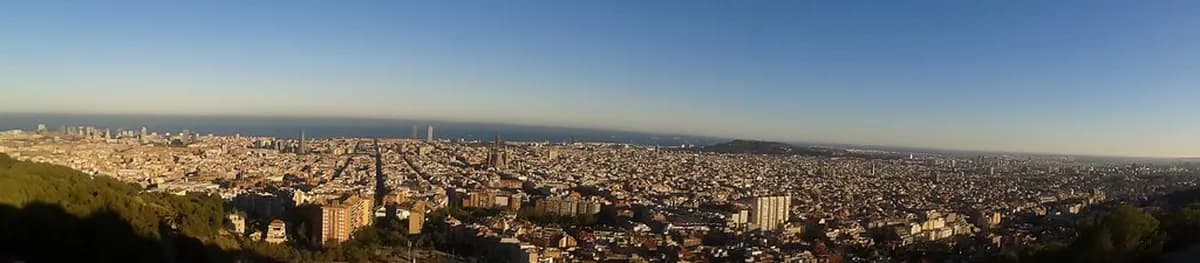
CosmoCaixa sits at the lower edge of the hills leading up to Tibidabo. Mount Tibidabo is a 20-minute uphill walk or short bus ride from the museum. The summit offers panoramic views over the whole city and the coast, the Sagrat Cor church, and the Tibidabo Amusement Park — Europe's oldest still-operating fairground, dating to 1901. It makes a natural full-day pairing with CosmoCaixa, especially for families with older children.
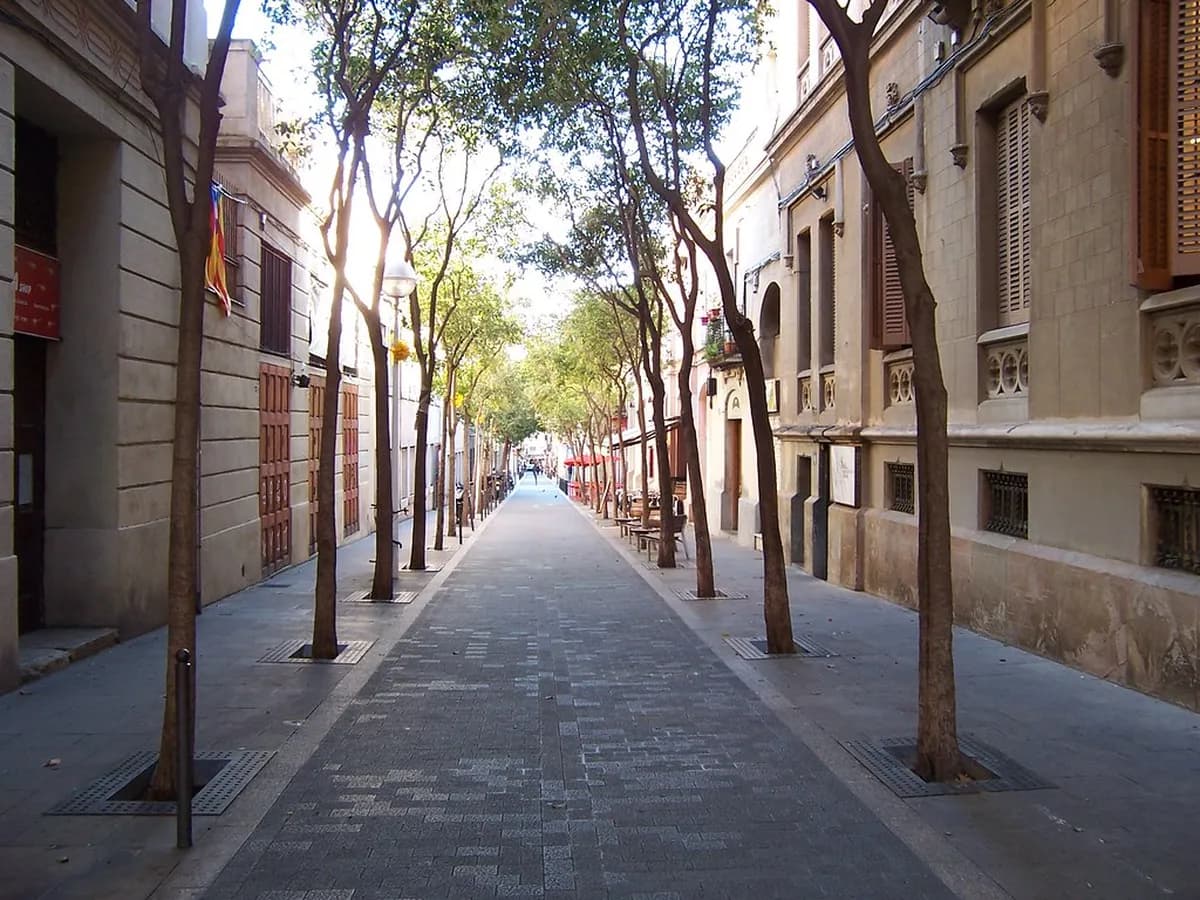
The neighbourhood of Sarrià lies a few minutes south of the museum. It retains the feel of the village it was before Barcelona's expansion absorbed it in 1921: a pedestrianised main street, independent shops, quiet plazas, and local cafés without tourist pricing. A walk through Sarrià before or after the museum provides a calming contrast to the intensity of the exhibits.
Park Güell is accessible by bus from the Sarrià area and is a UNESCO World Heritage site worth including in any visit to Barcelona. Pre-book your timed entry to the Monumental Zone before you travel — access is capped and summer 2026 slots sell out days in advance.
Frequently Asked Questions (FAQs) About CosmoCaixa
Frequently Asked Questions
Which cosmocaixa barcelona visitor guide options fit first-time visitors?
First-time visitors should prioritise the Flooded Forest, Wall of Geology, and a Planetarium show. Consider a general audio guide for comprehensive insights into the main exhibits. Allow at least 3-4 hours to experience these key areas comfortably.
How much time should you plan for cosmocaixa barcelona visitor guide?
Plan for a minimum of 3-4 hours to see the main attractions like the Flooded Forest and Wall of Geology. If you want to include a Planetarium show and explore temporary exhibitions, allocate 5-6 hours. A full day is ideal for science enthusiasts.
What should travelers avoid when planning cosmocaixa barcelona visitor guide?
Avoid visiting on weekend afternoons or during school holidays if you dislike crowds. Do not forget to check the official website for updated hours and temporary closures. Avoid arriving without pre-booked tickets, especially for Planetarium shows, to save time and ensure entry.
Is cosmocaixa barcelona visitor guide worth including on a short itinerary?
Yes, even on a short Barcelona itinerary, CosmoCaixa is worth it, especially for families or science lovers. Focus on the Flooded Forest and one other major exhibit for a memorable 2-3 hour visit. It offers a unique, interactive experience distinct from other city attractions.
Which Must-See Cosmocaixa Attractions options fit first-time visitors?
First-time visitors must see the Flooded Forest for its unique ecosystem and the Wall of Geology for its geological insights. The interactive exhibits provide hands-on learning, making them highly engaging. Don't miss the Planetarium for an immersive space journey.
CosmoCaixa Barcelona rewards visitors who arrive prepared. The combination of a living rainforest, a Cretaceous-scale dinosaur skeleton, a serious fulldome planetarium, and 30,000 square metres of hands-on science makes it unlike anything else in the city. Admission at €8 — with free entry for under-16s and three free-for-all days in 2026 — keeps it accessible to most budgets.
Book your Planetarium slot before you arrive, aim for a weekday morning, and give yourself at least half a day. Whether you spend three hours with children or a full day as a science enthusiast, CosmoCaixa will give you more than you expected.
For authoritative information, refer to the CosmoCaixa Barcelona on Wikipedia.
For more Barcelona planning, see our Hidden Gems in Barcelona guide.
See also our Palau Güell Visitor Guide: Plan Your Visit to Gaudí's Palace and Casa Vicens Visitor Guide: Plan Your Visit to Gaudí's First House guides for adjacent Barcelona experiences.
Continue exploring
More guides you'll find useful