Fundació Joan Miró Visitor Guide: Plan Your Visit to the Museum
Plan your Fundació Joan Miró visit with our comprehensive guide. Discover opening hours, ticket prices, how to get there, must-see exhibits, and essential tips for a memorable experience.
On this page
Fundació Joan Miró Visitor Guide
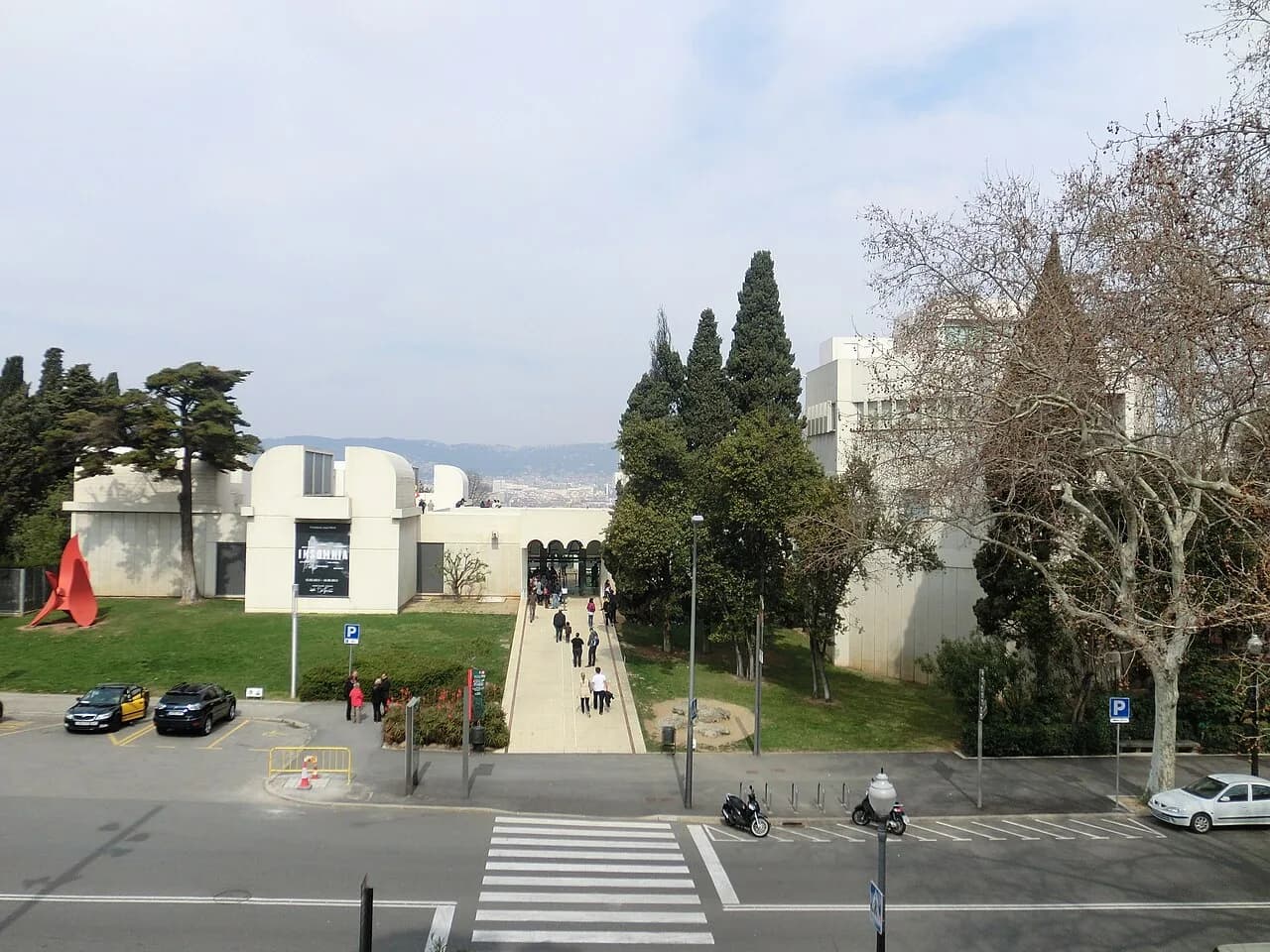
The Fundació Joan Miró sits on Montjuïc hill in Barcelona, housing over 14,000 paintings, sculptures, drawings, and textile works by Catalan artist Joan Miró. The 1975 building, designed by Miró's close friend Josep Lluís Sert, is as much a reason to visit as the collection inside.
This guide covers everything you need to plan your 2026 visit: exact ticket prices, seasonal opening hours, transit options, must-see works, and a few practical details that most visitors miss. Read it before you book.
Plan Your Visit to Fundació Joan Miró: An Overview
The foundation was established by Miró himself in 1975 with the aim of creating a living space for modern and contemporary art in Barcelona — not simply a retrospective of his own work. Today it holds the world's most comprehensive Miró collection, spanning paintings from the 1910s through his final experimental canvases of the 1970s, alongside prints, drawings, and objects. Temporary exhibitions occupy a significant share of the floor space and rotate throughout the year.
Sert designed the building around natural light. Clerestory windows and open courtyards flood the galleries with Mediterranean sun, so the experience shifts noticeably depending on the time of day. The structure itself earned architectural recognition when it opened, and a walk through the interconnected rooms and terraces is worth the visit even on a rainy day.
The museum sits inside the Parc de Montjuïc at street address Parc de Montjuïc, s/n, 08038. It is not walkable from the Gothic Quarter — plan at least 25–30 minutes of travel time from central Barcelona. For ideas on how to frame the rest of your stay, see our guide to Barcelona attractions.
Fundació Joan Miró Opening Hours & Best Times to Visit
The museum runs on two seasonal schedules. In winter (1 November–31 March) it is open Tuesday to Sunday, 10:00–19:00. In summer (1 April–31 October) it opens Tuesday to Saturday 10:00–20:00 and Sunday 10:00–19:00. The museum is closed every Monday year-round, with a small number of exceptions for public-holiday Mondays in 2026: 6 April, 18 May, 25 May, 12 October, and 28 December. Last entry to the galleries is 30 minutes before closing time — don't arrive at 19:45 expecting to get in.
The museum is closed on Mondays, with exceptions for holidays (6 April, 18 & 25 May, 12 October, 28 December 2026). Plan your visit for Tuesday–Sunday to guarantee access.
The quietest windows in 2026 are Tuesday through Thursday afternoons. Summer mornings fill up fast, especially July and August when school groups and tour buses arrive shortly after 10:00. If your schedule is flexible, aim for 14:00–15:00 on a weekday in April, May, September, or October — the light is good, the rooms are calm, and you will not be competing with queues at the ticket desk.
Check the official website at fmirobcn.org/en before your visit to confirm any holiday closures or changes to temporary exhibition scheduling. The museum occasionally closes individual galleries for installation work without advance notice on third-party sites.
Fundació Joan Miró Ticket Prices, Discounts & Free Admission
Standard adult admission in 2026 is €18 at the door or €17 if you buy online through the official ticket system. The €1 saving is modest, but online purchase also lets you choose an arrival slot, which is worth doing in summer. Concession tickets (€12 online / €11 at the door) apply to students aged 13–25, visitors over 65, holders of the Carnet Jove (ages 12–30), single-parent and large families, and companions of visitors with disabilities. Bring valid ID proving your eligibility — staff check at the desk.
| Ticket | Price |
|---|---|
| Adult (Desk) | €18 |
| Adult (Online) | €17 |
| Concession | €12 |
| Under 12 | Free |
| Articket BCN | €38 |
Free admission applies to children under 12 accompanied by an adult, unemployed visitors (with documentation), ICOM and CIMAM members, and the foundation's Friends and Benefactors. Espai 13, the basement contemporary art space, is always free regardless of whether you have a main ticket. A long list of institutional partners — including BBVA cardholders, Bus Turístic ticket holders, and several Barcelona hotel chains — are eligible for rates between €12 and €16.20. Check the full agreements list on the official site if you hold any cultural membership cards.
If you plan to visit multiple major museums in Barcelona, the Articket BCN pass (€38) covers entry to the Fundació Joan Miró plus five other leading art institutions including the MNAC and MACBA. At that price it pays for itself with just two visits. The Barcelona Card also includes admission plus unlimited public transport, which can simplify a multi-day trip. Both passes are sold online and at tourism offices.
Note: the "first Sunday of each month free after 15:00" policy that circulates on travel sites is not listed on the official Fundació Joan Miró website. Do not rely on it for your planning — use the verified free categories above instead.
How to Get to Fundació Joan Miró (Location & Transport)
The most important thing to know before planning your route: the Montjuïc Funicular is temporarily out of service in 2026. TMB has replaced it with a special shuttle bus running between Avinguda Paral·lel (adjacent to Paral·lel metro station, Lines L2 and L3) and the base of the Montjuïc cable car. Many visitor guides still list the funicular as the recommended option — it is not currently running, and simply heading to Paral·lel and looking for funicular signs will leave you confused.
The Montjuïc Funicular is out of service in 2026. Use the replacement shuttle bus from Paral·lel metro station or bus line 150 from Plaça d'Espanya instead.
Bus line 150 is the most direct public transit option. It runs from Plaça d'Espanya through the park and stops at the museum entrance. Bus 55 also serves the Montjuïc area. Both are included on standard T-Casual transport cards. Journey time from Plaça d'Espanya on bus 150 is roughly 10–15 minutes depending on traffic.
On foot from Plaça d'Espanya the climb takes around 25–35 minutes. It is a genuine uphill walk rather than a stroll, so factor in the temperature if you are visiting in summer. The park paths are well-marked and pleasant, but wear appropriate shoes. There is no parking at the museum itself — two accessible parking spaces exist 35 metres from the entrance for visitors with reduced mobility documentation, but general parking is not available on site.
Navigating the Museum: Must-See Exhibits & Layout
The museum is organised across three main levels. The ground floor permanent collection rooms (numbered in sequence) trace Miró's development from early figurative work through his mature symbolic vocabulary of primary colours, biomorphic shapes, and gestural marks. The first floor holds his large-format later paintings and connects to the temporary exhibition spaces. Espai 13 in the basement is a separate free contemporary art programme and runs independently of the main ticket flow.
Essential works in the permanent collection: The Gold of the Azure (1967), one of the most reproduced Miró canvases, is in the ground-floor galleries. Woman and Bird and the surrounding series of large canvases from the 1970s occupy the first floor. In the courtyard, Alexander Calder's Mercury Fountain — a kinetic sculpture built for the 1937 Paris World's Fair — is one of the highlights of the entire building. Do not walk past it quickly. The rooms are numbered to indicate a suggested route, but the layout is permissive and you can double back easily.
For audio commentary, download the free Bloomberg Connects app before you arrive. It covers major works in the permanent collection, the architecture, and the temporary exhibitions. This is a genuinely useful alternative to renting a per-device audio guide at the desk. If you prefer a structured visit, the museum also runs English-language guided tours of the Joan Miró collection — check the guided tours section of the official site for dates and booking.
Budget at least 1.5–2 hours for the permanent collection alone. Add another 45–60 minutes if a temporary exhibition is running that interests you. A superficial loop through the ground floor takes about 45 minutes but misses most of what makes the collection significant.
Visitor Services & Accessibility at Fundació Joan Miró
The customer service desk is on the right-hand side of the entrance at a height of 120 cm. Lockers are available near the entrance for bags larger than 30×30 cm, umbrellas, and helmets — you need a €1 coin, which is returned when you collect your belongings. Bring one; the lockers are not optional for larger bags. Photography is allowed throughout the permanent collection for personal use without flash, tripod, or selfie stick. Press and commercial photography requires prior authorisation from the foundation.
Physical accessibility: the ground-floor galleries are mostly level. A ramp (12% gradient) connects the sculpture room to the first floor — wheelchair users typically need a pusher for this section. Two manual wheelchairs are available on loan at the information desk at no charge. If you plan to visit alone and need mobility assistance, call +34 934 439 077 in advance and a staff member will meet you. Accessible toilets are on the ground floor mid-corridor, the first-floor library foyer, and the auditorium basement. The library on the second floor is lift-accessible — ask at reception for the lift key.
Hearing accessibility: magnetic induction loops are installed in the auditorium, library, Room 14, and at the reception and ticket desks, the restaurant, gift shop, and bookshop. Portable magnetic loops for guided tours are available at the information desk. All Fundació-produced videos are subtitled. A programme of activities in Catalan Sign Language runs regularly. For visitors with cognitive diversity, an easy-to-read accessibility guide with pictograms is downloadable from the official website and also available via Bloomberg Connects.
Families: the museum has a dedicated family room with games, mats, and sofas. Strollers are permitted. Baby-changing facilities are available. Assistance dogs are welcome with EU-recognised documentation presented to security staff.
Tips for a Smooth & Enjoyable Visit
Buy your tickets online before arriving. The saving is only €1, but the real benefit is that you pick an arrival time slot and bypass the ticket queue entirely — worth doing in July and August when that queue can run 20–30 minutes. Even for free-admission categories, you may still need to reserve online; confirm on the official site close to your visit date.
Download the Bloomberg Connects app on your phone before leaving your hotel. It is free, covers the permanent collection in depth, and removes the need to rent a per-device audio guide. The accessible guide within the same app works well for planning a cognitive-accessibility-friendly route before you arrive.
Bring a €1 coin for the lockers. The lockers are mandatory for oversized bags, and if you do not have the right change you will need to find it at the café — an avoidable delay. Also note the last-entry rule: the desk stops selling tickets 30 minutes before closing, and the rooms close at that time regardless of where you are in your visit. Plan your timing accordingly.
The building's courtyards and terraces are intentional rest stops — Miró and Sert designed the route with these breaks built in. Use them. The patio views towards the park and the city are genuinely good, and standing in front of the Mercury Fountain for five minutes is more rewarding than rushing to cover every room.
Beyond the Art: Shop, Cafe & Facilities
The gift shop and bookshop are both open during museum hours (Tue–Sat 10:00–20:00 in summer, 10:00–19:00 in winter; Sun 10:00–19:00 year-round) and are accessible free of charge — you do not need a ticket to browse them. The gift shop sells Miró-licensed merchandise, jewellery, children's items, and homewares. The bookshop specialises in Miró, contemporary art, architecture, and design, and stocks the foundation's own publications as well as prints and posters. Both collections are also available online via the MiróShop platform.
The bar-restaurant has indoor seating for 70 and outdoor seating for 60 in the Carob Tree Patio, a quiet courtyard in the centre of the building. It operates on the same hours as the museum. The outdoor terrace is one of the calmer spots on Montjuïc — a useful fact if you want to avoid the more exposed hilltop areas on hot summer days. Table reservations are taken at +34 933 290 768 or by email at the address listed on the official site; worth booking for summer weekends.
The Jacques Dupin Library sits on the top floor of the octagonal tower and is open Tuesday to Friday 10:00–14:00. It holds documents, correspondence, and research materials related to Miró's life and work. Access is free but separate from the main museum ticket; it functions as a study and research resource rather than a browsing library. If you are visiting Barcelona for Miró research specifically, contact the library in advance.
Nearby Attractions & Making a Day of It
Montjuïc has enough to fill a full day without leaving the hill. The Castell de Montjuïc is a 10–15 minute walk from the Fundació and offers panoramic views of the port and city. The Museu Nacional d'Art de Catalunya (MNAC) at the foot of the hill houses one of Europe's strongest collections of Romanesque art alongside Catalan modernisme — if you hold an Articket BCN, entry is already included in your pass.
The Magic Fountain of Montjuïc near Plaça d'Espanya runs evening light-and-music shows on Thursdays through Sundays from spring to autumn (schedule varies by season — check the Barcelona City Council website for exact 2026 dates). It makes a natural endpoint to a day that starts at the Fundació.
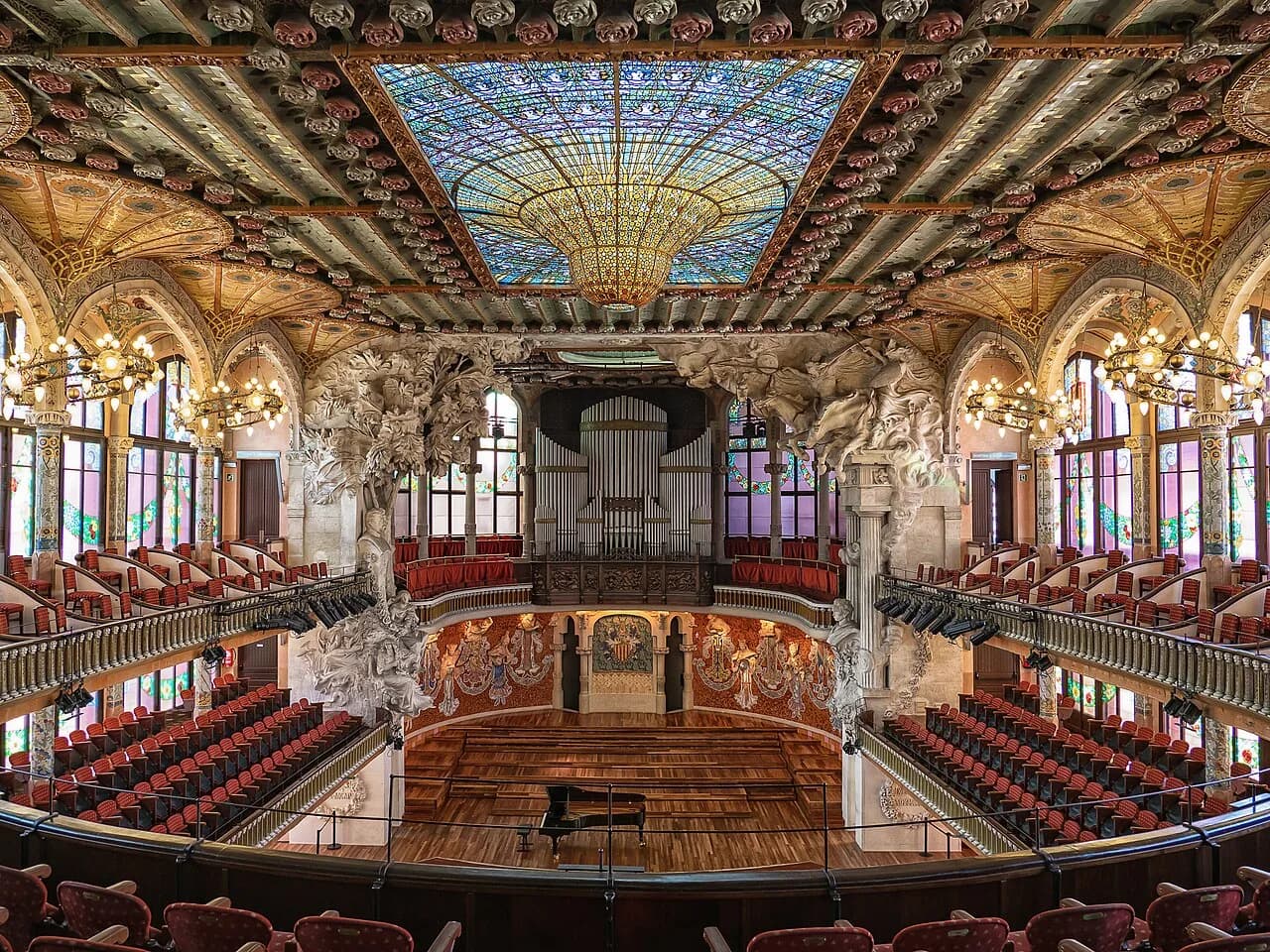
The Jardins de Laribal and the Jardí Botànic de Barcelona are both within walking distance and offer cooler, shaded paths if the afternoon heat sets in. For a different kind of architecture after Sert's modernism, the Palau de la Música Catalana in the Eixample deserves a separate visit — it is a 30-minute metro ride from Paral·lel station and represents the opposite end of Catalan architectural ambition.
Frequently Asked Questions
What are the Fundació Joan Miró opening hours?
The Fundació Joan Miró is typically open from Tuesday to Sunday, with specific hours varying by season. Mondays are usually closed. Always check the official website for the most current schedule, especially for holidays or special exhibitions. This ensures you have the latest information before your visit.
How much does it cost to visit Fundació Joan Miró?
General admission for adults is approximately €15, covering both permanent and temporary exhibitions. Reduced rates are available for students, seniors over 65, and youth card holders. Children under 15 usually enter for free. Check the official site for detailed pricing and eligibility requirements.
Are there free admission days at Fundació Joan Miró?
Yes, the Fundació Joan Miró often offers free admission on the first Sunday of each month after 3 PM. Certain public holidays may also include free entry. It is essential to confirm these dates and any required online reservation on the museum's official website.
How do I get to Fundació Joan Miró by public transport?
You can reach Fundació Joan Miró by taking the Montjuïc Funicular from Paral·lel Metro station, connecting to the Montjuïc Cable Car. Alternatively, bus lines 55 and 150 have stops directly near the museum entrance. These options provide convenient access.
What are the must-see artworks at Fundació Joan Miró?
Key artworks to see include Miró's 'The Gold of the Azure' and 'Woman and Bird.' Don't miss the 'Mercury Fountain' by Alexander Calder in the courtyard. The permanent collection showcases his iconic paintings, sculptures, and drawings, highlighting his artistic evolution.
The Fundació Joan Miró rewards careful planning. Book your ticket online, check the exact seasonal hours before you travel, and arrive knowing that the Montjuïc Funicular is currently out of service — bus 150 from Plaça d'Espanya is the straightforward alternative.
Allow at least two hours for the permanent collection, download Bloomberg Connects before leaving your hotel, and bring a €1 coin for the lockers. The rest — Sert's light-filled rooms, Calder's Mercury Fountain in the courtyard, Miró's large-format canvases from the 1970s — takes care of itself.
To verify current details, consult the Fundació Joan Miró on Wikipedia.
For more Barcelona planning, see our Hidden Gems in Barcelona guide and our advice on the best time to visit Barcelona without crowds.
Discover more options in our guide to Unique Things to Do in Barcelona.
Continue exploring
More guides you'll find useful