Museu Frederic Marès Visitor Guide: Tickets, Hours & What to See
Plan your visit to Barcelona's Museu Frederic Marès with top picks, unique collection insights, timing tips, and practical advice for a smoother trip.
On this page
Museu Frederic Marès Visitor Guide: Plan Your Visit to Barcelona's Unique Museum
The Museu Frederic Marès is one of Barcelona's best-kept secrets. Tucked behind the Cathedral in the Gothic Quarter, it holds a vast personal collection assembled by sculptor Frederic Marès across his 98-year life. Two very different experiences unfold inside: thousands of medieval religious sculptures on the lower floors, then floor after floor of obsessively catalogued everyday objects from the 19th and early 20th centuries. Together they form one of Spain's most distinctive museum experiences, and at €4.40 admission, one of the city's better cultural bargains in 2026.
Planning Your Visit: Tickets, Hours & Location
The museum is open Tuesday to Saturday from 10:00 to 19:00, and on Sundays and public holidays from 11:00 to 20:00. It is closed every Monday. Certain bank holidays also bring closures — 1 January, 1 May, 24 June, and 25 December. Always verify on the official museum website before travelling.
General admission costs €4.40. A reduced rate of €2.50 applies to visitors aged 16–29, those over 65, and the unemployed. Children under 16 enter free at all times. Free admission is available to everyone on the first Sunday of each month (11:00–20:00) and every Sunday afternoon from 15:00. The Barcelona Card also covers entry at no extra charge.
| Ticket | Price |
|---|---|
| General admission | €4.40 |
| Reduced (16–29, over 65, unemployed) | €2.50 |
| Children under 16 | Free |
| First Sunday of each month | Free |
| Every Sunday 15:00 onwards | Free |
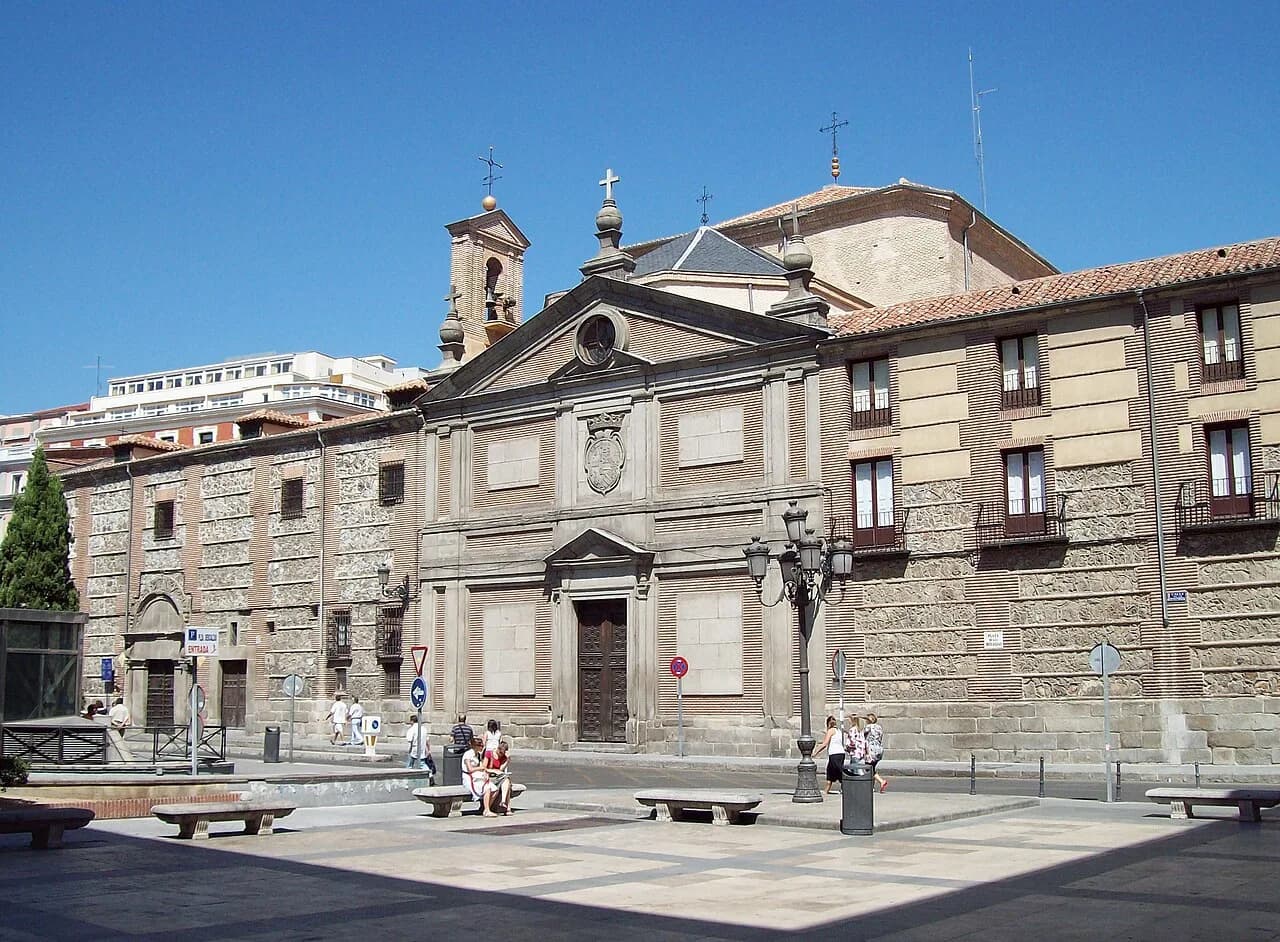
The museum sits at Plaça de Sant Iu, 5–6, in the Gothic Quarter (postal code 08002), immediately beside Barcelona Cathedral. The nearest metro stop is Jaume I on Line 4 (yellow line), a five-minute walk away. Line 3's Liceu stop is also within easy reach. The entrance is in a small square to the right flank of the cathedral — if you reach the cathedral's main facade, you have walked slightly too far.
Free entry is available on the first Sunday of each month (11:00–20:00) and every Sunday afternoon from 15:00. Children under 16 always enter free, regardless of the day or time.
Your general admission ticket is valid for 6 months following purchase. You can use it to return another day to continue exploring both the medieval sculpture floors and the upper-level Collector's Cabinet without paying again.
Highlights of the Frederic Marès Collection
The ground and lower ground floors are dense with medieval Christian sculpture. Polychrome wooden Madonnas, Crucifixions, reliquaries, and carved altarpiece panels span the Romanesque through the Renaissance. The volume is striking: entire walls lined with devotional figures, some worn smooth by centuries of handling. Monumental church arches and doorways — objects that somehow passed from sacred spaces into private hands — are among the most impressive pieces.
The first floor continues with Baroque and later works, then the collection pivots entirely. The upper floors house the Gabinet del Col·leccionista, an archive of thousands of objects from 19th and early 20th-century bourgeois life. Fans, pipes, canes, umbrellas, toys, early photographs, ceramic tiles, Christmas nativity figures, and clocks with swivelling glass eyes fill room after room. One space holds a bewildering accumulation of bedwarmers, helmets, and hundreds of keys. The leap between the two halves of the museum is one of the most disorienting and enjoyable turns in any Barcelona cultural institution.
The Sculptor Frederic Marès: A Life of Collecting
Frederic Marès was born in 1893 in Portbou, on the French border, and his family moved to Barcelona when he was ten. He studied at the School of Arts and Crafts and the School of Fine Arts before establishing himself as a sculptor and university professor. His work appears in public spaces across the city: fountain sculptures at the Plaça de Catalunya, pieces on the stairway leading to Montjuïc, and early commissions from 1919 at the Plaça del Clot. After the Spanish Civil War he turned largely to restoring damaged artworks and buildings.
The collecting started in childhood — little pictures and chocolate wrappers first. As a student he spent his exhibition prize money on a 15th-century painting his father could not afford. In Paris he developed contacts with antiquarian dealers and auction houses. He funded every purchase himself, from his university salary and sculpture commissions, without any family backing. The collection grew quietly in his studio for years, unknown to almost everyone outside his inner circle.
In 1944, aged 51, Marès staged his first public exhibition and wrote a will bequeathing the entire collection to the city of Barcelona. By 1946 he had rented a first display space. Between 1948 and 1952 the museum expanded from four rooms to three full floors. The collection reached its current scale by the early 1970s. Marès lived until 1991, well into his 98th year, and in 1999 the museum moved to its present building at Plaça de Sant Iu. Today he is remembered more for this collection than for his own sculpture.
Housed in History: The Palace of the Inquisition
The Museu Frederic Marès occupies a wing of the Palau Reial Major, the former Royal Palace, on the eastern flank of Barcelona Cathedral. This complex of buildings once served as the seat of the Spanish Inquisition in Catalonia. A worn coat of arms near one entrance is almost the only visible remnant of that history — a detail easy to walk past without recognising its weight.
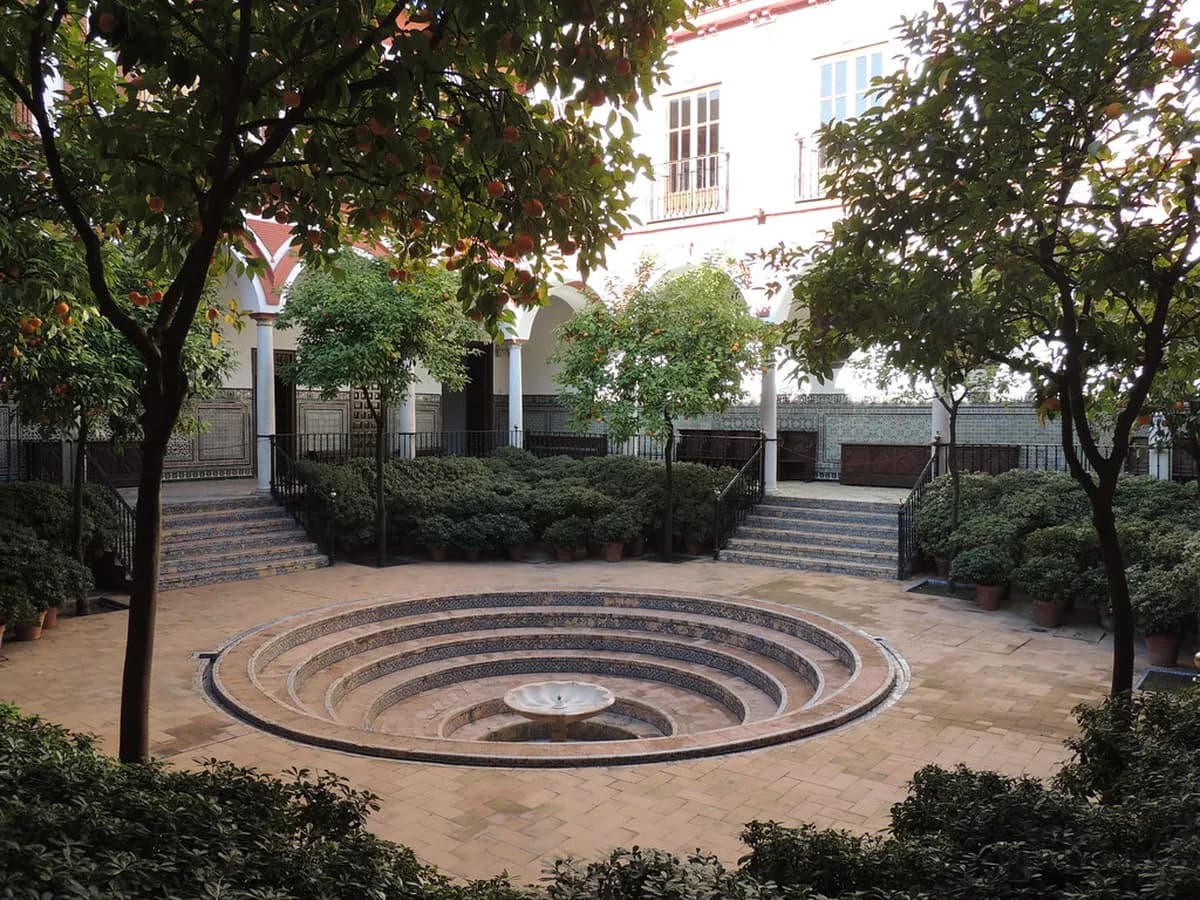
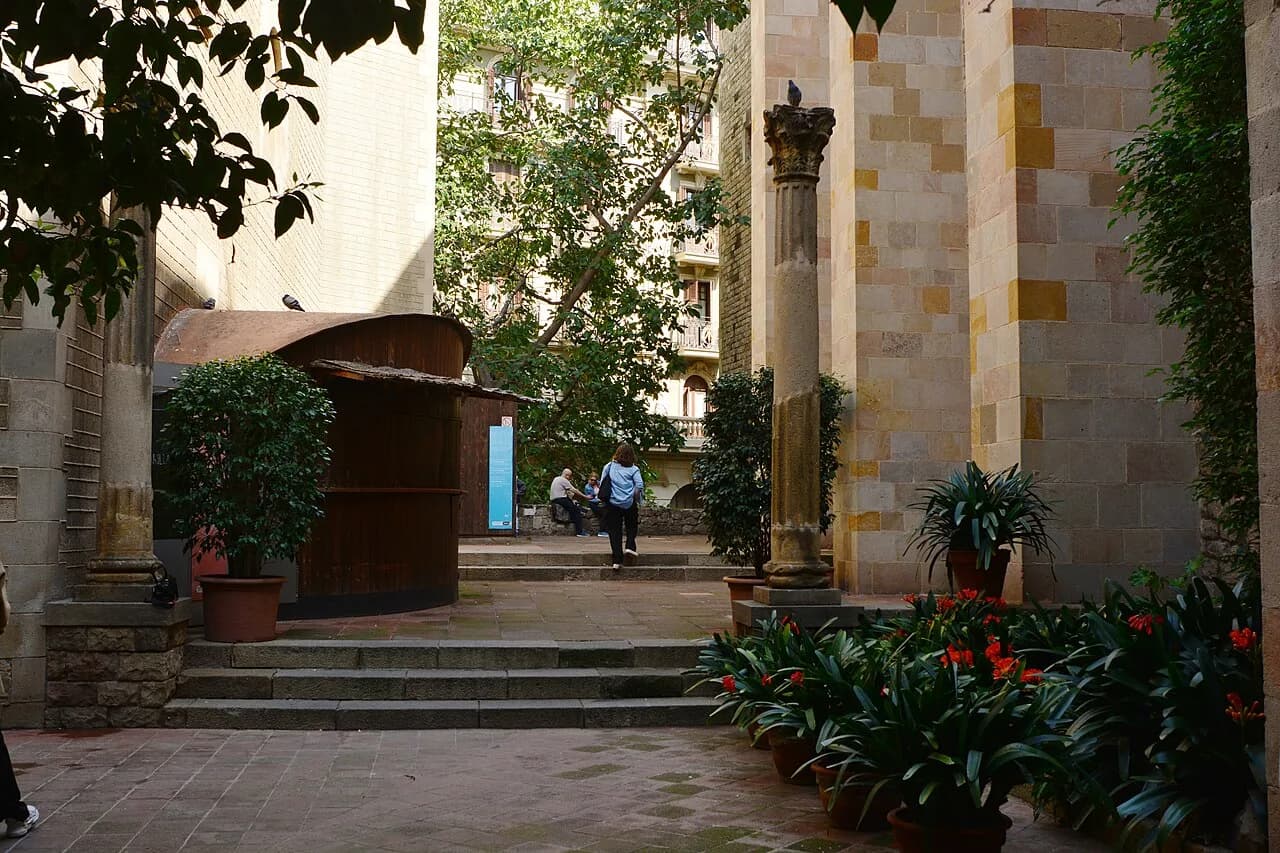
The building's layout is idiosyncratic as a result. It was never designed as a museum: you circle an internal courtyard on the ground floor, dip down to a lower level, then work back up through multiple floors. Blind corridors occasionally catch visitors out, though staff are generally on hand to redirect. The courtyard itself — known informally as the Patio del Reloj — is one of the museum's quieter pleasures, and home to the Café d'Estiu during warmer months.
One architectural detail worth seeking out: an upper-floor internal window looks directly into an adjacent building that now houses the Museu d'Història de Barcelona. The two institutions share a wall but are separately ticketed. It is a genuinely strange moment — glancing through a gap in the stonework from one museum into another, across several centuries of history compressed into a single narrow view.
Beyond Sculpture: The Eclectic Collector's Cabinet
The upper-floor rooms of the Gabinet del Col·leccionista are organised by material and object type. There is a room devoted to women's accessories — fans, hat pins, chatelaines, parasols — followed by a smoking room stocked with pipes, cigar boxes, and cigarette cards sorted by brand. A children's section holds early wooden toys. A photography room contains some of the earliest examples of Catalan portrait photography, faded but remarkably legible.
What distinguishes this section is Marès's instinct for the overlooked. He gathered objects others discarded as trivial or tacky: mechanical clocks with swivelling glass eyes, votive figures made of seashells, découpage boxes, cigar bands arranged in elaborate patterns. Many of the individual sub-collections are large enough to have constituted a single lifetime's obsession. Together they form what might be called a meta-collection — a collection of collections, an archive of things that barely survived.
The psychology behind it is worth sitting with. Marès funded every acquisition personally through decades of a professor's salary, pouring money into objects with no established market value. His motivation appears to have been a form of preservation — a conviction that if he did not acquire these things, they would vanish entirely. The Collector's Cabinet is best understood not as decorative art but as social archaeology: a record of what ordinary people in 19th-century Barcelona used, treasured, and eventually discarded.
Who This Museum Is For (And Who It Is Not)
At €4.40 — or free on Sunday afternoons — the Museu Frederic Marès is a well-priced stop for anyone spending more than one day in Barcelona. The Gothic Quarter location makes it easy to pair with a visit to the Cathedral or a walk through the Barri Gòtic. Plan for 1.5 to 2 hours; rushing through either the medieval floors or the Collector's Cabinet leaves neither half feeling complete.
The museum suits visitors drawn to personal, idiosyncratic collections over encyclopaedic survey museums. If the idea of a room filled with hundreds of keys and bedwarmers sounds interesting rather than tedious, this is the right place. It is also one of the few mid-sized museums in Barcelona that rarely feels overwhelmed — even in summer, the crowds are thin compared with the Picasso Museum or the MNAC.
It is a poor fit for visitors expecting impressionist painting, interactive displays, or the kind of grand chronological survey that defines larger institutions. Families with young children may find the medieval sculpture floors slow going; the toy and early photography rooms on the upper floors hold more interest for children. Solo visitors and couples who enjoy lingering at individual objects tend to get the most from it.
Tips for a Memorable Visit
Arrive before noon on a weekday to have the sculpture floors largely to yourself. The museum stays quieter than most Gothic Quarter sites throughout the week. Sunday afternoons draw larger numbers specifically because entry is free from 15:00. If you want the free admission without the extra visitors, the first Sunday of each month tends to be calmer during the morning session (11:00–14:00).
One practical detail most visitors miss: a general admission ticket stays valid for six months and can be used to continue the visit on a separate day. The upper Collector's Cabinet floors hold more than most people absorb in one go. If you find yourself running low on time or energy, hold on to your ticket and return — you will not need to pay again.
The building layout can disorient on the first pass. If you reach a dead end, backtrack to the internal courtyard staircase rather than trying to push through. Staff are generally stationed at key junctions to redirect visitors. Photography without flash is permitted throughout most of the permanent collection. In warmer months, the Café d'Estiu in the courtyard is a worthwhile break between the sculpture floors and the upper-floor objects.
Nearby Attractions & Things To Do
The museum entrance square sits immediately beside Barcelona Cathedral, whose Gothic cloisters and resident geese are worth 30 minutes before or after the museum. The surrounding Barri Gòtic rewards slow walking — Roman walls, small hidden squares, and medieval streetscapes are dense within a few blocks in every direction.
The Museu d'Història de Barcelona is literally adjacent, sharing a wall with the Marès building. It offers underground Roman foundations and a chronological history of the city. The two museums complement each other well and can fill a full morning in this part of the Gothic Quarter without much effort.
Further afield but still walkable, the Palau Güell — Gaudí's first major commission and a UNESCO World Heritage site — is a 15-minute walk through the lower Ramblas. The Palau de la Música Catalana is about 20 minutes on foot heading northeast through the Born neighbourhood. Both represent very different architectural eras from the medieval world of the Marès museum, making them natural complements on a full cultural day.
Final Thoughts on Museu Frederic Marès
The Museu Frederic Marès earns its place on a Barcelona itinerary without much justification. The admission is low, the queues are short, and the collection is genuinely unusual. Medieval sculpture gives way to an obsessive archive of Victorian-era objects — a combination that no other single museum in Barcelona replicates. Whether you come for the carved Madonnas, the room of keys, or simply a quiet hour away from the bigger sights, the experience tends to outlast its modest entrance fee in memory.
Frequently Asked Questions
How much time should you plan for a Museu Frederic Marès visitor guide?
Plan to spend approximately 1.5 to 2 hours at the Museu Frederic Marès. This allows enough time to explore both the sculpture collection and the eclectic 'Collector's Cabinet' thoroughly. You can also enjoy the tranquil courtyard.
Is Museu Frederic Marès worth including on a short Barcelona itinerary?
Yes, the Museu Frederic Marès is highly recommended for a short itinerary, especially if you seek unique cultural experiences. Its compact size and distinctive collections offer a refreshing alternative to larger museums. It provides a rich insight into Catalan art and history.
What should travelers avoid when planning a Museu Frederic Marès visit?
Avoid visiting on Mondays, as the museum is typically closed. Also, try to avoid peak afternoon hours if you prefer fewer crowds. Always check the official website for current opening hours and any holiday closures before your trip. This ensures a smooth and enjoyable visit.
Which Must-See Museu Attractions options fit first-time visitors?
First-time visitors should prioritize the medieval sculpture section and the 'Collector's Cabinet' for a full experience. The blend of sacred art and everyday objects truly defines the museum's unique character. Don't miss the beautiful courtyard for a peaceful break.
Other Collectors Who Kept Absolutely Everything
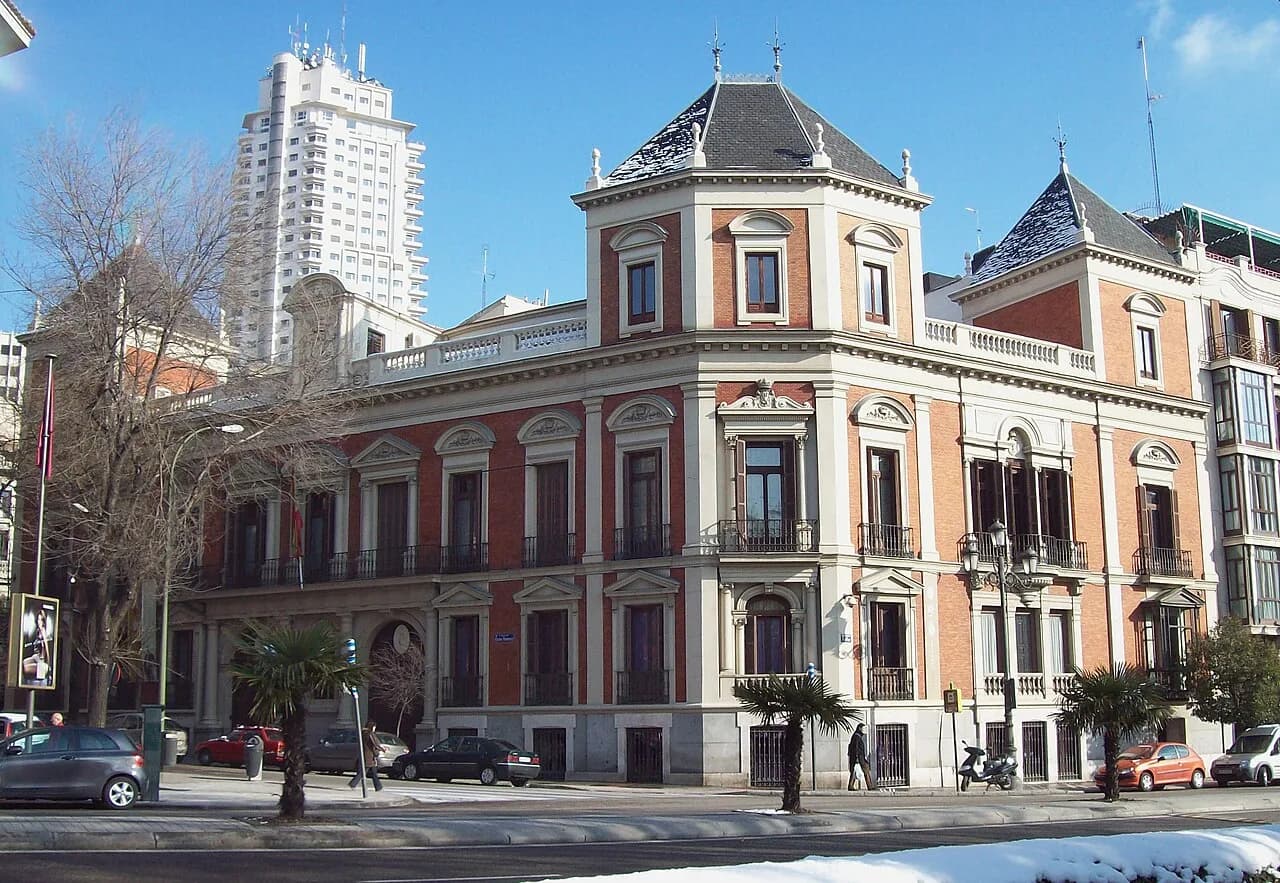
Marès collected medieval sculpture professionally and then filled the upper floors with fans, playing cards, scissors and pipe stems — the Sentimental Museum. London's Sir John Soane's Museum is the great precedent, a house arranged as an argument with itself. Madrid's Museo Cerralbo shows the aristocratic version, unrearranged since 1922.
The Museu Frederic Marès offers a truly distinctive cultural journey in Barcelona. It beautifully combines profound medieval art with a charming collection of everyday objects from centuries past. This unique blend reflects the singular vision of its founder, and his passion for collecting shines through every exhibit. Step into this fascinating world and discover a museum that tells stories beyond typical art displays.
For the latest official information, see the Museu Frederic Marès on Wikipedia.
For more Barcelona planning, see our Unique Things to Do in Barcelona guide.
Continue exploring
More guides you'll find useful