Hospital de Sant Pau Visitor Guide: History, Tickets & Visiting Tips
Plan your Hospital de Sant Pau visit with our comprehensive guide. Discover its history, modernist architecture, ticket info, and practical tips for a memorable experience.
On this page
Hospital de Sant Pau Visitor Guide: Plan Your Visit to Barcelona's Modernist Gem
Barcelona holds many architectural wonders, but the Hospital de Sant Pau stands in a category of its own.
This former hospital complex — officially the Recinte Modernista de Sant Pau — is the world's largest Art Nouveau complex and a UNESCO World Heritage Site since 1997.
Designed by Lluís Domènech i Montaner, it blends artistic grandeur with a profound social purpose.
This guide covers tickets, opening hours, what to see, and how to get there.
History of Hospital de Sant Pau: A Modernist Masterpiece
The story begins in 1401, when Barcelona merged six separate hospitals into a single institution — the Hospital de la Santa Creu, built in the El Raval district. That medieval building served the city for nearly 500 years. Antoni Gaudí died there in 1926 after being struck by a tram on the Gran Via; the building today houses the State Library of Catalonia and the Faculty of Medicine.
By the late 19th century, Barcelona's rapid industrialisation had made the old hospital too small and too cramped. In 1902, a major legacy from the Catalan banker Pau Gil funded a new complex on a fresh site in the Eixample. Construction began on 15 January 1902 under architect Lluís Domènech i Montaner, and the completed hospital was formally handed over to King Alfonso XIII on 16 January 1930. In tribute to the benefactor, the institution was renamed Hospital de la Santa Creu i de Sant Pau.
Domènech i Montaner conceived the project as a "city within a city" — 26 ornately decorated pavilions spread across a park, connected by underground tunnels, each oriented to catch maximum sunlight. His core belief was that beautiful surroundings accelerated recovery. The design set an international standard for humane hospital architecture that drew admiration from across Europe.
In 1997, UNESCO inscribed the Recinte Modernista de Sant Pau on its World Heritage List, alongside the Palau de la Música Catalana — both by Domènech i Montaner. Hospital operations moved to a modern building in 2009, and the historic pavilions have been open to the public ever since.
What to See: Exploring the Sant Pau Complex
The visit unfolds across a single walled campus. A signposted route guides you through the highlights, but you can explore in any order. Allow at least 1.5 to 2 hours for the main areas.
Begin at the Sant Salvador Pavilion, where an introductory exhibition traces the hospital from its 1401 foundation to its 2009 closure. From here, step out into the central gardens — shaded by horse chestnut, linden, and orange trees — and look toward the domed Administration Building at the far end. Its main axis points directly northwest toward the Sagrada Família, about 1 km away. The alignment was deliberate, and the boulevard connecting them was later named Avinguda de Gaudí.
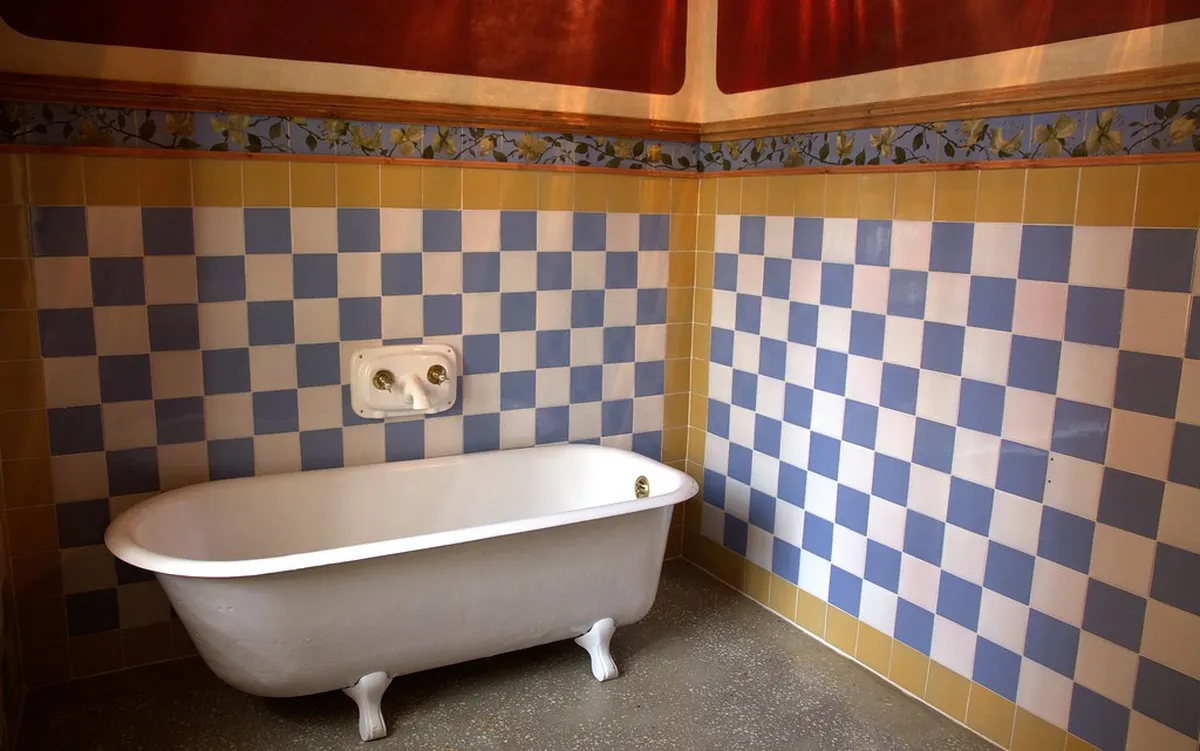
The Sant Rafael Pavilion recreates a 1930s hospital ward in full period detail. You can walk the corridors as patients once did, with original equipment and archival photographs in place. The underground tunnel system — built to transfer patients and supplies between pavilions without exposure to weather — runs beneath the entire complex and is a highlight of any self-guided visit.
The Administration Pavilion closes the tour. Its marble columns, mosaic-vaulted ceilings, and large stained-glass panels make it the most photogenic interior on the site. The building's chapel-like silhouette was intentional: Domènech i Montaner designed it to resemble a church, symbolising the Christian tradition of hospitality and signalling welcome to patients arriving in distress.
The gardens between pavilions are planted with medicinal herbs — lavender, rosemary, laurel, and lemon trees line the paths. They were always part of the therapeutic design, not merely landscaping. Today they provide a peaceful contrast to the busier Barcelona attractions nearby.
Tickets & Opening Hours for Your Visit
General admission in 2026 is €18 for entry before 14:00 and €17 for entry after 14:00. Visitors aged 12–24 or 65 and over pay a reduced rate of €11.90. Children under 12 enter free when accompanied by an adult. An audioguide covering all main pavilions — available in English, Spanish, Catalan, French, and German — can be added for €4. Guided tours are also bookable at the entrance desk.
| Ticket Type | Price |
|---|---|
| General admission (before 14:00) | €18 |
| General admission (after 14:00) | €17 |
| Reduced (ages 12–24 and 65+) | €11.90 |
| Children under 12 | Free |
| Audioguide add-on | €4 |
Buy tickets in advance at santpaubarcelona.org to skip the entrance queue. This is particularly worthwhile from April to October, when the site receives its largest visitor numbers. There are two days of free general admission each year: 23 April (Sant Jordi, Barcelona's patron saint day) and 24 September (La Mercè, the city's main festival). Holders of the Barcelona Card receive a 20% discount on entry.
Arriving after 14:00 saves €1 on standard adult admission and typically means fewer crowds than mid-morning visits. Free entry days on 23 April and 24 September are popular — plan ahead if visiting on these dates.
The complex is open daily from 09:30 to 18:30 between April and October, and from 09:30 to 17:00 between November and March. Last entry is 30 minutes before closing. Guided tours have their own separate schedule — check current availability at santpaubarcelona.org.
Why Visit Hospital de Sant Pau? Unique Insights
Sant Pau makes a case that most modern buildings do not: that beauty is not a luxury in public institutions, but a necessity. Domènech i Montaner built colour, light, and natural air into the design because he believed they aided healing. Every mosaic, garden, and ventilated corridor served that argument. Visiting the complex today is a reminder of how far hospitals have drifted from that philosophy.
Unlike Sagrada Família or Park Güell, Sant Pau has no timed-entry pressure. You arrive, pay, and wander. Queues are manageable even in high season, and the experience is more contemplative than those sites allow. This makes it well suited to travellers who find the headline Gaudí attractions overwhelming.
The site also carries real historical texture. Medical equipment, ward recreations, and archival photographs give it a human dimension that purely decorative monuments lack. For visitors interested in social history, the history of medicine, or early-20th-century urban planning, Sant Pau offers considerably more than its architecture alone.
Finding Hospital de Sant Pau: Location & How to Get There
The address is Carrer de Sant Antoni Maria Claret, 167, 08025 Barcelona, in the El Guinardó district. The nearest metro stop is Sant Pau | Dos de Maig on the L5 (Blue Line), a 5-minute walk from the main entrance. The L4 (Yellow Line) stop Guinardó | Hospital de Sant Pau is slightly further but equally convenient. Bus lines H8, 19, 47, 92, and 192 all serve the area.
The most rewarding way to arrive is on foot along Avinguda de Gaudí from Sagrada Família — roughly 1 km and 12–15 minutes at an easy pace. The boulevard is a tree-lined pedestrian street, and the walk itself is worth understanding. Domènech i Montaner positioned his Administration Pavilion precisely so its central axis would face the Sagrada Família directly across the Eixample grid. Both architects were working simultaneously on adjacent blocks in the early 1900s, and this visual corridor between their two buildings — later named after Gaudí — was no accident. Looking down the avenue from either end, you see the other building framed at the far end. It is one of the most intentional pieces of urban design in Barcelona, and almost no visitor is told about it.
Combining both sites in one day is the natural itinerary. Visit Sagrada Família first when it opens at 09:00, then walk Avinguda de Gaudí and arrive at Sant Pau for the 10:30–11:00 window, when the morning surge from tour buses has not yet peaked.
The 1 km walk from Sagrada Família along Avinguda de Gaudí is one of Barcelona's most intentional pieces of urban design — both buildings' architects positioned them to face each other directly. Allow 12–15 minutes for a leisurely stroll, then plan 1.5–2 hours for exploring the 26 pavilions and underground tunnels.
Experience the Modernisme: Architecture & Design Highlights
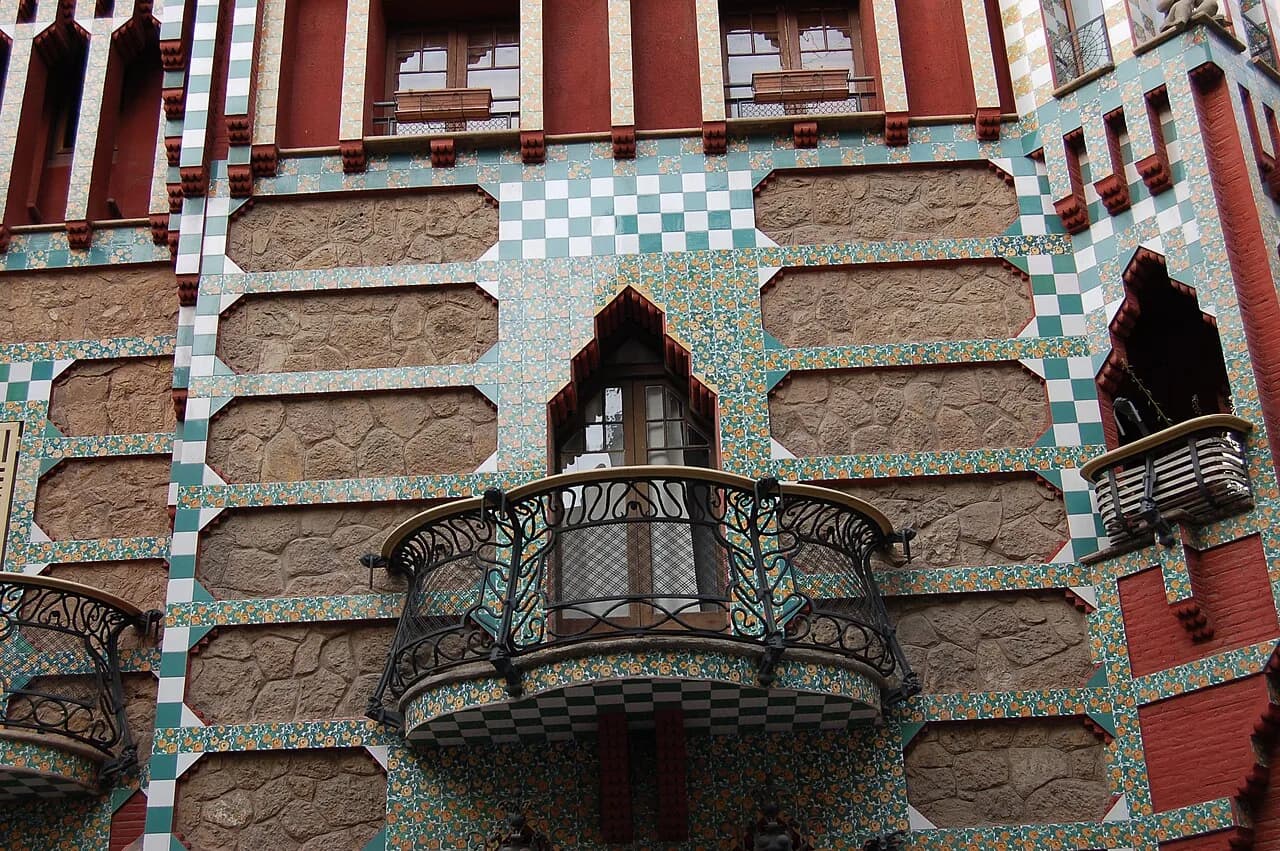
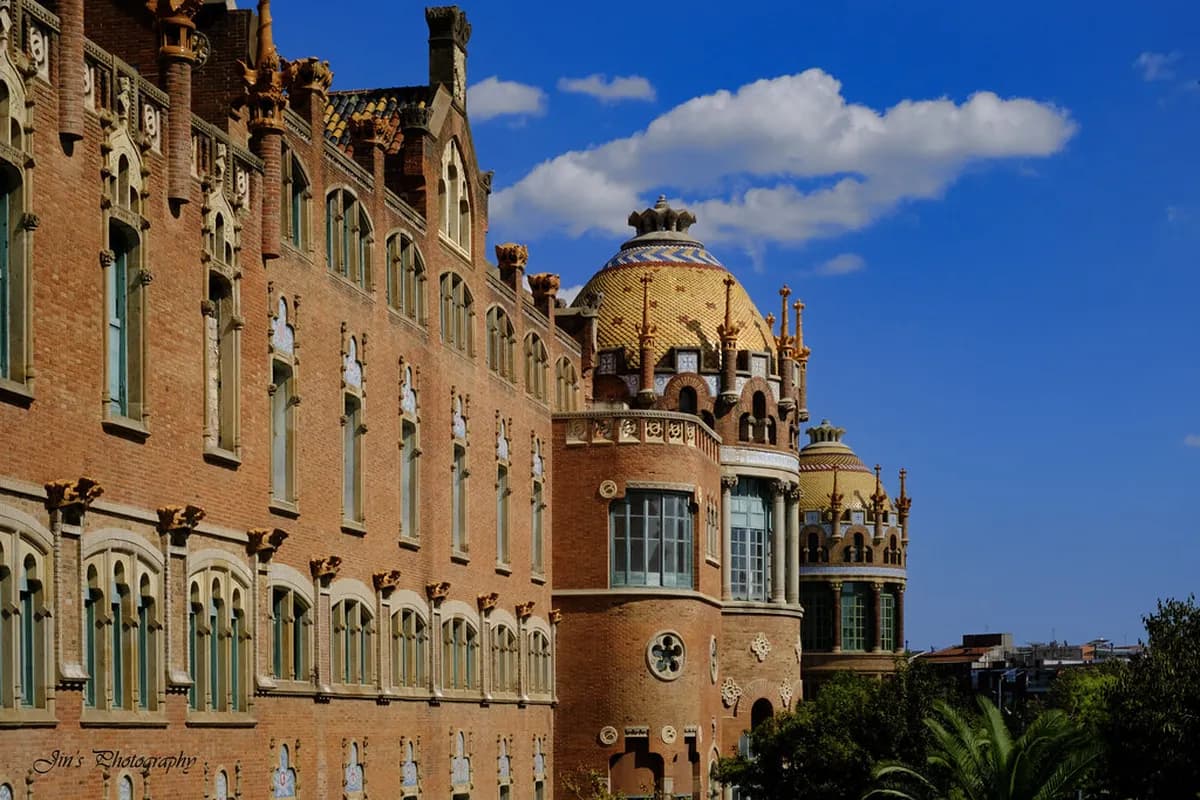
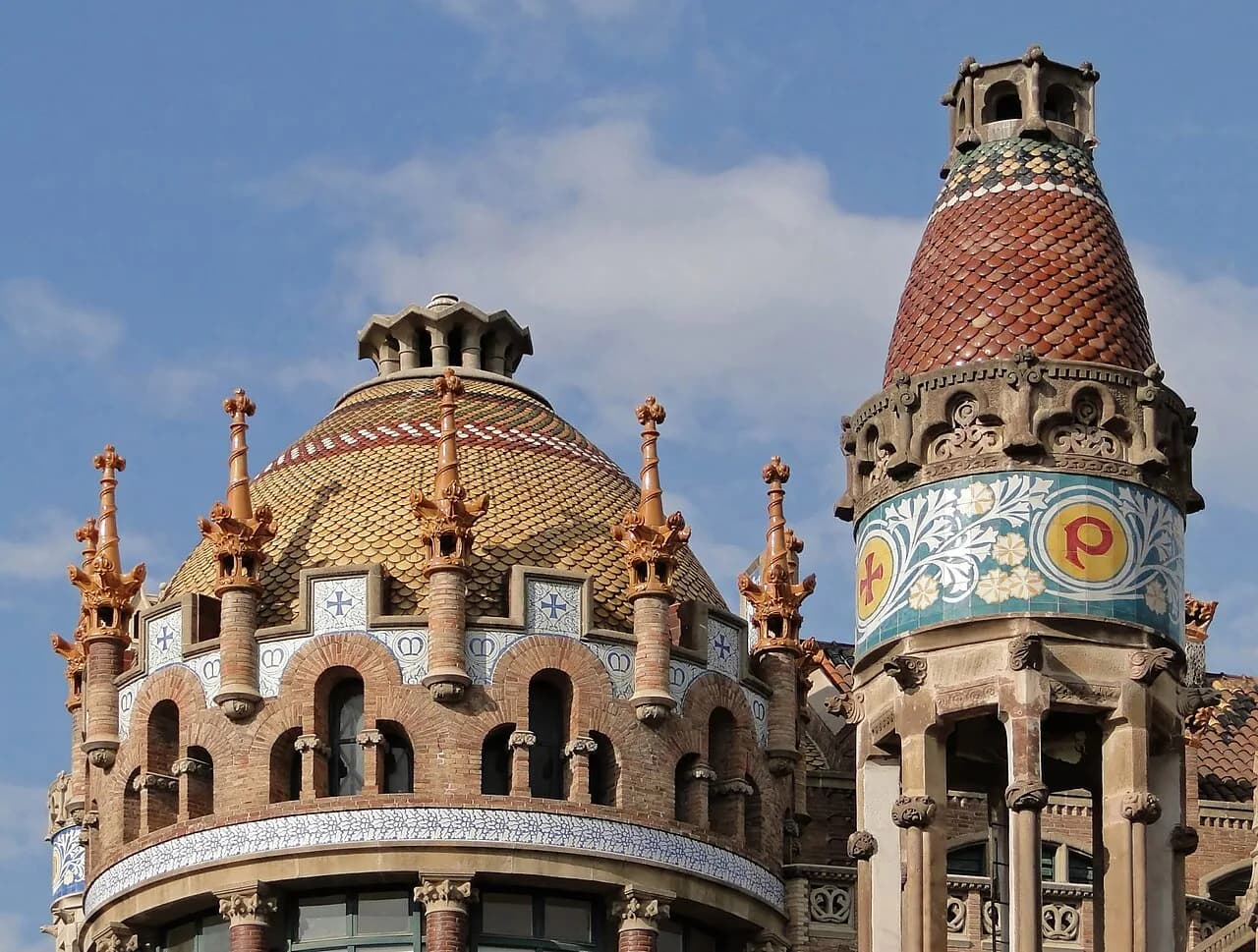
Catalan Modernisme favoured organic forms, rich surface decoration, and the integration of craft into structure. Sant Pau is the style's single largest statement. Every façade uses a consistent mix of red brick, natural stone, iron, glass, and glazed ceramics — each material assigned a specific role. Brick forms the structural outer shells; natural stone carries the sculptural load, appearing in reliefs, column capitals, and carved narrative panels.
The glazed ceramic tiles are the most immediately striking element. Blue, green, and gold mosaics cover domes, arches, and entryways throughout the complex. They were not decorative choices alone: ceramic surfaces are easy to disinfect, a practical requirement for a working hospital. Domènech i Montaner turned a hygiene specification into his most distinctive visual signature. Look closely at the figurative mosaics on the Administration Pavilion's vaulted ceiling — they depict scenes from the history of medicine alongside Catalan heraldic motifs.
Natural light was engineered into every building. Each pavilion sits on a north-south axis to maximise solar exposure and minimise shadowing between structures. Large windows, high ceilings, and cross-ventilation keep interiors bright without heat buildup. The best time to appreciate the architect's intentions is a clear morning, when low-angle light hits the ceramic domes and saturates the colours in a way afternoon visits rarely match.
Sant Pau as an Early Example of Sustainable Building
The complex had an unusually advanced environmental logic for its era. The pavilion layout was designed so that warm air — carrying bacteria and pathogens — would rise and be drawn away from patient areas through natural convection. Ventilation was built into the architecture itself rather than added as a mechanical system. This passive approach to infection control predated modern HVAC by decades.
Today the site is heated and cooled via a geothermal installation of approximately 400 wells drilled more than 100 metres deep beneath the complex. The system supplies energy to the pavilions with minimal carbon output. The same durability that made local brick and Catalan stone ideal hospital materials in 1902 continues to reduce maintenance demands over a century later. Local sourcing was standard practice then rather than a design statement, but the result is a building with low embodied energy and a material palette that has required no major replacement.
Planning Your Visit: Tips for a Smooth Experience
Arrive at opening (09:30) on a weekday if possible. The site is busiest between 11:00 and 14:00, particularly in spring and autumn. After 14:00, the entry price drops by €1 and the crowds thin noticeably — a useful trade-off if you do not need the full morning light for photography. Weekdays in November and March offer the quietest conditions overall.
Wear comfortable flat shoes. The paths between pavilions are extensive and mostly level, but the underground tunnels are cooler than the gardens above — relevant in summer when Barcelona regularly reaches 30°C or above. There is no bag-check facility, so travel light. A camera rewards the detail work: the mosaic close-ups and the garden symmetry are both worth shooting.
Accessibility across the main visitor circuit is good. The underground tunnels have level access throughout, and ramps serve most pavilion entrances. If travelling with a wheelchair or pushchair, call ahead to confirm the current route: +34 932 562 504.
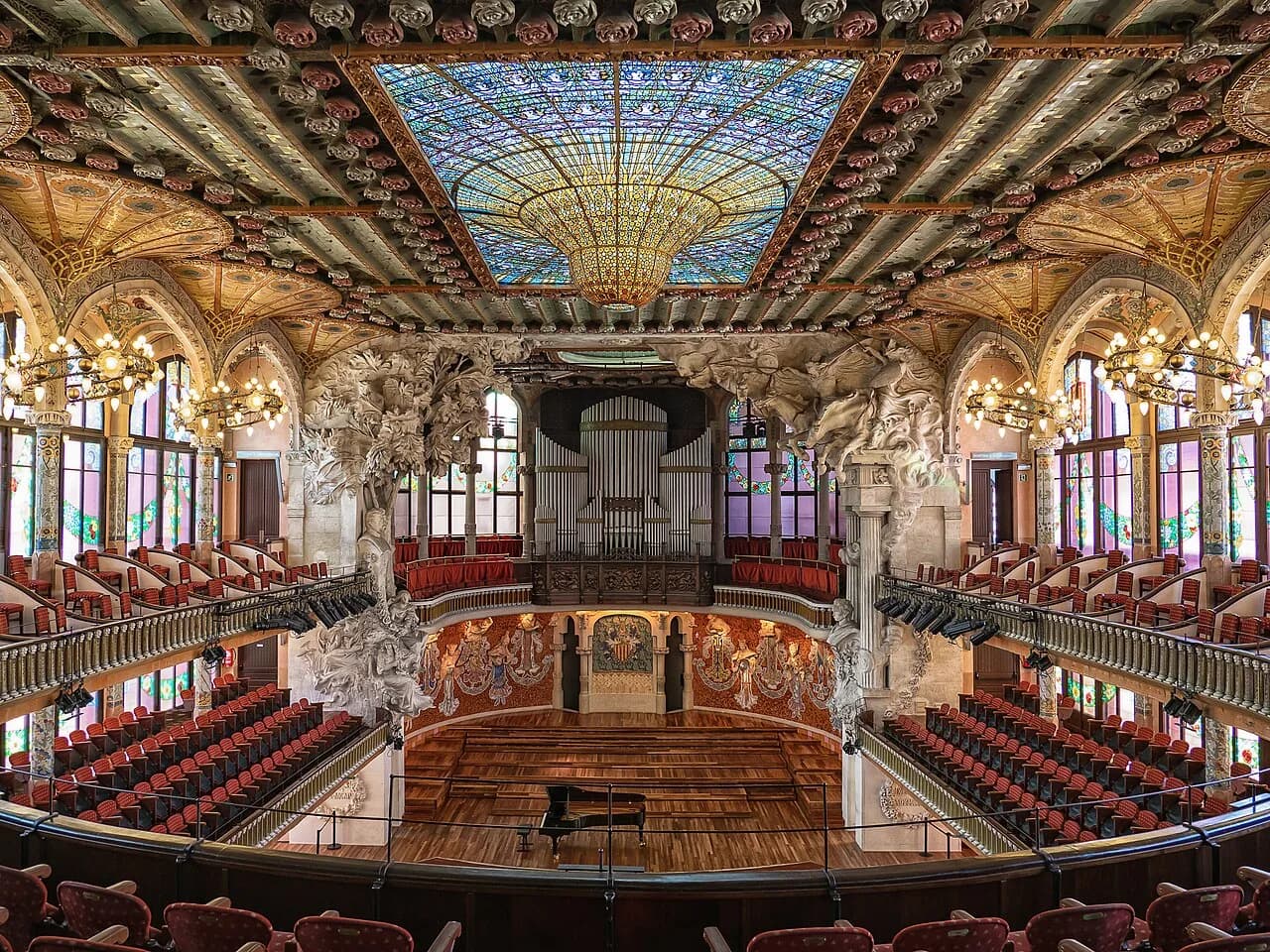
For a full day of Modernisme in Barcelona, pair Sant Pau with the Palau de la Música Catalana — Domènech i Montaner's other World Heritage commission, a 20-minute metro ride away. Seeing both makes a strong case for placing him alongside Gaudí at the top of the modernist canon.
Frequently Asked Questions
How long does it take to visit Hospital de Sant Pau?
Most visitors spend between 1.5 to 2.5 hours exploring the Hospital de Sant Pau complex. This allows ample time to walk through the pavilions, gardens, and underground tunnels. A guided tour might extend the visit slightly, offering deeper historical context and architectural details.
Can you visit Hospital Sant Pau without a guide?
Yes, you can absolutely visit Hospital de Sant Pau without a guide. Self-guided tours are very popular and allow you to explore at your own pace. Information panels are available throughout the complex to provide context and details about its history and architecture.
Is Hospital Sant Pau worth visiting?
Hospital de Sant Pau is highly worth visiting for its stunning Modernist architecture, rich history, and tranquil atmosphere. It offers a unique insight into early 20th-century design and healthcare, often with fewer crowds than other major Barcelona attractions. It is a UNESCO World Heritage site.
How much are tickets for Hospital Sant Pau?
Standard adult tickets for Hospital de Sant Pau typically cost around €15-€20 for a self-guided visit. Prices may vary for guided tours, special exhibitions, or during peak seasons. Discounts are often available for students, seniors, and children. Check the official website for current pricing before your visit.
What is the best way to get to Hospital Sant Pau?
The best way to get to Hospital de Sant Pau is by metro. Take the L5 (Blue Line) to the Sant Pau | Dos de Maig station, which is just a short walk from the complex. Alternatively, several bus lines also serve the area, providing convenient access from various parts of Barcelona.
Other Working Buildings Somebody Made Beautiful
Domènech i Montaner argued that patients recover faster in beautiful surroundings and got a hospital of twenty-seven pavilions to prove it. Seville's Hospital de los Venerables applied the same conviction to a retirement home for priests, Baroque rather than modernista. London's Crossness Pumping Station is the most extreme case: cathedral ironwork built to move sewage.
The Hospital de Sant Pau offers more than just beautiful architecture; it provides a journey through history and innovation.
This UNESCO World Heritage site stands as a testament to visionary design and compassionate care.
Our hospital de sant pau visitor guide aims to equip you with all the necessary information.
Plan your visit to this modernist gem and discover one of Barcelona's most captivating secrets.
For official details, visit the Hospital de Sant Pau on Wikipedia.
For more Barcelona planning, see our Hidden Gems in Barcelona guide.
For more Barcelona planning, see our Unique Things to Do in Barcelona guide.
Continue exploring
More guides you'll find useful